Sunday, December 21, 2025
8 C
Laval
spot_img
Home Blog Page 5

Sir Wilfrid Laurier School Board commissioners pass a balanced budget

Sir Wilfrid Laurier School Board’s HQ in Rosemère. (File photo: Martin C. Barry, Newsfirst Multimedia)

At their October 29 regular meeting, the commissioners at the Sir Wilfrid Laurier School Board (SWLSB) adopted a balanced budget for the 2025–2026 school year.

This came in the context of $3.7 million in budget cuts, following new financial rules imposed by the Ministère de l’Éducation du Québec (MEQ) under Premier François Legault’s Coalition Avenir Québec government.

“The Council recognizes that adopting a balanced budget was not achieved without sacrifice,” the SWLSB said in a statement.

“This was a team effort,” said chairperson James Di Sano.

“Our goal is to minimize the impact on our students, staff, and schools/centres as much as possible. These are not easy times, but we are committed to making the best decisions possible in the circumstances.”

According to the SWLSB, the impacts of the new budgetary rules on students and staff could have been much greater.

However, with collaboration from the Quebec English School Boards Association and the nine QESBA school boards who brought a court challenge to stay the budgetary rules, “the government made significant adjustments both before and after the stay hearing that reduced impacts, and allowed English school boards to drop their request to immediately suspend the new rules,” the SWLSB said.

They said the court case challenging the budgetary rules is continuing to ensure that our students’ needs are considered in future budgetary decisions.”

The SWLSB said its budgeting process involved administrators, governing boards, the parents’ committee and the audit committee and was developed through a concerted consultation process “to ensure that decisions best reflect the needs and priorities of our schools and centres in the circumstances.”

“The SWLSB is aware that the cuts required to balance this budget will be felt in our schools,” they added.

“The Council remains committed to making the best fiscal decisions possible and to continuing to advocate for the needs of students, families and staff, even under these challenging conditions.”

Contraband and unauthorized items seized at Correction Service’s Federal Training Centre

On October 25, contraband and unauthorized items, including unauthorized drugs, were seized at the Federal Training Centre, a multi-level security federal institution in Laval’s St-Vincent-de-Paul district.

An aerial view of the Correctional Service of Canada’s Federal Training Centre in Saint-Vincent-de-Paul.

The items seized included hashish and the total estimated institutional value of the seizure was $50,000.

The Correctional Service of Canada, which operates the centre, says it uses a number of tools to prevent drugs from entering its institutions.

These include ion scanners and drug-detector dogs to search buildings, personal property, inmates and visitors.

The CSC says it is heightening measures to prevent contraband from entering its institutions in order to help ensure a safe and secure environment for everyone.

CSC says it also works in partnership with the police to take action against individuals who might attempt to introduce contraband into correctional institutions.

CSC has also set up a telephone tip line for all federal institutions so that it may receive additional information about activities relating to security at CSC institutions.

These activities may be related to drug use or trafficking that may threaten the safety and security of visitors, inmates and staff members working at CSC institutions.

Information provided to CSC over its toll-free number, 1‑866‑780‑3784, is confidential and callers remain anonymous.

Searches and arrests related to drug sales in Laval

On October 8, several members of various squads of the Laval Police Dept. assisted investigators from the LPD’s Organized Crime division in an operation aimed at dismantling a criminal cell involved in drug trafficking in the Laval area.

The operation was part of the coordinated Paradoxe project aimed at actively combating the phenomenon of armed violence.

In August 2025, following information received from the public, the investigators from the Organized Crime squad of the LPD initiated an investigation regarding the sale of narcotics in the Laval area.

On October 8, searches were conducted at two residences in Laval, in collaboration with the Tactical Intervention Group (GTI), the Equinox squad and the Canine squad of the LPD.

Mohammad Zarif Naseri and Danial Rafique, aged 18 and 19 respectively, were arrested and face charges related to possession of narcotics with the intent to traffic and trafficking of narcotics.

They were detained following their arrests, then released with conditions to comply with. Their cases will return to the Court of Quebec in the coming weeks.

what was seized

  • Narcotics (crack and cocaine);
  • A .32 caliber firearm;
  • Offensive property (cell phones, scale, OBD2);
  • A sum of $3805 in Canadian currency.
    Anyone with information regarding drug trafficking can communicate confidentially on the Info-Police Line at 450-662-INFO (4636) or dial 911 and mention file LVL 250821-039.

Home invasion and arrest in Sainte-Rose

On Monday October 13 around 2:35 a.m., a resident of the Sainte-Rose district of Laval was awakened by suspicious noises inside his home. Reacting, he immediately called 9-1-1.

The Laval Police Dept. deployed a large number of of patrol officers to the scene, leading to the arrest of a suspect, who turned out to be a minor. Other suspects were still being sought in what the police believe was a home invasion case.

The resident was not injured in the incident. The LPD stated that it was still too early to confirm whether or not there was a theft. However, the Laval Police Crimes Against Persons Unit will be handling the case.

It should be noted that, as required by procedure, forensic identification specialists and investigators from the LPD examined the crime scene during the day on October 13.

Quebec school app pulled offline after major flaw exposes data

An app produced in Laval and used in hundreds of Quebec schools and daycares has been taken offline after a major security flaw was discovered.

Radio-Canada recently reported that a cybersecurity expert was able to easily access confidential information from parents using the HopHop app. The Laval-based platform allows parents to coordinate pick-ups with schools and daycare centres so children can be ready when they arrive.

In a statement on its website, HopHop said it suspended access to its server and app as a precaution following the Radio-Canada report.

“We are working closely with the Ministère de la Cybersécurité et du Numérique to correct the identified vulnerability and conduct resilience testing,” said the company.

“The HopHop application will only be restored once we have received the government’s analysis report and recommendations,” they addded. HopHop said its own server analysis showed no signs that data had been stolen.

“However, the vulnerability incident occurred between October 3 and October 7, 2025,” they said. “The data that may have been accessed includes parents’ names, photos, phone numbers and email addresses, as well as the names of their children and the school they attend.”

Cybersecurity expert Patrick Mathieu, who is also a parent and user of the app, told CTV News the incident was a wake-up call. Quebec’s Education Ministry says it is ultimately the responsibility of schools and daycares to ensure the apps they use comply with privacy laws.

Laval police seek witnesses to Saint-François high-speed crash

The Laval Police are seeking information from any witnesses to a dangerous driving incident that occurred in late July and ended with a fire at a bank.

On July 25, a gray Volkswagen Jetta, which was subsequently shown to belong to a police officer, was travelling at high speed eastbound on Marcel-Villeneuve Boulevard in Saint-François.

(Laval News file photo: Martin C. Barry)

It collided head-on with the National Bank branch at 1295 Montée du Moulin in Saint-François. When Laval Police officers arrived at the scene, they found the vehicle on fire. The fire spread to the structure of the bank building.

Witnesses also reportedly saw two people fleeing the scene immediately after the impact. The Laval fire department was able to quickly control the blaze, but it caused significant damage.

Forensic investigators and accident reconstruction technicians were back at the scene recently to corroborate some of the evidence they gathered during the resulting investigation.

The Laval police are inviting anyone who witnessed the vehicle being driven before the crash or who saw the vehicle’s occupants leaving the scene, or anyone who has photos or video of the event. to call the LPD’s Info- Line at (450) 662-INFO (4636). The file number is LVL-250725-009.

Police, fire, even CSIS, on a hiring blitz, as Ottawa responds to safety concerns and crime

Recruitment drive at Salaberry Armory drew security work applicants of all ages

The Canadian Armed Forces’ Charles Michel de Salaberry Armoury on Laval’s Le Carrefour Boulevard was teeming with police, military, firefighting, public safety, and even Canadian intelligence service officials on Thursday last week.

But they weren’t there responding to an emergency or a crisis.

Instead, they had gathered for one of the largest collective drives in recent memory for new recruits to fill a range of new openings that are becoming available with police and fire departments, as well as public safety agencies all over Quebec.

LPD K-9 squad constables Labelle and Doucet were on hand during the recruitment day with their faithful dog helper, Mickie. (Photo: Martin C. Barry, Laval News)

Job candidates sought

In addition to recruitment officers from the Laval Police Dept. and the Service de Police de la Ville de Montréal, there were police department recruiters from Quebec City and as far afield as Nunavik in northern Quebec.

From closer to home, police departments in suburban Repentigny just off the eastern tip of Montreal Island, and Terrebonne north of Laval, were also hunting for reliable job candidates.

The Sécurité du Québec were there, as were the Canadian Armed Forces, along with the SAAQ’s highway patrol unit, Contrôle routier. There were also officers from Protection de la faune, who enforce hunting, poaching and licensing regulations across the province’s forests and woodlands.

Laval Fire Dept. firefighter George Progakis was on hand to help potential LFD recruits suit up in firemen’s gear to get a taste of the job’s physical demands. (Photo: Martin C. Barry, Laval News)

RCMP recruitment up

In case you hadn’t heard, the federal government is increasing police and public safety recruitment, with recent government investments and new measures announced in October to hire 1,000 new RCMP personnel and bolster border security.

The initiatives are in response, according to Ottawa, to a rising need for more officers to address escalating crime rates and national security concerns, while also including better cadet training allowances and a focus on diversifying recruitment. The federal government also recently announced beefed-up compensation packages for Canadian Armed Forces personnel.

Underlying all of this is the pressure exerted by U.S. president Donald Trump, who since the beginning of his second term last January has insisted Canada needs to beef up its border security, while also suggesting the country should rethink its priorities for national defence.

CBSA hiring blitz

On October 17, Prime Minister Mark Carney announced that the upcoming federal budget, which is being tabled on November 4, will include new measures to better secure Canada’s borders. Among them (according to a statement issued last week by the Prime Minister’s Office) the government will:

  • Hire 1,000 new Canada Border Services Agency (CBSA) officers. These new officers will help crack down on the movement of stolen goods, illegal guns, and drugs, enforce import measures, and investigate unfair trade practices.
  • Increase the CBSA’s recruit stipend for the first time since 2005, raising it from $125 to $525 per week, to help attract and retain the next generation of highly trained border officers.
  • Amend the Public Service Superannuation Act to ensure CBSA officers and other frontline first responders receive benefits that reflect the weight of their responsibilities.
Potential security work recruit Raquel Bastazin, left, was briefed on the Sûreté du Québec’s job offerings by SQ recruitment officer Lieut. Sylvie Arcand. (Photo: Martin C. Barry, Laval News)

At the Salaberry Armoury last week, Canadian Security Intelligence Service representatives were anxious to spread the word they were looking for young new recruits. Some of the job offers might include entry-level electronic surveillance positions.

However, they were not so eager to have their picture taken while sitting at the CSIS booth. Everything’s a secret at CSIS, it seems. Even the identity of CSIS employment information officers. They agreed we could photograph their booth. As long as they stepped away.

CSIS’s lengthy screening process

While this type of work might appeal to some with a cloak-and-dagger streak, the downside is that the screening process alone before being hired by CSIS is 12 months, according to one of the two agency officials we spoke to. Still, she’s worked there for the past 30 years, suggesting that if you’re a good fit, CSIS might also be the place for you.

Surprisingly perhaps, recruiters for several of the agencies said they were looking for prospects from a fairly wide range of ages, from young adult (18 years), up to age 65.

A spokesperson for the Sûreté du Québec confirmed the provincial police force was willing to consider applicants up to retirement age. Mind you, this takes into consideration that they also hire people for mundane tasks such as clerical work that don’t necessarily require a background in law enforcement (although a security clearance might still be required).

The Canadian Security Intelligence Service’s vacant booth last week at the Salaberry Armoury, minus the job information officers. (Photo: Martin C. Barry, Laval News)

Applicants of all ages

Among the applicants we spoke to was a 20-year-old Laval resident who was interested in finding work with the Correctional Service of Canada which operates several detention facilities in Laval’s Saint-Vincent-de-Paul district.

“My sister worked at a detention centre for youths and I thought I might be able to do the same,” he said.

Towards the other end of the age spectrum was a 49-year-old woman from Montreal. She was looking for a change of career after having worked most of her adult life as a professional dancer and choreographer.

“I’m in a transition and I’m looking for security work,” she said, noting that the physical nature of her previous calling seemed to line up with the rigours that security work often demands.

Action Laval wants to reset the city’s mission

As Action Laval states in a message from its mayoralty candidate in the party’s 2025 election platform, the city has undergone significant changes over its 60-year history, accompanied by sustained population growth in recent years.

“Unfortunately, the city has strayed from its mission,” says Frédéric Mayer, while maintaining that the City of Laval’s basic services have not kept pace with population growth and that “a realignment is necessary.”

Among the solutions, according to the party which has run candidates in three municipal elections since 2013, is to regain control of the city’s finances and return to the purpose of a municipality. In its platform, the party focuses on five themes.

Accountability and transparency: “We place accountability at the heart of municipal governance,” they state. “Every decision will be tracked with clear and visible metrics, including digital tools (e.g., QR codes on tax bills) that allow citizens to understand how resources are being used.”

Consultative management: “By actively listening to citizens and involving their representatives in the decision-making process, solutions that are adapted to the realities on the ground can be put in place.”

Balance: “Economic development must not come at the expense of the environment or quality of life. We want to revitalize neighborhoods and bring services – whether cultural, sporting, or administrative – closer to citizens.”

Decentralization: “Since the creation of the City of Laval, efforts have focused on unifying the former municipalities and creating a single service center. Major infrastructures have been developed in the downtown of the island in recent years, but the districts have been abandoned. We want to relocate municipal infrastructures and services within the districts, closer to the citizens.”

Innovation and modernity: The party suggests the city should “adopt smart and connected solutions to improve the efficiency of the administration and the quality of municipal services, while anticipating the challenges linked to climate change and demographic developments.”

In addition to these areas of interest, Action Laval thoroughly explores 10 more themes.

Environment and sustainable development

Among other things, the party suggests the city needs to invest in critical infrastructure like sewers to prevent backups during storms and snowmelts, that water management needs better support, that green spaces need to be protected and enhanced, that aconsolidation of agricultural land be completed, that waste should be managed and minimized, and that a “positive” approach should be adopted for combating urban heat islands,

Sports, Arts and Culture

Among the actions AL suggests it would take in this dossier if elected would be development of major infrastructures to support Laval’s soccer and basketball organizations, the installation of a training area for cyclists, investments in a range of easily accessible sports and cultural infrastructures in the districts, and implementation of a policy to support Laval’s athletes and artists in order to promote a sense of belonging.

Infrastructure and urban development

“Laval is facing a dual crisis: housing and the dilapidated state of its infrastructures,” states the AL’s platform summary. “The advanced state of deterioration of our water and sanitation networks is a major obstacle to the development of new residential projects.”

That said, Action Laval makes the following six suggestions to remedy these and other related problems: Prioritize an upgrade of critical infrastructure; Establish a support program for victims of Storm Debby; Support the development of affordable housing and access to home ownership; Reduce administrative barriers to development; Facilitate urban development in an integrated, sustainable and inclusive vision; And collaborate with developers to establish cost-sharing agreements for infrastructure associated with new housing.

Transport and mobility

“Mobility in Laval must be rethought to meet today’s realities,” they continue. What they suggest as solutions to transit issues if they are elected: Establish a moratorium on the development of cycle paths, in order to define a real active mobility strategy; Reduce the registration tax; Review the public transport network to optimize travel within the city; Represent and defend the interests of Laval residents with the provincial government, so that the Metro loop is completed; Review the snow strategy; And extend free bus transportation to students.

Urban planning

“Laval’s Urban Planning Code (CDU) is currently a real obstacle to our city’s development,” Action Laval believes. They suggest a complete review and simplification of the Urban Planning Code, in collaboration with citizens and developers; Define a new master plan for the development of the cycle network, with objectives and strategies adapted to each district, and a public consultation process; Reviewing the Laval street template guide; And accelerating permit approval times by reducing bureaucratic steps.

Public safety and quality of life

The party suggests the following actions to provide improvements in this dossier: Develop easily accessible sports and cultural infrastructure; Establish partnerships with leisure, cultural and sports organizations; And adapt Laval’s parks to provide spaces for seniors.

Citizen participation

To reverse declining public participation in elections and other democratic activities, Action Laval says that under its management, the city would adopt a consultative management approach, while also taking measures to ensure that citizens’ opinions have a real impact on decisions.

Elders

Taking into consideration the City of Laval’s aging population, AL makes the following four policy recommendations: Facilitate installation of more benches for seniors as needed; Create spaces in parks and woodlands to accommodate seniors and their activities; Adapt better road signaling that takes into account the presence of seniors; And make sure the STL provides service that takes into account seniors’ needs.

Intergovernmental coordination

Action Laval maintains that too often, the city has seen itself receiving “less than its just share” of federal and provincial investments, given Laval’s growing population and correspondingly increasing needs. They suggest the party would work to promote closer relations with the two higher governments if elected.

Animal Welfare

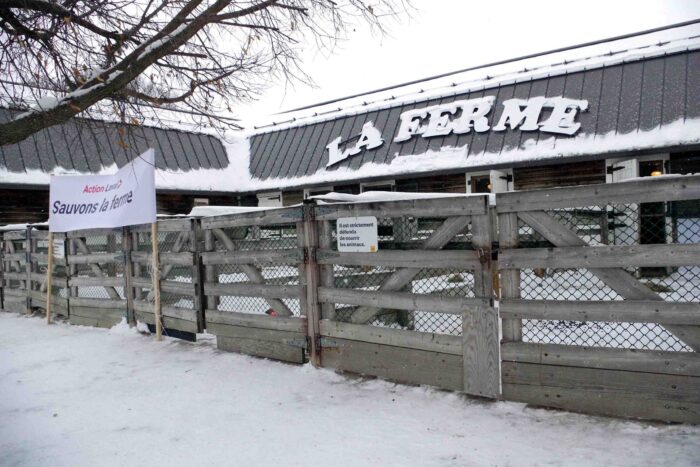
“Action Laval has always believed that the well-being of animals is an integral part of a modern, inclusive, and humane city,” says the party. As such, if elected, Action Laval would create a comprehensive and municipally-operated animal shelter, as well as an affordable pet sterilization program, among other proposals.

‘Our vision is clear,’ says Parti Laval/Équipe Larochelle

Launched in 2016, three years after the historic 2013 elections that shook up Laval City Council, the Parti Laval has managed since then to distinguish itself as the more serene of Laval’s municipal opposition parties, known for its carefully-measured positions and policy statements.

As they acknowledge in the preamble to their 2025 campaign literature, “Parti Laval quickly established itself as a credible and positive voice, recognized for its rigor in Laval’s political landscape,” and “we chose to prioritize the collective over individualism.”

“Our vision is clear: a safe city, clean neighborhoods, well-maintained infrastructure, and accessible local services across the territory,” their platform continues, while maintaining that the current administration “has held the mayor’s office for 12 years” and “it’s time for a change.”

“We want rigorous and responsible management of municipal finances,” they state. “In short, a city that takes care, first and foremost, of real priorities!”

A low-key approach

In keeping with the Parti Laval’s understated take on municipal management (their mayoralty candidate, Councillor Claude Larochelle, has a civil engineering background), the party’s platform is much shorter and less prone to rhetoric than the other two parties’ policy statements.

Larochelle, who has been a Laval resident for nearly 35 years, is the second Parti Laval leader to take the reins and serve as its mayoralty candidate after Michel Trottier’s unsuccessful mayoralty bids as head of the PL in 2017 and 2021.

After taking over Trottier’s functions as leader of the official opposition beginning with the 2017 city council, the PL maintains that Larochelle has since become “recognized for his rigor and his closeness to citizens. Known for his effectiveness in solving problems, he embodies solid and credible leadership.”

“Laval needs strong, reassuring and credible leadership to build a sustainable, safe, and well-managed city,” Larochelle states in the party’s campaign literature.

The PL has enshrined five basic values that define its actions: Transparency (putting citizens back at the heart of decisions); Proximity (valuing every neighborhood, not just downtown); Responsibility (managing every dollar with rigor and integrity); Sustainability (protecting our environment and natural spaces); and Equity (promoting an inclusive city where citizens, regardless of age, origin, or situation, can thrive.)

Parti Laval’s six-point platform

The party breaks down the issues in this election into six points:

1) A city serving its citizens and their well-being, “because it all starts in our neighborhoods. We want vibrant, well-equipped, and welcoming neighborhoods. Better-served neighborhoods where services will truly be available. We will invest heavily in local infrastructure, creating recreation, sports, and cultural spaces tailored to each neighborhood, as well as in basic services that truly meet your needs.”

2) Safe, clean, and well-maintained neighborhoods, “because the safety of our neighborhoods, pedestrians, and road users must be a priority. Road safety must become a priority for the city. We will increase police presence and make our neighborhoods and local streets safer. We will implement clearly marked pedestrian crossings, better lighting, and streets designed to protect vulnerable users. At the same time, we will act concretely to ensure clean and well-maintained neighborhoods through rapid interventions to repair, clean, and maintain public spaces in good condition.”

3) Responsible finances and an effective city, “because citizens deserve to have their money well invested. They deserve effectiveness, not a show. Laval residents must have the assurance that their taxes are being spent on real priorities. We will protect the wallets of Laval families by limiting property tax increases and offering more flexibility to families and seniors. We will put an end to oversized projects that drive up debt and refocus investments on what really matters.”

Flooding’s on their radar

4) Sustainable infrastructure to protect Laval and make it a resilient city, “because behind every flood, there are human stories. The people deserve an administration that does everything possible to protect them from floods and natural disasters. We will invest in the modernization of essential infrastructure: sewers, water supply, and stormwater systems, to reduce flood risks and ensure family safety. We will also implement concrete measures to help every household secure their home. At the same time, we will prepare Laval for climate challenges by relying on sustainable solutions: urban greening, protection of natural areas, and upgrading our networks. A resilient city is one that protects itself and its citizens.”

5) Smooth, accessible, and fair mobility, “because efficient transportation means a city that moves forward. Mobility must no longer be a daily obstacle. We will reassess the entire road, pedestrian, and cycling network to make it more coherent and safer. We will improve the experience of public transit users and support structuring projects that will relieve congestion in Laval. Whatever the mode of transportation, every citizen must be able to move efficiently throughout our city.”

6) A city that values its culture, its heritage, and its language, “because taking care of our culture, our heritage, and our language strengthens the social fabric of our city and the collective identity of Laval residents. We want a city that values the French language, preserves its heritage, and supports cultural creation. Preserving what unites us and passing on what distinguishes us, while respecting everyone’s language rights, means building a strong city, alive and proud of its history.”

Says ML failed on heritage preservation

In a statement the Parti Laval issued late last week on the current administration’s record for heritage preservation, the party criticizes the incumbent Mouvement lavallois for ostensibly being too lax in preserving the City of Laval’s architecture.

“For 12 years, Mayor Boyer’s party has allowed several heritage and historic buildings to deteriorate, particularly in Sainte-Rose, and has centralized cultural investments to the detriment of neighborhoods,” said Larochelle. “We want to do things differently. We want to bring culture closer to people, support artists, and protect places steeped in history. We want to make you truly proud. To achieve this, we will have to do better and that is what we are proposing.”

‘Economic tensions’ define pledges by Équipe Stéphane Boyer/Mouvement lavallois

“We are operating in an uncertain socioeconomic context,” the incumbent mayor, who is seeking a second term, states in a foreword to his party’s 2025 electoral platform.

He notes that tariff tensions with the U.S. and a rapid increase in the cost of living in recent years have made an impact on everyone and on the management of the city.

While maintaining that Laval’s economic vitality and purchasing power are under pressure, Boyer says “we must find pragmatic and innovative solutions to these challenges,” and for the next term the Mouvement lavallois is proposing to focus mostly on the essentials.

The ML’s four commitments

The ML summarizes its pledges in the form of four basic commitments: An efficient and well-managed city; A prosperous city that takes its place; Clean and safe neighbourhoods; And green neighborhoods on a human scale.

In a seven-point elaboration of their vision for a well-managed city, Boyer’s team pledges to upkeep Laval’s reputation as a municipality that has one of Quebec’s lowest property tax rates. Other points include: Simplifying interactions between citizens and the municipal administration; reducing resolution times to citizen requests; reducing permit delivery times for citizens and businesses; using new technologies and AI to automate repetitive processes; and implementing a pilot project to manage traffic lights using AI to reduce traffic and make getting around easier.

A prosperous city

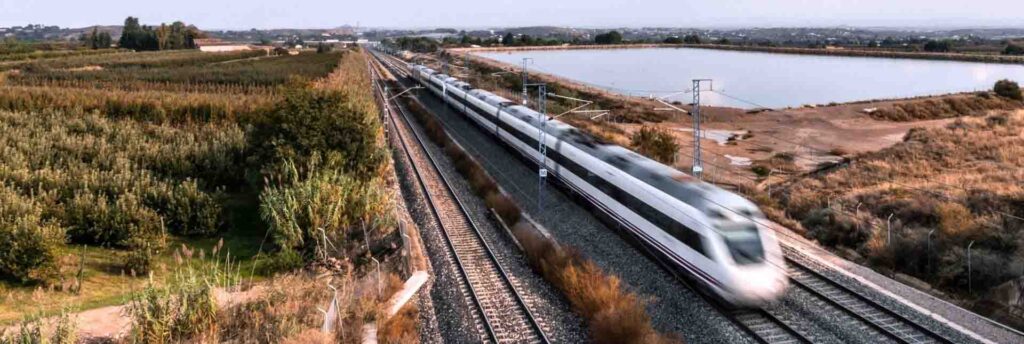
With the ML’s concept of Laval as a prosperous city that takes its place as a leader among municipalities, the party pledges, among other things, to improve STL bus service; to boost economic development in Laval’s historic villages (such as Vieux Sainte-Rose); support the development of new large-scale sporting and entertainment sites; increase the amount of cultivated farmland; work to open a second hospital or expand the Cité de la Santé to increase healthcare services for all; extend the orange Metro line to Chomedey to connect Côte-Vertu station, Carrefour Laval, and Montmorency station; seek a revision of the Criminal Code and penal laws to better fight crime; continue efforts to bring the high-speed rail project between Quebec City and Toronto to Laval; and ensure the redevelopment and heritage protection of the old Saint-Vincent-de-Paul Penitentiary site.

Clean and Safe Neighbourhoods

The ML begins to address these concerns with one of the most sensitive points Laval residents have faced in decades: flooding. If re-elected, the incumbent party proposes to establish a subsidy program for the installation of protective measures in homes at risk of flooding. As well, they would invest an additional $440 million to better maintain Laval’s streets and build infrastructure to better protect from flooding.

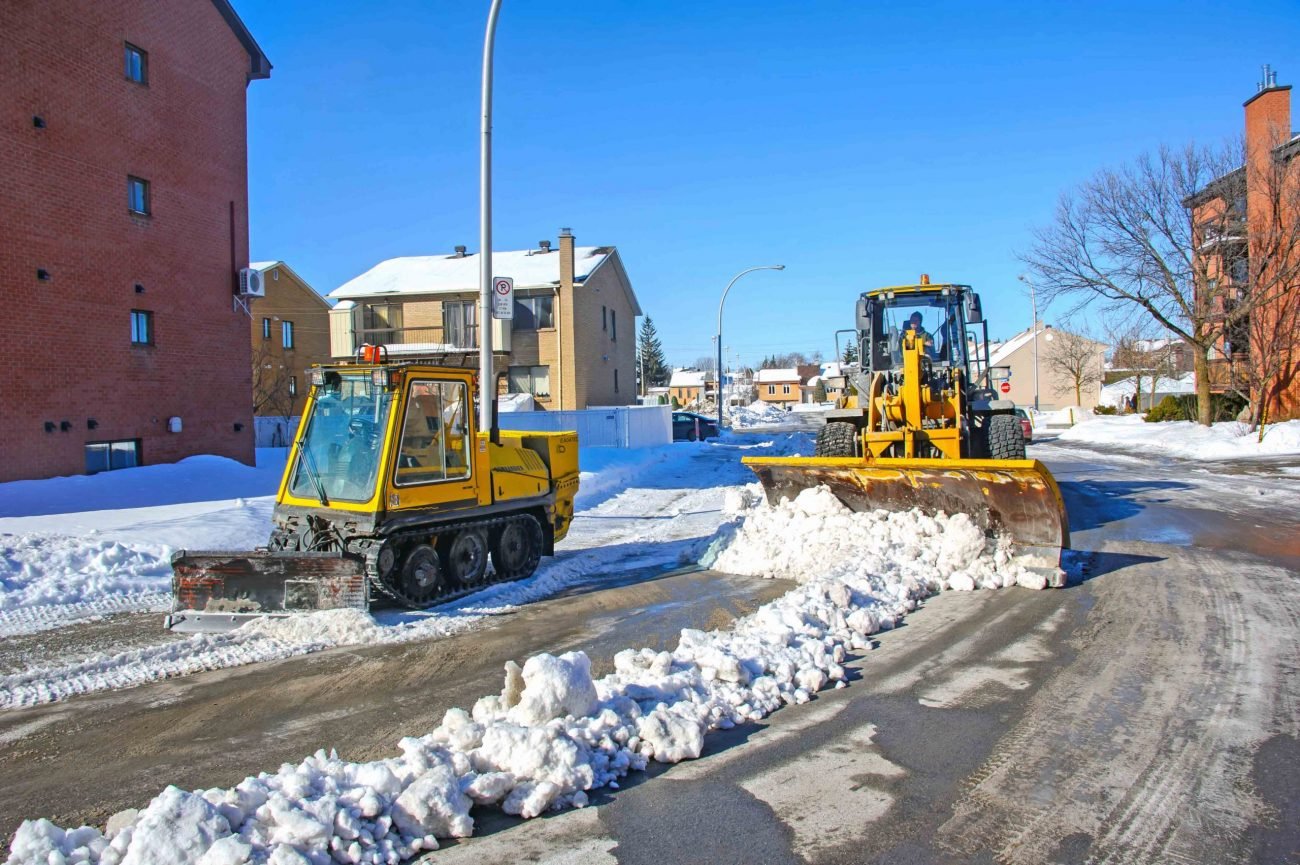
In two key areas of commitment if elected, the incumbent mayor’s party says it would double the road maintenance budgets to repair roads and sidewalks in poor condition more quickly, and ensure rapid snow removal in high-traffic areas, particularly schools and subway stations, within a maximum of 12 hours. In yet another passage from their list of engagements, the ML pledges to clean up graffiti in public spaces more quickly.

On the issue of making Laval’s neighbourhoods safer, some of the ML’s proposed measures would make pedestrian crossings and intersections safer, particularly in school zones and near senior residences; install 20 new traffic lights at the busiest intersections to facilitate travel and reduce the risk of accidents; hire additional police resources to increase presence in neighbourhoods and services to citizens; improve the investigation process and resolution of crimes against persons and property; make better use of existing public and private cameras in the area to fight crime; and . Continue prevention initiatives targeting young people in Laval, in collaboration with schools, community organizations, and the healthcare network.

Green neighbourhoods

Regarding the party’s promise to build green neighbourhoods in Laval, they pledge to double the number of new social and affordable housing units built in the last five years to 2,000 in the coming four years, and to protect existing affordable rents in the context of the current housing crisis.

On the issue of green spaces, the party makes an important pledge when it says it will create a new nature park in northwest Laval, while noting that negotiations are underway to finalize the acquisition of a golf course in Sainte-Rose in order to transform it, in collaboration with the public, into a large riverside nature park.

Along the same lines, the ML would also expand the wildlife refuge on the Mille-Îles river to create a large protected regional park; increase the area of protected natural and agricultural environments in our territory by 20 million square feet; offer a free tree on a voluntary basis to Laval residents who wish to green their property; reduce heat islands through targeted greening and demineralization initiatives; and implement a project to capture, sterilize and care for stray cats.

On the question of the beautification of Laval’s neighbourhoods, they pledge to continue Laval’s riverbanks redevelopment projects to make the city’s waterways accessible to all; increase beautification projects in neighbourhoods with decorative lighting and public art; and optimize the use of rooftops of major construction projects by installing green roofs, terraces or sports facilities.

Seniors not forgotten

The party has not forgotten the City of Laval’s senior citizens. In this regard, the ML pledges to improve urban amenities around seniors’ residences and places they frequent; develop new accessible and safe trails in woodlands, while saying that “active aging is essential to the physical and mental well-being of seniors”; continue efforts to promote seniors’ sense of security and combat isolation; and support community organizations that fight fraud against seniors. Regarding Laval’s cultural heritage, Mayor Boyer and his team promise to adopt and implement an action plan to promote the French language and launch a campaign to promote French; establish collaborative cultural governance to strengthen cultural vitality in Laval; create new spaces for cultural and artistic expression in Laval neighbourhoods; promote Laval artists in the city’s cultural programming and municipal libraries; facilitate local cultural events to celebrate Francophone culture and diversity; and continue to protect Laval’s built heritage.

Federal Energy Minister Tim Hodgson explains ‘Build Canada’ to Newsfirst Multimedia

Ottawa hopes to attract $500 billion in private investment through nationwide program

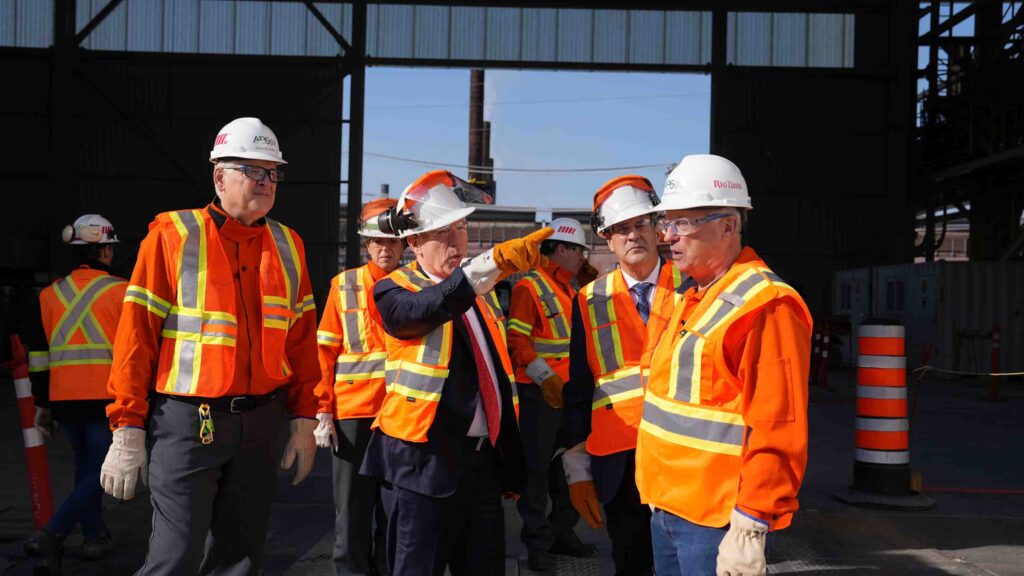
Federal Minister of Energy and Natural Resources Tim Hodgson made stops in several Quebec regions recently while on a whirlwind tour of the province to announce Ottawa’s support for key industries expected to play a part in the massive “Build Canada” program the government has launched to boost economic growth following U.S. president Donald Trump’s imposition of crippling tariffs.

Opportunity knocks

“We’re here learning about the different opportunities,” Hodgson said in an exclusive interview with Newsfirst Multmedia while in Chicoutimi to announce a $735,000 subsidy to a phosphate mining company that is expected to help build reliable critical minerals supply chains in Canada.

Federal Minister of Energy and Natural Resources Tim Hodgson met with industry leaders in Quebec’s Saguenay region recently to announce subsidies for mining, which is expected to play a key role in the Carney government’s Build Canada program.

“I just met with many of the mayors and business leaders in the Saguenay area and heard about what their aspirations and desires are and some of the opportunities here in critical minerals and in clean and conventional energy,” he said. “And it’s a very promising place.”

While in Montreal recently, Hodgson announced an investment by the Liberal government of over $22 million in support of eight projects to accelerate battery innovation and production capacity across Canada.

If commercialized, Arianne Phosphate’s project could establish a source of Canadian phosphorus, a key ingredient in lithium-iron-phosphate batteries.

Battery production growth

Hodgson’s ministry anticipates that the global cumulative battery demand from 2022 to 2050 is set to increase nearly 150-fold, providing an important opportunity for Canadian battery manufacturers. Phosphoric acid is also essential for fertilizers and other specialty products.

The subsidies, according to Hodgson, underscore the beginning of the Carney government’s massive Build Canada program.

It’s all about “getting educated,” the former CEO of Goldman Sachs Canada said. “Each region and each set of folks are wanting me to understand the opportunities in their regions. And as they think about what they’d like to see happen, I educate myself.”

Perhaps not since the Great Depression has the Canadian federal government undertaken such a massive, nationwide economic rebuilding program as Build Canada. Hodgson acknowledged that indeed “the Prime Minister has been talking for quite some time about how this is really a hinge moment.”

Rules changed by Trump

He recalled that after World War II, the major world powers signed the Bretton Woods Agreement, establishing a new global system of monetary and free trade management. That lasted up until recently when the U.S. under Trump decided it no longer wanted to do business that way.

“They no longer believe in free trade,” Hodgson said. “It’s no longer a free trading multilateral world. It’s becoming much more of an America-first or what, you know, you would call in economic terms a mercantilist world, where you design everything for the benefit of one country, if that is the world we find ourselves in. And again, we did not ask for this trade war. We were happy with the way it was working.”

The upshot, according to Hodgson, is that “we need to retool, we need to reorganize. And the Build Canada Act and the Major Projects Office are a critical part of the retooling of our economy.”

Federal Minister of Energy and Natural Resources Tim Hodgson.

Attracting private investment

Through Build Canada, the federal government hopes to attract $500 billion in new private sector investment into Canada over a five-year span. The government’s own investment would be minimal, according to Hodgson, with one of the goals being to “not spend government dollars,” he said.

“There may be situations where we provide some incentives to attract those private sector dollars, okay. But our job as government is to spend as little as possible taxpayer dollars in the most responsible way we can to attract many, many multiples of private sector money.”

Hodgson anticipates that the government will be able to attract an initial $60 billion during the first phase of Build Canada.

With that said, and given the volatile nature of the current situation in the U.S. where new tariffs decreed by Trump are often rising and falling from week to week, Newsfirst Multimedia asked Hodgson how the Canadian government can react effectively with a program like Build Canada when the rules are changing constantly.

U.S. beyond Canada’s control

“What the Prime Minister has said is we cannot control what others are going to do – we simply cannot,” he said. “The Americans are going to do what the Americans are going to do.

“What we need to do is to focus on what we can control so that the things that we can control are how we trade with each other within this country,” he continued. “So, reduce the trade barriers between provinces. That, and then reducing the regulation and creating the incentives to attract private sector money.

“If we do that and we attract the $500 billion of new investment to Canada, we will create the jobs and the revenue streams that insulate us from, shall I say, the inconsistent policies of our neighbors.”

New agreement between the city and its executives

A decisive step was recently taken in negotiations between the City of Laval and its management staff.

Laval mayor Stéphane Boyer. (File photo: Martin C. Barry, Laval News)

On October 8, the Executive Committee ratified a new agreement setting out working conditions and the compensation policy until December 2028.

“I am very pleased with the unanimous adoption by the executive of this new agreement with some of our managers,” said Mayor Stéphane Boyer.

“Our objective remains the same for all employees,” he continued. “To provide Laval residents with quality services while respecting their ability to pay.”

He said other agreements with various employee groups were also recently signed or could be signed soon. “We are approaching the next steps with optimism and rigor,” the mayor said.

On June 6, the city and the Laval Police Brotherhood also signed a five-year agreement focused on efficiency and public safety.

In addition, last year more than 1,200 municipal staff members in the recreation sector, represented by the Laval Recreation Workers’ Union, reached an agreement with the city.

The new city council, which will be in place following the November 2 elections, will be called upon at its next sitting on November 18 to formalize the agreement.

Annual purchase of dog and cat licenses and medals

The City of Laval is reminding all dog and cat owners that in Laval it is mandatory to obtain a permit to share a home with a cat or dog and that each pet must also wear an official city tag.

The tag allows pet owners to be contacted quickly if their dog or cat strays from home and is found.

It also helps identify the dog and cat population in the area, which is essential to ensure the safety of the entire population and to provide adequate services.

Animals allowed or prohibited at home:

Authorized Animals: Dogs (except hybrid dogs), cats, domestic Rabbits, ferrets, guinea pigs.

All fish authorized for captive keeping without a permit in accordance with the by-law adopted under section 73 of the Act respecting the conservation and development of wildlife (CQLR, chapter c-61.1)

Any animal authorized for captive keeping without a permit in accordance with the by-law adopted under section 42 of the Act respecting the conservation and development of wildlife (CQLR, chapter c-61.1)

Prohibited Animals:

Wild animals, poisonous animals, roosters (subject to the exceptions provided for in section 8 of Municipal By-law L-12430 relating to animals).

Number of Authorized Animals

You may have up to four animals, including a maximum of two dogs. A special permit may also be granted to double the number of authorized animals, i.e., to have custody of a maximum of four dogs, a total maximum of eight animals.

Spaying and microchipping

In Laval, all dogs and cats over six months old must be microchipped and sterilized.

Violations and Fines

Owners or guardians of an animal who do not comply with the regulations are liable to a fine.

Violation Details Minimum Fine

Barking and Meowing. A dog or cat may not whine, bark, howl, or meow in such a way as to disturb the peace or quiet of a person. Violators subject to a $300 fine.

Dog off-leash. Every dog ​​must be kept on a leash no longer than 1.85 meters at all times. Violators subject to a $500 to $1,500 fine.

Registration. The guardian of a dog or cat must register it with the city by obtaining a license and a tag. Violators subject to a $300 fine.

Park Use. The guardian of a dog must clean any public or private place soiled by their animal’s feces. Violators subject to a $50 fine.

Excrement. The guardian of a dog must clean any public or private place soiled by their animal’s feces. Violators subject to a $300 fine.

The amounts indicated above apply to an individual. In the event of a repeat offense, the fine is doubled. All offenses can be found in Municipal By-law L-12430, regarding animals.

Site Visit and Inspection

Any person responsible for enforcing the by-law may visit your property or land at any reasonable time to verify compliance with the rules regarding animals. This person has the right to require identification and proof if you are suspected of an offense.

This person may also enter any place or vehicle where an animal is located and seize an animal, and require you furnish any information related to the enforcement of By-law L-12430 regarding animals.

No one may prohibit, prevent or otherwise impede in any way access to a place directed by a city representative or otherwise obstruct the process.

Weather

Laval
overcast clouds
-3.7 ° C
-2.9 °
-4.8 °
63 %
7.7kmh
100 %
Mon
-5 °
Tue
-5 °
Wed
-4 °
Thu
-4 °
Fri
-6 °