Home Blog Page 3

CCILaval launches ‘Laval Net Zero 2040’ campaign for a lower-carbon economy

‘Hat’s off to the chamber of commerce for taking the lead,’ says executive-committee VP Khalil

The Laval Chamber of Commerce and Industry (CCILaval) last week unveiled Laval Net Zero 2040, an ambitious initiative to encourage Laval businesses to take part in a concrete, measurable and profitable transition to a lower-carbon, more circular and more resilient economy.

Unveiled at the Laval Evolution Summit 2026, the initiative builds on efforts undertaken for several years by the CCILaval and its sustainable development team to support businesses in improving their practices, operations and environmental performance.

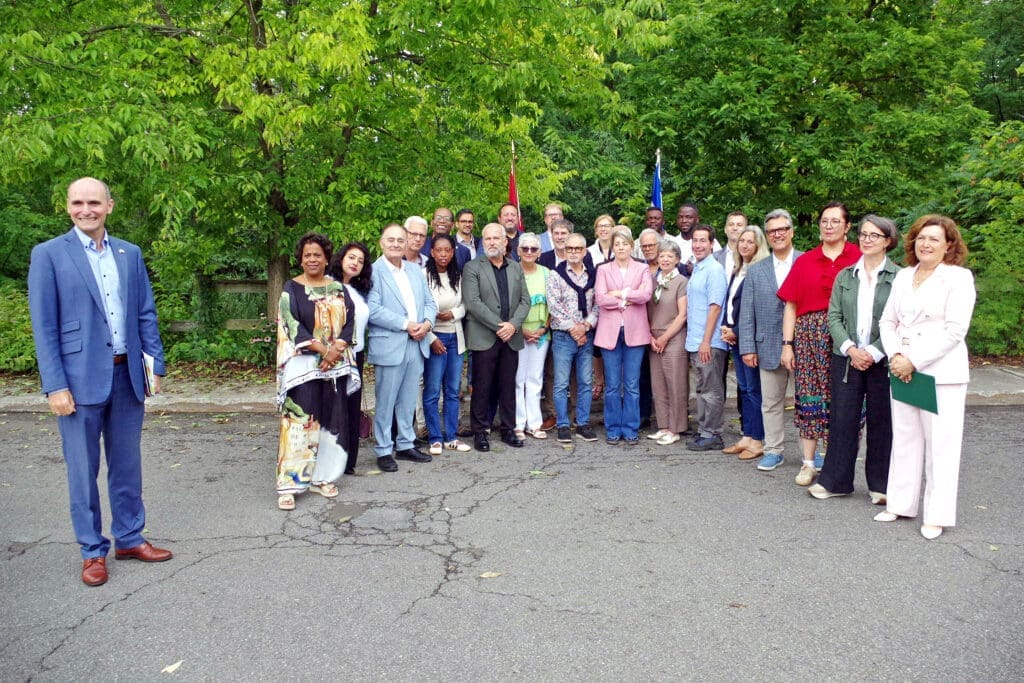
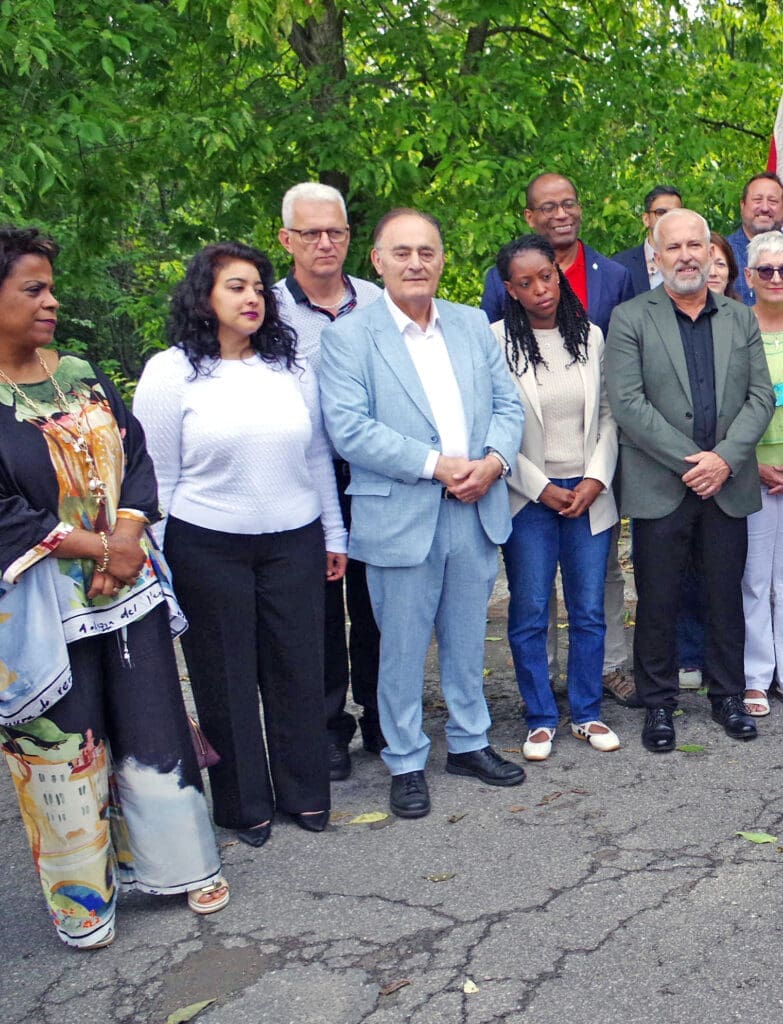
Members of the Laval Chamber of Commerce and Industry, as well as elected officials from the City of Laval and the Quebec government, are seen here following the unfurling of a banner to mark the official start of the CCIL’s Laval Net Zero 2024 campaign to create a lower-carbon and more resilient local economy. (Photo: Martin C. Barry, Laval News)

Turning words into actions

Laval Net Zero 2040’s ultimate goal is to support 50 Laval businesses over a 24-month period, from 2026 to 2027, in identifying, planning and implementing measurable environmental projects.

According to the CCIL, the initiative will generate 60 to 75 concrete projects, for an estimated total of 1,800 to 2,000 hours of support for participating businesses.

“With Laval Net Zero 2040, we want to demonstrate that the sustainable transition is not an abstract or theoretical exercise,” Caroline De Guire, CEO of the Laval Chamber of Commerce and Industry, said during an official launch at the Grand Times Hotel Laval Centropolis.

“It is a lever for competitiveness, productivity and resilience for businesses,” she added. “Our role, as the Chamber of Commerce, is to make this transition accessible, structured and visible for Laval businesses.”

Making less of an impact

Laval Net Zero 2040 represents an investment of approximately $850,000 (including $120,000 from the City of Laval). Financial contributions are also being made by the Government of Quebec, Desjardins, Filgo, Matrec), Montoni and Hydro-Québec, with additional support from numerous private and implementation partners.

Laval city councillor for Sainte-Dorothée Ray Khalil, who is vice-president of the city’s executive-committee, along with Laval-des-Rapides MNA Céline Haytayan, were among the guests for the campaign launch.

“Most businesses right now realize something like this is a must,” Khalil said in an interview with The Laval News. “We all want to make less of negative environmental impact and more of a positive impact. So my hat’s off to the chamber of commerce for taking the lead after listening to their members and putting into place this project.”

“My hat’s off to the chamber of commerce for taking the lead after listening to their members and putting into place this project,” said Laval executive-committee vice-president Ray Khalil. (Photo: Martin C. Barry, Laval News)

Laval Net Zero 2040 is based on a four-step approach: diagnosis, selection of a concrete objective, project implementation and measurement of results. Participating businesses will be able to work on areas such as waste reduction, energy efficiency, electrification, eco-design, decarbonization, greenhouse gas management and resource optimization.

Moving from intention to action

The projects will be supported by the CCILaval team, in collaboration with local experts and specialized partners, to help businesses move from intention to action. The objective is to achieve measurable gains, both environmental and economic, particularly in terms of cost reduction, GHG emission reduction, operational efficiency and better resource use.

“Since 2008, the chamber and its board of directors have championed a sustainable and ambitious vision of the circular economy in Laval. This vision has been structured over the years, with the Symbiose Laval initiative, the Zero Waste 2040 Vision, and concrete support for businesses,” said Daniel L’Écuyer, chairman of the board of directors of the CCIL. “With Laval Net Zero 2040, we are now shifting into a new gear: that of a broader, visible and measurable mobilization of businesses.”

Beyond technical support, Laval Net Zero 2040 will also take the form of a vast campaign of recognition and regional mobilization, inspired by the spirit of the major ISO 9001 campaigns that enabled many companies to proudly display their commitments and certifications in industrial districts.

Participating Laval companies will be able to make their efforts visible through signage on their building facades, a presence in the media, on digital platforms and partner networks, as well as an annual recognition event.

‘A large collective movement’

The joint undertaking also aims to highlight efforts already made, inspire other businesses and mobilize not only management, but also employees, suppliers, customers and business partners, says CCILaval. “Deployed prominently throughout the region, it will contribute to creating a large collective movement from which the entire Laval community can benefit,” they say.

“In businesses, the desire to act is often present, but taking action requires time, tools and tailored support,” said Jean-Sébastien Trudel, director of sustainable development at CCILaval. “Our role is to help leaders identify the right levers, prioritize the most promising projects and concretely measure the results. Laval Net Zero 2040 precisely bridges this gap between ambition and implementation.”

Mayor and councillors cut ribbons after Pie-X Park makeover in Chomedey

Laval plans to carry out similar renewals at parks and facilities all over the city

There was something new and exciting last week at Pie-X Park in Chomedey. Elected officials from the City of Laval were on hand to mark the official completion of several new facilities in the park following several years of redevelopment.

Among them are a swimming pool, a wading pool and splash pads (with universal access), a new chalet, a skate ramp and teen area, a synthetic soccer field, a refrigerated ice rink (winter use), a basketball and pickleball court (summer), children’s game modules (with universal access), new playground equipment and table tennis platforms.

Laval mayor Stéphane Boyer and Laval city councillor for Souvenir-Labelle Sandra El-Helou prepare last week to cut the ribbon marking the official opening of the new chalet in Chomedey’s Pie-X Park. (Photo: Martin C. Barry, Laval News)

Cost split between city and Quebec

As well, it will be possible to borrow sports equipment at no charge for activities including pickleball, soccer, hockey, skating, table tennis and basketball. In all, the overall cost of the project was more than $20 million, split between the City of Laval and the provincial government. As the work comes to an end, the facilities will be fully opened gradually beginning on June 29.

According to the city, the work is part of a major redevelopment not only in the Chomedey neighbourhood, but also planned in other districts of Laval to breathe renewal into them. Among other things, the refrigerated outdoor rink (inaugurated in March during spring break) is the first of its kind in Laval.

“Over the course of the coming years, we want to invest more to renovate what already exists,” Mayor Stéphane Boyer said last week in an address prior to an official ribbon-cutting ceremony at the park.

Renewing disadvantaged areas

While noting that a good number of Laval’s facilities were built during the 1950s, 1960s and 1970s, he said the city hopes to continue the redevelopment process started in Pie-X Park, beginning in some of Laval’s more disadvantaged neighborhoods.

“For me, it’s important to be able to offer a quality of life to our citizens in general,” said Boyer. “But even more so to our youths who may sometimes live in conditions that are difficult.”

Mayor Stéphane Boyer and (from left) city councillors Nicholas Borne (Laval-Les Îles), Sandra El Helou (Souvenir-Labelle) Christine Poirier (Pont-Viau) and Mohamed Bâ (Le Carrefour) cut the ribbon for new playground equipment last week at Chomedey’s Pie-X Park. (Photo: Martin C. Barry, Laval News)

In an interview with The Laval News, the mayor said “it was important for us to carry off a good project in this neighborhood that has big needs.” But at the same time, he acknowledged that two years ago some residents living in the area had raised objections about certain aspects of the redevelopment.

A group of up to 400 residents signed a petition opposing a significant part of the plan. They wanted the city to at least postpone the project so that some of the impact could be reconsidered. Up to 16 residents received legal notices the year before from the city, advising them to vacate 12-foot spaces on their property next to several fenced pedestrian walkways leading from the street into the park.

City claimed right to property

Additional notices were sent to the residents, informing them that land survey posts were going to be installed to establish the exact property limits. Fences and hedges belonging to property owners, but encroaching on municipal property, would also have to be demolished, according to the notices.

The city claimed it needed to enlarge the walkways in order to make them more secure and accessible for the population in general, but especially for those who may be physically-challenged or who suffer from limited mobility.

“For me, it’s important to be able to offer a quality of life to our citizens in general,” Laval mayor Stéphane Boyer said last week while officially dedicating new infrastructure and facilities at Pie-X Park in Chomedey. (Photo: Martin C. Barry, Laval News)

In so doing, the city expected to enlarge the walkways (which varied in width from 6 to 10 feet) to 30 feet, while enhancing the grounds with additional lawn and trees.

In addition to these claims, the city served notice that it was placing a “reserve” status on several houses located near the north and south entrances to Pie-X Park as an option for an eventual purchase in order to possibly add space in the park. This was done under a revised provincial law (“Right of pre-emption”) for municipalities.

City overlooked problem

Mayor Boyer told The Laval News last week that the issue dated back decades when some property owners had unwittingly encroached on land that legally belonged to the city with fences, trees, driveways and hedges – although the city overlooked it.

“And so, when we decided to do Pie-X Park, we decided to use all the lands which were available to us to make access wider, and this unfortunately came with changes for those residents,” he said. He said the city met with the residents and negotiated flexibly. “And I believe today everybody is happy with the outcome,” he added.

Quebec National Assembly passes Bill 4, creating an added measure against domestic violence

Legislation inspired by ‘Clare’s Law,’ which was first implemented in the United Kingdom

The head of a Montreal-based family services agency is giving a thumbs-up to the CAQ government’s recently-adopted Bill 4, which allows criminal and police record information to be shared in order to prevent femicide and intimate partner violence.

Melpa Kamateros, executive-director of Shield of Athena, says Bill 4 creates another level of security for domestic violence victims. (Newsfirst Multimedia file photo: Martin C. Barry).

Based on a UK law

In a June 11 statement, Premier Christine Fréchette’s government said they were proud to confirm the adoption by the National Assembly of Bill 4, inspired by Clare’s Law, “taking a significant step to prevent intimate partner violence and femicides and to combat these scourges.”

First implemented in the United Kingdom in 2014, Clare’s Law is named after Clare Wood, a woman murdered in England by a former domestic partner who police knew to be dangerous. Variations on the legislation, implemented in different areas of the world, provide several ways for police officers to disclose a person’s history of abusive behaviour to those who may be at risk.

Quebec’s Bill 4 amends various legislative provisions in order to allow the disclosure, to a person who fears for their safety or that of their child, of information concerning the history of domestic violence of a current or former intimate partner.

SQ and local police checks

Following a background check by the Sûreté du Québec (SQ), in collaboration with municipal and Indigenous police forces, disclosure will be made through a designated organization with expertise in domestic violence “to ensure compassionate and tailored support,” according to the government’s statement.

The person at risk can also be referred to appropriate resources if needed. The goal, says the government, is to provide the person at risk with as many tools as possible “to make an informed decision about their relationship, without imposing a decision.”

The law grants a victim the right to be informed of the conditions of any supervision imposed as part of a release order, a probation order with supervision, or a suspended sentence. It also grants the victim the right to be informed of the area where the person will be residing.

The government says significant collaborative work will continue in the coming months to develop tools with the partners involved who have expertise in this area, particularly as regards the use of the online application forms.

Some of the new law’s measures

The new law adds an additional mechanism to existing measures implemented in Quebec to combat femicide and intimate partner violence. These measures include:

  • The addition of specialized domestic and sexual violence units within police forces;
  • The deployment of electronic monitoring bracelets for perpetrators of domestic violence;
  • The establishment and strengthening of rapid intervention units for domestic violence in all regions of Quebec;
  • Emergency financial assistance to quickly relocate victims of sexual or domestic violence who wish to leave a dangerous environment;
  • The creation of a dedicated phone line, which offers four hours of free legal consultation to all victims of domestic or sexual violence;
  • And the creation and implementation of specialized courts for sexual and domestic violence cases.

A tool for domestic violence victims

Melpa Kamateros, executive-director of Shield of Athena Family Services, cited some examples of how the new law might be applied on a day-by-day basis.

“If you suspect something about someone your daughter is going out with, you will have the right under this law to go to the police station and ask if this guy has had any previous situations of conjugal violence, criminal arrests, complaints, if they’ve been tried,” she said.

While acknowledging she was aware that some critics have objected that disclosing personal information potentially violates individual privacy rights, Kamateros said, “As a person who works in the domain, this information could be a reliable source and an additional point of security for domestic violence victims.”

A right to feel safe

“Everyone should be able to feel safe with their intimate partner,” said Quebec Public Security Minister Ian Lafrenière. “I am particularly proud of the collaborative work with all my colleagues in the National Assembly. We don’t play partisan politics when it comes to violence against women.

“The adoption of this important bill is the concrete result of collaborative work among parliamentarians, united by the desire to do even more to combat femicide and intimate partner violence,” he continued. “The work is far from over, but the adoption of this bill is a strong step that strengthens our safety net. This measure complements a range of other measures already implemented by our government.”

‘We owe it to the women’

“Every time a femicide is committed, all of Quebec is in shock,” said Quebec Minister of Justice Simon Jolin-Barrette. “In recent years, we have worked tirelessly to better support victims throughout their healing process. If we can offer an additional tool that is more likely to prevent another tragedy, we must try.

“We owe it to the women of Quebec,” added Jolin Barrette. “If the measures included in the new law allow us to prevent even one case of domestic violence, all of society benefits. Once again, we are sending a clear message to victims: you are not alone.”

‘It could save my life’

Chomedey Blues football alumnus Greg Bradic needs a kidney

Martial arts instructor Gregory Bradic, a Chomedey Blues alumnus and lifelong resident of Chomedey, needs a donated kidney and is reaching out to the community for help.

A Chomedey Blues football club alumnus, who is also a dedicated martial arts instructor and lifelong Chomedey resident, is reaching out for help to the Laval community as he faces impending kidney failure from a hereditary medical condition.

Gregory Bradic, 53, suffers from Polycystic Kidney Disease (PKD), a condition that several other members of his family have had to struggle with for generations.

A former captain of Concordia University’s football Stingers, in 2016 Gregory’s 1993 Stingers team was inducted into the Concordia Sports Hall of Fame.

A few weeks ago, Bradic decided to turn to the community to which he had given so much, saying that he was seeking a living kidney donor while also hoping to raise awareness about kidney disease and the life-saving impact of organ donation.

Devoted to the martials arts

Born and raised in Chomedey, for over 20 years Greg has devoted his life to teaching martial arts to teenagers and adults at a martial arts dojo called Club Budo de Montréal in the Borough of Saint-Laurent.

A fourth-degree black belt, Gregory is known not only for his discipline and skill, but for the positive impact he has had on so many people over the years.

According to Greg’s girlfriend, Sonia D’Elia, his students see him “as a mentor, role model and source of encouragement both inside and outside the dojo,” she said in an e-mail to The Laval News.

However, according to Sonia, Gregory’s PKD has progressed to the point where he will soon need to be placed on the kidney transplant list. While waiting for a deceased donor kidney can take many years, a living donor transplant offers the best chance for a healthier and longer life.

They are hoping that by sharing Gregory’s story, it may help raise awareness about living organ donation and possibly inspire someone to come forward as a potential donor – not just for Gregory, but to help educate the public about how life-changing and life-saving living donation can be for so many people and families.

His PKD has reached the crisis point

In a recent social media post, Gregory wrote that his PKD “has now progressed to the point where my kidneys are no longer functioning well enough to keep me healthy.

Over the years, Gregory has given extensively of his time as an instructor in the martial arts.

“My options are limited. Dialysis can keep me alive by doing some of the work my kidneys can no longer do – but it is not a long-term solution. A kidney transplant, on the other hand, would give me a real chance at a longer, healthier and more normal life. It would give me time – time to live, to experience the things I love, and to be present for the people who matter most.

“But finding a kidney is incredibly difficult. Thousands of people are waiting right now for a deceased donor, and the reality is harsh: the wait can be 3 – 5 years or longer. Many people don’t make it that long.”

However, according to Gregory, there is another path – receiving a kidney from a living donor – and it could happen much sooner. “It could save my life,” he said.

“Asking anyone to donate a kidney to me is difficult, but it greatly improves my chances of getting a transplant. A living kidney donation typically lasts longer and has better function.”

What you need to know

While most people might not know a lot about living kidney donation (and Gregory himself admits he didn’t until it started to affect his life), he offered the following information on living-donor kidney transplants:

• You only need one kidney to live a healthy, long life.

• Most donor surgery is done laparoscopically, meaning through tiny incisions.

• The recuperation period is usually fairly quick, generally two weeks.

• The cost of your evaluation and surgery will be covered by Gregory’s insurance. The hospital can give you extensive information on this.

• You will have a separate team of healthcare professionals to evaluate you as a living donor. Their job is to help you understand the risks and benefits and look out for your best interests.

Now he needs your help

Outside of his work, Gregory spends a lot of his time teaching martial arts at a non-profit. “It’s something that means a lot to help others grow, build confidence and stay strong both mentally and physically,” he says. “Now, I’m in a position where I need that same kind of support.”

If donating a kidney to Gregory is something you would like to consider, please think of sending him a message and he would be happy to tell you more about his story and explore the process of determining if you are a match.

However, he says he realizes that living donation may not be right for everyone – but you may still be able to help. You may want to consider being an organ donor after death, and also help by sharing Gregory’s story with others.

At the very least, he says, he wants to raise awareness of kidney disease and living donation. “I am hopeful my efforts will help me receive a kidney sooner and encourage others to consider helping the many people on the wait list,” Gregory says. You can reach out to Greg Bradic at gregbradic@gmail.com 

‘Time for bold reforms,’ Mayor Boyer tells Quebec’s Municipal Infrastructure Summit

Calls on provincial election leaders to work towards reducing municipal infrastructure costs

Laval mayor Stéphane Boyer says he is encouraged by discussions held at the Municipal Infrastructure Summit last week on the skyrocketing cost for financing municipal infrastructure.

In a statement, he said he particularly welcomed the Quebec government’s commitment to abandoning the total nitrogen standard in wastewater treatment facilities.

Laval and other cities need a new deal from the Quebec government given the skyrocketing costs for important infrastructure work like this water infrastructure project in 2021 near the corner of Curé Labelle and Notre Dame in Chomedey. (Newsfirst Multimedia file photo: Martin C. Barry)

According to Boyer, this measure alone would allow Laval to avoid additional investments estimated at nearly $250 million, without compromising its environmental leadership and commitments.

Boyer is now calling on the leaders of the political parties in the upcoming provincial elections to continue working to sustainably reduce the cost of municipal infrastructure.

In its brief presented during the summit, the City of Laval advocated for a review of the standards it claims have contributed to skyrocketing construction costs, a simplification of government subsidy programs, and an acceleration of the construction permitting process.

Optimizing public funds

The city also reiterated the importance of continuing efforts to pool resources among municipalities and the Quebec government in order to reduce costs and optimize the use of public funds.

With the next Quebec election campaign close to getting underway, Laval’s mayor said he was inviting all party leaders to continue the work begun at the summit.

According to Boyer, controlling infrastructure costs will require decisions that may sometimes be difficult but necessary, in order to preserve the ability of municipalities to invest in the services and equipment their citizens need.

“Municipal infrastructure is becoming increasingly expensive and taxpayers have the right to expect that every dollar will be used as efficiently as possible,” Boyer said in the statement issued by the city.

“Today, we have put forward concrete solutions to reduce costs, simplify processes and increase resource sharing,” he continued. “Now we must have the courage to see this through, and I invite all political party leaders to commit to taking the necessary steps to make our infrastructure more affordable for citizens.”

‘A shared and funded vision’

The memo submitted by the city stated that the City of Laval “aspires to a shared and funded vision to act proactively in order to maintain economic prosperity and vitality while keeping public health and environmental protection at the centre of its concerns and making constructive proposals in this regard.”

The city listed three main priorities: reduce standards that increase construction costs; increase efficiency in the management of government programs; and accelerate the pooling of resources.

The city’s memorandum also offered some additional reflections: creating a more efficient, flexible and predictable funding model, both locally and provincially, while generally respecting taxpayers’ ability to pay; identifying methods for prioritizing the needs related to maintaining municipal assets; and identifying standards and requirements that can be reviewed or reduced to lower infrastructure construction costs.

Bearing costs without revenues

In the document’s conclusion, the City of Laval also maintains that cities in Quebec are responsible for 60 per cent of public infrastructure, but receive only 7.7 per cent of tax revenue, and the deficit in maintaining water and road assets is approaching $50 billion – an amount that could double by 2036 if nothing changes.

“The wastewater treatment plant that serves three-quarters of Laval’s households needs to be renovated,” it continues. “Lacking government funding, the city had to borrow $334 million to avoid delaying a project essential to its residents.

“This episode perfectly illustrates what these Estates General are seeking to correct: a financing model that is neither predictable enough nor flexible enough to keep pace with actual needs, and which shifts a risk onto taxes and municipal debt that municipalities cannot bear indefinitely.”

Memo says cities ready to rethink

The city says it took action to try to address these problems, noting that an “alliance formed with the City of Longueuil to explore the opportunity to launch joint calls for tenders, share plans and specifications and standardize replicable facilities demonstrates that municipalities are ready to rethink their practices to build more efficiently and at a lower cost.

“This initiative directly addresses the central objective of the government’s approach to reducing construction costs,” the memo continues. “This is particularly relevant when we consider that municipalities absorb up to $1.5 billion in additional costs each year, a significant portion of which results from the accumulation of government regulations. Cities are not waiting for efficiency to be imposed on them; they are already inventing it.”

Planning for the coming years

By making asset maintenance the top priority of its financial planning for the coming years, with major financial commitments to water, roads and underground networks, “the City of Laval is fully assuming its share of responsibility,” states the city. “This effort, however determined, is reaching the limits of what a municipality can bear alone.”

The memo closes by saying, “This is not about asking higher levels of government to replace cities, but about re-establishing a partnership commensurate with the challenge: a reduction in standards that increase construction costs, increased efficiency in the management of public programs, and an acceleration of the pooling of resources.”

Laval Receives two awards for communications achievements

Two projects by the City of Laval’s communications and marketing division received awards in June from leading communications organizations in Quebec and internationally.

The redesign of the laval.ca website received a Merit Award at the 2026 Gold Quill Awards from the International Association of Business Communicators (IABC).

At same time, the internal rollout of a new branding by the city won the Silver Award at the Quebec Society of Public Relations Professionals (SQPRP) Awards of Excellence.

Nathalie Monette, head of communications and Mireille Laurin-Burgess, graphic designer with the City of Laval’s communications and marketing service. (Photo: City of Laval)

“Receiving, within a few days of each other, such prestigious international and Quebec awards in two distinct areas of communications demonstrates the expertise and innovation that characterize the City of Laval,” Mayor Stéphane Boyer said in a statement.

“These awards reflect the excellence of the work done by our teams and our commitment to developing impactful initiatives that concretely meet the needs of the public and our staff,” added Boyer.

Designed to meet the needs of more than 460,000 citizens, according to the city, the new laval.ca was thoroughly redesigned to offer a modern, accessible and user-centric experience. A continuous feedback section allows residents to provide comments and contribute to the ongoing improvement of the platform.

Designed according to best practices in digital accessibility, the city says the site facilitates access to information and municipal services for people with physical or cognitive limitations.

Its redesign was also guided by eco-design principles, notably through a streamlined architecture that promotes more responsible use of digital resources.

The City of Laval also distinguished itself on the Quebec scene by winning the Silver Award at the SQRP Awards of Excellence on June 3 in the Internal Public Relations Program category.

The city said the award highlighted the internal rollout of the City’s new employer branding, a strategy focused on collective experience and team engagement. The initiative generated results that exceeded the established objectives in terms of awareness, participation, and satisfaction, according to the city.

“These accolades demonstrate the expertise of the Communications and Marketing Department and its ability to develop effective strategies that enrich both the citizen and employee experience,” stated a press release from the city, acknowledging both awards.

City mobilized to support households seeking housing on July 1

As the annual July 1 moving day approaches, the City of Laval says it is reaffirming a commitment to support individuals and families facing hardship.

In conjunction with its partners, including the Housing Search Assistance Service (SARL) at the Laval Municipal Housing Office, the city says it is deploying resources to support tenants, while continuing efforts to better protect them and preserve affordable housing.

“Housing has long been a top priority for Laval,” said Mayor Stéphane Boyer. “In recent years, numerous measures have been implemented to help the most vulnerable find housing, and we intend to continue to go further. The SARL’s support for households seeking housing is an important tool that we are deploying once again.”

The SARL is offering free support to Laval households at risk of becoming homeless, helping them find solutions tailored to their situation. Services are tailored to various eligibility criteria, including the household’s circumstances and income.

The city says it is working with its Social Emergency Division as well as community organizations to ensure a rapid and coordinated response. To date, the SARL is providing support to 154 Laval households. Of these, 28 cases are considered a priority for July 1 due to the risk of becoming homeless, while 32 others involve situations where the move-out date is later in the year.

Taking into account the current intense pressure in the rental market, the city says it is working towards the adoption this fall of a new bylaw aimed at better regulating eviction practices, thereby helping to prevent wrongful evictions and keep households in their homes.

Following the implementation of the new regulations, applications for demolition permits for any building with 10 or more units will be assessed based on the loss of affordable housing and the number of affordable units planned in the replacement project, while also taking into account the characteristics of the neighborhood and the vulnerability of the households.

The bylaw will also specify the applicants’ obligations to the tenants.

The city says it is continuing the implementation of its recently adopted 2025-2028 Housing Action Plan. This plan aims to sustainably improve access to quality, affordable housing that meets the needs of the population.

By 2028, the city intends to contribute to the construction of 2,000 social, affordable and non-profit housing units through a series of measures, including financial incentives, to promote residential construction and social inclusion, as well as the mobilization of municipal land and resources to accelerate residential development.

Available Resources: Individuals experiencing housing difficulties are encouraged to contact the SARL at 450-505-6025 or by email at sarl@omhlaval.ca. For information on the various collection services, go to laval.fr/collectes on the city’s main web page.

Laval fast-tracks flood protection with $21.3 million more in infra funding from Quebec

Cities ‘on the front lines of the impacts,’ says climate minister Pascale Déry during stop in Vimont

Less than 48 hours after a torrential rain storm caused extensive flood damage in several neighborhoods of Montreal, officials from the provincial government and the City of Laval were on hand last Monday morning at a stormwater drain worksite in Vimont to announce a $21.3 million subsidy from Quebec to boost Laval’s ability to deal with a heightened risk of floods.

Among the stormwater drain infrastructure projects being undertaken by Laval this year is the modernization of systems in the Vimont district to reduce the risk of backups and stormwater flooding. (Photo: Martin C. Barry, Laval News)

An overdue modernization

Faced with increasingly frequent extreme rainfall events and the challenges posed by aging municipal infrastructure, the City of Laval says in a press release, the municipality is accelerating the modernization of its water systems to better adapt its territory to new climate realities.

This year alone, according to the city, more than $102 million will be invested in drinking water, sewer and stormwater management infrastructure throughout Laval, including $65 million funded by Quebec through various programs.

Laval is receiving the $21.3 million in financial aid through the Quebec government’s OASIS program to accelerate, over the next three years, the deployment of green drainage infrastructure designed to better manage stormwater and strengthen the Laval territory’s resilience to climate change.

Climate change’s impact

“Climate change has a real impact on our neighborhoods and requires us to act faster and invest more intelligently,” said Mayor Stéphane Boyer. “Thanks to our ongoing efforts to secure funding and rigorous planning of our interventions, we are maximizing every dollar invested and accelerating the modernization of our water infrastructure.

“And thanks to the funding received through the OASIS program, we will take advantage of our projects in the coming years to integrate more sustainable stormwater management solutions directly into our neighborhoods,” he added. “The goal is simple: to better protect our residents today and prepare our city for the realities of tomorrow.”

“Municipalities are on the front lines of the impacts of climate change,” said Pascale Déry, Minister of the Environment and the Fight Against Climate Change in the Coalition Avenir Québec government.

“Through the OASIS program, our government supports projects that adapt infrastructure to new realities,” she continued.

From the left, Vimont MNA Valérie Schmaltz, Quebec Environment and Fight Against Climate Change Minister Pascale Déry and Laval mayor Stéphane Boyer go over some points with supersize rainwater drain pipes ready to be buried at a work site in Vimont last Monday morning. (Photo: Martin C. Barry, Laval News)

Reducing sewer overload

“The green spaces that will be deployed in Laval will be able to absorb a significant amount of rainwater, the equivalent of approximately seven Olympic-sized swimming pools, thus reducing sewer overload and the risk of flooding, while making neighborhoods greener and more pleasant for residents,” she said.

This year alone, according to the city, more than 40 kilometres of pipes will be upgraded in Laval, the equivalent of the distance between Laval and Mirabel.

The funding provided through the OASIS program will allow Laval to integrate more green drainage infrastructure into its street reconstruction projects over the next few years. Features, such as vegetated strips, drainage planting pits and bioretention areas, will allow for the capture, filtering and drainage of some rainwater directly into the ground rather than into the sewer system, in addition to reducing urban heat islands.

To optimize public investment, the infrastructure will be strategically placed primarily in areas where underground infrastructure work is already planned. This approach, according to the city, will allow for multiple interventions to be carried out simultaneously, limiting costs and maximizing benefits for residents.

Managing stormwater at source

The city says it is relying on an integrated approach to strengthen the performance of its infrastructure and increase the resilience of its territory. Complementary interventions planned by the city combine increasing the capacity of certain networks, rebuilding aging infrastructure, rehabilitating existing pipes without excavation, and deploying green infrastructure to manage stormwater at its source.

“Municipalities are on the front lines of the impacts of climate change,” said Pascale Déry, Minister of the Environment and the Fight Against Climate Change in the Coalition Avenir Québec cabinet. (Photo: Martin C. Barry, Laval News)

This year alone, work will be carried out on nearly one hundred street sections in Laval, representing more than 40 kilometres of infrastructure. The approach, according to the city, will not only reduce the risks of overflows, backups, and stormwater flooding, but also protect natural environments while ensuring sustainable service for the population.

The city says the projects it has planned for this year will contribute to strengthening the capacity of municipal infrastructure while sustainably improving the Laval region’s resilience to extreme weather events.

Among the major projects currently underway are the ongoing construction of the Cartier retention basin, designed to reduce overflows into the Rivière des Prairies; the modernization of water infrastructure in the Vimont district to reduce the risk of backups and stormwater flooding; and the Mille-Îles Blvd. stabilization project.

Strategy to maintain assets

The city says the modernization of its water infrastructure is part of a strategy to maintain its assets. As part of Laval’s 2026-2028 Three-Year Capital Investment Program, the city is dedicating the majority of its investments to maintaining and modernizing its existing infrastructure. The city has chosen to allocate 75 per cent of its investments to maintaining existing municipal assets and 25 per cent to new projects.

Regarding the water networks, the city says interventions are prioritized based on rigorous technical analyses, taking into account factors such as the condition of the pipes, network capacity requirements, history of breaks and risks associated with extreme weather events.

Laval News Volume 34-13

The current issue of the Laval News, volume 34-13, published on June 24th, 2026.
Covering Laval local news, politics, and sports.
(Click on the image to read the paper.)

A Year of Adjustment and Investment at Sir Wilfrid Laurier School Board

Over the past year, the Sir Wilfrid Laurier School Board has invested more than $12 million in infrastructure, expanded capacity in the North Shore and added hundreds of new classroom technologies. Those moves have marked a significant period under chairman James Di Sano’s leadership.

“When I came in, there was a need to improve our infrastructures across the organization,” said Di Sano. “Not just Laval, but across the North Shore.”

Rather than concentrating funds into one major project, the board spread the investment across multiple schools. Some saw significant upgrades, particularly older flagship buildings, while others received more modest improvements that nonetheless address pressing issues.

“We invested to respond to the needs of the respective communities,” he said, emphasizing that each region required a different approach.

At the same time, the board has expanded to meet rising enrolment in certain areas. A similar trend is unfolding in Saint-Jérôme, where Laurentia Elementary has reached capacity. In response, the board opted to expand beyond its original site, acquiring a second property with support from the Ministry of Education for just over $5.5 million. Located roughly 12 minutes from the main building, the new site will serve as a secondary campus to better accommodate growing student needs. The building required minimal work to become operational and provides an opportunity for future expansion if enrolment continues to rise.

Growth all across the regions has required more immediate solutions. At Mountain View Elementary in Deux-Montagnes, rising enrolment led to the installation of portable classrooms, modular units connected directly to the main building. These portable classrooms are a cost-effective way to expand schools immediately.

“It’s like another wing to the school,” he said, noting that the additions can range from single-level units to multi-storey extensions depending on demand.

Rather than viewing the expansion as a strain, Di Sano frames it differently. “It’s to respond to the growing numbers, which is a fantastic position to be in.”

James Di Sano, Chairmen of the Sir Wilfred Laurier School Board in his office.

Investing in more technology

Beyond physical space, the board has also focused on modernizing classrooms. Over the past year, it installed 398 new smartboards, representing an investment of approximately $1.3 million. These investments have taken place across a system that remains uniquely complex. The Sir Wilfrid Laurier School Board spans Laval, the Laurentians and Lanaudière, covering a vast territory with 40 schools and centres serving very different communities.

“Collectively, the territory of our board is the size of Belgium,” he said. “It’s not always one size fits all. It’s impossible. We adapt ourselves to the specific region and clientele that we’re servicing.”

That geographic diversity is reflected in enrolment trends. While some schools in Laval are seeing declining numbers, others in the surrounding regions are growing steadily.

“We’re losing in Laval, but we’re growing in the regions,” he explained.

Inevitable budget cuts

The challenge for the board has been to respond to both realities at once, expanding when needed while maintaining stability elsewhere. That balancing act has been further complicated by financial constraints. Like many school boards across Quebec, the school board had to contend with budget pressures that force difficult decisions.

“When I came in, it was to make the board more transparent, more accountable, and more fiscally responsible,” he said.

Those principles have shaped how the board has managed cuts. Rather than scaling back services outright, efforts have focused on restructuring and reallocating resources internally.

“If you’re cutting me here, I’m going to go find it here to pay for it,” he acknowledged. “We do the best that we can with the resources that we have.”

Community above all

Amid those pressures, Di Sano points to community involvement as a defining strength of the board. Within the English-language sector, parent engagement remains a consistent driver of school life. That involvement came into focus at Our Lady of Peace Elementary in Laval West, where a new playground structure opened last fall after years of fundraising efforts by parents.

“The parents took five or six years to raise the money,” he admitted. “And the difference that they were missing, we committed to funding.”

The result reflects a broader reality across the board’s schools, where projects are often shaped by collaboration between families and administration.

Student experience has also remained part of the board’s focus. Efforts to promote inclusion included raising the Pride flag at head office, a move Di Sano says is intended to encourage dialogue and understanding.

“It’s very important that students come together and have meaningful conversations about inclusion and respect,” he said.

Academic achievement has continued alongside these initiatives. At Laval Senior Academy, students hosted the Montreal Regional Science and Technology Fair, with several participants advancing to higher levels of competition in the United States.

Looking back on the year, there is no single defining initiative. Instead, what emerges is a pattern of response and adaptation. Investments in infrastructure and technology have been paired with expansion in growing regions and ongoing efforts to maintain services elsewhere.

Through it all, Di Sano returns to a consistent focus.

“Our collective duty and responsibility are to ensure the success of our students.”

Committed to mobility, STL files activity report for a ‘challenging’ 2025

The Société de transport de Laval (STL), which released its 2025 activity report last month, said the year was marked by persistent economic challenges, but also progress in terms of the future development of mobility on its territory, particularly in terms of electrification and on-demand transportation in industrial areas.

Bus in Laval Qc.

“In a context marked by austerity and budgetary constraints, the STL has also been able to transform these challenges into opportunities for growth and optimization, while placing the customer experience at the heart of its operations,” stated Laval city councillor for Vimont Pierre Brabant, chairman of the STL board of directors.

“Alongside the ongoing funding challenges, the STL has made it a priority in 2025 to guarantee quality service to its customers, on the one hand, and to support its teams to foster a healthy, safe, and inclusive work environment, on the other,” said Josée Roy, the STL’s CEO.

Well-being and commitment

“More than ever, we are convinced that the success of our mission depends on the well-being and commitment of the women and men who carry it out every day,” she added.

The STL said it continued its mission to serve the residents of Laval, while ensuring the efficiency and optimization of its resources. However, according to the transit agency, ridership in 2025 was down 2.5 per cent compared to the previous year.

The STL board attributed the decrease to various external factors, including adjustments to service offerings, exceptional weather conditions, including storms and heat waves, as well as periods of strike action at the Société de transport de Montréal (STM), the impact of which was felt on the Laval network.

Despite the slight decline, public transit ridership in Laval remained the highest in the metropolitan region, said the STL. “This result demonstrates the continued importance of public transit in the travel habits of Laval residents, even in a less favorable economic climate,” stated the annual report.

Paratransit trips up 5 per cent

A graphic designer’s rendering of the exterior of the STL’s new garage facility to house and service its fleet of electric buses.

The STL said paratransit has been following an opposite trend, with a five per cent increase in trips, surpassing 2019 levels, totaling nearly 550,000 trips for the year. Initiated in 2024, paratransit service optimization efforts continued in 2025 “to better reflect actual ridership on the network,” the STL said.

In spite of a demanding budgetary context, the STL said it demonstrated agility by redesigning its service to meet anticipated mobility needs and facilitate access to new express stations for its customers. Five additional routes were also added to support ridership, particularly in western Laval, and to optimize connectivity between networks.

To support economic growth in industrial sectors, the STL said it launched three new on-demand taxi routes. The initiatives aimed to improve worker mobility in these sectors, particularly in western Laval.

To meet budget rationalization requirements of the Metropolitan Regional Transportation Authority and to contribute to metropolitan efforts in this area, the STL continued its efforts to optimize its administrative expenses in 2025.

Paratransit partner with STM

In addition to continuing to adjust its service offerings based on ridership on its network, the STL entered into a partnership with the Société de transport de Montréal (STM) to take over the reservation centre and paratransit services for Laval residents, effective January 1, 2026.

The year 2025 also marked a significant milestone in the STL’s energy transition. Progress on the future electrified garage – the largest infrastructure project since the STL’s inception – paved the way for the imminent arrival of the first new-generation electric buses, according to the transit agency.

The agency said this major transformation will require profound changes, impacting infrastructure, work practices and staff skills. “This strategic project is fully aligned with the STL’s commitment to an energy transition and more sustainable mobility,” they said.

The STL’s 2025 performance results indicated that customer satisfaction with regular transit saw a slight decrease, primarily due to service adjustments implemented during the year.

Former STL chair reacts

The nearly 30 projects will help improve the STL’s performance, according to STL president David De Cotis.

Reacting to the STL report, Action Laval city councillor for Saint-Bruno David De Cotis (who chaired the STL’s board from 2013-2017) faulted the transit agency primarily for a lack of transparency, while maintaining that nothing was said of the STL’s recent cuts in service brought on by a supply-chain-generated shortage of spare parts.

While the service cuts were actually implemented in the first few months of 2026, De Cotis said there should have been some mention of the problem in the 2025 report because the problem started last year, he claimed.

“It started in 2025 because they knew about it,” said De Cotis. “The parts weren’t coming in in February and March. They knew about that last November. It wasn’t something new. There’s absolutely no mention of what happened, of why it happened, and what they would do to prevent it from happening again.”

De Cotis also noted that other public transit agencies in the Montreal region were facing similar circumstances, but didn’t report any supply chain problems. Although Action Laval had asked for an inquiry to be held, the Mouvement lavallois council majority voted the motion down, he added.

Weather

Laval
broken clouds
26.2 ° C
26.8 °
25 °
53%
4m/s
84%
Wed
26 °
Thu
25 °
Fri
25 °
Sat
22 °
Sun
24 °