Home Blog Page 192

Robert Vairo’s ‘That’s What I’m Thinking’

0

We Have to Stop Chasing the Soccer Ball

Bonjour Hi! Some discomforting events are happening, in addition to our rudderless elected politicians leading us to who knows where. I can’t make any sense of these pesky little people from the OLF sighting ‘language violations’ unheard of in the western world. It’s the same damn argument we were making the in 70s and 80s. Promotion and protection of a language, without forbidding another, makes sense to everyone. And that’s the way it should be. Monsieur Legault, this is not the time to appeal to nationalists. Call off these OLF cockroaches running around in respectable businesses that are trying to make a living during these extremely difficult times. Quebec is on the edge, with uncontrollable transmission of the virus, and at time of writing, is about to close schools again. Ontario, mostly Greater Toronto, is not fairing better, with their Premier Doug Ford trying to be business friendly, only half listening to medical experts who are telling him to “close it down”. A very difficult decision many of us would not want to make. Canada’s most conservative province Alberta is finally realizing it has to close down its economy even though, with the collapse of oil prices, and no pipeline to sell Canada’s richest resource, oil, to Asia, it simply can not afford to close business down. Alberta, where Premier Kenney says “Covid is starting to win”, now has almost as many cases of infection as BC, Saskatchewan and Manitoba, combined. Enough “consulting and reassessing”, it has to make a definitive decision. And while this virus is now out of control in Canada, here is how some of our supposed exemplary elected officials are behaving, like the liberal member of parliament in the Indo Canadian riding of Surrey Center BC. Liberal MP Randeep Sarai. He attended the “Chetna Association’s welcome to new Indian Consul-General Manish Manish at the Mahek Restaurant and Lounge” on Oct. 26, not wearing a mask. “They chose to put themselves and, more importantly, the public at risk,” a Surrey Councillor told theBreaker.news. That’s some example from our elected ‘poo paz’, isn’t it? You heard that Mr. Trudeau fired one of his favourites from caucus, the mp for Don Valley East, Yasmin Ratansi, for employing her sister at her riding office. She now sits as an Independent, while her case is before the Office of the Conflict of Interest and Ethics Commissioner. Justin Trudeau found it “deeply disappointing, unacceptable”, the same Justin Trudeau who himself was in conflict for voting in cabinet to hire the WE Charity for student programs while WE hired his wife, Mother, and brother and who knows how many of his friends. Oops, those contracts are now shredded before making it to the parliamentary committee. What hypocrisy. Trudeau urges Premiers “to do the right thing”, knowing health is a provincial jurisdiction in Canada. Premiers repeatedly tell Trudeau to stop toying with imposing the Emergency Act. Continued testing is vital, however those test results absolutely need to be followed up by an army of trackers. Too late. BC’s Dr. Bonnie Henry says this “surge is straining contact tracing efforts”, and seems to be ineffective because according to the Centers for Disease Control and Prevention, we may no longer be able to “effectively isolate patients and ensure contacts can separate themselves from others”. We have to stop chasing the soccer ball. What will we do for Covid 29? Spotlight on New Zealand’s 40 year old Prime Minister Jacinda Ardern who was re-elected with a “smashing” majority because she was able to shut down COVID 19. As early as February she closed the border to anyone, anyone, who had visited China. In March, just weeks later, Ardern shut down the entire country for one whole month. New Zealand was able to get ahead of the curve. The results? During this month of November, in fact one day last week, there were only three new cases of Covid -19 in New Zealand. A returnee from Los Angeles tested positive and self isolated. And here’s how NZ’s Ministry of health, fully transparent in its assessment, unlike Canada, describes what happened to the other 2 cases. “Case C met Case B for lunch in Wellington at the Little Penang restaurant on The Terrace on Friday afternoon. On developing symptoms on Saturday they self-isolated at home and had a COVID-19 test. They are being moved to the Auckland quarantine facility today”. Now that’s tracking, and that’s why New Zealand is a world leader in mitigating and at one time eliminating Covid, without a vaccine.

Why couldn’t we have done that?

That’s what I’m thinking.

Robert Vairo | robert@newsfirst.ca

Survey finds COVID-19 is impacting mental health of entrepreneurs

Women, minorities and business owners are suffering during the pandemic

Business Development Bank of Canada (BDC) released a report last week revealing that while nearly two-thirds of Canadian business owners (64 per cent) say they are adjusting to COVID-19, nearly one-third (29 per cent) say the situation is touch-and-go from day to day.

According to the report, two out of five business owners say they are feeling depressed at least once a week (39 per cent) and two-thirds feel tired or have low energy (64 per cent).

BDC says there are many concerns keeping entrepreneurs awake at night

According to the BDC, the pandemic is having an even more alarming impact on certain sub-groups, including women entrepreneurs, visible minorities and business owners, who have either not yet resumed or only partially resumed business activities following the initial COVID-19 lockdown.

Women and minorities

BDC says women are significantly more likely to feel depressed (51 per cent) and admit that mental health challenges interfered with their ability to work (40 per cent). Visible minorities are significantly more likely to say that mental health challenges interfered (48 per cent) and they would have liked support from a mental health professional (33 per cent).

Business owners who had not yet resumed business activities were significantly more likely to feel tired (87 per cent), depressed (75 per cent) and said that mental health challenges interfered with their ability to work (57 per cent).

“Last year, BDC made a commitment to raise awareness about the mental health and well-being of entrepreneurs, in addition to the health of their business,” Annie Marsolais, Chief Marketing Officer and Mental Health Advocate at BDC, said in a statement.

Where to turn for help

“By examining this topic and collaborating with experts and partners, we can help break the stigma associated with mental health issues, ensure business owners feel more at ease discussing it, and know where to turn for help,” she said.

BDC says there are many concerns keeping entrepreneurs awake at night. But according to their report, the biggest preoccupations are being able to generate enough revenue to make a profit (43 per cent) and covering expenses (40 per cent).

To help provide support to entrepreneurs, BDC says it asked experts, including one from the Douglas Mental Health University Institute in Montreal, to review the survey findings.

Prioritizing mental health

Dr. Joaquin Poundja, a psychologist at the Douglas Institute, believes entrepreneurs must brace themselves for longer-term disruptions due to COVID-19, and they must prioritize their mental health in order to lead their businesses through this new reality.

“The fact that two-thirds of respondents feel tired, low or have little energy is worrisome and should be addressed,” he said.

“On one hand, it is important to keep in mind that being more anxious at times or having mild ups and downs is a normal reaction during a pandemic, but it can be more problematic when we become self-critical or judgmental. Finding coping strategies and watching for warning signs of a bigger problem are important.”

Watch for warnings

Poundja also encourages business owners to watch for warning signs that could indicate more serious mental health issues.

These might include changes in normal behavioural patterns like eating or sleeping more or less than usual; increased alcohol or drug consumption; withdrawal from relationships and reduced sociability; difficulties in daily functioning at work, at home or in relationships; and rumination about how things could go wrong that start to affect one’s capacity to work.

Quebec projects a $15-billion budgetary deficit for 2020-2021

CAQ gov’t adds $1.8 billion to support Quebecers and restart the economy

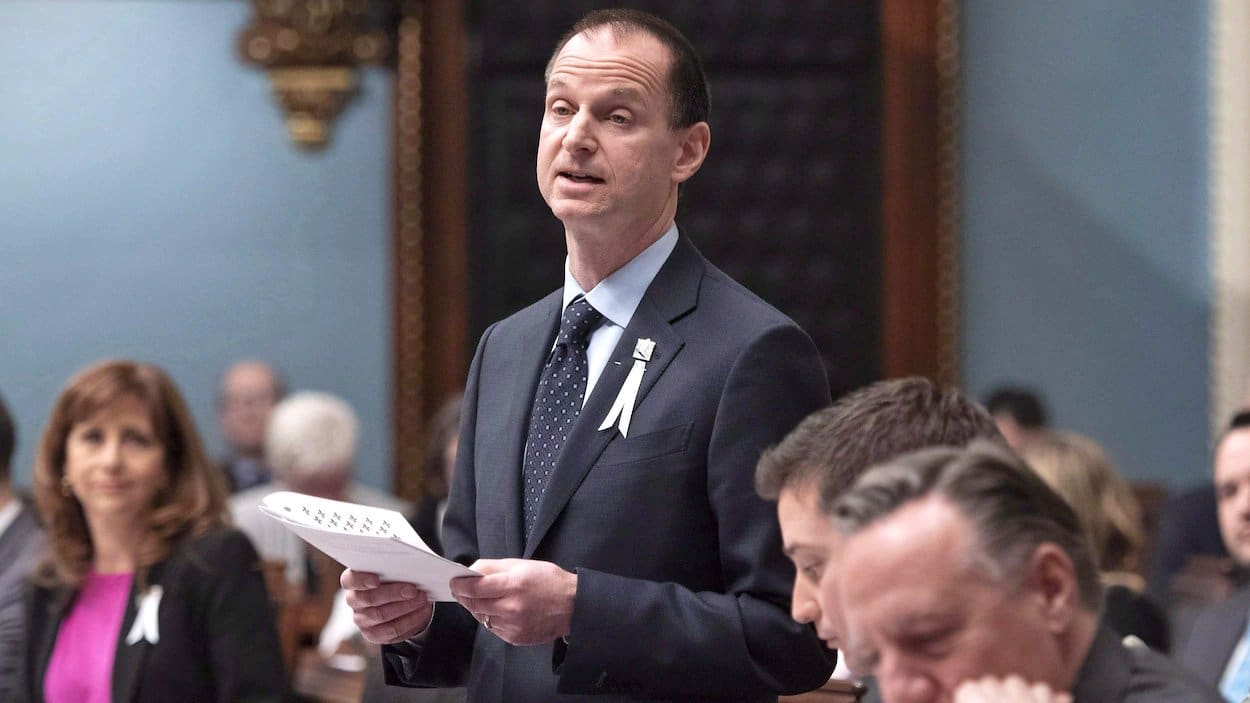
Updating Quebec’s financial picture last week, Finance Minister Éric Girard said the COVID-19 pandemic hasn’t changed the CAQ government’s goal of reversing Quebec’s historical tendency to underperform in Canada – even though a fifth of the country’s population lives here.

$15 billion deficit seen

“We must collectively tackle one of the worst crises in Quebec’s history,” said Girard. “The government will take every necessary step to strengthen our health care system and help hard-hit citizens and businesses so that they can get through this pandemic and recover quickly.”

I’m focused on what we need to do: we need to fight the epidemic, we need to support Quebecers and businesses

Quebec Finance Minister Éric Girard

Girard outlined an additional $1.8 billion in measures over three years to bolster the economy. At the same time, his update included a projected $15-billion deficit for 2020-2021.

Focused on the economy

Despite the staggering increase in allotments since the CAQ government’s last full budget last March, Girard said he remains “very focused” on the task of stabilizing the economy, while working on longer-term economic growth.

“Our number one task is to control the epidemic,” he said. “That’s why we’ve allocated $5 billion to health care, and if they need more we will give it. So, I’m focused on what we need to do: we need to fight the epidemic, we need to support Quebecers and businesses.”

The announced initiatives raised to nearly $13 billion the total amount invested by the CAQ government since the onset of the pandemic in March to deal with the historic economic and public health crisis Quebec is currently going through.

Mental health funding

In addition to the actions taken since March 2020, the government announced an additional $287 million to support Quebecers and the economy. This includes $100 million to address mental health problems by providing better access to support services, among other things.

As well, the government said new initiatives totalling $117 million will help support vulnerable population groups, provide safe subsidized childcare services, and ensure that educational settings are better adapted to the current context and to distance learning.

An additional $60 million in support for the tourism sector was also announced, in particular to offset the impact of the pandemic on tourist accommodations.

New actions for recovery

While the majority of investments to date were allocated for managing the COVID-19 crisis, the government presented new actions totalling $1.5 billion over three years to accelerate economic recovery. Of this amount, $459 million will go to initiatives to get Quebecers back into the labour force by focusing on requalification, training and successful graduation.

The government said it is also providing $477 million to drive economic growth by accelerating business investment projects, fostering innovative initiatives and supporting regional economic development. Another $300 million will also be used to enhance the Plan for a Green Economy and $247 million will be spent on promoting Quebec production and buying locally.

No balanced budget for five years

A $15-billion budgetary deficit is projected for 2020-2021, including provisions, declining budgetary deficits of $8.3 billion in 2021-2022, and $7.0 billion in 2022-2023 are currently forecast. According to the government, the pandemic and the measures put in place since March have generated these deficits.

Girard maintained that the province will return to a balanced budget within five years without cutting services or raising taxes. Additional details on the way forward are to be presented in the next regular budget in March 2021.

Highlights from Finance Minister Girard’s update

  • Initiatives totalling $1.8 billion since June include:
  • $287 million to support Quebecers and the economy;
  • $459 million to help Quebecers back into the labour market;
  • $477 million to drive economic growth;
  • $300 million more to ensure a greener recovery;
  • $247 million to promote Quebec production and buying locally.

STL wins another award for its bus crowdedness estimator

Is transit agency’s second prize this year for initiative

The Société de transport de Laval (STL) was presented on Thursday with the Corporate Leadership Award in the Innovation category for its online tool that enables users to know in advance how crowded buses are.

The ceremony took place during the Canadian Urban Transit Association’s (CUTA) virtual Annual Conference and Transit Show, which ended last Thursday.

“We are very moved by this second recognition for our estimator from our Canadian peers,” said STL president Éric Morasse.

“Put together in a matter of weeks, it was obvious from the early broad strokes a bold idea was taking shape: empowering users, in just a few clicks, with the information they need to make the choices that are right for them. It thoroughly reflects how we see our role at the STL, as transit facilitators for the Laval population.”

It was the second recognition in a month for the crowd estimator, which also earned a Grand prix d’excellence en transport in the Public transit category from the Association québécoise du transport (AQTr) on November 5.

Launched last June, the tool stands out, according to the STL, because it provides riders with an estimate of the number of passengers that should be expected, not only when a user boards, but also during the course of the entire bus trip – which is a first in Canada, the STL says.

With the COVID-19 pandemic having made social distancing in public transit situations a core concern for users, the crowdedness estimator supplies information tailored to individual users, so they can make informed decisions based on the level of bus crowdedness they are comfortable with. (For example, taking an earlier or later bus, getting on or off at a different bus stop, or using another bus route nearby, etc.

STL buses have been equipped with GPS technology and passenger counters for years, which record on a daily basis how many passengers are on the bus at each stop, for each bus route, at each scheduled bus time.

The new tool uses this information to derive the level of bus occupancy at a stop, at a specific time, for the entire length of a commute, based on the averages trending over the previous five business days. The calculations are updated daily. The app is available at stlaval.ca/passengers, for computer or smartphone.

CISSS de Laval says appointment needed for COVID-19 screening

The Centre intégré de santé et de services sociaux (CISSS) de Laval is asking residents to call and make an appointment for COVID-19 screening, rather than turn up unannounced.

With winter now approaching, the CISSS says this approach will allow screening to take place in a much more orderly fashion, and so that people won’t have to line up and wait outside.

At the same time, the CISSS is asking all those who’ve made appointments to show up on time, and even to get there 5 minutes early to allow for processing.

The number to call to make an appointment is: 1 877 644-4545 (for residents and workers in Laval). No other changes have been made in the schedules of the screening clinics, the CISSS de Laval adds.

Health Canada warns about UV devices making unproven claims to disinfect against COVID-19

Health Canada is warning Canadians about the risks of using ultraviolet (UV) lights and wands that make unproven claims to disinfect against the COVID-19 virus.

This includes ultraviolet C (UVC) products. According to the federal health regulation ministry, UVC is an extremely dangerous form of UV radiation and, although it can destroy some germs on non-porous surfaces, if used on the skin there is a risk that it can cause harm or injury.

The World Health Organization (WHO) has warned against the use of UV light to disinfect hands or any other part of the body because of the risk of damage to the skin and eyes.

Health Canada says it is aware of UV lights and wands being advertised for home use (e.g., for disinfecting cell phones, car keys and wallets) with claims that they can protect against COVID-19.

In order to make claims that a UV light or wand can protect against COVID-19, a manufacturer must hold evidence to demonstrate that their product works as claimed.

Health Canada says it has not yet received any evidence to demonstrate that UV lights can protect specifically against COVID-19.

To lower the chance of COVID-19 spreading in your home, Health Canada says you should frequently clean and disinfect high-touch surfaces and items (e.g., light switches, door handles, phones, electronics). The agency has published a list of hard surface disinfectants for use against COVID-19.

At the same time, Health Canada says that selling or advertising health products that make false or misleading claims is illegal.

“Health Canada takes this issue seriously and has directed advertisers of UV lights and wands falsely claiming to disinfect against COVID-19 to immediately stop all illegal advertising, including on websites,” they said in a statement issued Wednesday.

They say they will continue to take action to address non-compliant advertising and regularly update the list of advertising incidents related to COVID-19 to help keep Canadians informed.

Health Canada advises the following:

More information about buying health products safely is available on Health Canada’s website.

For the latest and most up-to-date information on COVID-19, visit Canada.ca/coronavirus.

For authorized medical devices for uses related to COVID-19, visit this page.

For further information:

Public enquiries, (613) 957-2991, 1-866 225-0709, hcinfo.infosc@canada.ca

Laval News Volume 28-22

0

The current issue of the Laval News volume 28-22 published November 18th, 2020.
Covering Laval local news, politics, sports and our new section Mature Life.
(Click on the image to read the paper.)

Front page of the Laval News.
https://lavalnews.ca/wp-content/uploads/2020/11/TLN-28-22-WEB.pdfhttps://lavalnews.ca/wp-content/uploads/2020/11/TLN-28-22-WEB.pdfFront page of the Laval News, November 18th, 2020 issue.

Witnesses sought to help resolve fatal fire in Ste-Rose

0

The Laval Police Department (SPL) is requesting the public’s cooperation in locating witnesses to a fatal fire that occurred in October in the Ste-Rose sector.

Investigators are looking for information or images that have not yet been submitted to the case.

Chronology of facts:

On October 9, 2020, at around 11 p.m., a fire broke out in a residence in the Ste-Rose sector, in which one person was killed.

Since then, the investigation has unveiled that a few minutes before the fire, a group of people were near the bus terminal, near the Ste-Rose Educational Daycare, located at 2 Terrasse Dufferin, who may be able to provide important information.

The SPL urgently seeks to communicate with these individuals. Investigators would also like to meet witnesses who have not come forward in order to resolve and to try to move the case forward.

Any information to help advance the investigation can be communicated on the the SPL’s Info Line, 450 662 ‑ INFO (4636) or by dialing 911 and saying you are calling about LVL file 201009 069.

CISSS de Laval to hold Annual General Meeting on Thursday Nov. 19

Yves Carignan, chair of the board of the CISSS de Laval, and Chantal Friset, acting CEO, would like to invite Laval residents to the centre’s annual public information session.

The AGM meeting will be taking place this year on Thursday Nov. 19 at 7 pm. in a “virtual” format on the web.

During the meeting, the following information be will presented:

  • Highlights of CISSS de Laval’s 2019-2020 activities;
  • The financial report as of March 31, 2020;
  • The report on the implementation of the complaint review process;
  • The 2019-2020 activity report of the CISSS de Laval users’ committee.

The presentation will be followed by a question period. For instructions on participating in the question period, please go to https://bit.ly/3kVVJvF.

DATE: Thursday, November 19, 2020

TIME: 7 p.m. to 7:30 p.m.

Link to the VIRTUAL MEETING: https://us02web.zoom.us/j/81696872267

For those interested, it will also be possible to participate in the meeting by telephone at: 438 809-7799 – ID: 816 9687 2267.

Demers not certain he’ll run again for mayor in 2021

Laval mayor Marc Demers says he’s not certain he’ll be seeking a third term in the municipal elections in November next year, but that he’ll be deciding early in 2021.

In an interview published Thursday on the Montreal daily La Presse‘s website, Demers said he will be consulting his family on the issue while taking into consideration his state of health.

First elected in 2013 after long-serving mayor Gilles Vaillancourt left office, Demers was diagnosed and treated for cancer two years ago.