Home Blog Page 193

Opposition questions ‘transparency’ of Laval’s ‘Grande Bibliothèque’ project

Demers and Boyer say too little information available yet to share with council

Although construction work on a new central branch for the City of Laval’s public library network is still far from underway, the opposition on Laval city council is already raising questions about “transparency” and questionable costs for a project slated to be built in Laval’s downtown core.

No transparency: Opposition

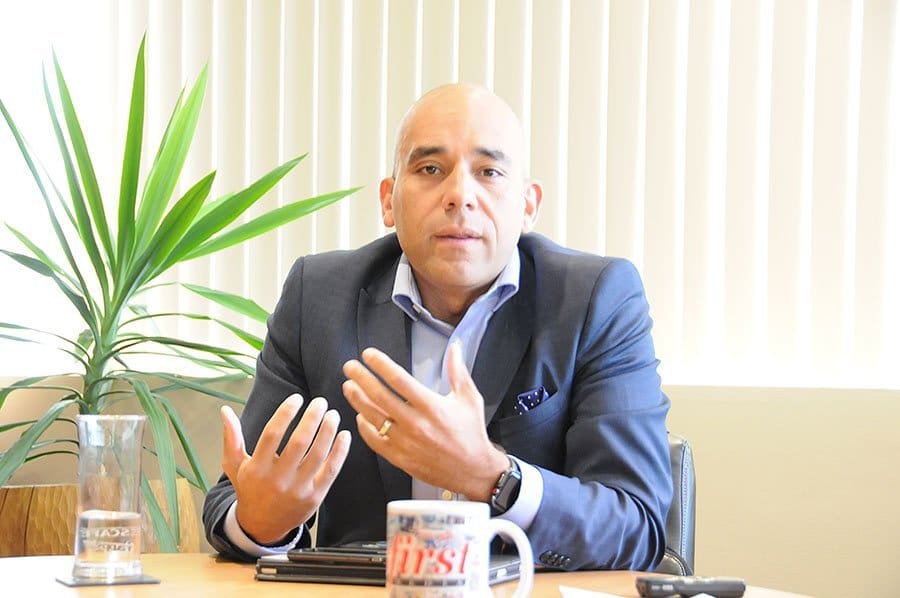
Seen here in a file photo, Laval executive-committee vice-president Stéphane Boyer says the city hasn’t enough information gathered on the Grande Bibliothèque project yet to reveal any preliminary planning.

During the Sept. 1 webcast of Laval city council, objections were voiced from several opposition councillors to an agenda item calling for the awarding of a 12-month contract worth a little over $313,074 to an architectural firm to produce a preliminary technical study for the future “Grande Bibliothèque.”

“There is a shortage of information,” said opposition councillor for Saint-Bruno David De Cotis. “It leaves the impression that there is a lack of transparency. Because I can understand that studies have to be done. But I am convinced that the committee members who worked on this were given a presentation and they know where the Grande Bibliothéque is going to be built.

Team work, suggests De Cotis

“They know the needs,” added De Cotis. “So we don’t need an outside consultant to tell us the functioning or technical needs. What I am asking managers at city hall is to give us a presentation with all the information that is available today. After that it will be easier for us all as a team to vote on budgets.”

De Cotis and fellow opposition councillor Isabella Tassoni, who represents Laval-des-Rapides, agreed that athough she’s the councillor for the district, even she is being kept in the dark by the Demers administration as to the details of the project.

While Tassoni, De Cotis and others said they agreed that a central library building is needed – “I want to see it in my district more than anybody,” Tassoni said at one point – she added that she found it impossible to vote even on a preliminary part of a project when the administration hadn’t provided any information on it.

Tassoni voted No

“At the end of the day, I don’t know how we can vote on something that we have no idea how it’s going to take place,” she said, adding that even though she understood the points being made by Mayor Marc Demers and executive-committee vice-president Stéphane Boyer, she saw no option but to vote against the library project contract.

St-Vincent-de-Paul city councillor Paolo Galati said he, too, supported the Grande Bibliothèque project, “except that for me there is a lack of transparency,” he added, citing the City of Laval auditor-general’s most recent annual report which noted an absence of transparency in a number of the administration’s dealings. For that reason, Galati said he would vote against the contract.

Info not ready yet, said Demers

Responding to the criticism that the project lacks transparency, Stéphane Boyer said that because planning is still in the early stages there wasn’t enough information to share at this point. Mayor Demers said the city is currently seeking subsidies from the provincial government to help pay for the project. He said that when further studies have been completed, the administration will be in a position to present an outline to all the city council members.

During the public question period, Laval resident Mélanie Guimond said that following the vandalism committed against the statue of John A. MacDonald in downtown Montreal, the City of Laval might consider denouncing such acts as they could end up also taking place in Laval. She suggested a resolution should be tabled at the council meeting to denounce all forms of vandalism being used to stifle constructive debate.

No monuments here, said mayor

While agreeing that the violent upheavals and events recently in the U.S. as well as the vandalism in Montreal shouldn’t be ignored, Mayor Demers said Laval has little in common with those incidents. “In the City of Laval, we have very few monuments honoring historic figures and so we are perhaps not as vulnerable to the type of situation that took place in Montreal,” said Demers.

“But I can assure you that all of the elected officials here tonight heard you and we oppose any manifestation of violence whether it is verbal, physical or otherwise to meet a goal. I think that the best way to win people over is by speaking and letting the facts be known.”

Chomedey U18 AAA pays homage to ‘Black Lives Matter’

Provincial league team beats Longueuil 3 – 1 in semi-final match

Wearing “Black Lives Matter” t-shirts as a gesture of solidarity with the growing anti-racism movement, members of the U18 AAA Chomedey soccer team won a semi-final match by a score of 3 – 1 last Saturday against Longueuil at Berthiaume-Du Tremblay Park.

“Our boys were very proud to wear the Black lives matter shirt and be part of the movement and we’re proud of them,” said Maria Kyrtatas, manager of U18 AAA Chomedey, a provincial league team.

Since Chomedey is home to many nationalities and cultures, the team members felt strongly that they wanted to make a statement on their support for the Black Lives Matter movement, she added.

“We thought that this would be a really good way, through sport, and since the team members have become so close, to voice their feelings about Black Lives Matter,” said Kyrtatas.

City of Laval employees, retirees and others donate $112,302 to the Red Cross

Marking the close of their 32nd annual workplace fundraising campaign, representatives of current and former employees of the City of Laval announced the donation of $112,302.60 on Wednesday to the Red Cross Québec.

The money will be going towards the Canadian Red Cross’s emergency fund which is used to meet the needs of victims of major catastrophes who need lodging, food, clothing and other necessities on quick notice.

From the end of June to early August, employees, retirees and elected officials of the City of Laval took part in the campaign, which was conducted “virtually” this year because of the COVID-19 pandemic.

While the donation each year is normally done formally with a ceremony taking place at Laval city hall, this year it took place over the internet, the city said.

Over the past 10 years, more than $943,968 has been collected during these fundraisers for the Red Cross by the City of Laval’s elected officials, current employees and past employees.

“What with the pandemic, we had to improvise a little bit,” said Mayor Marc Demers. “Since holding a fundraising event wasn’t possible, the ambassadors for the campaign decided to be creative in their fundraising, while everyone else answered the call by being generous despite the uncertainty of the current times. I would like to thank them with all my heart.”

Demers tests negative for COVID-19, but will stay in isolation for a week

Laval mayor Marc Demers, who went into self-isolation on Tuesday after coming into contact with someone who was a carrier of the COVID-19 virus, said on Wednesday morning that a screening test has determined he is not infected.

Seen in this file photo from an event last year, Mayor Marc Demers says he will work in isolation for a week, although his test for COVID-19 came back negative. (Photo: Martin C. Barry, Newsfirst Multimedia)

“Just got my screening test results following my contact with the Mayor of Longueuil and I’m relieved to hear that I’m negative,” Demers said on his Facebook page.

“I will remain in preventive isolation until September 16th to follow the instructions of the Public Health Department.

“During this time, I will continue to assume my functions in telework. This situation is another proof that this virus is still very present and that we must continue to protect ourselves.”

Demers was part of a group of provincial government and municipal officials who were in contact with each other last week while at least one of the group was infected with the coronavirus.

Three provincial government ministers, François Bonnardel, Simon Jolin-Barrette and Chantal Rouleau, were also affected, as was Montreal mayor Valérie Plante.

Mayor Marc Demers in isolation after attending event where COVID-19 may have spread

Laval mayor Marc Demers, seen in this file photo at a city council meeting, is in self-isolation after attending an event where someone with COVID-19 is known to have been present. (File photo: Newsfirst)

Laval mayor Marc Demers has gone into self-isolation for a potential COVID-19 infection after it was revealed on Tuesday that he was part of a group of provincial government and municipal officials who attended an event last week where they were exposed to the coronavirus.

According to the Montreal daily La Presse, three provincial government ministers, François Bonnardel, Simon Jolin-Barrette and Chantal Rouleau, are also in self-isolation now, as is Longueuil mayor Sylvie Parent, pending tests to determine if they became infected.

“My thoughts are with my colleague Sylvie Parent, to whom I wish a speedy recovery,” Demers said on his Facebook page Tuesday morning. “Since we were all present at the same activity, I am placing myself in isolation and I will submit to a screening test today. Together, let us continue to respect the sanitary requirements set by the government.”

Laval News Volume 28-17

0

The current issue of the Laval News volume 28-17 published September 9th, 2020.
Covering Laval local news, politics, sports and our new section Mature Life.
(Click on the image to read the paper.)

Front page of the Laval News.
Front page of the Laval News, September 9th, 2020 issue.

Hand Sanitizers and Children’s Safety: What you need to know

Health Canada is warning Canadians, particularly parents and guardians, about the risks of accidental ingestion among children from hand sanitizers packaged in formats that could appeal to children and be mistaken for food or beverages.

The federal agency says you should always read and follow the directions on product labels. Talk to your children about the safe use of hand sanitizers. The warning applies to all hand sanitizers in non-traditional packaging, including squeeze pouches commonly used for food and beverages.

Whether your child is learning from home or at school this fall, Health Canada is reminding Canadians, particularly parents and guardians, that hand hygiene is one of the most effective ways to stop the spread of germs, including COVID-19. Washing your hands often with soap and water for at least 20 seconds is one of the best ways to prevent the spread of COVID-19.

When that is not an option, Health Canada recommends using an authorized hand sanitizer that has an alcohol concentration of at least 60%. All hand sanitizer products authorized for sale by Health Canada have an eight-digit Drug Identification Number (DIN) or Natural Product Number (NPN) on the label, and are listed on the List of Hand Sanitizers Authorized by Health Canada, which is updated regularly on the Health Canada web site.

Some hand sanitizers that may not fully meet Health Canada’s regulatory requirements and may not have a DIN or NPN on the label are being permitted for sale as an interim measure given the shortage of supply of hand sanitizers because of the COVID-19 outbreak. Check for these products by searching the list of Disinfectants and hand sanitizers accepted under COVID-19 interim measure.

However, certain hand sanitizers are being sold in packaging that could appeal to children, such as squeeze pouches that typically contain food or beverages. Parents and guardians should be particularly vigilant about these products because children may accidentally mistake them for edible products and consume them.

Health Canada recommends against using hand sanitizers sold in packaging that resembles food or beverage containers in settings in which direct adult supervision cannot be assured at all times, such as at school.

To avoid accidental ingestion, hand sanitizers should be stored away from, and out of sight of, children under six years of age. They should always be used with adult supervision. As with all health products, always read and follow the directions on the product label.

Never eat or drink hand sanitizers because ingesting even small amounts can be dangerous or fatal. Health Canada recently issued an advisory about the risk of poisoning from hand sanitizers sold in beverage containers.

Health Canada says it is continuing to monitor the situation. If a safety concern or non-compliance is identified, Health Canada will take action and inform Canadians.

What you should do

  • Always read and follow the label directions on hand sanitizers.
  • If you choose to send children to school with hand sanitizer, avoid products packaged in containers that resemble food or beverage containers to avoid possible confusion with edible products.
  • Always supervise children when they use hand sanitizer.
  • Store hand sanitizers out of the reach of children.
  • Talk to your children about the safe use of hand sanitizers.
  • Children should not use hand sanitizers containing technical-grade ethanol. Always check the label to ensure the product does not contain technical-grade ethanol.
  • If hand sanitizer is swallowed, call a poison control centre or get medical help right away.
  • Report any health product adverse events or complaints to Health Canada.
  • To help limit the spread of COVID-19, wash your hands often with soap and water for at least 20 seconds. Use alcohol-based hand sanitizers if soap and water are not available.

Information update on hand sanitizers recalled because they may pose health risks

In yet another hand sanitizer update, Health Canada is advising Canadians that the following hand sanitizers are being recalled because they may pose health risks. For more information, including what Canadians should do, visit the online safety alert.

Health Canada maintains a list of hand sanitizers that may pose health risks, so that Canadians can easily identify products they may have purchased and take appropriate action. Canadians are encouraged to check it regularly for updates. The latest update applies to the following products:

ProductReason for recallCompanyNPN or
DIN
Lot
Number(s)
Expiry
Date
Date
Added
Désinfectant pour
les mains à base
d’éthanol 70%
Missing risk statements;
product not authorized to
contain technical
grade ethanol
Duvernois80098158200414 20005195 20005475 20005478 20005479 20005848 20005849 20005850 20006018 20006019 20006020 20005193 20005194 20005195 20005476 20005477 20005479 20005480 20005688 20005693 20006022 20006023April 2022September 4, 2020
200414 200414A 20006026 20006027May 2022
Holistic Living
70% Alcohol
Disinfectant
Antiseptic
Not authorized for sale in
Canada; Missing risk
statements; product not
authorized to contain
technical-grade ethanol
Lusty Libation, Inc.NoneISO007May 2023September 4, 2020

Deloitte moving to Espace Montmorency by early 2023

Project developer Montoni, Groupe Sélection and the Fonds immobilier de solidarité FTQ announced on Thursday that the professional services firm Deloitte will become a tenant at Espace Montmorency beginning in early 2023.

Deloitte’s new Laval offices will be located in Espace Montmorency’s Tower 2, at the corner of Jacques-Tétreault and Lucien-Paiement streets.

As a premier tenant in the largest commercial development project ever in Laval, the company will have its logo installed on the building facade, with visibility from Autoroute 15.

Deloitte joins Groupe Sélection and Montoni, which will both be transferring their head offices to the Espace Montmorency campus, a $450-million, mixed-use urban development consisting of about 10 buildings, as soon as the project is completed in summer 2022.

Espace Montmorency is a $450-million, mixed-use urban development consisting of about 10 buildings in Laval.

Future business tenants at Espace Montmorency will have direct underground access to the building from the Montmorency Métro station, in a strategic location that is near Place Bell, with the advantage for Montreal residents of being able to commute against rush hour traffic.

The multi-tower project, which was launched in June 2019, will be bringing together an array of services, such as an urban spa, a hotel and a wide choice of first-rate restaurants, including chains opening for the first time in Québec.

“We’re very pleased to welcome a premier tenant like Deloitte,” said Groupe Montoni president Dario Montoni. “This confirms the drawing power of this large-scale, innovative project in Laval, a centrepiece of the new downtown. Deloitte will benefit from Espace Montmorency’s multifunctional design and choice location near major arteries, public transportation and knowledge institutions.”

“We are very pleased to offer our employees in the Laval office modern and futuristic workspaces that will be located in the heart of a bustling business area where citizens are enthusiastically looking to build a better community,” said Geneviève Provost, a managing partner with Deloitte for Quebec and the National Capital Region.

“This new bright, flexible and state-of-the-art work environment is an increased investment in our people, which will allow them not only to continue to excel in their work, but also to put their unique skills to use, harness their strengths, and nurture a sense of belonging to a community,” she said.

Located just east of Autoroute 15, between Du Souvenir and De la Concorde West boulevards, next to Place Bell, the project will offer a mix of buildings that will create, according to the developer, “a new city within the city of Laval.”

Update – Public Health Notice: Outbreak of Salmonella infections linked to red onions imported from the United States

The investigation into an outbreak of Salmonella infections linked to red onions imported from the U.S. is ongoing as illnesses continue to be reported to the Public Health Agency of Canada.

Since August 21, according to the federal agency, there have been 78 additional illnesses reported in the ongoing Canadian investigation. There are now 457 confirmed cases in Canada. One individual has died, but it is not known if Salmonella contributed to the cause of death.

There is no evidence to suggest that onions grown in Canada are associated with this outbreak. Onions imported from the United States are under investigation.

Do not eat, use, sell or serve any red, white, yellow, and sweet yellow onions from Thomson International Inc. of Bakersfield, California, USA, or any products made with these onions. This advice applies to all individuals across Canada, as well as retailers, distributors, manufacturers and food service establishments such as hotels, restaurants, cafeterias, hospitals and nursing homes.

If you are not sure where a red, yellow, white, or sweet yellow onion was grown, do not eat it. This notice contains more advice on how to avoid getting sick.

The Canadian Food Inspection Agency (CFIA) has issued food recall warnings for related products that came to Canada. Some of these products were possibly distributed nationally. Additional food recall warnings in Canada are possible. More information on recalled products is available on CFIA’s website.

Why should you take note

The Public Health Agency of Canada (PHAC) is collaborating with federal and provincial public health partners, the United States Centers for Disease Control and Prevention (U.S. CDC), and the U.S. Food and Drug Administration to investigate an outbreak of Salmonella infections occurring in seven provinces.

In Canada, based on the investigation findings to date, exposure to red onions imported from the USA has been identified as a likely source of the outbreak. Many of the ill individuals under investigation reported having eaten red onions before getting sick.

Through a collaborative investigation between public health and food safety partners in Canada and the U.S., traceback information has identified that the contaminated red onions are coming from Thomson International Inc. of Bakersfield, California, USA.

The CFIA has issued food recall warnings for related products that came to Canada. Some of these products were possibly distributed nationally. Additional food recall warnings in Canada are possible. More information is needed to determine the cause of contamination in red onions imported from Thomson International Inc. The outbreak is ongoing, as recent illnesses continue to be reported to the PHAC.

Given this information, and until more is known about the outbreak, do not eat, use, sell or serve any red, yellow, white, and sweet yellow onions grown by Thomson International Inc. of Bakersfield, California, USA, or any products made with these onions. This advice applies to all individuals across Canada, as well as retailers, distributors, manufacturers and food service establishments such as hotels, restaurants, cafeterias, hospitals and nursing homes.

Onions grown in Canada are not affected by this advice.

As the investigation is ongoing, it is possible that additional sources could be identified, and additional food recall warnings related to this outbreak may be issued. This public health notice will be updated as the investigation evolves.

Investigation summary

As of August 31, 2020, there have been 457 confirmed cases of Salmonella Newport illness linked to this outbreak in the following provinces: British Columbia (107), Alberta (257), Saskatchewan (33), Manitoba (25), Ontario (11), Quebec (23) and Prince Edward Island (1).

Individuals became sick between mid-June and early August 2020. Sixty-six individuals have been hospitalized. One individual has died, but it is not known if Salmonella contributed to the cause of death. Individuals who became ill are between 1 and 100 years of age. The majority of cases (55%) are female.

Individuals who became ill reported eating red onions at home, in menu items ordered at restaurants and in residential care settings.

The Canadian Food Inspection Agency (CFIA) is conducting a food safety investigation and has issued related food recall warnings. Additional food recall warnings in Canada are possible. More information on recalled products is available on CFIA’s website.

The U.S. CDC is also investigating an outbreak of Salmonella Newport illnesses that have a similar genetic fingerprint to illnesses reported in this outbreak. Investigators in Canada and the U.S. continue to collaborate to exchange information and identify commonalities in the outbreak information that may identify additional sources of illness or help to identify the cause of contamination in the red onions.

It is possible that more recent illnesses may be reported in the outbreak because there is a period of time between when a person becomes ill and when the illness is reported to public health officials. For this outbreak, the illness reporting period is between two and four weeks.

Who is most at risk

Anyone can become sick with a Salmonella infection, but children aged 5 years and under, older adults, pregnant women or people with weakened immune systems are at higher risk for contracting serious illness.

Most people who become ill from a Salmonella infection will recover fully after a few days. It is possible for some people to be infected with the bacteria and to not get sick or show any symptoms, but to still be able to spread the infection to others.

What should you do to protect your health

Do not eat, use, sell or serve any red, white, yellow, and sweet yellow onions from Thomson International Inc., of Bakersfield, California, USA, or any products made with these onions. This advice applies to all individuals across Canada, as well as retailers, distributors, manufacturers and food service establishments such as hotels, restaurants, cafeterias, hospitals and nursing homes.

Advice to consumers

Individuals are asked to check their homes for red, white, yellow, and sweet varieties, including whole, sliced, or chopped onions, and any prepared foods that contain onions as an ingredient, such as premade salads, sandwiches, wraps, salsas, dips or guacamole.

  • If you have onions at home:
    • Look for a label showing where the onion was grown. It may be printed on the package or on a sticker.
    • If the packaging or sticker shows that it is from Thomson International Inc., don’t eat it. Throw it away and wash your hands.
    • If it isn’t labeled, don’t eat it. Throw it away and wash your hands.
    • If you don’t know whether the onion found in a premade salad, sandwich, wrap, salsa, dip or guacamole contains onions from Thomson International Inc., don’t eat it. Throw it away and wash your hands.
    • Wash and sanitize any surfaces that may have come in contact with onions or their packaging, such as countertops, fridge drawers, pantry shelves, knives, and cutting boards.
  • If you buy onions at grocery or convenience stores:
    • Make sure they are not selling onions from Thomson International Inc., or serving fresh foods prepared with them.
    • If you can’t confirm that the onion in stores is not from Thomson International Inc., don’t buy it.
  • If you order salad or any other food items containing onions at a restaurant or food establishment:
    • Ask the staff whether their onions come from Thomson International Inc. If they did, or they don’t know, don’t eat it.
  • Do not eat any recalled food products. Check to see if you have recalled food products at home. If you do, throw them out and wash your hands.
  • If you have been diagnosed with a Salmonella infection or any other gastrointestinal illness, do not cook food for other people.
  • Contact your local public health authority to report any food safety concerns at restaurants or grocery stores, or if you suspect food poisoning from a restaurant or other food establishments.

Advice to restaurants, retailers, suppliers and distributors

  • Check the label on bags or boxes of onions, or ask suppliers about the source of their onions.
  • Do not ship or sell onions from Thomson International Inc. of Bakersfield, California, USA, or any products made with these onions.
  • Clean and sanitize all surfaces and storage bins that onions may have come in contact with, including cutting boards, countertops, slicers, utensils, and containers used to store or transport them.

Symptoms

Symptoms of a Salmonella infection, called salmonellosis, typically start 6 to 72 hours after exposure to Salmonella bacteria from an infected animal, person or contaminated product.

Symptoms include:

  • fever
  • chills
  • diarrhea
  • abdominal cramps
  • headache
  • nausea
  • vomiting

These symptoms usually last for 4 to 7 days. In healthy people, salmonellosis often clears up without treatment, but sometimes antibiotics may be required. In some cases, severe illness may occur and hospitalization may be required. People who are infected with Salmonella bacteria can be infectious from several days to several weeks. People who experience symptoms, or who have underlying medical conditions, should contact their health care provider if they suspect they have a Salmonella infection.

Weather

Laval
overcast clouds
14.7 ° C
15.1 °
13.5 °
94%
0.9m/s
100%
Mon
24 °
Tue
26 °
Wed
21 °
Thu
23 °
Fri
20 °