After eight years, all six Laval ridings are held by PLQ MNAs again
On October 22, the day after elected members of the Quebec National Assembly took the oath of office in Quebec City, the Quebec Liberal Party (PLQ) held its first caucus meeting in Laval, a region that elected an all-Quebec Liberal slate in the island’s six provincial ridings.
For the first time in eight years, all six Laval ridings are represented by MNAs belonging to the PLQ.
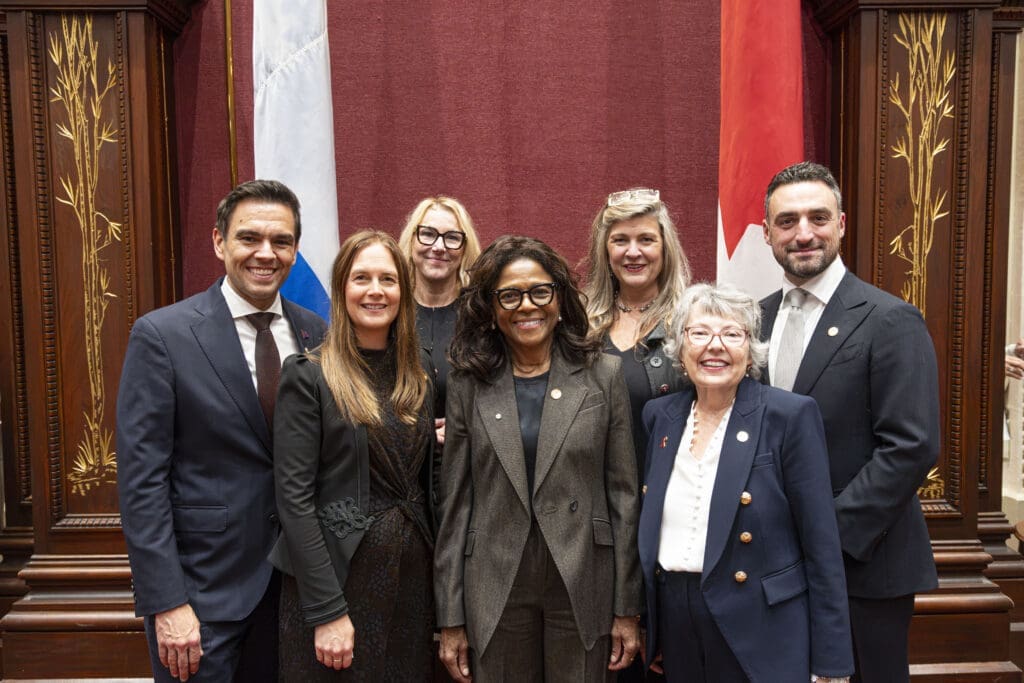
Starting a new mandate
In statement, the new Laval PLQ MNAs said they were proud to welcome their colleagues and the PLQ leader, Charles Milliard, to the first caucus meeting.
“The gathering marked the beginning of a new mandate and demonstrated the Liberal elected officials’ commitment to joining forces to defend the interests of the people of Laval,” the PLQ said in the statement.
“This election result marks a strong comeback for the Liberal Party of Quebec (PLQ) in the region and allows Laval to count on a team of six united and determined MNAs ready to make its voice heard in the National Assembly,” they continued.
Laval’s importance in Quebec
“Whether it’s health, housing, education or mobility, the concerns of Laval residents will be at the heart of their priorities,” the Quebec Liberals said.
“By choosing Laval to hold its first caucus, the PLQ reaffirms the importance it places on the region and its commitment to leveraging the strength of its new parliamentary team to advance the issues that matter to citizens,” they added.
Laval’s six Quebec Liberal members of the National Assembly (MNAs) are Madeleine Féquière (Chomedey); Marie Claude Fournier (Fabre); Caroline De Guire (Laval-des-Rapides); Virginie Dufour (Mille-Îles) (Dufour being the lone PLQ incumbent re-elected in Laval); Cécile Tremblay (Sainte-Rose); and Louis Ialenti (Vimont-Auteuil).
What comes next?
The Quebec Liberals now have a firm 39 seats in the National Assembly (with a 40th currently the focus of a judicial recount). Meanwhile, the minority Parti Québécois government has 60 seats in the 125-seat assembly.
The last time the Parti Québécois were in power following the 2012 election they had 54 seats. However, they failed to hold onto the confidence of the National Assembly, leading to another election just two years later.
By the time of that 2014 election, the Quebec Liberals had managed to rebuild their strength following former PLQ leader Jean Charest’s humiliating defeat in the 2012 election (when he lost in his own riding in Sherbrooke).
PLQ surged back in 2014
In 2014 under new PLQ leader Philippe Couillard, the Quebec Liberals won a majority government of 70 seats. In the meantime, the incumbent Parti Québécois finished second with 30 seats, becoming the first single-term government since Jean-Jacques Bertrand’s Union Nationale government was defeated in 1970.
As well, the PQ’s April 2014 electoral defeat (and Pauline Marois’s personal electoral loss in her Charlevoix–Côte-de-Beaupré riding) marked the shortest stay of any Quebec provincial government since Canadian Confederation, according to a 2014 post-election account of the defeat written by former Montreal Gazette political columnist Don MacPherson.