Two people were injured during the mid-afternoon on Monday August 24 in an armed assault near Berthiaume du Tremblay Park in Chomedey.
The Laval Police Service said officers were called around 3:30 p.m. for an incident on Lévesque Boulevard West near the park on the edge of the Rivière des Prairies.
There, officers found a teenager and a young adult, both with stab wounds.
The two were taken to hospital with non-life-threatening injuries, according to an SPL spokesperson.
No arrests have been made and an investigation is underway.
Quebec’s highways ministry is warning motorists who use Autoroute 13 that a technical inspection to be conducted overnight Aug. 16 will force the closing of the exit road leading towards Samson, Notre-Dame and Saint-Martin boulevards from 10 pm until 5 am on Aug. 17.
According to the provincial ministry, temporary detour signage on the A-13’s Exit 12 will be in place to guide motorists.
However, the work may be postponed, extended or cancelled due to adverse weather conditions or operational constraints.
To stay informed about all disruptions related to this work and for updates, motorists are advised to consult Québec 511 when planning trips.
The Québec 511 mobile app can also be downloaded to activate notifications.
Festival des Vins et Spiritueux and Festival Manger Santé draw 10,000 guests
Organizers of the Festival des Vins et Spiritueux de Laval and the inaugural Festival Manger Santé de Laval which were held in July say both festivals were an outstanding success.
The Festival des Vins et Spiritueux de Laval celebrates wine, spirits and gourmet experiences, while the Festival Manger Santé de Laval promotes healthy living through nutrition, wellness and local entrepreneurship.
Together, according to the organizers, the two summertime events are establishing themselves as part of Laval’s signature summer festival experience – a celebration where culture, commerce, community and discovery come together.
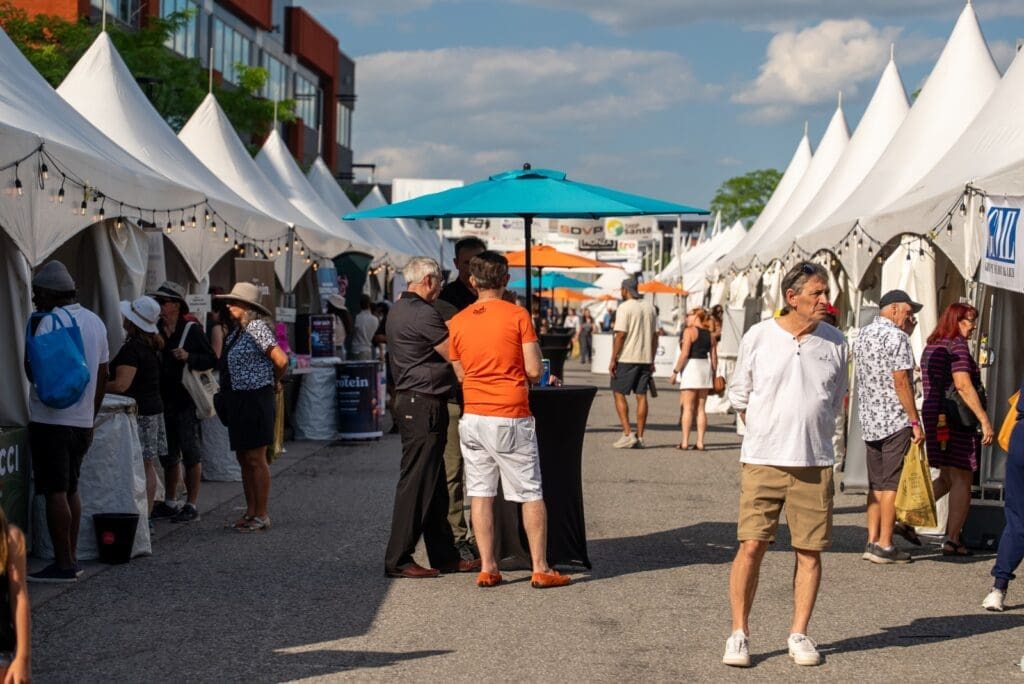
Each event featured more than 50 exhibitors and attracted over 5,000 visitors each to Centropolis Laval for two consecutive weekends.
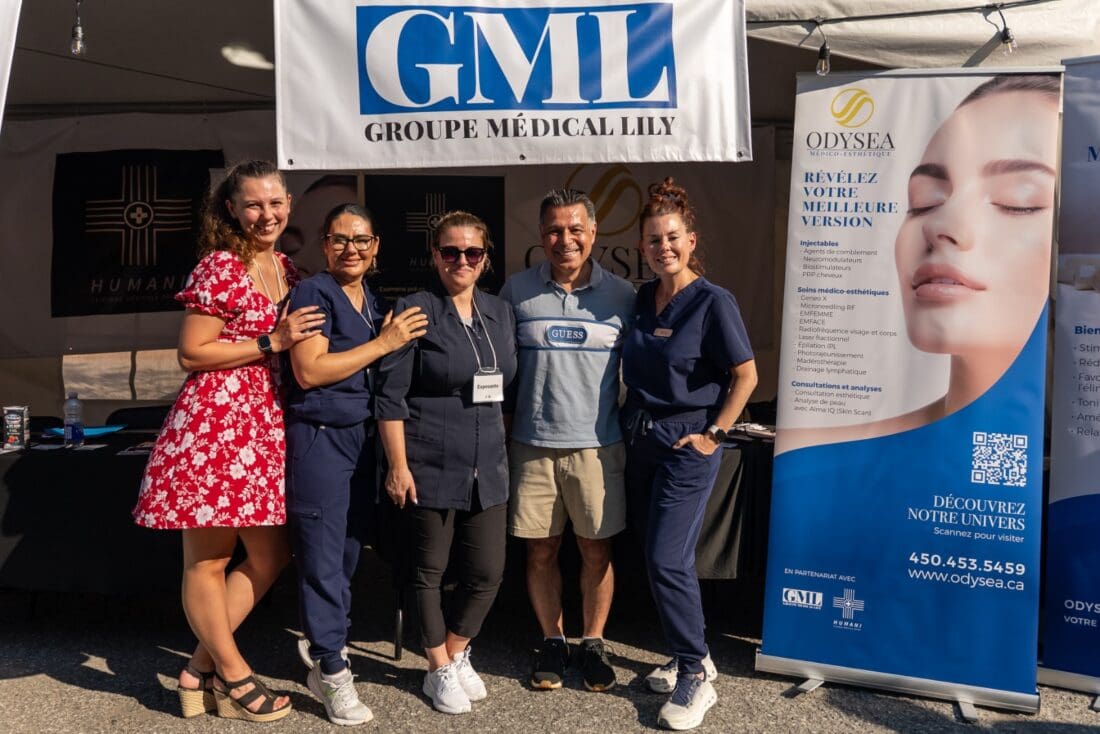
David De Cotis (second from right) is seen here with Festival Manger Santé de Laval exhibitor representatives in July.
More reason to be proud
“Our vision has always been to create festivals that celebrate people, culture and local entrepreneurship while giving residents another reason to be proud of their city,” said festival co-organizer David De Cotis, who is also the Laval city councillor for Saint-Bruno.
“Seeing more than 10,000 people attend our events confirms that Laval was ready for experiences like these,” he added. “We are building something that we believe will become a tradition for generations to come.”
Regarding the Festival Manger Santé, De Cotis agreed it’s an area of consumer interest where there is a great deal of room for growth.
With an aging population increasingly focused on personal wellness and health, in conjunction with a decline in the ready availability of public health services, it’s difficult to predict expanding interest in the sector.
A focus on wellness
“There’s a huge event like this that takes place in Montreal and we wanted to do something similar in Laval that meets the needs of the people here,” De Cotis said. “As people are aging, they are paying more and more attention to their bodies. So, this is a beautiful niche to offer these products and services in Laval.”
The organizers were able to convince at least one major sponsor, health food retailer Marchés TAU, to jump aboard and anchor the Festival Manger Santé de Laval. According to De Cotis, that crucial support encouraged smaller businesses and entrepreneurs to also sign on as exhibitors.
According to the organizers, the festivals attracted visitors from Laval, Montreal and from across the greater Montreal region, while showcasing local businesses, wineries, distilleries, food producers, health and wellness organizations, artisans and community partners.
Enthusiasm beyond expectations
Together, they say, the two festivals generated significant economic activity and strengthened Laval’s position as an exciting summer destination.
“The enthusiasm from both our exhibitors and our visitors exceeded every expectation,” said James Bissi, another festival co-organizer.
“Many exhibitors have already expressed their desire to return next year, which is the greatest compliment we could receive,” he continued. “Their confidence tells us that these festivals create real value – not only for businesses, but for the entire community.”
With more than 10,000 visitors combined and over 100 exhibitors participating across both festivals, the organizers maintain that the events are becoming strong contenders in the region’s most anticipated summer celebrations.
Planning next year’s events
They say planning is already underway for the 2027 editions, with expanded programming, new attractions and announcements on developments to come.
“From the very beginning, our objective was to create events that unite people through exceptional food, beverages, wellness and culture while showcasing everything Laval has to offer,” said Emilio Migliozzi, another co-organizer.
“The response from the public has been remarkable, and we are excited to continue growing these festivals into a signature summer tradition that attracts visitors from across Quebec,” he said.
In life as in the world of entrepreneurialism and community engagement, networking occupies a very important place.
As such, De Cotis acknowledged in an interview with The Laval News that each of the three co-organizers, who formed a committee to oversee the two festivals, is (or was at one time) affiliated with the Action Laval municipal party.
A political connection
James Bissi (who is De Cotis’s nephew, according to De Cotis) was Action Laval’s candidate in the district of Sainte-Dorothée in the 2025 municipal elections. However, Bissi has distanced himself from the party since then and is no longer a registered member, according to De Cotis.
As for Migliozzi, he served Action Laval as a political attaché as recently as 2014. Apart from that, he was an early supporter of the Mouvement lavallois, which now holds the most seats in Laval city council, although he left to join Action Laval.
In spite of the shared connection, De Cotis insisted they went to great lengths to keep politics out of the two festivals.
“This is not political at all and I don’t want Action Laval to be involved in this,” he said. “We purposely didn’t put anything related to politics. We didn’t ask any municipal councillors to be sponsors in any way.”
It was ‘an opportunity to express my sincere gratitude,’ says independent Chomedey MNA
In a celebration of generosity, civic engagement and community spirit, more than 140 guests gathered on the evening of July 21 at the Armenian Community Centre on Elizabeth Blvd. in Chomedey for a Recognition Evening hosted by Sona Lakhoyan Olivier, the MNA for Chomedey.
The evening recognized the outstanding contributions of organizations, cultural communities, volunteers, partners, community leaders and local media “whose dedication and commitment continue to strengthen the Chomedey community and enhance the quality of life of its residents,” a spokesperson for Lakhoyan Olivier’s said in a statement.
FILIA executive-director Johanna Tsoublekas (third from right) and other FILIA supporters and board members were among the 140 people presented with certificates of appreciation by Chomedey MNA Sona Lakhoyan Olivier. (Photo: Martin C. Barry, Laval News)
An expression of appreciation
Bringing together representatives from across Laval, the event – which included wine, canapés and a lavish seafood buffet served afterwards – was “a heartfelt expression of appreciation for those who dedicate their time, energy and passion to building a more inclusive, caring and vibrant community,” the spokesperson added.
The highlight of the evening was the presentation of certificates of appreciation, the Médaille de souvenir de l’Assemblée nationale du Québec, as well as the Inukshuk Award, to individuals whose exceptional leadership, volunteerism and community involvement were judged to have made a lasting and meaningful impact on Chomedey.
Chomedey MNA Sona Lakhoyan Olivier is seen here with one of the Inukshuk Awards she presented to a select number of community leaders in her riding during a Recognition Evening held on July 13 at the Armenian Community Centre. (Photo: Martin C. Barry, Laval News)
“Over the past four years, I have had the privilege of working alongside remarkable individuals and organizations whose dedication inspires me every day,” said Lakhoyan Olivier who was elected as a Quebec Liberal in 2022 before becoming independent.
“This evening was an opportunity to express my sincere gratitude and recognize the invaluable contributions that make Chomedey such a welcoming and dynamic community,” she said.
The evening also highlighted a fundraising initiative in support of the Fondation Cité de la Santé de Laval. Through the generosity of attendees, a total of $3,775 was raised during the event.
MNA’s matching donation to hospital
Lakhoyan Olivier reaffirmed her commitment to match the collected donations, while also pledging an additional $5,000 grant through the Subvention au bénévolat program to help the Fondation Cité de la Santé de Laval continue its mission and services.
Local organizers for the Pan Armenian Games were also presented with certificates and tokens of appreciation. (Photo: Martin C. Barry, Laval News)
While explaining the work done by the Fondation Cité de la Santé, André Malacket, executive-director of the foundation, noted that Cité de la Santé will soon be celebrating its 50th anniversary. He said they are currently in the midst of organizing a major event set to take place in the main ice rink at Place Bell in Laval in September 2027.
Malacket said he recently asked his board what they thought of the idea of going all out during the 50th anniversary by setting a $50 million fundraising goal. “That’s what we’re going to be announcing very soon,” he said, adding that the target amount hadn’t yet been made public.
At the same time, Malacket said efforts have begun to recruit new members to the Fondation Cité de la Santé. “We need to diversify the composition of the administrative board. When I went in, it was obvious to me it was a boys’ club. And there were no women, no representatives from the ethnic communities.”
Diversifying the hospital’s board
Constantine ‘Gus’ Milonopoulos and Aglaia Revelakis were presented by Lakhoyan Olivier with a statuette and medallion respectively for their support for the Club social du Manoir Laval which serves senior residents of Chomedey. (Photo: Martin C. Barry, Laval News)
He said the foundation is currently searching for leaders from Laval’s multicultural communities to join the Fondation Cité de la Santé board. “It’s important for us to diversify the board, especially to reach our 50th anniversary fundraising goals.”
With more than 140 attendees, “the Recognition Evening reflected the strength, diversity and solidarity that define Chomedey,” added the spokesperson’s statement. “It was a meaningful opportunity to celebrate achievements, recognize community excellence, and reinforce the importance of collaboration.”
The evening concluded with a well-stocked buffet prepared by P.B. Banquet, allowing guests to continue celebrating, connecting and sharing throughout the remaining evening.
Lakhoyan Olivier extended her heartfelt appreciation to all attendees, volunteers, organizations, partners and community leaders “whose continued dedication helps build a stronger, more united and more prosperous Chomedey,” she said.
Artists and sculptors showcased their best in Laval’s Vieux Sainte-Rose
Attendance at the Symposium Ste-Rose was up this year, possibly because of the good weather, according to Oprina Félicia Dolea, president of the Corporation Rose-Art which organizes the symposium. (Photo: Martin C. Barry, Newsfirst Multimedia)
While summer rain in recent years has been a constant worry for the organizers of the annual Symposium Ste-Rose, there was hardly a drop of moisture in the air during this year’s three-day art event. However, the threat came from another force of nature – wind.
As most of the artists exhibit their works outdoors in tents, efforts this year to set up the equipment in Laval’s Vieux Sainte-Rose neighborhood had its challenging moments, according to Oprina Félicia Dolea, president of the Corporation Rose-Art which organizes the symposium.
Coping with nature’s forces
“We started installing them at six in the evening the day before we opened and we had to deal with the wind – but now everything is okay,” she said.
If anything, the lack of rain seemed to have encouraged people to turn out in larger than usual numbers this year – which was the Symposium Ste-Rose’s 30th anniversary. For some of the artists, that meant brisk sales of art pieces and canvases – or just greater public exposure for their art.
From July 23 to 26, appreciators of quality sculpture and art from all over Quebec, as well as Ontario and other parts of eastern Canada, gathered in Vieux Sainte Rose for an event that has come to be recognized as one of Quebec’s leading and most prestigious outdoor art shows.
Shirley Théroux singer and artist
For the third time, the organizers were able to persuade legendary Quebec singer Shirley Théroux – a talented visual artist in addition to her musical talents – to be the official spokesperson for the symposium.
Renowned Quebec chanteuse Shirley Théroux (seen here with one of her abstract paintings) was the official spokesperson for the 2026 Symposium Ste-Rose. (Photo: Martin C. Barry, Newsfirst Multimedia)
Théroux had a string of hits in Quebec, as well as in Eastern Ontario, Atlantic Canada and other French-speaking regions of the country, during the 1960s and 1970s. She was also a highly popular late-afternoon program host on French-language television in Quebec. Several of Théroux’s art works were featured in a special segment of the 2026 symposium.
After years of developing herself as a painter of figurative or representational art, Shirley Théroux exhibited a selection of paintings she produced since last year as abstracts. “I worked on this one six months,” she said in an interview, noting that abstract is far more difficult, requiring more concentration than most people imagine.
AI makes inroads into art
“It takes time to study your canvas, to verify the colors to see that everything is in the right place – why there is green here and black there – it’s not just tossing paint randomly – it’s not like that at all,” she added.
As Artificial Intelligence continues to make its way into a growing number of sectors of human activity, it was only a matter of time before AI would begin to influence the world of art – and the Symposium Ste-Rose.
Oprina Félicia Dolea acknowledged that she and others in the art collective were aware that AI might actually have been used to help create some works in this year’s symposium, while adding that Rose-Arts has no guidelines or rules for how AI is used by participating artists. Still, she suggested it could have legitimate uses in the creation of art as a new kind of tool alongside canvases, paints and brushes.
Among the artists from outside Laval who exhibited at this year’s Symposium Ste-Rose was Maria Astadjov from Deux-Montagnes on the North Shore. (Photo: Martin C. Barry, Newsfirst Multimedia)
Home of renowned artists
In addition to Théroux’s support, the symposium’s honorary president this year was Christopher Skeete, Member of the Quebec National Assembly for Sainte-Rose.
As always, the symposium took place alongside the Rivière des Mille-Îles in the charming and historic Laval neighbourhood. The village is renowned as the birthplace of internationally-acclaimed Québécois painter Marc-Aurèle Fortin. Sainte-Rose was also at one time the home of landscape painter Clarence Gagnon. Both influenced generations of artists in Quebec as well as around the world.
Awards of excellence
After winning a range of awards for excellence over nearly three decades, the symposium’s organizing committee continues to uphold the standards that have established the Symposium Ste-Rose’s reputation for excellence in art circles across eastern Canada.
In 2019, the Laval Chamber of Commerce and Industry presented them with a Dunamis award for helping to promote tourism in Laval. They were also a finalist for a second Dunamis in 2020 and 2022, as an environmentally-sustainable organization or enterprise.
An estimated 20,000 people attended. Although most are usually from the Laval and greater Montreal regions, the busy vacation season typically also draws in visitors from Ontario, New Brunswick and Nova Scotia, as well as from the U.S. states of New York, New Hampshire and Vermont.
‘It’s time for this project to move forward,’ says Laval’s mayor
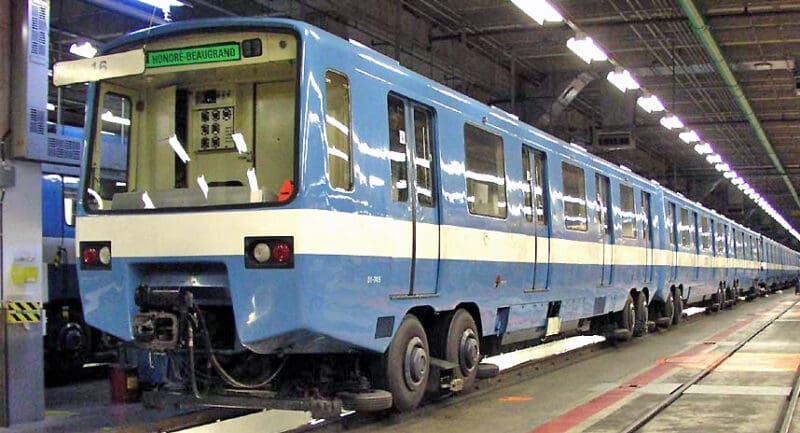
Following word from the Montreal region’s public transit planning authority that it will be working on eight major transit projects in the coming years – including the Orange Line extension to Chomedey – Laval mayor Stéphane Boyer has stepped forward on cue to enthusiastically boost this long-neglected project that could add up to five new Metro stations in Laval.
Laval mayor Stéphane Boyer.
On July 24, the Autorité régionale de transport métropolitain (ARTM) issued a communiqué, which included preliminary results of a study identifying the extension of the Orange Line as the most viable of the eight projects, confirming what Laval had been requesting for years.
“While major projects are progressing rapidly, the ARTM is working on the next phase of long-term planning,” the ARTM said in a statement, adding that the launch of the eight metropolitan study zones “will guide decision-makers on the best ways to develop public transit” throughout the Greater Montreal region.
‘Needs of the coming decades’
“The projects shaping the network of tomorrow are already underway, but our work doesn’t stop there,” said Benoit Gendron, the ARTM’s director general. “To meet the needs of the coming decades, we must start thinking now about the next steps. That’s why public transit planning must be ongoing. The study areas allow us to better understand the realities of each territory and identify the most promising interventions for the future.”
Over the next few years, the ARTM says it will conduct the studies covering the entire Montreal metropolitan area. According to the agency, the studies will assess current and future mobility needs; analyze different public transit development scenarios; identify projects offering the greatest benefits to citizens; and recommend the most relevant scenario for each area to the provincial government in order to guide future investments.
The eight sectors
The eight study areas will cover strategic sectors of the metropolitan region:
Chomedey–Saint-Laurent (2026);
Central Montreal sectors–West Zone (2026);
Laurentian Corridor (2027);
Les Moulins (2027);
Montérégie Corridor (2028);
Saint-Laurent–Ahuntsic–Montréal-Nord (2028);
Marguerite-d’Youville (2029);
Roussillon (2029).
The ARTM says the first study will focus on the Chomedey–Saint-Laurent sector (Montreal and Laval). Its results will be released in the fall “and will contribute to discussions on the next phases of development of the metropolitan network in this territory,” according to the agency.
The ARTM says the studies will provide the agency “with a comprehensive overview of mobility needs across Greater Montreal and identify the most promising investments for citizens and communities.”
ARTM preparing for the future
While acknowledging that public transit funding “remains a significant challenge,” the ARTM said it is carrying out the studies to continue “the necessary planning work to prepare for the future.”
“We must be ready when the financial context is more favorable because, despite the current challenges, mobility needs will continue to grow,” said Gendron. “We must continue planning, define priorities and ensure that tomorrow’s projects meet the real needs of citizens and communities.”
Reacting to the announcement on Facebook, Mayor Boyer said: “New figures were released this weekend, and they’re spectacular! According to a study by the ARTM (Regional Metropolitan Transportation Authority), completing the Orange Line of the Metro between Côte-Vertu and Montmorency stations would move an additional 31,200 people during the morning rush hour.
He’s all for Orange Line extension
“That’s more than any other public transit project, and 10 times more than the Third Link in Quebec City,” he continued, alluding to the proposed but long postponed third bridge in the province’s capital.
“The project would take 11,000 cars off the road along Autoroute 15 and the Metropolitan Expressway, two of the most congested highways in the province,” added Boyer.
“The average travel time between downtown Laval and downtown Montreal would be 35 minutes instead of the current 50 minutes – a 40 per cent reduction. And the travel time between Carrefour Laval and Côte-Vertu station by public transit would drop from about an hour to just 14 minutes!
“This is therefore a project that is good for the economy, good for the environment, and would reduce travel time for both motorists and public transport users. In short, it’s time for this project to move forward!”
In an interview with Radio-Canada, Boyer noted that extending the Orange Line to Laval, where it would connect the Montmorency Metro station to the Côte Vertu station in Montreal, while adding six to eight stations to the network, including one at Carrefour Laval, “is a project that has been in discussion for a very long time,” he said.
Best overall project, says Boyer
“This is probably the mass transit project in Greater Montreal that would attract the most people and would be the best to finance,” he continued. While pointing out that up to now, extending the Orange Line was never successfully brought forward, he said the ARTM’s support for the project shows that with time, old ideas age well “like good wine” and “this is a project with even more potential than it had back then.”
As the proposed Orange Line extension would likely include several stations in Chomedey, Mayor Boyer suggested it could help rejuvenate this densely-populated sector where a lot of re-development is underway, including 20,000 new housing units in the next ten years.
“There is an enormous potential in terms of the number of people who would be users,” said Boyer. “But it’s also a project that would improve the quality of life of people and it would reduce travel time significantly. And from the standpoint of economics and efficiency, delivery people with businesses will spend less time in traffic and do things faster and everybody would win. So, in my opinion, it’s a good all-round project.”
Since August is a time of year when the skies come alive with celestial phenomena, it’s fitting that two Laval organizations supported by the City of Laval are holding astronomy-themed events on the evening of Wednesday August 12.
From 7 p.m. to 11 p.m. at the sky observatory in the Centre de la nature, the Laval Amateur Astronomers Club will be presenting Discovering the Perseids, a free no-registration outdoor event during which you will be invited to discover the sky with the naked eye as well as with the aid of a telescope.
Founded in 1986, the Laval Amateur Astronomers Club offers a meeting place for all those interested in astronomy and the observation of celestial objects.
The club’s mission is to foster a community of people who are interested in the science of astronomy for their personal enrichment or wish to learn more on how to observe the sky.
As a non-profit organization accredited by the City of Laval, the Laval Amateur Astronomers Club welcomes without prerequisites young and old who want to practice the hobby of amateur astronomy.
Every Wednesday from 8:00 p.m. to 10:00 p.m., members meet at the club’s premises to attend a lecture by a guest expert, a presentation organized by a member, or to participate in a workshop on astronomy, while choosing and using a telescope or binoculars.
During the summer, meetings are held at the Jean-Marc-Richard Astronomical Observatory in the Centre de la nature on avenue du Parc, weather permitting.
Depending on demand, the club also organizes training workshops on specific topics to allow interested individuals to develop their skills in particular aspects of astronomy, including lunar observation, planetary and deep-sky observation, astrophotography and specific observation projects.
The Jean-Marc-Richard Astronomical Observatory has been in operation since July 1996 and is the first municipal observatory in North America. There is no other facility of this type in an urban setting that is open for public use.
The observatory is considered to be unique in that it is able to show visitors young and old the moon, the planets and the sun using safe, high-quality instruments, all within the City of Laval and free of charge.
Discovering the Perseids is free and open to the whole family. You can observe planets, galaxies, nebulae and the sun with the club’s dedicated solar observation instrument – a 7-inch (185 mm) astronomical telescope. A presenter will also be on hand to answer questions.
Laval Symphony Orchestra concert to focus on stars and sky
Also on Wednesday Aug. 12, but at Parc Bernard-Landry on boulevard des Prairies in Laval-des-Rapides, the Laval Symphony Orchestra, led by Adam Johnson as artistic director and principal conductor, will be giving a truly unique concert.
For the evening, at the expected annual height of the Perseid meteor showers, the orchestra presents a program themed around the stars, featuring symphonic works by Astor Piazzolla, John Williams and Giuseppe Verdi, among others. From dance to space and even cinema, the evening promises to be magical.
Johnson, an award-winning conductor, is known for his charismatic presence and versatility. In addition to his work with the Laval Symphony Orchestra, Johnson also leads the Baton Rouge Symphony Orchestra and the Guelph Symphony Orchestra.
LSO conductor Adam Johnson is known for his charismatic presence and versatility.
A sought-after guest conductor in France and internationally and winner of an Opus Award, he is also actively involved in music education as an educator-in-residence with Mécénat Musica.
In keeping with the celestial theme, the evening’s program will include compositions by Richard Strauss (Also sprach Zarathustra), Giuseppe Verdi (Nabucco Overture), Claude Debussy (Clair de Lune), Manuel de Falla (Danza del Fuego) and Gustav Holst (The Planets – Jupiter).
The program will also include musical works by Astor Piazzolla (Libertango), Elena Kats-Chernin (Moon Feather Magic), Bill Conti (Rocky – Gonna Fly Now), John Williams (E.T. Adventures on Earth, Across the Stars and Star Wars Main Theme) and Dancing Queen by ABBA as a finale.
Additional information: There will be some pre-show entertainment, and it is suggested you arrive early to enjoy a picnic, or offerings from food trucks on site. While seating will be available, it is recommended you bring your own folding chair. As parking will be limited, use of public transportation is strongly recommended.
In case of inclement weather or circumstances beyond control, the performance may be cancelled. If in doubt, it is suggested you check the performance details for updates. You can also contact the City of Laval’s central info line at 3-1-1 during business hours for more information.
The current issue of the Laval News, volume 34-15, published on August 12th, 2026. Covering Laval local news, politics, and sports. (Click on the image to read the paper.)
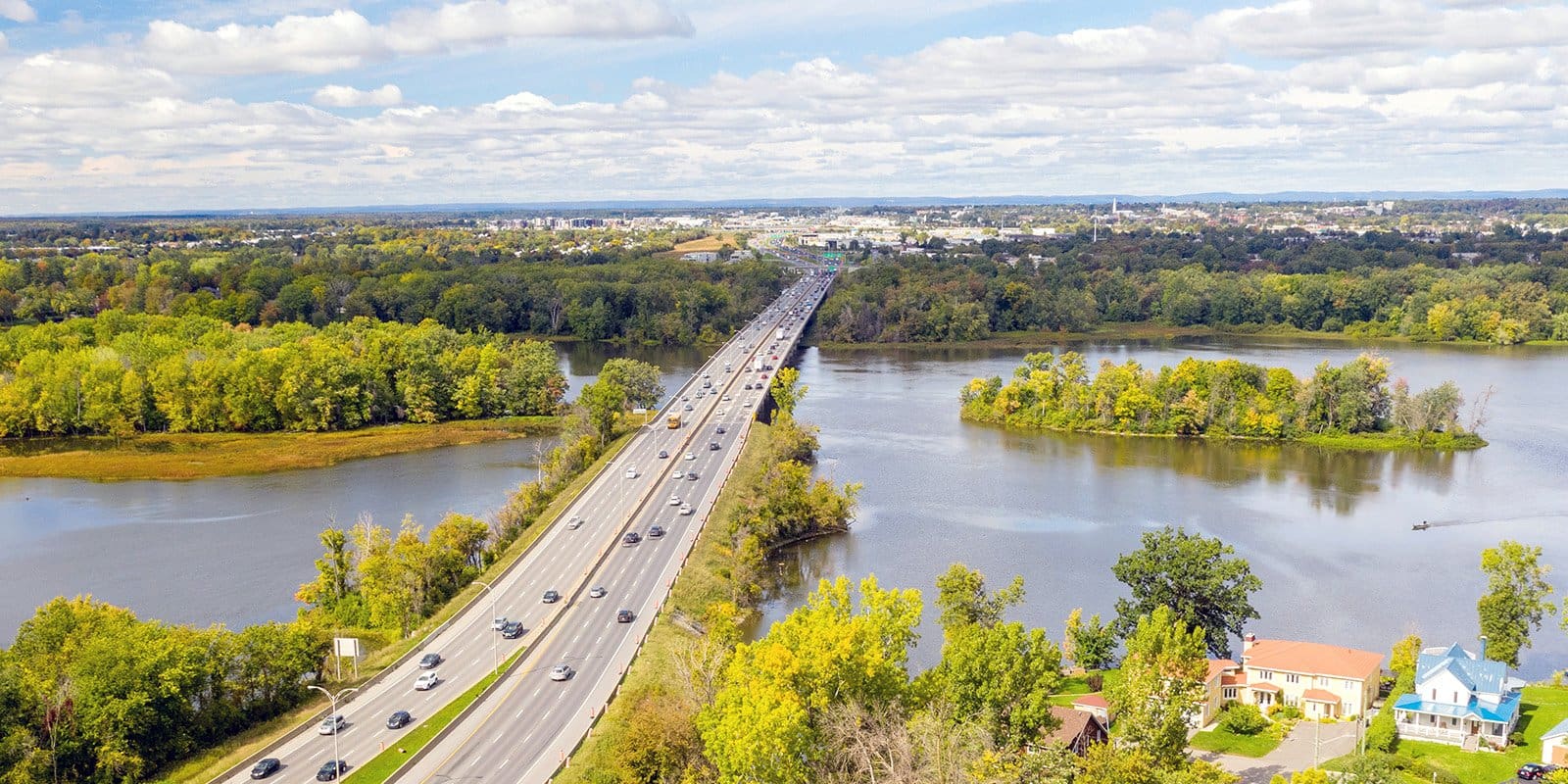
The province’s transport ministry is warning motorists who use Autoroute 15 that an asphalting operation scheduled for the Gédéon Ouimet Bridge between Laval and Boisbriand will lead to a partial closure of the structure from 10 p.m. on Aug. 10 to 5 a.m. the following day.
Scheduled Traffic Disruptions:
August 10, 10 p.m. to August 11, 5 a.m.: Complete closure of Highway 15 southbound between Highway 640 in Boisbriand and Sainte-Rose Boulevard in Laval. Complete closure of Exit 16 (Sainte-Rose Boulevard, Avenue de la Renaissance) on Highway 15 southbound.
The Gédéon Ouimet Bridge between Laval and Boisbriand.
August 10, 9 p.m. to August 11, 5 a.m.: Complete closure of the access ramps connecting Route 344 (Chemin de la Grande-Côte) to Highway 15 southbound. Complete closure of the ramp leading from Boulevard du Faubourg to Highway 15, southbound.
From August 10, 9:30 p.m., to August 11, 5:00 a.m.: Complete closure of the access ramps connecting Highway 640, in both directions, to Highway 15, southbound.
Additional information: Detours will be marked with temporary signage.
The Laval Police announced on Tuesday that they had concluded a major investigation, dubbed Projet Daurade, aimed at dismantling a criminal network operating within its territory.
The operation, which lasted over a year and a half, was designed to curb the illicit activities of a group involved in drug trafficking and money laundering, according to the LPD.
Among the assets and materials seized by the police:
Three buildings valued at over $2.8 million;
Five vehicles;
Over $300,000 in luxury goods and proceeds of crime;
Over $555,000 in cash;
51 kg of cannabis, 1.4 kg of cocaine, 1.5 kg of MDMA, 700 g of methamphetamine, and several other controlled substances;
4 firearms;
Equipment for the production and processing of narcotics.