With the summer’s first heatwaves rolling through Laval as thousands of young people were beginning school holidays, the City of Laval announced a $25 million investment in its sports, recreational and aquatic infrastructure to continue improving living environments on its territory.
From neighborhood parks to large-scale projects, the investments will support approximately 40 projects across all of Laval’s neighborhoods. According to the city, they will also provide more residents with access to modern, accessible, safe and suitable facilities.
“Residents tell us they want to be active, enjoy nature and have access to quality facilities close to home,” said Mayor Stéphane Boyer.
“The message is clear: we must continue to invest in our parks, sports facilities and community spaces to ensure they remain accessible, safe and adapted to the needs of the population,” he added. “By modernizing our infrastructure and improving services in all neighborhoods, we are investing directly in the quality of life, health, and well-being of Laval residents.”
With heatwaves like the one Laval residents have recently been experiencing expected to become more frequent, the city says green spaces and aquatic facilities will be more essential than ever as local resources that allow residents to cool off and enjoy the summer safely.
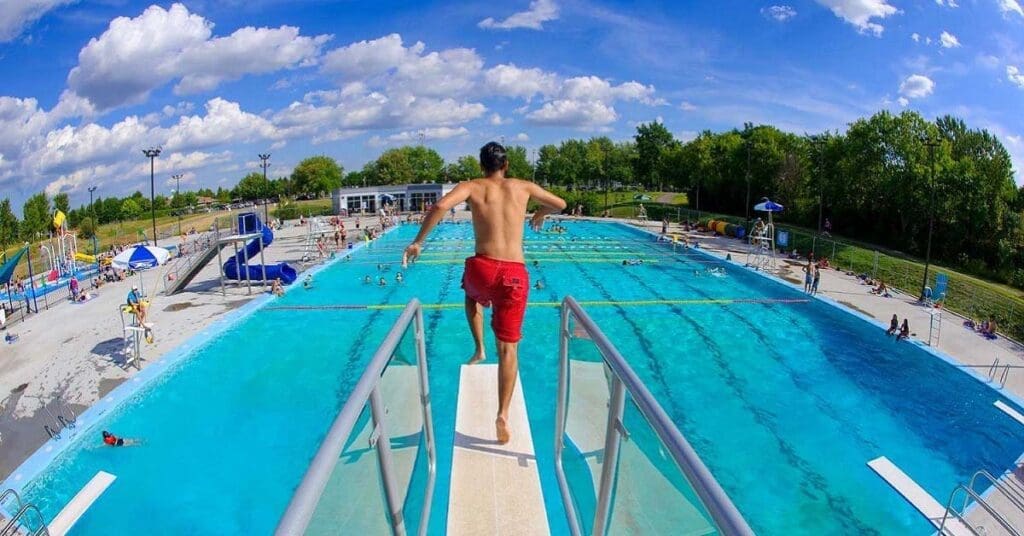
In Laval, 18 outdoor pools, 8 wading pools and 16 splash pads are now open and accessible for cooling off and having fun on hot days.
These include a brand-new, universally accessible pool, with a wading area and splash pads, which was officially opened to the public at Pie-X Park on June 29 in Chomedey, Laval’s most densely populated area.
In addition, Laval is launching a series of initiatives to enhance its sports, recreational and outdoor infrastructure throughout its neighborhoods.
The investments will include the development of two riverside areas, the major redesign of four parks, the refurbishment of two swimming pools, two splash pads and seven sports fields dedicated to baseball, tennis, and basketball, as well as the construction of four pickleball courts.
The city says it will also continue to improve local spaces by modernizing play structures and swings in 25 parks, developing and improving trails in wooded areas, and adding street furniture.
In addition to these city-wide projects, several major development projects are expected to enhance Laval’s recreational and sports offerings. Among these is the major redesign of Pie-X Park, made possible by a financial contribution from the Government of Quebec and open to the public since June 29.
The city has notably developed Laval’s first-ever refrigerated and covered outdoor skating rink, which residents were able to enjoy during a soft opening at the end of last winter.
‘We understand that many parents are feeling upset,’ says board chair Di Sano
Parents of teens enrolled at the Sir Wilfrid Laurier School Board’s Rosemère High School in Rosemère were in a state of shock late last week as news spread about a digital spreadsheet e-mailed to them which contained sensitive personal information – including a list of names with corresponding social insurance numbers.
The e-mail, with 2026-27 back-to-school information for parents, came with an attached Excel spreadsheet that also contained several other types of personal information.
Sir Wilfrid Laurier School Board’s HQ in Rosemere. (File photo: Martin C. Barry, Newsfirst Multimedia)
Sensitive personal info
When the foul-up was discovered last Thursday by school board officials, they sent a message by late afternoon warning parents not to open the email, followed by an attempt to recall the e-mail a few minutes later.
“This document contains sensitive personal information, including but not limited to addresses, phone numbers, email addresses and social insurance numbers of all Rosemère High School parents that have a child registered for the 2026-2027 school year,” said the message.
“While the distribution was limited to this group, we recognize the seriousness of this incident and the importance of protecting every family’s personal information,” it stated, while adding, “We sincerely apologize for this situation.È
DELETE immediately
“Do not open and immediately DELETE the email received today,” the school board wrote, saying that parents would be asked to sign a document by 4 pm on July 3 confirming they deleted it and did not share the spreadsheet.
The school board said it is “investigating the circumstances” that led to the email being sent.
“On behalf of the Sir Wilfrid Laurier School Board, we wish to offer our sincerest apologies to families of Rosmère High School affected by today’s information security breach,” chairperson James Di Sano wrote in a statement also sent out.
“We understand that many parents are feeling upset and concerned. This incident is being treated with the utmost seriousness.” Di Sano said the breach will be reported to the Commission d’accès à l’information du Québec, “in accordance with our legal obligations.”
Credit monitoring needed
“We are committed to being transparent, and to keeping our community informed as additional information becomes available,” wrote Di Sano. “Our focus remains on addressing this matter with the care, accountability and seriousness it deserves.”
One digital security expert suggested that close credit monitoring may become a necessity for anyone whose name appeared on the list. Among the risks from such an exposure are identity theft, as well as loans or credit cards fraudulently obtained by perpetrators who could get access to the list.
In the meantime, the SWLSB has announced a program of free credit monitoring for affected parents, while also vowing to “implement any additional measures necessary to strengthen our processes and prevent this from happening again.”
Social services provider ‘continues to face growing demand,’ annual report says
In their latest annual report, the directors of the Youth and Parents Agape Association say 2025-2026 was “another productive year” when an important number of English-speaking Laval residents were served by the organization which has long been based in Chomedey.
Over the past 12 months, Agape provided services, resources, presentations, referrals, emergency food relief and other essential support to more than 5,000 individuals.
Agape executive-director Kevin McLeod delivered part of the Chomedey-based social service organization’s 2025-2026 report of activities on June 26 in the offices of the Senior Wellness Centre on Notre-Dame Blvd. (Photo: Martin C. Barry, Laval News)
An overview of efforts
Founded in 1976 by Cliff and Leo Young in a Chomedey church basement, Agape has progressed since then from a food and clothing bank to become a corner stone for the provision of a range of social services directed primarily at English-speaking Chomedey and Laval residents.
The 2025-2026 report offers a comprehensive overview of Agape’s efforts to enhance the vitality of the underprivileged English-speaking and multicultural communities in Laval from April last year up to March 2026.
Over the past year, according to the report, Agape provided 693 free food and clothing orders, benefiting 842 people. Of these, 64 per cent were adults and 36 per cent were children.
Close to 500 individuals received emergency food relief last Christmas and 112 children received new gifts or toys during the holiday season.
Demand beyond December peak
“Distribution was particularly significant around Easter, beyond the December peak,” the 2025-2026 report states. However, it goes on to note that “Agape continues to face growing demand for its services while experiencing a decline in both monetary and food donations.
“Ongoing economic uncertainty and rising living costs are increasing the need for support within the community, while potentially reducing funding opportunities and charitable giving. As a result, fundraising initiatives will be essential to sustain and expand Agape’s services.”
Agape’s assistant director and staff social worker Ian Williams also delivered part of the organization’s 2025-2026 report on activities. (Photo: Martin C. Barry, Laval News)
While explaining Agape’s Elementary School Dropout Prevention Through Social Emotional Learning program, executive-director Kevin McLeod revealed that JFK Elementary School in Chomedey (where the program is provided) now ranks 10 on a 10-point poverty scale.
Hard times at Laval’s schools
He said another school in Chomedey is about to go from 6 to 8 on the scale. “Schools are having a harder time, which means there’s more of a need for social emotional learning in the schools,” said McLeod.
While funding and support for the program were secured until this past June, Agape is currently actively seeking funding to be able to offer social emotional learning at more Laval schools in the coming years.
According to McLeod, learning itself is being impacted in the schools by deteriorating social conditions. “Like one principal said to us, ‘Imagine that we have to take a step back from academics right now in order to be concentrated on the well-being of our kids,’” he said.
“There’s also issues happening – not to sound alarming – but there’s gangsterism happening among children 10 to 12 years old in primary schools,” he continued, maintaining that the gang activities include drug dealing and prostitution. “So, Agape is leading the charge on that.”
Senior Wellness Centre continues
Regarding the Senior Wellness Centre, according to the 2025-2026 report, Agape plans to continue to expand the SWC’s initiatives into 2026-2027 with renewed funding until March next year.
“The focus remains on sustaining these vital services to support health, social engagement and an overall well-being of English-speaking seniors in the community,” states the report.
There was a full house of supporters, many of them seniors, at Agape’s 2025-2026 annual general meeting on June 26. (Photo: Martin C. Barry, Laval News)
Over the past year, the SWC operated from two locations (one in Chomedey and the other in Duvernay), as well as through online programming – “ensuring broad accessibility for Laval seniors.” In all, 406 seniors participated in the SWC’s actvities and services at the Chomedey and Duvernay centres.
The ongoing support of a team of 18 dedicated SWC volunteers “played a vital role in the daily operation and success of the centres.” In partnership with the Pharmaprix drug store chain, the SWC hosted a vaccination clinic in October last year, administering 291 vaccines (153 for flu, 127 Covid and 11 for shingles) to seniors.
Building community connection
Generally, the latest annual report states, the SWC helped build a daily sense of community connection in the past year, welcoming an average of 50 to 60 seniors each weekday, while providing opportunities for social interaction, physical activity, learning and mutual support.
Also in the past year, under Agape’s Youth Mental Health Initiative, awareness was raised through social media and other digital means regarding gaps in mental health services among young English-speaking Laval residents aged 12-29 years.
As part of the program, promotional fidget toys were developed and created with youth mental health resources printed on them. In all, nearly 800 fidgets were distributed at Laval Junior Academy. Through other resources, including event kiosks, 2,500 youths were reached.
The current issue of the Laval News, volume 34-14, published on July 8th, 2026. Covering Laval local news, politics, and sports. (Click on the image to read the paper.)
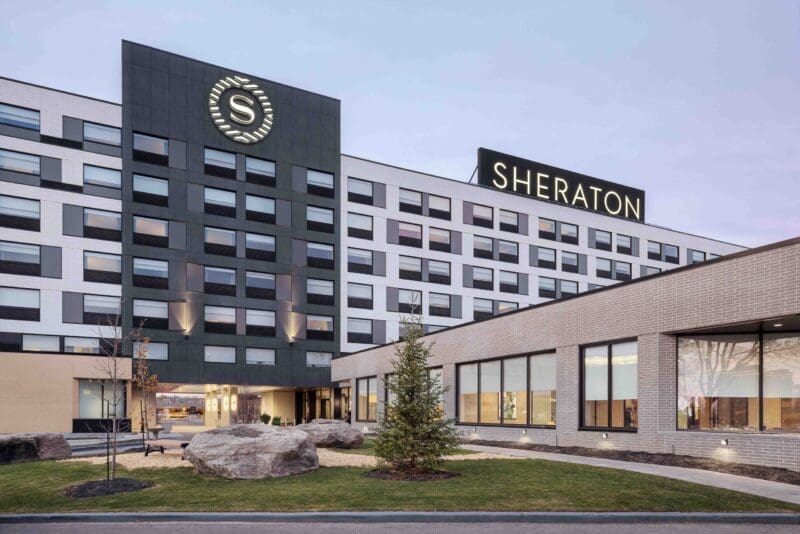
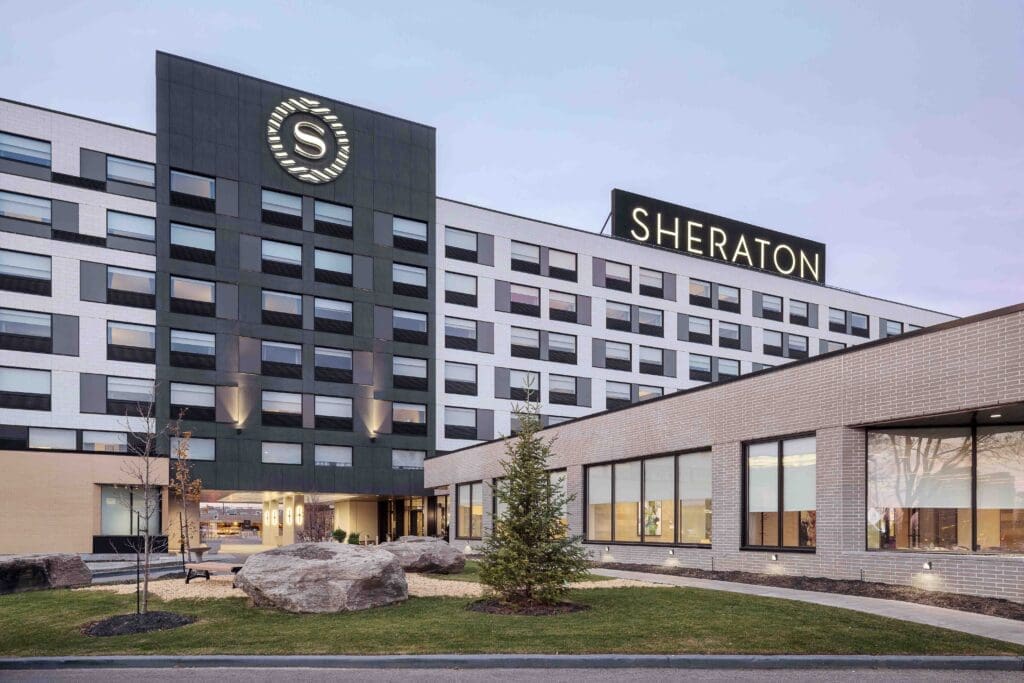
Around 250 unionized employees of the Sheraton Laval, members of United Steelworkers Local 9400, ratified a new five-year collective agreement earlier this month by a 67 per cent majority, following a recommendation from an assigned mediator.
The agreement was reached after an initial offer was rejected, after which a mediator was called in to intervene.
“We are pleased to have found a solution that meets the members’ expectations,” said Stéphane Simard, president of the union local, while adding that the negotiated increases will allow for an adjustment of purchasing power as soon as the collective agreement is signed.
The five-year contract includes salary increases totaling 24 per cent over five years, with 10 per cent in the first year, plus a lump sum payment equivalent to 2 per cent of annual salary upon signing the contract.
Although the hotel bears the Sheraton brand name (which is owned by Marriott International), the Sheraton Laval is operated by Groupe Hôtelier Grand Château, a Quebec-based hospitality company.
The Sir Wilfrid Laurier Foundation has donated $15,000 to the Sir Wilfrid Laurier School Board to support students with dyslexia through laptop bundles designed to meet their learning needs.
The donation, presented at the June 25 Council of Commissioners meeting, will fund approximately 16 bundles.
Each bundle includes a laptop, backpack, headset and mouse and will be distributed according to individual student needs across the school board.
Sir Wilfrid Laurier Foundation president Archie Cifelli (second from left) was presented with a certificate of appreciation for years of dedicated service by SWLSB chairman James Di Sano.
“The Foundation’s impact extends far beyond a single event,” said James Di Sano, chairman of the SWLSB.
“This generous donation will help provide students with dyslexia access to tools that support their learning and remove barriers to success. We are grateful to the Foundation Board and to every member of our community who continues to support public education and believe in the potential of our students.”
The Council of Commissioners also took the opportunity to recognize Archie Cifelli for his many years of service to the Foundation, first as vice-president and currently as president.
“Through his leadership, involvement and support, he has played an important role in supporting countless initiatives that have benefited students and schools throughout the school board,” the SWLSB said in a statement.
A laptop bundle for dyslexic students paid for with funds raised by the Sir Wilfrid Laurier Foundation.
According to the SWLSB, the donation followed another successful year for the foundation.
Earlier in June, the foundation’s annual Lobster Gala welcomed close to 300 guests at the Château Royal and generated almost $34,000 in net proceeds.
The funds raised will allow the foundation to continue supporting schools through the purchase of multisensory equipment, technology initiatives and the longstanding Citizenship Bursary Program.
“The generosity of our community continues to amaze us,” said foundation president Cifelli.
“Thanks to our supporters, we can continue investing in initiatives that make a real difference in the lives of students, whether through multisensory equipment, technology for learners with dyslexia, or our Citizenship Bursary Program,” he added.
Since its creation, the foundation has contributed more than $1 million (including more than $350,000 in Citizenship Bursaries) to schools, centres and students across the SWLSB’s territory which takes in Laval, the Laurentians and the Lanaudière region.
Laval is one of nearly a dozen communities across Quebec where the Sûreté du Québec’s Contraband Investigation Service conducted a series of raids targeting a criminal organization alleged to be involved in the large-scale importation and distribution of flavored nicotine vaping products in Quebec where their sale is prohibited.
The operation was carried out in collaboration with members of the Tobacco ACCESS Section of the Laval and Gatineau police forces, as well as officers from the Montreal, Terrebonne, Roussillon and Longueuil police forces.
In total, 10 searches were conducted at residences in LaSalle, Candiac, Brossard and Dorval, while 7 were carried out at businesses in LaSalle, Vaudreuil-Dorion, Sainte-Anne-des-Plaines, Laval, Terrebonne, St-Lambert-de-Lauzon and Gatineau.
According the provincial police force, a total of 8 vehicles were also seized.
The SQ issued the following preliminary summary of the searches:
More than 300,000 e-cigarettes and refills seized;
6,500 contraband cigars;
More than 10,000 contraband cigarettes;
Nearly $500,000 in Canadian currency;
Valuables (jewelry, watches);
Accounting documents.
In conjunction with the province’s Director of Criminal and Penal Prosecutions (DPCP), 13 bank accounts were also frozen with balances totaling over $1,800,000.
According to the SQ, the transactional website “vapme.fr” was also shut down.
“The network is suspected of fraud because it failed to declare its business income and laundered the proceeds of crime.” the SQ said in a statement, while noting that the sale of flavored e-cigarettes “is an emerging scheme linked to organized crime throughout Quebec.”
More than 120 police resources contributed to the operation, in addition to representatives from Santé Québec and the Canada Border Services Agency (CBSA). The SQ said the Financial Transactions and Reports Analysis Centre of Canada (FINTRAC) also contributed to the investigation.
Environment Canada has issued a special weather statement saying hot and humid weather is expected in the Laval and Montreal regions from Wednesday until Saturday at least.
According to the federal weather agency, daytime highs can be expected between 30 and 33 degrees Celsius and nighttime lows near 20 degrees Celsius, with humidex values between 40 and 44.
Among the potential health impacts are exhaustion or heat stroke, as well as risk of inconvenience to the general population, but also high risk of inconvenience for vulnerable people.
Laval’s executive-committee has recommended the adoption of the city’s first-ever action plan for promoting French.
According to the city, the purpose of the initiative is to strengthen the role of French as a common language, a language of integration and a means of participation in community life.
The city says 80 per cent of the recommendations made by an ad hoc Citizen Advisory Committee on the French language are already being implemented or are in the process of being put into action, “demonstrating the leadership the city intends to continue to embody,” the city says in a statement.
“This action plan is an opportunity to reaffirm the importance of French as the language that unites us and allows all those who choose Laval to fully participate in the life of our community,” said Mayor Stéphane Boyer.
“In Laval, we want French to be a source of pride, inclusion and sharing,” he continued. “Quebec’s third-largest city is taking responsibility for promoting our shared language, and I hope that across Quebec, everyone will do their part, because promoting French is a shared responsibility.”
The city says the action plan is based on a unifying, inclusive and concrete approach and leverages municipal expertise, while consolidating existing initiatives and identifying new ones that will be rolled out gradually over the coming years.
Organized around three main complementary objectives – maintaining, innovating and funding – the plan will provide guidelines for municipal actions until 2029 to consolidate achievements, seize new opportunities to promote French and mobilize partners to carry out impactful projects.
Among the actions already implemented:
The City of Laval has a French Language Commissioner, responsible in particular for accountability, supporting municipal teams in the application of the Charter of the French Language and relations with government bodies;
The redesign of the laval.fr website and the municipal intranet, emphasizing clear, accessible, and inclusive writing;
The publication of the Welcome to Laval guide, which supports newcomers and promotes learning French as a tool for integration;
The maintenance of a wide range of cultural, heritage, sports and recreational activities offered in French in all neighbourhoods;
More than 3,000 activities annually in French in Laval libraries;
support for community initiatives that promote the learning and use of French, particularly among immigrants;
The maintenance of municipal signage in French throughout the city.
Among the initiatives to be rolled out in the coming years, the city plans to integrate a French-language promotion component into its participatory budgeting process, continue developing a communications strategy for young adults and enhance Laval’s profile through national and international events.
“As a Francophone city and a major welcoming community in Quebec, Laval intends to continue its efforts to ensure that French remains a language of unity, integration and civic participation,” says the city, adding that the 2026-2029 action plan “will serve as a framework to guide municipal actions and support the vitality of French throughout the city.”
Get ready for an unforgettable time celebrating Canada’s birthday on Wednesday July 1 at the City of Laval’s Centre de la nature in Duvernay.
To celebrate Canada Day, everyone is invited to take part in a large family celebration from 10 a.m. to 5 p.m. designed to delight visitors of all ages.
All are invioted to come and share a joyful and welcoming moment with the Laval community in a festive and heartwarming atmosphere.
A Day Full of Family Activities
Starting with the official opening of the site at 10 a.m., visitors will be able to enjoy a full day of activities.
In celebration of World Cup 2026, with Canada as one of the host countries, soccer will take centre stage with mini matches and skills challenges.
Guests will also be able to enjoy face painting, creative craft workshops, inflatable games and more.
The presence of the Canadian Armed Forces will add an extra patriotic dimension to the event.
Beginning at 11:00 a.m., food trucks will offer something for every taste.
Meaningful and Symbolic Moments
At 12:50 p.m., the national anthem will be sung during the Canadian flag-raising ceremony.
At 1 p.m., a moving citizenship ceremony will welcome new Canadians – promising to be a powerful moment celebrating inclusion and diversity.
The traditional Canada Day cake will be cut at 2:45 p.m. and will be shared with the public starting at 3:30 p.m.
An Invitation to All
Full event details are available at www.feteducanadalaval.net Facebook: @feteducanadalaval Instagram: @feteducanadalaval #CanadaLaval2026
The event is made possible thanks to support from the City of Laval and the Government of Canada.
Weather Advisory: The event will take place rain or shine! Only thunderstorms or severe weather requiring site evacuation could lead to a cancellation.