Home Blog Page 152

Local engineering student awarded $5,000 bursary by foundation

Liliya Boyadjieva hopes to make breakthroughs in health technology

A young Laval woman with aspirations to advance in the traditionally male-dominated domain of electrical engineering is one of five female university undergraduates from across Canada who’ve been chosen to receive scholarships from the Canadian Engineering Memorial Foundation.

An ÉTS student

Liliya Boyadjieva, who currently is attending École de technologie supérieure (ÉTS) in Montreal, is a second-year electrical engineering student. She and the others were selected as 2021 CEMF Undergraduate Women in Engineering Scholarship winners, the CEMF says.

They were chosen as the strongest regional ambassadors in their profession, based on their leadership, volunteerism and community involvement. Each award is valued at $5,000 and comes with extensive networking and promotional opportunities for the recipients.

Women in engineering

The scholarships are awarded annually to the most promising women in an accredited undergraduate engineering program in Canada. Since 1990, the CEMF has been promoting engineering as a career choice for young Canadian women through an extensive award and networking program.

While the level of competition is always outstanding, with many strong contenders among the women in engineering, the CEMF says the five women chosen this year stood out as the very best. All of the recipients are actively involved in their communities, volunteer many hours to helping others and are strong role models for the engineering profession.

Inspired by robotics

Liliya, 23, lives in Laval’s Sainte-Dorothée district. She went to high school at École internationale de Laval in Chomedey.

In an interview with the Laval News, she explained how she became interested enough in electrical engineering to pursue a career in the domain. “It was a long road,” she said. “When I was in high school, I had the opportunity to participate in robotics competitions and I participated one year. And that sparked an interest for me in robotics.

“When I went into CEGEP at Collège Bois-de-Boulogne, they had a team in competition there. And it was there that I really just fell in love with creating things with my hands, the process of designing something from scratch. That’s really when I started to love engineering.”

Interested in health technology

Currently studying at ÉTS for a Bachelor of Electrical Engineering, she hopes eventually to apply her learning and skills towards the development of health and medical technology, a field where robotics are increasingly being used in areas such as surgery.

She was inspired to pursue electrical engineering as a career after taking part in robotics competitions

“I think there’s a lot of work to be done in that area, and not a lot of people going into it,” she continued, noting that part of her current studies include health technology. While she had previously received awards for her entries in robotics competitions, she said the CEMF scholarship “is the biggest honour I’ve been given so far. It is indeed a great honour for me.”

Worthy award winners

“It is heartening to see so many qualified and capable applicants,” said Julie Lassonde, the CEMF’s president.

“Each of these young women are worthy award winners and we look forward to watching them continue to help connect young Canadians, through their passionate volunteerism, with engineering and its vast possibilities as a viable career choice for other young ladies.

“We’re delighted to see their infectious enthusiasm for engineering, and are thrilled to be supporting them in their future endeavours.”

Ottawa throws in additional support for Laval’s families

Region’s four MPs say they are making life more affordable for parents

The Laval region’s four federal Members of Parliament say families have been hit hard by the pandemic and many have had to choose between paying for groceries, rent or their electricity bill.

They note that since the beginning of the pandemic, the federal government has been there for families, notably through the temporary increase of the Canada Child Benefit (CCB).

In the Fall 2020 Economic Statement, according to the four MPs, the government reiterated its commitment to low- and middle-income Canadian families with a supplement to the Canada Child Tax Benefit of up to $1,200 per child under the age of six. Families who are eligible to receive the CCB in January, April, July or October 2021, and whose net income is $120,000 or less, will receive a payment for each child under six.

Those most in need

“Since 2015, the Canada Child Benefit has been making a difference for Laval families by providing more support to those who need it most,” say the four MPs from Laval (Annie Koutrakis [Vimy], Fayçal El Khoury [Laval-Les Îles], Angelo Iacono [Alfred-Pellan], and Yves Robillard [Marc-Aurèle-Fortin].

“With the Early Childhood Supplement, our federal government continues to be there for families with children under the age of six,” they say. “The first payments will be issued on May 28, 2021 and will include January and April payments for those who qualify. The other payments will be made on July 30 and October 29, 2021.”

Since its implementation, the CCB has supported more than 80,000 Laval children and has helped lift nearly 435,000 children out of poverty across the country.

Details from Prime Minister

Last week in Ottawa, Prime Minister Justin Trudeau provided details about the government’s additional COVID-19 pandemic-relief for families.

Under terms of the program, families with a net income of $120,000 or less will receive up to four tax-free payments of $300. Families with a net income above $120,000 will receive up to four tax-free payments of $150, for a total benefit of up to $600.

To ensure that more money goes to the families that need it the most, families with net incomes that are too high to be entitled to the CCB will not receive these additional payments.

Helping parents, says Trudeau

The first and second payments were issued last week, with subsequent payments on July 30 and October 29, 2021. The government says the measure will benefit approximately 1.6 million Canadian families and approximately 2.1 million children under the age of six.

“This immediate investment in our children will help hard-working parents provide for their families by putting more money directly in their pockets. We will continue to make life more affordable for Canadian families, grow the middle class, and build a better country for everyone,” Trudeau said.

“Having raised my children as a working mother, I know the challenges that parents face when balancing the well-being of their children with economic necessity,” added Diane Lebouthillier, Minister of National Revenue. “The Government of Canada is committed to supporting families with young children as we work together towards recovery and a return to a new normal for all Canadians.”

Tax returns must be filed

Families that already receive the CCB will not need to take any action to receive the payments. However, families do need to file their 2019 and 2020 tax returns to access them. The payments made last week were for each of the first two quarters – January and April – based on the family net income for 2019.

The July and October payments will be based on the family net income for 2020. This may mean that payment amounts differ for some families midway through the year. Families that have not yet filed for either year could still be entitled to receive the CCB and the CCB young child supplement by filing their income taxes as soon as possible.

Société de transport de Laval purchases its first all-electric buses

Transit agency will be buying only electric beginning in 2025

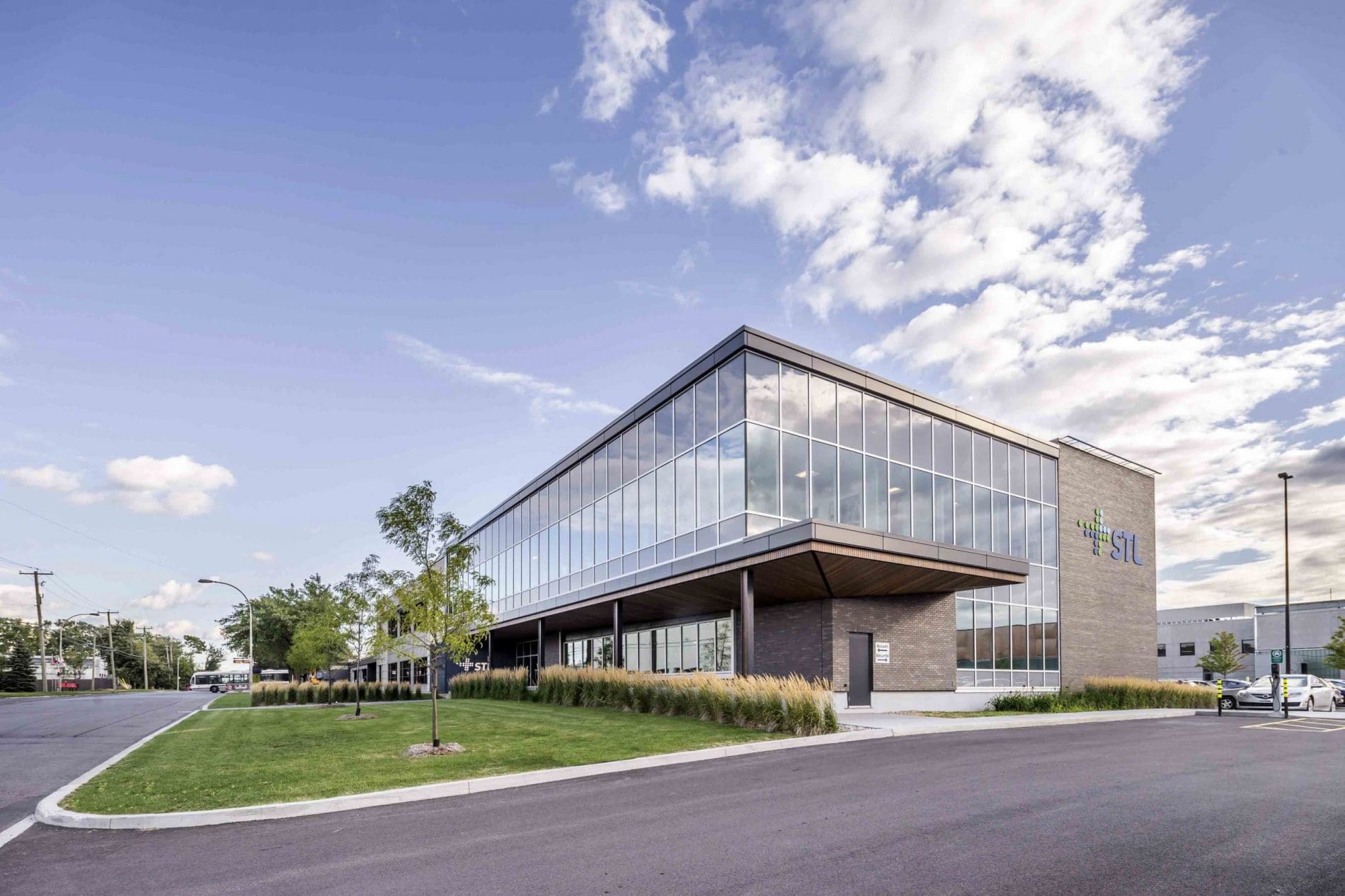
Despite the reputation battery-electric motor vehicles have acquired for reduced efficiency in cold weather, elected officials gave assurances last week that such problems have been largely overcome and Quebec’s gruelling winters won’t impact the performance of the Société de Transport de Laval’s growing fleet of electric buses.

Over the coming weeks, the STL expects to deploy the first of 10 new 100 per cent electric buses. They are part of a new generation of electric vehicle technology that optimizes battery performance, while allowing the buses to roll 250 kilometres under normal conditions before recharging becomes necessary.

The future of transit

The 10 buses, built by New Flyer Industries of Winnipeg MB, were acquired as part of a group purchase – the largest ever in Quebec, according to the STL – through the Association du transport urbain du Québec (ATUQ) in conjunction with the Société de transport de Montréal (STM).

Like many other public transit agencies, the STL believes that electric vehicles are the future of transportation. As such, the company is investing in electric technologies and stands committed to only purchasing electric buses beginning in 2025.

In 2019, the STL began testing Quebec’s first slow-charge electric bus, which has a 250 km range, taking one step further toward the goal of electrifying the entire fleet.

Transmissionless power

The New Flyer 40-foot Xcelsior electric buses are powered by direct-drive (no transmission), seat 32 passengers and are equipped with Thermo King rear-mounted air-conditioning units. Four years from now, the STL plans to open a new garage built especially for its fleet of all-electric buses.

According to the STL, the benefits of electrification include: lower energy costs per kilometre, with an estimated reduction of 40 to 50 per cent; lower maintenance costs, with a reduction of 15 to 20 per cent, because the vehicles have no engine, transmission or exhaust; reduced GHG emissions, with a reduction of 70 to 80 tonnes per bus per year; and improved passenger experience thanks to the quiet electric motor.

Step in the right direction

“Laval is the first city in Quebec to actually have this type of electric bus,” Sainte-Rose MNA Christopher Skeete said in an interview with the Laval News during a launch event at the STL’s Cartier intermodal public transit terminal last Friday. “This is a really big deal and good news. I think we’re taking a step in the right direction of electrifying all our transports eventually.”

He noted that the efficiency of electric buses has been growing exponentially over the past decade. “The evolution of technology is such that in 2012 buses like this took seven hours to charge for 100 kilometres of autonomy,” he said. “Now, 13 short years later, we’re at 250 kilometres of autonomy with a three-hour charge. So, the technology is moving really fast.”

Winter heating issue

According to Laval city councillor for Saint-François Éric Morasse, who is the STL’s president, the heating of battery-electric buses during the winter does indeed use up a larger amount of battery energy. But he noted that the new buses come equipped with auxiliary heating systems that will kick in when the temperature drops below minus -5º Celsius.

The new buses are being paid for largely with the assistance of the federal and provincial governments. Ottawa is providing more than $6 million and Quebec is providing nearly $5 million. The STL expects to have replaced all its buses with a 100 per cent electric fleet by 2035.

Makes sense to electrify

“The STL is always very innovative in everything it undertakes, and this marks another first for them,” noted city councillor for Auteuil Jocelyne Frédéric-Gauthier.

“Transportation is very important to the federal government and there are multiple reasons why it makes sense to electrify it, including the environment,” said Alfred-Pellan MP Angelo Iacono.

‘The electric bus allows us to save money, whether in fuel or maintenance costs,’ says Laval’s deputy mayor Stéphane Boyer

“I think this is the future,” added Vimy MP Annie Koutrakis. “Everybody’s concerned about the environment. So, what a great example Laval is setting for other cities in Quebec to follow their example.”

The STL believes repair costs will be significantly lower because electric bus engines aren’t as complex as traditional gas-fuelled motors and require far less maintenance.

Reduced GHG emissions

“In addition to reducing greenhouse gas emissions in Laval, the electric bus allows us to save money, whether in fuel or maintenance costs, and to improve customer experience on board,” said Stéphane Boyer, the City of Laval’s deputy mayor and executive-committee vice-president.

According to an online encyclopaedia, at least 37 major cities in the U.S. have begun regularly using electric buses (both battery electric and trolley buses).

In Canada, the adoption of electric buses appears to be concentrated in Quebec, Ontario and British Columbia. Globally, the Russian city of Moscow currently leads on the European continent with at least 500 electric buses in its public transportation fleet as of October 2020.

(This should not be surprising, since Russia, as a former communist society, always placed greater emphasis in its priorities on public transit rather than on private transportation.)

City moves to implement First Responder services in Laval

Beginning in 2022, firefighters in Laval will be trained to provide First Responder services for medical situations involving cardio-respiratory arrests or acute allergic reactions, city officials have announced.

According to the city, all firefighters in Laval will receive the training beginning this fall, and the service will become available in stages in conjunction with Urgences-Santé.

The city says that currently around 1,600 calls are received for this type of priority medical service. They say the early intervention of firefighters will allow lives to be saved, since firefighters typically arrive on the scene of incidents within three to six minutes.

“Just months away from retiring, I can confirm that I will be writing this announcement in the book about our greatest successes,” Mayor Marc Demers said last week while announcing the new development.

(Left to right) Mayor Marc Demers, Laval fire chief Patrick Taillefer, Yvan Gendron, president and interim general manager of Urgences-santé, Sandra Desmeules, executive-committee member responsible for public safety. (Photo credit: Vincent Girard)

“This is the concretization of a commitment that we made to save the lives of Laval residents. It isn’t every day that this can be said.”

“The population of Laval will be able to count on more than 280 firefighters certified as First Responders to intervene in situations involving pre-hospital emergencies,” said city councillor Sandra Desmeules, an executive-committee member responsible for public safety dossiers. “I thank them sincerely for having accepted to take this step forward to improve safety in Laval.”

The role of the PR-1 First Response certified firefighters will be to maintain the stability of victims suffering from cardio-respiratory arrest and anaphylactic shock, until the arrival of paramedics from Urgences-Santé.

“The implementation of this major project changes considerably our ways of intervening, and this transformation took colossal efforts,” said Laval Fire Department chief Patrick Taillefer.

“I would like to salute the contributions of all those involved since 2014 in the work to build a service based on results and being close to people. Everything is now in place so that the First Responder service can be deployed gradually. More lives will be saved, strengthening the primary mission of the LFD.”

Laval becomes the fourth city in Quebec to deploy a First Responder service provided by its firefighters. An agreement between the firefighters and the city was signed at Laval city hall on May 19. The agreement is good for six years, retroactive to 2019.

Italian Canadians receive official apology from the RT. Hon. Prime Minister Justin Trudeau

The National Congress of Italian Canadians, The Order of Sons and Daughters of Italy and the National Federation of Canadian Italian Business Professional Association have been working tirelessly, for close to 40 years, towards an official and formal apology from the Government of Canada with respect to the treatment of Italian Canadians during the Second World War. Together, these three national organizations represent 1.6 million Italian Canadians.

On June 10th, 1940, over 17,000 families of Italian origin were declared enemy aliens and required to report at least once a week to the RCMP or authorized government reporting centers including men, women, and children. This caused irreparable damage and a grave injustice with many being interned in camps across the country. 6000 were arrested and over 600 were imprisoned; some for up to 3 years, without ever being charged. The entire Italian Community was humiliated by the unjust elements of discrimination and harassment.

To this day, descendants of these individuals continue to come forth, for some sort of closure. Acknowledging the historical injustices that those of Italian origin endured in Canada during this dark time in Canadian history, creates a path towards closure and a final chapter to the endless story of these families. The Internment caused irrevocable harm and hardships not only to the families but to whole communities who suffered ongoing discrimination.

On behalf of the many families and the Italian Canadian communities affected and its respective memberships, the National Congress of Italian Canadians, the Order of Sons and Daughters of Italy, and the National Federation of Canadian Italian Business Professional Associations, graciously accept this formal apology by the Rt. Hon. Prime Minister of Canada and the Government of Canada.

Let us now embark on the task of educating Canadians about these events thereby ensuring that they are never repeated.

Roberto Colavecchio,

président | president

National Congress of Italian-Canadians

Never consulted…

Dear editor,

The residents of the following streets in Chomedey, Korman, Webb and Ridgewood were not consulted on a major project from the Ville de Laval which will reduce the overall quality of life. Under the guise of replacing the decades old sewers and water pipes, which we are in full support since they have been doing it to other streets around us, they had another agenda. The other sneaky project is to increase the width of the sidewalks on both sides of the street BUT eliminate completely one side of parking completely.

This will be a nightmare in the winter since where will the citizens push the snow to, with no parking lane … on to oncoming traffic? Where can you stop to drop off groceries for 5 minutes? This also presents a problem with several handicapped people that require a parking spot in front of their house. This also presents a hazard for pedestrians walking on a sidewalk (full of cracks to trip on) so close to traffic, without the parking lane buffer should someone take a fall or slip. We really believe that the decision from whomever at Ville de Laval was not well thought out in practice. It appears these 3 streets are the guinea pigs for what will eventually happen to all of Laval.

The quality of life will go down as well as the value of properties on the side of no parking. I stress again, we were NEVER consulted on this part of the operation. The outgoing mayor Demers and his team of engineers do not even want to hear us. Our City councillor for Chomedey, Aglaia Revelakis, is desperately trying to fight for us. We are also looking for a lawyer since this made up in the courts.

Emmanuel (Manny) Axais

Chomedey Resident

CRTC’s Chairman should resign

Dear editor,

As the largest independent internet service provider in Quebec, employing more than 450 people and serving over 130,000 clients for 23 years-, EBOX is calling for CRTC ’s Chairman resignation.

In a stunning reversal, CRTC has decided to backtrack on their 2019 decision that was lowering internet rates for Canadians. Evidence was found in a 3-year-long process that highlighted rates being inflated by large providers.

In a multi-year court process following 2019 decision, the Federal court of appeal concluded that the case brought up by large telecom providers were of dubious merit. However regardless of what the court of appeal and supreme court of Canada said, CRTC decided to do a 180-degree stunt and rollback on old tariff essentially selling out Canadians to the big telecoms and throwing competitors under the bus.

The CRTC chair and ex-Telus VP have a clear bias towards large telecom providers’ facilities-based competition. The appearance of a conflict of interest due to pressure from the major providers, the incompetence, as well as the inefficiency in handling this case are simply too great to be ignored.

Jean-Philippe Béïque BAA, MIS

Ebox Chief Executive Officer

Sovereignty-Association Achieved, Without a Referendum!

This is what Québec separatists have wanted since the beginning. René Lévesque understood that outright separation would be risky, so he opted for a much more palatable phrase that would have a much wider appeal. Something called sovereignty-association. It was a genial marketing ploy by the Premier. Hard core separatism appealed to only 20% of French Quebec at the time, but, the expression “sovereignty-association”, don’t forget the hyphen, would also appeal to softer leaning separatists called Nationalists, including some Liberal party supporters. The plan was for Québec to operate on its own, in effect, be a nation, separated from Canadian policy and politics, (here’s the hyphen), but enjoy the luxury of Canada’s currency, its transfer and equalization payments, its army, and more.

It has succeeded with Bill 96, and, without a referendum.

You could not dream up this deal!

The elder Pierre Trudeau refused to accept Quebec even as a ‘distinct society’. Suddenly his son, Justin, agrees Québec can now rewrite the 154-year-old document signed in 1867 by the Fathers of Confederation, which took years of intense debate. No, our current Prime Minister will not stand in the way, in fact he will take a knee to Québec and allow those changes without the provinces, without debate in the House of Commons, much less the Senate, a supposedly wise group who are supposed to give any new changes or legislation “a sober second thought”. Québec could not achieve this through 2 referendums (or is it referenda) but it may have now, through the wisely chosen timing of Premier Francois Legault.

The Québec Premier made his move just prior to a federal election call by a minority government leader, who absolutely needs Québec seats to improve his standings if he is ever to form a majority. Legault knows this, and knows that Justin Trudeau is a neophyte, who has an obsession for Quebec votes and an obsession for power. And at home, Legault is on top of the polls. He is the most popular Premier in Canada right now. (76% – Leger Marketing) No one wants to start a divisive debate with the popular premier. So his timing was perfect, if not brilliant. His choosing of Section 45 of the 1982 Constitution Act to alter the Canadian constitution seems to find agreement with politicians blinded by a hunger for votes.

But not all jurists will agree. You can bet constitutional lawyers will have a plethora of arguments, for and against. For example, what does it mean to give Quebecers “the right to form a nation”? What is a nation? Is it a sovereign state with its own laws and governance? If so, how can a Quebec nation exist within the nation of Canada?

Québec collects its own taxes, administers its own social programs, receives the largest share of Ottawa’s equalization programs (2019- 2020) as a ‘have-not province’. In general, Québec yearly receives the biggest share of federal transfer funds. Would that be Croix Rouge, as it is across Canada? Mais non, pas au Québec. It’s Héma Québec. We are the only NHL team that has a filter on the Habs head coach application. Only French speaking need apply.

It always seems to be the Québec way or the highway, and Quebec wins, all the time. So too with the Constitutional change.

And be careful of that “notwithstanding clause”, which threatens to take away decisions from judges, and give them to premiers.

I don’t know about you, but I was painfully disappointed when neither of the opposition leaders stood up for our Constitution. (except for Independent MP Jody Wilson-Raybould) I am not sure any of them, including Trudeau, even read Bill 96 before agreeing to it. That’s how obsessed these guys are for votes. The separatist Bloc is a given. And I frankly don’t expect much cerebral manoeuvring from the NDP’s Jagmeet Singh. But Conservative Erin O’Toole is the one I anticipated would approach this issue more intelligently than with a knee jerk ‘yes’. Alas, that did not happen. Unfortunately, much like the rest of Canada, O’Toole does not seem to understand Québec’s DNA.

There are 1.1 million Quebecers who speak and want to preserve their English language and heritage. (Almost 100 thousand live in Laval-2016 Census). There are French Quebecers who are bilingual, because they want their children to learn and prosper in the international language of business. There are Quebecers of Arabic, Spanish, Italian, Chinese, Greek, Vietnamese, Russian decent who speak, and want their children to speak and prosper in English, as well as French, as well as in their first language. No, they are not bilingual. They are trilingual Mr. O’Toole (Mr. Trudeau, Mr. Singh). How can they exercise those rights under another nation?

The freedom in our Canadian Constitution, and those who defended it, have made all this possible, so far.

That’s What I’m Thinking.

Robert Vairo robert@newsfirst.ca

No new hospital in Laval’s current plan for the emerging downtown

Strategy for city’s centre is being mapped out for the next 10-20 years

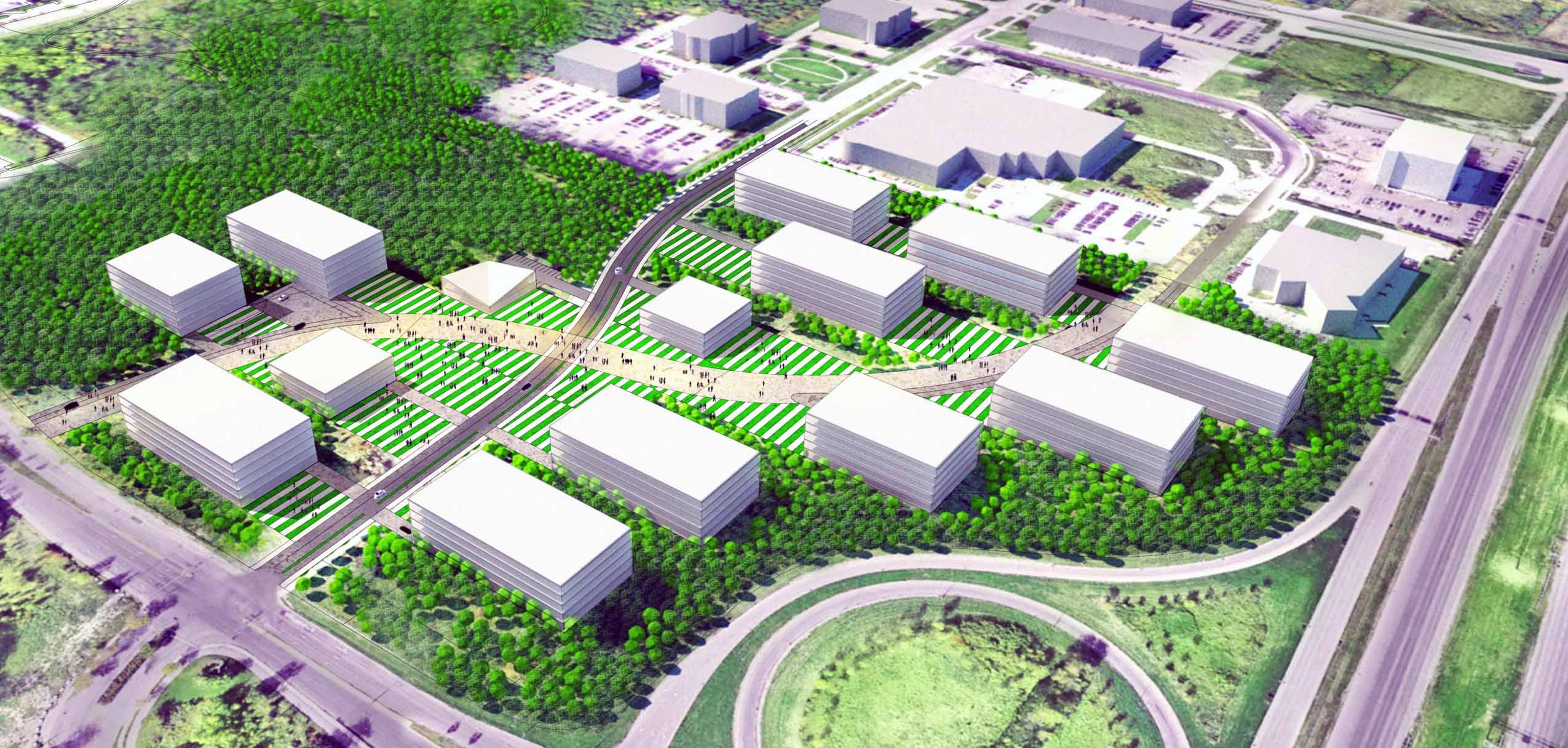
The City of Laval’s emerging downtown core will have a linear park, a high-tech industrial component, an urban boulevard, a cultural district, an esplanade and a commercial/retail street, but no new hospital, a city official acknowledged last week during a webcast public consultation on the massive centre city development plan.

Laval’s planned downtown core has been partly mapped out and is gradually being developed within an L-shaped quadrant bounded in the north by Autoroute 440, Chomedey Blvd. in the west, de la Concorde Blvd. to the south, and a zigzag border in the east consisting of Le Corbusier and Saint Martin boulevards, along with the north/south Exo commuter railway line.

A very large area

Some of the existing and more recent developments in the area include Place Bell, the high-rise condo towers that are now going up, the Centropolis shopping district, the Cosmodôme and future Armand-Frappier museum, and the Carrefour Laval interior shopping mall.

A significant physical obstacle that the city’s urban planners hope to overcome is Autoroute 15, which cuts the downtown core in two. Their plan is to eventually join the two halves with pedestrian overpasses to effectively make Laval’s centre friendlier and more accommodating to walkers.

A ‘vision,’ Boyer says

In some preliminary remarks opening the consultation, Deputy Mayor Stéphane Boyer said the city’s initial “vision” of the downtown core seeks to modernize it, while also retaining human aspects that reflect the existing and unique characteristics of the districts that converge in Laval’s centre.

The City of Laval’s plans for its downtown core extend over the next 15-20 years.

During a public question period, Stéphane Merizzi, who identified himself as a resident living near the city centre, asked whether the planners had thought to include a hospital in the downtown plan.

“There are many residences for elderly people which are being built there,” he noted, while adding that almost certainly more families will also be moving in, and the Laval region will soon be needing a second hospital for its growing population. As it now stands, Laval has only Cité de la Santé in the east, while west end Laval residents have been clamouring for years to have a second hospital built in their area.

No hospital planned

“There isn’t any hospital planned in the downtown area,” replied Perrine Lapierre, a member of the City of Laval’s urban planning staff.

“For now, we have no information about that. But there are several projects underway connected to retirement residences that we are looking at. But for the moment, I have nothing specific mapped out that I can tell you about this evening.”

Merizzi pointed out that in the not very distant future, Laval will be reaching a population of 500,000, while Montreal is also on the verge of hitting the 2 million mark.

Hospital needed, says resident

“It seems to be that a second hospital, at least in the downtown, is something that might at least be studied or taken into account in the plans for the city centre – especially with the plans you have to increase the population in that particular sector,” Merizzi said.

‘A second hospital, at least in the downtown, is something that might at least be studied or taken into account in the plans’

Last week’s consultation wasn’t the first Laval has held on future orientations for the downtown area. An earlier consultation, held in December 2020, found, among other things, that some people in Laval want the city centre to have a lot of greenery and foliage, that the presence of cars should be minimized, that preference should be given to pedestrians and cyclists, and that the area should have an overall ambience that encourages activity at virtually any time of the night or day.

Ongoing up to 20 years

While some elements of the downtown development would be implemented in the next 5-10 years, others would be introduced over a span of up to 20 years. These would include the possibility of building pedestrian overpasses over Autoroute 15 using extensions westward along Jacques Tetrault St. and Tessier Blvd.

As well, the city’s urban planners envision developing a linear park along Souvenir Blvd., and a major redevelopment of Saint Martin Blvd. where it crosses the middle of the downtown core.

The city is accepting written memorandums, containing comments by residents on the downtown development plan, until June 16.

Although the city will be taking the comments into consideration over the coming summer, no fixed deadline has been set for the adoption of a comprehensive plan, and the process could conceivably go on for years.

Laval News Volume 29-16

0

The current issue of the Laval News volume 29-16 published June 2nd, 2021.
Covering Laval local news, politics, sports and our new section Mature Life.
(Click on the image to read the paper.)

Front page of the Laval News.
https://lavalnews.ca/wp-content/uploads/2021/06/TLN-29-16-WEB.pdfFront page of the Laval News, June 2nd, 2021 issue.

Neighbour plows into Chomedey home’s front window… again

For the second time in less than three years, a family living on Eiffel Ave. in Chomedey found themselves having to pick up the shattered pieces of their home’s front window after a neighbour accidentally drove her car partly through it while backing out of her driveway.

A video of the incident last weekend, posted on Tik Tok, shows the aftermath of the incident: the woman who was driving the car was assisted as she got out, while the car itself remained partly lodged inside the home’s living room.

According to the Journal de Québec which reported the incident, no one was injured inside the damaged home.

However, the owner told the Journal that it was the second time in the past 2-3 years that the woman driving the car had driven accidentally into their living room.

Laval woman jailed after embezzling at least $127,000 from mom with Alzheimer’s

A 64-year-old woman from Laval found guilty of misappropriating at least $127,000 from her mother who was suffering from Alzheimer’s disease was sentenced to two years imprisonment on May 25 at the Laval courthouse.

Lynda Patricia Morinville was found guilty in April of embezzling the sum between 2010 and 2013 from her mother, Carmen Buckley.

According to evidence entered into the record during the trial, Morinville purchased a truck and a trailer for vacationing with the misappropriated amounts.

Quebec Court Judge Marc-André Dagenais ruled that through her actions, Morinville had deprived her mother of healthcare, while the mother’s condition deteriorated.

He also stated that she had probably misappropriated additional amounts.

In a separate civil lawsuit filed by her brother, Morinville has been ordered to reimburse the mother’s estate $268,155, including $40,000 in damages and interest.

Weather

Laval
scattered clouds
9.4 ° C
9.4 °
9.4 °
29 %
3.4kmh
31 %
Wed
9 °
Thu
12 °
Fri
12 °
Sat
13 °
Sun
11 °