Home Blog Page 151

Laval’s life insurance bill rises to $191.5 million for five years coverage

New Desjardins contract is 133 per cent higher and most costly ever, says opposition

The City of Laval will be paying Quebec financial services giant Desjardins more than $191 million for employee life insurance coverage over the next five years, in what the official opposition at city hall claims is the largest contract in the municipality’s 56-year history.
The agreement was one of number of expenditures approved by the members of Laval city council during their webcast monthly meeting on Aug. 10.
Cost between city/employees
The Desjardins contract might have gone unnoticed, as do many routine expenditures during council meetings. However, Parti Laval city councillor for Fabre Claude Larochelle singled out the agreement, which amounts to exactly $191,549,842.
While the sum, even when spread out over five years, may seem somewhat staggering – the City of Laval’s total budget for 2021 is $932 million – it’s worth noting that the city itself will be paying only 60 per cent, with the remaining 40 per cent coming from deductions taken from employee salaries.
A 133 per cent increase
However, according to Larochelle, the new contract will raise Laval’s bill for premiums paid on employee life insurance by 133 per cent over the coming five years. “Maybe it’s the best deal, but we didn’t go to public tender, so we don’t know exactly,” he said.
“And it would have shown a little respect to the elected officials to get together a presentation for the biggest contract in the history of the city, and to explain it to the elected officials. Because it’s our residents who are going to be paying for this.
“The tenant on Cartier Blvd. who’s earning $16 an hour and has no group insurance will be paying the $191 million,” added Larochelle. “So, I think we would have deserved to receive some good explanations, which was not the case.”
Position on climate change
With an extremely pessimistic report on global climate change issued the day before the council meeting by the United Nations, Mayor Marc Demers read out a statement at the opening of the meeting in which he outlined the City of Laval’s efforts in recent years to combat environmental warming.
“In the most optimistic scenario, where we would succeed in curtailing greenhouse gas emissions quickly and drastically, the experts are predicting a climate warming by around 1.5 degrees Celsius between now and 2030,” he said, noting that this shortens the window of time since the last assessment by around 10 years.
Action needed, said Demers
“It is clear that among those of us who govern, we are confronted by an urgent need to act and to take even more action than we have until now.”
Among the efforts Demers said the City of Laval has undertaken to do its part to help are a range of subsidies to help pay for electric cars and bicycles, to convert oil-fired furnaces to electric, and a program to recycle old refrigerators containing environmentally-hazardous coolants.
“All these things are steps forward for a greener world,” added the mayor. “We have done a lot, but in light of this latest report, you will understand that I am strongly encouraging those who will follow us on council to do more. We are all responsible to future generations.”
St-Elzéar wetlands threatened
During the public question period, several residents of the Saint-Elzéar Ouest neighbourhood between Curé Labelle and Chomedey boulevards noted that there are number of wetlands in the area, although they maintained the city is doing little to protect them environmentally.
Pointing out that on a recent day in August several residents caught some individuals using equipment in an elaborate attempt to drain one of the wetlands known as the Oasis Bergerac, they asked what sort of commitment city officials would be willing to make to establish better safeguards.
More condos than trees
Vimont city councillor Michel Poissant, who is running for mayor under the banner of his Laval Citoyens party, referred to the Bergerac sector as an “immense heat island” where “there are more cars and condos than there are trees. The wetlands there are important because they are located at the heart of an ensemble of condos.”
While suggesting that Laval appears to still be actively encouraging the development of heat islands by allowing so many condo projects to proceed, he said the city would be better off buying up wooded lands, perhaps with the help of the Quebec environment ministry, and developing more green spaces.
Protection needed, says Boyer
Although the City of Laval owns some of the wetlands in question and others are protected by environmental decrees, Deputy Mayor Stéphane Boyer acknowledged that most are not protected from being drained by private owners.
“We’ll see if there is something we can do to strengthen the protection regulations,” said Boyer, adding that the city began to look at the possibility in recent weeks of buying up private tracts of wetland “because this is in fact a very beautiful area which must be protected.”

Laval mayor Marc Demers speaks during last week’s city council meeting. (Screenshot: Newsfirst Multimedia)

Laval News Volume 29-27

0

The current issue of the Laval News volume 29-27 published August 18th, 2021.
Covering Laval local news, politics, sports and our new section Mature Life.
(Click on the image to read the paper.)

Front page of the Laval News.
https://lavalnews.ca/wp-content/uploads/2021/08/TLN-29-27-WEB.pdfFront page of the Laval News, August 18th, 2021 issue.

Federal prison guards concerned about smuggling and drones

Smuggling of contraband such as drugs and cell phones by aerially-borne drones into federally-administered prisons on Laval’s territory is of growing concern to the union representing guards who oversee prisoners at the penal institutions.

According to the Union of Canadian Correctional Officers (UCCO-SACC–CSN), drones were used in the majority of the 41 documented seizures from detainees at the two federal prisons located in Laval’s Saint-Vincent-de-Paul district.

The union speculates that the with the curfews and restrictions that were in place earlier this year to deal with the COVID-19 pandemic, the use of drones to clandestinely fly contraband onto prison grounds grew.

The union says that over a period of five months, correctional services officers made 11 seizures of contraband alcohol, three involving firearms, five for drugs, 11 for unauthorized medications, and 10 for illicit tobacco and cell phones (which are banned for prisoners).

The union maintains that the employer, the Correctional Service of Canada, has taken inadequate measures to control the unauthorized delivery of contraband packages into the penitentiaries in Laval. UCCO-SACC–CSN says CSC should install new radar systems designed to detect the presence of drones being flown near the prisons.

“These radars will facilitate more efficient detection of drones overflying the penitentiaries, which would be a step in the right direction,” Frédérick Lebeau, president of UCCO-SACC–CSN for the region of Quebec, said in a press release issued by the union.

However, the union maintains that CSC is only planning on implementing five radar units at a total of 49 federal penal establishments across Canada. The union says that in Quebec, the only radar system to be installed soon will be at Donnaconna Institution near Quebec City.

As well, the union claims that the radar systems will only be solving part of the problem – that being detection of incoming drones. “Once the drone has been detected, how are we to get our hands on the package before the detainees do?” Lebeau asked.

According to the UCCO-SACC–CSN, interception of contraband packages being smuggled in by drone will be essential. They also note that other measures being planned by the CSC include securing prison cell windows and possibly also installing roofs over some exterior areas, making them inaccessible to drones.

On top of these suggestions, UCCO-SACC–CSN says CSC needs to implement body scanners inside its prisons and penitentiaries to detect the presence of contraband when it has been smuggled past outside security by drones.

Laval Police seek missing 17-year-old girl

The Laval Police Department is hoping members of the public will help to locate a 17-year-old girl from Laval who has been missing since July 29.

The LPD is seeking help from the public to locate this missing 17-year-old girl.

According to a press release issued by the LPD on Aug. 2, Joelle Adam left her home on that date but hasn’t been seen since. Her family fear for her safety. It is believed she is still somewhere in the greater Montreal region.

Description:

  • Race: Caucasian and speaks French
  • She is 5’ 3” tall and weighs 140 lbs.
  • She has blonde hair and hazel eyes
  • She was last seen wearing a pink top, flowered slacks and beige running shoes made by FILA.

Anyone who believes they have information on the whereabouts of Joelle Adam can contact the Laval Police Department’s Info-Line at 450 662-INFO (4636), or call 911. The file number is LVL 210801-028.

Boating Safety

With the good weather forecast for the next few days, many boaters will be on the waterways. Your nautical patrol police call for caution, however, because our rivers have certain peculiarities, often unknown to boating enthusiasts. Let us think here of the narrow channels, the low or variable water level as well as the cold temperature in certain places.

The City of Laval is surrounded by 2 major bodies of water, namely the Rivière des Prairies and the Rivière des Mille Îles. Regardless of the waterway, boat operators who engage in nautical activities must show courtesy and above all, respect the articles and regulations taken from the Canada Shipping Act.

This means that you must know and follow the laws and rules that apply to your boat, as well as water in which you navigate. It is also suggested to use the Safe Boating Guide Canada as a starting point for safe navigation.

The Criminal Code of Canada also applies to boating. The following are considered criminal acts:

• Driving / guarding and controlling a boat with impaired abilities by alcohol and / or drugs

• Do not stop at the scene of an accident

• Operating a boat that is not seaworthy Five takeaways:

• Wear your PFD or life jacket

• Do not drink alcohol while driving

• Take a navigation course

• Be prepared and the required equipment on your boat

• Beware of the dangers of cold water immersion.

City employees and retirees raised $109,943.08 for the Red Cross

Even though for a second consecutive year the the Red Cross corporate
campaign was done virtually, the employees and retirees of the City of Laval raised $109,943.08.

It is well known that in Quebec, the Red
Cross intervenes on average three times a day as part of an emergency response, for example during a flood or fire.

It provides affected families with comfort, shelter, food aid, clothing and essential items.

The donations received make it possible, among other things, to offer this service 24 hours a day, 365 days a year.

The pandemic has highlighted the fragility of the most vulnerable citizens, hence the urgent need for generosity.

City employees and retirees responded to this call by participating in large
numbers in the campaign.

New LPD police station will serve City of Laval’s western sectors

Mayor Demers and police chief Brochet help get construction underway

On August 5, construction work began on a new Laval Police station on Curé Labelle Blvd. in Saint Martin, with Mayor Marc Demers, Councillor Sandra Desmeules, police chief Pierre Brochet and others starting things off by helping turn the first shovels of earth.

Fall 2023 opening

Located at 2455 Curé Labelle near the Adonis supermarket, the new building will house the LPD’s western Laval police detachment, as well as a police operations centre. The building is scheduled to open in the fall of 2023.

According to the LPD, the services housed in the building will help improve response times to emergency calls while boosting the presence of police in surrounding neighbourhoods. Some of the latest police technology will be installed in the new police station, contributing to the modernization of Laval’s security and police operations.

Improving services

“The western police station is part of a brand-new approach to public security services to be implemented between now and 2023,” said Mayor Marc Demers.

“This new outlook aims towards improving intervention capacity, towards optimizing operational efficiency, while also improving proximity with the residents. So, the security of citizens, which is Laval’s priority, will not only be assured, but will be even better.”

‘The western police station is part of a brand-new approach to public security services to be implemented between now and 2023,’ said Mayor Marc Demers

“The creation of this new police station in the west of the city will offer more proximity in order to take on the evolving reality of the territory, while continuing to assure the security of the citizens of Laval,” said police chief Brochet.

An important milestone

“We are very excited about the idea of crossing this important milestone for our new service offer in public security,” he added.

According to the city, the police station building is being erected with a goal of achieving LEED Gold environmental certification for environmental values.

The construction and certification process are being handled by Laval-based Groupe Geyser which specializes in projects such as this.

The contract for the project was awarded by Laval city council in July following a call for tenders.

Alouettes linebacker Brian Harelimana learned to love football in Laval

0

The 25-year-old played for the Chomedey Blues and Les Loups Curé-Antoine-Labelle

Although Canadian professional football lost one half of a promising duo of siblings when Kean Harelimana retired from the sport after failing to qualify for the 2021 roster of the CFL’s Ottawa Redblacks, his brother Brian will be carrying forth the torch.
Football runs in the Harelimana family. Originally from the African nation of Rwanda, they became residents of Laval’s Chomedey district around 2004 when the two were grade schoolers after living for a time on Montreal’s West Island.
Brian carries the torch
While the younger Kean Harelimana played lineback for the University of Laval’s Rouge et Or before being drafted earlier this year, he was released from the Ottawa Redblacks roster in late July. According to the Journal de Québec last week, Kean believes his best years are behind him and he has formally retired from the sport.
Brian Harelimana (who also plays lineback) is the more fortunate of the two. The 6’ 2”, 228-lb., 25-year-old was selected earlier this year by the league’s Montreal Alouettes after four seasons with the Carabins at the University of Montreal. There he ranked second on the roster in 2019 with 37 tackles and eight knockdowns.
Laval a football town
During an interview with the Laval News, Brian Harelimana acknowledged that Laval is a real football town, where the sport is played and appreciated by a large base of fans. It was in Laval and in Chomedey where his love of football really started to take off.
“When I first moved from the West Island and came to Laval and started playing football here, there were some good players who went through the Chomedey Blues program,” he said, referring to the storied local football club which has been the breeding ground for a good amount of professional football talent.
Although Brian had started playing football on the West Island, he played for two years (2008-2009) for the Chomedey Blues, following which he joined the high school football team (Les Loups) at École secondaire Curé-Antoine-Labelle in Laval.
Fell in love with football
He recalled the first time he felt a strong emotional connection with the sport. “From the moment I first stepped onto a football field, I fell in love with football,” said Harelimana. “But I would say that when I really decided that football was something I wanted to do with my life was when I got to high school.
“When I got to École secondaire Curé-Antoine-Labelle, it was a powerhouse team at that point and it still is. I was picked up by Les Loups and I wanted to be the best player on the team. And I was surrounded by great coaches who taught me a lot about discipline and work ethics. And ever since I got into that program, I knew football was something I wanted to do with my life.”
Failure and success
Brian is a firm believer in the age-old truth that you learn more from failure than you do from success. Having played on teams that often fell just short of winning a championship, he said he experienced disappointment first-hand.
“In these programs there are a lot of expectations and you want to win a championship with them,” he said. “You know what, for some reason I never had a chance to win a championship for any of these teams. These are things that, at the end of the day as a competitor, you want to end up with a championship, which is more important than anything else.
“But I haven’t had the chance to have that. So, you know what drives me to this day is that I have the chance to play in my hometown with the Alouettes. It would be something very special for me to be able to contribute and help my team get to the Grey Cup.”
A highly versatile player
Over the years culminating with his signing to the Alouettes, Brian Harelimana developed a reputation as a football player with versatility comparable to that of a multi-purpose Swiss Army Knife. Whether it’s pass rushing off the edge or dropping back to play in coverage, Brian is comfortable at all three levels. He explained how he ended up evolving in this direction.
“As I was growing and playing, the game changed,” he said. “At the same time, I came to realize that the more you can do on the field helps your team. So, I gradually added to my game. The more you can help out, the more you are useful to your team. It’s something I would even suggest younger players look into that can help out.”
A future NFL prospect?
Although Brian studied industrial relations in university as an alternate career to football, he feels inclined at this point to pursue the sport professionally, be it on the field or as a coach, trainer and consultant. In the meantime, there has been speculation that Brian Harelimana might be a prospect for NFL recruitment.
“I’m taking things a step at a time,” he said last week regarding this potential development. “Right now, we just finished training camp preparing for our first game. I don’t like to look too much ahead. I do what I have to do, and if I’m good enough, they’ll find me. That’s for sure.”

Special waste collection to support the transition to new habits

Ville de Laval organized a special manual waste collection at around 100 collection points in order to support adaptation to new practices.

This is in addition to the collections already scheduled normally. Thus, a large collection was carried out in the last days to ensure that targeted places in the city are free from the accumulation of abandoned residual materials.

This intervention was necessary to maintain the cleanliness of the streets and the quality of the citizens’ living environment.

In addition, several awareness officers who have crisscrossed the territory since last April will continue their work during the next collections in order to better support citizens in sorting residual materials and to explain the recovery solutions available in order to maximize the use of collection bins.

It should be noted that this very targeted operation, which concerns around a hundred collection points, consisted in the collection of tillers of waste abandoned on vacant lots at the end of dead end streets or left on the edge of the street, but also not in conformity with the regulations. usual collection services.

Every action counts!

In a context of labor shortages in the trucking and recyclable materials industry, the management of collections brings up specific issues for which the City must remain vigilant and show constant agility in order to ensure sanitation. of the territory. Last April, nearly 123,000  black bins serving 130,000 doors were distributed across the region. This operation for the citizens living in buildings of 7 units or less has completed the automated collection service 3-way ( brown bin , blue bin , black bin ). However, the new habits required by 3-way collection still require adjustments from citizens. It is also important to emphasize that in addition to the three-way collection, other recovery and recovery solutions are possible. In March of this year, the City adopted its  Laval Residual Materials Management Strategy 2020-2025 with a desire to put in place the right conditions in order to move towards “zero waste” by 2035.

Ways to dispose of residual materials

With the new 3-way automated collection, citizens now have access to several ways of disposing of their residual materials. Waste  Black bin collected once a week, for buildings with 7 units or less. Black bin and other containers picked up once or twice a week, for buildings with 8 units or more and businesses. Recycling Blue bin collected once a week. Compost Brown bin picked up once a week from April to November and every 2 weeks in the winter season, for buildings with 7 units or less.

Implementation of collection in progress, for buildings with 8 or more housing units.

2 reception areas for dry materials

Free for a volume of 12 m 3 per address, per year.

Bulky items collection

For buildings with 7 units or less, the bulky items collection takes place the last full week of each month, one working day before the garbage collection. For citizens whose blue bin and black bin collections are on Monday, the bulky items collection is the following Friday. Exceptionally, in 2021, 6 additional collections are offered.

Old refrigeration equipment

Home collection on call.

Collections of fallen leaves and Christmas trees

The collection of dead leaves is done through the collection of organic materials. The collection  of Christmas trees is done the same day as the collection of recyclable materials.

Mobile ecocentre

Next: September 18, 2021.

Report delays to 311

If citizens notice delays in their collections, they are asked to leave their bins at the curb and wait 2 days before calling 311 to report it.

We need more than vaccines. Cleaner air, please!

None of us will ever forget the summer that was not. The summer of 2020. And the summer of ‘21 will indeed be remembered, particularly by those who have been cheated. They did everything that was asked of them by governments, but now realize they were unintentionally misled. They stepped up and got vaccinated against Covid, twice, with the vaccines bought with our money, by the Trudeau government. Some of those vaccines are AstraZeneca and Covishield, produced by AstraZeneca-SKBio (Republic of Korea) and the Serum Institute of India. Governments around the world are not accepting them, because of the now well-known blood clot issue, and the comparatively lower 60 percent efficacy. Countries are unwavering, despite the approval by the World Health Organization.

Travel agents are having to cancel trips, like the one in Alberta which had 40 family related people booked for Croatia. Nine had Covishield so the whole September trip was cancelled.

We are hearing daily from fully vaccinated travelers, having to cancel their trips because one country or another they had planned to visit, is not recognizing the Canadian government issued and mandated vaccine. (Although there are reports of lax border checks in some countries) I would not be surprised if some creative lawyer finds convincing wording for the basis of a class action law suit against the federal government. The Legault government realizes the ‘mistake’, or the unfortunate consequences of encouraging Quebecers whose first jab was AZ and their second dose was an mRNA, Pfizer or Moderna . This booster shot tries to hide the stumble, by the federal government, admittedly accepted by every province in the country. The third dose will allow Canadians with “two matching doses to circumvent international restrictions on mixed doses”.

I’m not sure there was a choice. A year ago, governments were grasping at anything that would get us out of this, trying to avoid health care systems collapsing. Even if it was only 60 per cent effective, after two arm jabs, it was worth it, they said, because it was at least some protection against this fatal virus.

It could be worse. Pity the 350 quarantined health workers in Indonesia and in other countries who took the China produced Sinovac vaccine, which offers little protection against Covid, and much less against any new variant, especially Delta.

In the end we have to wonder whether a vaccine strategy alone will be enough to stop the next wave. Quebec, BC and Alberta are opening up, too soon for many. In BC for example, masks are no longer required on public transit, not even in stores. Yet six million people remain unvaccinated in Canada. The hard-core anti-vaxxers will not be convinced. Even if they’ve been hospitalized and survive, to the detriment of health workers, they are stubbornly against it. Said one to a TV reporter “it’s because government has an agenda” What!

Many other Canadians simply do not have access, can’t leave the children at home alone, have no internet capability to navigate through the health system, language barrier, mental health and addiction issues, the homeless and the marginalized. Others are just fence sitters. Our system has to reach them. The Quebec passport is an excellent motivator. But there seems no reason to try to convince the hard-core deniers, “for whom it’s kind of a religion.”

Herd immunity was originally a 70% target. But with the arrival of variants, milder symptomatic infection is happening even to those of us fully vaccinated. So we can still transmit the virus. And that virus will find the unvaccinated. They are the most vulnerable. As a result, some epidemiologists call for herd immunity to be “75 to 80-plus percent.”. That is unlikely to happen. What’s the alternative? Let’s make the double vaccine mandatory for all health workers, all teachers, all front-line workers, all government employees. And if you’re going to return to the office, double jabs have to be mandatory. I worry about our kids going back to school soon, with no vaccines for the under 12 years of age.

I’m a big proponent of cleaner air, especially indoors where the concentration of viral particles is often higher than outdoors, and especially where large gatherings are now allowed because of relaxed restrictions. Recirculated air is just bad. Governments should be working with architects and aerosol engineers, to encourage office building owners, school administrators, airlines, to upgrade their HVAC system. Support the use of Ultraviolet germicidal irradiation. It’s ultraviolet energy that kills viral, bacterial, and fungal organisms. Let’s make more use of fresh air.

Despite the miracle performance of the vaccine, just like the virus, our strategies have to evolve. We need more than vaccines.

That’s what I’m Thinking.

Robert Vairo robert@newsfirst.ca

Laval News Volume 29-26

0

The current issue of the Laval News volume 29-26 published August 11th, 2021.
Covering Laval local news, politics, sports and our new section Mature Life.
(Click on the image to read the paper.)

Front page of the Laval News.
https://lavalnews.ca/wp-content/uploads/2021/08/TLN-29-26-WEB.pdfFront page of the Laval News, August 11th, 2021 issue.

Three face charges after kidnapping in Laval and police chase

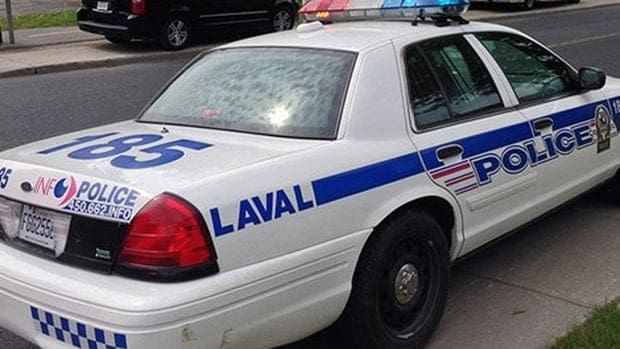
A trio of male suspects, including two adults and a minor, were arrested last week in connection with the armed kidnapping of a 17-year-old Laval resident. The arrests took place in Montreal following a police chase. The suspects are said to have been in possession of a loaded handgun.

Witnesses called police after seeing the victim being accosted in the parking lot of a retail establishment at the intersection of Autoroute 440 and Curé Labelle Blvd in Laval. The assailants allegedly forced the victim to board their car, after which they sped off towards Montreal.

According to an account furnished to media by a spokesperson for the Laval Police, the LPD dispatched several cruisers at high speed, and the suspect vehicle was located travelling along Autoroute 40. When the driver refused to stop, the Montreal Police took over the pursuit which lasted around five minutes.

Finally stopped near the Jean Talon Market in east-central Montreal, the suspects allegedly attempted to flee on foot, but were apprehended by the police. The victim was found inside the suspect vehicle and was uninjured.

LPD investigators were set to meet with the suspects to try to unravel just what was going on between the suspects and the victim.

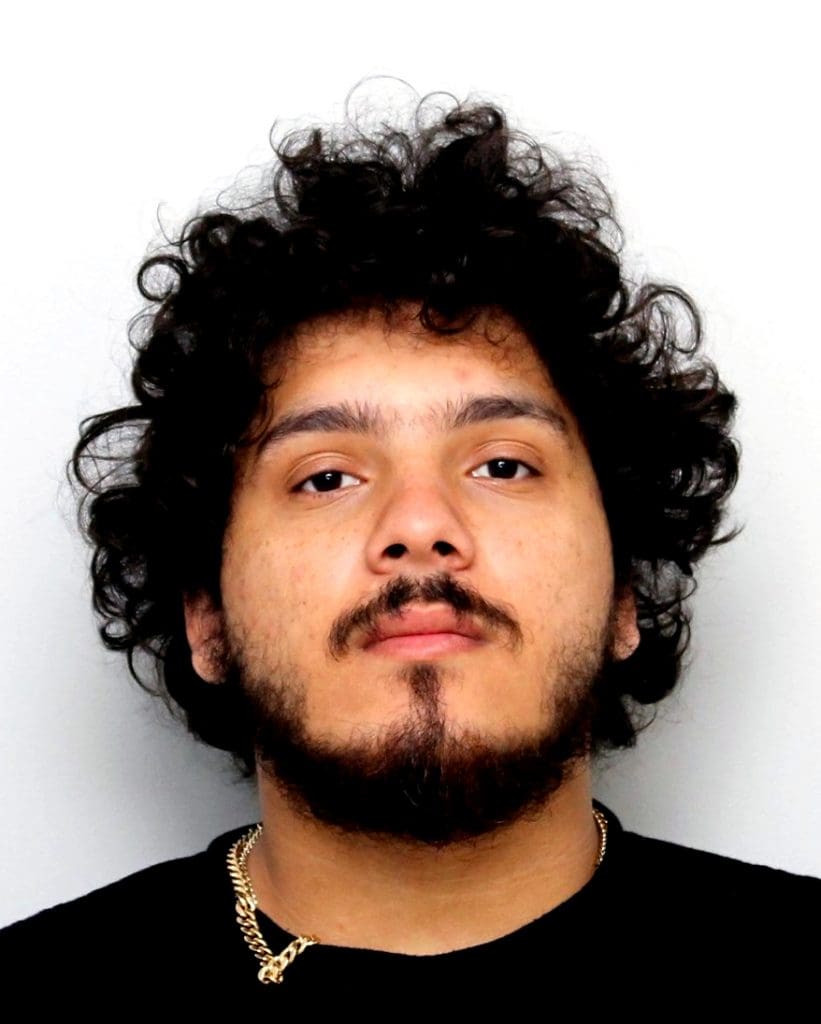
Mohamed Jbara and Midwinrick-Rockley Badette, both of whom are over 18, face charges of forcible confinement, possession of a prohibited weapon and assault. A loaded 22-calibre handgun was found by the police in their vehicle.

A third suspect, who cannot be named because he is under the age of 18, also faces charges in youth court as a minor. He is said to have reached his 18th birthday the day after the alleged events. According to the LPD, the suspects are known to the police for past incidents involving the use of violence.

LPD reports a 1 per cent rise in crime in 2020

In its 2020 annual report, the Laval Police Department says the number of criminal incidents in Laval rose by 1 per cent over the previous year, from 14,556 incidents in 2019 to 14,774 in 2020.

According to the report, which was presented to Laval city council in July by police chief Pierre Brochet, the number of car accidents in Laval dropped by one third (33 per cent), which was the best result in five years.

Laval Police chief Pierre Brochet
Laval Police Chief Pierre Brochet.

Brochet speculated that the COVID-19 pandemic was responsible for this improvement, by limiting the number of vehicles on the road last year because fewer people were travelling to the office. The number of traffic-related tickets issued by the LPD also dropped by 6 per cent.

But the pandemic, which forced many people to stay home, may also have encouraged the spread of child pornography. According to the LPD’s 2020 report, there was a 45 per cent increase in the number of files of this nature opened by the police.

The hike might also be explained by the fact that the RCMP’s National Centre Against the Exploitation of Children on the Internet increased its staff and opened more files of this nature.

In other types of crime, the LPD report said that the number of dossiers opened for fraud rose from 1,000 to 1,241 over a one-year period. Many of these cases involved identity theft and frauds committed on the web or by computer.

The LPD also recorded frauds related to the federal government’s emergency COVID-19 assistance subsidies. The number of incidents of conjugal violence in homes in Laval remained relatively stable, with 980 cases in 2020 compared to 988 the year before.

Weather

Laval
overcast clouds
18.9 ° C
19.4 °
16.8 °
83%
0.9m/s
100%
Sun
29 °
Mon
27 °
Tue
30 °
Wed
21 °
Thu
28 °