September brought ‘smart retail’ and municipal election campaigning
As announced in our September 10 issue, members of the City of Laval’s executive-committee signed a letter of intent stating the city’s interest in purchasing a Sainte-Rose golf course for the purpose of redeveloping it into a public park.
According to a release issued by the city, the undertaking was being done in conjunction with the Communauté métropolitaine de Montréal (CMM), which is a regional government authority with a mandate to eventually conserve 30 per cent of the greater Montreal area’s overall territory for a network of regional parks.
From the left, Mille-Îles PLQ MNA Virginie Dufour, Chomedey Liberal MNA Sona Lakhoyan Olivier and Quebec Liberal MNA for Bourassa-Sauvé Madwa-Nika Cadet were briefed by teachers’ union officials on the impact from the Legault government’s cuts to education budgets. (Photo: Martin C. Barry, Laval News)
The city turned a big-box parking lot into a three-week experiment in ‘smart’ retail it says could help bring life back to its main streets. The pop-up, branded ‘Lab Achetons plus ici’ (“Buy More Here”), was running until late September and put automation front and centre: self-scanning on smartphones, Radio Frequency Identification (RFID) checkout to ring up a basket in one pass, and wired inventory systems.
In a meeting between Laval region teachers’ union reps and three Quebec Liberal Party MNAs, including two from Laval, the union contended there had been a noteworthy drop in the number of university students working to become teachers because of the CAQ government’s failure to address worsening workplace conditions in public education.
Senior officials with the Syndicat de l’enseignement de la région de Laval met at union headquarters in Pont-Viau with Quebec Liberal MNA Madwa-Nika Cadet, the PLQ’s official critic for education and employment, as well as Chomedey PLQ MNA Sona Lakhoyan Olivier and Mille-Îles PLQ MNA Virginie Dufour.
Unlike several mayoralty candidates who were seeking re-election in Quebec’s third-largest city over the past few decades, incumbent Laval mayor Stéphane Boyer was not dangling the prospect of flashy new projects – like Place Bell or the Aquatic Complex, as his predecessors did – when he was campaigning before the November 2 election day.
In spite of claims by opposition critics, incumbent Laval mayor Stéphane Boyer maintained that his administration struck a balance between major projects, such as development of the city’s downtown, and smaller ones in neighbourhoods scattered all over Île Jésus. (Photo: Martin C. Barry, Laval News)
In a wide-ranging pre-election interview with The Laval News, Boyer said he had no major electoral promises to make, but was concentrating rather on smaller and more local things impacting the city’s neighbourhoods.
“The opposition always wants to do wedge politics, while telling people that they are forgotten in their neighbourhoods,” said Boyer, accusing the opposition of spreading disinformation.
A new municipal community centre in one of Laval’s more disadvantaged neighbourhoods was officially declared open by the city as well as community activists who had long urged Laval to move forward with the project.
The Centre communautaire Simonne-Monet-Chartrand is located on Notre-Dame Blvd. on the boundary that separates the city’s Chomedey and l’Abord-à-Plouffe neighbourhoods.
In August last year, the Task Force on Linguistic Policy, one of several interest groups challenging Quebec’s Bill 21, received word they would be permitted to intervene in the Supreme Court of Canada in the Bill 21 case involving the English Montreal School Board and the Quebec government.
Along with many other interveners, including the Canadian Civil Liberties Association, the Canadian Human Rights Commission, the Quebec Community Groups Network and the attorneys general of six Canadian provinces, the Task Force would be present at the Supreme Court hearing on Bill 21,
“The reason that we’re doing this is we want the Notwithstanding Clause to be properly defined,” Task Force president Andrew Caddell said in an interview with The Laval News.
Bill 21 (‘An act respecting the laicity of the State’) was passed in 2019 by Premier François Legault’s CAQ government. It most notably prohibited the wearing of religious symbols by public employees in positions of authority.
For those who might have missed it, the City of Laval celebrated its 60th anniversary in 2025. Among other things, officials with the city marked the occasion on August 6 with something especially meaningful and sure to be continued by future generations: the awarding of the first Order of the City of Laval Medals.
“The recipients of the Order of the City of Laval embody, each in their own way, the values of pride, excellence and solidarity that define our city,” Mayor Stéphane Boyer said during a ceremony held at Espace Montmorency in the heart of Laval’s rapidly-growing downtown sector.
An accomplished painter in addition to her musical talents, several of Quebec singer Shirley Théroux’s art works were featured in a special segment of the 2025 Symposium de Sainte-Rose. (Photo: Martin C. Barry, Laval News)
The city chose seven deserving City of Laval residents from a range of professional backgrounds to be the first recipients. The city held a range of activities over the course of the year to keep the celebration going, including performance events, neighbourhood parties, library events, outdoor theatre, cooking musical performances and culinary happenings.
Our August 13 issue featured coverage of the Corporation Rose-Art 29th annual Symposium de Sainte-Rose. From July 24 to 27, appreciators of quality sculpture and art from all over Quebec, as well as Ontario and other parts of eastern Canada, had gathered in Laval’s historic Vieux Sainte Rose for the event, which has come to be recognized as one of Quebec’s leading and most prestigious outdoor art shows.
Air Canada passengers were left scrambling after more than 10,000 of the airline’s flight attendants took to the picket line. The strike, which lasted from Aug. 16 to 19, grounded flights at the peak of the summer travel season and affected nearly half a million people worldwide.
“I can’t even explain the emotional rollercoaster that we went through,” said Laval resident Rosy Trimboli after the uncertainty turned her family’s first trip to Europe into a drawn-out ordeal. “It’s been hell to say the least,” she said.
Federal and city elections, U.S. tariffs and crime made 2025 an exciting year
It was the year when the Canada/U.S. tariffs issue hit the fan, when elections were being held in Laval as well as across Canada, and most people agreed there was a steep increase in urban violence and gun-related crime.
Although far from the whole story, these three themes dominated much of the news that broke in 2025. In our second issue of 2026, The Laval News explores these and other important newsmakers during the last six months of last year.
Retailers were preparing for longer hours in July
Laval businesses and shoppers were preparing for late nights, but not everyone was sold on the idea. As part of a year-long provincial pilot project, Laval was one of three Quebec cities where retail stores could remain open until 8 p.m. on weekends.
The move marked a shift away from Quebec’s longstanding rules that typically forced stores to close by 5 p.m. on Saturdays and Sundays. The pilot project began late summer, with Laval joining Gatineau and Saint-Georges de Beauce as test cities. The measure could eventually be rolled out province-wide.
With housing shortages turning critical in many regions across the country, the City of Laval was pledging concrete action.
People living in Laval who were searching for a place to live and needed help doing so were being encouraged to call Laval’s municipal housing help hotline (SARL) at 450 505-6025 or by e-mail: sarl@omhlaval.ca.
“The summer holiday season, and especially all the moving taking place on July 1, represents every year a moment of precarity for some Laval residents,” said Mayor Stéphane Boyer
The Youth and Parents Agape Association – known to most people in Laval simply as Agape – “had another productive year,” according to its directors, with a consistent number of English-speaking clients receiving a range of social services in 2024-2025.
Volunteer BBQ chefs are seen with the makings for dozens of servings of pork souvlaki during the 2025 Laval Hellenic Summer Festival at Holy Cross Church in Chomedey. (Photo: Martin C. Barry, Laval News)
“Over the past 12 months, we have provided services, resources, presentations, referrals, emergency food relief and other essential support to over 5,000 individuals,” the non-profit group’s board of directors stated in their latest Report of Activities.
Tabled during Agape’s annual general meeting on June 26, the document offered a comprehensive overview of Agape’s efforts to improve the lives of the underprivileged English-speaking and multicultural communities in Laval between April last year and this past March.
Mother Nature smiled with warm benevolence on Holy Cross Church on Souvenir Blvd. in Chomedey for the 2025 Laval Hellenic Summer Festival. As it was just a few days until Canada Day, the festival was an occasion, as always, to celebrate the country’s origins and multicultural diversity – although it was primarily a celebration of Hellenic culture and values.
System that replaced old sandwich boards is ‘unreliable,’ say several residents
Theophania Rodaros of Antonio St. in Souvenir-Labelle is seen here with one of the city’s new electronic snow removal warning display signs, which are drawing a lot of flack from residents including Rodaros. (Photo: Martin C. Barry, Laval News)
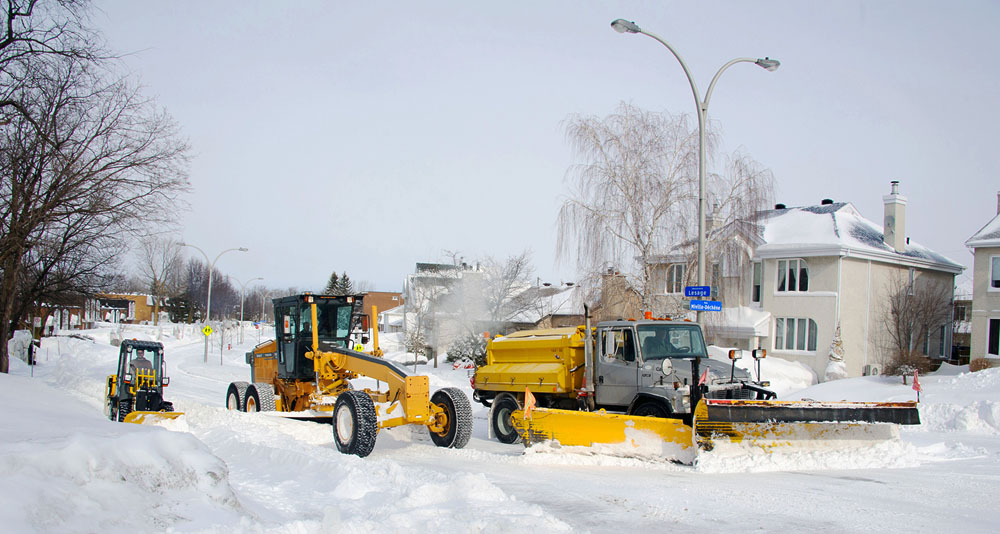
If it’s January, then there are probably complaints about the City of Laval’s snow removal operations and wintertime street parking – even though this wasn’t supposed to be happening.
In January 2024, according to Laval News files, Laval city council awarded a contract for the installation of new electronic parking signage on a range of streets in districts that included Chomedey.
In principle, this was supposed to put an end to a litany of complaints coming from residents all over Laval about the confusing way the city had previously been managing snow removal in residential neighbourhoods.
Changes over past two winters
For decades, the city’s policy (similar to that of other municipalities) was to place wooden sandwich-board signs beforehand in snow banks that were scheduled to be taken away. Another part of the policy forbade wintertime parking on certain sides of the street to facilitate snow removal.
This changed over the last two winters as the city began ramping up the new system of electronic signage. The signs, which are programmable remotely, allow municipal employees to inform motorists and residents in “real time.”
When functioning, the new illuminated panels light up as needed to display specific times when snow removal (or street cleaning operations during the summer) are taking place. The city decided to opt for the system following tests with several pilot projects over the past few years on Laval’s territory.
Complaints about new system
Despite the City of Laval’s hopes that the new electronic signage would lead to a reduction in the vast number of complaints about poor snow removal the city received every winter, The Laval News touched base with several residents last week, complaining about what they maintain is the new system’s failure. As well, complaints about snow removal were voiced by other residents at the most recent city council meeting.
Among the people we spoke to were Theophania Rodaros of Antonio St. in the Souvenir-Labelle district. A resident of the street for the past ten years, she complained that the new signage has proven itself to be unreliable, switching on sporadically, forcing cars to be moved, then shutting off long before any snow removal has actually taken place.
Theophania Rodaros, right, took her problem with the city’s new e-signage for snow removal to Souvenir-Labelle city councillor Sandra El Helou prior to the January 13 city council meeting. (Photo: Martin C. Barry, Laval News)
While The Laval News was interviewing her late Tuesday afternoon last week, one of the illuminated signs on Antonio St. was switched on, forbidding any parking from 7 am to 5 pm. It then switched off at the appointed hour, without any snow removal having taken place during that time period.
Cars moved, but still no snow removal
“Many times they will put the signs for the snow cleanup, residents had moved their cars, but the snow it was never removed, sometimes to a week later,” Rodaros wrote in a written statement she hoped to deliver to the mayor and council at the January 13 city council meeting.
(As it turned out, she missed the deadline a day earlier to register for the public question period.) “Sometimes the red light is on, sometimes not, neither side of the road,” she continued. “To me this is nonsense. I prefer the old system better.”
“I don’t understand how it works,” she said regarding the new warning system. “It is very confusing. Sometimes it goes on late at night, but our cars need to be removed by 7 am. For someone who is retired and is home all day, how are we supposed to know that the sign is on and he has to remove his car because of the snow removal?”
No warning, followed by car towing
Although the city created a snow removal app with a feature that sends users warnings when snow removal operations are scheduled to begin, Rodaros said it failed to inform her one day in early January. Instead, a neighbour told her that a tow truck was about to remove her car from a reserved handicapped parking space in front of Rodaros’s apartment building.
Things only got worse after that. On January 12, she came out onto the street only to see that an $88 parking violation ticket had been left on her car’s windshield after she allegedly failed to liberate the space for a scheduled snow removal operation.
By 5:20 pm when she arrived home that day, some of the electronic snow removal signs on Antonio St. were switched on – “but there was no snow to be cleaned,” Rodaros added.
‘Confusing,’ says a Chomedey resident
Theophania Rodaros is not the only Laval resident who finds the city’s new snow removal warning system has limitations and shortcomings.
During a break at last week’s council meeting, The Laval News spoke with Imane El Idrissi of de Chambly Ave. in Chomedey. (It’s worth noting that like Rodaros, El Idrissi was also unable to address the council on the snow removal issue, because she failed to register for question period before the deadline.)
“Very confusing and conducive to error,” is how Imane El Idrissi of de Chambly Ave. in Chomedey described the city’s electronic signs for snow removal operations. (Photo: Martin C. Barry, Laval News)
“Very confusing and conducive to error,” she said, referring to the new e-signage system. “We no longer know when we can stay parked or when to move our cars and they’re switched on all the time.
“Since their installation last spring, in April 2025, every time it’s lit up, there’s no cleanup,” she continued. “For example today, it was flashing on one side of the street. And what happens? They clean up the other side where there are no lights flashing.”
‘All over Laval,’ says city councillor
Like Rodaros, El Idrissi was also served with parking violation tickets ($88 and $120) after allegedly not moving her car from in front of her home during scheduled snow removal operations.
“The system doesn’t work and the citizens are really fed up,” said Aglaia Revelakis, city councillor for Chomedey. Citing just one of many recent incidents, Revelakis noted that she received complaints on a recent Sunday morning from residents of Sinclair St. about being forced to move their cars, after which the snow removal crew didn’t turn up anyway.
“It’s all over Laval, not only in Chomedey,” she said. “The lights go on, but the snow [removers] don’t pass. It’s confusing the residents. And then, of course, after a while the citizens won’t pay any attention anymore to the lights.”
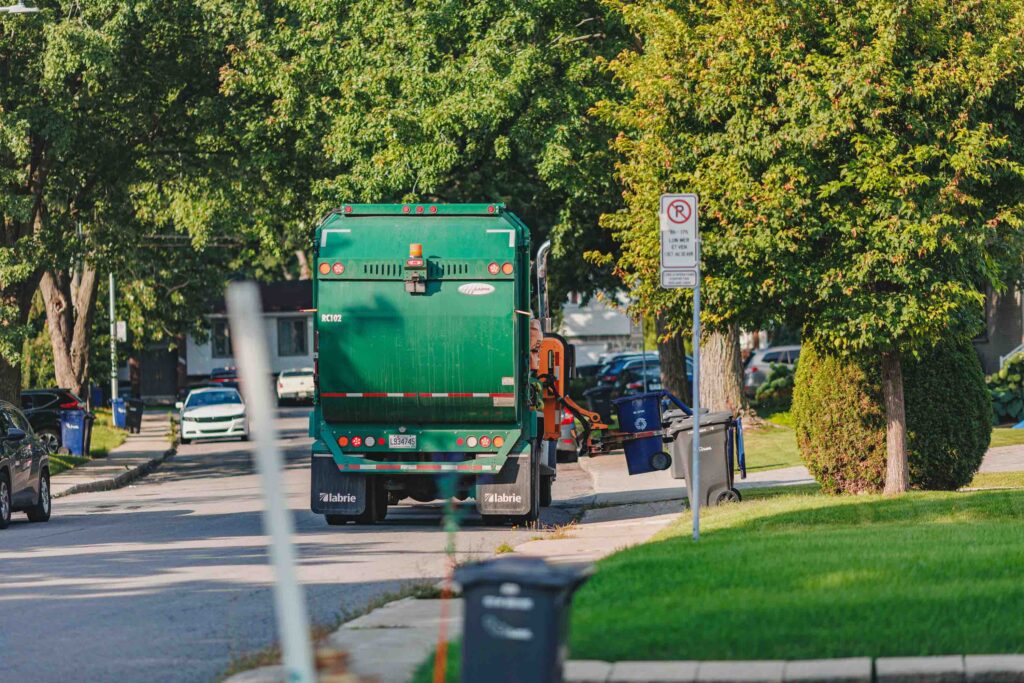
Starting on April 1, garbage collection (black bin) in Laval will be taking place every two weeks. At the same time, the frequency of recycling collection (blue bin) will also be adjusted to every two weeks.
Both are due to a change implemented province-wide by the Government of Quebec as part of the modernization of waste collections.
The two collections will be coordinated on alternate days to optimize the work of the collection teams and facilitate the adoption of these new habits for residents. The city says it is following the lead of other major cities in the province, while also meeting the requirements of the Montreal Metropolitan Community (CMM).
In 2020, 62 of the 82 municipalities belonging to the CMM already offered household waste collection at a frequency of once every two weeks or less. These municipalities included Longueuil, Terrebonne, Blainville, and Mascouche.
An ‘eco-responsible’ change
“Laval is joining other major Quebec cities in this eco-responsible shift that has become essential,” says Laval city councillor for Sainte-Dorothée Ray Khalil, who is vice-president of the Laval executive-committee.
“We know this is a significant change in people’s habits and will be monitoring the situation closely to ensure the smooth transition to waste collection and that residents are well supported throughout this process,” he added.
Not only will optimizing waste collections reduce greenhouse gas emissions, according to the city, but it is also expected to generate significant savings for the city on transportation and operating costs, estimated at 22 per cent.
The amount of garbage sent to landfills is also expected to decrease. The city says it is another step towards reaching a target for waste produced annually per capita, which is one of the objectives of Laval’s Waste Management Strategy.
A transition well underway
The decision is part of an ongoing transition that the city has begun in collaboration with its residents. Since 2021, says the city, several concrete actions have been taken to reduce waste sent to landfill.
These include: the introduction of the black bin, the implementation of a monthly bulky waste collection, a ban on single-use plastics, and an expansion of services, including a waste disposal centre, a dry materials drop-off area and special collections.
More recently, the City of Laval adopted a bylaw making waste sorting mandatory, and a pilot project for a bulky waste collection service by reservation was launched. The city says that in 2024, the full implementation of the brown bin in residential areas marked a major step towards sustainable and responsible waste management.
A survey conducted by the City of Laval in 2024 revealed that nearly three-quarters of Laval residents (74.6 per cent) reported having already taken concrete steps to reduce the amount of waste sent to the black bin or are in the process of doing so. For the city, this confirms the effectiveness and relevance of the measures implemented to date.
Getting with the bins
Furthermore, 66.1 per cent of Laval residents reported themselves as being already actively participating in the blue and brown bin collection throughout the year. Based on this data, the city has implemented various measures to support residents in continuing the transition, especially by redoubling awareness-building and education efforts since last summer.
The city says other concrete actions are underway to facilitate these changes, particularly in denser neighborhoods. These include validating an (if necessary) adjusting waste collection equipment in buildings with 24 units or more, providing support to property owners, and converting some buildings to container systems.
The size of the blue bin may also be adjusted, says the city, or a second bin may be provided upon request, if a smaller bin is no longer sufficient due to improved recycling habits.
‘It was truly chaotic,’ Fabreville man complains to council after recent snow and ice storms
The City of Laval’s ability to properly maintain its sidewalks and roadways with salt and abrasives during the challenging winter months was closely questioned by several residents during the January 13 meeting of city council.
Laval mayor Stéphane Boyer answered questions about the city’s snow and ice clearing operations during the January 13 municipal council meeting for residents complaining about dangerous sidewalks and streets this winter (Photo: Martin C. Barry, Laval News)
“Over the last few weeks, there were several instances of black ice which transformed various streets and sidewalks in the City of Laval, making them chaotic for the residents and also for motorists,” Jean-Claude Clerger of Russell St. in Fabreville told the mayor and councillors during the question period.
Could anything be done?
Clerger said he had personally fallen on the ice, nearly breaking a leg. He asked Yannick Langlois, the city councillor for the district of l’Orée-des-Bois, “Was there not something that could have been done as a prevention to avoid this kind of catastrophic situation? Because it was truly chaotic.”
He asked Councillor Langlois whether he was satisfied with the current situation. “Shouldn’t the city be doing more when it is faced with situation like this?” He also asked Mayor Stéphane Boyer what the city plans to do to improve security.
Another resident, Mrs. Guirlande, asked what alternative measures the city uses to neutralize ice on streets and sidewalks when the temperature is too low to allow salt to be used.
Is equipment lacking?
She also asked whether the city has a sufficient amount of equipment (especially abrasive spreaders) to deal efficiently with periods when sidewalks and streets ice over. And finally, she asked how the City of Laval matches up to other large cities for dealing with ice storms.
Another resident who sent in a question by e-mail complained that over the last five years he has lived in Laval, he’d become discouraged by the City of Laval’s failure to listen to complaints about snow and ice removal, as well as other issues at other times during the year.
“The snow gets picked up only once each season, and this is after several complaints, which does not help traffic flow and parking,” he said. “The city does not put salt down after snow removal, which complicates the situation for pedestrians and especially children while increasing the risk of falling.”
Many complaints received by the City of Laval’s ombudsman’s office concerned snow removal, the ombudsman reported last year.
Strategy under review, says Langlois
He went on to say that recycling and garbage removal trucks are also hindered, while school bus traffic adds to the danger on streets that haven’t been properly cleared of ice and snow.
Responding to the questions over problems in his district, Councillor Langlois maintained, “We have one of the most productive sectors among the municipal garages in our area. Sector four is envied by many of my colleagues and it is very much up to the task.
“However, you are right, not everything is perfect, and we have decided to review our strategy for the snow and the ice,” he added, while pledging to go out and see for himself on specific streets “and take whatever actions would be necessary if that is the case.”
Mayor Boyer said that given the average wintertime weather conditions, the city can’t get all its streets cleared of ice and snow within 24 hours, and so has to prioritize them.
Snow removal priorities
Among the first to be cleared are those adjacent to schools and hospitals, as well as boulevards and autoroute entrance ramps, followed by collector streets and finally residential avenues.
“All of this takes several days,” he said. “Snow removal is always difficult because we would rather everything could get done quickly, but logistically it’s impossible. And it’s noteworthy that it’s no different in other cities in Quebec.”
According to the mayor, several days of storm activity in a row can substantially slow down the snow and ice clearing operations, made all the worse by the fact that under those circumstances public works crews have to return to the top priority areas before they get around to the lower priority ones.
Action Laval city councillor for Saint-François Isabelle Piché said the opposition party had received several complaints about bad ice and snow removal in several Laval districts over the past few weeks. (Photo: Martin C. Barry, Laval News)
Costs are another factor, Mayor Boyer continued, with the average bill for a single snow removal operation being around $5 million.
Also a money issue
For that reason, he suggested, a decision might sometimes be made (when a second storm is expected soon after a first storm, or a temperature increase is coming) to delay snow and ice removal operations in order to save money for taxpayers.
He also acknowledged that when the temperature goes down drastically, as it did a few days after New Year’s, immediately following a thaw, salt spread on the sidewalks and streets works far less efficiently – “although that doesn’t mean we don’t use it,” Boyer said.
Action Laval city councillor for Saint-François Isabelle Piché said the opposition party had received complaints about poor ice and snow removal in recent weeks from several Laval districts, including Fabreville.
She noted that the city’s public works department had several pieces of its salt spreading equipment out of action at the time, while blaming it on “poor planning” by the Boyer administration.
Consultation sought on mini-farm closing
Also during the council meeting, Councillor Piché tabled a resolution calling on the city to hold a public consultation on the future of the mini-farm at the Centre de la nature, which the Boyer administration plans to close as a cost-saving measure.
The resolution proposes “that the executive-committee mandate the City of Laval’s general management to hold a public consultation regarding the future of the Centre de la nature’s small farm, including options for maintenance, renovation, relocation or partnership, before any final decision is made regarding its closure or transformation, and that the results of this consultation be made public and presented to city council.”
Cabinet ministers, MPs, MNAs and city councillors pay homage at salute to Tamil Heritage Month
Up to 3,000 people of Tamil origin turned out at the Château Royal congress centre in Chomedey last Sunday afternoon to be part of one of their community’s most important annual events.
The eighth annual celebration for Tamil Heritage Month was produced by the Quebec Tamil Heritage Month Federation, in conjunction with more than 50 organizations in the Quebec Tamil community.
Tamil folk dancers entertained more than 3,000 guests during the Tamil Heritage Month event. (Photo: Martin C. Barry, Laval News)
Elected officials from the federal, provincial and municipal governments, including the cities of Laval and Montreal, came out to express their support for the Tamil people, while also paying homage to the contributions of Tamils since their arrival in Canada.
For those from the Tamil community, it was an opportunity to reinforce their identity as a people, while for others it was a chance to learn about a community that has grown numerically and in its influence in Canada over the last few decades.
Today and the next generation
“This is an event that is very important for the Tamil community today and for the next generation,” Karikalan Jeewaratnam, a prominent member of the Tamil business community in Laval, said in an interview with The Laval News.
“We are very thankful for all the support we have received from all the elected officials from the federal, provincial and the city councils,” he added.
Federal Minister of Public Safety Gary Anandasangaree (seen on stage with fellow cabinet minister Marc Miller, Laval-Les-Îles Liberal MP Fayçal El Khoury and other government officials) addressed up to 3,000 people of Tamil origin during the Tamil Heritage Month celebration at the Château Royal last Sunday. (Photo: Martin C. Barry, Laval News)
Since 2010, Tamil Heritage Month has celebrated the history of Canada’s Tamil community and its contributions to the social, cultural, political and economic strength of Canada.
The federal government declared January Tamil Heritage Month, recognizing the importance of the Tamil community on a national basis.
While recognizing the Tamil community’s accomplishments and tracing its roots, Tamil Heritage Month also provides opportunities to celebrate the Tamils’ history in Canada.
More than a half-dozen members of Laval city council climbed the Château Royal stage to express their warm feelings towards Laval’s growing Tamil community. (Photo: Martin C. Barry, Laval News)
A Tamil calendar celebration
The month of January was chosen as Tamil Heritage Month for a number of reasons. The Pongal festival, the most important and widely-celebrated festival among Tamils around the world, falls in the middle of the month.
Pongal is both a time of thanksgiving for the blessings of the past year and a time to look forward to the start of a new year. The first month of the Tamil calendar, Thai, begins in the middle of January.
Throughout the morning and early afternoon, members of Tamil cultural and community groups performed musical numbers and folk-dance routines. Short documentary film presentations were also projected, providing background on the history of the Tamil people, as well as more recent developments in Sri Lanka.
Chomedey city councillor Aglaia Revelakis was among the elected officials who were presented with colorful ceremonial shawls.Laval-Les-Îles Liberal MP Fayçal El Khoury is seen here with Quebec Tamil community officials.
The current issue of the Laval News, volume 34-02, published on January 21st, 2026. Covering Laval local news, politics, and sports. (Click on the image to read the paper.)
Speedier interventions expected, along with improved emergency coverage
According to City of Laval officials, significant improvements are being made to the city’s First Responder program to enable the Laval Fire Department (SSIL) to respond more effectively everywhere in Laval, with the ultimate goal being to save more lives.
The City of Laval and Urgences-Santé (the Montreal-based ambulance service) have enhanced and renewed their agreement, thereby improving First Responder services through enhancements that are expected to directly benefit the public.
The official announcement was made on December 17 at Fire Station 6 in Laval. The new one-year agreement includes optimized SSIL interventions and deployments to provide better emergency coverage for the city’s residents.
Stéphane Boyer, Mayor of Laval, Patrick Taillefer, Director of the Laval Fire Department, and Michel Garceau, president and CEO of Urgences-Santé, met at Station 6 (Laval-Ouest) in December to formalize the new agreement. They were accompanied by Pierre Brabant, city councillor for Vimont, Flavia Alexandra Novac, city councillor for Sainte-Rose, members of both organizations, and first responders from Station 6. (Photo: Vincent Girard, City of Laval)
Improved emergency access
Specifically, says the city, more people experiencing health distress will receive rapid assistance from First Responders. Now, all extreme emergency calls (priority 0) will automatically trigger an intervention, significantly increasing the chances of survival.
Also under the new agreement, coverage is being extended to significant emergencies (Priority 1) when the ambulance takes more than 10 minutes to arrive.
In addition, firefighters will be released more quickly after each call, resulting in a faster response to all urgent incidents in the region. As well, beginning in 2027, designated First Responder teams will answer to cases of severe hypoglycemia.
(Hypoglycemia, or low blood sugar, occurs when glucose levels drop below a healthy range (around 3.9 mmol/L or 70 mg/dL), causing shakiness, hunger, confusion, sweating, rapid heart rate and weakness. It often happens in people with diabetes from too much insulin, missed meals or intense exercise, but also reactive hypoglycemia can occur after meals.)
Improvements since 2022
Since its implementation in May 2022, according to the city, Laval’s First Responder program has transformed emergency response in Laval in the following ways:
• 6,016 interventions carried out by SSIL teams;
• 409 lives saved in life-threatening situations;
• Reduced response time: from an average of more than 11 minutes to receive medical assistance to an average of less than 7 minutes and 30 seconds when first responders are dispatched;
• 100 per cent of firefighters (306 in total) are trained and certified as Level 1 First Responders (PR-1);
• First Responders intervene in life-threatening medical emergencies: high risk of cardiorespiratory arrest, allergic or anaphylactic reaction, medication or drug overdose, respiratory failure, and unconscious individuals;
• In addition to being First Responders, Laval firefighters possess expertise in water and ice rescue.
Shorter response times
“Laval is a vast territory to cover, and this valuable partnership with Urgences-Santé plays a vital role in public safety,” said Laval mayor Stéphane Boyer, adding that Laval’s nine fire stations, strategically located throughout the territory, allow response times for medical assistance to be shortened.
“Our firefighters can quickly provide first aid in medical emergencies while awaiting the arrival of paramedics,” he continued. “We are very proud that the expertise of our fire department is now inspiring all first responder services in Quebec.”
Going the extra mile
Since First Responder service was implemented in 2022, SSIL teams have responded to 526 cardiac arrests, including 37 resuscitated individuals who were revived before the ambulance even arrived, according to Laval fire department director Patrick Taillefer.
“This enhanced renewed agreement allows us to go even further in protecting the lives of Laval residents,” he said. “Laval is a leader in this field and will even be invited to sit on the new provincial First Responder committee of the Ministry of Health and Social Services (MSSS).”
“Urgences-santé and the City of Laval are joining forces to offer citizens an efficient and rapid pre-hospital response chain,” said Michel Garceau, Urgences-Santé’s executive-director. “Thanks to the commitment of first responders, lives are saved and morbidity is reduced.”
A convenience store located on Montée du Moulin in Saint-François was the target of a suspected arson attack during the late evening of December 30.
“10:39 PM // Building fire on Montée Du Moulin in the Saint-François sector,” the Laval Firefighters’ Association posted on their X feed.
“Commercial building. Flames visible in the convenience store. Code 10-07, intervention required. File forwarded for investigation,” they added.
The incident, which occurred at a small shopping mall just east of Marcel-Villeneuve Avenue, was reported to 911. The Laval Police dispatched several patrol cars to the scene, sending seven units, 26 firefighters and officers from the Laval Fire Dept.
The first firefighters arrived on the scene at 10:44 p.m. when the business was closed but engulfed in flames. The firefighters noted that a front window had been shattered and they immediately began attacking the blaze.
By around 11:06 p.m., they had brought the fire under control, although smoke had spread to neighboring businesses by then. Around 11:30 p.m., after the discovery of possibly incendiary materials, the LFD transferred the case to the Laval Police for investigation and analysis for evidence of arson.
It should be noted that the firefighters found no smoke detectors. The damage was estimated at approximately $30,000 for the building and $30,000 for its contents.
Faulty fireplace sets home on fire in Saint-François
A faulty installation or design in an indoor fireplace at an old single-family home on Rang du Haut Saint-François in Duvernay is believed to be the cause of a fire on January 3 that resulted in over $200,000 in damage.
“00:52 // Building fire on Rang Haut-Saint-François in the Duvernay sector,” the Laval Firefighters’ Association posted on their X feed. “Residential building. Smoke visible with fire spreading to the roof. Code 10-12, second alarm,” they said.
The incident, which forced two people to seek out temporary accommodation, was reported to 911 at 12:40 a.m. The Laval Fire Dept. dispatched 34 firefighters and officers, for a total of nine units, to the area located just west of Pie-IX Boulevard.
The first firefighters arriving on the scene easily spotted smoke, particularly at the roof level of the century-old building where flames had rapidly spread.
Faced with a complex situation due to the age of the building and a significant amount of interior wooden structure, the firefighters determined that a wood-burning stove connected to the chimney had been venting combusted gases into the attic.
After confirming the presence and functionality of a smoke detector, allowing for a safe evacuation, the firefighters covered furniture on the first floor to shield it as much as possible from water damage. They were finally able to declare the blaze under control at approximately 2:06 a.m.
An estimated $175,000 in damage was caused to the building’s structure and $50,000 worth to the contents. The Laval Fire Dept. is reminding residents to always make sure that any fireplace or other heating appliance meets safety standards.
Chomedey residential fire being investigated
Laval Police are investigating a suspicious house fire that broke out during the early hours of January 4 in a residential area of Chomedey.
The blaze forced the evacuation of six people. Three of them, who had inhaled smoke, were transported by ambulance to hospital. The fire broke out at 4:51 a.m. Thirty-five firefighters and two chiefs responded to the blaze.
“5:00 AM // Building fire on Edmond-Rostand Street in the Chomedey sector,” Laval’s firefighters reported on their X feed. “Two-story residential building. Flames visible. Code 10-09, full response, potential for escalation. File forwarded for investigation.”
The family home sustained extensive damage, estimated at approximately $400,000, according to an initial assessment by firefighters. However, their intervention contained the flames and prevented the fire from spreading to the adjacent building, explained Ms. Bolduc-Jacob. The cause of the fire is not yet known, but the case has been turned over to the police for investigation.