Monday, February 23, 2026
8 C
Laval
spot_img
Home Blog Page 178

Ticket offenders, rather than close movie theatres, says Cinémas Guzzo head

Quebec more interested in ‘perception,’ than dealing effectively with COVID, says Vince Guzzo

Although the provincial government announced last week that $50 million in compensation will be paid to the operators of cultural venues and live theatres to offset the impact of the COVID-19 pandemic, film theatre chain executive Vince Guzzo is wondering why Quebec is penalizing companies like his, while doing nothing to actually enforce COVID-19 sanitation regulations.

Closed until Oct. 28
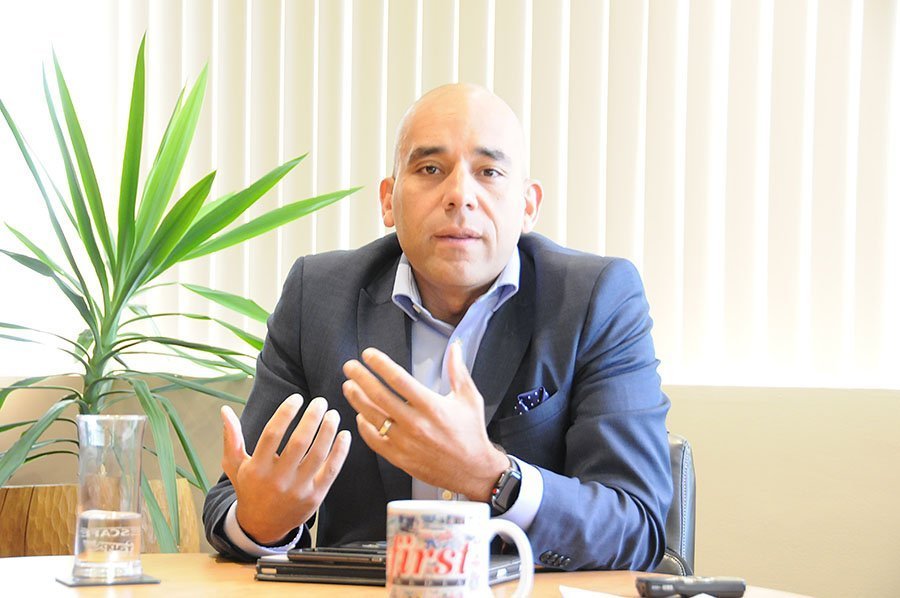
Never one to mince words, Cinémas Guzzo president Vince Guzzo, centre, says the Quebec government seems interested only in creating a “perception” that it is actively doing something to deal with COVID-19, while needlessly hurting movie theatre owners by forcing them to close during the pandemic. File photo: Martin C. Barry, Newsfirst Multimedia

Under new regulations that came into effect in the Montreal region last week in the highest-alert “red” zones decreed by Quebec to combat the spread of COVID-19, cinemas, bars, theatres, casinos and museums are closed from Oct. 1 to Oct. 28.

Guzzo, whose family founded the Cinémas Guzzo chain 46 years ago, is incensed that the government seems to prefer not taking concrete action against individuals who are openly breaking sanitary rules, while penalizing companies by forcing them to shut – even though they’ve complied with all the regulations.

A feeling of powerlessness

“The day that my behavior – that is what I do or don’t do – is no longer relevant to what happens, and whether my theatres are open or not, means I have become the most powerless person that exists,” Guzzo said in an interview this week with Newsfirst Multimedia.

‘Whoever doesn’t respect the rules, shut them down. But don’t shut down a whole industry,’ says Cinémas Guzzo president

“In other words, if you’re closing my theatres not because we violated confinement laws, not because we have COVID cases coming out of movie theatres, not because we’re a high-risk market – and you’ve got to remember we were shut down beginning in March – once we re-opened and after operating in July, August and September and there were zero cases coming out of movie theatres, and zero media coverage saying we were not respecting the rules – and everybody was saying there was no issue with movie theatres – but the government still shuts us down.

A perception problem

“But they don’t shut down shopping malls, they don’t shut down gyms and other stuff,” he continued. “So now there’s a problem. And that problem is that we’re being shut down for perception reasons. That’s where the problem is: we are literally in a position where whatever we do or whatever we don’t do is irrelevant.”

While noting that Premier François Legault made it abundantly clear while announcing the new regulations last week that the government was determined to stop people from socializing, Guzzo said he was outraged that Quebec didn’t include parks and other publicly-owned gathering places in the ban.

“When you see that they couldn’t control who was playing the tam-tam at the park,” he said, noting the public drumming events that drew large crowds to the edge of Mount Royal this past summer, in defiance of the government’s standing recommendation against holding large gatherings.

Damned if we do or don’t

“Don’t blame us – shut down your parks,” added Guzzo, maintaining that Cinémas Guzzo meticulously followed all the sanitation rules imposed by the government. “You know, we’ve actually been controlling our premises. It’s a very awkward situation to be in. Damned if we do and damned if we don’t.”

Guzzo’s reading of the government’s message goes like this: “We’re going to shut down theatres because you are a socializing outlet. Whether you are a problem socializing outlet or not is irrelevant to them. We’re shutting you down, they’re saying. Which is what’s bothersome.

“My argument with the Legault government is: whoever doesn’t respect the rules, shut them down. But don’t shut down a whole industry. Shut down the restaurant that’s violating the rules. The bar that’s violated the rules. Shut down whoever’s not getting these rules respected.”

Why no tickets, asks Guzzo

Regarding the province’s notable hesitation up to now to aggressively ticket individual sanitation rule violators, Guzzo said, “They should be giving tickets. When CNESST [Commission des normes, de l’équité, de la santé et de la sécurité du travail] comes into my theatres or onto my construction sites, if there’s something wrong I get a ticket. So how come the government isn’t doing that with such a severe situation as COVID-19?”

(For the record, Guzzo pointed out that Cinémas Guzzo wasn’t cited even once since re-opening in July for any alleged failure to abide by the COVID-19 sanitation regulations.) He suggested that the government seems more interested in maintaining a “perception” that it is taking effective action to deal with the pandemic, while not going after those who are actually causing it and making it worse.

Former SWLSB chair Steve Bletas remembered for strength and endurance

Maple planted at board HQ in Rosemère honours Bletas, who died last May

Friends, colleagues and members of the family of the late Steve Bletas gathered on the front lawn outside the Sir Wilfrid Laurier School Board’s headquarters in Rosemère on Sept. 23 to plant an ornamental maple tree in memory of the SWLSB’s founding chairman who passed away suddenly last May.

Members of Steve Bletas’s family are seen here outside SWLSB HQ in Rosemère during the ceremony during which a maple tree was planted in memory of the school board’s founding chairman. (Photo: Martin C. Barry, Newsfirst Multimedia)

The board’s first chair

After the Quebec government decided to reform the province’s former faith-based public education system and create new secular school boards in 1998, Steve Bletas was the SWLSB’s first chairman, serving for 14 years until May 2012.

Before becoming the SWLSB’s chairman, Bletas had been a Parent Commissioner on a Provisional Council representing the English minority for their high schools at the Commission scolaire Chomedey-de-Laval, president of Laval Catholic High School’s Orientation Committee and president of Sacred Heart Middle School’s school committee.

Also coached handball

As well, Bletas was a handball coach for the boys’ teams at Terry Fox Elementary, Laval Catholic High School and at Sacred Heart Middle School. During his time as SWLSB chairman, Bletas was instrumental in board development, in negotiations for land grants and other agreements with municipal authorities and provincial officials.

He was also instrumental in acquiring funding for new schools in Rawdon, Blainville and Repentigny, as well as renovation grants for schools in Chomedey (John F. Kennedy Elementary) and Duvernay (Jules Verne Elementary).

Helped start Laurier Foundation

As one of the founding members of the Sir Wilfrid Laurier Foundation, Bletas’s time in office saw highly successful fundraisers held for the benefit of students and schools on the SWLSB’s territory. He was regarded as a hands‐on chairman developing important and close ties with students, parents and municipal and provincial politicians.

“There’s never an easy way to speak about a friend who’s left us too soon,” said current SWLSB chairman Paolo Galati, who first met Steve in 2006 at the opening of St-Vincent Elementary School.

He dreamed big, said Galati

“Steve and I became friends almost instantly. We had many things in common. But the one thing that stands out the most is that both Steve and I dream big. Not only was Steve a dreamer, he was a doer. He walked the talk as we would say.”

‘Steve was a visionary and a passionate and fearless leader,’ said current SWLSB chairman Paolo Galati

Steve Bletas dedicated most of his life to English public education, Galati pointed out, and was involved in all aspects of education for many years in various capacities.

“Steve was a visionary and a passionate and fearless leader,” Galati added. “I have always had great respect for him and all that he has accomplished. The Education Ministers he worked with during his tenure knew him by his first name. He had their cell phone numbers on speed dial. I was always impressed by the many contacts Steve had. He knew everyone. And everyone knew him.

Also active with QESBA

“Steve was also a founding member of the Sir Wilfrid Laurier Foundation, created in 2004. He’s the one who actually introduced me to the foundation in 2012. He was part of the executive committee of the Quebec English School Boards Association and was a member of many different local and provincial education tables over the years.

“Despite the few bumps along the road, Steve has certainly left a legacy at the Sir Wilfrid Laurier School Board. Eva-Marie and Michael, you can be proud of what your father has accomplished. Steve, may you rest in peace my friend.”

Strength and endurance

The SWLSB’s communications coordinator, Maxeen Jolin, said the board and employees decided a maple would be the most appropriate way to remember Steve. “This tree symbolizes strength and endurance and I think everyone who knew Steve can definitely agree these are characteristics that he had,” she said.

Bletas’s daughter, Eva-Marie, who is an elementary school teacher with the SWLSB, said her father loved being involved in public education issues. “He lived for this. It was a passion for him,” she said.

Construction starts on Laval’s Firehall Six

Laval-Ouest will have modern, new facility by next fall

Last week, Mayor Marc Demers joined Laval city councillor and executive-committee member Sandra Desmeules as well as fire department head René Daigneault for a ceremony marking the official start of construction of the new firehall to be built at 5580 Dagenais Blvd. West in Laval-Ouest.

The City of Laval is hoping that Firehall Six will obtain a LEED Gold certification for environmentally-sustainable design and construction.

As well, according to the city, the building will be constructed in conformity with provincial requirements in the revised 2015-2019 fire safety plan to have 10 firefighters at the scene of a blaze within 10 minutes of a call in 90 per cent of interventions.

The new firehall will be under construction for the next year or so and is scheduled to be inaugurated in the autumn of 2021.

Quebec releases report on COVID-19 outbreak at CHSLD Sainte-Dorothée

Ministers Blais and Dubé say steps are being taken to prevent future occurrences

A provincial investigative report completed last summer but only released by Quebec last week on the reasons behind the deadly COVID-19 outbreak at CHSLD Sainte-Dorothée lays the blame on technical shortcomings as well as a lack of personnel at the long-term care facility.

The report on CHSLD Sainte-Dorothée was tabled by Minister for Senior Citizens and Caregivers Marguerite Blais and Health and Social Services Minister Christian Dubé, together with another report on the even more devastating outbreak which took place around the same time last spring at the Herron private residence for seniors in Dorval.

Action taken, says Quebec

Both Blais and Dubé insisted that, after the revelations about the devastation from COVID-19 that was taking place at the two residences became known, government and health authorities had already begun to take action so there would be no repeated situations.

More than 100 fatalities from COVID-19 were recorded at CHSLD Sainte-Dorothée by the middle of this summer, ranking the residence among the hardest-hit in the province during the ongoing pandemic.

The report on CHSLD Sainte-Dorothée said that although the residence had been offering quality services prior to the pandemic, a lack of personnel and other factors contributed to a rapid deterioration in living conditions as the pandemic took hold.

Reports were delayed

According to a statement from the provincial government, the reports weren’t released sooner because ministry officials wanted first to analyze the findings, so that appropriate measures could be taken to deal with the problems.

“It is clear to us that the pandemic alone cannot justify what happened,” said Blais. “We learned lessons from the first wave to make sure that we never have to go through human crises like those we lived through last spring. The enquiry’s reports that we have released will serve to better take care of our seniors as well as those from our vulnerable populations at CHSLD Sainte-Dorothée and Herron as well as everywhere across Quebec.”

Lasting solutions, says Dubé

“The pandemic shed light on the shortcomings that were already there in the network,” said Dubé. “The inquiry reports on CHSLDs Herron and Sainte-Dorothée attest to this. The government responded quickly to the conclusions presented in the reports. Not only have the major changes undertaken served to prepare us for the second wave, but our actions will be lasting and their benefits will continue indefinitely after the pandemic.”

‘It is clear to us that the pandemic alone cannot justify what happened,’ says Minister of Senior Citizens Marguerite Blais

The two ministries maintain that concrete measures were implemented in the last few months to improve conditions at the two CHSLDs and at others in order to upgrade conditions for the mostly elderly residents living there.

Thousands of staff hired

The new measures at CHSLD Herron and CHSLD Sainte-Dorothée include having a specialized manager on staff for works in progress, as well as working closely with the provincial ministries to find lasting solutions for current labour shortages.

According to the government, a hiring campaign since the pandemic began has resulted in 7,000 attendants being taken on to assist at CHSLDs. As well, 3,000 more are being hired this fall. The government says a separate program saw 21,000 employees hired, of which 11,000 are still on the job.

In addition, special teams equipped for the disinfection of CHSLDs are being created, with a workforce of 15,000 workers for this purpose.

New procedures and protocols

The government also says that procedures and protocols are being clarified so that there is better communication between the ministries and CHSLDs (private and public) in the future.

As well, new committees are being formed, and new computer technologies are being implemented to streamline the application of medical procedures involving remote consultations.

The two ministries say they are also moving ahead with the planned conversion of private CHSLDs into public CHSLDs, in order to standardize the level of service offered at both.

Finally, the government says it is tabling a proposed new law (Bill 52), whose purpose will be to upgrade procedures for the filing of complaints by service users at private long-term care residences.

Minister of Middle Class Prosperity meets online with Laval Chamber of Commerce

Local business owners warn Mona Fortier about looming labour shortages

Federal Minister of Middle Class Prosperity Mona Fortier dropped into Laval virtually last week for an online town hall meeting with the Laval Chamber of Commerce and Industry.

During the Sept. 30 webcast open to media and chamber members, the business owners warned Fortier about labour and staffing problems arising as a result of the COVID-19 pandemic.

Seen in the photo from last week’s Laval Chamber of Commerce and Industry online meeting are (from the bottom going clockwise) are federal Minister of Middle Class Prosperity Mona Fortier, Alfred-Pellan MP Angelo Iacono, Laval C of C executive-director Caroline De Guire, Vimy MP Annie Koutrakis, Laval C of C president Michel Rousseau, Marc-Aurèle-Fortin MP Yves Robillard, and Laval-Les Îles MP Fayçal El-Khoury.

Fortier, who is also Associate Minister of Finance, was joined during the online session by Laval-area Liberal MPs Angelo Iacono (Alfred-Pellan), Annie Koutrakis (Vimy), Fayçal El-Khoury (Laval—Les Îles) and Yves Robillard (Marc-Aurèle-Fortin).

Pandemic as priority

“Our first priority is addressing this pandemic and ensuring Canadians are healthy and safe,” Fortier told the LCCI members and the MPs present. “We are getting them the help they need today, while finding solutions which will improve their quality of life over the months and years to come.

“In the long-term, as we look to recovery, we are determined to build back better,” she added. “We will focus on targeted investments to strengthen the middle class, create jobs, and generate clean growth. We will take bold action on health, the economy, equality, and the environment to build a more resilient country for future generations.”

Workers needed, said Chamber

During the meeting, leaders with several of the Laval-based businesses and enterprises pointed out to Fortier that they currently are in a growing need of employees and workers to meet a backlog of client orders and demands.

“They told me they needed workers to be back in their jobs and that ways needed to be found to respond to the labour shortages,” Fortier said in an interview with The Laval News afterwards. “They were saying that in Laval there are specific concerns and challenges and we need to work together to help in the recovery phase.”

Fortier said she was aware that Laval is facing certain recovery challenges, since some of its sectors of commercial activity, such as tourism and hospitality, have been especially impacted by the pandemic.

Greener economy coming

“We need to look at how we’re going to support these businesses,” she said, while adding that the government plans to carry this out while keeping in mind the additional necessity of transitioning to a greener economy, which takes environmental impact into account.

Later during the meeting, Fortier highlighted the work done up to now by the federal government through Canada’s COVID-19 Economic Response Plan to support businesses and individuals. And she shared the government’s plan for economic recovery as outlined in the recent Speech from the Throne.

Four pillars of recovery

She said the federal government’s approach rests on four pillars: to secure public health and fight the pandemic; to support jobs and businesses; and to build the foundations for a better recovery and safeguard Canada’s values while doing so.

To further these priorities, Fortier added, the government intends to take additional steps to assist vulnerable Canadians to the other side of the pandemic. These measures include making the largest investment in Canadian history for training for workers; enhancing the First Time Home Buyer’s incentive to ensure families can afford a home; making a significant, long-term, sustained investment to create a Canada-wide early learning and childcare system; and extending the Canada Emergency Wage Subsidy (CEWS) through to summer 2021 so businesses can keep their workers.

More important steps

According to Fortier, the measures also include scaling up the Youth Employment and Skills Strategy, to provide more paid work experiences for young Canadians; expanding the Canada Emergency Business Account (CEBA) to help businesses keep their doors open; and introducing further support for industries that have been the hardest hit, including travel and tourism, hospitality, and cultural industries such as the performing arts.

The meeting was the first in a series of town halls that Fortier said she will be participating in to highlight the continued work of the government to address the pandemic and rebuild the country’s economy.

According to a statement issued by Fortier’s office, Canada’s COVID-19 Economic Response Plan has put into place a number of programs for individuals and businesses to weather the worst of the economic storm brought on by the COVID-19 pandemic. The programs include:

  • The Canada Emergency Response Benefit (CERB), a taxable benefit of $2,000 every four weeks for up to 28 weeks for eligible workers. So far, it has helped more than 8.8 million people, according to the government.
  • CERB recipients will continue to be supported by the Employment Insurance system. For workers who are unemployed and ineligible for EI, and for workers whose income has dropped by 50% or more, the government would create the transitional Canada Recovery Benefit (CRB).
  • The Canada Emergency Wage Subsidy (CEWS), which protects jobs by helping employers keep workers on the payroll and encourages them to re-hire those previously laid off. The government says it has supported over 3.5 million Canadian employees, with more than $35 billion paid out in wage subsidies.
  • The Canada Emergency Business Account (CEBA), providing interest-free loans of up to $40,000 to small businesses and not-for-profits, 25 per cent of which is forgivable. The government says this program has assisted more than 755,000 small businesses, representing over $30 billion in financing.

Laval City-Watch

During their Sept. 23 and Sept. 30 meetings, the members of the City of Laval’s executive-committee made some key decisions on issues that included a donation to Collège Montmorency, the creation of a linear park along the route of the P’Tit Train du Nord, and efforts to improve drainage on a soccer field at Parc d’Argenson in Laval’s Duvernay sector.

Montmorency’s 50th

As Collège Montmorency is celebrating its 50th anniversary this year, the city decided it would be an appropriate gesture to support the CEGEP’s current financing campaign with a $100,000 donation. Collège Montmorency is not just the only CEGEP on Laval’s territory, but also one of the largest such community colleges in Quebec with an enrollment of 8,000 students.

P’Tit Train du Nord linear park

The executive-committee members confirmed that the City of Laval is interested in studying a project for extending the route of the former P’tit Train du Nord between Blainville and Laval, in conjunction with other partners (the MRC de Thérèse-De Blainville and Rivière-du-Nord, Communauté métropolitaine de Montréal, Quebec Ministry of Municipal Affairs, Parc linéaire Le P’tit Train du Nord and Vélo Québec).

Delegated employees from Laval’s engineering department would be able to sit while representing the city within a committee and participate in strategic discussions for the project regarding a portion of the route which is located in the City of Laval.

According to the city, the proposal is in conformity with the overall orientations contained in a master urban plan adopted in recent years by Laval. The city says the project would do away with a significant hurdle that city planners faced – that being to create a feasible link for modes of active transport (walking, bicycling etc.) from Laval up to the North Shore.

The goal, says the city, is to implement an interregional cycling/walking project with prospects beyond Laval, which would create an interesting trajectory with points of interest along the way.

Irrigation work at parc D’Argenson

The executive-committee awarded a contract worth $217,779.33 (including taxes) to Joseph Labelle Paysagiste for irrigation work to be conducted at D’Argenson Park in Duvernay. The work will include installation of an automatic irrigation system as well as resodding of some lawn areas.

Agreement Centre de services scolaire de Laval

The executive-committee has decided that the city should enter into an agreement with the Centre de services scolaire de Laval (CSSL) for a job training program for youths to be offered by the CSSL’s adult education service.

The program has two goals: teaching entrepreneurialism to young students through conferences and testimonials, and to offer support from project partners. For its part, the city will be offering the support of a special counsellor, free workshops, two free noon-hour events, posting of participants’ profiles at the Carrefour des entrepreneurs, as well as tickets to entrepreneurial activities, depending on their availability.

Subsidy to Regroupement du sport à Laval

The members of the executive-committee awarded a $54,590 contract to Regroupement du sport à Laval, to help develop Laval’s young athletes for the Jeux du Québec in Laval taking place in 2021. In 2018, the city allotted $150,000 to Regroupement du sport à Laval, which oversees Excellence Sports Laval. In view of the postponement of the games until next year, the $54,590 amount was needed to compensate Regroupement du sport à Laval for expenses incurred by the delay.

Subsidy for

Subsidy for reading project

The executive-committee has decided to award an organization called Lis avec moi a subsidy worth $16,311 to conduct a program whose purpose, according to a statement from the executive-committee, is to “democratize culture among the citizens of Laval.” The organization put together a project known as “Sentier du conte vivant,” and was one of several organizations that bid for the subsidy. It’s the second year the group will be doing the project.

Executive-committee members

The City of Laval’s executive-committee meets each week to make decisions on a variety of issues. The executive-committee includes the following people: Mayor Marc Demers, vice-president Stéphane Boyer (also councillor for Duvernay–Pont-Viau) councillors Sandra Desmeules (Concorde–Bois-de-Boulogne), Ray Khalil (Sainte-Dorothée), Virginie Dufour (Sainte-Rose) and associate members Nicholas Borne (Laval-les-Îles) and Yannick Langlois (L’Orée-des-Bois).

Quebec’s CAQ government marks its second year since 2018 election

‘We have respected more than half our commitments,’ says Sainte-Rose MNA Skeete

Noting that over the past few months Quebec and the rest of the world have been overshadowed by COVID-19 which is now going into a second wave, Sainte-Rose CAQ MNA Christopher Skeete says it is more important than ever to follow all the sanitary rules that have been put into place.

Sainte-Rose MNA Skeete pleased with four-year-olds pre-k
Sainte-Rose CAQ MNA Christopher Skeete.

“Despite the enormous challenge with which it is faced, the government has not abandoned Quebecers,” said Skeete. “Far from it, this pragmatic government succeeds in honouring its commitments. However, it must be said that after 15 years of Liberals in power, we are still in catch-up mode in Laval.”

Second anniversary

Marking the anniversary of the CAQ government’s second year since being elected, Skeete said, “Since our arrival to lead this government, we have respected more than half our commitments. In Laval, there was really some catching up to do. The previous governments seem to have ignored the peculiarities of our region in several respects.

My role as the CAQ MNA from here is to make sure that there is no iniquity in matters regarding public finance,” he continued. “On the occasion of this second year of our mandate, I would like to thank once again the citizens of my riding who placed their confidence in me on Oct. 1 2018.” Skeete listed off some of the major accomplishments of the CAQ government over the past year in Laval.

Health and social services

He said the Minister for Senior Citizens and Caregivers, Marguerite Blais, announced that 121 new places will be created in seniors retirement residences, as well as 32 in alternative residences in Laval. He said $476,000 will be invested in the Laval region in order to add to services offered directly to caregivers.

‘I would like to thank once again the citizens of my riding who placed their confidence in me,’ says Skeete

Family

Skeete said financial assistance of $294,460 to improve playground equipment in parks was accorded for eight projects at early childhood care centres in Laval. As well, Minister of Families Mathieu Lacombe had announced the creation of 72 places set aside for parents studying at the les Berges training centre for adults.

Education

Education Minister Jean-François Roberge has granted financial assistance of $102,945,000 to the Centre de services scolaire de Laval for several projects to add schools and classroom space. This includes:

Acquisition of the Cunard building and its restructuring;

Restructuring of the Les Berges building 1 (430 student places);

Restructuring of the Les Berges building 2 (320 student places);

Demolition oft the Pavillon Sainte-Croix and construction of two gymnasiums;

Construction of a new professional training centre in metallurgy.

The Quebec Infrastructure Plan 2020-2030 sets aside nearly $152 million for the construction, enlargement and renovation of schools in the Laval region over that period of time.

Culture

Communications and Culture Minister Nathalie Roy has announced financial support of $3.7 million to science and technology museums in Laval. They include the Cosmodôme, the Armand-Frappier Museum, the Parc de la Rivière-des-Mille-Îles and the Centre d’interprétation de l’eau.

Transports

Transport Minister François Bonnardel has announced the construction of a suspended overpass leading from the fast lanes of Autoroute 440 west towards Autoroute 15 north, which will greatly improve road safety there. The work is largely the result of a major multi-car highway accident near there last year, as well as a long list of collisions over the years.

The minister has also announced investments totalling $121,627,000 in the Laval region for the maintenance and repair of roadways.

Municipal Affairs and Housing

As part of the RénoRégion and Rénovation Québec programs, the Minister of Municipal Affairs and Housing Andrée Laforest has granted Laval $429,500$. Skeete also pointed out that the school tax was significantly lowered for many taxpayers across the province by the CAQ government.

As well, he noted that the “family tax” brought in by the Liberal government was eliminatedand a family bonus was added, while Bill 55 changed the statute of limitations with regards to civil suits involving sexual assaults.

Face masks become mandatory at all times in Quebec’s ‘red zone’ high-schools

Education minister ratchets up the pressure, as COVID-19 Wave II begins

The Quebec government announced on Monday additional protective measures for schools, sports facilities and teams in the province’s “red” zones – including Laval – which will be in place beginning Oct. 8 until at least Oct. 28.

Quebec Education Minister Jean-François Roberge.

Beginning Thursday, wearing a face mask becomes mandatory at all times for students attending high-schools located in the red zones, including inside classrooms and outdoor areas.

Protection for students

“Today we are announcing an important reinforcement of the existing sanitary measures, as well as the deployment of additional measures, for school establishments located in red zones,” said Education Minister Jean-François Roberge.

“All these measures are a way of protecting our students and personnel against COVID. We are far from happy to have to announce these new restrictions recommended by the public health authorities. All the same, it is a sacrifice that we must make in order to keep our schools open.

“We can and we must get out of this,” Roberge added, pleading for the public’s cooperation. “I implore the citizens in the zones in question and all over Quebec to follow the directives and to limit their social contacts as much as possible. Our children deserve that we double up our efforts.”

Changes in the rules

Up until now, students were required to wear a mask when walking in indoor common spaces, such as hallways, and while on school buses. But, since school began again earlier this fall, health officials had noticed it seemed harder for students to respect “class bubbles” when out in the schoolyard.

In recent months, the government had been criticized for not making masks mandatory inside classrooms. According to the new rules, two-metre distancing and face mask rules will have to be respected during optional classes, or else the classes will be offered remotely if students aren’t all from the same class-group.

‘I implore the citizens in the zones in question and all over Quebec to follow the directives,’ says Education Minister Jean-François Roberge

Wearing face masks also becomes mandatory for school staff in common areas, as well as teachers’ rest lounges, and on the outside grounds if a two-metre distance can’t be maintained. According to a statement issued by the government, the government will be assuming all costs for protective masks.

In order to limit students forming groups that are too large, schools in red zones will have to maintain a single class-group at all times. Extracurricular and inter-school activities, as well as all outings, are cancelled until further notice.

New ‘hybrid’ learning

No organized sports or leisure activities will be allowed. Courses taking place in groups and organized sports practices are cancelled. However individual activities, one-on-one coaching and activities practiced with members of one family unit are allowed.

Those practicing a sport one-on-one or as a duo will have to maintain the two-metre distancing protocol. Those involved in sports-studies or arts-studies programs will be allowed to continue, says the government.

To limit social contacts in schools, secondary 4 and 5 students will be attending school using a “hybrid” method: some days they will attend classes, on others they will learn remotely. The government says that on average, students will be in class at school one day out of two.

Some additional measures

In accordance with recommendations made by provincial public health officials, the following supplementary measures will also be in effect in red zones:

  • On school transport, there will only one student per bench;
  • An increase in protective measures and distancing in staff rooms;
  • Noon-time meals to be taken in class or in the cafeteria, in the class-group unit with two-metre distancing between groups.
  • Increase in disinfection with additional janitor services.

Robert Vairo’s ‘That’s What I’m Thinking’

Newsfirst columnist Robert Vairo.

The Bad News and Some Good News

For the foreseeable future it appears we’re in for some very tough struggles.
The winds of early autumn brought a major disappointment. Daily cases of
infection rising to almost a thousand cases a day, and climbing. We thought
we had actually flattened the curve and all we needed was just to maintain our
health measures a little while longer. We seemed close, especially encouraged
so many pharmaceuticals and Universities were involved in research. A
vaccine was surely not far away. But some of us dropped the ball. Trying to
balance health and economy, it was decided that businesses should reopen,
with restrictions. They did, but unfortunately some did not respect the law,
nor did reckless maskless party goers. Despite the evidence of the sick and
dying, some still do not believe Covid-19 is real, although cavalier Mr Trump
now does. So here we are. One more full lock down is being discussed.
Some Good News
The good news so far are the smiles and happiness of children getting back
to their school routine with their friends, keeping their busy little minds
occupied, and nervous, but happier Moms and Dads. And last week, more
good news. After what seemed like every other country in the world had
already done so, our Canadian government purchased, and a full day day later
Health Canada approved, the Abbott ‘ID Now’ COVID-19 rapid tests from
U.S.-based Abbott Laboratories, although not arriving until later this month.
On location nose swab testing, with results literally in minutes. Hallelujah!
This announcement, ironically just hours after Ontario’s Doug Ford, “what’s
their problem”, rightly lambasted Health Canada for delays.
Stay Positive
I am trying to remain positive. But it’s difficult. The pain and anger we
feel because of non believers who have ruined it for the majority. The pain
and anger we feel for not being able to see the rest of our family who live at
another address. Feel for the men and women operating a business today.
A commercial building with vacant office space. I can not imagine trying to
operate a restaurant during this pandemic. Those that are still open, have to
plead and negotiate with landlords, banks, and break budget to mitigate the
risk. That means countless panels of plexiglass, masks, visors, disinfectant,
extra staff, if they can find motivated individuals to come to work, although
the recent Quebec assistance will help. But I am trying to remain positive.
It’s safe to say we are in transition to a new lifestyle both at home, at play and
at work. Entrepreneurs, current and new, have to have fresh ideas adjusted to
outmanoeuvre uncertainty by course correcting. There’s a hotel in Vancouver
with a new slogan, ‘Work from Hotel Belmont’. Like all other hotels, its
rooms went from full capacity to nearly empty, so owners and management
rethought their vocation as a conventional hotel and pivoted into renting
rooms as office space for a day. That’s the idea. That’s the new reality. ‘Teledoctoring’ is something you might have already experienced. Some court
cases are being heard remotely, call it ‘tele-court’ rather than in person before
the judge. The whole case heard, and judgment rendered, online. Office
vacancies are spiking in Toronto, Vancouver, to a lesser extent in Montreal, as
the “pandemic fuels work-from-home migration”. Clients call now, so there’s
no need for a physical visit. Many offices are now virtually empty. What to
do with empty office towers. Convert to housing? Our online shopping has
increased 160% since the virus struck. The mail man now delivers boxes not
envelopes. This will not change with a vaccine. The fix is in. We will forever
be supicious and ask “how safe is it”? We will get through this but we will
have to adjust and readjust with changing times. That is the reality.
Hockey in August
A shout out to the National Hockey League. It would have been so much
easier to just shut it down, but no. What we got and watched, was a cleverly
crafted mini season with playoffs and Stanley Cup thrown in. We did not
see the crowds in Edmonton and Toronto but we heard them. Sound effects
were were great. Horn sounds of the respective team that scored, crowd
noises, oohs and ahhs, and even “dernière minute de la troisième période”.
I loved it. And amazingly, the NHL is the only major league without a case
of Covid-19. Congratulations.
Stay safe, stay positive.
I’m Robert Vairo
That’s What I’m Thinking.
robert@newsfirst.ca

Non compliance will cost you $1000, +administration fees $546=$1546

Easier for police to enforce COVID
restrictions inside private homes

Quebec Premier François Legault says the
negligence of a few means the province has to
crack down on public health rules in red zones in
an effort to curb the rising spread of COVID-19.
“Lives are at stake. We want to keep our children in schools,” Legault said. “We also want
to protect our health network”
Aside from exceptions such as a visiting
caregiver, the premier said people who host
gatherings or parties are violating the law and
the police will be able to issue fines on the spot.
Telephone warrants to enter
private homes

If a homeowner does not comply with when
the police ask to enter the home, he said, officers will be able to obtain a warrant by telephone. He said warrants will be issued quickly,
using a virtual system in collaboration with
the Crown.
He referred to the warrants as “portable,” as
they allow police to act quickly. People who
gather in homes can get fined $1,000 per person.
Protesters must wear masks
He said protestors who refuse to wear masks
will also be fined $1,000 and those portable
warrants will be used if needed.
Legault said all gatherings will be banned, even
outside. Recently, the cap was set at 25 people.
He said that rule no longer applies in red zones.
“Police officers will start by trying to disperse
the gatherings, but if people don’t co-operate,
fines can be given,” he said.
No travelling to other zones
The premier said people from red zones
cannot travel to orange zones to eat in a restaurant. They will face fines if they do.
Legault said restaurants will not be required to
verify residency, but police can issue a ticket if
they catch people dining outside of their region.
Heading to the country
He said people should not travel between
regions to pick up groceries or run similar
errands. Heading off to orange or yellow zones
is acceptable, he said, if people are heading out
to a hunting cabin or something of that nature
but they must bring all their provisions with
them.
Legault made no mention of roadblocks,
something that occurred this spring.
Public Security Minister Geneviève Guilbault
said there is a concern about people going to
other zones to gather, and in that respect, fines
of up to $6,000 are possible.
She said the idea is not to issue as many fines
as possible, but to ensure people are staying
in their zones and decreasing the spread of
COVID-19.
For now, elected officials from places like
Charlevoix and Portneuf do not believe that
barriers are necessary to keep people from red
zones, like Montreal and Quebec City, out.
For now, elected officials from places like
Charlevoix and Portneuf do not believe that
roadblocks are necessary to keep out people
from red zones, like Montreal and Quebec City

Weather

Laval
scattered clouds
-6.2 ° C
-5.4 °
-7.8 °
80 %
7.2kmh
40 %
Mon
-2 °
Tue
-8 °
Wed
-1 °
Thu
-2 °
Fri
-5 °