Home Blog Page 17

Laval residents seek answers after spike in missing cats

By Matthew Daldalian

A series of missing cats in a Laval neighbourhood near the Armand-Frappier woods prompted concern among residents this summer. 

Several owners reported their whiskered companions disappearing within weeks of one another, with coyotes suspected to be the culprits.

Amalia Caporicci, a clinical research lead and nearby resident, first noticed lost-cat posters appearing in her neighbourhood in July. Two of her own cats later disappeared and have not returned.

As the Chomedy resident filed reports, put up posters and posted online, she heard from other owners that she wasn’t alone— and that coyotes had been seen near the woods.

“Within that time period, two to three other cats basically disappeared,” Caporicci said. “I realized I wasn’t the only one— people were actively searching for their cats, and it was happening all at once. That’s when I started to get really concerned.”

Other residents reported similar concerns. Sylvie Lozier, a retired resident of the same neighbourhood, said her eight-year-old cat Mimi had always gone outside and returned home without issue, until recently. She noted the recent disappearances were unusual for the area. “If it was one or two cats, sure, but it’s a lot of cats. It’s weird. It’s not normal,” she said.

In July, a stormy night marked the last time Agnes Por, who operates a home daycare and works as an educator, saw her cat.  Her cat, Gabi, was used to going outside and always came home, but this time he didn’t. 

Por searched the neighbourhood for days, posted notices, and filed reports with the SPCA, but never found him. As time passed, she began noticing more missing-cat posters nearby. “And I see more and more posters of cats missing in this area,” she said. “And I’m thinking, must be a coyote. What else could it be?”

Amalia Caporicci, a clinical research lead and nearby resident, pictured in the Armand-Frappier Woods on Sept. 24 2025. (Matthew Daldalian, The Laval News)

City and political responses

Caporicci said she contacted Laval’s Gestion Animalière, Protection de la faune Laval-Laurentide, the Ministry of the Environment, and the office of Sandra El-Helou, the councillor for her district, Souvenir–Labelle. She said she did not receive responses.

“To date, I’ve just been met with silence. I haven’t had any of my calls returned,” Caporicci said.

Frédéric Mayer, Action Laval leader and mayoral candidate, said he had not heard about the situation through official channels. He believed that when natural habitats change, it’s normal for animals to move into new areas.

Mayer said his party would prioritize communication with residents if elected. “This is at the heart of our values,” he added.

He also argued that Laval currently lacks a dedicated municipal animal service to deal with situations like coyote sightings, leaving residents to handle problems themselves.

While the city has regulations governing pet ownership and contracts animal control to Berger Blanc, it does not operate its own wildlife management team. The closest option is the provincial Environment Ministry, which intervenes when coyotes become aggressive or lose their fear of humans.

One of  Amalia Caporicci’s missing cats, Fluffy. (Courtesy Amalia Caporicci)

According to Caporicci, a biologist from the Ministry of the Environment would later tell her that coyotes are now common in urban areas due to habitat loss, but no investigation would be conducted near her neighbourhood due to budget constraints.

Laval has also partnered with the SPCA Lanaudière Basses-Laurentides on pilot projects to manage stray cats through catch-sterilize-release programs, but Mayer said Action Laval would go further by bringing a permanent animal centre to the city.

In a written statement to The Laval News, the City of Laval said “neither the City of Laval nor the mandated animal service have received any reports on this subject.”

The city added that 30 calls were made to 311 about coyotes in 2025. Several reports were received in August from residents near the Armand-Frappier woods, and tracks were observed by Canopée, the organization responsible for managing and patrolling eight of Laval’s municipal woods. 

Deterrent patrols were conducted between August 14 and 22, and a hunting camera was installed at the end of the month.

Information posters warning residents about coyotes were also put up at the entrance near Boulevard du Souvenir, near Fire Station No. 2, close to Laval Senior Academy and inside the forest itself. 

The signs outline basic safety measures, including keeping pets indoors at night and avoiding leaving food or garbage outside.

Ecological perspective

Grant Brown, a professor of behavioural ecology at Concordia University, said coyotes and other “mid-ranking” predators could possibly be drawn into cities because of food sources and changing habitats.

“Urban environments represent a food resource,” Brown said. “Neighborhood pets are a wonderful source of food. Garbage refuse is a wonderful source of food and available freely.”

Grant Brown, a professor of ecology at Concordia University, speaks to The Laval News in his office on Sept. 24, 2025. (Matthew Daldalian, The Laval News)

He said habitat fragmentation forces animals to choose between moving farther away or entering urban areas. “You’re changing the characteristics of that habitat and you’re changing the resources and the availability of usable habitat,” he said.

Coyotes, he added, adapt easily to urban conditions.

On their part, the Laval Police Service confirmed that coyote calls near their Chomedey headquarters have been a recurring issue.

The Laval Police said they receive coyote-related calls every year in the area near their Chomedey headquarters. However, spokesperson Erika Landry noted that the number of sightings has declined since the construction of condo towers on St-Elzéar Boulevard, and only a few reports have been made so far this year.

The Montreal SPCA warns that outdoor cats face higher risks of injury from predators, cars, and other animals, and recommends microchipping, parasite treatments, and GPS collars.

Residents continue to seek answers

Lozier has since stopped letting her remaining cat outside, Por has advised neighbours to do the same.

Caporicci continued to search for her missing cats and believed the city should have done more to alert residents.

“I think in this particular case, [the city is] responsible for that,” Caporicci said. “They should actually, at the very least, take our calls, listen to us.”

Seizure of contraband and unauthorized items at Federal Training Centre in Laval

An aerial view of the Federal Training Centre in Laval's Saint-Vincent-de-Paul district. (Photo: Courtesy of Correctional Service Canada)

On September 20, contraband and unauthorized items were seized at the Federal Training Centre, a multi-level security federal institution located in Laval’s Saint-François district.

The items seized included hashish, cocaine, marijuana, ecstasy pills, amphetamines, tobacco, lighters and rolling papers.

The total estimated institutional value of the seizure was $142,534, according to the Correctional Service of Canada.

The CSC says it uses a number of tools to prevent drugs from entering its institutions.

They include ion scanners and drug-detector dogs to search buildings, personal property, inmates and visitors.

The CSC says it is heightening measures to prevent contraband from entering its institutions in order to help ensure a safe and secure environment for everyone.

“CSC also works in partnership with the police to take action against those who attempt to introduce contraband into correctional institutions,” says the agency.

CSC has set up a telephone tip line so that it may receive additional information about activities relating to security at CSC institutions.

These activities may be related to drug use or trafficking that may threaten the safety and security of visitors, inmates, and staff members working at CSC institutions.

According to the CSC, the toll-free number, 1‑866‑780‑3784, helps ensure that the information shared is protected and that callers remain anonymous.

Shooting, injuries and a fatality reported at Autoroute 440 Starbucks

Multiple vehicles from the Laval Police and Urgences-Santé were on the scene at the Starbucks coffee franchise on Autoroute 440 at the corner of 100th Avenue late Wednesday morning, responding to reports of gunshots being fired and at least one fatality.

The Laval Starbucks on Autoroute 440 near the intersection of 100th Ave. (Photo: Google Maps)

According to preliminary reports coming in during the early afternoon, at least three people were hurt, one seriously.

Posting on X, Sainte-Rose MNA Christopher Skeete, whose constituency office is near the Starbucks, urged people to stay away from the area.

“I am asking citizens to avoid the sector and know that I am following the situation closely with my colleagues,” he said.

Several media confirmed during the afternoon that one of the three injured, a male in his 40s, had died, and that the shooting was probably linked to organized crime.

In the meantime, the Sûreté du Québec, which deals with province-side organized crime, has become involved.

The Laval News will be posting additional information as it becomes available.

Canadian smaller businesses pay between 20-23 per cent more taxes than the U.S., claims CFIB report

Trump’s ‘Big Beautiful Bill’ will make things worse, says Canadian Federation of Independent Business

To improve Canada’s tax competitiveness and boost economic productivity, the Canadian Federation of Independent Business is calling on the federal and provincial governments to lower corporate income tax rates for small firms, and increase the small business deduction threshold while indexing it to inflation.

TLN3318CFIBSmallBusinessTaxes1: “U.S. tariffs are not the only competitive issue facing Canadian small businesses,” says Bradlee Whidden, a CFIB senior policy analyst and the report’s co-author.

Quebec businesses overtaxed

The motion comes after the CFIB recently issued a report that compared business tax loads in Canada and the U.S., concluding that small businesses in Quebec and Atlantic Canada were among the most overcharged in the ten provinces.

A Canadian microbusiness (which the CFIB defines as being made up of four employees) pays on average a whopping 20% more in taxes than a similar firm in the United States, stated the report which compared tax loads in 10 Canadian provinces and 20 U.S. states.

By comparison, a small business (25 employees) pays 23% more in taxes than its U.S. counterpart, the CFIB found. But even the most competitive provinces (B.C. for micro businesses, Saskatchewan for small firms) had an average tax burden higher than the vast majority of U.S. states.

Trump’s ‘Big Beautiful Bill’

The CFIB notes that recent pro-small business changes in the United States through the “Big Beautiful Bill” driven through by President Donald Trump made the tax gap between the two countries even wider.

The conclusion the federation came to? “Canada needs to lower taxes or risk driving investment south of the border,” they said in a September 11 statement.

“U.S. tariffs are not the only competitive issue facing Canadian small businesses,” said Bradlee Whidden, a CFIB senior policy analyst and the report’s co-author.

“We can’t ignore the widening gap between Canadian small firms and their U.S. competitors,” said Juliette Nicolaÿ, the CFIB’s policy analyst for national affairs and the report’s other co-author.

“When you look at the numbers, it’s crystal clear: smaller businesses in Canada are already at a serious tax disadvantage, which was just made permanent by recent pro-small business changes in the United States through the Big Beautiful Bill.

“If Canada wants to compete and raise our standard of living, we need to cut taxes,” added Whidden. “Payroll taxes are heavy on both sides of the border, but the real gap is in corporate and property taxes. Here in Canada, that gap means less money going back into wages, business operations and growth.”

Quebec’s poor tax performance

On a province-by-province level, Quebec and Atlantic Canada performed the poorest, the CFIB said, while western Canadian provinces ranked a bit higher, but still significantly below the average of U.S. states that were analyzed.

However, even the most competitive provinces (B.C. for micro businesses, Saskatchewan for small firms) had an average tax burden higher than the vast majority of U.S. states, the CFIB concluded.

Among microbusinesses, the five best (1 – 5) and worst (26 – 30) jurisdictions in the report were:

1.   South Dakota (USA) 26.   Newfoundland and Labrador (CAN) 
2.   North Dakota (USA) 27.   Prince Edward Island (CAN) 
3.   Wyoming (USA) 28.   Nova Scotia (CAN) 
4.   Florida (USA) 29.   New Brunswick (CAN) 
5.   Texas (USA) 30.   Quebec (CAN)  

Among small businesses, the five best (1 – 5) and worst (26 – 30) jurisdictions are:

1.   South Dakota (USA) 26.   Nova Scotia (CAN) 
2.   Wyoming (USA) 27.   Prince Edward Island (CAN) 
3.   North Dakota (USA)28.   Newfoundland and Labrador (CAN) 
4.   Florida (USA) 29.   New Brunswick (CAN) 
5.   Texas (USA) 30.   Quebec (CAN)  

In addition to the recommendation to the federal and provincial governments, the CFIB is also suggesting that municipalities, working in conjunction with provincial governments that oversee them, should reduce property taxes and close the property tax gap between commercial and residential properties.

“Trade disruptions have put the spotlight on Canada’s uphill battle to remain competitive with the United States,” said Juliette Nicolaÿ, the CFIB’s policy analyst for national affairs and the report’s other co-author.

Gap can’t be ignored, says analyst

“While we can’t control what other countries do, we can’t ignore the widening gap between Canadian small firms and their U.S. competitors,” she added. “It’s time for governments to step up with policies that lower the cost of doing business in Canada.”

Laval Police officer facing luring and child porn charges

The Laval Police confirmed last week that it arrested one of its own, Constable Anthony De Melo, to face charges of luring and transmitting sexually explicit materials to a person believed to be a minor.

De Melo was arraigned in Quebec Court, with the LPD noting that the alleged offences occurred outside of the police officer’s working hours.

Initial information released by the LPD indicate the alleged offences took place place last March in the Châteauguay region south of Montreal.

The 46-year-old officer was exposed following efforts made by amateur pedophile hunters.

19-year-old hospitalized after stabbing outside Laval movie theatre

A 19-year-old man is in hospital after an armed assault outside of Laval’s Colossus movie theatre on the night of Sunday September 21.

At around 9:55 p.m., the LPD received a 911 call regarding the stabbing. Upon arrival, the 19-year-old male victim was found with serious stab wounds.

He was taken to hospital for treatment of life-threatening injuries, according to the LPD. In the meantime, the force’s Crimes Against Persons unit has taken over the investigation.

The crime scene was analyzed by investigators and crime scene technicians Sunday night, the SPL said, although no arrests had been made by early Monday.

Recent LFD fire calls

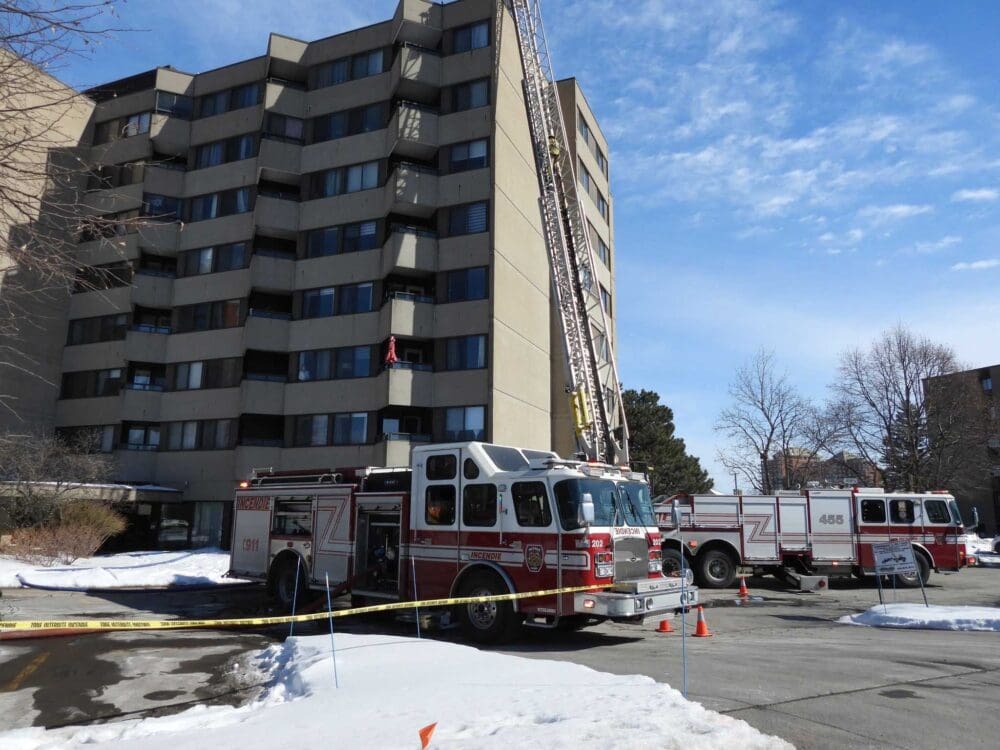
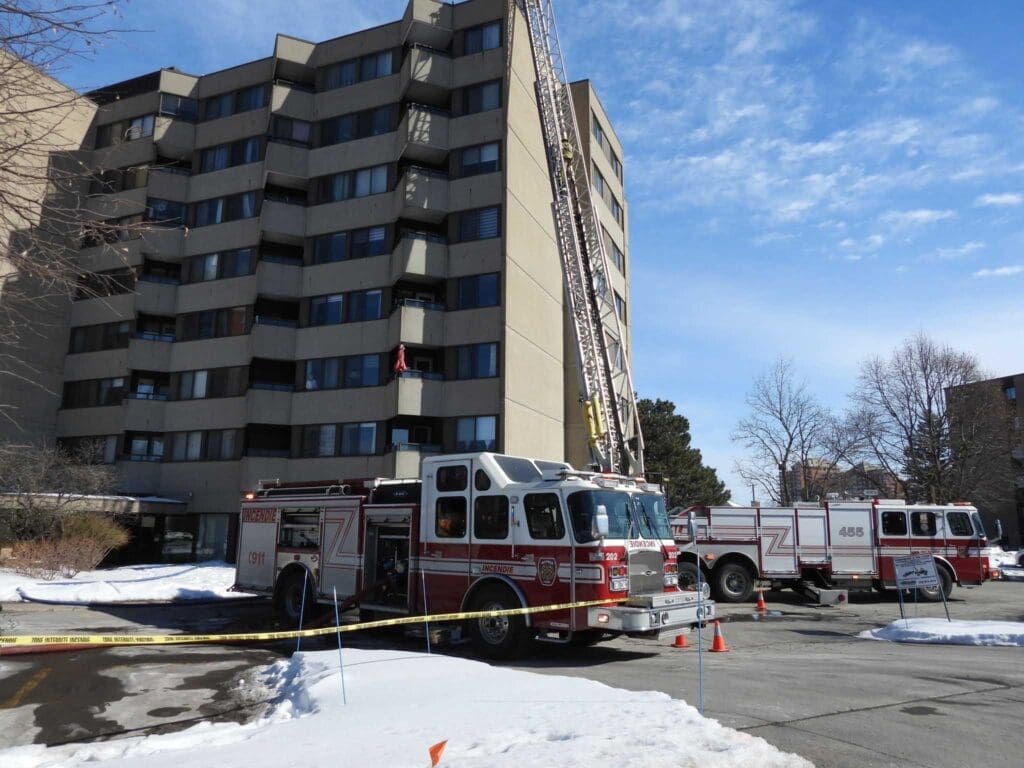
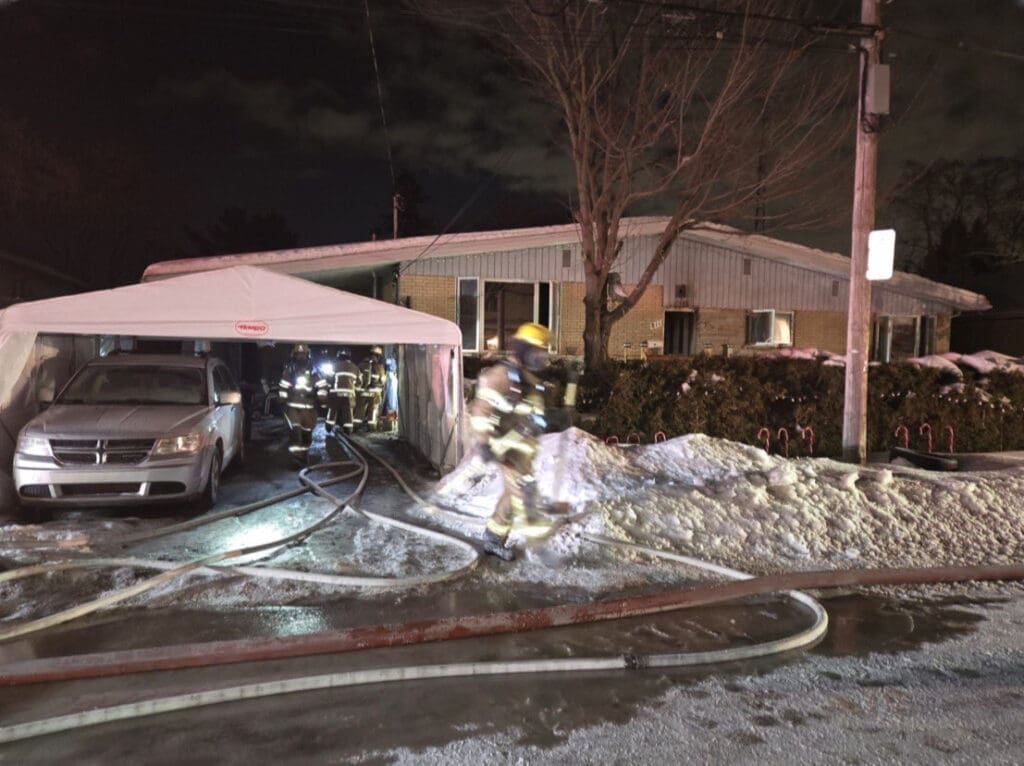
16 September 11:09 am // Building fire on Place des Sarcelles in the district of Sainte-Rose. One-storey residential building. Flames were visible on the roof upon arrival of firefighters. Fire code 10-12, meaning a alarm was called in.

20 September 08:17 am // Building fire on Jean-Picard St. in the district of Chomedey. Multi-unit residential structure. Flames apparent in basement to firefighters upon their arrival. Code 10-07, necessitating intervention.

21 September 12:36 pm // Building fire on La Perière St. in district of Saint-François. Residential structure. Flames apparent on the roof. Code 10-09, meaning full intervention required secours engagé à plein, with aggravating circumstances possible.

FILIA Association for Seniors holds annual Walk a Thon in Chomedey

Group’s founder is seeking someone willing to take on a new leadership role

With the searing heat of summer finally over, what could be more fitting for fitness-conscious seniors than a brisk walk around the block, when the sun is high in the sky, while enjoying the cool autumn air?

For a certain number of senior citizens from Laval who are loyal supporters of FILIA, the group’s September Walk a Thon is an outdoor event at Saint Norbert Park in eastern Chomedey never to be missed.

The 19th annual Walk a Thon on Sept. 15 drew a loyal following of FILIA members, as well as a few elected officials who have provided a significant amount help to the organization for years.

FILIA supporters walk along Third St. at the corner of 65th Ave. in Chomedey during the 2024 Walk a Thon on Sept. 16. (Photo: Martin C. Barry, Laval News)

A range of services

The goal of the day was to raise awareness of the needs of senior citizens – including regular physical exercise – while also raising funds for FILIA so it can continue providing a range of crucial services to seniors, such as a meals-on-wheels program, but also interesting field trips to locations in and outside the Montreal region.

Led for around 30 years by Johanna Tsoublekas who continues to provide guidance and management, FILIA’s services include home housekeeping and supervision, volunteer training and a healthcare clinic for the feet.

From the left (foreground standing), Montreal city councillor for Parc Extension Mary Deros, FILIA leader Johanna Tsoublekas and Laval city councillor Sandra El Helou (responsible for senior citizens’ issues, are seen here in Saint Norbert Park in eastern Chomedey before the start of the annual FILIA Walk a Thon on Sept. 15. (Photo: Martin C. Barry, Laval News)

“For me, this is a must annual gathering,” said Laval city councillor for Souvenir-Labelle Sandra El Helou who is responsible for senior citizen dossiers on city council. “It’s nearly eight years I’ve been following FILIA and its mission, and it is as important as ever to provide support,” she added.

Deros loves FILIA

FILIA leader Johanna Tsoublekas summarized the group’s activities over the past year prior to the start of the Walk a Thon in Chomedey. (Photo: Martin C. Barry, Laval News)

“It’s great to see the number of people who come out here year after year to participate and support the meals-on-wheels program,” said Montreal city councillor for Parc Extension Mary Deros. (FILIA was initially based in her district, but relocated to Chomedey as Montreal’s Greek population migrated here.)

“Joahanna brings people together,” said Deros. “She provides the FILIA members with a reason for being. She keeps them active in mind and in body, which is a great accomplishment. Especially when you come to a certain age, sometimes you want to be alone or quiet. But she gets them out of that and keeps everybody active.”

Passing on the torch

Although FILIA’s mission at one time was to provide assistance to Greek women of the Parc Extension Hellenic community, then later throughout the Montreal region, the organization’s mandate now is to serve senior citizens and people from all backgrounds – with a growing emphasis on the population of Chomedey.

With advancing age, Johanna has been looking over the past two years for someone who might be willing to take over at least some of her responsibilities. In the meantime, her son, Bill, has stepped in, and he was on hand at the Walk a Thon providing assistance.

Laval opens new community centre in Val-Martin, while delivering 359 social housing units

‘We are building entire neighbourhoods,” says Mayor Boyer, highlighting the renewal of the area

A new municipal community centre in one of Laval’s more disadvantaged neighbourhoods was officially declared open earlier this month by officials from the city as well as community activists who had long urged Laval to move forward with the project.

The Centre communautaire Simonne-Monet-Chartrand is located on Notre-Dame Blvd. on the boundary that separates the city’s Chomedey and l’Abord-à-Plouffe neighbourhoods.

Designed to primarily serve residents of the nearby Val-Martin social housing district, the community centre (costing $17 million, not including the housing) was conceived to fit in snugly with a seven-storey subsidized residential building.

The recently-completed Centre communautaire Simonne-Monet-Chartrand on Notre Dame Blvd. (Photo: Martin C. Barry, Laval News)

Old replaced with new

Completion of the project also marked the culmination of the first phase of a major overhaul of the Val-Martin neighbourhood, which was started by former Laval mayor Marc Demers and continued under Mayor Stéphane Boyer.

At one time, Val-Martin was notorious for its run-down and mould-infested subsidized housing units, many of which were condemned and demolished.

And indeed, a certain number of the old units can still be seen on nearby streets, boarded over and abandoned, as new units (paid for largely with sums from higher levels of government) are gradually built to replace them.

Phase One completed

According to a press release issued by the City of Laval, this was the conclusion of the first of several phases to revitalize Val-Martin.

It was a process that was kickstarted in 2016 by the municipal housing department (Office municipal d’habitation de Laval OMHL), in conjunction with the Société d’habitation du Québec (SHQ) and the Canada Mortgage and Housing Corp (CMHC). In all, 359 new social housing units will have been completed when all is said and done.

Among the officials on hand for the official opening of the Centre communautaire Simonne-Monet-Chartrand were a half-dozen city councillors, Mayor Stéphane Boyer, as well as the executive-directors of the city’s housing authority and the centre itself. (Photo: Martin C. Barry, Laval News)

The centre was named after labor activist, feminist writer and pacifist Simonne Monet-Chartrand. In addition to her social activism, she was married to Quebec labor leader Michel Chartrand.

A multifunctional place

Conceived to encourage inclusion, creativity and communal living, the centre includes focused facilities for youths and families, a food bank and a community kitchen, a large communal gathering space, multifunctional rooms, as well as interior spaces for dancing and other types of artistic and cultural events.

With the task of building now accomplished, the City of Laval is seeking to have the Centre communautaire Simonne-Monet-Chartrand certified LEED Gold as an internationally-recognized, environmentally-sustainable facility. Worth noting is that the centre was designed to be easily accessible by pedestrians and by public transit.

“Taking into consideration the scarcity of affordable housing, the inauguration of the Simonne-Monet-Chartrand community centre demonstrates that Laval acts decisively to create living spaces that are accessible, sustainable and unifying,” said Mayor Stéphane Boyer.

‘Building neighbourhoods’

“This project demonstrates our willingness to go higher than the simple construction of housing,” he continued. “We are building entire neighbourhoods where apartments, services and meeting spaces are side by side. With our partners, we are setting down the bases for an exemplary revitalization that restores dignity, hope and a sense of belonging to the families of Val-Martin, and, more widely, to the entire community in Laval.”

“This project demonstrates our willingness to go higher than the simple construction of housing,” Mayor Stéphane Boyer said at the centre’s official dedication. (Photo: Martin C. Barry, Laval News)

“The centre is much more than just a building,” said the centre’s executive-director, Noémie Barolet. “Our vision is a clear one: to make Chomedey a neighbourhood where you can grow. With the Centre Simonne-Monet-Chartrand, we are laying down a cornerstone to get there, by wagering on the strength of the collective, along with citizen creativity and solidarity.”

A ‘magnificent project,’ says opposition

The project’s completion received praise not only from the mayor’s side of the Laval city council chamber (it’s located just within the boundaries of l’Abord-à-Plouffe councillor Vasilios Karidogiannis’s district), but also from Claude Larochelle, leader of the Parti Laval (the official opposition).

“It’s a magnificent project,” Larochelle said in an interview with The Laval News, while adding that the city chose to locate the centre in the best possible place where it was most needed. “This is a place where a project like this was most needed. That said, my hat’s off to a good project in the right location.”

Laval declares its efficiency improvements a success

Nearly a year after the initial implementation of a municipal efficiency plan, officials with the City of Laval say they have achieved some real improvements in services offered to the city’s population.

Laval mayor Stéphane Boyer. (File photo: Martin C. Barry, Laval News)

“By setting clear objectives, transparent management and a structured accountability, the administration is modernizing its practices in order to offer its citizens an experience that’s smoother, more efficient and better adapted to the population’s needs,” the city states in a press release issued last week.

“We were looking for some in-depth change and the results are there,” said Mayor Stéphane Boyer. “The services are faster, more accessible, more efficient and simpler.

“This is the result of some hard work, of a clear vision and commitment from everyone in the organization,” he continued. “Modernizing our administration means we are fully taking up our responsibility towards all citizens, which is to offer quality services, at a fair cost while meeting expectations.”

The city reports that during the first months this year, the average waiting time for callers to its 311 centralized info service fell to 63 seconds, representing an 87 per cent improvement over 496 seconds in 2021.

During the same period, 81 per cent of requests were dealt with within that time frame, for a 10 per cent improvement compared to 2024. The city says this was in spite of an 11 per cent increase in the number of calls received.

The improvements were achieved, according to the city, through the use of a digital platform, the Mon Dossier web portal, which was developed internally. More than 85 per cent of requests received for things such as permits, subsidies or declarations are processed via this platform now.

“By going for digital solutions like the Mon Dossier portal, we are simplifying access to services, while also making the internal process lighter,” said Tania Fonrose, director of the city’s citizen experience department.

“This reorganization of work allows not only an improvement in citizen experience, but also for better use of resources. The 311 service, for example, was able to absorb a significant increase in requests with additional staff, thanks to the efficiency gains generated.”

Beginning this winter, permit applications and certificates from the urban planning department can be obtained online through the Mon Dossier portal. The City of Laval has won a number of awards for its work on resolving these issues, including some from the Institut d’administration publique du Québec (IAPQ), the Réseau de l’informatique municipale du Québec (RIMQ) and the Project Management Institute of Montreal.

A new concert hall and events venue opens in Saint-François

Residents from all over Laval will be able to enjoy a range of shows and entertainments at the latest concert hall and events venue to be completed and opened by the city.

Located in the Espace citoyen des Confluents (ECC) in the district of Saint-François, the multipurpose hall hosted its first show on September 20, although there will be more to come, according to the city.

“As the first professional quality concert hall in eastern Laval, it offers 180 seats in a modern and quality building,” says Laval city councillor for Sainte-Rose Flavia Alexandra Novac, who is responsible for cultural dossiers on city council.

“With the opening of this new hall, the ECC will be a gathering place that’s even more outstanding for the community of Laval, especially those from the east end of the island,” added Novac.

Some of the events and shows on the schedule at the hall over the coming months:

  • Liberté Big Band: A jazz and classical ensemble made up of seasoned and professional musicians.
  • Guided tour: On the city’s Journées de la culture, learn more about the workings of a professional concert hall, including acoustics.
  • Boubacar Ndiaye: A spoken word event combining art and music.
  • Salsalazar: Music from Québec, Cuba, Peru Colombia and Chile.
  • Kutsi Merki: Folklore from Bulgaria with dance.
  • Dead Gong: Jazz with Turkish and Ethiopian influences.

Towards a silent campaign?

Until now, the 2025 municipal election campaign is unfolding in an unusually hushed manner.

Political parties, traditionally eager to court public attention through rallies, debates, and media coverage, have opted for a minimalist approach this year.

Instead of inviting journalists to cover their events or engaging in public discourse, they are relying almost exclusively on press releases to communicate their platforms and activities on social media.

This shift toward a “silent campaign” raises troubling questions about transparency, accountability, and the health of democratic participation in Laval.

The 2025 campaign feels more like a corporate rollout than a democratic exercise. Candidates and parties are issuing carefully worded press releases, often devoid of meaningful detail or direct engagement.

This strategy may be efficient, but it is also exclusionary. By avoiding live events and direct media interaction, political actors sidestep scrutiny. There are no follow-up questions, no spontaneous moments, no opportunities for journalists to probe inconsistencies or challenge vague promises. The result is a sanitized narrative that benefits incumbents and well-resourced campaigns while leaving voters in the dark.

Democracy thrives on debate, dissent, and dialogue. When political parties choose to bypass the media, they also bypass the public conversation. Press releases, no matter how informative, cannot replace the dynamic exchange of ideas that occurs in interviews, debates, and town halls.

Residents rely on their two newspapers, Laval News and Courrier Laval, for election coverages. Throughout their existence, they have proven their journalistic integrity.

Without access to events where they can ask pertinent questions, their ability to inform the public is severely limited. The media’s role is not just to report—it is to challenge, contextualize, and amplify. When political parties exclude journalists, they undermine this role and weaken the democratic fabric of the city.

Citizens deserve better

Laval’s residents deserve a campaign that respects their intelligence and values their participation. They deserve candidates who are willing to speak openly, answer tough questions, and engage with the community.

The silent campaign may be convenient for political actors, but it is a disservice to the electorate. It fosters apathy, erodes trust, and diminishes the legitimacy of the electoral process.

A call to action

It’s not too late to change course. Political parties in Laval should reconsider their approach and invite the media back into the fold. Citizens should demand more from those who seek to represent them.

George Guzmas

Co-publisher

The Laval News

Laval city councillors table petitions during September council meeting

Karidogiannis submits motion for a memorial recognizing contributions of Laval’s Greeks

In a municipality of the size and as populous as the City of Laval, one of the many things that takes place during city council meetings is the tabling of petitions from residents seeking interventions on a range of issues.

At every monthly council meeting, there is a period around the beginning when councillors in the 21 districts formally present the petitions, which are accepted and registered by the city’s chief clerk.

Independent Saint-Vincent-de-Paul city councillor Paolo Galati speaks during the September 9 meeting of Laval city council. (Photo: Martin C. Barry, Laval News)

Petitions tabled during meeting

During the September 9 council meeting, Laval-Les Îles councillor Nicholas Borne presented a petition started by Robert Papillon of Pesant St. in the district, asking that the city conduct an analysis of speed bumps installed on the street. According to Councillor Borne, 43 residents of the street signed the petition.

A petition was also tabled by Duvernay district councillor Achille Cifelli, regarding a skating rink at Val-des-Arbres Park, where, according to the 222 residents who signed the petition, the rink is in poor condition and has been moved to various locations over time, most recently to make space for a dog park.

Safety issues on Lévesque Blvd.

Independent city councillor for Saint-Vincent-de-Paul Paolo Galati tabled a petition gathered by residents of St-Jean St. and Lévesque Blvd. East in his district, expressing concern about the safety of pedestrians, many of them children, as well as public transit users, because of traffic hazards on Lévesque Blvd.

“Traffic on Lévesque Blvd. East has become much too fast and too dense,” Galati said while tabling the petition.

“Vehicles are passing regularly at an excessive speed, making it extremely dangerous to cross, especially for children going to school, to the park or to neighbourhood activities, as well as for families who must cross this artery, and users of the STL who most cross to get to bus stops.”

Girl killed by car in 2016

Galati said that over the years, he’s often raised the issue, and that in 2016 a young girl was killed after being hit by a car on Lévesque while she was walking along with her father, her grandmother and another child.

He said the residents are therefore demanding that the city act urgently and concretely by implementing the following measures: installation of a pedestrian crosswalk with an adapted traffic light, reduction of the maximum speed to 40 km/h between des Cépages Blvd. and Roger Lortie Ave., and addition of a solar panel with a digital speed display.

“This citizen initiative is a pressing appeal for prevention in order to avoid that a serious accident, or worse a tragedy like the one in 2016, does not happen again,” added Galati, demanding that the city’s traffic department develop an action plan quickly.

Chomedey city councillor Aglaia Revelakis noted during the most recent council meeting that September is the National Month for the Prevention of Suicide. (Photo: Martin C. Barry, Laval News)

Suicide Prevention Month

During a period reserved for councillors’ statements and new business, Chomedey independent councillor Aglaia Revelakis noted that September has been set aside on the calendar as the National Month for the Prevention of Suicide.

“This is a moment that reminds us undeniably of those persons in our community who are in need of help, as well as those who have been impacted by this problem,” said Revelakis.

“Mental health is important and asking for help is a sign of strength rather than weakness,” she continued. “Together, let us create a community where support, compassion and understanding make all the difference.”

At the same time, Revelakis wished her Jewish constituents a happy Rosh Hashanah, and she wished good luck to all the incumbent and new candidates in the upcoming municipal elections taking place on November 2.

L;Abord-à-Plouffe city councillor Vasilios Karidogiannis (behind) hopes to create a monument or memorial honoring the contributions of Laval’s Greek community. (Photo: Martin C. Barry, Laval News)

Memorial sought for Greeks

L’Abord-à-Plouffe city councillor Vasilios Karidogiannis noted that he recently met with the newly-elected president of the Hellenic Community of Greater Montreal, Basile Angelopoulos, to discuss a variety of issues.

Karidogiannis added that Laval’s Greek population is among the five most significant multicultural communities in the city, with more than 20,000 people being of Hellenic heritage.

He tabled a resolution during the council meeting proposing the installation in a public place along Souvenir Blvd. of a memorial of some kind paying homage to the contributions made in Laval by the Greek diaspora.

Weather

Laval
overcast clouds
12 ° C
13.2 °
10.9 °
36 %
2.2kmh
100 %
Fri
13 °
Sat
14 °
Sun
15 °
Mon
19 °
Tue
18 °