The current issue of the Laval News volume 29-33 published September 29th, 2021.
Covering Laval local news, politics, sports and our new section Mature Life.
(Click on the image to read the paper.)

The current issue of the Laval News volume 29-33 published September 29th, 2021.
Covering Laval local news, politics, sports and our new section Mature Life.
(Click on the image to read the paper.)

Following a fatal accident on Sept. 8 near Laval’s Champfleury neighbourhood , investigators at the Laval Police say they are seeking the help of a possible witness. In the meantime, they have arrested a suspect.
Around 10:30 pm on Sept. 8, the victim, a 61-year-old man, was walking alongside des Rossignols Blvd. near Dagenais Blvd. when he was struck by a vehicle. He was pronounced dead on the scene.
The driver of the vehicle, a Laval resident in his 20s, was arrested and blood samples were taken to verify whether he was intoxicated at the time of the accident.
Since then, the investigators have been able to determine that at the moment of the accident, a man with light brown skin, around 6 feet tall, speaking English and driving a white truck cab without a trailer, came to the assistance of the victim and then the suspect.
The investigators would like to speak to this person, as well as anyone who might have witnessed the accident. Anyone who has information may contact the LPD through their Info-Line at 450 662 INFO (4636), or by calling 911. The file number is LVL 210908-083.
Suspect sought by LPD for laptop computer theft
The Laval Police are seeking a suspect who is alleged to have stolen a laptop computer out of vehicle in a store parking lot in Chomedey more than eight months ago.
Around 12:30 in the afternoon on Jan. 7, the victim of the theft was at a Canadian Tire on Le Corbusier Blvd. While he was inside, the suspect allegedly entered his vehicle and stole the portable computer which was inside the car.
The LPD says it has images of the suspect which were taken by a security camera as the suspect was leaving the store.

Description of suspect
Anyone who has information may contact the LPD through their Info-Line at 450 662 INFO (4636), or by calling 911. The file number is LVL 210107-039.
Metal structure on A-15 dismantled after collision
Hundreds of drivers heading south toward Montreal on Autoroute 15 on the morning of Wednesday Sept. 15 came to a standstill for several hours in gridlocked traffic after a vehicle slammed into an overhead piece of traffic signage which came loose and was at risk of falling.
Although no one was injured in the 5 am crash, the sign was weakened enough to concern Transport Quebec officials enough that it might collapse. And so they closed A-15 between du Souvenir and Cartier boulevards.
By 7 a.m. when rush hour was beginning, traffic was backed up more than 10 kilometres, according to eyewitnesses.
According to Sarah Bensadoun, a spokesperson with the Transport Ministry, crews dismantled and removed the structure, but the operation took several hours.
Man stabbed at a Laval sports complex
A man in his 20s who had been playing soccer at an indoor sports complex in Laval was stabbed during the late hours of Sept. 5 at the height of an argument with another player.
The LPD received a call around 11 pm, saying that a fight had broken out between two soccer players at the SportXpo sports complex on Dagenais Blvd.
According to the LPD, the victim was stabbed several times in the abdomen. After being transported to hospital, his condition was listed as stable. The police had not yet made any arrests last week, but investigators had opened a file on the incident.
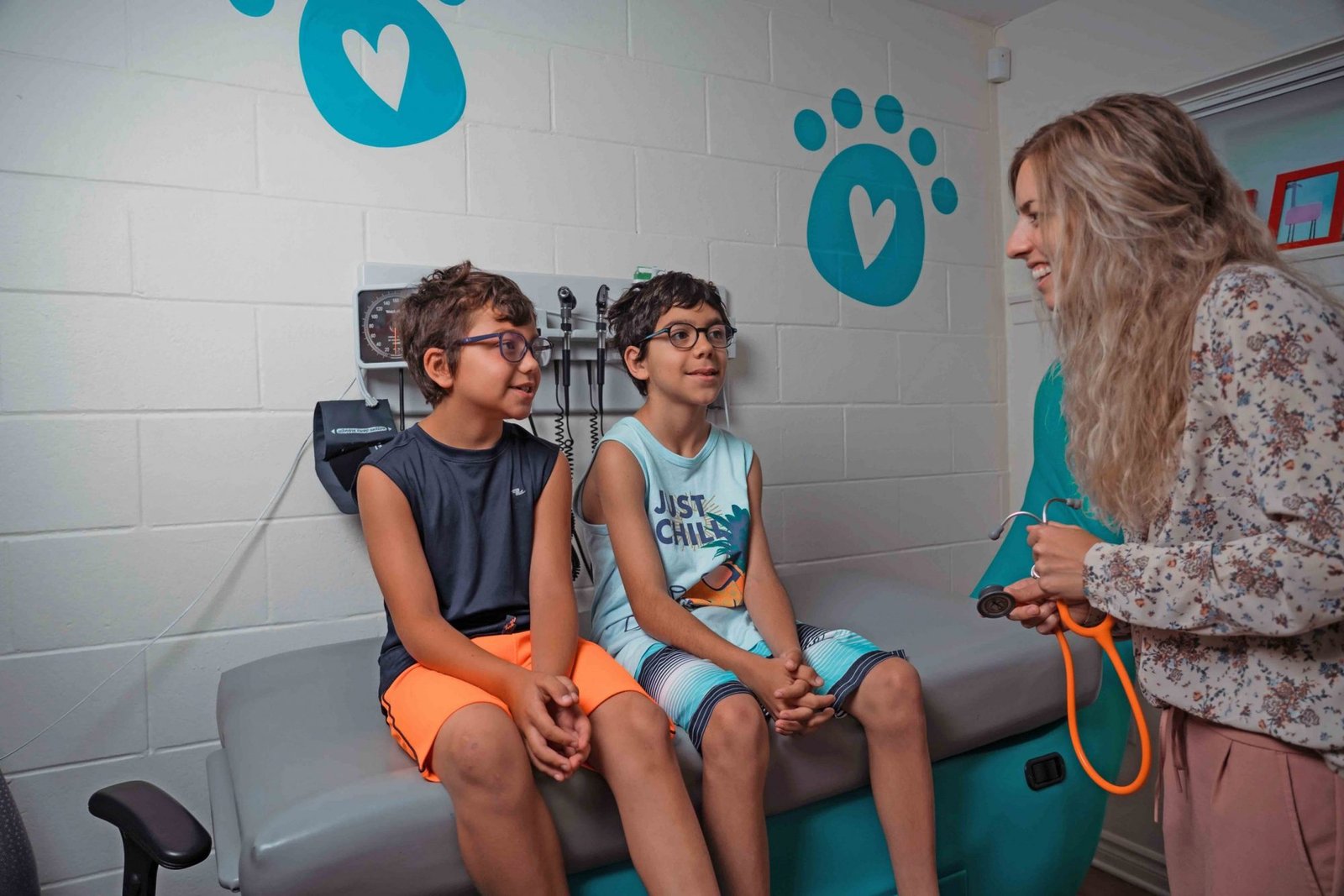
This autumn, staff and parents who are part of the community at the Centre de Pédiatrie Sociale Laval will be celebrating something very special – the 10th anniversary of the non-profit children’s health and social services centre.
The Centre de Pédiatrie Sociale Laval provides activities and care to children in the surrounding community. The centre contributes to the overall development of children and adolescents with developmental, social or health problems in disadvantaged areas.
It also promotes the interests and rights of children and their families. Its mandate is to offer, in a living environment integrated into the community, interdisciplinary health services to a vulnerable clientele that is at odds with the current service network.
10 years of helping
Every day for the past 10 years, according to the centre, vulnerable children in Laval have benefited from the support of the centre’s doctors, volunteers and caregivers. Working as a team with parents, the dedicated staff create a circle of caring around each child.
To mark this important milestone in its history, the centre is launching a fundraising campaign. The campaign aims to promote the centre’s mission while raising $100,000 to help meet the growing demand for its services.
Despite having only one doctor, one educator and one psychoeducator when it opened in 2011, the centre now has a multidisciplinary team of four doctors and eleven clinical professionals deployed in three service points.
Me Jean Marius Mottet, president of the board of directors from the beginning, said he is delighted with the remarkable evolution of the centre.
“When we see the children and families we have been helping for all these years, and the impact that the centre’s team has on them, there is no doubt that the recipe is a winner,” he says.
In 10 years, the Centre de Pédiatrie Sociale Laval has improved the well-being of more than a thousand Laval residents in extremely vulnerable situations. This represents close to 30,000 interventions, each aimed at supporting the growth and development of the child.
Diver becomes spokesperson
Many Laval residents may be unaware of the small miracles the Centre de Pédiatrie Sociale is performing to change lives on a daily basis. In order to remedy this situation, the organization has found a major ally to increase its visibility: Olympic diver Meaghan Benfeito.
“Meaghan Benfeito has given us the immense honour of being the godmother of our 10th anniversary,” said Mylène Du Bois, the centre’s executive director. Meaghan’s reputation as an athletic achiever is well deserved. A three-time Olympic medallist in diving and a gold medallist in the 2021 FINA World Cup, she is widely regarded as a true inspiration for young people.
“Having spent part of her youth in Laval and being passionate about early childhood, in addition to being a model of perseverance, there is no doubt that she is the ideal spokesperson for our cause,” adds Du Bois.
According to the centre, Meaghan gladly agreed to partner with the Centre de Pédiatrie Sociale to highlight the work and services offered to Laval youths from disadvantaged backgrounds.
“The end of an Olympic cycle is always an opportune time to reflect on our professional aspirations,” says Benfeito. “And it is with young people, children and teenagers that I wish to pursue my second career when my sports career will be completed.
In 10 years, the Centre de Pédiatrie Sociale Laval has improved the well-being of more than a thousand Laval children in extremely vulnerable circumstances
“Participating in the promotion of the centre was therefore a natural choice for me. I wish to contribute to the influence of this essential work and thus contribute to the well-being of my community.”
Financial help needed
In spite of all these accomplishments, however, the Centre de Pédiatrie Sociale is currently struggling to support all the children who need help. Unfortunately, but perhaps not surprisingly, the pandemic and the containment measures exacerbated the difficulties experienced by the centre’s clientele.
However, without the centre, these children are even more vulnerable, says the Centre de Pédiatrie, and the worst may yet be in store for their health and development. As such, more than ever the mission of the centre is essential.
“The need to expand our facilities in order to adequately meet the needs of the children is one of our most pressing issues,” says Du Bois, adding that with more financial resources, the centre could help hundreds more children in neighbourhoods where the centre is not yet present, such as in Saint-François and in Laval-Ouest.
In order to pursue its mission, the centre is inviting Laval residents to be part of a caring community that takes care of its children.
Donations can be made by visiting the website cpslaval.org. “We are investing in the wealth of our society: our children,” says Me Mottet.

Seeking a second term after her first victory in 2019, incumbent Vimy Liberal MP Annie Koutrakis managed to increase her share of voter support by several percentage points in last Monday’s federal elections, handily winning the riding for her party.
By 11 pm on election night, the returns indicated that Koutrakis had the support of 51.2 per cent of voters, compared to the 47.5 per cent result she obtained two years ago.
She recalled that in the last election, not long after she had won the nomination to run for the Liberals in Vimy, she had only about a week to find a campaign office, and put together a campaign team.
Better prepared
“This time around I was more lucky, because I already had my campaign team in place, I already knew where I wanted my headquarters to be,” said Koutrakis.
“This time I felt more organized. And also, having been an elected Member of Parliament for almost 18 or 19 months, I had a better idea of what is required of what is required of me. I just felt more prepared, more organized, it wasn’t as chaotic, and I feel that I’m very well supported.”
Koutrakis said her door-to-door campaigning went very well, although there were some difficult questions from some of the constituents she met.
Frequently asked questions
The question that came up most frequently, she admitted, was why Prime Minister Justin Trudeau saw it necessary to call an election at the halfway mark since the last election in 2019, and in the middle of a public health crisis.
Koutrakis said that after two years, it had become evident that Parliament was no longer functioning effectively and that the Liberal government would probably have fallen eventually if the election had not been called.
“So, if our Prime Minister had not called the election, you can be sure that the government was going to fall soon after the summer break,” she added.
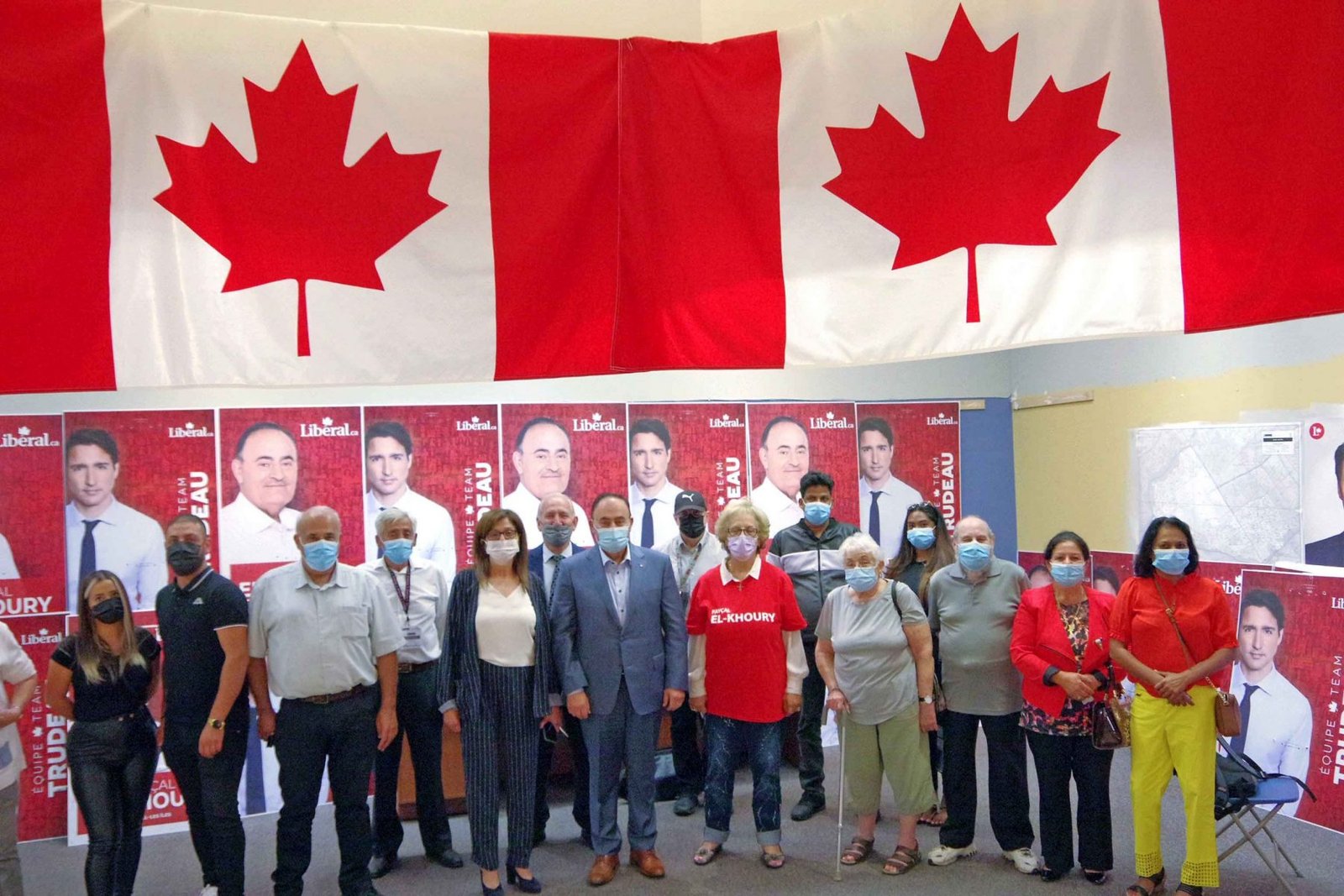
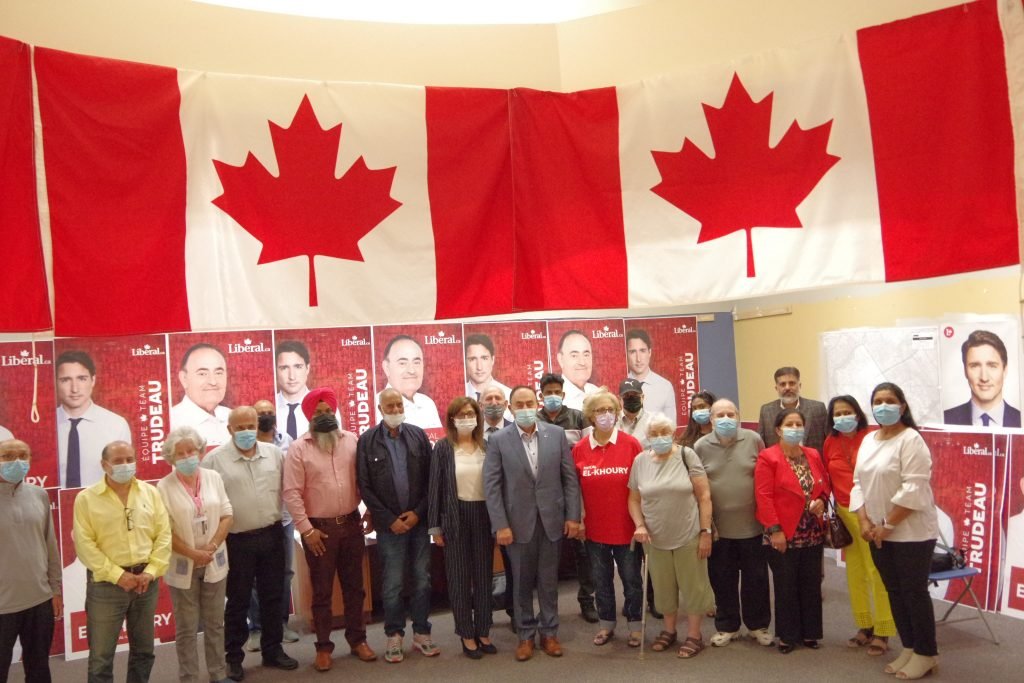
Incumbent Laval-Les Îles Liberal MP Fayçal El-Khoury cruised to an easy victory in the federal general election on Monday Sept. 20, following a local campaign in which there were signs of acrimony from critics and opponents of the minority Liberal government which had sought to shore up its status since the 2019 election in the hopes of winning a majority.
On many Liberal campaign posters erected in Laval-Les Îles as well as in other ridings throughout Laval and Montreal, vandals painted narrow Hitler-like black moustaches onto candidates’ upper lips, a seeming comment on the Trudeau government’s sometimes unpopular measures over the past year-and-a-half to deal with the Covid pandemic.
Vandalized posters
El-Khoury’s campaign posters weren’t spared the treatment, although he took it in stride. “When people are weak and desperate and they dream of victory but know they will not make it, they will use every possible way and means to try and increase their vote,” he said. “But I think it has just reflected badly on them and has been good publicity for me.”
Among the supporters and volunteers at El-Khoury’s campaign HQ on Samson Blvd. in Sainte-Dorothée last Monday evening waiting for the results to come in was long-time local political organizer Claudette Lessard who has worked for decades on federal and provincial Liberal campaigns.

She wasn’t initially optimistic about the Liberals’ prospects, fearful that the Bloc Québécois would gain seats at the expense of the Grits.
Grateful for volunteers
For his part, El-Khoury praised members of the Punjabi and Sikh communities for the help they provided him during the campaign.
“Some of the best and the strongest help on the ground was received from these communities,” he said.
El-Khoury also praised members of his staff for their loyalty and hard work, as well as his wife for the moral support and encouragement she provided him during this and previous campaigns.

With more than a month of campaigning to go before municipal elections take place in the City of Laval, the Action Laval opposition party is hoping a major campaign pledge they’re making to build a large international-calibre convention centre captures the imagination of voters and leads to victory on election day.
The elaborate plan for the Centre de foire de Laval was unveiled last week by Action Laval leader and mayoralty candidate Sophie Trottier, along with incumbent and new candidates running in the Nov. 7 election.
Estimated cost: $220 million
The estimated cost of the project would be $220 million. $100 million would come from the federal and provincial governments, with the rest being paid by the City of Laval on an amortized 20-year basis at 5 per cent interest, equalling $8 million in interest fees per year.
The party maintains that for a good number of years now, businesses in the Montreal metropolitan region and beyond have been missing out on opportunities because there is no single convention centre in the area that has the capacity to meet new and demanding trade show and convention standards.
Located near old quarry
Action Laval sees the Centre de foire de Laval, which would be built somewhere on a large and currently-vacant tract of land on St-Martin Blvd. near the old quarry and Laval courthouse, as a unique opportunity to add to the City of Laval’s global prestige by building a convention and trade show centre of international stature.
According to a prospectus prepared by Action Laval setting out a few basic specifications, it would have 1.5 million square feet of space, multi-level interior parking, a green roof, would be accessible by mass public transit, and would be built for energy self-sufficiency and to LEED standards.
Reaping the benefits
Action Laval believes the Centre de foire, which would operate year around, would bring in annual revenues ranging from $13.5 million to $16 million, that it would help create new employment directly and indirectly, would be equipped to serve as a venue to host NBA farm team and semi-pro basketball tournaments, and would contain a large multi-purpose events hall for international-level conventions, competitions, events and trade shows.
“We know this is a market where currently there is room for expansion, but what we also see now is that there is a shortage of venues,” said Trottier. “So, our vision is one that’s simple and straightforward: the Centre de foire will be filling a need while providing an answer for something that is wanted.”
Other convention centres
According to research conducted by Action Laval, some of the world’s largest convention centres, such as those in Barcelona (Spain) and New York have 1.4 million and 1.8 million square feet of space each respectively. In Canada, the Toronto Convention Centre has 700,000 square feet.
In Montreal, the Palais des congrès de Montréal has 550,000 square feet spread out over several floor levels. The aging Place Bonaventure has 250,000 square feet, while the Olympic Stadium has just over 200,000 square feet of usable space to host events inside the cavernous sports venue.
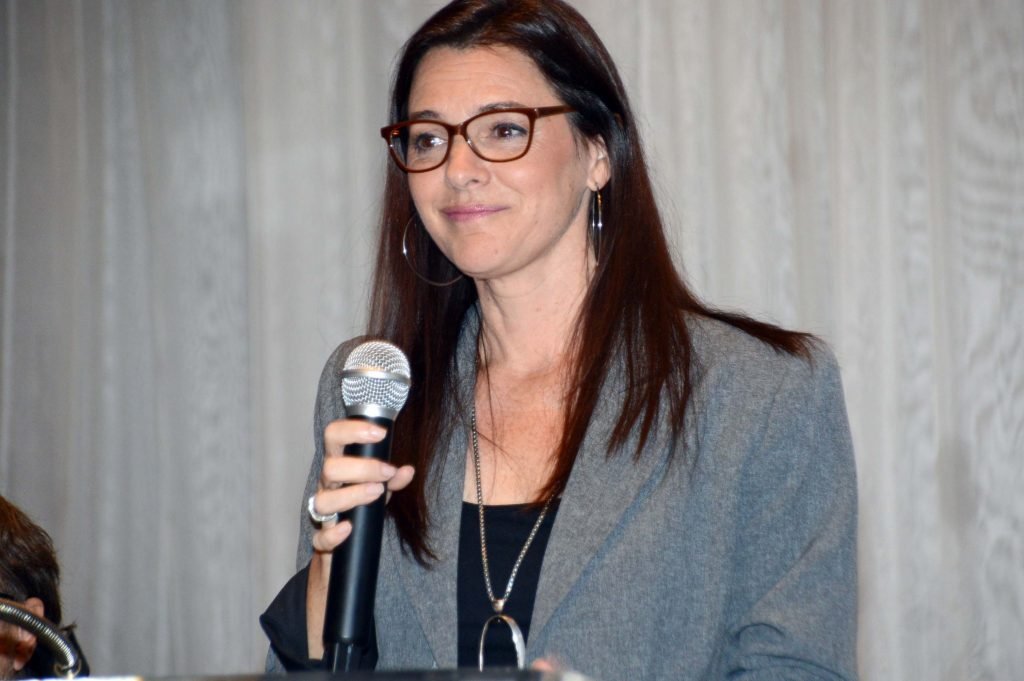
“So, right now we’re at a turning point in our city, with a unique opportunity that may never come up again,” said Trottier, adding that “The timing couldn’t be more perfect” while the market value of convention and trade show events hosting in Canada alone is worth $33 billion annually.
Having an edge over Montreal
Action Laval feels the City of Laval could be in an advantaged position, because Montreal’s Palais des congrès, which is located in an already densely-developed area of that city’s downtown core on the fringe of Chinatown, is currently facing constraints that go against plans for expansion. In short, they simply may not have enough room to expand.
As things now stand, the City of Laval’s current administration has one major project going, promised years ago, but which it has yet to deliver. Although the foundations for the Aquatics Complex have already been built next to the Cosmodôme in central Laval, progress fell behind when bids for the rest of the building came in far too high and the city suspended the process for a time.
Aquatics Complex not yet done
Keeping that in mind, Action Laval maintains nonetheless there would be nothing inappropriate about starting another major infrastructure project before the last one has even started.

According to Action Laval city councillor for Saint-Bruno David De Cotis, the city has already allotted $20 million in cash of its own money for the estimated $61.1 million Aquatics Complex, and is awaiting a further $20 million in subsidies from Quebec and Ottawa.
“It’s not an issue,” he insisted. “And it will be auto-financed by the city based on revenues coming in. So, there are no issues here over financing or investment.”

Victorious Liberal says she found it easier campaigning this time around
Seeking a second term after her first victory in 2019, incumbent Vimy Liberal MP Annie Koutrakis managed to increase her share of voter support by several percentage points in last Monday’s federal elections, handily winning the riding for her party.
By 11 pm on election night, the returns indicated that Koutrakis had the support of 51.2 per cent of voters, compared to the 47.5 per cent result she obtained two years ago.
She recalled that in the last election, not long after she had won the nomination to run for the Liberals in Vimy, she had only about a week to find a campaign office, and put together a campaign team.
Better prepared
“This time around I was more lucky, because I already had my campaign team in place, I already knew where I wanted my headquarters to be,” said Koutrakis.
“This time I felt more organized. And also, having been an elected Member of Parliament for almost 18 or 19 months, I had a better idea of what is required of what is required of me. I just felt more prepared, more organized, it wasn’t as chaotic, and I feel that I’m very well supported.”
Koutrakis said her door-to-door campaigning went very well, although there were some difficult questions from some of the constituents she met.
Frequently asked questions
The question that came up most frequently, she admitted, was why Prime Minister Justin Trudeau saw it necessary to call an election at the halfway mark since the last election in 2019, and in the middle of a public health crisis.
Koutrakis said that after two years, it had become evident that Parliament was no longer functioning effectively and that the Liberal government would probably have fallen eventually if the election had not been called.
“So, if our Prime Minister had not called the election, you can be sure that the government was going to fall soon after the summer break,” she added.

Vandalized election posters mar an otherwise civilized campaign
Incumbent Laval-Les Îles Liberal MP Fayçal El-Khoury cruised to an easy victory in the federal general election on Monday Sept. 20, following a local campaign in which there were signs of acrimony from critics and opponents of the minority Liberal government which had sought to shore up its status since the 2019 election in the hopes of winning a majority.
On many Liberal campaign posters erected in Laval-Les Îles as well as in other ridings throughout Laval and Montreal, vandals painted narrow Hitler-like black moustaches onto candidates’ upper lips, a seeming comment on the Trudeau government’s sometimes unpopular measures over the past year-and-a-half to deal with the Covid pandemic.
Vandalized posters
El-Khoury’s campaign posters weren’t spared the treatment, although he took it in stride. “When people are weak and desperate and they dream of victory but know they will not make it, they will use every possible way and means to try and increase their vote,” he said. “But I think it has just reflected badly on them and has been good publicity for me.”
Among the supporters and volunteers at El-Khoury’s campaign HQ on Samson Blvd. in Sainte-Dorothée last Monday evening waiting for the results to come in was long-time local political organizer Claudette Lessard who has worked for decades on federal and provincial Liberal campaigns.
She wasn’t initially optimistic about the Liberals’ prospects, fearful that the Bloc Québécois would gain seats at the expense of the Grits.
Grateful for volunteers
For his part, El-Khoury praised members of the Punjabi and Sikh communities for the help they provided him during the campaign. “Some of the best and the strongest help on the ground was received from these communities,” he said.
El-Khoury also praised members of his staff for their loyalty and hard work, as well as his wife for the moral support and encouragement she provided him during this and previous campaigns.

The City of Laval says it has signed a strategic alliance agreement with Groupe 3737, an organization that promotes ecosystem entrepreneurialism while encouraging economic development, job and wealth creation and diversity, in order to accelerate business and economic values in cities.
“By associating ourselves with Groupe 3737, Laval shows one more time that it is a leader in terms of diversity and inclusion and that immigration is one of the engines for creating wealth as well as economic and social development,” said Laval executive-committee vice-president and deputy mayor Stéphane Boyer.
As part of the agreement, the city’s economic development department will be working closely with Groupe 3737.
“With several Laval-based companies being followed by us already since we started, it was only logical and synergistic for Group 3737 to reach this collaborative agreement with the city,” said Groupe 3737 CEO and general manager Louis-Edgar Jean-François.
“With its actions, the City of Laval demonstrates clearly the importance it accords to diversity and inclusion and economic engines. The confirmation of this agreement is yet one more proof of this.”
According to the city, Laval is the second most important city in Quebec as a point of entry for immigrants, and more than half of the population of Laval is the result of immigration, including second-generation immigrants.
In 2018, entrepreneurial indicators for Laval suggested that immigrants are nearly twice as likely to be inclined towards entrepreneurialism compared to others (35 per cent versus 16. 5 per cent).
Among immigrants in Laval, 18.7 per cent are involved in the creation of a business, which is a rate clearly higher compared to the reading in 2014 when it was 11.9 per cent. The rate is also slightly higher that the rest of Quebec (17.3 per cent).
Out of 161 recent dossiers at the City of Laval’s economic development department dealing with the creation of businesses, 65 per cent concerned entrepreneurial projects started by immigrants.
Entrepreneurs and business owners in Laval who would like to receive counselling from experts in business solutions for strategic growth options can contact the City of Laval’s economic development department at 450 978-5959 or by e-mail at lavaleconomique@laval.ca.

The city of Laval is working with artificial intelligence tools to benefit its citizens. Having started its digital transformation in 2019, it now offers its consulting expertise to public organizations in Canada who wish to accelerate theirs. Several municipalities outside Quebec and ministries have already requested support from Laval in this area.
Supporting 311 agents
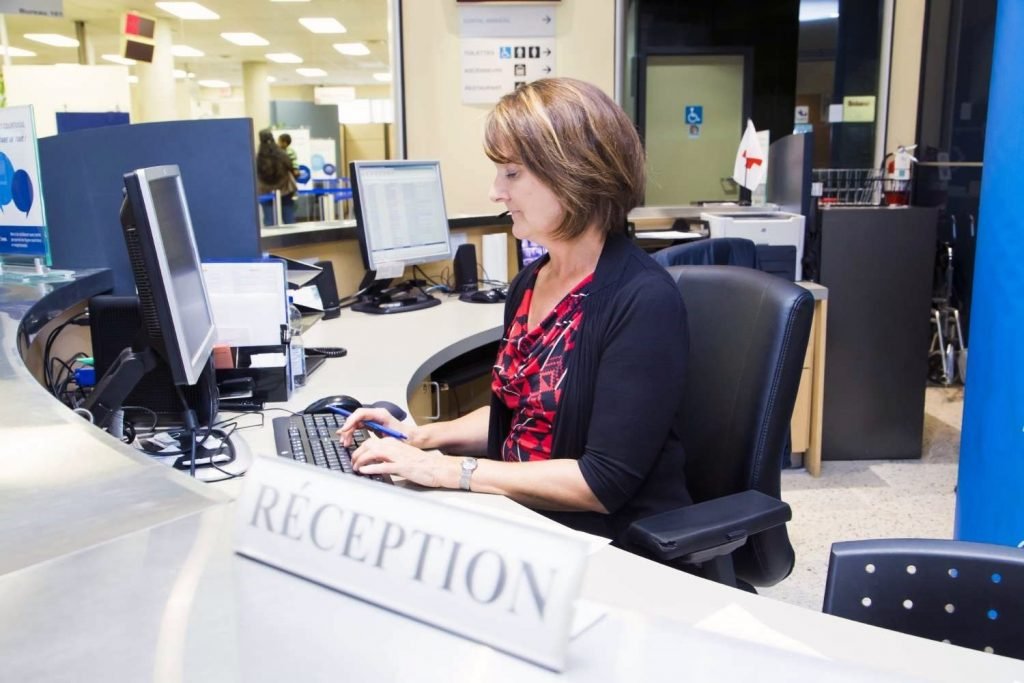
The integration of a virtual assistant application using artificial intelligence began in late 2020, at the 311 call centre in Laval, in collaboration with Microsoft. This new technology tool has not only made it possible to successfully support the work of agents, it has also facilitated citizen participation in various public consultation sessions.
At 311, the virtual assistant makes it possible to respond to complex requests more quickly, in addition to summarizing the verbal interaction between the citizen and the agent in a written text. This dialogue text is then filed in the citizen request, which improves the quality of subsequent exchanges between agents and citizens. This tool using Microsoft Azure AI, Dynamics 365 and Power Platform supports the 311 team, which responds to approximately 250,000 calls annually on more than 250 different topics.
“We are convinced that the introduction of tools using artificial intelligence has a real positive impact on the citizen experience and on the efficiency of our public services. Thanks to the ideas and comments that emerge from citizen participation, we are continuously improving these tools. We are proud of this expertise that we are developing with collaborators such as Microsoft and aim to use these technological innovations in other settings, such as the 911 emergency response service. “
— Stéphane Boyer, deputy mayor and vice-president of the executive committee
More inclusive citizen consultations
Since December 2020, this technology tool has been used in the context of citizen consultation sessions. Written verbal interactions from all participants appear at the bottom of the Microsoft Teams app screen. This innovation fostered a better understanding of the projects by all, which then allowed the formulation of more informed comments. This initiative is therefore part of the City’s desire to promote inclusion and provide better accessibility to consultation sessions.
Additional information
For more information on this partnership and the innovations in place in Laval, visit https://www.partenariatpublic.laval.ca
To know more about the virtual assistant application, watch the video available on City of Laval’s YouTube channel.