Parents sue Quebec over Covid decree banning unvaccinated teens from sports
More than 100 families from across Quebec – including some from Laval – are suing the provincial government over a National Assembly decree which forbids their children from taking part in extra-curricular group sports or physical activities if they haven’t been vaccinated against COVID-19.
The families who have signed on maintain that the fundamental rights of their children are being violated by the government’s insistence their teenage children must have vaccine passports.
National Assembly decree
The decree, which was passed by the National Assembly on Sept. 1, effectively forbids children 13 years of age and older from taking part in sports competitions, in organized leagues or in tournaments.
Gatineau, QC lawyer Me William Desrochers is presenting the case of more than 100 parents from across Quebec who are contesting the provincial government’s decree preventing teenaged students age 13-17 from participating in extra-curricular sports if they are not vaccinated against COVID-19.
The claim, filed at the Montreal courthouse last month, maintains that the decree unjustifiably impedes upon several of their children’s fundamental rights and liberties and that it thus must be declared non-applicable in part.
“Basically, it’s an action about the vaccine passports, but only for the teenagers who are 13 to 17 years,” says Me William Desrochers, a lawyer in Gatineau QC who is representing the parents. “What the decree says is that you cannot do anything that falls outside the regular school program.
Limited in taking part
“So, if you’re in a sports/study program and you’re doing maybe volleyball, then you can do physical education, you can do volleyball six or eight hours a week. But once you have a competition on a Saturday, you cannot go. If you have an extra practice on a Monday night, you cannot go.
“And it’s not only that. If you can’t do the practice with the team, they’re not going to put you in the front position – you’re not going to be the quarterback on the football team if you can’t play. You end up being left out or only in practice or even sitting on the bench. It’s something that’s extremely hard on these kids and we feel that the decree is an infringement of several human rights and not reasonable under the circumstances.”
Is it reasonable and why?
Among the issues the lawsuit hopes to raise is the scientific validity of the government’s insisting that all school children must be vaccinated in order to fully participate in the sports programs.
‘It’s something that’s extremely hard on these kids,’ says Me William Desrochers who filed the lawsuit on behalf of the parents
“We understand or we believe that the vaccination rate is pretty high,” Desrochers added. “Sometimes if you’re in a program in school, you might have one kid who is not vaccinated. So, how is it so important that this kid must be vaccinated at all cost? That is the question: Is it reasonable and why? That is the question we’re raising here.”
Case to be heard by May
Desrochers said he expected the case to be heard by next May, hopefully with a decision rendered before the beginning in the fall of 2022 of the next school year.
In the meantime, he said the parents were pleased with the government’s announcement that mandatory vaccine passports would not be demanded for younger students.
“Still, for 13 to 17 years old it still raises the question as to why is it okay for them, but it’s not okay for the five or eleven or twelve-year-olds,” he said.
At this-time-of-year, bombarded with ‘happy’ and “merry” from every direction, an inward/outward look into what and where we are at end of 2021 is worth exploring.
Happy greetings abound in cards, store windows, e-mails. Colourful lights flash happiness everywhere. Beaming Santas, frolicking reindeer, smiling snowmen, and scenes of ‘happy’ family gatherings surround us. Messages/ Texts wish happy Christmas, happy holiday, happy new year and while we’re at it – happy life!
Too much happy? Excessive? Demanding too much happiness of ourselves and others? Is narrowing expectations to this single emotion good for us? Might other forces want to crash our festive celebrations? As a third extraordinary year of Covid-19 bodes more difficulties, complications, trials, and tribulations – might we do better to challenge this ‘happy’ time? True, some of us will welcome guests into our castles, but we may have to share home-sweet-home with other not-so-pleasant visitors.
These are desperate times, too many of us living lives of quiet desperation. Has it ever been this bad, we ask? Has humanity ever been threatened with anything similar to the apocalyptic threat of Covid-19? Yes, it has, and worse, much worse. In retrospect, the Spanish Flu pandemic of the early 20th century proves that today’s crisis is neither new nor unique, and apparently much-less-deadly.
That was then…
A century ago, 1918, the advisory – Beware the mistletoe – warned about the lingering pandemic: “Not only should you resist the temptation of holiday kisses and hugs, but you shouldn’t even be at social gatherings where it might come up.” Sounds familiar? In hindsight the catastrophic flu of 1918-1919 remains the deadliest event in modern history, apart from world wars, taking 50 million lives from 500 million infections. To date, 5.31 million have died from Covid-19 world-wide since March 2020; from 271m infections), a drop-in-the-bucket. Fatal to 30,000 Canadians (1.86m infections), and 798,000 Americans (50.1m infections), Covid-19 pales in comparison to tragic losses from Spanish Flu.
We’re confronting critical periods of humankind’s history, engendering reflection on how the planet survived the last pandemic, origins of which are debated; England, France, China, U.S. considered possible sources. Naming it the Spanish Flu resulted from Allied media censorship by the military during World War I, suppressing public reports of the virus and its high tolls among soldiers. In neutral Spain the media publicly signaled high incidences of death from the illness, thus the Spanish link. The flu’s pandemic’s effects cannot be underplayed. Children sang haunting playground nursery rhymes: ‘I had a little bird, its name was Enza, I opened the window, And in-flu-enza.’
Just weeks after Christmas 1918, the virus’s third wave swept Europe, lasting to Summer 1919, adding substantially to death-tolls. Sounds familiar? Moving fast, it killed entire families, hours or days after symptoms, with high mortality among children five-and-under, adults-20-40 and over 65. Patients struggled to breathe as fluid filled lungs; starved of oxygen faces, lips, ears, fingers, toes turned blue. Social-economic inequality exacerbated suffering, also true of Covid-19.
December 1918, after three Christmases with little to celebrate during World War I, Europe faced constraints comparable to Covid-19. In its path, the flu infected one-third of the world’s population, costing 228,000 lives in Britain alone. Mysteriously, by December 1918, weekly British deaths dropped to 1,029, after reaching November deadly-peaks when 8,000 people died first-week alone.
With no explanation for these dramatic drops, deprived of peacetime Christmas for three years, residents were left with difficult decisions – to meet with family over the holidays? Many did. Gift-buying rushes were commonplace. Shopkeepers applied one-in-one-out practices now familiar to us as social-distancing.
Some businesses closed or prohibited those under 14 from entering. Dancehalls, cinemas, theatres were shuttered. Schools with significant infections closed, but churches stayed open for worship. No central lockdown was imposed but local councils had power over closures.
To Canada, come from away
The 1918 pandemic came to Canada with returning troops, infecting even remote communities, wiping out entire villages. Labrador, Québec, First Nations reserves were hard-hit. Quarantine measures failed. Overextended medical facilities compelled set-ups of infirmaries in schools and hotels. Unlike most strains of influenza, dangerous for those with reduced immunity (elderly, very young, pre-existing conditions), the 1918 flu inexplicably killed young and hearty alike. Pneumonia developed by flu-weakened patients, rather than influenza itself, was the major cause of death. Long-term consequences, for some, included parkinsonian syndromes and marked tremors.
The pandemic brought death, suffering and social/economic hardship. Children became parentless, families lost wage-earners. Businesses profits declined from lack of demand and/or inability to meet demand due to reduced work forces.
To control the spread, Canadian municipal governments closed all except necessary services. Quarantines and public mask-wearing became mandatory. Although Canadians unhappily accepted these restrictions, they defied federal government requests for postponement of end-of-war-celebrations. Positively, the pandemic gave birth to Canada’s Department of Health in 1919. As good as these measures were, it was too-little-too-late for Canadians in tens of thousands.
And this is now…
Christmas 2021 isn’t Christmas 1918. No cures/vaccines came from the Spanish Flu. Its sudden disappearance proved as puzzling as its origins. Herd immunity? Less-lethal mutation? Simple burn-out? Running out of new live hosts to infect? Most crucial, now that there’s another contagious and deadly pathogen in the world, have we learned enough to make better choices? Home for Christmas?
Third/fourth waves of Covid-19 are out there. U.S. deaths are the highest ever, showing no signs of waning. But the Spanish Flu killed far more Americans (675,000) and Canadians (50,000) in much smaller populations, than has Covid-19. It isn’t over by-any-means. A world-wide Omicron wave has already struck whether Christmas likes it or not.
Despite serious variant increases, we don’t need to pour salt into wounds by recapping the misery touching every part of the globe, or citing divisiveness and anger tinging pandemic-altered days for so many. Struggling to get through to 2022, even those who have it relatively good are fearful of incoming uncertainty. Unavoidable job losses portend toward overwhelming financial/social challenges.
To pay bills, savings/retirement nest-eggs may have to be tapped. Lost gigs, pay-cuts, investment-gutting of portfolios have wreaked havoc, provoking worries about mortgages, personal illness or that of others, and more. Need we throw in the scourge of galloping inflation of 2021? Amid this misery, is it futile to talk Merry Christmas/Happy New Year?
Understandably, as Christmas rapidly approaches, generous giving may not suffice to deflect Covid’s negative effect on our celebration-and-gifting-traditions. Yes, surveys show that people feel like Christmas 2021 will be normal, but a majority of hosts will only invite double-vaccinated guests and two-in-five will demand Covid-19 tests for visitors, with 25% admitting anxiety about carriers.
Begging your pardon, Covid-19 be damned
Sadly, faint-of-heart folks will show love for parents, brothers, sisters by staying home, with others risking family-reunions and parties, vaxxed or not. No doubt, most will exercise “caution” until we’re out of the woods, whenever that may be.
In the meantime, let’s affirm that sooner or later, in tomorrows around the corner or far-off in the unfolding-of-the universe, humankind will fundamentally re-embrace the best of yet to come, prevailing with the hope, courage, strength, humility and grace of the good news delivered by the child in the manger, for there is no Christmas without Christ and no Christ without Christmas … the truth of which will never be lost to time, pandemic or not …
On behalf of The Laval News, I’ll impose on John Lennon for last words, in his timeless insight into what’s ahead for humanity:
“And so, this is Christmas for weak and for strong, For the rich and the poor ones, the road is so long. A very Merry Christmas and a Happy New Year, Let’s hope it’s a good one, without any fear.”
Annual fiscal exercise includes a $29 million hike for employees’ salaries
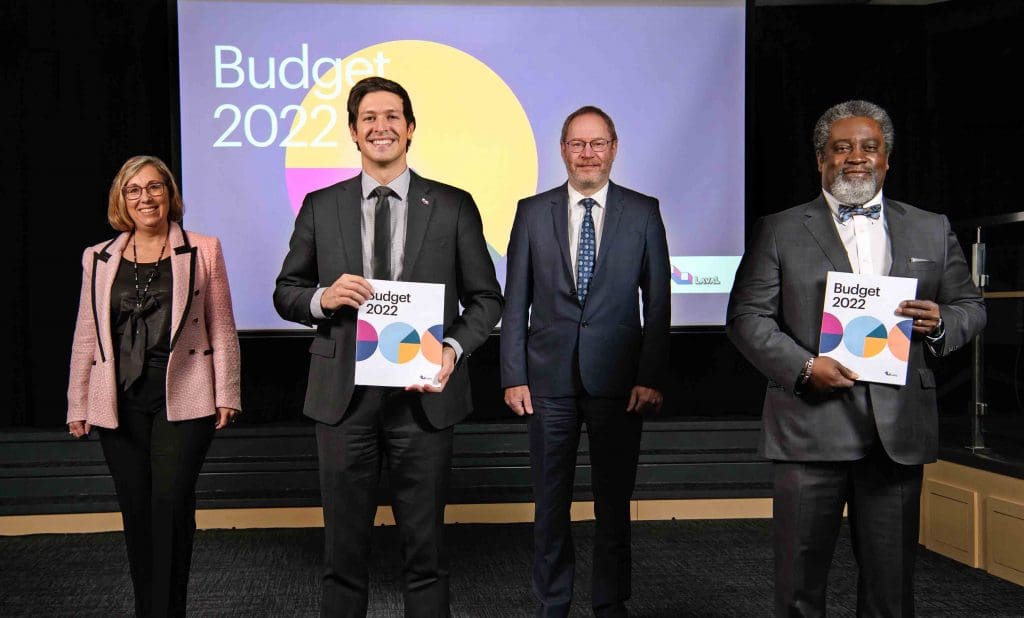
While the City of Laval’s latest operating budget calls for the average property owner to pay just 1.9 per cent more in taxes in 2022, the $969.9 million fiscal exercise includes spending that is 4.3 per cent higher than it was last year.
City sets priorities
In a statement issued by the city last Thursday when the budget was released, finance department officials said their priorities over the coming year will focus primarily on improving the security of residents as well as municipal employees, optimizing services to citizens, following sound environmental practices, enhancing the quality of life and managing finances responsibly.
Although much of the operating budget consists of business-as-usual expenditures adjusted slightly upwards to take inflation into consideration, there are a few notable exceptions. Perhaps most outstanding among these is a significant increase in the city’s payroll expenses, which is the total amount Laval expects to pay in 2022 to its thousands of employees.
$29 million more in salaries
Answering questions from journalists about the budget last week, Pierre Beaudet, the city’s director of finance, said the payroll is going up by two per cent or roughly $29 million next year. The city will be paying its employees around $412 million in 2022 (not including more than $100 million more for social benefits).
The two per cent hike reflects not only salary increases written into unionized workers’ contracts, but also the fact that the city is hiring 269 new employees. In an interview with the Laval News, Mayor Stéphane Boyer explained that as the City of Laval expands and its population rises, the municipality has no choice but to hire new employees almost every year to meet the rising demand on services.
Hiring for growing population
“To maintain the level of service, we have to hire, because each year we have more kilometres of streets to clear of snow, more residents who want to access municipal services,” he said. “There’s always an increase that is due simply to an increase in the population.” Mayor Boyer pointed out that the 269 new workers includes 60 who are re-hired annually on one-year contracts which are renewed. He said the actual number of new positions is 111.
Mayor Stéphane Boyer, city manager Jacques Ulysse and municipal finance officials are seen here following the presentation of the City of Laval’s 2022 budget last week.
Although the Covid pandemic is taking a toll on the city’s expenses, it’s not as devastating as might otherwise be expected. According to the new budget, $15 million has been allotted for pandemic-related costs in the coming year.
Some of this will be going towards the purchase of PPE (personal protective equipment) to safeguard employees against viral spread. As well, the city has found it necessary to purchase laptop computers and other equipment so that employees can work from home during periods of mandatory isolation.
Covid pandemic expenses
But that’s not all. Around $6 million of the sum will be going to the Société de transport de Laval to make up for the STL’s steep decline in revenue from the loss of passenger traffic during the pandemic. Thorough cleaning of municipal offices to minimize the risk of Covid spread is also an additional expense resulting from the pandemic.
The city has also made room on the 2022 budget for better public security. Laval has allotted $1.7 million to provide its police force with better resources to deal with sexual exploitation by pimps, as well as the illegal spread of firearms and the presence of organized crime on the city’s territory. The city says more than $2 million has been set aside for programs to encourage inclusion and diversity within institutional settings.
$65K to protect firefighters
The city plans to spend $65,000 next year implementing a new system designed to protect its firefighters from hazardous and potentially carcinogenic smoke and fumes. The fire department will be purchasing an additive to be fed into the water that’s poured onto fires; it is designed to chemically absorb carbon molecules and smoke, thus minimizing the health impact on firefighting personnel.
The city is allotting $1.9 million to improve snow removal, and an additional $1.7 million to improve the current system of alternative street parking during snow removal operations. As well, the city says it is continuing to improve traffic management with the purchase of more illuminated speed indication signage.
Jeux du Québec next year
The city is allotting $285,000 to support the opening in the fall of 2022 of the Centre d’interprétation des biosciences Armand-Frappier. Currently located on des Prairies Blvd. in Laval-des-Rapides, the museum is moving next fall into a brand-new facility next to the Cosmodôme in central Laval.
And finally, despite all the turmoil and postponements brought about by the COVID-19 pandemic, the city hasn’t forgotten its commitment to hosting the Finals for the Jeux du Québec which were supposed to take place in 2020.
According to next year’s budget, $2 million has been set aside for the provincial athletics and sporting event scheduled to be held in Laval sometime next year.
The current issue of the Laval News volume 29-45 published December 22nd, 2021. Covering Laval local news, politics, sports and our new section Mature Life. (Click on the image to read the paper.)
Front page of the Laval News, December 22nd, 2021 issue.
An 18-year-old male who was stabbed with a knife-like weapon in Chomedey is recovering in hospital where his life is not considered to be in danger, according to the LPD.
A fight in which he was injured is said to have taken place around 9:30 pm on Saturday last week.
An LPD incident report stated that he suffered an injury to the upper body on Mackenzie St., after which he was transported to hospital to be treated.
LPD investigators and crime scene technicians were on the scene the night of the incident and had cordoned off part of the area.
Identity of Cité de la Santé ‘euthanasia’ doctor revealed
An anaesthesiologist at Laval’s Cité de la Santé hospital is waiting for the Quebec College of Physicians to render a verdict in a case involving a police investigation into whether she terminated the life of a patient without following established procedures.
The identity of Dr. Isabelle Desormeau, who is no longer practicing medicine, was revealed after lawyers acting on her behalf applied several times to keep her identity secret, including an intervention to the Supreme Court of Canada.
The LPD has opened an investigation into whether an anaesthesiologist’s actions while treating a patient at Laval’s Cité de la Santé hospital constituted murder. (Photo: Newsfirst Multimedia)
The case goes back to October 2019, when the life of an 84-year-old male patient about to undergo emergency surgery was terminated, according to medical personnel who were witnesses. Since then, the LPD opened an investigation into whether her actions constituted homicide.
During the patient’s intestinal surgery, in which Desormeau participated, the surgeon discovered significant portions of the patient’s intestine which could not be saved and necessitated a long-term intervention with quality-of-life consequences.
After consulting a family member, the surgeon decided that palliative care would be best and returned to the operating room to finish the surgery.
At this point, apparently a heated discussion broke out between Desormeau and some of the nurses over the patient’s long-term prospects and quality-of-life issues.
According to the Montreal daily La Presse, which reported several accounts given by witnesses, Desormeau gave the patient an injection and disconnected him from a respirator. This was done, according to La Presse, in spite of a nurse’s informing the anaesthesiologist that she was not following the accepted medical protocols and procedures.
LPD arrests suspect during firearms search
The Laval Police Department say they have arrested a male suspect they believe was involved in a breaking and entering incident during a search for firearms last week on Laval territory.
The raid was conducted for reasons the LPD said were related to “events involving firearms and street gangs that occurred in recent months.”
Ayoub Machkour, 21, faces charges of breaking and entering, as well as pointing a firearm. He was in custody and was expected to appear in court last Friday.
The LPD said two bullet-proof vests, an air gun and additional evidence were seized during their searches, which were conducted at two homes and in a vehicle.
The police force noted that additional investigations were conducted earlier, on Nov. 22, leading to the arrest of two other individuals and the seizure of a 9 mm firearm.
Anyone who believes they have information which could be useful to this case is invited to contact the LPD on their Info-Line at 450 662 INFO (4636), or by calling 911. The file number is LVL 210728 026.
But Société de transport de Laval and water tax hikes will add $20 to each bill
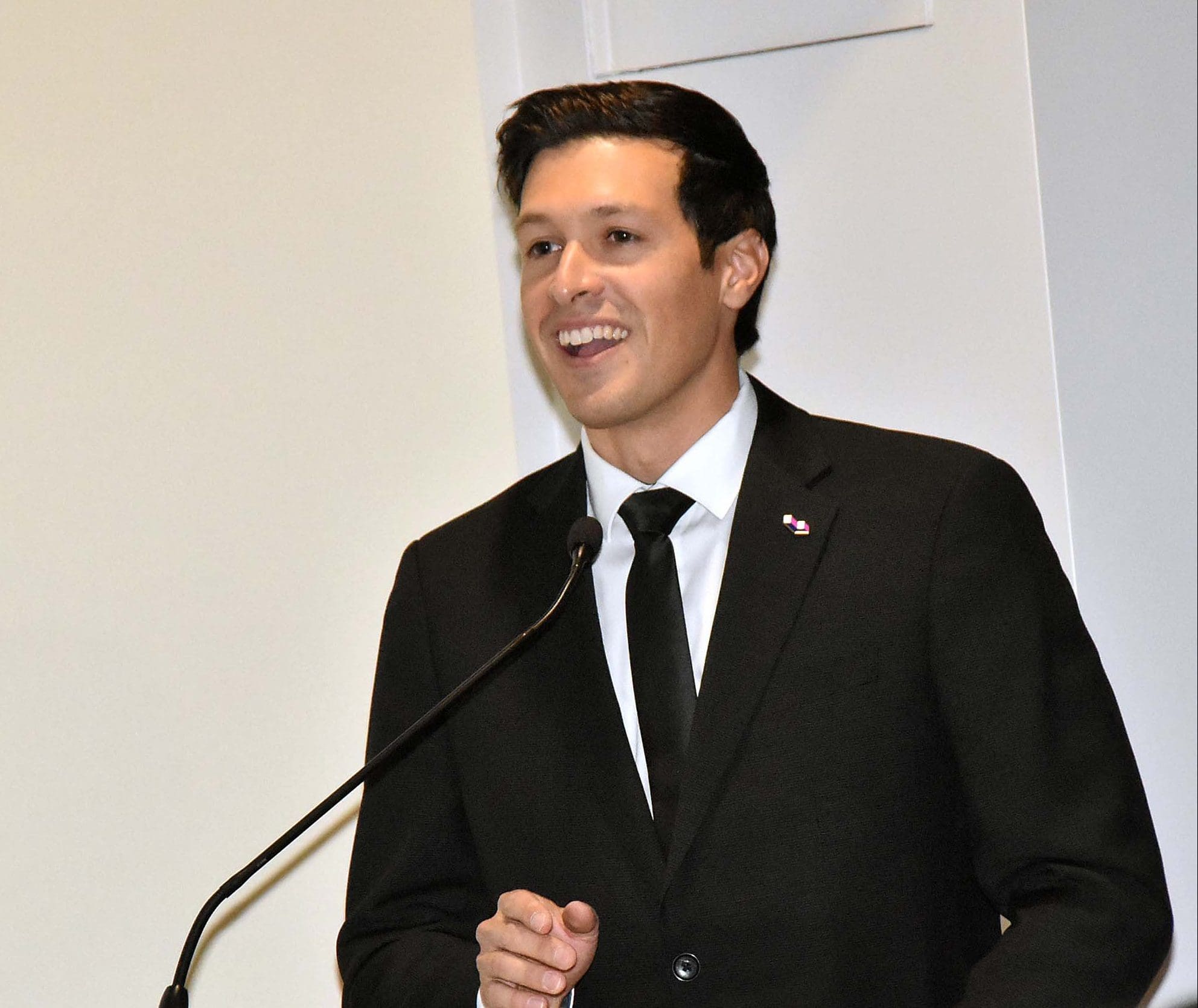
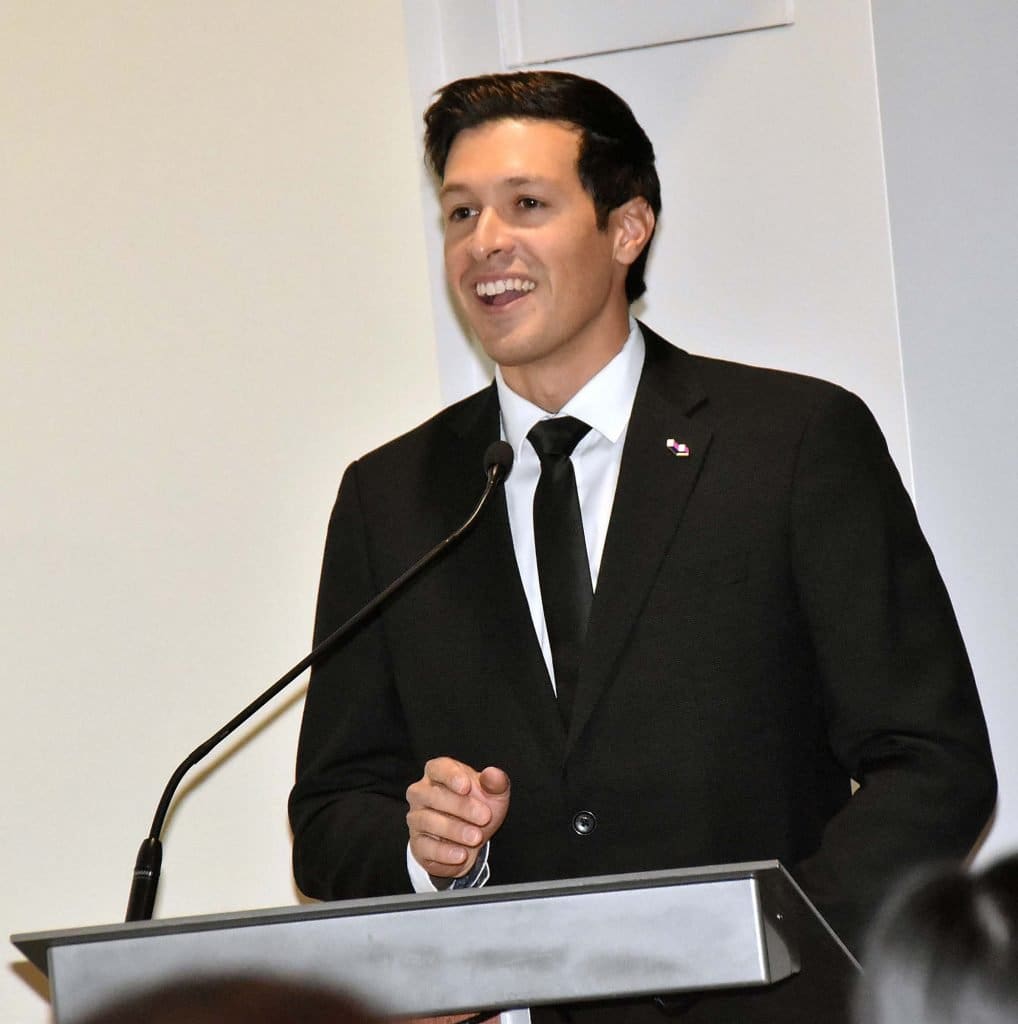
In an interview this week with the Laval News prior to the release of the City of Laval’s 2022 budget on Dec. 16, Mayor Stéphane Boyer said the average home’s tax bill can be expected to increase no more than 1.9 per cent next year – below the anticipated rate of inflation.
According to Boyer, the new administration is putting together the 2022 budget differently than in past years. As such, the operations segment of the budget will be tabled on Dec. 16, but the triennial capital works budget (PTI) will only be announced in mid-January.
Seeks transparency
The mayor maintains that delaying the PTI (which includes major infrastructure project expenses for the next three years) will allow municipal officials to meet city councillors, including opposition members, to receive input for priorities from them. The administration believes this will contribute to its goal of creating more transparency.
“In the past there was no consultation – for the budget there was just a presentation to certain people,” said Boyer. “Now in this way there will be a consultation, and we want to make sure there is as much as possible in it from the elected members as possible.”
PTI budget in January
He said the municipal elections in November reduced the time city officials had available to formulate the new budget, obliging them to postpone the PTI to January.
Laval mayor Stéphane Boyer. (Photo: Martin C. Barry, Newsfirst Multimedia)
Although the 1.9 per cent general tax hike is an indicator of restraint by the new administration, a $15 per household increase is being introduced on the water tax in order to help pay for improvements to water infrastructure.
Because of a longstanding engineering oversight in Laval’s underground wastewater infrastructure (as well as in many other cities in Quebec), wastewater during heavy rain storms has ended up for years being mixed with sewage before being flushed into the river.
Water infrastructure work
“We’ve been talking about doing something about his for many years and we finally want to do something about it,” said Boyer, noting that part of the city’s solution will be to create up to three underground reservoirs to catch rainwater overflows during major downpours.
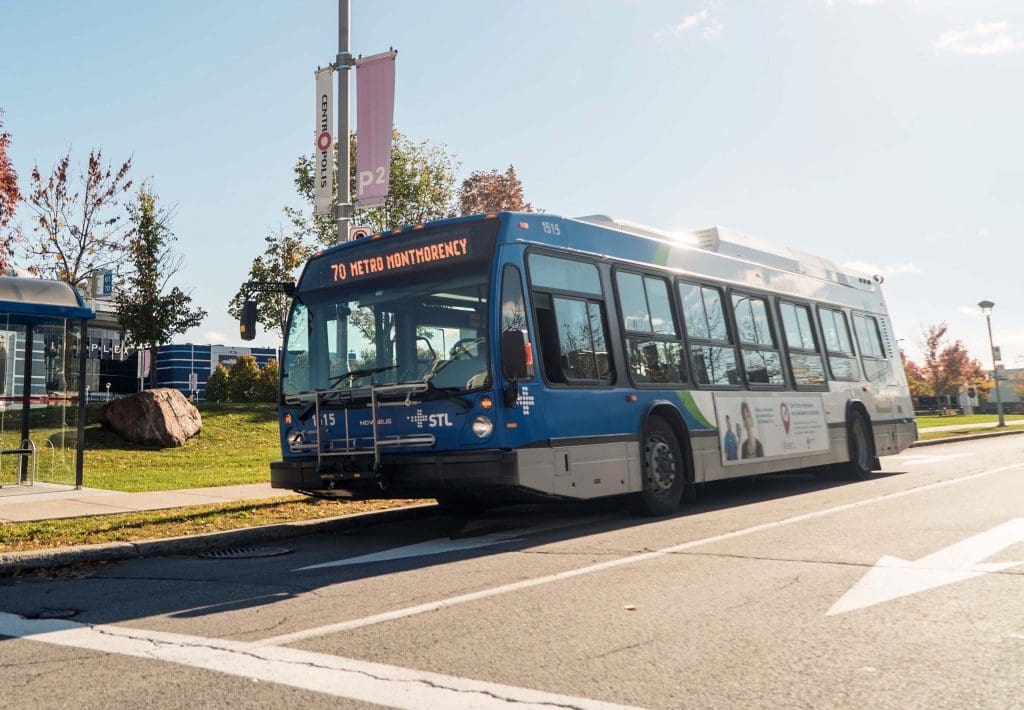
As well, the city is imposing a $5 increase on a tax to help the Société de transport de Laval (STL) deal with a deficit at the transit agency caused by a more than 50 per cent drop in ridership during the Covid pandemic. “We have to compensate for this loss,” Boyer said.
Tax freeze not in the cards
While some Laval city council opposition members have lobbied in the past for the city to decree a tax freeze, Boyer said that during the election campaign the Mouvement lavallois never made that promise. “For us, our commitment was never to freeze taxes – it was to not raise them more than inflation, which is a commitment that we respect,” he said, noting that other cities in the province are contemplating tax increases ranging between two and more than three per cent. In the meantime, it is predicted that the overall rate of inflation next year will exceed three per cent.
Three athletes from Laval honored during Mérite sportif lavallois
Three outstanding athletes from Laval were honored recently by city officials during the 63rd Mérite sportif lavallois awards gala.
Covid restrictions
Laval city councillor for Laval-Les Îles Nicholas Borne welcomed the winner of the bourse Alexandre-Despatie, Laurie St-Georges, as well as winners of the Prix Pierre-Marchand, Kiana Dufour and Ève Rajotte.
Because of the COVID-19 pandemic and the subsequent cancellation of several sports competitions over the past two years, this year’s Mérite sportif lavallois awards were presented to athletes who distinguished themselves over the last few months only.
Honoring accomplishment
“In spite of the pandemic, it seemed imperative for the city to emphasize the sports accomplishments of our athletes from Laval since sports started up again,” said Borne. “Laurie, Kiana and Ève distinguished themselves this year with their sports performancesand the remarkable perseverance. They are models for all young people in Laval, whether on the personal or sporting level, and we feel very proud to honor them on the occastion of the Mérite sportif lavallois.”
From the left, Ève Rajotte, Laurie St-Georges, Kiana Dufour and Nicholas Borne. (Photo: Vincent Girard, City of Laval)
Bourse Alexandre-Despatie
Laurie St-Georges’ sport is curling, for which her excellence saw her being presented with the Bourse Alexandre-Despatie. Worth $2,500, it honours athletes judged to be elite who have performed nationally or internationally. The curling capitain led her team during the Scotties Women’s Canadian Championship in Calgary in February 2021.
Prix Pierre-Marchand Two of these awards were given out. Kiana Dufour, who plays soccer, received one, while Ève Rajotte, who is a figure skater, received the other. Dufour plays the sport despite some serious health issues, from which she has undergone treatment in recent years and from which she continues to recover. Rajotte, on the other hand, has serious problems with her vision. She developed her proficiency in her chosen sport despite the limitation.
STL bus drivers stage one-day strikes again on Dec. 18-19
Public transit users in Laval will have to seek out alternate modes of transportation on Dec. 18 and 19 when bus drivers with the Société de transport de Laval (STL) say they will be going out on strike.
As a result, there will be no public transit available in Laval on those days, which are a Saturday and Sunday.
The STL drivers’ union maintains that an agreement has still not been reached at the bargaining table with their employer.
The president of the FTQ-affiliated union, Patrick Lafleur, maintains that management isn’t making sufficient efforts to ensure quality public transport. He says that STL bus drivers will come out the worse for it if they accept the transit agency’s current wage offer.
The union is criticizing the STL for being closed to suggestions, despite several concessions the transit authrority has made.
The dispute also concerns the maintenance of bus routes where demand is insufficient, as well as scheduling of bus service. The union received a strike mandate from 99 per cent of its membership last January. The STL claims that its overall offer tabled with the union is fair and comparable what was agreed upon with the company’s other unions.
Vimy MP Annie Koutrakis becomes Parliamentary Secretary to Minister of Transport
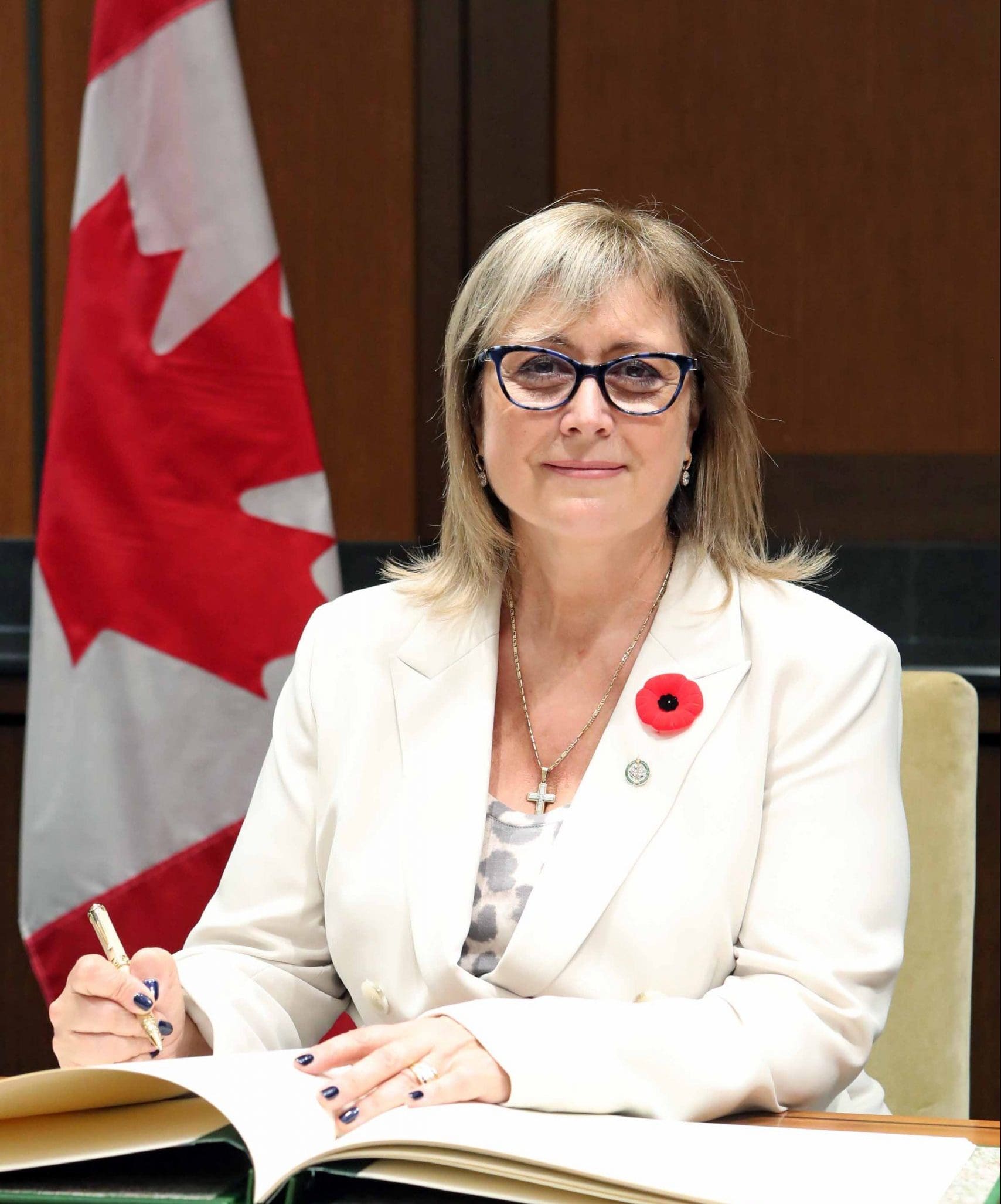
In addition to her duties as the Liberal Member of Parliament for the riding of Vimy, Annie Koutrakis’ workload will be a quite a bit heavier for at least the next year following her appointment recently by Prime Minister Justin Trudeau as the Minister of Transport’s Parliamentary Secretary.
A vital link
Announcing the new team of parliamentary secretaries on Dec. 3, the Prime Minister’s Office (PMO) said the appointees will be an important link between the ministers and Parliament, working closely with their colleagues.
“This talented and diverse team of parliamentary secretaries will work tirelessly with their ministers and colleagues,” Trudeau said in a statement. The responsibilities of parliamentary secretaries generally fall into two broad categories: House of Commons business and department-related duties.
Vimy Member of Parliament Annie Koutrakis was recently appointed by Prime Minister Justin Trudeau as Parliamentary Secretary to Minister of Transport Alghabra in the Liberal government.
Not decision-making
They are not members of the cabinet and do not play a formal role in the cabinet decision-making process. However, they do provide support to ministers, although overall responsibility and accountability remains with the minister.
“It’s always an honour when the Prime Minister shows confidence in the people on his team to help with the various cabinet portfolios,” Koutrakis said in an interview with the Laval News. “I tell you I was so excited when I received his call a couple of days before it was announced publicly.”
Providing support
Koutrakis describes the Parliamentary Secretary’s position as “junior ministerial,” with her job being primarily to assist the Minister of Transport, Omar Alghabra, and see that he has the necessary support to understand and process a very large number of files pertaining to national transportation issues.
“There are so many different files, there is no way he can stay on top of everything,” she said. “So, he needs someone to assist with that. My conversation with Minister Alghabra was that he’d like me to take some time to reflect on the kinds of files that perhaps I would like to take a lead on.”
Some of the duties
‘i’m the kind of person who, when I’m assigned a certain file, really wants to ensure that I fully understand the issues’
According to a “Guide for Parliamentary Secretaries” published on the Prime Minister’s website, the role of Parliamentary Secretaries in supporting ministers’ House duties includes:
Attending Question Period;
Piloting the minister’s legislation through the legislative process on the floor of the House, in parliamentary committees (although parliamentary secretaries do not vote on committees that fall under their responsibility as parliamentary secretary), and with caucus and opposition MPs;
Supporting the minister’s position on Private Members’ Business;
Supporting the minister on committee issues and appearing before parliamentary committees;
liaising with caucus members and other parliamentarians on behalf of the minister;
Carrying out other House duties assigned to them and coordinated by the Government House Leader, such as participating in “Late Show” debates, leading the Government’s response to Opposition Day motions, and responding to Parliamentary Returns.
The Parliament of Canada Act sets the maximum term for an appointment as a Parliamentary Secretary at 12 months, although the appointment may be renewed for more than one term. The appointment comes with a $16.600 bonus added to the annual salary of more than $185,000 paid to MPs.
Heavier workload
Koutrakis said that as part of her Parliamentary Secretary duties, she expects to be briefed for several hours at least once a week on issues pertaining to the dossiers she will be overseeing on behalf of the Transport Minister. As a result, her workload will be increasing significantly.
“There’s no question that if I was working 12-to-14-hour days before, I expect to add maybe two to three hours more a day,” she said.
Knowing the issues
“But, you know, for someone who really wants to make a difference, I’m the kind of person who, when I’m assigned a certain file, really wants to ensure that I fully understand the issues and that I can be as helpful and involved as I can be.
“So, I expect to be busier in the beginning. And the Christmas break coming up that will be welcome, because it will give me some time to catch up on reading and familiarizing myself with the files.”
It never ceases to amaze me how governments consistently bungle projects that they were elected and well paid to manage professionally and effectively. And so it’s refreshing to be able to write about the optimism that’s emanating from our west coast. It was a horrific scene of floods and destruction. It is Canada’s worst disaster.
The BC government, corporations and ordinary folk have reacted with swiftness, courage and determination to this horrible and catastrophic blow dealt by Mother Nature. And they are getting it done.
Trans Mountain and Enbridge, that transport gasoline and natural gas from Alberta to most of British Columbians, quickly stopped the flow for precautionary reasons when the rains came (the floods unearthed the pipelines, leaving them exposed or underwater). The BC government, foes in court with these same pipeline companies, actually praised and thanked the corporations.
Newsfirst columnist Robert Vairo.
B.C. acted swiftly in declaring a Provincial State of Emergency to mitigate impacts on transportation networks and movement of essential goods and supplies. It also allowed various government departments to order repairs and reconstruction done immediately, and disburse money in days, which would otherwise have taken months. Victims received an immediate two thousand dollars, a small but well received amount, with more to follow. There was swift and efficient prioritizing and organization. Emergency services went to work literally within hours to assess damage, block roads because of highway wash outs, snapped bridges, and mudslides obstructing routes. They rerouted traffic, closed some roads, and arranged for single lane traffic to allow only emergency and essential vehicles.
The unsung heroes are the farmers affected. Even though some had lost cattle, chickens, hogs, and homes, they didn’t immediately seek shelter but helped neighbours move their livestock first. There are some unbelievable human stories. School kids with fund raisers, Telus $1 million, Stormtech Performance Apparel $600,000 in new clothes, and the list goes on of corporate and private help and donations.
The government ordinance gave powers to their Public Safety Minister Mike Farnworth to freeze gasoline prices that were in effect ten days earlier. Retailers were served with hefty fines for gouging. There was none reported.
British Columbians were told to drive only if necessary, and resume working from home. Fill up was limited to 30 liters at a time except for emergency and essential vehicles, to preserve what gasoline remained There were some cheaters, as there always are, but most abided.
The main transportation highway, the 600 km Coquihalla, the shortest route from Edmonton to Vancouver was scheduled to reopen only at the end of January. Because of the voluminous machinery and manpower dispatched, and the Canadian Armed Forces, some crews working under lights around the clock, ‘the Coq’, (pronounced ‘coke’) as it’s called there, is expected to be back in business some time after Christmas.
There is anger too. The Americans have done little to mitigate flood waters from Washington state from spilling into Canada. The U.S. Nooksack River, is a powerful contributor to floods in Abbotsford BC. There are grounds for a law suit.
What is also in Canadians’ conversation coast to coast, is COVID-19 infections on the rise, and Omicron expected to quadruple daily case counts. Even at this late stage there is no accountability by the Legault government for “10 times the number of deaths in care homes more than anywhere else in Canada.”
The center stage chatter has to be the stratospheric rise in the cost of everything. We are all noticing because the surge in prices is affecting what we need and buy daily, like food, energy and housing. Inflation in Canada will likely be over 5% this month, it was approaching 7% in the U.S.
Yes, inflation is world wide, but it has domestic roots. And what is astounding is our liberal government’s inability and unwillingness to address grocery store prices, while continuing to plan more record spending.
And this continuous spending has resulted in a warning from the National Bank’s chief economist Stéfane Marion. “We are bleeding capital”. With no new projects allowed, private investment in Canada has slowed since 2015. There is investment in residential real estate though. It now exceeds investment in all the other sectors of the economy for the first time since 1961. That’s not a good economic indicator. Not even Canadian pension funds are investing in Canada. 130 billion dollars have left this country that otherwise would have funded expansion, more employment, especially for the record increase to 400 thousand immigrants now allowed into Canada, one of the highest per capita rates of permanent immigration in the world. Says Marion ““Clearly we are not doing well when our own domestic pension funds prefer to invest heavily abroad rather than in Canada.”
It’s true, the pandemic has dampened toy drives, visits with mall Santas, and annual Christmas parades, but that should not prevent us from enjoying safe, festive, family gatherings.
Hope you had a great Hanukkah, and have a very Merry Christmas.
Responding to 3-1-1 service criticism, Boyer says six new operators hired
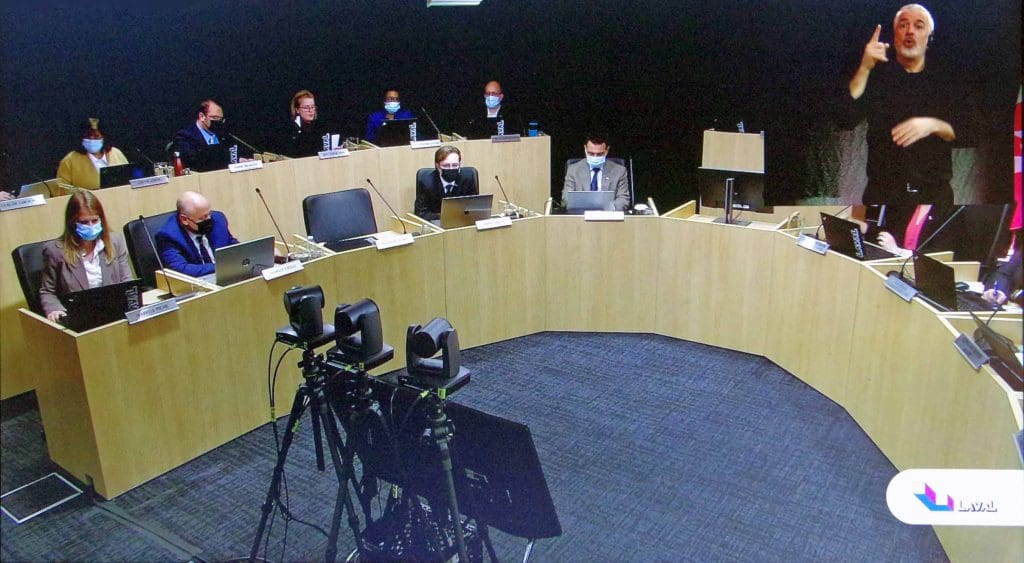
The Société de transport de Laval’s ongoing labour dispute and rotating service disruptions were the focus of questions from a concerned resident to Mayor Stéphane Boyer and other elected officials during the first regular public meeting of Laval city council since last month’s municipal elections.
‘Users held hostage’
In an e-mail to the mayor read out during question period at the Dec. 7 meeting, Steve Vézina asked whether the City of Laval has any powers to deal with the pressure tactics currently being used by the unionized STL bus drivers, “because this is completely unacceptable that the users are being held hostage by slowdowns, cancellations and service stoppages,” he said.
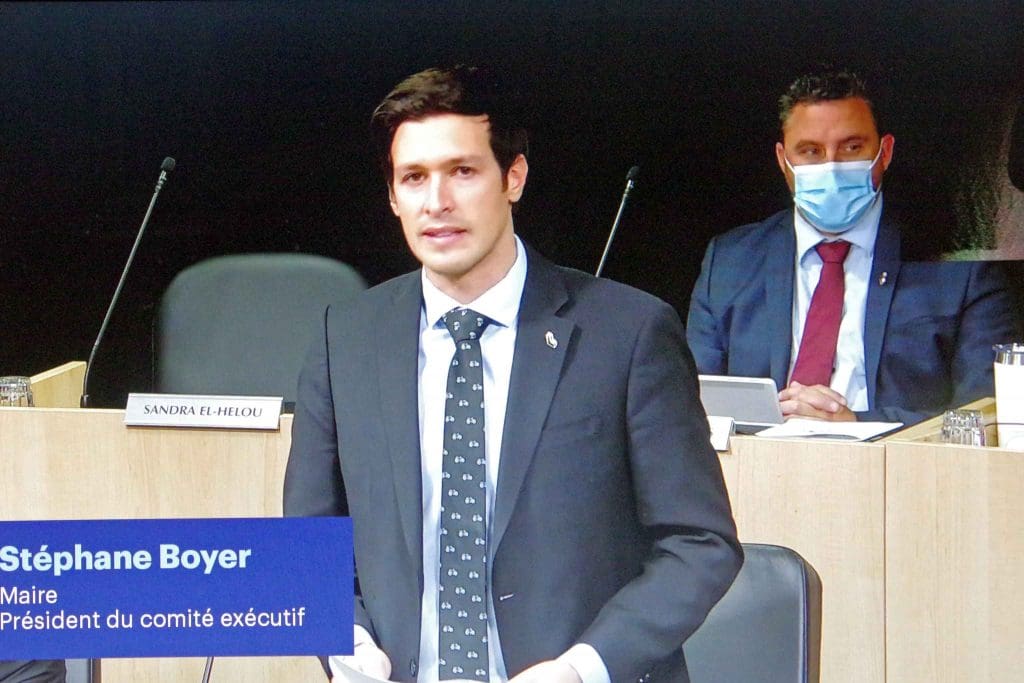
Mayor Stéphane Boyer said during the Dec. 7 Laval city council meeting that Laval is doing all it can to resolve the ongoing Société de transport de Laval labour dispute.
While pointing out that many residents of Laval depend on STL bus service to get to work or to appointments, Vézina asked leaders of the opposition as well as the new mayor when the STL could be expected to settle the situation “because we are at wit’s end.”
3-1-1 service criticized
Vézina also complained about the quality of service on the city’s 3-1-1 public works hotline, which suffers from sometimes lengthy delays.
“I am in complete agreement with you that the population should not be held hostage,” said Parti Laval city councillor for Fabreville Claude Larochelle, noting that a few days earlier there was no STL service available at all, while adding that the bus drivers have been without a collective agreement for nearly two years.
Larochelle said he was not in a position to comment on the state of 3-1-1 because the past administration never furnished performance status information on the service to the opposition in spite of their requests.
Depends when you call
Larochelle suggested residents not call during busy hours, such as Monday mornings, but preferably during weekends when the line is far less busy.
Action Laval city councillor for Saint-Bruno David De Cotis, who presided the Société de transport de Laval when he was a member of former mayor Marc Demers’ administration, said he felt confident the STL’s current leadership would eventually reach an agreement with the union.
Mayor Boyer said the STL has been losing immense sums of money since the beginning of the Covid pandemic last year because of lower ridership
As for 3-1-1, De Cotis acknowledged that callers must sometimes wait on the phone from 30 minutes up to an hour for a call to be answered by an operator when the lines are most busy. However, he said the city appears to be heeding advice offered by the opposition last year and the service hopefully will improve under the new administration.
STL losing money, said Boyer
For his part, Mayor Boyer said the STL has been losing immense sums of money since the beginning of the Covid pandemic last year because of lower ridership, although he acknowledged the City of Laval and the Quebec government have been absorbing most of the impact.
“So, when there is talk of improving working conditions and remuneration, the will is there but this would require a particular financial maneuver, and not only in Laval but all over Quebec and elsewhere in the world, so there is this challenge to meet at the moment,” he said. For the time being, he added, negotiations remain underway between STL management and the bus drivers’ union.
More 3-1-1 operators
Regarding 3-1-1, the mayor insisted that most of the time it runs smoothly, although he admitted that the level of service can vary widely depending on the time of year or the day of the week. He said the number of operators on duty can vary and unexpected events such as weather disturbances or power failures can cause the system to become choked with callers.
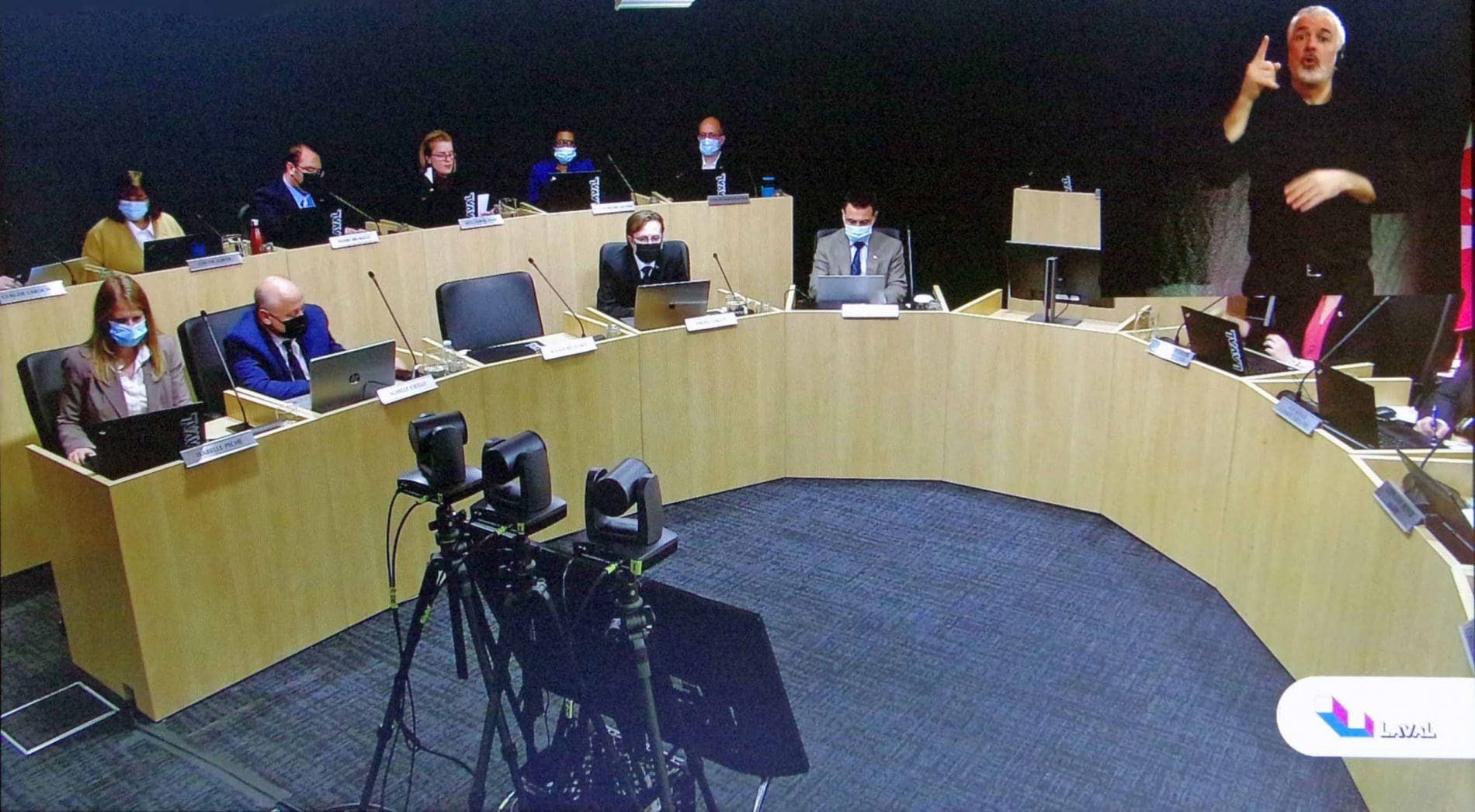
Members of Laval City Council held their first regular monthly public meeting on Dec. 7 at Laval’s interim city hall on Saint-Martin Blvd.
While maintaining that wait times on Laval’s 3-1-1 service can vary from two minutes up to a half-hour, Mayor Boyer said the city decided recently to hire six more operators. As well, he pledged to begin sharing information and data from the 3-1-1 service with councillors who are members of the opposition.
Polytechnique Massacre
As Dec. 6 was the anniversary of the École Polytechnique Massacre in 1989, a minute of silence was observed at the opening of the meeting and the mayor and several councillors later also made statements.
Boyer noted that the past year saw a significant increase in the number or women murdered in Laval. “It’s a reality which sadly is still among us and that is obviously unacceptable,” he said.
“As a society, we must do everything we can about this problem. In Laval, we have some basic resources to help women who are enduring domestic abuse. We will see what more we can do to support them in the future. We are already supporting them, but we will see what else we can do to go further.”