The current issue of the Laval News volume 29-45 published December 22nd, 2021.
Covering Laval local news, politics, sports and our new section Mature Life.
(Click on the image to read the paper.)


An 18-year-old male who was stabbed with a knife-like weapon in Chomedey is recovering in hospital where his life is not considered to be in danger, according to the LPD.
A fight in which he was injured is said to have taken place around 9:30 pm on Saturday last week.
An LPD incident report stated that he suffered an injury to the upper body on Mackenzie St., after which he was transported to hospital to be treated.
LPD investigators and crime scene technicians were on the scene the night of the incident and had cordoned off part of the area.
Identity of Cité de la Santé ‘euthanasia’ doctor revealed
An anaesthesiologist at Laval’s Cité de la Santé hospital is waiting for the Quebec College of Physicians to render a verdict in a case involving a police investigation into whether she terminated the life of a patient without following established procedures.
The identity of Dr. Isabelle Desormeau, who is no longer practicing medicine, was revealed after lawyers acting on her behalf applied several times to keep her identity secret, including an intervention to the Supreme Court of Canada.
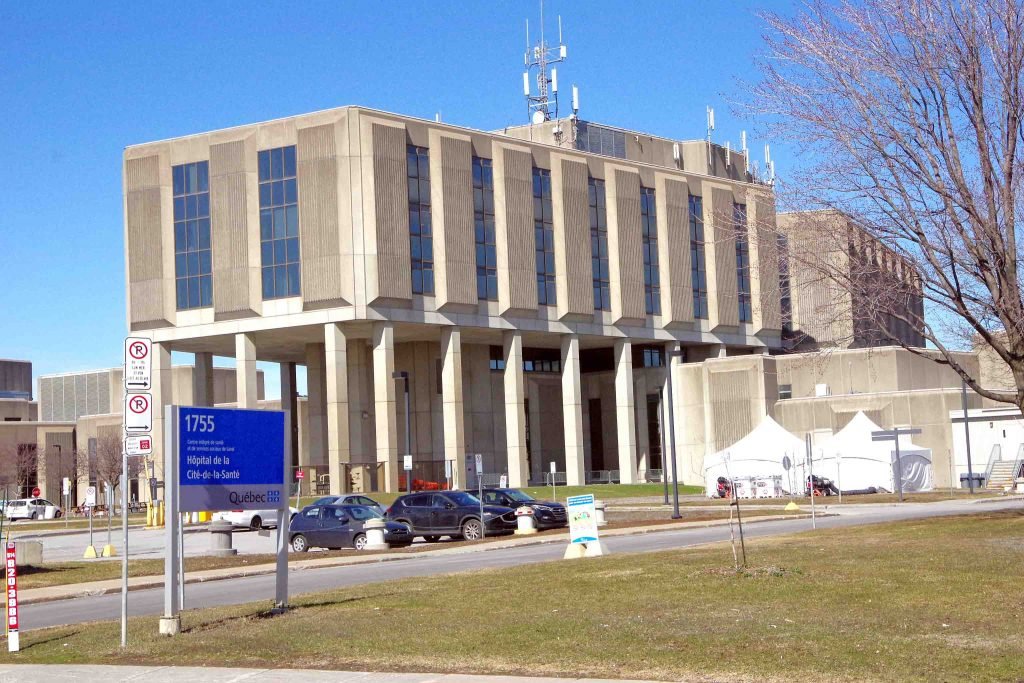
The case goes back to October 2019, when the life of an 84-year-old male patient about to undergo emergency surgery was terminated, according to medical personnel who were witnesses. Since then, the LPD opened an investigation into whether her actions constituted homicide.
During the patient’s intestinal surgery, in which Desormeau participated, the surgeon discovered significant portions of the patient’s intestine which could not be saved and necessitated a long-term intervention with quality-of-life consequences.
After consulting a family member, the surgeon decided that palliative care would be best and returned to the operating room to finish the surgery.
At this point, apparently a heated discussion broke out between Desormeau and some of the nurses over the patient’s long-term prospects and quality-of-life issues.
According to the Montreal daily La Presse, which reported several accounts given by witnesses, Desormeau gave the patient an injection and disconnected him from a respirator. This was done, according to La Presse, in spite of a nurse’s informing the anaesthesiologist that she was not following the accepted medical protocols and procedures.
LPD arrests suspect during firearms search
The Laval Police Department say they have arrested a male suspect they believe was involved in a breaking and entering incident during a search for firearms last week on Laval territory.
The raid was conducted for reasons the LPD said were related to “events involving firearms and street gangs that occurred in recent months.”
Ayoub Machkour, 21, faces charges of breaking and entering, as well as pointing a firearm. He was in custody and was expected to appear in court last Friday.
The LPD said two bullet-proof vests, an air gun and additional evidence were seized during their searches, which were conducted at two homes and in a vehicle.
The police force noted that additional investigations were conducted earlier, on Nov. 22, leading to the arrest of two other individuals and the seizure of a 9 mm firearm.
Anyone who believes they have information which could be useful to this case is invited to contact the LPD on their Info-Line at 450 662 INFO (4636), or by calling 911. The file number is LVL 210728 026.
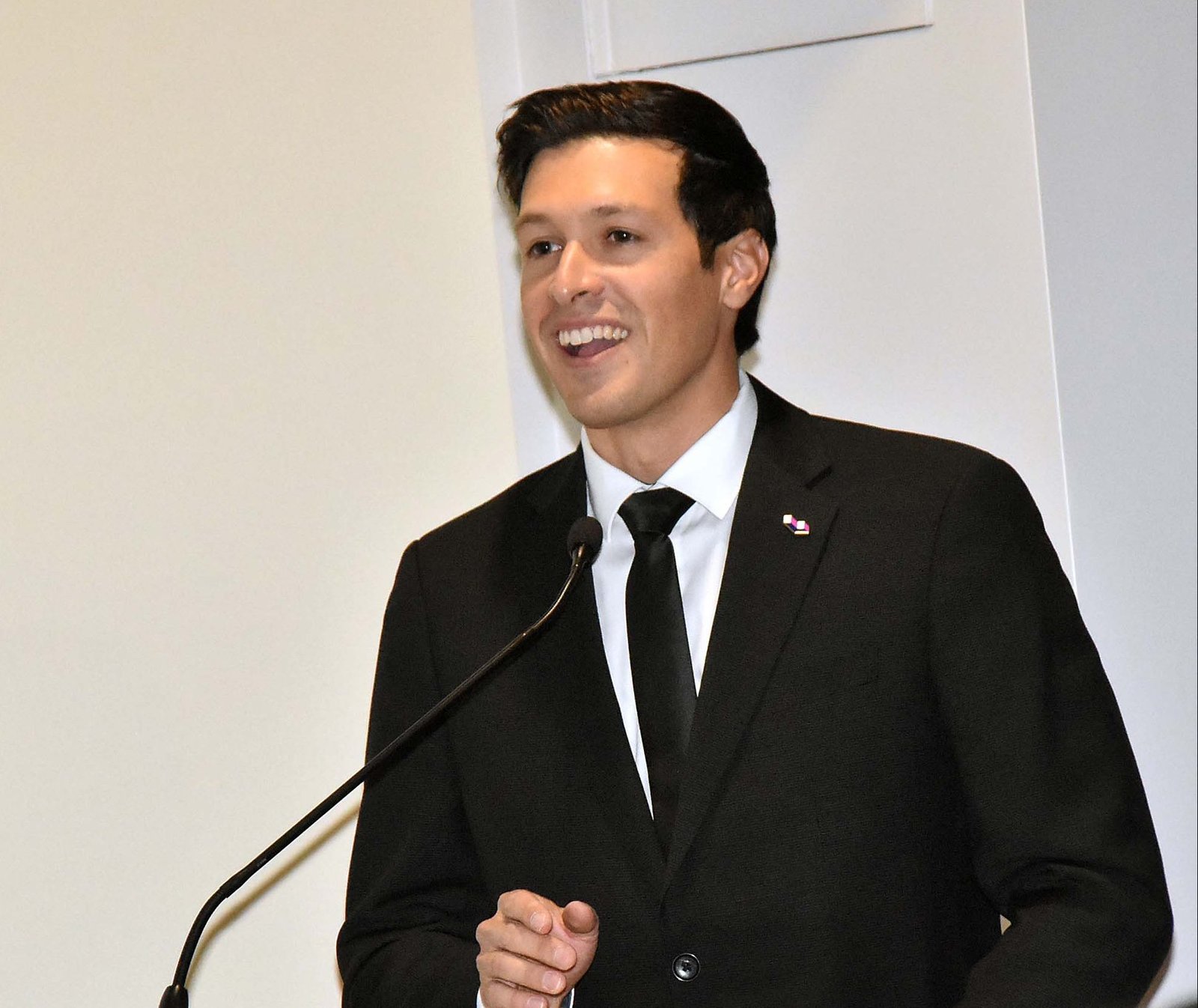
In an interview this week with the Laval News prior to the release of the City of Laval’s 2022 budget on Dec. 16, Mayor Stéphane Boyer said the average home’s tax bill can be expected to increase no more than 1.9 per cent next year – below the anticipated rate of inflation.
According to Boyer, the new administration is putting together the 2022 budget differently than in past years. As such, the operations segment of the budget will be tabled on Dec. 16, but the triennial capital works budget (PTI) will only be announced in mid-January.
Seeks transparency
The mayor maintains that delaying the PTI (which includes major infrastructure project expenses for the next three years) will allow municipal officials to meet city councillors, including opposition members, to receive input for priorities from them. The administration believes this will contribute to its goal of creating more transparency.
“In the past there was no consultation – for the budget there was just a presentation to certain people,” said Boyer. “Now in this way there will be a consultation, and we want to make sure there is as much as possible in it from the elected members as possible.”
PTI budget in January
He said the municipal elections in November reduced the time city officials had available to formulate the new budget, obliging them to postpone the PTI to January.
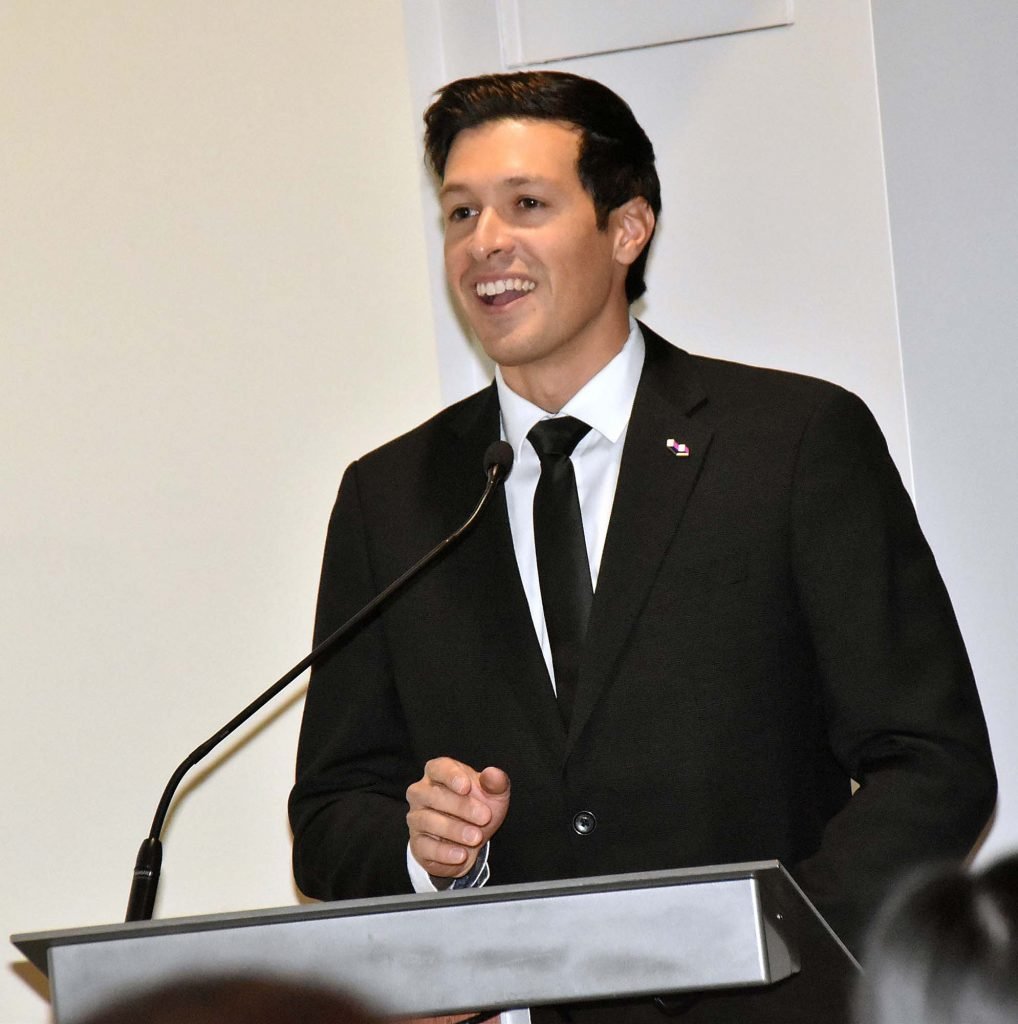
Although the 1.9 per cent general tax hike is an indicator of restraint by the new administration, a $15 per household increase is being introduced on the water tax in order to help pay for improvements to water infrastructure.
Because of a longstanding engineering oversight in Laval’s underground wastewater infrastructure (as well as in many other cities in Quebec), wastewater during heavy rain storms has ended up for years being mixed with sewage before being flushed into the river.
Water infrastructure work
“We’ve been talking about doing something about his for many years and we finally want to do something about it,” said Boyer, noting that part of the city’s solution will be to create up to three underground reservoirs to catch rainwater overflows during major downpours.
As well, the city is imposing a $5 increase on a tax to help the Société de transport de Laval (STL) deal with a deficit at the transit agency caused by a more than 50 per cent drop in ridership during the Covid pandemic. “We have to compensate for this loss,” Boyer said.
Tax freeze not in the cards
While some Laval city council opposition members have lobbied in the past for the city to decree a tax freeze, Boyer said that during the election campaign the Mouvement lavallois never made that promise. “For us, our commitment was never to freeze taxes – it was to not raise them more than inflation, which is a commitment that we respect,” he said, noting that other cities in the province are contemplating tax increases ranging between two and more than three per cent. In the meantime, it is predicted that the overall rate of inflation next year will exceed three per cent.

Three outstanding athletes from Laval were honored recently by city officials during the 63rd Mérite sportif lavallois awards gala.
Covid restrictions
Laval city councillor for Laval-Les Îles Nicholas Borne welcomed the winner of the bourse Alexandre-Despatie, Laurie St-Georges, as well as winners of the Prix Pierre-Marchand, Kiana Dufour and Ève Rajotte.
Because of the COVID-19 pandemic and the subsequent cancellation of several sports competitions over the past two years, this year’s Mérite sportif lavallois awards were presented to athletes who distinguished themselves over the last few months only.
Honoring accomplishment
“In spite of the pandemic, it seemed imperative for the city to emphasize the sports accomplishments of our athletes from Laval since sports started up again,” said Borne. “Laurie, Kiana and Ève distinguished themselves this year with their sports performancesand the remarkable perseverance. They are models for all young people in Laval, whether on the personal or sporting level, and we feel very proud to honor them on the occastion of the Mérite sportif lavallois.”

Bourse Alexandre-Despatie
Laurie St-Georges’ sport is curling, for which her excellence saw her being presented with the Bourse Alexandre-Despatie. Worth $2,500, it honours athletes judged to be elite who have performed nationally or internationally. The curling capitain led her team during the Scotties Women’s Canadian Championship in Calgary in February 2021.
Prix Pierre-Marchand Two of these awards were given out. Kiana Dufour, who plays soccer, received one, while Ève Rajotte, who is a figure skater, received the other. Dufour plays the sport despite some serious health issues, from which she has undergone treatment in recent years and from which she continues to recover. Rajotte, on the other hand, has serious problems with her vision. She developed her proficiency in her chosen sport despite the limitation.
STL bus drivers stage one-day strikes again on Dec. 18-19
Public transit users in Laval will have to seek out alternate modes of transportation on Dec. 18 and 19 when bus drivers with the Société de transport de Laval (STL) say they will be going out on strike.
As a result, there will be no public transit available in Laval on those days, which are a Saturday and Sunday.
The STL drivers’ union maintains that an agreement has still not been reached at the bargaining table with their employer.

The president of the FTQ-affiliated union, Patrick Lafleur, maintains that management isn’t making sufficient efforts to ensure quality public transport. He says that STL bus drivers will come out the worse for it if they accept the transit agency’s current wage offer.
The union is criticizing the STL for being closed to suggestions, despite several concessions the transit authrority has made.
The dispute also concerns the maintenance of bus routes where demand is insufficient, as well as scheduling of bus service. The union received a strike mandate from 99 per cent of its membership last January. The STL claims that its overall offer tabled with the union is fair and comparable what was agreed upon with the company’s other unions.
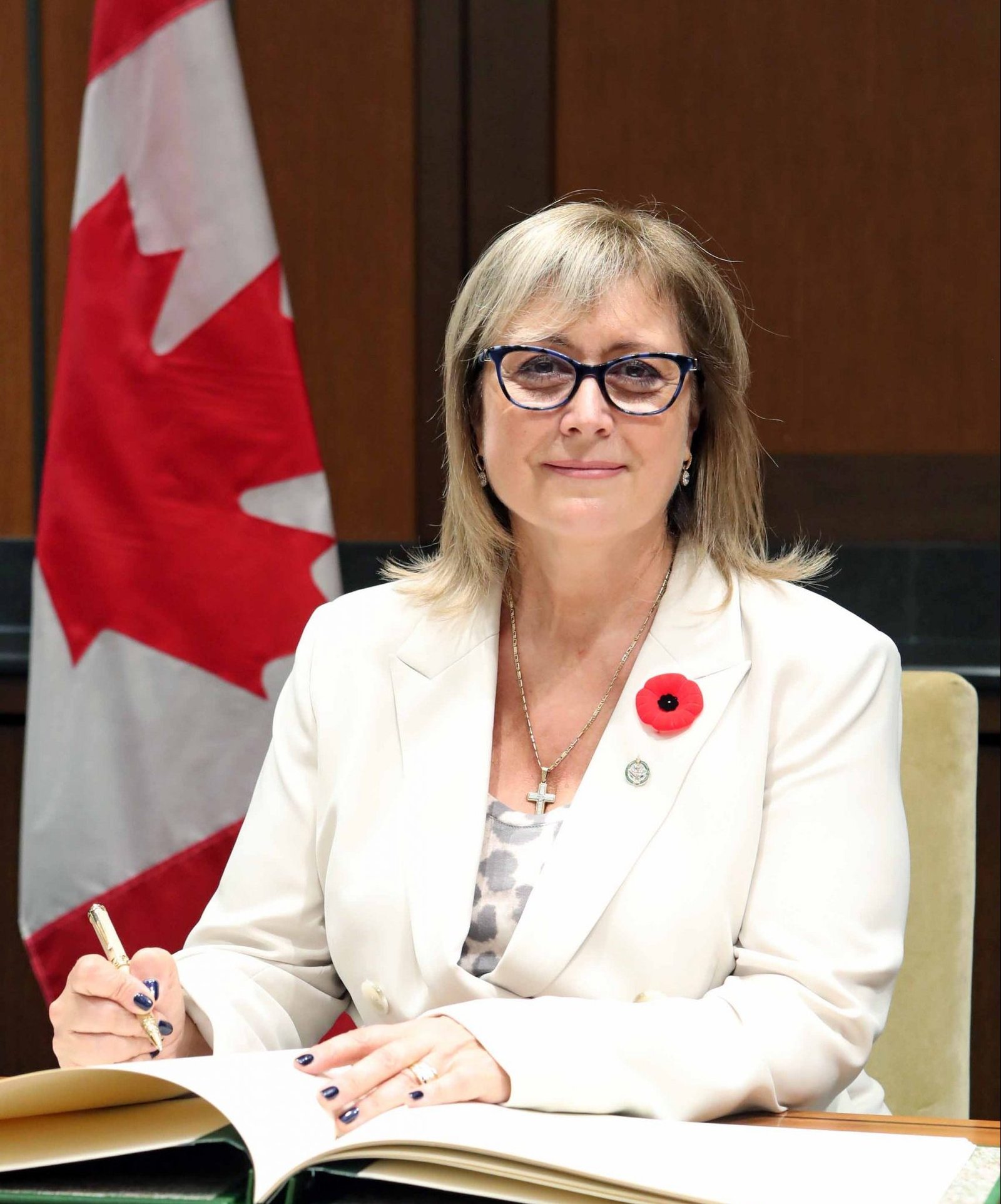
In addition to her duties as the Liberal Member of Parliament for the riding of Vimy, Annie Koutrakis’ workload will be a quite a bit heavier for at least the next year following her appointment recently by Prime Minister Justin Trudeau as the Minister of Transport’s Parliamentary Secretary.
A vital link
Announcing the new team of parliamentary secretaries on Dec. 3, the Prime Minister’s Office (PMO) said the appointees will be an important link between the ministers and Parliament, working closely with their colleagues.
“This talented and diverse team of parliamentary secretaries will work tirelessly with their ministers and colleagues,” Trudeau said in a statement. The responsibilities of parliamentary secretaries generally fall into two broad categories: House of Commons business and department-related duties.

Not decision-making
They are not members of the cabinet and do not play a formal role in the cabinet decision-making process. However, they do provide support to ministers, although overall responsibility and accountability remains with the minister.
“It’s always an honour when the Prime Minister shows confidence in the people on his team to help with the various cabinet portfolios,” Koutrakis said in an interview with the Laval News. “I tell you I was so excited when I received his call a couple of days before it was announced publicly.”
Providing support
Koutrakis describes the Parliamentary Secretary’s position as “junior ministerial,” with her job being primarily to assist the Minister of Transport, Omar Alghabra, and see that he has the necessary support to understand and process a very large number of files pertaining to national transportation issues.
“There are so many different files, there is no way he can stay on top of everything,” she said. “So, he needs someone to assist with that. My conversation with Minister Alghabra was that he’d like me to take some time to reflect on the kinds of files that perhaps I would like to take a lead on.”
Some of the duties
‘i’m the kind of person who, when I’m assigned a certain file, really wants to ensure that I fully understand the issues’
According to a “Guide for Parliamentary Secretaries” published on the Prime Minister’s website, the role of Parliamentary Secretaries in supporting ministers’ House duties includes:
The Parliament of Canada Act sets the maximum term for an appointment as a Parliamentary Secretary at 12 months, although the appointment may be renewed for more than one term. The appointment comes with a $16.600 bonus added to the annual salary of more than $185,000 paid to MPs.
Heavier workload
Koutrakis said that as part of her Parliamentary Secretary duties, she expects to be briefed for several hours at least once a week on issues pertaining to the dossiers she will be overseeing on behalf of the Transport Minister. As a result, her workload will be increasing significantly.
“There’s no question that if I was working 12-to-14-hour days before, I expect to add maybe two to three hours more a day,” she said.
Knowing the issues
“But, you know, for someone who really wants to make a difference, I’m the kind of person who, when I’m assigned a certain file, really wants to ensure that I fully understand the issues and that I can be as helpful and involved as I can be.
“So, I expect to be busier in the beginning. And the Christmas break coming up that will be welcome, because it will give me some time to catch up on reading and familiarizing myself with the files.”

It never ceases to amaze me how governments consistently bungle projects that they were elected and well paid to manage professionally and effectively. And so it’s refreshing to be able to write about the optimism that’s emanating from our west coast. It was a horrific scene of floods and destruction. It is Canada’s worst disaster.
The BC government, corporations and ordinary folk have reacted with swiftness, courage and determination to this horrible and catastrophic blow dealt by Mother Nature. And they are getting it done.
Trans Mountain and Enbridge, that transport gasoline and natural gas from Alberta to most of British Columbians, quickly stopped the flow for precautionary reasons when the rains came (the floods unearthed the pipelines, leaving them exposed or underwater). The BC government, foes in court with these same pipeline companies, actually praised and thanked the corporations.

B.C. acted swiftly in declaring a Provincial State of Emergency to mitigate impacts on transportation networks and movement of essential goods and supplies. It also allowed various government departments to order repairs and reconstruction done immediately, and disburse money in days, which would otherwise have taken months. Victims received an immediate two thousand dollars, a small but well received amount, with more to follow. There was swift and efficient prioritizing and organization. Emergency services went to work literally within hours to assess damage, block roads because of highway wash outs, snapped bridges, and mudslides obstructing routes. They rerouted traffic, closed some roads, and arranged for single lane traffic to allow only emergency and essential vehicles.
The unsung heroes are the farmers affected. Even though some had lost cattle, chickens, hogs, and homes, they didn’t immediately seek shelter but helped neighbours move their livestock first. There are some unbelievable human stories. School kids with fund raisers, Telus $1 million, Stormtech Performance Apparel $600,000 in new clothes, and the list goes on of corporate and private help and donations.
The government ordinance gave powers to their Public Safety Minister Mike Farnworth to freeze gasoline prices that were in effect ten days earlier. Retailers were served with hefty fines for gouging. There was none reported.
British Columbians were told to drive only if necessary, and resume working from home. Fill up was limited to 30 liters at a time except for emergency and essential vehicles, to preserve what gasoline remained There were some cheaters, as there always are, but most abided.
The main transportation highway, the 600 km Coquihalla, the shortest route from Edmonton to Vancouver was scheduled to reopen only at the end of January. Because of the voluminous machinery and manpower dispatched, and the Canadian Armed Forces, some crews working under lights around the clock, ‘the Coq’, (pronounced ‘coke’) as it’s called there, is expected to be back in business some time after Christmas.
There is anger too. The Americans have done little to mitigate flood waters from Washington state from spilling into Canada. The U.S. Nooksack River, is a powerful contributor to floods in Abbotsford BC. There are grounds for a law suit.
What is also in Canadians’ conversation coast to coast, is COVID-19 infections on the rise, and Omicron expected to quadruple daily case counts. Even at this late stage there is no accountability by the Legault government for “10 times the number of deaths in care homes more than anywhere else in Canada.”
The center stage chatter has to be the stratospheric rise in the cost of everything. We are all noticing because the surge in prices is affecting what we need and buy daily, like food, energy and housing. Inflation in Canada will likely be over 5% this month, it was approaching 7% in the U.S.
Yes, inflation is world wide, but it has domestic roots. And what is astounding is our liberal government’s inability and unwillingness to address grocery store prices, while continuing to plan more record spending.
And this continuous spending has resulted in a warning from the National Bank’s chief economist Stéfane Marion. “We are bleeding capital”. With no new projects allowed, private investment in Canada has slowed since 2015. There is investment in residential real estate though. It now exceeds investment in all the other sectors of the economy for the first time since 1961. That’s not a good economic indicator. Not even Canadian pension funds are investing in Canada. 130 billion dollars have left this country that otherwise would have funded expansion, more employment, especially for the record increase to 400 thousand immigrants now allowed into Canada, one of the highest per capita rates of permanent immigration in the world. Says Marion ““Clearly we are not doing well when our own domestic pension funds prefer to invest heavily abroad rather than in Canada.”
It’s true, the pandemic has dampened toy drives, visits with mall Santas, and annual Christmas parades, but that should not prevent us from enjoying safe, festive, family gatherings.
Hope you had a great Hanukkah, and have a very Merry Christmas.
That’s what I’m Thinking.
Robert Vairo
robert@newsfirst.ca

The Société de transport de Laval’s ongoing labour dispute and rotating service disruptions were the focus of questions from a concerned resident to Mayor Stéphane Boyer and other elected officials during the first regular public meeting of Laval city council since last month’s municipal elections.
‘Users held hostage’
In an e-mail to the mayor read out during question period at the Dec. 7 meeting, Steve Vézina asked whether the City of Laval has any powers to deal with the pressure tactics currently being used by the unionized STL bus drivers, “because this is completely unacceptable that the users are being held hostage by slowdowns, cancellations and service stoppages,” he said.
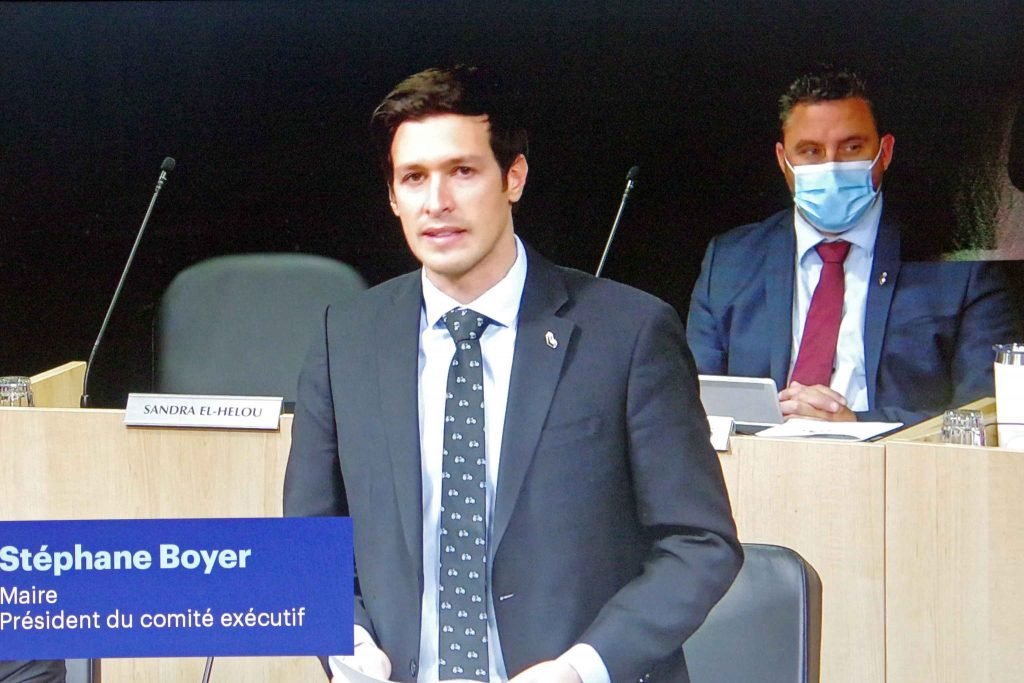
While pointing out that many residents of Laval depend on STL bus service to get to work or to appointments, Vézina asked leaders of the opposition as well as the new mayor when the STL could be expected to settle the situation “because we are at wit’s end.”
3-1-1 service criticized
Vézina also complained about the quality of service on the city’s 3-1-1 public works hotline, which suffers from sometimes lengthy delays.
“I am in complete agreement with you that the population should not be held hostage,” said Parti Laval city councillor for Fabreville Claude Larochelle, noting that a few days earlier there was no STL service available at all, while adding that the bus drivers have been without a collective agreement for nearly two years.
Larochelle said he was not in a position to comment on the state of 3-1-1 because the past administration never furnished performance status information on the service to the opposition in spite of their requests.
Depends when you call
Larochelle suggested residents not call during busy hours, such as Monday mornings, but preferably during weekends when the line is far less busy.
Action Laval city councillor for Saint-Bruno David De Cotis, who presided the Société de transport de Laval when he was a member of former mayor Marc Demers’ administration, said he felt confident the STL’s current leadership would eventually reach an agreement with the union.
Mayor Boyer said the STL has been losing immense sums of money since the beginning of the Covid pandemic last year because of lower ridership
As for 3-1-1, De Cotis acknowledged that callers must sometimes wait on the phone from 30 minutes up to an hour for a call to be answered by an operator when the lines are most busy. However, he said the city appears to be heeding advice offered by the opposition last year and the service hopefully will improve under the new administration.
STL losing money, said Boyer
For his part, Mayor Boyer said the STL has been losing immense sums of money since the beginning of the Covid pandemic last year because of lower ridership, although he acknowledged the City of Laval and the Quebec government have been absorbing most of the impact.
“So, when there is talk of improving working conditions and remuneration, the will is there but this would require a particular financial maneuver, and not only in Laval but all over Quebec and elsewhere in the world, so there is this challenge to meet at the moment,” he said. For the time being, he added, negotiations remain underway between STL management and the bus drivers’ union.
More 3-1-1 operators
Regarding 3-1-1, the mayor insisted that most of the time it runs smoothly, although he admitted that the level of service can vary widely depending on the time of year or the day of the week. He said the number of operators on duty can vary and unexpected events such as weather disturbances or power failures can cause the system to become choked with callers.

While maintaining that wait times on Laval’s 3-1-1 service can vary from two minutes up to a half-hour, Mayor Boyer said the city decided recently to hire six more operators. As well, he pledged to begin sharing information and data from the 3-1-1 service with councillors who are members of the opposition.
Polytechnique Massacre
As Dec. 6 was the anniversary of the École Polytechnique Massacre in 1989, a minute of silence was observed at the opening of the meeting and the mayor and several councillors later also made statements.
Boyer noted that the past year saw a significant increase in the number or women murdered in Laval. “It’s a reality which sadly is still among us and that is obviously unacceptable,” he said.
“As a society, we must do everything we can about this problem. In Laval, we have some basic resources to help women who are enduring domestic abuse. We will see what more we can do to support them in the future. We are already supporting them, but we will see what else we can do to go further.”

The current issue of the Laval News volume 29-44 published December 15th, 2021.
Covering Laval local news, politics, sports and our new section Mature Life.
(Click on the image to read the paper.)

The Meteorological Service of Canada issued a weather warning on Tuesday that freezing rain is possible in the Laval and Montreal regions this week on Wednesday and Thursday.
According to the federal weather forecaster, a warm front associated with a low pressure system from the American Midwest will move through the province of Quebec beginning on Wednesday.

Along this front, an area of freezing rain could develop, mainly affecting regions north of the St Lawrence River from Wednesday evening into Thursday morning.
As such, surfaces such as highways, roads, walkways and parking lots could become icy and slippery. As well, the Thursday morning commute could be significantly impacted in urban areas.

A 42-year-old man from Laval was arrested by the Laval Police last week after he allegedly posted threats against health-care workers administering COVID-19 vaccines.
According to Radio-Canada, the man seemed to be a follower of a Canadian sub-group adhering to Qanon conspiracy theories, led in part by a woman from British Columbia.
In a private online chat room, the suspect from Laval posted a press release for a vaccination program at his daughter’s school, claimed Radio-Canada.

Along with the release, he was reported to have written, “It’s time to go hunting bang bang.” The LPD said in a statement issued last week that they took the man’s comments “seriously” and immediately opened a file.
On Dec. 2, he was arrested and met with LPD investigators before being released. He was given conditions to observe, and signed a declaration in which he promised to appear in court at a later date. However, the LPD did not identify the man since he has not been formally charged.
Anyone who feels they have information regarding these kinds of threats they would like to share is asked to contact the LPD at their Info Line 450-662-INFO (4636), or by calling 9-1-1. The file number LVL 211126-085.
Laval man among suspects in RCMP firearms seizure
A 25-year-old man from Laval was among the suspects arrested on Nov. 26 by members of the Integrated RCMP Cornwall Border Integrity Team who intervened for a suspected firearms smuggling operation after a boat crossed the St. Lawrence River and made landfall near Cornwall.
According to the RCMP, three large bags were unloaded from the boat into a vehicle which departed the area. Soon after, the RCMP conducted a roadside stop of the vehicle and found a large number of restricted and prohibited firearms and high-capacity magazines.

Inti Falero-Delgado, 25 years old, from Laval, and Vladimir Souffrant, 49 years old, from Montreal, were arrested. The investigation found a total of 53 restricted and prohibited pistols, 6 prohibited rifles and 110 high-capacity magazines.
The RCMP believes the firearms in question were destined for criminal networks and illicit gun trafficking groups within Canada. The two suspects were charged with unauthorized possession of a firearm, possession of firearm knowing its possession is unauthorized, and possession of weapons for purpose of trafficking.
They are also subject to additional charges under the Criminal Code and Customs Act. Falero-Delgado appeared in court to seek bail and was released with conditions, including a $10,000 bond and an electronic monitoring device he must wear. Vladimir Souffrant also appeared in court and was released with conditions, including a $2,000 bond. They are scheduled to appear again in court by video on January 11 next year.