Home Blog Page 284

Electoral system reformists seek local feedback

0
Martin C. Barry

The Conservatives won the 2006 federal election with 40 per cent of the seats and 36 per cent of votes, followed by the 2008 election when they won 46 per cent of seats with 38 per cent of national support.

The Conservatives scored another win in 2011 when they finished with 54 per cent of the seats and 39.6 per cent popular support, while the Liberals won the 2015 election with 50 per cent of the seats but just 35.5 per cent of the national vote.

A flawed system?

These kinds of lob-sided election results – in which the seat count doesn’t jive with the popular result – are leading some observers to view Canada’s current electoral system as fundamentally flawed, according to Saint-Louis Liberal MP Francis Scarpaleggia, president of the Liberal government’s special electoral reform committee.

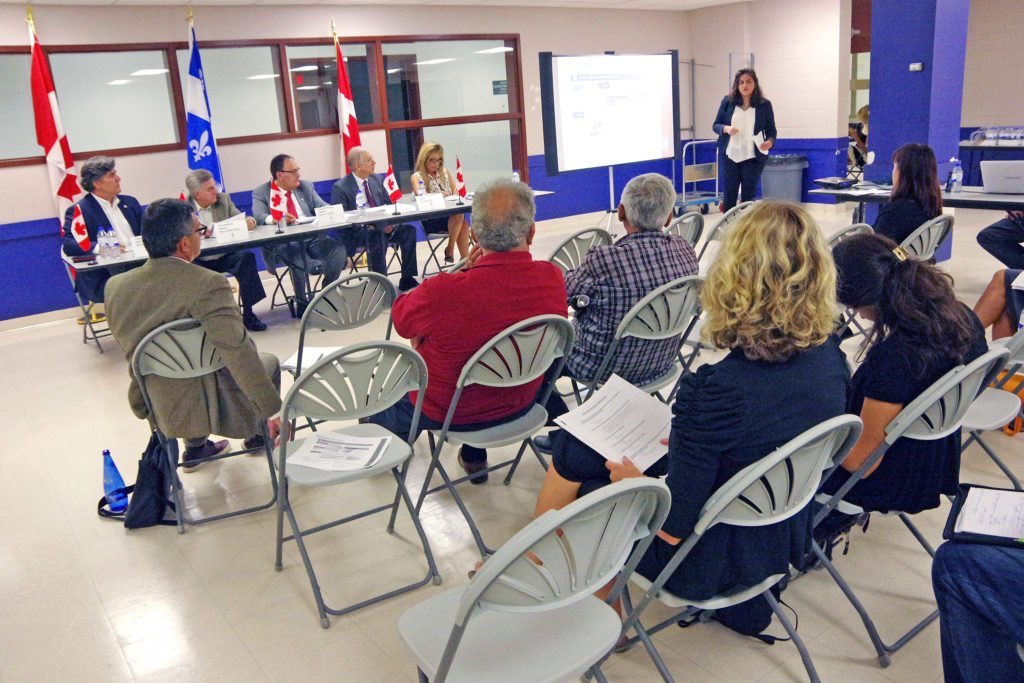
Scarpaleggia was at the Centre de Sablon in Chomedey on Sept. 13 to lead a public consultation meeting attended by 20 or so people, with three of Laval’s four MPs (Angelo Iacono [Alfred-Pellan], Yves Robillard [Marc-Aurèle-Fortin] and Fayçal El-Khoury [Laval-Les Îles]) also present.

Canada’s current electoral system, known as “first-past-the-post” or plurality voting, has voters indicating on the ballot the candidate of their choice, with the one receiving more votes than any other winning the election. The government’s actions date from a resolution passed at a Liberal Party of Canada convention in Montreal in 2014, a year before they formed the current government.
Electoral system reformists seek local feedback
Those attending the consultation heard about a number of alternative voting systems.

Some voting alternatives

Alternative types of voting system that were presented during the meeting included: Preferential or Ranked Voting, in which voters rank candidates in order of preference, with the winner requiring at least 50 per cent support; Proportional Representation, which increases the impact of the popular vote while weakening the link between voters and local representatives; Single Transferable Voting, in which electors vote for their most preferred candidate, and as the count proceeds and candidates are elected or eliminated, the vote is transferred to second-choice candidates; and Mixed Proportional Representation, which combines first-past-the-post and Proportional Representation. An added complication to some of these is that they involve electing more than one representative per riding.

While the NDP and the Green Party agree that Canada is overdue for an electoral reform and are participating fully, the official opposition Conservatives have been much less enthusiastic. The Conservatives have also been conducting an aggressive campaign on Twitter and other social media, demanding the Liberal government hold a referendum if any changes are made to the country’s electoral system.
Electoral system reformists seek local feedback
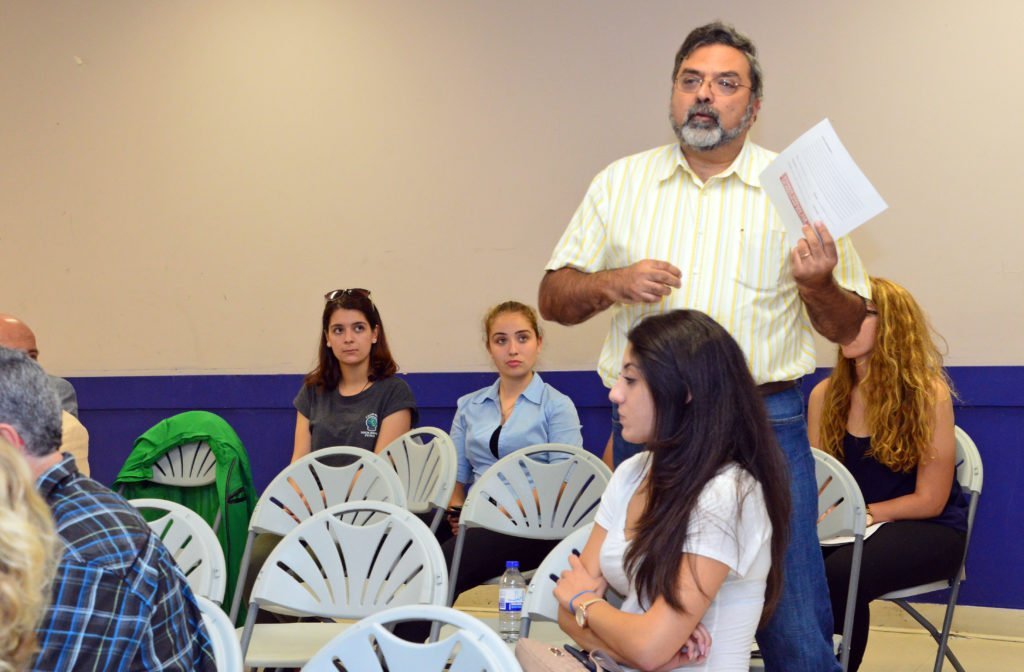
Viken Afarian of Laval-Les Îles said he favours replacing the current first-past-the-post electoral system with a new one based on Proportional Representation.

Response by constituents

During a question and answer period following a PowerPoint presentation, several residents said what they thought of the proposed alternatives. Alain Ouimet of Alfred-Pellan said he tended to favour Mixed Proportional Representation, while adding, “I am mostly in favour of changing the actual model.”

One of the criticisms expressed during the meeting about Mixed Proportional Representation is that since it is a two-tier system, involving the election of representatives from local ridings as well political party representatives, the cost of sustaining such a system could easily be higher.

Viken Afarian of Laval-Les Îles said the present electoral system is “is one of the worst among the potential choices. I also am in favour of Proportional Representation, but at the same time as saying that we don’t have to increase the number of elected representatives because we could change the number of ridings to make sure that, I don’t know, say 75 per cent of representatives are elected by the ridings, 25 per cent nationally through party lists.

“For me this is not a worry but it’s not where I am going,” he added. “Preferential voting would be much better than what we have got. On the other hand, we will lose the vote expressed in first and second rounds by people who have become lost. We would be in the process of forcing the channelling of votes that perhaps the citizens don’t want.”

Against radical reform

George Guzmas, editor of the Laval News and a Laval-Les Îles resident, waded into the debate. He said that in Italy there have been 62 governments since World War II, largely because Italy has held elections with the Mixed Proportional Representation system. He also pointed out that in Greece, where a form of Proportional Representation is used, a neo-Nazi party gained the opportunity to run for the Greek parliament largely because of the nature of the electoral system.

“This is why I am against a radical reform of the electoral system,” he said, “because I think democracy in Canada and the electoral system are working very well. I know, too, that at the present time Italy is looking at the Canadian electoral system to change theirs.” Guzmas said he plans to present a written memorandum, including his opposition to a reform, to the electoral reform committee.

Mixed Proportional Representation

Michel Charuest of Alfred-Pellan suggested that Mixed Proportional Representation could help build bridges between political parties by encouraging them to work more closely, while reducing the tendency of parties to be partisan. He pointed to the example of Germany as a European country where Mixed Proportional Representation is used and the government is stable.

“That’s why I believe that Mixed Proportional Representation is one of the best systems,” said Charuest, while adding that Canada’s current electoral system favours regional parties, such as the Bloc Québécois, who have used it to their advantage.

The Liberal government’s attempt at electoral reform comes two years after the former Conservative government passed the Fair Elections Act, which was attacked by opponents (including the Liberals) as an attempt by the Conservatives to change the country’s electoral system to the Conservatives’ advantage. Iacono and El-Khoury maintained adamantly that there is nothing partisan in the Liberals’ current efforts.

‘Not partisan,’ say Liberals

“Absolutely not,” said El-Khoury. “All the decisions will be based on facts, on evidence, on research, on consultation. You know, for this particular reform our minister is travelling and we are doing consultation from coast to coast to coast. We are collecting data, evidence and we will provide our report to the Chamber, but all the citizens of Canada are being consulted.”

Iacono noted that the Liberals “invited all the other parties to be part of this process, so we’re not really doing it on our own. We’re inviting everybody to be part of it.” As for the indifferent response from some opposition MPs, he acknowledged, “They are not much collaborating, but we have continuously invited them to be part of this change to help us to come up with something that will represent all Canadians.”

Scarpalegggia, for his part, pointed out that the Liberal government’s good intentions should be evident given the fact they agreed to put together the electoral reform committee with a minority of Liberals as members. “The rules of the House of Commons make it such that committees reflect the distribution of seats in the House, but this is an exception,” he said, adding “I think this is a gesture of good faith.”


Laval’s mayor and councillors take on SWLSB at soccer

0
Martin C. Barry

Elected officials and employees from the City of Laval were defeated in a close 8-7 match in a benefit soccer match played against students and staff from the Sir Wilfrid Laurier School Board at Lausanne Park in Saint-Bruno on Monday Sept. 19.

Time for a rematch

After playing against the SWLSB team in August in a softball match, as well as in hockey games last winter, Mayor Marc Demers and his teammates decided to follow up this month with a rematch, only this time at the sport of soccer. The overall purpose was to promote academic perseverance in school.

Joking before the game, Demers, who tended nets during the match, said no one from the opposing team should worry that if they scored goals that their municipal tax rates might suddenly go up. “Have fun. We’re all here for that,” he added.

SWLSB chairwoman Jennifer Maccarone said it was great to see parents and friends come out to stand on the sidelines and cheer on members of both teams who had agreed to the match for an educational cause. “You score as many goals as you can,” she said.

It’s how you play the game

“School perseverance is so important,” said St-Vincent-de-Paul city councillor Paolo Galati, who was coaching the City of Laval team. “This is an initiative started by the city to give back as much as possible.” According to Galati, it was executive-committee vice-president David De Cotis’s idea to begin staging a regular series of sports matches with the SWLSB as well as the Commission scolaire de Laval.

“Win or lose is not important for us,” said De Cotis. “We just want to have fun and enjoy the game with the students from the schools. This is exciting for all of us. It’s never been done before: three sports, during the winter, summer and fall. And, of course, the mayor of Laval is our goalie so we can’t go wrong with that.”

Mayor Demers in nets

Although he’d had only a bit of practice before the match, the mayor’s performance as goaltender for the city team earned praise from some of the teenaged members of the SWLSB squad. As Demers pulled quick moves to keep the ball out of the net, he was praised for his agility and ability to execute good saves.

De Cotis also managed to score several goals during the match. As the city team was lagging at one point as the match wore on, a decision was made to even up the roster by trading some players from the SWLSB.

Demers pleads Laval’s case with Canada Post

0
(TLN)

Laval mayor Marc Demers has repeated his position to a federal panel of commissioners regarding the necessity to maintain door-to-door mail delivery in the city’s older neighbourhoods.

“A number of our residents have no problem with the community postal delivery boxes in neighbourhoods where recent changes took place,” Demers said in a statement.

Older neighbourhoods

“The way things are done has become clear for some. But this is not the case in our older neighbourhoods which are more densely populated and largely inhabited by older people or persons with reduced mobility who are losing an essential service without anything to replace it.”

Therefore the mayor is asking Canada Post to withdraw all community mail boxes from Laval’s older neighbourhoods. “In the most recent neighbourhoods, we want Canada Post to systematically review each of its community postal box installations in conjunction with our staff in order to assure us that they fully respond to the criteria of security and fluidity of traffic. In cases where the situation might be problematic, these boxes must be reinstalled elsewhere.”

Seeks cooperative approach

Demers said that in all new neighbourhoods of Laval, the installation of community mailboxes will have to be validated through a consultation process in conjunction with municipal services so that the boxes respect Laval’s municipal regulations. “It is our wish that Canada Post takes care of these community mailboxes as a good corporate citizen, concerned about the environment, while integrating recycling bins for paper in these installations.”

Demers also took a moment to criticize the past behaviour of Canada Post. “We were confronted by a unilateral decision by Canada Post to abandon home delivery,” he told the commissioners. “From the moment the decision was implemented, the City of Laval was up against an absence of listening and cooperation. But in October 2014, a resolution by the municipal council attested to our desire to cooperate with Canada Post.”

Canada Post criticized

According to the mayor, a negotiated solution would have allowed planning for better installations that would have answered to the corporate goals of Canada Post as well as of the citizens. Apart from that, he said it would also have avoided security problems while reducing the anxiety of handicapped or older residents living in some of Laval’s older neighbourhoods.

“The decision by Canada Post gave way to chaotic implementation of the community mail boxes,” added Demers. “We would have wished to deal with an intervener that was more conciliatory, more humane in its way of meeting objectives.” He said he respected Canada Post’s goal of efficiency and viability in the context that it took into account “respect for our most vulnerable citizens.”

Immigrant taxi owners mostly feeling impact from Uber

0

Martin C. Barry

After 25 years in the taxi business, George Boussios says he has never seen a provincial government do so many about-faces as the Liberals have in their handling of Uber.

“In one Liberal mandate, their first transport minister, Robert Poëti, was against Uber a hundred percent, saying it’s illegal,” the president of Champlain Taxi, Montreal’s second-largest taxi service, said in an interview with Newsfirst Multimedia.

Three ministers and counting

“A few months later Mr. Poëti was gone and then they put in Mr. Daoust,” he added, referring to Liberal MNA Jacques Daoust who was then appointed transport minister. “But I guess Mr. Couillard wasn’t too happy with the second transport minister going against him, and then the Rona problem arose and he [Daoust] resigned. So now we have a third transport minister in one mandate, which right there to me doesn’t seem right.”

The latest appointee in the transport minister’s post is Laurent Lessard. He remains largely unmoved by the pleas of the province’s established taxi industry to deal more decisively with Uber, which is gradually undermining conventional taxi service. The government’s overall view is that Uber – which uses independent car owners without taxi permits – is operating legally, although the government believes some tweaking is necessary to iron out inconsistencies between Uber and regular taxi service.

A question of fairness

“All we are asking for is fairness,” said Boussios, who took over Champlain from his father who operated it before for decades. According to Boussios, the value of taxi permits, which have been mandatory for cab owners up to now, has diminished by more than $100,000 since Uber became involved in the past few years.

“Five, six years ago they were worth $210,000 – $220,000. I saw a permit two weeks ago that was put up for sale for $120,000. The owner died and the family put it up for sale. That really says it all. If you can drive for Uber without a permit, why would you invest even $1,000 if you can do it without a permit? It looks to me almost like someone is trying to devalue permits on purpose.”

While maintaining that San Francisco-headquartered Uber hasn’t been obeying new legislation, including a clause that says the company’s drivers can’t bill for more than 1.5 per cent in surge charges, Boussios said the company routinely behaves as though it is beyond the reach of the law.

“We all know that Uber does not follow any laws or respect any laws, whether it’s here or all over the world, and that’s why they’re in court all over the world now because they don’t care about the law. It’s a disgrace that we – especially the Liberal Party – make a law and Uber just laughs in their face and does basically whatever they want.”

Champlain’s fleet shrinking

While Champlain Taxi’s operations peaked at 500 cars, the fleet now stands at around 390 vehicles. “Permit owners can’t find drivers to work their cars,” said Boussios. “The people who are suffering the most in this are the permit owners. When a driver, who hasn’t invested anything, hears from Uber that he can work with no rules or regulations, why is he going to work for me?”

For Champlain Taxi, the immediate impact has been a reduction in revenue which comes from monthly dues. “If they’re paying $400 per month per car per owner and 10 cars leave, I’ve lost $4,000 right there – that’s what we’re losing.” At the rate Uber is advancing, he predicts that within five years the taxi industry as it is now will no longer exist.

“Look at Diamond,” he said, referring to Montreal’s longtime cab industry leader which was bought up recently by transportation entrepreneur Alexandre Taillefer. “Diamond was the biggest one in Montreal and they sold out. If Diamond with 1,000 cars and that’s been a family-run business for 60 – 70 years can do that, what’s next? If Uber stays, it doesn’t look good for any company. There’ll be no point of driving a taxi when you drive for Uber in your own car.”

Impact on immigrants

Boussios sees individual taxi permit owners as being the biggest losers in the chaos that is sweeping Quebec’s taxi industry. “I’m talking about the person who’s invested $200,000, remortgaged his house to basically buy a job.” He said immigrants are most affected, including Haitians, Algerians, North Africans, Lebanese and some Greeks left over from an earlier generation of cab owners.

Boussios sees the inaction of Premier Philippe Couillard’s government as symptomatic of decay he thinks lies within the Liberal Party. “All my life I’ve been a Liberal and my parents were Liberals,” he said. “We are told to vote Liberal because of fear of separation and referendums and language laws. But at the end of the day, you know what, it is a party of corruption. In the end, they’re not for the middle-class and hardworking people. They’re for people like Uber and for people like Taillefer who are part of the top one per cent.”

Bois Papineau’s 30th year marked with a walk in the woods

0
Martin C. Barry

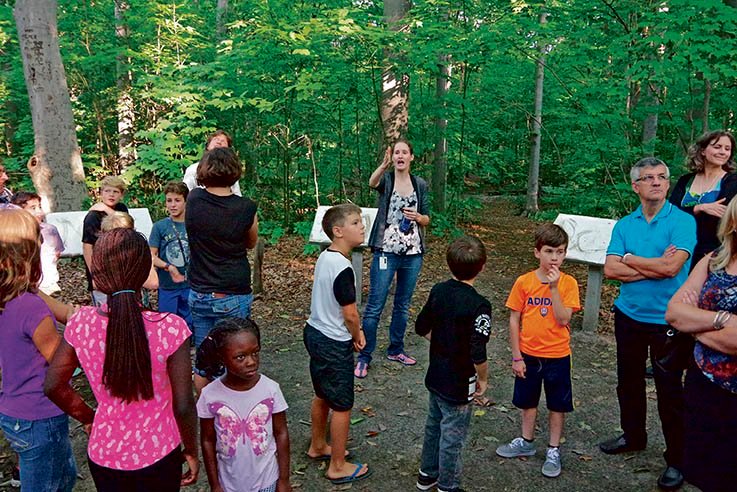
On Monday Sept. 19, grade five students from École Boisjoili in eastern Laval got a guided tour of one of Île Jésus’ best kept secrets – the Bois Papineau. Although the densely-wooded forest behind the Pavillon du Bois Papineau on Saint-Martin Blvd. East has been a protected area for decades, a surprising number of people are not yet aware of its charms.

Students from École Boisjoli
Students from École Boisjoli took part in the 30th anniversary celebration of the Bois Papineau on Sept. 19, 2016

Very old trees

Among other things, the Papineau woods are said to resemble very closely what the forests of New France looked like shortly after the arrival of the first colonists. This is because many of the trees are more than 200 hundred years old. In 2016, the City of Laval is marking the 30th year since an association was formed to lobby successfully for the woods to be declared a conservation site.

By 1986, long after vast agricultural and wooded areas of the City of Laval had started to be settled for suburban development, the Association du Bois Papineau was formed to safeguard what was increasingly seen as a threatened natural heritage. Today the territory is well protected over an area of several acres from development and construction.

For the children

Following the tour, the students and their teachers were joined in the Pavillon du Bois Papineau by Mayor Marc Demers, Mille-Îles Liberal MNA Francine Charbonneau, Laval city councillor for Val-des-Arbres Christiane Yoakim and CSDL president Louise Lortie. Demers spoke of the importance of preserving Laval’s forested areas such as the Papineau woods for future generations of children. He also maintained that since coming to power at Laval city hall three years ago, his administration has taken important steps to protect Laval’s woodlands.

Lungs of the city

“At the same time our woodlands are the lungs of a big city,” added Demers. “We know that air quality is a constant challenge. So we must do everything and make every effort to preserve the quality of the air. I have said before that we are what we breathe and we have a responsibility to assure the best quality possible. Health costs linked to the quality of the air are going through the roof in Canada these past few years according to the latest studies that I have been privileged to see and it is enormous. It is a sign that we need to be careful with our woodlands.”

Laval city councillor hand out copies of L’Arbre millénaire to grade five students from École Boisjoili.
Laval city councillor for Val-des-Arbres Christiane Yoakim, left, and Mille-Îles Liberal MNA Francine Charbonneau hand out copies of L’Arbre millénaire to grade five students from École Boisjoili.

New book launched

Charbonneau followed up on the children’s theme brought up by Demers. “It is through you that we come to understand that the woods don’t belong to adults – they are lent out to the children,” she said, alluding to the fact that the French writer Antoine de Saint-Exupéry said something along the same lines.

At the same time, the gathering was also was the occasion for the launch of a new book completed for the 30th anniversary of the Papineau woodlands: L’Arbre millénaire, ou l’histoire du Bois Papineau. Publication of the book received an important amount of financial support from Me. Pierre Renaud who was also present for its launch.

Elections DG would annex part of Chomedey to Fabre

0
(TLN)

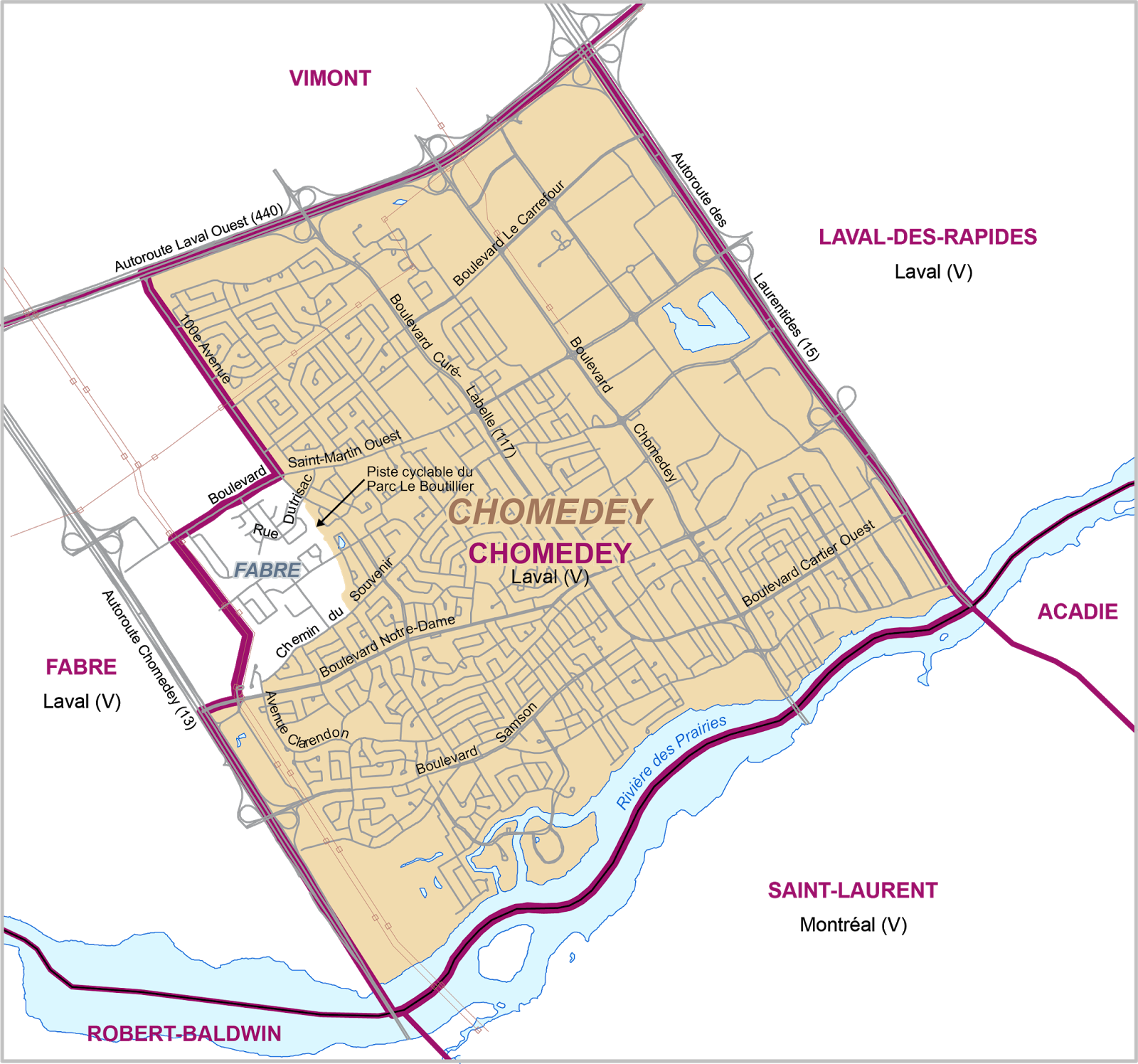
Provincial MNAs from the Laval region are raising their voices against a proposal by Quebec’s Director General of Elections that would see part of the riding of Chomedey annexed to the riding of Fabre.

According to a statement issued by the MNAs, the 2,538 voters in the current configuration of Chomedey, which is bounded by Saint-Martin Blvd. West, 100th Ave. to the intersection of Dutrisac St., the bike path in Le Boutillier Park, Souvenir Rd., Clarendon Ave. Notre-Dame Blvd. and the Hydro Quebec high-tension power line, stand to become part of the riding of Fabre “with which they have no sociological, cultural, historical or geographic affinity,” the MNAs said.

Chomedey Liberal MNA Guy Ouellette, president of the Laval Liberal caucus, said the proposed modification “creates more than an inconvenience. It reaches to the heart of the Hellenic community, a community which has been in Laval since the city’s beginning.” Ouellette also pointed out the importance of taking fully into account the projected growth of the population of the riding, and beyond that the growth of the region of Laval.

Many factors to consider

The MNAs pointed out that Article 15 of the elections act stipulates that any restructuring of electoral boundaries must take into account the surrounding natural communities as being a representation of the electors. The density of the population, the relative growth of the population, accessibility, the surface area, the natural boundaries and the presence of specific groups of people, be they religious, linguistic or cultural, are among the factors to be considred, said the MNAs.

“With the proposed enlargement of the territory of Fabre and the addition of Souvenir Rd., this would cause the outflow of the Hellenic orthodox church of Chomedey,” said Fabre Liberal MNA Monique Sauvé. “It is more than a building: this church is a place of community, a gathering spot, a pillar of the Greek community in Chomedey.”

Sainte-Rose Liberal MNA Jean Habel suggested that another way should be found before proceeding with any changes. “The addition of a section of Chomedey North, bounded by Autoroute 440, le Carrefour Blvd., Route 117 and the A-15, while annexing it to the riding of Sainte-Rose,” he said. “This proposal comes from the fact that there exist natual links with this sector north of Chomedey.”


‘Agape Classic 2016’ Raise $6,500

0

‘Agape Classic’ golfers raise $6,500 for a great cause

Martin C. Barry

As if things couldn’t be any sunnier after a decade, there wasn’t so much as a cloud in the sky on Tuesday Sept. 13 as supporters descended on the Victorien golf course in Mirabel to take part in the 10th anniversary Agape Classic fundraising golf tournament.

Agape executive-director Kevin McLeod
Agape executive-director Kevin McLeod, the Agape Classic’s longtime organizer.
Agape Classic with Caisse Desjardins de Chomedey president Daniel Rousseau.
Left, Caisse Desjardins member Jean-Claude Caron, seen here during the pre-tournament breakfast at Le Victorien, gives the thumbs up to another great Agape Classic with Caisse Desjardins de Chomedey president Daniel Rousseau.

With that, the tournament’s organizers can say they’ve had a 10-year-long unbroken streak of fine weather for their annual event to benefit Agape, Laval’s leading English-language charitable services provider.

The tournament drew at least 64 golfers eager to enjoy their favourite game while contributing to one of the most worthy causes in Laval. “I guess September has always been a good month for us to hold this,” said Kevin McLeod, Agape’s executive-director. In all, this year’s Agape Classic raised $6,500.

Among the items up during a silent auction segment this year were hockey jerseys from Alexander Ovechkin and P.K. Subban, as well as a large framed image of Habs goaltender Carey Price. There were also tickets to Canadiens games, gift certificates for restaurants and wine baskets. Before setting off onto the fairways with a shotgun start, the early birds got to indulge themselves in a big traditional breakfast.

Agape board members
Agape board member Michael Cambolieto, centre, drew on his connections to recruit up to two dozen friends to the tournament, some of whom are seen here.

Caisse’s long sponsorship

In addition to the 10-year milestone, the Caisse Desjardins de Chomedey also marked a decade of being the Agape Classic’s principal sponsor. “As has been the tradition for the past 10 years, this year we helped Agape once again with the organization of the tournament,” said Daniel Rousseau, president of the Chomedey Caisse. According to Rousseau, it was the Caisse that planted the seed for the golf tournament when board members suggested to Kevin McLeod that an event such as the Agape Classic would be a great fundraiser.

It’s hard to keep Fr. Michael Leclerc, Agape’s unofficial chaplain, away from the Agape Classic considering he’s an avid golfer to begin with. In all, he’s missed just a single tournament: the first one. “When I see the value in what they do, the help they bring to the community and the resources they provide, for me it becomes a no-brainer to come and support Agape in recognition of this,” said Leclerc who is also vice-president of the board.

Fairways of Le Victorien
The greens and fairways of Le Victorien were the perfect venue for this year’s Agape Classic fundraising golf tournament.
While most participants in the tournament are men, a few ladies also took part.

Laval City Hall Watch – September 28 2016

Laval City Hall Watch - September 28 2016

City Watch

Major roadway construction to be completed fall of 2016

While existing roadworks are ongoing no new major road artery reorientation projects are scheduled to start this fall. The only projects yet to be started include repaving stretches of boulevards Curé Labelle in Chomedey, St. Elzear Boulevard west of highway 15 which are scheduled for the end of September. Major work on the boulevards Notre Dame, Curé-Labelle and the Terry Fox Avenue are almost completed. The administration advises its citizens to remain vigilant and take note of the new traffic signs and regulations governing traffic flow in these construction zones which should be completely installed by the end of October. Motorists will then have to abide by the time restrictions for dedicated lanes for buses and cyclists.

Improving westward traffic flow

In order to address a bottleneck of traffic westward especially from the 440 Highway East and central industrial park key changes are being developed at the Curé-Labelle Boulevard / Edith Street and Boulevard Curé-Labelle / Dagenais Boulevard intersections. The addition of a new median at the Corbusier Boulevard, northbound at the corner of boulevard Dagenais, will allow for an additional lane of traffic flowing to the north and the implementation of newly synchronized green traffic lights dedicated to shift traffic westward is expected to improve travel to the Sainte-Rose and Fabreville Auteuil districts.

According to public planners additional automobile traffic lanes added to the Daniel-Johnson Boulevard, south of Saint-Martin should also ensure a smoother transit between the Centropolis area, Montmorency metro station and the high-tech park. In the industrial park center, pedestrian access to the new bus stops will be friendlier since sidewalks will finally be provided on the boulevard Le Corbusier.

Developing alternative transport strategies

Laval has seen major development in its public transportation systems in the past decades. Two commuters train lines, three subway stations, a new central bus terminal as well as reserved parking for public transit users are some of the infrastructures that have made travel to and from Laval not only more accessible but also environmentally friendlier. While recent roadway improvements acknowledge that the automobile continues to occupy a prominent place in travel habits of Laval residents the administration continues to look for ways to reduce the dependence on this mode of transportation.

Travellers can now complement travel on the public bus system with their bicycles as some buses have been equipped with the Cyclobus infrastructures which are racks that can transport bicycles. Certain bus routes are now equipped to handle persons with reduced mobility. Carpooling, an expanding network of preferred parking at access points to public transit, as well as a program to swap old vehicles for a STL transit pass are all expected to reduce dependency on cars.

Also the Electric Circuit network is a major step in the deployment of the charging infrastructure needed to support the use of plug-in electric vehicles in Québec. As of January 2013 nearly one hundred fifty (150) public charging stations at 240 volts are in service in parking lots of the AMT (Metropolitan Transportation Agency) and many RONA hardware stores, grocery stores and metro St-Hubert in Quebec. Since its inauguration on 30 March 2012, eighteen (18) other private and institutional partners have joined the Electric Circuit. Its expansion will continue to provide greater geographical coverage and service to a greater number of Electric Car drivers in several regions of Quebec. While most of the energy charging needs of electric vehicle owners is done at home or at work, public infrastructure enables motorists to drive with peace of mind by offering them the possibility to refuel on route when necessary. Users of the electrical circuit have access to a 24 hour hotline managed by CAA-Québec.

Go Browns expands organic waste collection

This fall the City of Laval will expand its organic waste garbage collection to serve an additional ten thousand homes in selected areas of the Duvernay, Auteuil, Vimont, Chomedey and St. Dorothée districts. Since 1996 a total of 7,118 homes in Champfleury, Chomedey and Laval-des-Rapides have been benefiting from this service. The new initiative is the first step of an effort to meet the provincial government requirements asking for the reduction of 60% organic materials generated in the territory ending up in local landfills.

The collection zones were separated by natural axes. It is possible that a citizen will benefit from this service in 2016 while the neighbor across the street may have to wait a few years, “said Virginie Dufour, Executive Committee Member, responsible for environmental issues at the City of Laval. “However, we are planning that at least one sector in each electoral district will benefit from the organic waste collection service by 2017″.

Le Berger Blanc awarded a transitional contract for animal services.

In response to the publics concerns raised in social media and via Laval’s 311 telephone service, the administration wanted to reiterate its position with regards to animal services management. Last fall a public call for tenders was issued (SP-28670) for the procurement of professional services and infrastructures required to develop an animal shelter and services centre by the end of 2018. Moreover, an amount of $15.3 million has been set aside for this purpose and is budgeted in the three-year capital expenditures program for 2016-2018. It is expected that the preliminary studies and plans to develop the centre will be ready by the end of this year. A site (owned by the City) has in fact already been reserved and soil characterization studies are ongoing.

Laval Mayor Marc Demers explained the transition process.” In order to meet the planned opening date of the future animal services centre (Centre de services animaliers de Laval), we are awarding Le Berger Blanc a transition contract, following its approval by City Council members. And lastly, I wish to point out that we also intend to call upon independent inspectors who will be able to make impromptu visits there and check compliance with good animal health practices.”

Sandra Desmeules, member of the Executive Committee and in charge of animal management matters, provided the details of the contract awarded by the City: “This three-year contract in the amount of $1,836,000 has a one-year renewal clause. Most definitely, our new service provider must fully comply with the requirements of current laws and bylaws. Le Berger Blanc has moreover agreed to take part in the process aimed at joint participation of the local organizations.”

Le Berger Blanc for its part has been responsible for animal care since February 27th 2016 and is obligated contractually to: examine, vaccinate, deworm, sterilize and microchip all animals before they are adopted; refuse residents’ requests to euthanize any healthy animals; take part in organizing two days of microchipping, adoption and sterilization of animals every year, in conjunction with local organizations and is mandated to cooperate with other animal shelters in order to promote transfers so as to maximize adoptions


Laval News Volume 24-19

0
Front page image of The Laval News Volume 24 Number 19
Image of Laval News Volume 24 Number 19

Laval News Volume 24-19


Click here to read the Laval News Volume 24-19 online 


This is a archived copy in PDF format of the Laval News Volume 24-19 that was published and distributed September 28, 2016.

This issue covers local events such us politics, sports and human interest stories. It features editorials and other columns

School boards beat Laval officials in softball matches

0
(TLN)


On Aug. 15 and 22, staff and elected officials from the Sir Wilfrid Laurier School Board and the Commission scolaire de Laval went up against their counterparts from the City of Laval in softball matches that were played as a fundraiser for the benefit of students who are determined to stay in school and finish their studies.

It was the third year that the three teams went head to head in matches played at Paul-Marcel-Maheu Park in Laval-des-Rapides. “Encouraging perseverance in school is all about thinking of the future of our society by investing in an educated youth, but it’s also doing everything to persuade young people that education is valuable in itself,” said Laval executive-committee vice-president and councillor for Saint-Bruno David De Cotis.

Commission scolaire Sir-Wilfrid-Laurier softball match
It was at Paul-Marcel-Maheu Park on Aug. 15 that Laval’s city councillors played their counterparts from the Commission scolaire de Laval to support school perseverance.

Softball not city council’s sport

Despite their best efforts, the City of Laval’s softball team saw itself defeated in matches against both school boards. In fact, it was the third time in three years that the city officials suffered that fate. All the same, the city council team scored higher than it did in last year’s matches. It should be noted that the city team fares much better when it plays hockey against the school boards during the winter. Over the past three years, the school board teams have suffered the worst in those matches.

“It’s with great pleasure that we played in this enjoyable event for a good cause,” said CSDL president Louise Lortie whose team played the city on Aug. 15 and closed the game with a final score of 22 – 11. “We thank our municipal elected officials, our youths, their coaches and the schools administrators.” On Aug. 22, it was the turn of the SWLSB which beat Laval 24 – 17. Among the board’s elected representatives taking part were chairwoman Jennifer Maccarone, commissioners Ailsa Pehi and Emilio Migliozzi. The new director-general, Paul Lamoureux, as well as communications employees Maxeen Jolin and Susan O’Keefe served as coaches.

Win-win, says SWLSB chair

“This evening everyone’s a winner,” commented Maccarone. “Encouraging school perseverance is good for everybody and not just for today’s students. Reducing the dropout rate most certainly has important social, financial and community benefits. Activities like those this evening are crucial. She extended warm thanks to the City of Laval for doing its part to raise awareness of the cause.

In September, the City of Laval’s elected officials, along with their counterparts from the school commissions, will again be participating in a benefit sport event during two soccer matches taking place at Lausanne Park in Vimont. On Sept. 19 at 6 pm, they will play the SWLSB, while the CSDL will take on the city councillors a week later on Sept. 26 in the same place. In case of rain the Sept. 19 game will be held on Sept. 20, while the Sept. 26 match will be rescheduled for Oct. 3.

Weather

Laval
moderate rain
3 ° C
3.7 °
2 °
92 %
1.5kmh
100 %
Fri
3 °
Sat
-2 °
Sun
5 °
Mon
4 °
Tue
2 °