More than 400 people – including many proud parents and friends – gathered in the auditorium at École Curé-Antoine Labelle in Sainte-Rose on Sunday Oct. 15 for Baseball Laval’s Gala Méritas 440 Laval Chevrolet.
The annual and much-anticipated event pays homage to all the players, coaches, teams, officials and volunteers who contribute to making baseball the exciting sport it is in Laval.
Baseball Laval’s Midget A division season champs were the Éperviers Vimont-Auteuil.
Membership growing
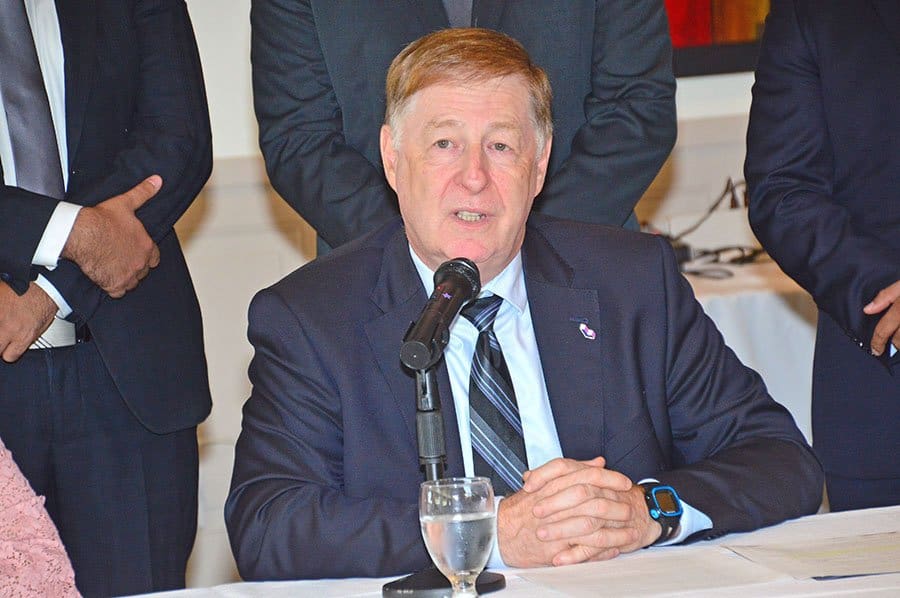
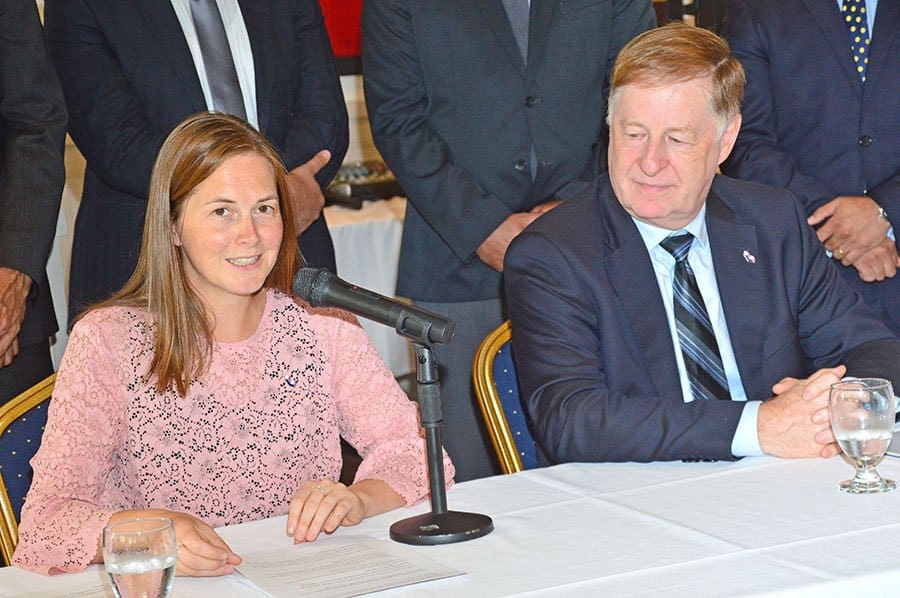
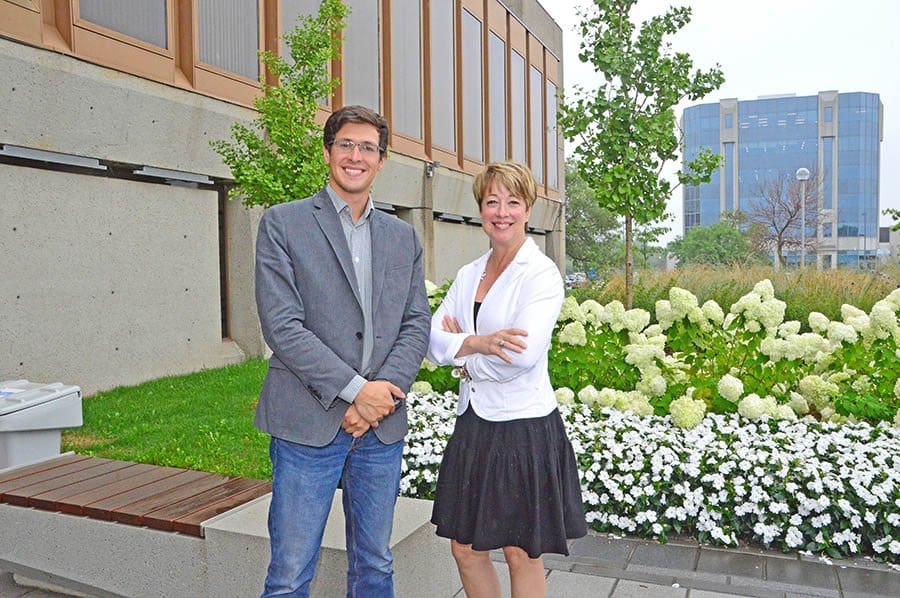
Among those attending the event were Sainte-Rose MNA Jean Habel, as well as Baseball Laval’s president Richard Saint-Amour and the vice-president Jacques Continelli. Representatives of Baseball Laval’s two leading sponsors – Kiana Pagé-Lajoie from 440 Laval Chevrolet and Olivier Landry-St-Laurent from Benny & Co. Chicken & Ribs – were also on hand to present awards to recipients.
In an address at the beginning of the event, Saint-Amour had good news suggesting that the sport is flourishing in Laval, when he revealed that Baseball Laval’s membership rose 10 per cent this past season, raising the membership of young players to more than 800.
In a brief address, Sainte-Rose MNA Jean Habel praised the Baseball Laval organization for raising its membership 10 per cent this year, while providing a safe and sporting pastime for Laval’s youngsters.
Habel’s a baseball fan
Habel, who attended the gala on behalf of the Laval Liberal caucus, said he had long been a fan of baseball and considered himself fortunate to be one of the generation who were able to see the Montreal Expos play before the club moved to Washington D.C. and became the Nationals.
“I thank you all for supporting this great sport which is baseball, and what I think is particularly meaningful is the increase in membership for which I think we all deserve a good round of applause,” said Habel.
Teams that finished the season at the top of the standings in their league and/or who won the regional Benny & Co. championship received trophies during the gala. Among other things, three teams distinguished themselves as teams of the year.
Baseball Laval’s Midget AA division player of the year, Étienne Lalonde.
Some of the winners
The Midget AA Associés de Laval won Team of the Year in their category. The Bantam A Éperviers de Vimont-Auteuil also won Team of the Year in their division, while the B division Mosquito Indians de Laval-Nord were Team of the Year for their category.
Nearly 40 more Méritas trophies were handed out to individual Baseball Laval team players whose performance this past season was judged to be exceptional. Several of the winners are now eligible for recognition at the provincial level based on their excellence in 2016. A complete listing of the 2016 winners can be found on the Baseball Laval website: laval.baseballquebec.com.
The club’s Mosquito B season champs were the the Indians of Laval-Nord.A year’s worth of winners means a lot of trophies for Baseball Laval.
Laval has become the first city in the metropolitan Montreal region to offer live 2-1-1 telephone service, allowing callers to gain immediate access to a wide range of social and community organizations by entering 2-1-1 into the keypad on any phone.
Help seven days a week
The 2-1-1 operators will be available from 8 a.m. to 6 p.m. seven days a week to provide information on 300 organizations dealing with food security, homelessness, psychosocial support, employment assistance and human rights.
A comprehensive Laval 2-1-1 website (211laval.ca) has also been set up to provide information identical to that available over the phone for any social or community group based in Laval or elsewhere in the Montreal region. The service is available in English, French and several hundred other languages for which translation is provided.
The City of Laval undertook to provide the service in conjunction with the Information and Referral Centre of Greater Montreal. Laval has agreed to pay more than $305,000 to the IRCGM for the service over the next five years, including the phone system and web access.
Pierrette Gagné, executive-director of the IRCGM, and Mayor Marc Demers at Laval city hall last week for the launch of the new 2-1-1 service.
Five-year agreement
Under the agreement, the IRCGM will be evaluating the effectiveness of the service, while also quantifying it statistically. Two committees have been formed to follow up in these respects.
“In addition to contributing to the social well-being of families and communities, 2-1-1 Laval will allow us to consolidate our community network by assuring a continuous promotion of resources offered on our territory and beyond,” Mayor Marc Demers said during a press conference at city hall last week. “This is a win-win situation for our residents and the organizations we regard as our partners,” the mayor added.
An innovative project
“Laval’s political and administrative authorities showed they are social innovators and become the first city in the greater Montréal area to adopt a 2-1-1 service facilitating access to our community resources,” said Pierrette Gagné, IRCGM’s executive director.
“From this point forward, Laval citizens will have rapid access to all the information and social and community-based services needed,” Gagné continued. “But it will also be the case for community-based and public groups that will be directing these persons to the pertinent resources after having consulted the 211 data base or having been informed by the Centre’s counsellors.”
Laval ratifies an agreement to host the Federation of Canadian Municipalities
Laval’s Executive Committee has ratified the agreement with the Federation of Canadian Municipalities (FCM) with respect to the holding of a board meeting of the directors of the of the FCM Board. Laval will host the March 6th to 9th, 2018 meetings. Working on behalf of its members Canadian cities, municipalities and towns the FCM actively engages with the federal government on a wide variety of issues that impact municipalities.
Land Purchases for the conservation of natural habitats and creating parks
The City of Laval will acquire a lot measuring 557.4 square meters located southeast of Riviera Street. This site in the Laval-Ouest district is adjacent to a large area zoned for parks called des berges des Quatre-Vents (The Four Winds river banks). The decision to purchase this property is part of the administration’s strategy to conserve natural environments and habitats. The municipality already is the owner of adjacent lots in the area.
The City of Laval will also purchase lot 1,392,201 of the Quebec land registry, an area of 554.8 square meters for the sum of $ 55,000. Located north of Saint-Martin Boulevard East this purchase will consolidate the Le Bois Papineau (Papineau Woodland Park). The Association for the Conservation of Papineau Woodlands has expressed support for this acquisition as it will consolidate the plans to conserve the natural habitats in this area.
The Executive Committee also adopted the recommendation to acquire lot 1404794 of the Québec land registry for $350,000 which is needed for the overhaul of a portion of the avenue Léo Lacombe and François-Souillard Street. Following this acquisition an existing building present on the site will be demolished to allow for the future development of a city park aa part of the redevelopment of the Léo-Lacombe Avenue project.
Regional Council for Cultural development receives an additional grant
A grant of $ 40,000 was given to the Regional Council of Culture for the completion of the first phase of development of a web platform project designed to publicize and promote the diverse elements of cultural life of Laval. This not for profit organization is recognized as the official consultative body of Laval with regards to cultural development. Its mission is to promote the Laval culture at regional and national levels and to strategically position local art, music, and literature as an important vector of development of the region.
Young Promoters Fund awards grant
A favorable recommendation from the committee managing the Young Promoters Fund (YPF) has prompted the executive committee to grant a subsidy to Rosalie T. Perreault and Ernesto Blanco Landero in the amount of $ 6,000 each to help fund their fledgling business Air Ventilation Solution. Their company will provide ventilation duct cleaning services and sell ventilation hoods for commercial, industrial and institutional markets. The YPF was created to help young entrepreneurs access initial funding needed to start up their business ventures. Another positive intervention from this fund is that it can also facilitate access to supplementary financing required for the realization of their business plans. The ultimate goal is to help create and foster an entrepreneurial spirit in young people of Laval.
Construction of a chalet in Saint-Norbert Park underway
The City of Laval will need to demolish the existing St. Norbert park chalet before it can commence the construction of the new chalet. The existing structure is which is obsolete must be demolished and the land site located in the yards of the St. Norbert School must also be excavated in order to lay the foundations for the new building to be erected. The Executive Committee members have approved the initial funding for this project and awarded the following amounts (excluding taxes) to the following companies: general contractor Construction Encore an amount of $695,750, Gémel an amount of $15,286 to oversee the construction, L’Écuyer Lefaivre architects for professional services in the amount of $16,370 and $9,894 to Groupe ABS for laboratory and materials testing.
Community projects for planting greenery
The Environment Department has been mandated by the executive committee to coordinate community planting projects for the autumn of 2016 in collaboration with local organizations. This fall the Association pour la conservation du bois Papineau (ACBP) has been granted aide to close certain park trails and to replant trees and shrubbery. Plantaction will oversee the planting of greenery in thirteen residences and two local schools. The association Jour de la Terre will embellish the wooded areas of bois de l’Équerre and bois Papineau. The Corporation for the development of the l’Équerre wooded space project involves trail closures as well landscaping of the parking lot and adjacent spaces. Finally the Habitations du boisé FLOH will landscape and provide greenery at 2035 avenue Albert-Murphy and 1720 boulevard d’Auteuil while SOVERDI will oversee a planting project at park des Prairies.
Organizations, schools and volunteers who wish to embellish green spaces in Laval are invited each year to submit their projects to the Environmental Action Division. On average, six community plantations are performed each year. While much of the human and some of the material resources are provided by its community partners in these planting projects the administration coordinates the projects providing technical assistance as well trees, shrubs, compost and wood chips (from the municipal composting site) as well as additional materials such as protectors of tree trunks. The environment service has set aside an annual budget in the amount of nearly $14,000 to support these efforts.
Various grants
A grant in the amount of $7,000 will be given to the Canadian Red Cross, Quebec Division Laval, as part of their corporate fund raising campaign in 2016 while an additional and extraordinary donation by the City of Laval of $ 15,000 was also donated to the Canadian Red Cross to offer support to victims in Haiti affected by hurricane Matthew.
The executive committee also provided a grant of $2,800 under the program to support local activities to the Hospice of Laval (Maison de soins palliatifs de Laval) to help defray costs for the community fest organized in St. Vincent de Paul this past September 10th 2016. Financial assistance of $ 40,000 will be paid to Complexe Multi-Sports de Laval for repair work, mainly on the pool filtration system Val-des-Arbres sports centre.
Downtown Laval development open for public bidding
The Executive Committee has authorized its public works services to solicit bids through public tender for public works infrastructure projects needed to complete the development of the downtown sector and facilities in Laval up to the limits of the Place Bell Complex. Work involves the installations of a storm sewer and drainage network, roads and landscaping. Final road paving, sidewalks, curbs, and the extension of the city’s bicycle path as well as street lighting work, traffic light installations and coordination will all be covered by this call for public offers of services.
Health Canada is advising consumers to check all Spirit Halloween products on the list below due to ongoing health and safety concerns.
On several occasions, Spirit Halloween has agreed to voluntarily stop sale or recall products that do not meet Canadian health and safety regulatory requirements. However, Health Canada recently visited 45 stores across Canada and found that 23 stores continued to sell products that Spirit Halloween had previously agreed to stop selling or recall.
Health Canada is concerned with the continued sale of the following products sold by Spirit Halloween, some of which have been recalled or should no longer be available to consumers following a voluntary stop sale. Health Canada will update this list if additional affected products are identified.
Consumers should not purchase the affected products listed above from Spirit Halloween and should check the Recalls and Safety Alerts Database for any products that were previously purchased. If you have a product that has been recalled, you should follow the actions described in the recall notice.
Health Canada has requested an action plan from Spirit Halloween to outline how they will address these compliance issues. The Department is also following up on additional products to assess compliance and may take further actions, if required. Health Canada also continues to inspect stores and may seize non-compliant products, if identified.
The Montreal Heart Institute (MHI) informs all patients who underwent an open heart surgery at the Institute of a low infection risk associated with certain devices (heater-cooler systems) used during cardiac surgeries under cardiopulmonary bypass. Patients operated since 2012 at the MHI are being advised of this risk by phone and/or mail.
“Although the potential for infection is low (0.1% to 1% according to the American Centers for Disease Control and Prevention (CDC)), our main priority is the well-being and safety of our patients. Therefore, as a pre-emptive measure, we wish to get in touch with our patients in order to monitor their medical condition as adequately as possible,” said Dr. Denis Roy, Chief Executive Officer at the MHI. All patients operated since 2012 will be notified. An operation to get in touch with the concerned patients is currently underway.
The Centre d’expertise en retraitement des dispositifs médicaux (CERDM – the Centre of Expertise for Medical Devices Reprocessing) of the Institut national de santé publique (the National Institute of Public Health) and the ministère de la Santé et des Services sociaux (Ministry of Health) have been notified of the issue.
The heater-cooler systems in question are used in several North American and European hospitals and may have been contaminated by the Mycobacteriumchimaera bacterium during their manufacturing in Germany. This type of bacterium is commonly found in nature and is rarely the cause of adverse events in people who contract it. However, patients exposed during cardiac surgery may develop symptoms much later (i.e. months or years after surgery).
“This bacterium is not contagious but could potentially lead to serious infection and should be diagnosed by laboratory testing (microbiology) when symptoms occur,” according to Dr. Louis P. Perrault, cardiac surgeon and head of the Department of Surgery at the Montreal Heart Institute.
All the devices used at the MHI have been replaced and the audit and decontamination protocols are continuously optimized with the acquisition of new knowledge regarding this issue.
“We are aware that the announcement of this potential risk of infection, albeit a low one, can be a source of concern for patients involved and we sincerely regret any inconvenience this can cause,” declared Dr. Denis Roy. “Our main focus today is to provide our patients with all the information, support and care they may need in order to cope with this situation. To date, two patients of the Institute, out of the 8458 patients who have undergone surgery since 2012, have been diagnosed with such an infection. They are being taken care of and their treatment is underway.”
To contact the dedicated call centre at the MHI please dial: 514 593-2505 and 1 844 593-2505.
A MHI professional is available Monday to Friday from 9 AM to 5 PM.
Halloween night and the weeks of preparation leading up to it, can be very exciting for children of all ages. It’s a special celebration shared with their family, friends and community that gives them the rare chance to walk around their neighborhood at night. The trick to making Halloween a real treat is by following these “sweet” safety tips:
Before Halloween:
Choose bright costumes and have your children carry flashlights or glow sticks so they are easily visible.
Plan a trick-or-treating route in familiar neighborhoods with well-lit streets. Make sure to identify all the safe places where your children can seek help in case of an emergency.
Make sure your children know your cellphone number and address in case you get separated. For older children, consider giving them a cellphone so they can reach you easily.
Remind them, not to text while walking or crossing the street!
Teach your children to say NO!, in a loud voice, if someone tries to grab them or leave with them.
On Halloween Night:
Make sure older children take friends and stay together while trick-or-treating.
Remind your children to visit only those homes that are well lit and decorated and always wait on the porch.
Remind your children not to approach any vehicle or accept a ride unless they have your permission to do so.
All good things must come to an end! Make sure that older children respect the agreed upon time to return home.
Carefully inspect all the treats and immediately discard any that are unwrapped.
With autism diagnoses rising to unprecedented levels, on Sept. 25 one of the Montreal Hellenic community’s largest associations, the Laconian Brotherhood, held an information session and panel discussion on autism spectrum disorders at The Palace convention centre in Laval.
The afternoon’s keynote speaker, Dr. Lila Amirali, is the chief of psychiatry at the Montreal Children’s Hospital and a professor of psychiatry at McGill University.
Dr. Lila Amirali, chief of psychiatry at the Montreal Children’s Hospital, was the keynote speaker.
To inform the community
Three other featured panellists were Hollie-Michelle D’Aoust, a family support coordinator at the See Things My Way Assessment Center, Dr. Nadia Abouzeid, director and lead psychologist at the center, and Nicholas Katalifos, chairman of the Giant Steps School for autistic children who is the parent of a child with autism.
As the Laconian Brotherhood is currently celebrating its 80th year in Montreal, they decided to mark it by coming up with a schedule of events, including this one to better inform people in the community whose lives might be affected by autism, said Pat Kyriacou, president of the Laconian Brotherhood. Other topics that could be focused on at upcoming brotherhood events could be Alzheimer’s disease, she added.
In an interview with Newsfirst Multimedia, Dr. Amirali said the MCH currently has a major project underway called Navigator whose goal is to make sure that every family with an autistic child is assigned a special coordinator to guide them as they seek out services.
TheLaconian Brotherhood holds conference on autism spectrum disorders for its diagnosis and treatment.
An episodic problem
“As children and then as adults, those with autism have what we call episodes in their lives when they need specific services,” she said. “They vary according to the severity of the disorders, according to intellectual abilities, according to the accessibility of private or public resources. It can be quite complex. Today we are trying to shed a little light.”
During her presentation, Dr. Amirali described autism as “something that affects the very fibre of who we are, and it starts at the beginning of life and it continues across a lifespan. But the manifestations change across the lifespan. And they change and they differ because they are subject to development, to changes that are natural with growth.”
According to Dr. Amirali, the characteristics of autism can be identified early on. But, she emphasized, they have to cause significant clinical impairment in order for someone who potentially has autism to be confirmed with that diagnosis. “This is why sometimes it is not very simple to get a diagnosis, and not very simple to give a diagnosis,” she said.
Autism more common now
Based on ne
Giant Steps School president Nick Katalifos is the parent of a 14-year-old boy with autism.
w developments in diagnosis processes, she said it is now estimated that one to two per cent of the population may have characteristics corresponding to autism spectrum disorders. “The numbers seem to be going up, and they seem to be going up not just because we are better at diagnosis, and not just because we seem to recognize it better,” she said, adding that about one out of every 70 people have autism.
“This is a huge proportion of the population, and you can understand why this is extremely significant for us to be aware. I don’t think there is one single person who has not had or has not come in contact with another individual who has this problem, who has this difficulty or this challenge to deal with.”
Dr. Amirali also touched on the issue of complementary and new therapies for treating autism. While maintaining that she sometimes feels helpless because of the limitations of conventional medicine for treating a problem for which there are treatments but still no cure, she cautioned against concerned parents of autistic children becoming involved with non-medically approved methods for treating autism such as chelation and hyperbaric oxygen therapies.
Unapproved method dangers
“We have children that have died,” she said. “But families can get desperate and I understand this degree of desperation. I mean, they’ll do anything. Sometimes we hear about all sorts of things, like diets, but for all these things there is nothing proven yet today.” Although she was less concerned about a few alternative methods which are unproven but are known to not cause harm, she insisted that parents should always discuss with their physician or paediatrician any kind of treatment.
According to Hollie-Michelle D’Aoust and Dr. Nadia Abouzeid of the See Things My Way Assessment Center which is affiliated with the Miriam Center, there are currently five major hospitals on the island of Montreal where autism evaluations are done. Evaluations can also be referred to See Things My Way, but they don’t accept referrals coming from outside the hospital network.
Two-year wait for diagnosis
“We had a clear mandate when we first opened our doors and it is to help eliminate the wait list across the island of Montreal for the diagnosis of autism,” said D’Aoust, adding that there is currently an estimated two-year wait time for children with autism to get a diagnostic evaluation.
Katalifos spoke about the experience he and his wife had raising a child with autism. “It was kind of a shock to see that he wasn’t developing in exactly the same way as our daughter had,” he said. After obtaining an early diagnosis, they became aware of the problems that face families, such as treatment waiting lists.
While he lamented the shortage of treatment services for autism in English in Quebec, Katalifos praised the CRDI de Laval “because they really went out of their way to find someone that could speak in English” and work with their now 14-year-old son.
The Nova Scotia-born founder of a new Montreal-based group for Anglophones who support the idea of Quebec becoming a sovereign nation maintains that the current rights of English-speaking citizens would be guaranteed in an independent Quebec based on a statement former PQ Premier Jacques Parizeau was going to make on the night in 1995 when sovereignists lost the last independence referendum.
“In a separate Quebec I see all those rights being protected,” said Jennifer Drouin, a Montreal-based professor of English who started the group Anglophones for Quebec Independence which now claims to have up to 50 members.
A ‘non-issue,’ she says
“I see it really as a non-issue that Anglophones shouldn’t be worried about,” she said. “I understand that they are, but they shouldn’t because those rights have always been there and they will always be there. And sovereignist governments are constantly restating that and reaffirming that they will protect Anglophone linguistic rights.”
Drouin maintained that in 1995, when then PQ Premier Parizeau pre-recorded a victory speech for the Yes side in the referendum had they won, he explicitly stated that he was committed to protecting the historical rights of the English community in a sovereign Quebec.
More notoriously, though, it was on that same evening, when the Yes side failed to muster enough support and narrowly lost the referendum, that Parizeau made his infamous comments about “money and ethnic votes” having cheated the Yes side out of a win.
‘Unfortunate’ Parizeau comments
“That was unfortunate,” said Drouin, dismissing the incident. “I think we all know that was a speech made in the heat of the moment, and none of his councillors at the time agreed and we’ve been compensating for that one moment of emotion ever since.” Still she maintained that when Parizeau recorded his alternate statement for a victory, “there was a very strong commitment to historical Anglophone linguistic rights.”
To further bolster her case, Drouin noted that in 2007, when former PQ MNA Daniel Turp tabled a proposed constitution in the National Assembly for an independent Quebec, “he very explicitly referenced in the opening preamble the historical rights of the English community,” she said. “And we also have to remember that after a Yes vote, sovereignty doesn’t just happen like that: there’s a negotiation that will happen between Quebec and Ottawa.”
Measures not ‘anti-English’
Since 1976 when they first started being elected, PQ governments have enacted the strictest legislation Quebec has ever known to protect the French language and culture. This has included Bill 101, which restricted the use of languages other than French in public advertising and led to the creation of an outspoken lobby of anglo rights activists. Drouin said she doesn’t understand what all the fuss was about in this last respect.
“We [AQI] don’t feel that measures to protect the French language are anti-English,” she said. “Because, I mean, if you look around, living in Quebec as an anglophone, it’s so easy I find. I honestly have trouble understanding the argument of oppression because I’ve had nothing but fantastic treatment as an Anglophone living here for 15 years.”
She maintained that the services for anglophones in Quebec, which include many longstanding institutions such as McGill University, Bishop’s University, as well as hospitals like the MUHC, are exemplary compared to what’s available for French-speaking minorities in other parts of Canada, such as the Acadians in Nova Scotia where the availability of services for them is lamentable.
Wants to build bridges
Drouin said the purpose of Anglophones for Quebec Independence “is to give anglophone sovereignists space to come together to have a collective voice so that people know that we exist and to build bridges between the two solitudes – to have the anglophone and francophone communities in dialogue.”
Drouin, who was born into an English-speaking family and adopted her francophone name after marrying a French-Canadian, said she became acutely aware of the endangered state of the French language in most of Canada outside Quebec after attending university in the Acadian region of Atlantic Canada where she said French is constantly under threat.
“One of the things you notice very frequently is the difficulty of trying to get services in French,” she said. “Trying to get health care services in French in Nova Scotia is extremely difficult.” She said that while in Nova Scotia she found herself cast in the role of “constantly playing translator” for her French-speaking spouse who was originally from Trois-Rivières in Quebec.
According to a 2015 province-wide CROP survey of community vitality among Quebec’s English-speaking population, the anglophone community in Laval underwent the greatest amount of growth, increasing from 31,357 English-speakers in 1996 to 82,000 in 2011.
When Quebec’s English-speaking communities were compared in the survey, Laval – where the total population now exceeds 400,000 – saw the greatest jump, said Joanne Pocock, a consulting researcher for the Quebec City-headquartered Community Health and Social Services Network.
CHSSN consultant/researcher Dr. Joanne Pocock, far left, explains aspects of the CROP survey’s results for Laval during the Agape NPI Partners special meeting at Cité de la Santé on Sept. 29.
Growth in English community
Presentation of the findings from the CHSSN survey, which was funded by a grant from the federal government, were the main subject of a special meeting of Agape NPI Partners held at Cité de la Santé on Sept. 29.
“Laval is always remarkable to us at CHSSN for being such a growing English-speaking community,” Pocock continued. She said she presumed that the surge in Laval over the 15-year period probably represents “a lot of young families and children that probably are fitting in there.”
With the aid of a graph, Pocock pointed out, without overstating, that around 16,000 of the anglophones in Laval are 55 years old and over. “That’s a fair number,” she said. “They represent over 19 per cent of the English-speaking population. Substantial.”
Kevin McLeod, executive-director of the Youth and Parents Agape Association Inc. which anchors NPI Partners, interjected that Agape is currently in the process of beginning groundwork for the establishment of an English-speaking senior citizens’ wellness centre.
Among those attending the meeting were STL board member Steve Bletas and Laval city councillor Aline Dib who is responsible for family-related dossiers.
English wellness centre
“Laval needs to have a wellness centre for English-speaking seniors,” he said. “What we’re trying to do is we’re trying to get some funds together because of the importance, having Place des Aînés, we have a lot of community groups, we have a lot of seniors clubs. We have all this working out, but we need a wellness for seniors. That’s one of our projects we’re working on right now.”
When Agape social worker Ian Williams pointed out that a significant amount of Laval’s English-speaking population sees itself forced to go to the island of Montreal to seek out health and social services in their own language because they are usually not available here, CHSSN’s Pocock said the question did come up in the CROP survey as to whether individuals are using services outside their region.
Lack of English services
“There’s a fair proportion that comes up for Laval,” she said. “We also asked them what was your main reason? There were lots of reasons cited, but certainly what came out on top in Laval was that they didn’t have access to English services in their region. That’s why they found themselves going elsewhere. That’s their main barrier.”
Examining some income statistics, Pocock said “it’s certainly remarkable in Laval to see that 50 per cent of the 65 and over are living on a low income” which is often less than $20,000 per year.
“We know from research that lower income individuals tend to be less healthy, so they have a demand for services, and they’re less likely to be able to afford private services. So you are going to see that clientele at your hospital or at your CLSC. They need those public services.”
Two-hundred-and-seventy respondents from Laval in the survey were asked how satisfied they were with access to health and social services in English. More than 50 per cent replied that they were not satisfied.
Not satisfied with service
“If you look across the regions, you’ll see that’s among the highest reporting no satisfaction,” Pocock added. Just 22 per cent responded being affirmatively satisfied with the level of service, she said. While the sampling may seem small, she confirmed to Williams that “it’s a statistically substantial group” for a population of 82,000. She elaborated on the implications for Laval’s English-speaking population.
“It’s been shown when you’re in a situation of poor health, when you’re older, age also affects this. There are a number of elements actually that come into play at the point of communication, at the point of access. Which means you don’t use your second language as easily as you might in other situations. So when you have a health issue, when you’re anxious, stressed, age also affects your capacity to use your second language.”