Home Blog Page 257

Leitão castigates CAQ’s Legault over future of school boards

Leitão castigates CAQ’s Legault over future of school boards
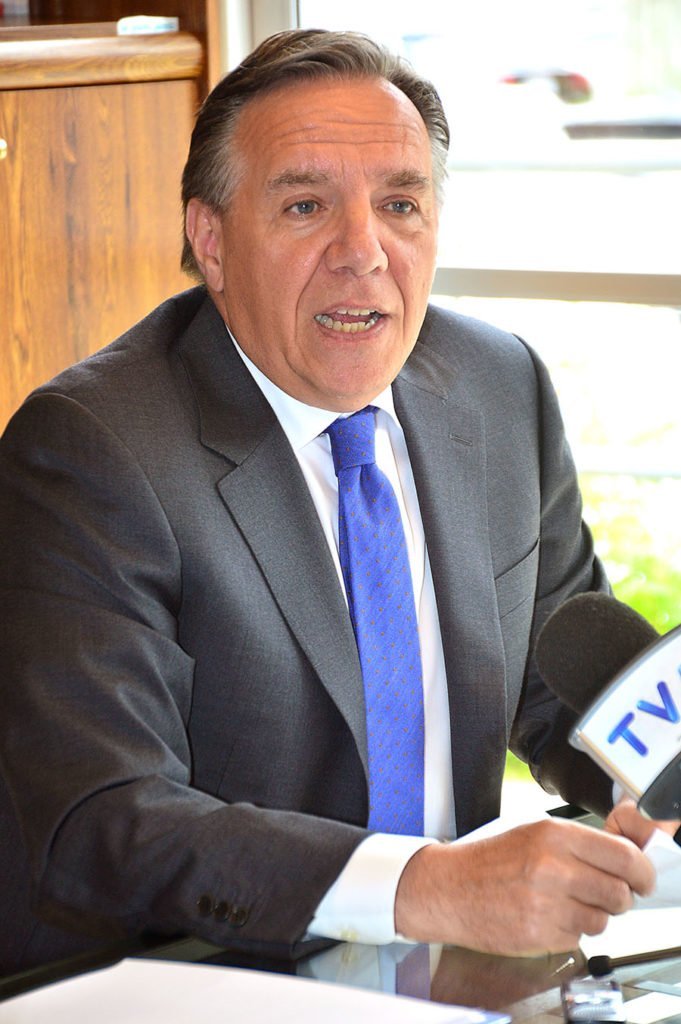
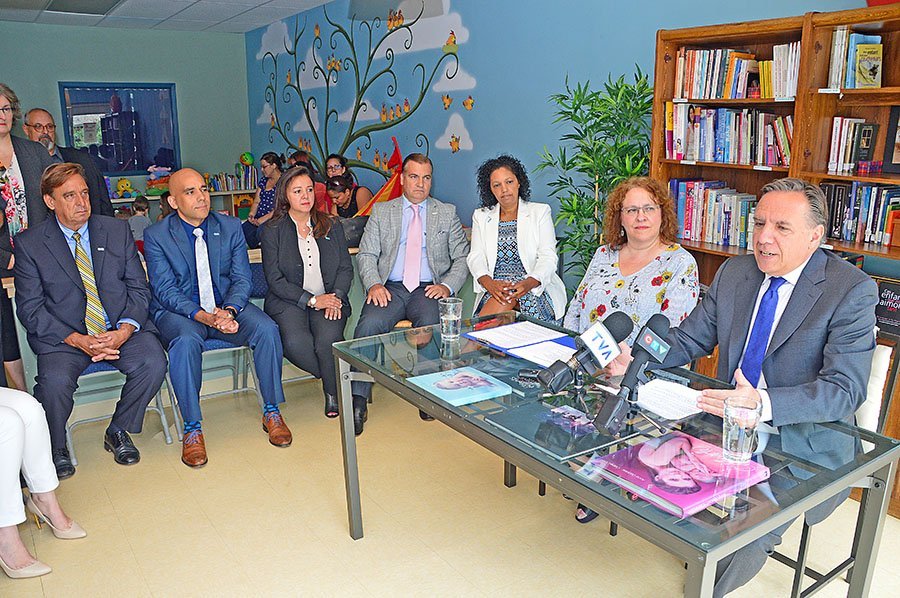
Quebec Finance Minister Carlos Leitão and Sainte-Rose Liberal MNA Jean Habel say the CAQ and its leader François Legault are off base with suggestions to abolish school boards and set a single tax rate province-wide for school taxes.
Martin C. Barry

During a pre-election campaign stop in Laval last week to lend support to Sainte-Rose Liberal MNA Jean Habel, Quebec Finance Minister Carlos Leitão sounded a warning about the potential impact on the province’s English-speaking community from the Coalition Avenir Québec’s plans to abolish school boards, while changing how Quebec collects school taxes.

Seemingly determined to make inroads in Laval where the region’s six National Assembly seats are currently held by the Liberals, CAQ leader François Legault has raised the issue of school taxes during recent visits to Laval, while reminding Laval residents that they pay higher school taxes than is often the case in other regions.

Region versus region

“He’s playing a dangerous game because he’s pitting regions against other regions,” said Leitão, while maintaining that the school tax issue is complex. “We proceeded with a reform that we announced in the last budget, which was to create a unified tax rate for every region,” he said.

Leitão acknowledged that because there was a big imbalance between school boards, mainly English and French school boards within the same regions, there were some issues here in Laval particularly “where you had one house on one side of the street paying a certain tax rate” while another house just next door “paid a different tax rate just because you go to an English school board or a French school board.

Addressing an imbalance

“That was a huge imbalance and it was clearly unfair,” he continued. “So we proceeded with a reform to unify the tax rates within the region, so in Laval now everybody pays the same tax rate regardless of the school board, English or French, that they send their children to within each region.”

However, in the meantime, Leitão pointed out, CAQ leader Legault wants to go further by implementing a province-wide single tax rate, so that everybody in every single region will pay the same tax rate. “Two problems with that,” said the finance minister, noting this would cost the government several hundred million dollars (just as it did to implement the initial school tax reform).
Leitão castigates CAQ’s Legault over future of school boards
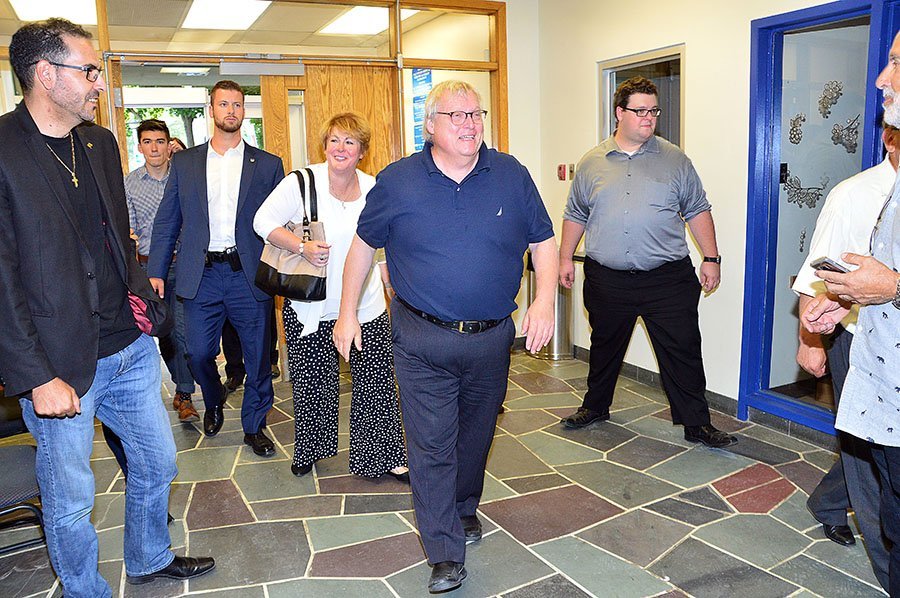
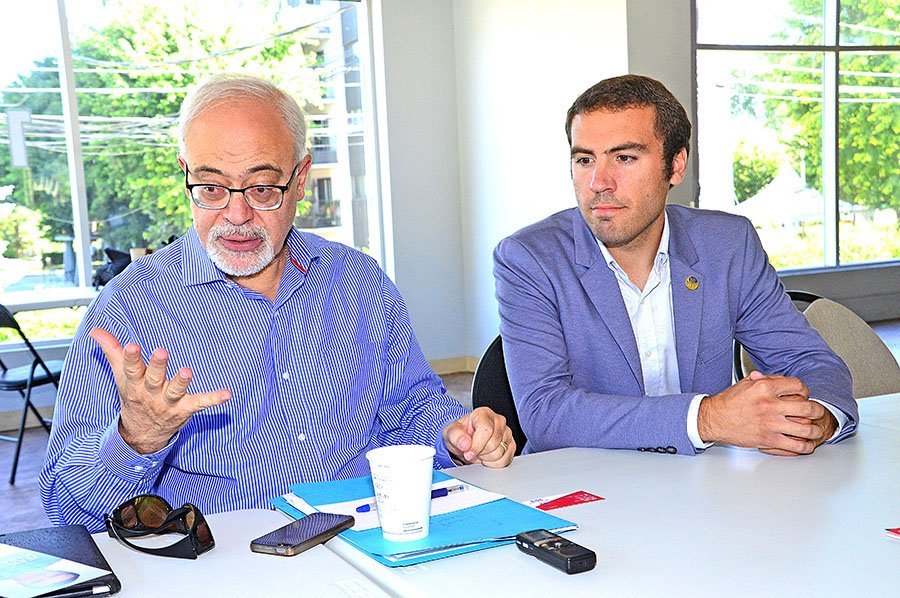
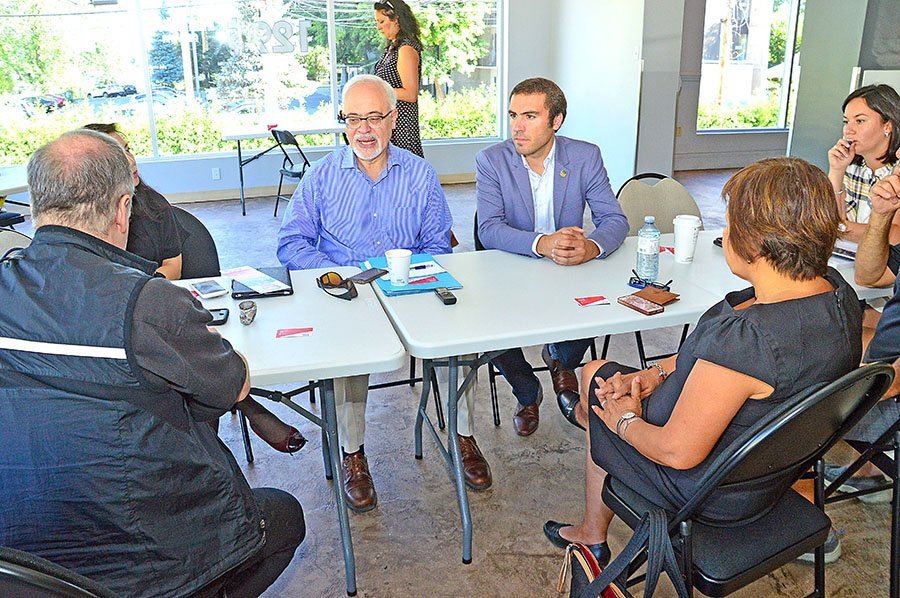
Quebec Finance Minister Carlos Leitão, rear left, and Sainte-Rose Liberal MNA Jean Habel, next to him, say the CAQ and its leader François Legault are off base with suggestions to abolish school boards and set a single tax rate province-wide for school taxes.

Disagrees with CAQ proposal

“We think that there are perhaps other priorities where those $700 million could be put to better use,” he said. “So that’s one problem with his proposal. The second problem is that he says that by doing so it would address the issue of equity.

“Well, no, because the regions of Quebec are not uniform. Property values are not the same obviously everywhere. And I think to have one single tax rate province-wide doesn’t really address the differences in regions, the differences in real estate values, the differences in the kind of services that some of the school boards offer.”

CAQ would abolish boards

Habel said that when the governing Liberals pushed forward the school tax reform, Legault and the CAQ voted against several elements of the bill, while also noting that Legault and the CAQ have long advocated the outright abolition of the province’s system of school boards.

“That’s an issue that’s also very important,” said Leitão, “the fact that the Coalition Avenir Québec has only said several times that they would eventually abolish school boards.” Asked what are his concerns about such a move, Leitão responded:

“The English-speaking community is very attached to its school boards. And it’s not just some sort of emotional attachment. It’s very concrete, it’s very real, I mean, because it’s one way where the community can exercise some control over its institutions.”

Leitão defends school boards

Citing the experience of English-speaking constituents in his own riding of Robert-Baldwin on Montreal’s West Island, Leitão said Anglophone school boards there “are very active and parents’ groups have a great deal to gain from continuing to control the school boards. And if you look at the school board election turnouts at the Anglophone school boards, their participation rate is significantly higher.”

While admitting that the Liberal government back in 2014-15 flirted with the idea of shutting school boards, “we quickly moved away from that because of communities in the West Island and elsewhere in Quebec,” Leitão said. “Anglophone communities told us that they are very much attached to the school boards. And it makes sense. On top of all that also it would trigger all kinds of constitutional debates, which I don’t think is necessary to do that now.”

CAQ open Laval campaign HQ

CAQ open Laval campaign HQ
The CAQ’s six candidates in Laval [Mauro Barone (Mille-Îles), Alice Abou-Khalil (Chomedey), Adriana Dudas (Fabre), Christine Mitton (Laval-des-Rapides), Michel Reeves (Vimont) and Christopher Skeete (Sainte-Rose)] are seen here with party supporters and volunteers cutting the ribbon to open CAQ Laval’s campaign headquarters on de l’Avenir Blvd. last Monday.
Martin C. Barry

Last Monday morning, the Laval region’s six Coalition Avenir Québec candidates held an unofficial launch of their campaign for the Oct. 1 provincial election with the opening of their headquarters on de l’Avenir Blvd. in central Laval.

With the campaign set to begin officially on Aug. 23, Laval CAQ supporters are hoping to score a breakthrough in the 2018 election, expanding the party’s number of seats in the region beyond those it currently holds on the North Shore.

Support from councillors

The six CAQ candidates running in Laval in the election are Mauro Barone (Mille-Îles), Alice Abou-Khalil (Chomedey), Adriana Dudas (Fabre), Christine Mitton (Laval-des-Rapides), Michel Reeves (Vimont) and Christopher Skeete (Sainte-Rose).

Some of the candidates, such as Mauro Barone who is running against Liberal incumbent Francine Charbonneau, received apparent support from members of Laval city council. Several Laval city councillors were among the 75 or so people who crowded into a rented storefront on de l’Avenir Blvd. for the headquarters opening.

Chomedey CAQiste determined

“As you have no doubt surmised, I am not a homegrown Quebecer,” said Chomedey CAQ candidate Alice Abou-Khalil. “But I am Québécoise in my heart and, even better, Québécoise by choice. And I have always consecrated a great deal of time to my community and I decided to run for the CAQ and stir things up a bit.”

She said she wants to put an end to the “inaction” of the Liberals, while following CAQ leader François Legault who has “intergrity and determination.” According to Abou-Khalil, the CAQ’s three priorities are education, the economy and health, “which align very well with what I hope to accomplish in Chomedey.”

CAQ’s Skeete confident

The CAQ’s Sainte-Rose candidate Christopher Skeete, a founding member of the party, said, “This is my third election as a candidate in Laval. I am convinced that this time will be the right one, because I am surrounded by competent people.”

Of the six candidates, perhaps it is Alice Abou-Khalil who faces the steepest challenge since the riding of Chomedey has long been a Quebec Liberal stronghold. “I agree that it is a château fort,” she said in an interview with the Laval News.

“But I believe that people want a change and they see that things haven’t been changing for the last 15 years. We need a government that will bring this change and do things better.”

Legault pledges funding for Mieux-Naître Laval prenatal services

Legault pledges funding for Mieux-Naître Laval prenatal services CAQ leader mystified by Liberal government’s refusal to come through
Coalition Avenir Québec leader François Legault has pledged financial support for prenatal services provided by Mieux-Naître Laval should the CAQ form the next provincial government.
Martin C. Barry

During a visit to Laval on Aug. 2 to bolster local Coalition Avenir Québec candidates running in the Oct. 1 provincial election, party leader François Legault pledged the CAQ’s long-term support for a Concorde Blvd. East prenatal and maternity services centre, where the management claims the incumbent Liberals turned down their appeal for financial help.

“As you may know, our team from Laval sounded the alarm on the question of financing for prenatal services in Laval,” Legault said during a press conference held at Mieux-Naître Laval. “This is a file that has dragged on too long.

Laval birth rate rising

“I would like to remind you that Laval is still growing very much: we’re now at 4,200 births each year,” added Legault. “And, of course, Mieux-Naître Laval is an important organization which gives services before and after birth. And also as MNA for Lanaudière I can tell you that there are comparable organizations in other regions which are financed by the government of Quebec with financing that is recurring.”

According to the CAQ, nearly a dozen regions in Quebec benefit from organizations similar to Mieux-Naître Laval with financial support from the Quebec government. Legault maintains that MNL’s executive-director, Lysane Grégoire, tried several times to obtain similar funding for the Laval-based group without success.

No prenatal funding

“Despite the efforts made by Mme Grégoire over the years, for example towards Mme Charbonneau who is an MNA here but is also a minister and towards the minister of health Gaétan Barrette, it has not been possible – there was even a refusal on the part of Gaétan Barrette – to finance the prenatal services here in Laval,” said Legault.

“We don’t understand – there is a problem with equity,” he continued. “As I say, there are equivalent organizations in 10 regions which have financing that if it was applied per child in Laval would represent from $500,000 to $650,000 per year. How is it that in Laval it is refused?”

While acknowledging that Charbonneau was known to have expressed support for Mieux-Naître Laval as well as a degree of willingness to obtain funding for the group, Legault said Barrette declined to provide funds after deciding there were already enough prenatal services being offered in the Laval region.

Legault pledges funding for Mieux-Naître Laval prenatal services CAQ leader mystified by Liberal government’s refusal to come through
: CAQ candidates in Laval are seen here with CAQ leader François Legault (far right) and Mieux-Naître Laval executive-director Lysane Grégoire on Aug. 2

Legault pledges funding

“And yet, there was a study done by the City of Laval with specialists from UQAM which shows that adequate services given in other regions don’t exist or aren’t financed in Laval,” said Legault. “So why is Laval being treated differently? I want to make a commitment today that if a CAQ government is elected next Oct. 1, then we will finance in a recurring manner the organization Mieux-Naître Laval in the same way as it’s done in other regions.”

For her part, Grégoire said, “After four years of mandate, the Liberals haven’t yet been able to solve this problem which is actually not complicated and consists of re-establishing equity in the region with regards to prenatal services. But finally there is hope that we will get the means to fulfill our mission with the families. This would be enormous because an incredible injustice has been done to families, which is completely inexplicable.”

Says Liberal inconsistent

The CAQ’s Sainte-Rose candidate Christopher Skeete agreed the Liberal government’s treatment of the issue shows inconsistency on their part. “There are six MNAs from the Liberal Party here, so I would be remiss if I didn’t point out that somehow they must have fumbled the ball if they weren’t able to move this forward,” he said.

During his stop at Mieux-Naître Laval, Legault was accompanied by the six CAQ candidates running in Laval in the Oct. 1 election: Mauro Barone (Mille-Îles), Alice Abou-Khalil (Chomedey), Adriana Dudas (Fabre), Christine Mitton (Laval-des-Rapides), Michel Reeves (Vimont) and Christopher Skeete (Sainte-Rose).

“It is high time that the people of Laval, as well as the rest of the population of Quebec, were able to speak out on the issues that concern them, while electing the party offering the best program,” said CAQ candidate in Vimont Michel Reeves. “Our program is based on three priority elements: education, the economy and health, which are crucial issues for everyone.”

Laval takes home honors from Jeux du Québec summer finals

City won 16 medals at competitions held in Thetford Mines
Laval takes home honors from Jeux du Québec summer finals.

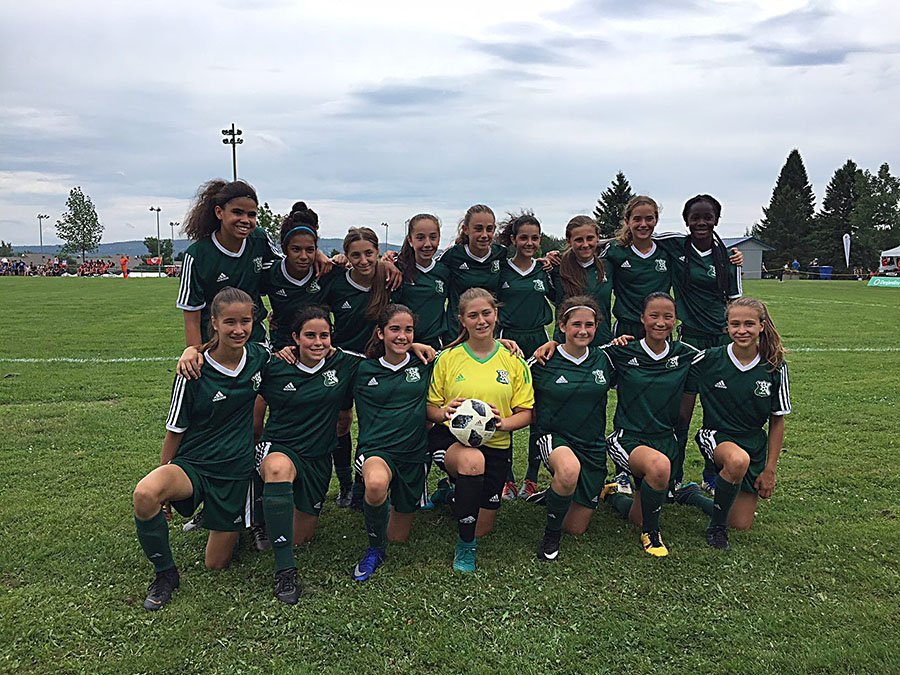
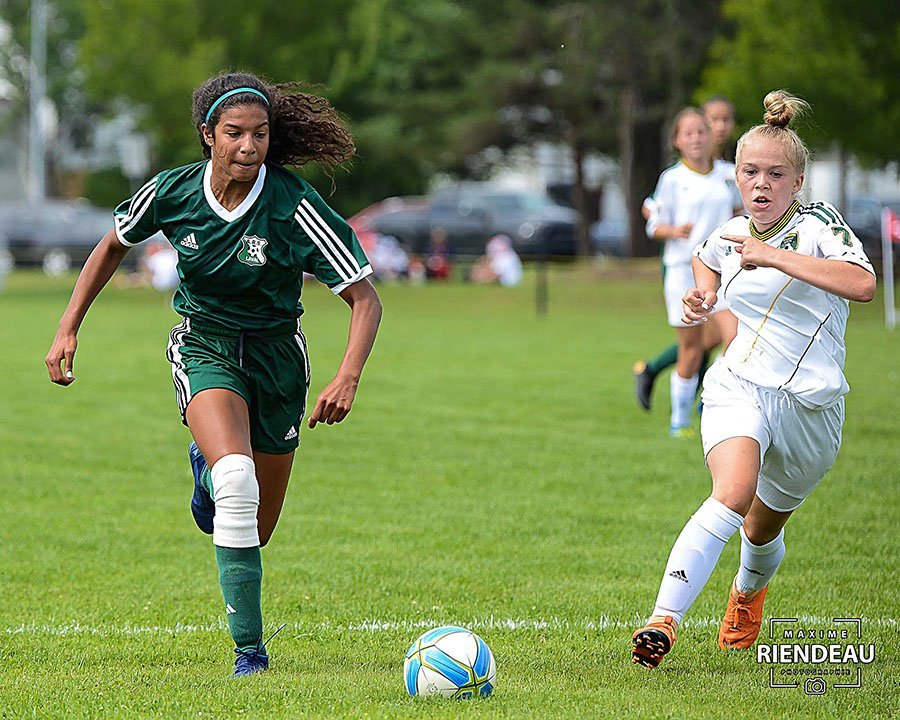
(TLN) Laval succeeded in winning two new gold medals while participating in soccer last week on the last day of the 53rd finals of the Jeux du Québec in Thetford Mines. Teams from Laval competed with counterparts from the Lanaudière region on Aug. 4.

The girls’ team won their match 3 – 0 thanks to goals by Jasmine Garcia and Sarina Teoli early in the game. Adèle Jones then assured the victory with a third goal.

On the boys’ side, promising young Laval resident Dohryen Rinaldi Damas scored the only goal of the male soccer finals to secure Laval a gold medal.


General classification – bloc #2
Basketball girls13/19
Basketball boys11/19
Cycling on road14/16
Swimming19/19
Soccer girls1/18
Soccer boys1/19
Beach volleyball girls17/18


The region of Laval finished 15th in regional classifications, while also distinguishing itself as the third most improved region compared to the Montreal Summer Games in 2016. Joël Savoie, chief of the Laval delegation, confirmed that “Sports Laval will continue to make efforts to support regional associations to assure sports development in Laval in order to finish among the top 10 regions at the next summertime Jeux du Québec which will be taking place here in Laval.”

In all, Laval took home 16 medals from Thetford Mines, 10 of which were won during the first block of competition, with a further six during a second competition block. It was no surprise that Matisse Julien, a 15-year-old cyclist who was participating in his fourth Jeux du Québec finals, was named flag bearer during the closing ceremony. Julien won three medals (gold, silver and bronze) in on-road cycling this year, in addition to having won gold and silver medals at the Finale d’Alma in 2017 in cross-country skiing.

City won 16 medals at competitions held in Thetford Mines
Laval takes home honors from Jeux du Québec summer finals.
City won 16 medals at competitions held in Thetford Mines
Laval takes home honors from Jeux du Québec summer finals.
City won 16 medals at competitions held in Thetford Mines
Laval takes home honors from Jeux du Québec summer finals.
City won 16 medals at competitions held in Thetford Mines
Laval takes home honors from Jeux du Québec summer finals.
City won 16 medals at competitions held in Thetford Mines
Laval takes home honors from Jeux du Québec summer finals.
City won 16 medals at competitions held in Thetford Mines
Laval takes home honors from Jeux du Québec summer finals.

Quebec allots $1.66 million for 14 projects in Laval


Martin C. Barry

The Quebec government will be providing nearly $1.7 million in funding over the next four years for 14 cultural, artistic and business projects in Laval through a provincial fund designed to support and enhance social and economic development throughout the province’s regions.

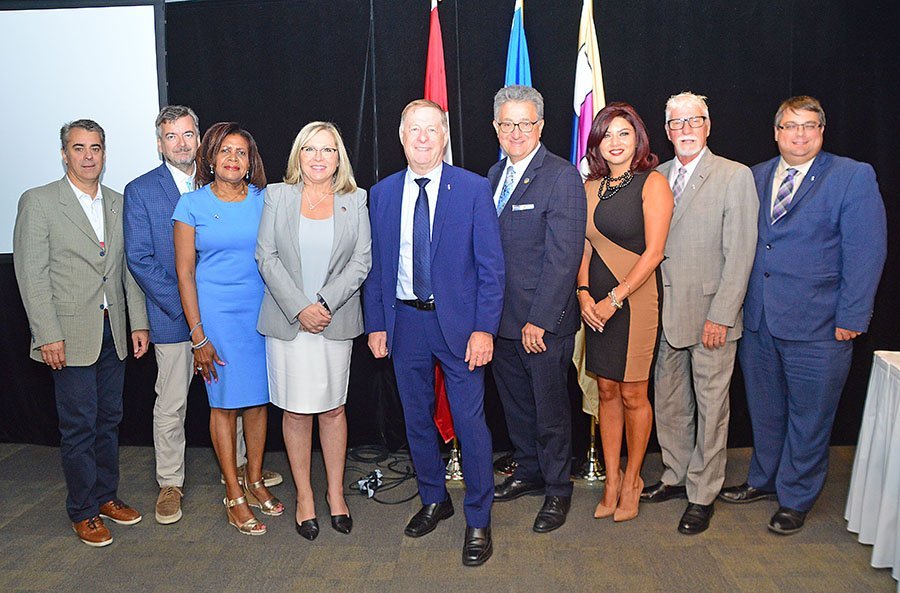
Mille-Îles Liberal MNA Francine Charbonneau, who is Minister Responsible for the Laval Region in the Couillard cabinet, was at Laval city hall on Aug. 10 to announce the subsidies made from the Fonds d’appui au rayonnement de régions (FARR). The funding comes through the Ministry of Municipal Affairs and Occupation of the Territory.

FARR investments

“The FARR offers to elected officials the tools and financial means to solidify projects that are well-adapted to their contexts,” Charbonneau said. “It also allows precious aid to be given to developers in the region. I would like to thank all the organizations that came together to propose interesting projects that answer to the specific needs and the reality of our community.”

Mayor Marc Demers, who was also on hand for the announcement, said, “The FARR is an important lever for the support of various initiatives which encourage development in Laval. The sums given out today will have positive repercussions on the growth of sectors that include culture, economic and social development as well as the environment. The 14 projects that were selected this year bear witness to the dynamism, the creativity and the innovation of Laval’s organizations.”

The projects:

$135 000Paroles croisées

By: Bluff Productions inc.


Intergenerational encounters in various districts of Laval.

2018-2021


$131 300Collecte d’archives de l’histoire orale de l’Île Jésus

By: Centre d’archives de Laval


Gathering of oral histories in 14 formers town and villages of Laval.

2018-2021
$215 000Préparation de l’ouverture du BioCentre Armand-Frappier

By: Centre d’interprétation des biosciences Armand-Frappier


Moving to a new building next to Cosmodôme and new organizational structure.

2018-2021
$116 660Thermographie

Par : Conseil régional de l’environnement de Laval


Three-D aerial thermographic project of Laval.

2018-2021
$50 000Marché local

By: Coopérative de solidarité Saint-François en action


Development of a food service alternative in Saint-François.

2018-2021
$149 775Sommet jeunesse de Laval

By: Forum jeunesse Laval


Funding over three years for the organization of a youth gathering.

2018-2021
 

$30 000

Vitrine Théâtre Ados

By: La Rencontre Théâtre Ados


Additional support for a festival.

2018-2020
$210 000Laboratoire d’innovation sociale de Laval

By: Pôle régional d’économie sociale de Laval


Support for social innovation.

2018-2021
$175 000Pôle régional d’innovation de Laval

By: Pôle régional d’innovation de Laval


Support for entrepreneurs and small businesses.

2018-2021
$212 698Prox-Industriel

By: Prox-Industriel


Program for businesses encountering problems finding qualified workers.

2018-2021
$115 000Centre de création artistique professionnel de Laval

By: Regroupement d’organismes culturels et d’artistes lavallois


Business plan for a new outdoor public space in the Montmorency neighbourhood.

2018-2020


$41 400Animation et mise en valeur du patrimoine de Laval

By: Société d’histoire et de généalogie de l’Île Jésus


Elaboration of a new business model for a tourism project.

2018-2019


$22 000Boite à outils

By: Le Tiers Lieu, coopérative de solidarité


Exploration of new means for geographical expansion of services offered.

2018-2020
$56 000Villa, véhicule de démocratisation en arts numériques

By: Verticale – Centre d’artistes


Mobile laboratory for digital culture and arts projects.

2018-2020
Total accorded:

$1 659 833

Laval to save ‘Bois du Trait-Carré’

Laval is taking measures to save ‘Bois du Trait-Carré’
Laval city council held its most recent monthly public meeting on Aug. 7.
Martin C. Barry

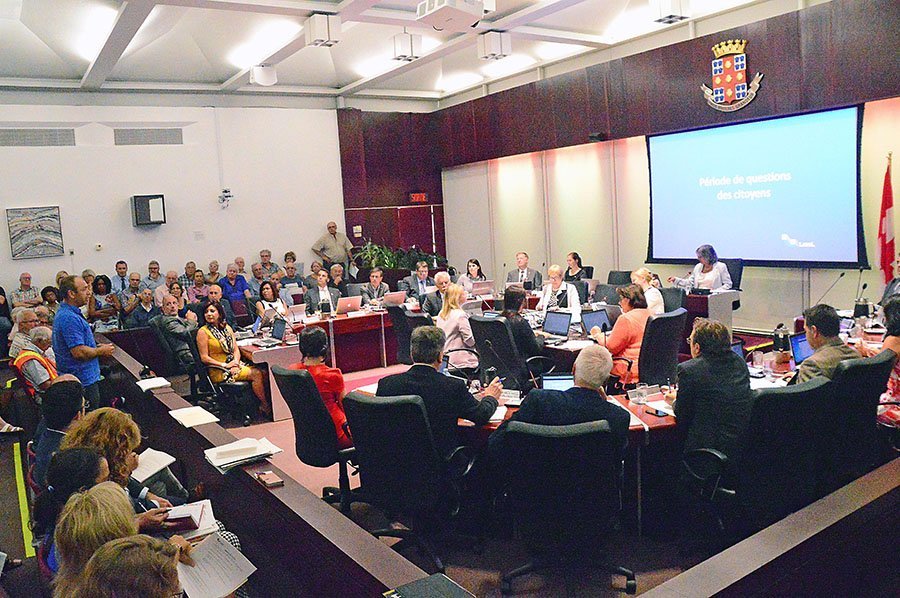
A divided Laval city council spent much of their monthly public meeting on Aug. 7 pondering the future of one of Laval’s remaining forest spaces – the Bois du Trait-Carré – as well as an opposition proposal to change the city’s charter and decentralize power from the executive-committee and mayor’s office to the councillors themselves.

Mayor Marc Demers opened the meeting with a statement to the effect he would be recommending the creation of a new committee to examine issues surrounding the Bois du Trait-Carré, which is a wooded space in eastern Chomedey around Saint-Martin, Laval and de l’Avenir boulevards.

Saving Bois du Trait-Carré

The area is on the verge of being developed. Fabre city councillor Claude Larochelle, who represents the official opposition Parti Laval, tabled a motion calling for the city to conserve the entire site of the Bois du Trait-Carré by preventing commercial development there and taking measures to have a school surrounded by the woods built there.

Although voting on the council is currently dominated by 11 councillors who do not regard themselves as allied with the mayor and his Mouvement Lavallois municipal party, the resolution remained in limbo after a vote in view of the fact the mayor still holds a right of veto over any resolution. The item was deferred for additional study until it is retabled at a future council meeting.

During the public question period, the mayor was asked to comment on the slow progress being made towards building an aquatic complex
Mayor Marc Demers answers questions during the Aug. 7 city council meeting at

Charter changes sought

The opposition wants to restore Laval city council’s powers as they were decades ago. As such, Larochelle, party leader Michel Trottier and others have sent a request to the Quebec Ministry of Municipal Affairs to modify the city’s charter. The purpose of the resolution was to confirm that the city is also agreeing to seek the changes.

“The current charter takes from elected officials fundamental powers while we have duty to represent,” Larochelle said in a statement on the issue. “The municipal council is a democratic body that has been neglected for too long in Laval, and today we must take back our rights like other municipalities in Quebec.”

Aquatic complex questions

During the public question period, the mayor was asked to comment on the slow progress being made towards building an aquatic complex for the city. “Within a few weeks we should be able to announce a more precise orientation,” he responded, while adding that some of the information can’t be released for now as it is regarded as sensitive to closing a deal to build the aquatic complex.

Also during question period, Gaétane Girard of Chomedey complained about the proliferation of reserved public transit lanes on Curé Labelle Blvd. near Autoroute 15, which she claimed are not helping but rather are contributing to traffic problems. “I ask that the reserved lane on Curé Labelle be abolished in its entirety,” she said.

New city administrators

Also during the meeting, the city announced the appointment of two new assistant-directors to the administration at city hall. Firstly, Nathalie Marchand is joining the administration as assistant-director for operations and development of business solutions in the department of innovation and technologies. Secondly, the city announced the promotion of Francis Thibeault to the post of assistant-director for planning and development for real estate investments in the department of economic development.

And the city also announced that it has concluded a new agreement for the next three years with Tourisme Laval, the at-arm’s-length municipal agency responsible for promoting Laval as a tourist destination. The city’s contribution to Tourisme Laval in 2018 will be $445,800. According to the city, tourism accounts for 11 per cent of employment in Laval.

Unionists trade verbal jabs with Health Minister Gaétan Barrette

Health Minister Gaétan Barrette came to Laval to defend Liberal reforms, before October 1 election.
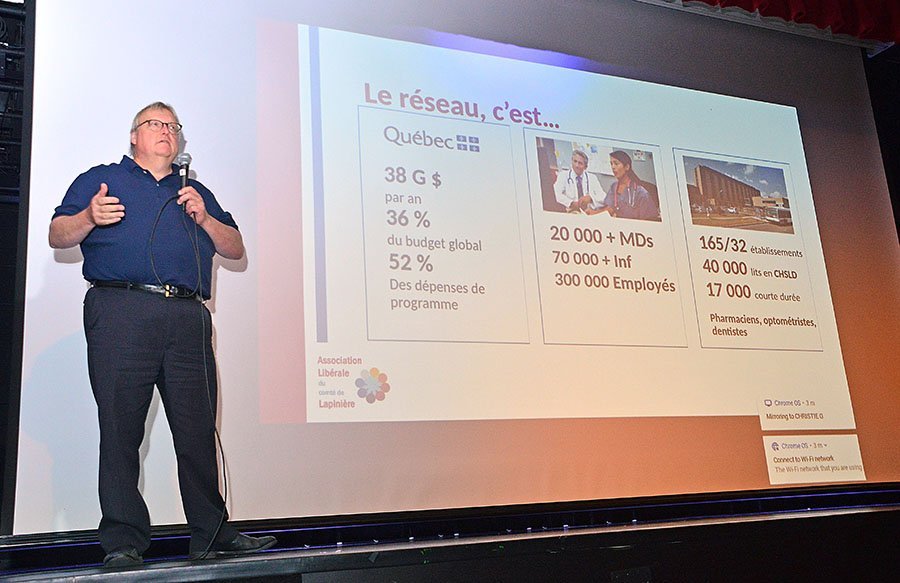
Quebec Liberal Health Minister Gaétan Barrette arrives on Aug. 2 at Laval Junior Academy where he gave a presentation on the provincial government’s health care reforms over the past four years.
Martin C. Barry

After coming to Laval on Aug. 2 to explain the Quebec Liberal government’s controversial health and social service reforms of the past four years, Health Minister Gaétan Barrette found himself before an audience consisting mostly of labour union activists critical of the government’s management.

Large union presence

The gathering, organized by the Quebec Liberal Party’s political issues commission for the Laval region, took place in the auditorium of Laval Junior Academy on Daniel Johnson Blvd.

While attendance at the meeting was sparse, most of the questions following Barrette’s presentation were overwhelmingly from the unionists who made up at least two-thirds of the audience. They managed to maintain an acceptable level of decorum most of the time, despite occasional outbursts of sarcasm and laughter.

Arriving late, Barrette was greeted outside by very noisy union members from the Canadian Union of Public Employees as well as the Centrale des syndicats du Québec.

Health Minister Gaétan Barrette came to Laval to defend Liberal reforms, before October 1 election.
The CSQ and CUPE were on hand to make their presence known to Quebec Health Minister Gaétan Barrette.

Barrette’s approach

As Barrette pointed out, he had been making the rounds in various areas of Quebec since June 15 making his presentation to audiences, which were considerably larger than the one that turned out in Laval.

“I do politics the way it should be: transparently, precisely, with a clear message and you can decide eventually,” he said.

Shortly after winning the last provincial election in 2014, the Liberals initiated an austerity program that saw some of the deepest cuts and policy changes in recent history made within various government departments – including the ministry of health.

Although the Liberals brought the austerity period to a close last year, there’s not much doubt Barrette held the toughest portfolio, tightly managing Quebec’s now $38.6 billion annual health and social services budget, representing 52 per cent of most provincial government spending.

Health Minister Gaétan Barrette came to Laval to defend Liberal reforms, before October 1 election.
Question period saw many union activists getting up to challenge the Liberal health minister’s many assertions.

Denies lowering budgets

“It’s been four years you’ve been hearing about austerity,” said Barrette, insisting that “austerity is when year after year we make the budget smaller.” All the same, he maintained that over a 15-year time span when the Liberals were in power, “there’s not once when we lowered the budget.”

However, he acknowledged, “We controlled the growth of expenses. That’s true.” Barrette also maintained that the Liberals consistently invested in the public health care sector, with a steady increase in services over 15 years.

A particularly ominous point Barrette wished to make was that if Quebec’s health care budget continues growing at its current rate, in 10 years, “if we don’t control expenses in health, or if we don’t reflect on the choices we have to make, the health budget will reach 65 per cent of the global budget,” he said.

Ballooning health budget

He pointed out that in 1972, a few years after the Quebec Health Insurance Plan’s creation by the government, public health and social services accounted for just 27 per cent of the overall provincial budget. “I say this in order to have you realize that if decisions are not made, we are going to have problems.”

By the time of the question period, Marc Ranger, Quebec director of the CUPE, was first to fire shots at Barrette. A veteran worker from the health and social services sector, Ranger accused the health minister of portraying himself as the “savior” of Quebec’s system of health care.

“Are you aware as minister of health, beyond those who defend the status quo, that there is a general demobilization never seen before in the health sector, that there are senior managers who quit and take retirement long before it’s time because they feel they no longer have a say,” said Ranger, who was loudly cheered by his colleagues.

Health Minister Gaétan Barrette came to Laval to defend Liberal reforms, before October 1 election.
Quebec Health Minister Gaétan Barrette defended the Liberal government’s health and social sector reforms.

No ‘demobilization,’ he said

Responding, Barrette said, “I myself don’t see that everywhere in Quebec there is a demobilization. I do see that there are difficulties. But I also see a bunch of regions where things are going well, where the shift is being made and is taking place in a spirit of collaboration.”

When Ranger asked again whether the health minister was “aware that a historic demobilization of human resources in the network,” Barrette replied, “I am perfectly aware that the reform I am undertaking is causing reactions. And I am perfectly aware of the fact that the shift is now taking place and it is not black as you are portraying it.”

Later during question period, Barrette and the meeting’s organizers were derided because five out of six of Laval’s Liberal MNAs failed to attend. Fabre MNA Monique Sauvé was the only local Liberal present. Asked for his views on Public Private Projects (PPP), Barrette said there wouldn’t be any as long as he was health minister. “A hospital is not a bridge,” he said.

Justin Trudeau: 10 years since first went to Ottawa

0

How time flies. Looking back a decade, it’s hard to resist using a cliché when saying that it seems like only yesterday Justin Trudeau was setting his sights on becoming an MP in Canada’s Parliament.

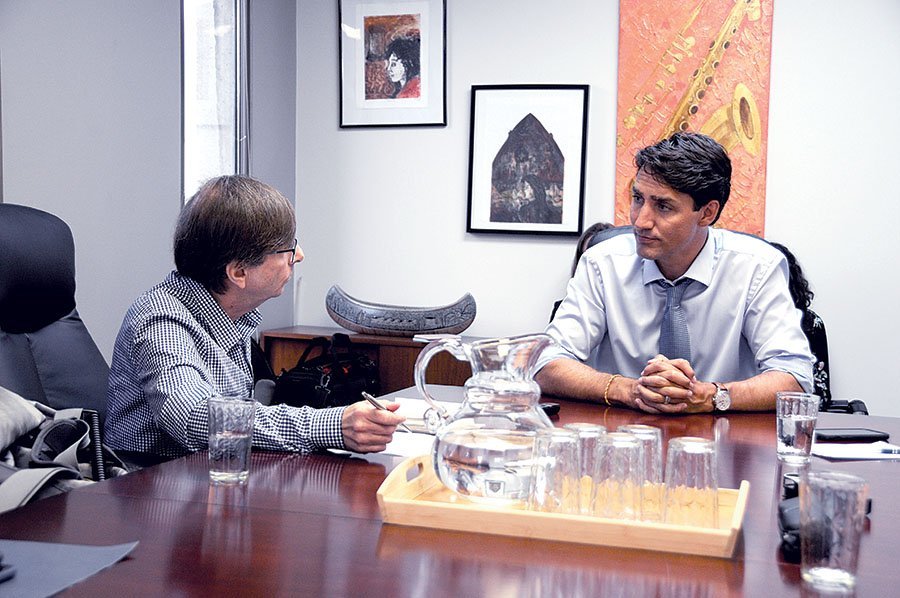
And yet it has indeed been a decade since our current Prime Minister walked into the public library in Montreal’s Park Extension district to sit down with Newsfirst Multimedia for what would be his first interview with us, as he prepared to seek the Liberal nomination to run in Papineau in the 2008 federal election.

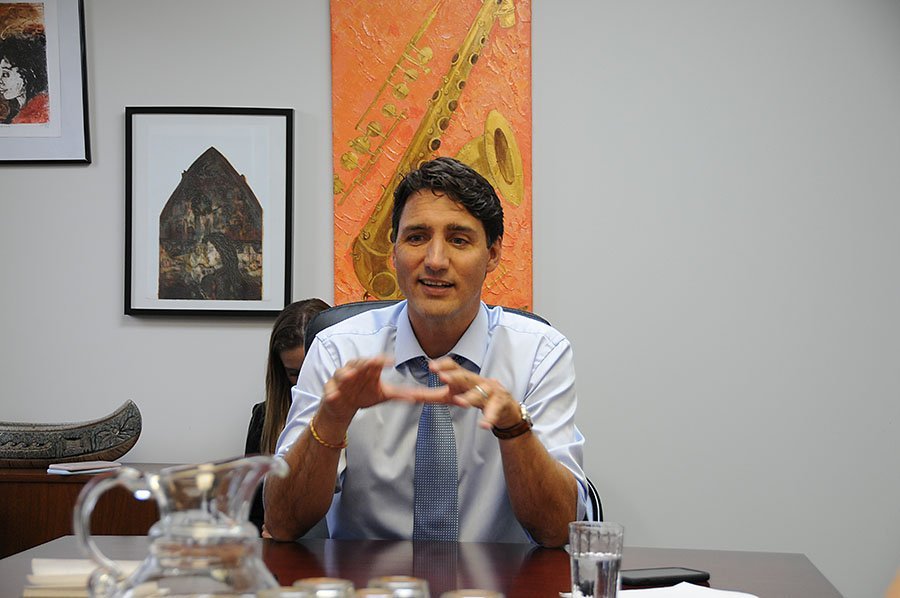
In a wide-ranging interview last week in conjunction with the upcoming 10th anniversary of his first being elected, Prime Minister Justin Trudeau described his beginnings in federal politics as “a steep learning curve,” although “that was the whole point,” he said.

A fateful decision

According to a by-now well-known account, Justin Trudeau had been contemplating entering federal politics for some time. As early as 2007, rumours circulated that he was seeking the Liberal nomination in the riding of Outremont, although the riding had already been staked out for Stéphane Dion.

As the story goes, this motivated Trudeau to choose the neighbouring riding of Papineau, where he easily won the Liberal nomination on April 29, 2007.

“Ten years ago, picking a place that I knew would teach me not just what mattered for local issues but for the country was at the heart of what I was trying to do,” he said last week, looking back. “I had a lot to learn and I knew that I would work very, very hard and learn.”

‘Make no small dreams…’

Nearly five years ago, when Justin Trudeau announced his intentions to run for the leadership of the Liberal Party of Canada, he did so at a rally held in Park Extension. In a speech, quoting the German humanist philosopher Johann Goethe, Trudeau confidently declared: “Make no small dreams – they have not the power to move the soul.”

Recalling the moment, he said: “That speaks larger than just a run for politics. It’s the kind of world we want to build – the kind of communities we want to have. When you’re not thinking big about the future, if you’re not even dreaming big, you’ll never achieve anything. So this idea of taking this community and achieving great things has been at the centre of everything I’ve done.”

His father’s influence

“You know, people often talk about my father and the influence he had. And, yes, I learned a little how to be a prime minister from him. But it wasn’t he who taught me how to be the MP for a riding, to understand and listen to people.

“My father got into politics with ideas which really were given shape by his writings in Cité Libre, the Quiet Revolution. He had goals with regards to bilingualism, with regards to the constitution which were very clear to him. Of course, I have ideas and values. But a lot of who I am as a politician and as prime minister was taught on the terrain by the people I hoped to represent.”

In the course of the interview, Trudeau also answered questions on a number of current issues facing the country, including Canada’s processing of immigrants and refugees, as well as the country’s gun control policies in the aftermath of mass shooting incidents in Toronto in July and in Fredericton NB in August.

Q and A’s with the PM

While Canada has long had a generally open policy towards immigrants and refugees, that image has found itself challenged lately by the newly-elected Conservative government of Ontario, which has complained to Ottawa about costs associated with accepting refugees crossing over the U.S. border, and Quebec poised to possibly elect a similarly-minded CAQ government. We asked Prime Minister Trudeau if Ottawa is anticipating any significant changes in its immigration and refugee strategies.

“First of all, one of the big changes is that we invested significantly more in streamlining, in improving, in giving more resources to our immigration and refugee system so that we can deal with backlogs and family reunifications,” responded Trudeau. “We have the capacity to process more people, to being families together, to allow them to integrate better and allow them to be successful quicker in Canada and in their communities.

Fine-tuning the refugee system

“That is already a big step forward – recognizing that regular arrivals are putting extra pressure on the system, but pressure that we are able to respond to. We are still processing everyone who crosses the border. They will go through the immigration and refugee system in its integrality. And we recognize that there are extra costs for Ontario and for Quebec and that’s why we are sending extra money to Quebec and to Ontario and to other provinces who need help on housing the refugees.”

Given the recent shooting incidents in two of Canada’s largest cities, and the looming possibility that U.S.-style gun carnage is spilling over into this country, we asked the prime minister whether his government is contemplating any changes to Canada’s gun legislation with regards to licensing and firearms control.

Trudeau on gun control

“We brought in fairly strong common sense gun legislation in the spring that already does a significant job in making sure there are more controls and making it safer for our communities,” he replied. “But there are a lot of questions about can we do more. And we’re very much looking, talking with Canadians, talking with people around the world about different ways of moving forward to keep Canadians even safer.”

Finally, with a federal election looming in late 2019, we asked the Prime Minister whether (depending on the outcome of the election) he would be willing to serve as leader of the Official Opposition? “I’m not going to answer that,” he said with a grin. “I’m focused on winning the election. That’s not a question I’m going to entertain.”

Laval News Volume 26-15

0

The current issue of the Laval News volume 26-15 published August 15, 2018, (Laval’s English Newspaper), covers local events such as politics, sports and human-interest stories. It features editorials and other columns. Click on the image to read the paper.


Front page image of The Laval News Volume 26 Number 15
Front page of Laval News.
August 15, 2018

Armed man forces closure of Highway 440

0

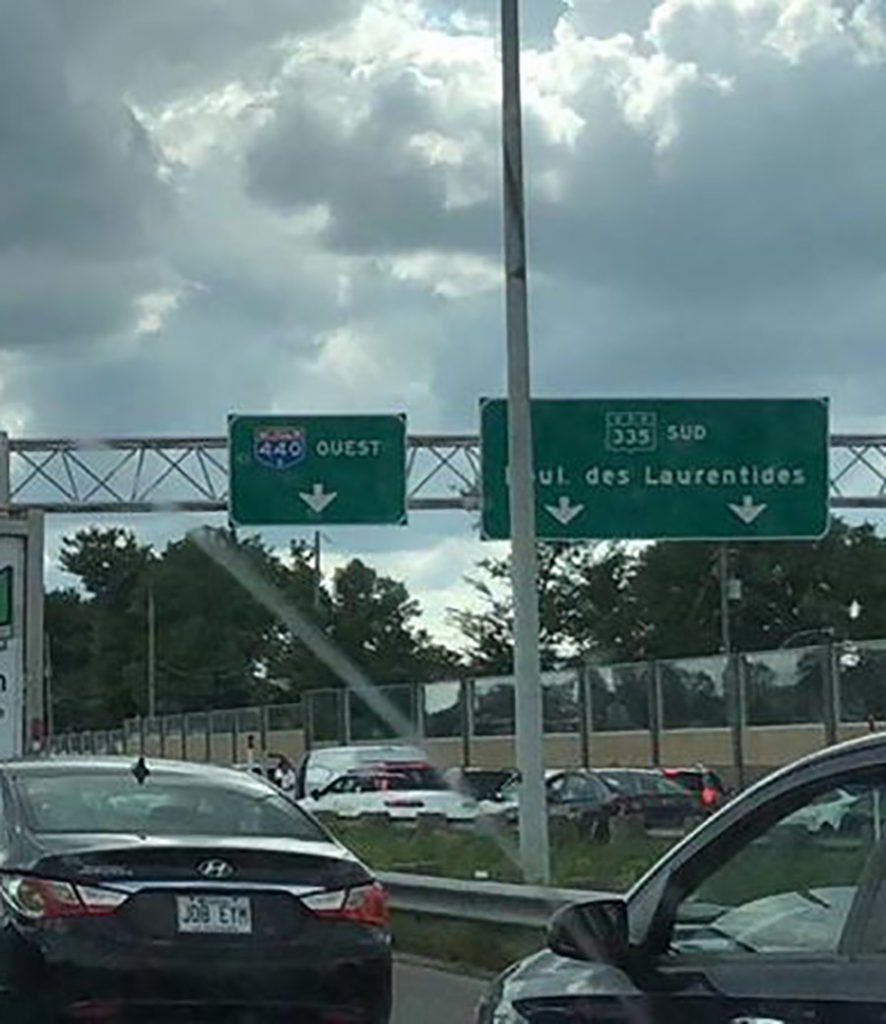
A police operation to apprehend an armed man led to the closure of Highway 440 in Laval on Tuesday afternoon. (Aug 14, 2018)

Armed man forces closure of Highway 440 in Laval
A police operation to control an armed man led to the closure of Highway 440 in Laval on Tuesday afternoon. (Aug 14, 2018)

The operation is taking place at Highway 440 and Boulevard des Laurentides. The highway has been completely closed to traffic in both directions.

The Laval police indicated, via their Twitter account, that the armed person could be mentally unstable.

A spokesperson for the police explained that they were busy establishing a perimeter to secure the scene and to control the traffic around the area

The Laval police and the Ministry of Transport both recommended that motorists avoid the area.

Weather

Laval
overcast clouds
2.1 ° C
2.7 °
1.1 °
95 %
2.6kmh
100 %
Fri
1 °
Sat
-2 °
Sun
5 °
Mon
2 °
Tue
2 °