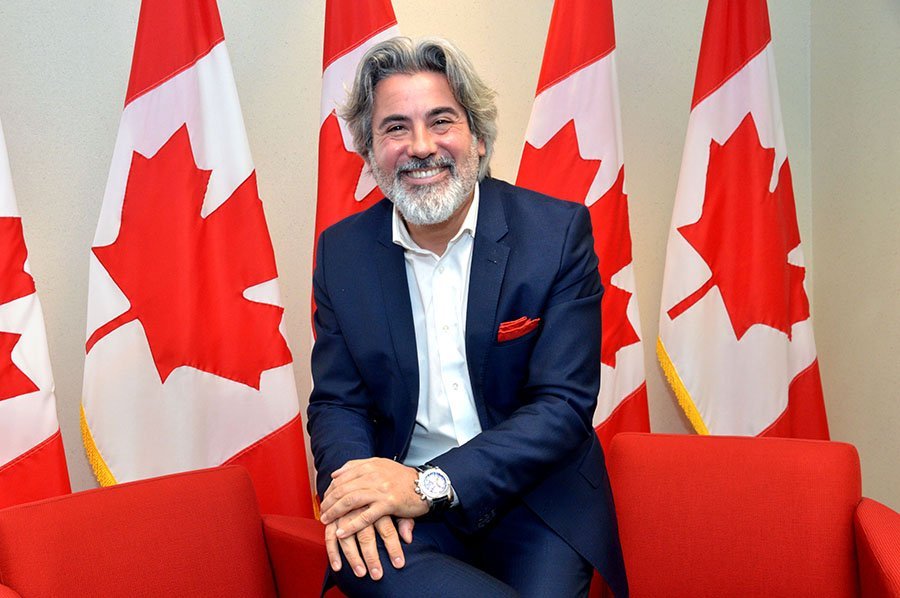
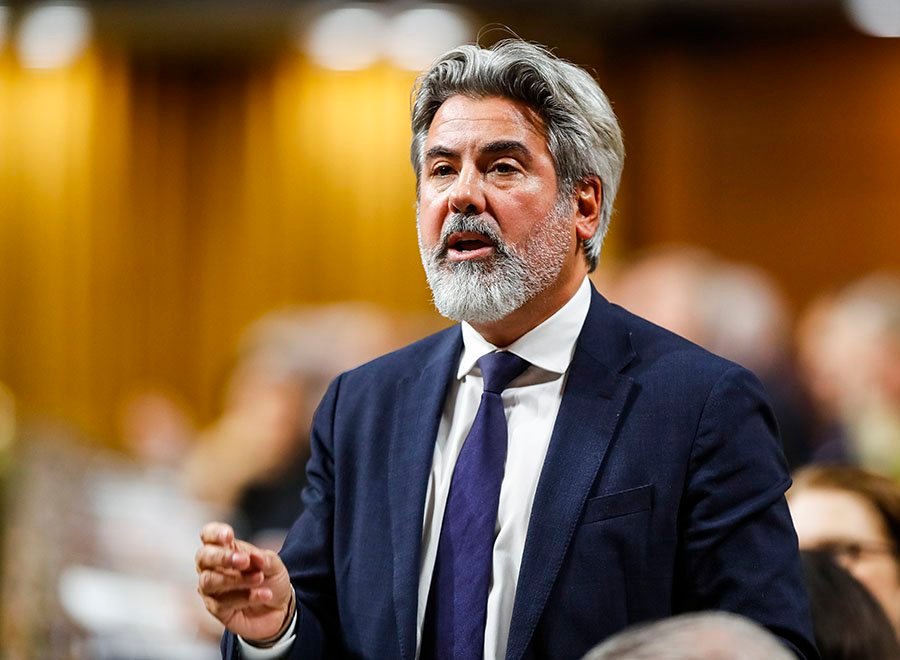
Patty Hajdu, federal Minister of Health, has announced an investment of more than $7.85 million over four years towards 12 new projects that will support individuals living with dementia, their families, caregivers and communities.
Federal Health Minister Patty Hajdu.
The federal government is funding these projects through the Dementia Community Investment (DCI), which supports community-based projects that address the challenges of dementia.
Each project funded by the DCI involves people with lived experience in helping to design, deliver or evaluate the project.
With more than 432,000 Canadians over the age of 65 living with dementia, communities across Canada are seeing the impacts this condition has on both those living with dementia and those who care for them.
The number of people living with dementia is expected to increase, making improving the lives and wellbeing of those impacted by dementia a priority for Canada, according the federal health ministry.
These 12 new projects will address the needs of individuals in Canadian communities in areas such as:
Raising awareness and de-stigmatizing dementia;
Fostering effective communications between care providers, and people living with dementia and their families to mitigate stress and enhance wellbeing;
And creating community action plans for the social inclusion of people living with dementia.
The projects announced on Aug. 13 support one of the three objectives of Canada’s first national dementia strategy, A Dementia Strategy for Canada: Together We Aspire — improving the quality of life of people living with dementia and their caregivers, says the government.
In addition to the projects funded under the DCI, the Public Health Agency of Canada (PHAC) is announcing the first project under the new Dementia Strategic Fund (DSF). PHAC is providing $163,603 to the Native Women’s Association of Canada for a project entitled Stigma: An Exploration of Lived Experience, Understandings and Behaviours of Dementia within Indigenous Communities.
The DSF supports the implementation of key elements of the national dementia strategy, including a national public education/awareness campaign, targeted awareness raising initiatives, initiatives that support access to and use of dementia guidance, and the creation of a comprehensive online portal to share dementia information resources with Canadians.
Health Canada has issued an advisory saying it is aware of several cases of serious harm resulting in hospitalization after children have accidentally consumed illegal edible cannabis products. These products appeared similar to regular candies or foods and were stored in locations such as the fridge or freezer and without child-resistant packaging.
All cannabis should be stored securely and out of reach of children, Health Canada says.
Obtaining cannabis from illegal sources can carry potential health risks as the products are not regulated and do not meet the strict safety and quality controls as set out in the Cannabis Act and its Regulations. These controls address issues such as the maximum amount of THC, product ingredients, packaging, labelling, production, testing, and sale, including appeal to young persons.
Canadians are reminded that they should only purchase cannabis from authorized provincial and territorial retailers, online or in brick-and-mortar stores. Legal cannabis products must be sold in child-resistant and tamper-evident packaging, and the immediate container must be opaque or translucent. Edible cannabis products may legally contain a maximum of 10 milligrams of THC per package.
All cannabis should be stored securely and out of reach of children and young persons. Cannabis should always be kept in its original child-resistant packaging. It is important to note that the tamper-evident feature on cannabis packaging is no longer effective after it has been opened.
Who is affected? Children and young persons are at risk of serious harm if they accidentally ingest cannabis.
Affected products Improperly stored cannabis from legal sources and all cannabis purchased outside the legal supply chain.
What consumers should do
If you possess cannabis, store it away from children and young persons. Be especially careful with edible cannabis, which can be mistaken for regular food or drink. Consider storing cannabis products in a locked drawer or box, and separate from regular food or drinks.
Always purchase cannabis products from authorized provincial and territorial retailers. Cannabis products purchased outside the legal, regulated supply chain are not subject to any quality control or safety measures.
Even adults may be unable to spot the difference between a regular candy and an edible, or a cookie with or without cannabis. By properly storing and labelling cannabis products, there is less risk of accidental consumption.
If someone is having a serious medical emergency related to a cannabis product, call 911, or contact your regional poison center. If you have questions or concerns about cannabis and your health, consult your health care practitioner.
Tips for recognizing legal cannabis
Cannabis products sold by licensed retailers, containing more than 0.3% THC, are required to have an excise stamp at the point of sale. If a packaged cannabis product does not have an excise stamp at the time of purchase, it is an illegal product. Find your provincial excise stamp here.
Legal and regulated cannabis have a number of control measures in place to minimize harms from cannabis use, including plain packaging and labelling that contains appropriate warning messages and important information about the product (e.g., THC and CBD content).
Provincially and territorially authorized retailers are the only legal way to purchase cannabis for non-medical purposes in Canada. Each province and territory is responsible for determining how cannabis is distributed and sold within its jurisdiction. Most provinces and territories list the locations where legal cannabis can be purchased online and in brick-and-mortar stores.
If you purchase edible cannabis, remember that legal edible cannabis products are limited to a maximum of 10 mg THC per package. If the retailer where you are considering making your purchase sells edible cannabis products that contain more than 10 mg of THC per package, then the retailer is selling illicit cannabis that is unregulated and untested.
What Health Canada is doing Under the Cannabis Act, and its regulations, Health Canada has created a strict legal framework for controlling the production, distribution, sale and possession of cannabis across Canada, and has established requirements for packaging and labelling of cannabis products to:
minimize appeal to children and young persons;
protect against accidental consumption; and
provide consumers with information they need to make informed decisions, including the potential risks and harms of cannabis use.
The Sainte-Dorothée Community Centre in Laval’s Sainte-Dorothée district has just received LEED Gold certification from the Canada Green Building Council.
Laval now has four buildings with the environmental certification
The Sainte-Dorothée Community Centre has just received LEED Gold certification, the highest distinction bestowed on building owners for environmentally-sound design and architecture.
Completed in 2019, the community centre is the fourth building owned by the City of Laval to reach this level of certification awarded by the Canada Green Building Council. Leadership in Energy and Environmental Design (LEED) is a green building certification program standard that is used worldwide.
Criteria that must be met in order to meet LEED standards include: environmental management of the building site, efficient management of water resources, energy efficiency, choice of resources and materials, and environmental quality of building interiors.
Stéfanie Thompson took part in 2018 Sainte-Rose Art Symposium
An accomplished nature painter from Quebec’s James Bay region, who was among the many artists who took part in the 2018 Sainte-Rose Art Symposium, will be displaying her works all year around in Laval now after being invited to show them at the Polyclinique médicale Fabreville. “I am so thankful that the clinic is helping me make my art travel and shine from north to south,” said Stéfanie Thompson, who was featured in the Laval News’s coverage of the 2018 Sainte-Rose Art Symposium. File photo: Martin C. Barry, Laval News
CAQ finance minister sees balanced budgets and stable taxes in five years
While everyone at the federal, provincial or municipal levels seems to be talking about economic recovery during the ongoing COVID-19 pandemic, the Laval Chamber of Commerce and Industry believes the local business community needs to understand what help is available in order to seize the opportunities offered by the three levels of government.
That at least was a leading point offered by the LCCI prior to an online Zoom video forum they sponsored last month on post-COVID-19 recovery. Among the many elected officials who took part were Quebec Finance Minister Éric Girard who is also Minister Responsible for Laval.
Quebec Finance Minister Eric Girard (seen during the LCCI’s online forum) says the CAQ government sees balanced budgets and doesn’t foresee higher taxes five years from now as a result of the impact of the COVID-19 pandemic on the province’s economy.
Buy-local policy
LCCI president Michel Rousseau said buy-local policies that have been emerging almost everywhere as one of the efforts to reverse the economic downturn is the way to go if businesses and individuals in Laval also want to dig ourselves out.
While China used to get failing grades for eco-responsibility, Rousseau suggested the rest of the world will have to wake up and realize that the world’s largest economy has become competitive even in this respect, adding to all other advantages that favour China now.
Finance Minister Girard was asked what he thought Quebec’s economy and the public finance situation might look like five years from now when presumably the pandemic is over. “In five years we will have returned to a balanced budget,” he responded.
“Taxes will not have been increased because we already have a fiscal standing that is significant. In the normal course of events, we would have preferred to keep on reducing the fiscal burden by $2 billion a year if we remained elected. There’s no question of heading down that road.”
‘According to means’
On a more somber note, the finance minister added that “we will have to live according to our means, that is with a level of expenses in conjunction with the revenues of the government.”
Girard was asked how he had been viewing the relaunch of the economy since the beginning of the COVID-19 crisis. “It’s important to say at the outset that what has been going on is first of all a pandemic which has brought about a global recession of the greatest magnitude since the Second World War, and there is a risk of the recession lasting longer than the pandemic,” he said.
‘In five years we will have returned to a balanced budget,’ said Quebec Finance Minister Éric Girard
He pointed out that recessions in turn create “important challenges in public finance” that last even longer than the recessions themselves. “At the economic level, Quebec had to confine itself, that is we had to shut 40 per cent of the economy for two months. And the impact of this is that our unemployment rate has dropped up to 17 per cent. We lost 800,000 jobs. And then began the period of deconfinement.
Jobs recovered, Girard says
“We were closed for March, April and to mid-May, and we recovered 30 per cent of the jobs – 230,000 jobs in May – March and April being the heart of the crisis,” he continued, suggesting that additional recovery of employment also took place in June, while the trend probably also continued through July so that Quebec effectively recovered up to 50 per cent of all jobs lost during the pandemic.
However, Girard warned that by September when it becomes more obvious that a significant number of businesses across Quebec haven’t recovered, the challenge will be greater. He said it was important during the first wave of the pandemic that governments, including Quebec’s, provide significant amounts of financial assistance to workers and businesses in order to ensure that the economy would continue to flow as usual and that it wouldn’t stagnate.
He acknowledged that the CAQ government’s decision to postpone payment of income tax amounts due for 2019 has proven to be one of Quebec’s most popular measures during the crisis, while support provided by Investissement Québec (the government’s targeted business development branch) has also been effective.
Trends to accelerate
“The economy is going to change, but the crisis is mostly going to accelerate trends which were already there,” Girard said. “Family/work conciliation, being at home, online retail: these are trends that were there before the pandemic and will be accentuated by it.” As for how the CAQ government sees the relaunch of the economy unfolding, the finance minister said they see it happening along certain key axes.
He suggested renewal of public infrastructure could prove to be important because the private sector tends to withdraw during recessions. “The government has a role to play by increasing public investments temporarily,” said Girard, noting for example that construction workers need to be kept busy.
Also taking part in the forum were Laval mayor Marc Demers, Sainte-Rose MNA Christopher Skeete, Vimont MNA Jean Rousselle, Laval-des-Rapides MNA Saul Polo, Vimy MP Annie Koutrakis, and Laval executive-committee vice-president Stéphane Boyer (who is in charge of economic development dossiers with the city).
Developer has to modify rejected plan before city will consider it
With the preliminary results of a recent poll on the redevelopment of Laval’s Île Gagnon suggesting a majority of nearby residents oppose the project, officials with the City of Laval say the city will not be dealing with the developer’s current plans and will be refusing a zoning change the company had requested.
“The position of the city has not changed since the beginning: the developer’s project must have the requisite social accessibility in order for it to be implemented,” Mayor Marc Demers said this week in a statement. “Therefore the developer will have to modify his projects and obtain the support of the community in order to move forward.”
Not going ahead: Dufour
Sainte-Rose city councillor and executive-committee member Virginie Dufour said that in as much as she needed to stay neutral while the survey was underway, she hadn’t commented up to now, but was finally ready to make a statement.
The luxury development on Île Gagnon would be located immediately next to the Parc de la Rivière-des-Mille Îles, which is a public outdoor recreation area accessible to everyone. Photo: Martin C. Barry
“Now that we know that the projects do not have the support of the citizens, I want to assure them that we are not moving ahead with the projects in their current form,” she said. “I understand that the citizens have at heart the protection of their environment, a value that I share and that I defend at every opportunity.
“Finally, I would like to assure the citizens of my district of the fact that the present zoning of Île Gagnon only allows limited development, which is somewhat similar to what would be allowed with a protected status,” she added.
Initial plans rejected
According to the initial plans by property developer François Duplantie which have now essentially been rejected, 700 condos, a hotel, a spa, a gym and two restaurants would have been built on Île Gagnon starting in 2022. A second phase of the project would take place later in nearby Sainte-Rose where development would include 970 apartments or condos, a retirement residence, a CHSLD and an entertainment auditorium.
Although it’s not the first time a developer has set its sights on transforming Île Gagnon, the task of turning the island into an exclusive luxury destination seemed challenging due to the fact it is located immediately adjacent to the Parc de la Rivière-des-Mille-Îles, a public wildlife reserve where access is open to everyone.
Developer’s statement
In a statement issued by property developer François Duplantie, he said the survey outcome had been expected. “We hear the citizens affected by the projects and we are willing to work with them and with the city to make the projects more socially acceptable,” Duplantie said.
‘The developer will have to modify his projects and obtain the support of the community,’ says Mayor Marc Demers
Duplantie said it was his company’s hope to work with the city and local residents on a “co-design” approach to the projects in order to make them acceptable to everyone. “Our primary motivation is the preservation and the protection of the environment and we are determined to demonstrate that we can achieve this here in Laval in 2020,” he said.
CRE de Laval’s position
The Conseil régional de l’environnement (CRE) de Laval also issued a statement. In it, they asked the City of Laval to maintain the current zoning of Île Gagnon, in accordance with the revised land use and development plan, as adopted by City of Laval in August 2017 and the Quebec government in December 2017.
“We would also like to highlight the fact that notwithstanding its new urban designation, Île Gagnon is still included in a peculiar ecological planning area for which the city is committed to create living environments that promote the well-being of Laval citizens and the protection of biodiversity and to limit tree felling,” the CRE said.
Heritage issue, CRE says
“Moreover, still according to the revised land use and development plan, the archipelago of the Rivière-des-Mille-Îles that includes Île Gagnon remains an integral part of heritage places of metropolitan interest,” they added.
“Even though City of Laval has modified the designation status of Île Gagnon, we are asking that the existing guidelines of the revised land use and development plan are respected and that regulations resulting from these guidelines get elaborated.”
Region has ‘resilience’ and major construction projects are planned
In a report on the state of Laval’s economy released by the city late last month, Mayor Marc Demers says Laval is well-positioned to navigate the economic downturns from COVID-19 because of its excellent standing before the pandemic based largely on highly diversified business and economic sectors.
On the upward
According to the report, Laval’s economic growth has taken place at a faster rate than in the rest of Quebec, with a gross domestic product here that was 3.5 per cent higher on average during the period 2007-2019. Employment in Laval continued to grow during the same period in areas of economic activity that include retail, production and public services.
As well, according to the report, the value of non-residential construction permits issued by the city increased in 2019 by 10.5 per cent over the previous year to reach $471.3 million in construction projects.
Construction projects
Mayor Demers maintains that numerous more construction projects will help to rejuvenate the City of Laval’s economy in the post-COVID-19 era. Downtown construction projects in Laval’s rapidly emerging central core area are expected to become especially large sources of revenue for Laval.
The report also suggests that after years of allowing large amounts of agricultural land on the island to be redeveloped and urbanized, Laval appears to be waking up to the fact its territory includes vast agricultural lands. Up to 30 per cent of the City of Laval is farm land. A growing emphasis on producing domestically and “buy-local” policies are potentially increasing the strategic value of these territories.
Challenges to be met
“All these realizations are preparing us to face the challenges that await in order to succeed our economic renewal, while creating wealth that will benefit everyone all over our territory,” Demers said in the preface to the report.
“Faced with the considerable economic challenges wrought by the pandemic, Laval can count on its resilience, which is a quality that has distinguished it for a long time,” said executive-committee vice-president Stéphane Boyer who is responsible for economic development.
Diversification is key
“Thanks to our diversified economy, which is enriched by the presence of entrepreneurs and businesses from a large variety of sectors, we will know how to adapt ourselves to the new reality after COVID-19 and seize the opportunities that will come along,” Boyer added.
“The strategic vision that the municipal administration has adopted, applied onto an advantageous geographic localization and adapted assistance services across all the territory, will allow businesses to reach their full potential in Laval.”
Government’s Quebec lieutenant makes local stop during fact-finding mission
Honoré-Mercier MP Pablo Rodriguez – who is the Liberal government’s lieutenant for Quebec – was in Ottawa on a fact-finding mission on July 29 to hear about pressing local needs which have arisen since the beginning of the COVID-19 pandemic more than four months ago.
“Families, workers and businesses in Laval are sticking together closely during this pandemic and this economic crisis,” said Rodriguez, who was accompanied for part of the tour by Vimy Liberal MP Annie Koutrakis.
Here to help
“Since the very beginning, we are here to help them with the salary subsidy, the Canada Emergency Response Benefit (CERB) the intervention of the Armed Forces and now also the Red Cross. I am currently doing the lieutenant’s tour across Quebec and today I am in Laval to take the pulse, to understand what is working well and what is not working as well.”
Honoré-Mercier MP Pablo Rodriguez.
In a statement following his visit, Rodriguez noted that working from home, as many parents now must during the COVID-19 lockdown, has become “quite a challenge. It is particularly true when you take care of a child who has an intellectual disability.” He also noted the innovative methods that many businesses in Laval are not introducing to deal with COVID-19.
Concerns expressed
“In Laval, I heard many concerns, but also many good ideas and solutions,” Rodriguez added. “All of this will be helping us to adapt our programs in order to support more families and more businesses. Our government will continue to be there for you.”
“It was great having the opportunity to tour my riding with Pablo Rodriguez, our government leader in the House of Commons, who makes everything happen in the parliament,” said Koutrakis.
“As you know, our government has provided about $250 billion of direct aid to Canadians, 90 per cent of all aid provided by all governments in Canada. I am very proud and it was very satisfying to see in person some of the tremendous amount of good that the over 70 programs that we rolled out have done in such a short time.
Pleased by visit: Koutrakis
“Our economy and employment are now growing very rapidly while we are controlling the virus,” she added. “Our government has been very open to ideas and has been very flexible in how we have structured the many aid programs and I think that our response represents the best of what government should be.”
During the visit, Rodriguez made stops at several organizations and businesses in Laval. At the Halte de L’Orchidbleue on de la Concorde Blvd. West he met with the group’s director Silvana Sousa. She explained to him the organization’s activities, which consist primarily of providing assistance to intellectually disabled individuals 12 years of age and older, as well as their parents.
A stop at ALPA
Next on the agenda was a stop at the Association Lavalloise des personnes aidantes (ALPA) on le Corbusier Blvd. ALPA executive-director France Boisclair provided Rodriguez with information on subsidies ALPA has received from the federal government. Some of the aid has helped ALPA produce a video that persons with Alzheimer’s and other types of problems and their caregivers can access to learn more about the help they can receive.
Rodriguez also made a stop at Alco Prévention Canada, a company that produces tools and equipment to detect the presence of alcohol in the body and that recently decided to also produce products and gear that will be useful in the ongoing efforts to combat COVID-19.
New tech at ALCO
ALCO is now producing a tool which uses ultraviolet light to help destroy viruses and other germs that settle on surfaces that many people come into conctact with such as cell phones, keys, jewellery and cosmetic containers.In addition to helping sterilize such objects, ALCO’s UV PLUS disinfecting unit can also be used to recharge cell phones wirelessly. As well, it includes an aromatherapy function to which aroma oils can be added. The unit has three different uses in all.
‘We still have firepower in terms of fiscal capacity,’ federal Economic Development Minister says
While some of Canada’s leading economists are suggesting Ottawa won’t be able to deal with the second wave of COVID-19 with the same financial largesse it has shown up to now, federal Economic Development Minister Melanie Joly says the Liberal government is well positioned to continue along the path it has been on since the beginning of the pandemic.
Federal Economic Development Minister Mélanie Joly says the Liberal government is well positioned to continue along the path it has been on since the beginning of the pandemic.
In a report issued by the C.D. Howe Institute last May shortly after the pandemic started, the Ottawa-based public policy research organization warned that Canada would not be capable of implementing another comprehensive shutdown of the economy if new cases of COVID-19 were to climb, while the federal government, the provinces and Canadian households were also taking on massive new amounts of debt.
More targeted approach
“Placing the economy in a partial coma made sense during the first wave of the pandemic,” stated the report. “But if there is a second wave, a second economy wide shutdown should be avoided in favour of more targeted approaches that are effective and avoid further erosion of public finances and the risk of hitting debt walls and loss of borrowing capacity.”
During an interview with Newsfirst Multimedia last week at her Ahuntsic-Cartierville riding office, we asked Joly whether concerns have arisen within the Liberal government that at some point there may be a limit to the amount of financial assistance Ottawa can provide before reaching a cut-off point.
The only way, Joly says
“Well, you know, we’ve been generous,” said Joly, who sits on the Trudeau inner cabinet committee dealing with COVID-19. “It is the only way to deal with this pandemic. Because if people lose their jobs, they go usually on unemployment. But who pays for unemployment but the federal government?
“So, for us the most important thing is to make sure that businesses can keep their employees, and that’s why we have a wage subsidy. But in some cases, like the hospitality sector, tourism and entertainment sectors, where it’s not possible now to have large gatherings and not possible to travel, we are there for these people who have lost their jobs. And that’s why we’re providing the help that is required.”
‘We still have firepower,’ she says
Joly noted that Canada is the only country along with Germany that has been able to relatively maintain its pre-COVID-19 credit rating, even though it was dropped from AAA to AA+ by Fitch Ratings in late June. “We’re in the best position and we still have firepower in terms of fiscal capacity,” she said.
“We’ve been really following what our experts have been saying,” continued Joly. “We want to make sure to develop a vaccine soon and fast. We also want to make sure that we are prepared for the next wave, the second one.
“And so meanwhile, while we are dealing with everything that is related to health, well that uncertainty is creating a lot of disruption within the economy. So my job is to be there to support people in keeping their jobs and help businesses to survive.”
As part of her ministerial role and as a member of the COVID-19 cabinet response team, Joly has partial responsibility for overseeing Ottawa’s highly-publicized Canada Emergency Response Benefit (CERB) program.
Challenge during pandemic
At the same time, she oversees a $2 billion fund ($500 million of which is allotted for Quebec), whose purpose is to make targeted investments in businesses, including those in the tourism sector, to keep them afloat through access to money until the end of the pandemic.
In one of the most notable COVID-19 recovery program developments, the CERB subsidy (which was established in early April and which pays $2,000 per month to persons who became unemployed because of COVID-19) was extended recently by the Trudeau government until December. Businesses are also being offered additional support during the continuing crisis.
While emphasizing that in normal times her job as Economic Development Minister consists primarily of creating jobs as well as protecting them, Joly acknowledged that “economic development in times of pandemic is a challenge. Which is why we are doing everything we can right now to help people and businesses just to survive.”
Tourism sector impacted
Oversight of the federal tourism ministry is also one of Melanie Joly’s mandates. Asked whether her department has been able to make a preliminary assessment of the damage done to the tourism sector by COVID-19, she responded:
“We’re still in the midst of doing that evaluation. But one thing that’s sure is that last year we had 22.1 million international visitors and that’s clearly not the case this year. Based on that, obviously we know that billions of dollars have been lost. And that’s why we have come up with support such as the wage subsidy and the CERB.”
While noting that tourism this summer to destinations within Canada, such as Quebec’s Gaspé region, has flourished in spite of the pandemic, she also pointed out that Montreal is undergoing an exceptionally drastic drop in tourism, largely because of the forced shutdown of normally-scheduled sporting events, public gatherings and entertainment festivals.
Tourism spreading the virus
Newsfirst Multimedia asked Joly whether her ministry is concerned that encouraging tourists this summer to visit regional attractions like Gaspésie may inadvertently cause COVID-19 to be spread by people from densely-populated cities into rural areas that were relatively unimpacted up to now by the pandemic.
“That’s something that we are really, really focused on and that we are working with the Quebec government on,” she said. “At the end of the day, what we’re trying to do is to protect the capacity of our public health system. And in certain regions, the health system is not as developed as Montreal. So that’s why we are being extremely vigilant. And, yes we are very much aware.”
Official languages in Quebec
Another of Melanie Joly’s responsibilities is oversight of Canada’s official languages policies. In recent years, successive Quebec governments have broached the possibility of amending Bill 101 so as to override the federal government’s standing pledge to provide services at all times in English and French at federal government offices. Jolie was asked how the Liberal government would respond to such a development.
“We’ll always defend the constitutional rights of people,” she said. “It’s a bilingual country and so are our federal institutions. There has been jurisprudence from the Supreme Court of Canada regarding these issues. And it is now well established that official bilingualism is part of our constitution and a province cannot go against it.”
On Gov.-Gen. Julie Payette
Finally, Melanie Joly waded into the recent controversy involving allegations of abusive conduct by Governor-General Julie Payette against employees at Rideau Hall in Ottawa. “I believe in the work that the Governor General is doing, that’s not the question,” she said.
“The issue is much more that we need to make sure that everybody has a right to be working in a place that is harassment-free. This is something that I take very, very seriously. And so therefore there needs to be work done. Because obviously these allegations are unacceptable.”
Four people died in a fiery crash at local autoroute crossroads last year
Nearly a year after a tragic collision in Laval at the intersection of Autoroutes 15 and 440 that saw four people killed and 15 others injured, the Quebec Ministry of Transport announced recently that a major restructuring of the busy crossroads will be taking place to make it safe regardless of the volume of traffic passing through.
The principal solution to the longstanding traffic management dilemma at the crossroads proposed by Transport Quebec is a flyover overpass to connect the A-440 westbound to the A-15 going north.
Quebec Transport Minister François Bonnardel points to Exit 22 on the A-440, which will be closing and replaced by a flyover overpass to allow motorists headed for the A-15 northbound safer and easier access. Photo: Martin C. Barry
The strategy will also involve permanently closing the current Exit 22 (Montreal/St-Jérôme/Chomedey Blvd.) on the A-15 (which is where the accident took place), while creating a new on ramp on the A-15 just south of the A-440.
The junction in question, created around 50 years ago, is one of the busiest and most notorious in Quebec, with several hundred thousand drivers per day trying to navigate a layout that’s known to create confusion. Over the years, it’s been the site of crashes too numerous to calculate.
A real bottleneck
The problem up to now, as almost everyone in Laval who has been through the interchange knows, is that massive amounts of traffic heading for the A-15 come to a dead stop in the exit lane, and sometimes spill over into the passing lanes on the A-440 – especially during rush hours.
In the meantime, traffic headed westbound whizzes past at full speed, sometimes scarcely missing the stationary vehicles. As well, the hundreds of vehicles backed up while exiting from the A-440 have to negotiate their way through a wide section of the busy service road to get over to the A-15 entrance ramp.
On Aug. 5 last year, four people were killed and 15 others were injured in a fiery multi-vehicle pileup in that spot. The collision involved two tractor-trailers and seven cars. Although accidents were common at the intersection long before then, it took last year’s catastrophic accident to finally motivate the provincial government into doing something.
Remembering the victims
“Despite this good news, my thoughts are with all the people who died or who were injured in this location and the members of their families,” Mayor Marc Demers said during a press conference in Laval on July 17 that was attended by Quebec Transport Minister François Bonnardel, Finance Minister Éric Girard and Sainte-Rose MNA Christopher Skeete.
Demers said he was impressed with the government’s steadfast determination to resolve the longstanding problem. “I’d like to thank you for taking action. For us, this is a major thing. When we consider all the projects underway now, to be able to have taken on this one is remarkable.”
“Laval is a magnet for families, but also for a good number of businesses and industries,” Sainte-Rose MNA Christopher Skeete pointed out. “These improvements on the arteries that cross the heart of our city will not only ensure a better quality of life for the population, but also the continuing development of the region.”
Improving security
“The new infrastructures will simultaneously allow for the improvement of the security of road users and the flow of traffic on one of the busiest exchanges in Quebec,” said the transport minister, while adding that the measures will supplement stop-gap improvements Transport Quebec implemented immediately after the accident.
“By ensuring there is better traffic flow in that key area, the entire population of Laval will be benefiting from the positive effects, whether in terms of security or on the social and economic level,” said Finance Minister Girard who is also the minister responsible for the Laval region.
Although the estimated cost for the work isn’t yet known, but the bidding process is underway, the first phase of work is scheduled to begin in 2022, with delivery expected by late 2023. According to Transport Quebec, the A-15/A-440 interchange is used by 305,000 vehicles daily.