Sunday, February 22, 2026
8 C
Laval
spot_img
Home Blog Page 172

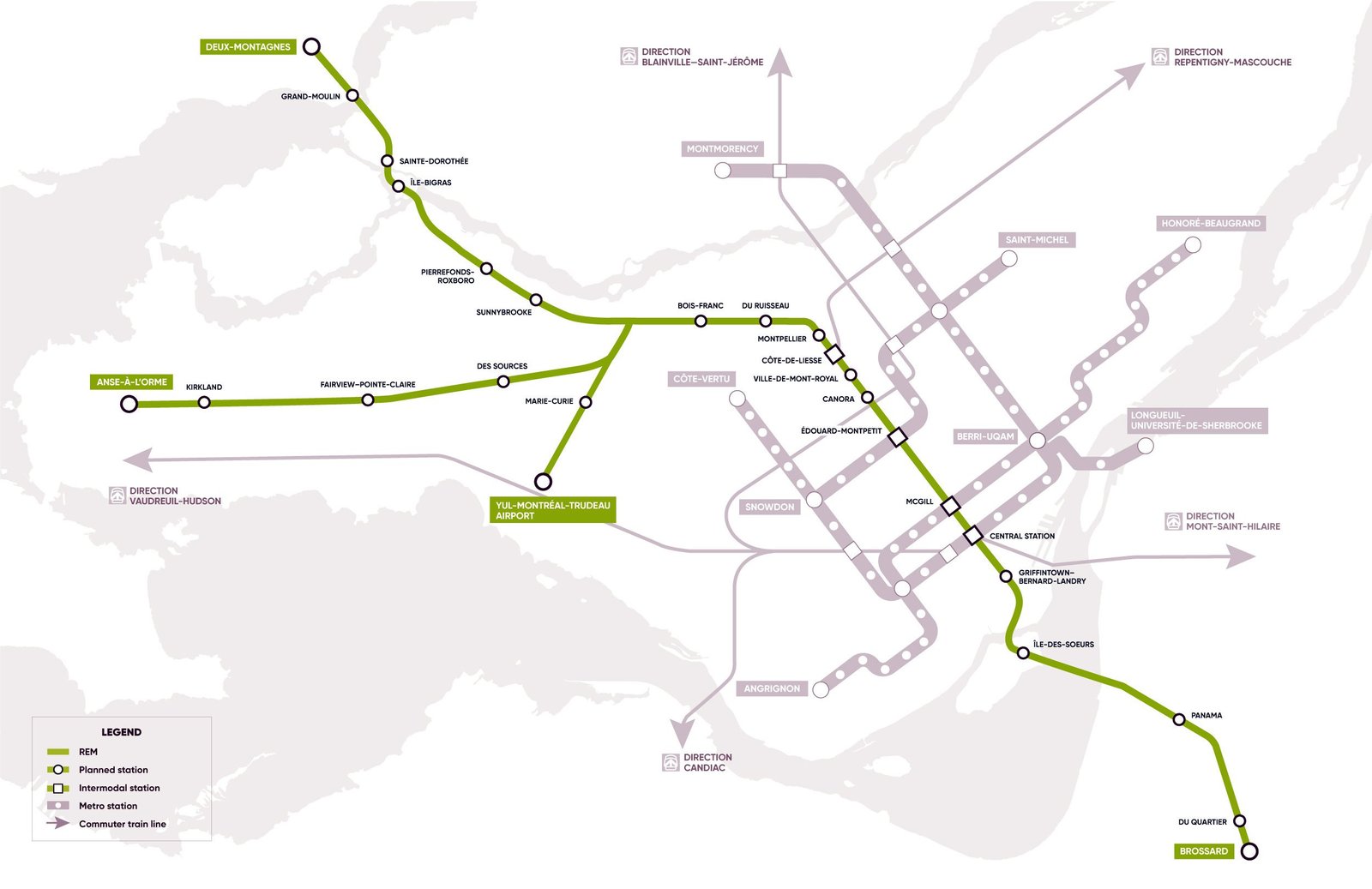
REM stations in Ste-Dorothée and Île Bigras delayed until 2024

Pandemic, tunnel snafus, set back finishing $6.5 billion light-rail project

Residents of Laval who are looking forward to getting aboard one of the Réseau express métropolitain’s new rapid transit trains at future Laval REM stations in Sainte-Dorothée and on Île Bigras will have to wait another four years, according to REM officials who delivered a progress report last week on the multi-billion-dollar project.

During an online meeting with media, CDPQ Infra and REM project managers went over the work completed in 2020. They presented a revised schedule that takes into account the impact of COVID-19, as well as two major issues identified as problematic in the Mount Royal Tunnel during its modernization for REM train traffic.

Valuable time lost

REM construction is spread out over more than 20 construction sites across the greater Montreal region, with more than 2,000 workers and professionals on the job. According to CDPQ Infra, major milestones were reached in 2020, with the launch of Alice – a tunnel boring machine – toward the airport and the arrival of the first four REM cars.

The REM segment up to Deux-Montagnes, which includes REM stations in Sainte-Dorothée and on Île Bigras, will only be put into service in the fall of 2024, instead of late 2023

Following a COVID-19-related analysis conducted in the last few months, said REM officials, a work shutdown period in early spring, with the implementation of health measures due to the pandemic, together with the impact on the mobility of a specialized workforce, and the impact on the supply chain, resulted in an overall delay of approximately three to six months for all REM construction sites.

Making up for lost time

CDPQ Infra says teams are working diligently to find ways to make up for lost time. While the pandemic is still ongoing, the company says the REM project office continues to closely monitor the situation with relevant authorities.

According to the company, the complete closure of the Mount Royal Tunnel last May made it possible to begin construction work required to modernize the century-old tunnel and add two stations in the heart of Mount Royal. However, acquiring full and safe access to the tunnel led the construction crews to identify two major and unforeseen safety issues.

Tunnel incident last July

On July 20, as excavations began inside the Mount Royal Tunnel, an unexpected detonation occurred. Work was immediately suspended and no workers were injured, said the company. However, an investigation and enquiry revealed the most likely cause was that REM workers had inadvertently hit upon an old bore hole containing an explosive charge dating back to tunnel construction in 1912.

In conjunction with experts and researchers, strict measures, approved by the Commission des normes de l’équité, de la santé et de la sécurité du travail (CNESST), were established in order to safely resume the tunnel work in early November, said CDPQ Infra. The measures included observing worker exclusion zones during drilling activities and using remote-controlled equipment to ensure the safety of all on-site personnel.

Salt damaged tunnel

But that was not all. While conducting inspections in the tunnel in downtown Montreal, the teams also noted extensive structural degradation of the tunnel walls. Since no waterproofing membranes had been applied over the years, it was noted that de-icing salts used on McGill College Avenue above had infiltrated the concrete and corroded steel columns and beams in the vault, creating an advanced state of decay.

The company said the deterioration called for immediate measures to avoid potential risks to the structural integrity of McGill College Avenue and required major reinforcement work. The tunnel will therefore be reinforced from the inside to ensure it remains structurally sound.

Laval REM stops delayed

CDPQ Infra says the safety issues that arose in the Mount Royal Tunnel are not only slowing activities due to the strict safety measures to be used for drilling 30,000 planned bore holes, but also due to the added task of reinforcing the southern section of the tunnel. Therefore, the REM segment between Central Station and Du Ruisseau Station will only be opened in the fall of 2023, rather than spring 2022.

The company says the delayed work at the Mount Royal Tunnel will also affect opening the West Island, Deux-Montagnes and airport branches, since the tunnel lies in the central segment. The completed REM segment up to Deux-Montagnes, which includes REM stations in Sainte-Dorothée and on Île Bigras, will thus only be put into service in the fall of 2024, rather than at the end of 2023 as previously planned.

Laval and Deux-Montagnes work completed and in progress in 2020:

  • Laval: construction of two railway bridges crossing Rivière-des-Prairies
  • Laval: road redevelopment in the Sainte-Dorothée sector to eliminate existing grade crossings
  • Laval/Deux-Montagnes: relocation of public utilities and work zone preparation
  • Laval/Deux-Montagnes: Implementation of interim measures in preparation for suspension of service

New COVID-19 screening clinic opening in Auteuil on Monday

The CISSS de Laval says that a new COVID-19 screening clinic will be opening on Monday Nov. 23 at noon in Laval’s Auteuil district.

The clinic is located at 5555 des Laurentides Blvd.

The CISSS says people experiencing symptoms similar to those of influenza, gastroenteritis or COVID-19 (including fever, cough, difficulty breathing) should be tested.

As well, if you don’t have symptoms, but you’ve recently been in close contact with someone who tested positive for COVID-19, you should also be tested.

For anyone who feels they should be screened for COVID-19, the number to call for an appointment is 1 877 644-4545.

According to the CISSS de Laval, this clinic will be open 7 days out of 7 from 8 am to 4 pm.

For more information on Quebec’s COVID-19 screening clinics and to check before going to an appointment, use this link:

https://www.lavalensante.com/covid19/depistage-et-evaluation/#c16931

Laval says it’s ready for anything as winter approaches

0

City says it won’t be caught unprepared like last year

Although weather forecasters are predicting the onset of winter this year won’t be quite as harsh as in the recent past, the City of Laval says it is going to be prepared anyway.

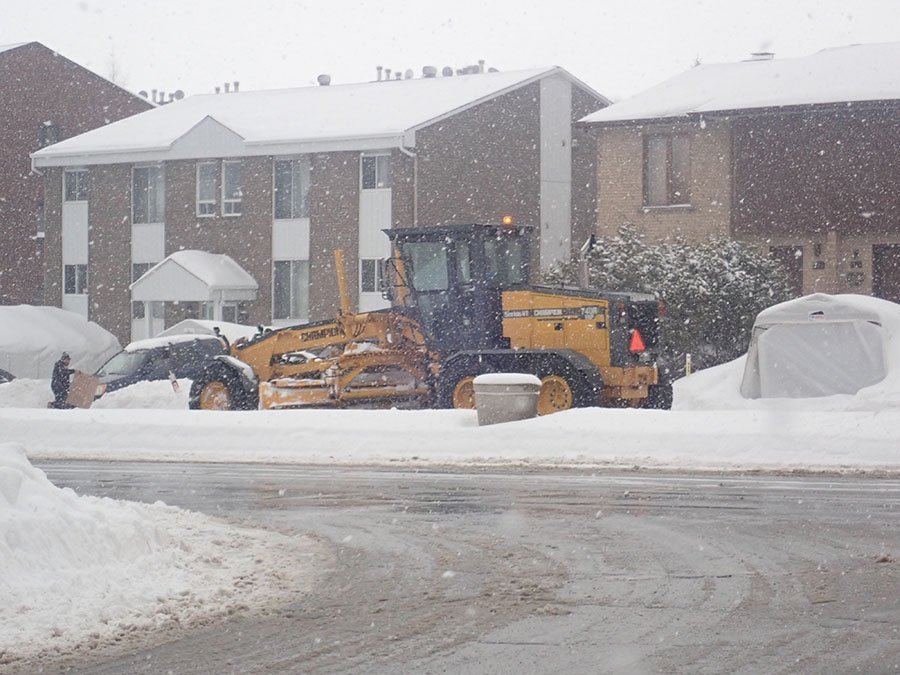
Last year, Laval, like many other municipalities in eastern Canada, got taken by surprise when the first storm hit with a vengeance. This time, the city says it has hired additional staff and done an inventory of snow-clearing equipment just in case.

A lot of work

“In Laval, with 3,000 kilometres of streets and 1,300 kilometres of sidewalks that get snowed in, each storm requires the mobilization of nearly 400 people on teams at public works,” says Sainte-Dorothée city councillor Ray Khalil, who manages public works dossiers on the executive-committee.

Each storm requires the mobilization of nearly 400 people on teams from laval’s public works department, according to the city

“Day and night, the workers are busy during weather events that are sometimes unpredictable, in order to make our roadways and sidewalks safe.”

Since even small gestures can help speed the work along, the city is asking residents to help in their own way. Among other things, residents are being asked to shovel or blow snow onto their own property, rather than out onto sidewalks or streets.

Do your bit

Place garbage and recycling containers for pickup on your property at the edge, rather than on the sidewalk or street. Parking regulations should also always be respected. While vehicles can be parked on the street, the city says it is preferable they be parked in private driveways whenever possible.

Snow shelters, a sensitive point among some residents, should be erected at a minimum distance of two feet from the sidewalk, and four feet from the street. This is necessary to allow proper clearance for snow removal vehicles, says the city. Additional information on the City of Laval’s snow removal methods and regulations can be obtained at this web site: neige.laval.ca.

Laval City-Watch

The City of Laval’s executive-committee made a number of decisions on various issues during their Nov. 11 meeting, including conservation of the region’s forested areas, and improvement of cross-country ski trails in Auteuil-Vimont and other areas of Laval.

The executive-committee decided to continue its support for CANOPÉE, an organization that works towards preserving forests and woods in Laval.

Improving Laval’s woods

As such, the Souvenir woods, the Forêt du 50e and the Centre de la Nature will join six other wooded areas in Laval which are already being managed by CANOPÉE. In addition, the perimeter of a wooded area in Sainte-Dorothée under the group’s management, the Bois de l’Équerre, will also be expanded.

The agreement between the city and the organization is for three years, dating back to Jan. 1 2019. As part of the agreement, six wooded areas, including the Papineau, de la Source, Armand-Frappier, de l’Équerre, Sainte-Dorothée and l’Orée-des -Bois woods, were targeted for conservation and improvement.

CANOPÉE, also known as the réseau des bois de Laval, has a mandate to improve natural and forested areas in Laval. The organization’s mission is to protect, conserve, make more accessible and improve forested spaces in the Laval region for the benefit of all residents.

Better X-country skiing

In another recent decision involving wooded areas in Laval, the executive-committee awarded a $10,000 subsidy to an organization that creates and maintains cross-country ski trails. The amount will help the Coureurs de boisés de Vimont-Auteuil purchase a tracked vehicle to assist with the work.

Founded during the 1970s, the non-profit cross-country ski club is administered by volunteers. The organization promotes physical fitness through cross-country skiing. Although the group’s activities are centered in the Duvernay woods, some trails also extend over agricultural lands and private forested territory.

The Coureurs de boisés de Vimont-Auteuil have developed a reputation for the quality of their trails, which are popular among families as well as seasoned cross-country skiers. The club is one of the largest in Quebec, with more than 2,000 active members and an estimated 35,000 visits each year.

Executive-committee members

The City of Laval’s executive-committee meets each week to make decisions on a variety of issues. The executive-committee includes the following people: Mayor Marc Demers, vice-president Stéphane Boyer (also councillor for Duvernay–Pont-Viau) councillors Sandra Desmeules (Concorde–Bois-de-Boulogne), Ray Khalil (Sainte-Dorothée), Virginie Dufour (Sainte-Rose) and associate members Nicholas Borne (Laval-les-Îles) and Yannick Langlois (L’Orée-des-Bois).

Legault is optimistic about Quebec’s post-pandemic economy

Premier delivered a hopeful message during online CAQ convention

In spite of infection rates rising again during the second phase of the COVID-19 pandemic, Quebec Premier François Legault delivered a message of hope recently to members of the Coalition Avenir Québec and to all Quebecers during a CAQ policy convention.

In a keynote speech to CAQ members during the convention webcast on Nov. 7, Legault said the government remains focused on restoring and expanding the province’s economy. But at the same time, he suggested there might be economic advantages to be gained despite the pandemic.

Thanks Quebecers

“Thanks for continuing to believe in change,” he said, citing a key element of the CAQ platform which emphasizes implementing fundamental changes in the province’s administration. “And thanks also to all those who have been involved since the beginning of the pandemic in helping others, including those who are alone. It’s during trying times that we get to see a people’s greatness emerging.”

The pandemic is an opportunity to relaunch our economy on a new basis, in a new direction 

– Quebec Premier François Legault

Legault took a moment to acknowledge the province’s Anglophone community. “I would also would like to thank our fellow English-speaking Quebecers,” he said. “I want to tell you that our party welcomes you with open arms, and we’re all going through these difficult times together, and we want to bring everyone to come out stronger, everyone to be proud Quebecers.”

‘It’s not over,’ Legault said

Legault said he would have preferred to tell the 2,000 or so CAQ party members who tuned into the event that “the worst is behind us, but it’s not finished. The war hasn’t been won yet. There are still difficult months ahead, and we see what’s happening in Europe and in certain states in the U.S. Every time we think the coast is clear, the virus comes back twice as strong.

“I know it’s not easy,” he continued. “But we have a duty to make sacrifices. We owe this to our senior citizens. We also owe this to our children. We want them to stay in school and they get to have a reasonably normal childhood.

He was also hopeful

“And despite all this, there is hope,” said Legault. “We are succeeding in stabilizing the number of cases, and we must continue to break this second wave. And when I am talking about hope, I’m not just talking about our struggle against the virus. I’m also talking about our struggle to relaunch the economy.”

Noting that this past spring Quebec found itself faced with its worst economic crisis since World War II, he pointed out that thousands of Quebecers had since then lost their livelihoods, but that the government responded by implementing measures to come to the assistance of businesses.

The economic picture

Legault maintained that Quebec was the province that contributed the most pandemic assistance to businesses during the ongoing crisis. “And the result is that Quebec is the province which has the best economic relaunch in Canada,” he said, noting, however, that the province’s economy had been doing well prior to the onset of the pandemic.

“In 2019, economic growth in Quebec was the best of all the G7 countries,” said Legault. “And this economic relaunch, it’s not just a question of rising again. With the pandemic, there are changes which accelerated and the economy is in the midst of changing. The pandemic is an opportunity to relaunch our economy on a new basis, in a new direction.”

Transforming the economy

According to the Premier, technologies like teleworking, online sales, artificial intelligence and robotization are paving the way to a looming new economy. As such, he said workers will have to be re-trained for new types of employment, and young as well as older generations of Quebecers will find themselves having to return to studies many times over their careers to renew their knowledge of the evolving professions and skills.

Legault said the pandemic is presenting yet another option: to build a Quebec that has more economic autonomy. While pointing out that in just a few months this year Quebecers began purchasing a great deal more products produced here, he said this offers an opportunity “to have a more prosperous Quebec which serves all Quebecers.”

Mr. Galati, you didn’t honour Steve Bletas, you simply danced between the raindrops

Reading the recent letter-to-the-editor submitted by my father’s and my friend Tom Mouhteros, entitled “Mr. Galati you are entitled to your opinion but not to your own facts”, stirred a few emotions inside of me.

Let me start by stating that Steve Bletas had a close-knit inner-circle of true friends towards the end of his days. Tom Mouhteros was one of those people and had been from the start of their friendship in the early days of the Sir Wilfrid Laurier School Board. One thing that I can tell you about Mr. Mouhteros, he tells it like it is and doesn’t back down from speaking his mind and providing factual information.

What I can take away from experiences over these many years of service my father sacrificed for the betterment of public education is how dedicated he was towards the goals that he envisioned for the future.

He never was one to care for the spotlight unless it had direct benefits for the school board and for the thousands of students attending schools in the Laurier Board. He lobbied for added support for special needs and autistic children in schools and later flipped his talents to help reduced mobility transportation for elderly people and handicapped individuals as a member of the Société de Transport de Laval (STL) Board of Directors. To the very end he was a man of the people, honest, caring, and selflessly driven.

Steve Bletas passed away this May 5th, amidst a world-wide pandemic, on what I can only describe as one of the worst days that I have ever lived as I not only lost my father but also my best friend and confidant. He guided me through many obstacles in my life and losing him so soon was devastating to our entire family.

Fortunately for me, my father’s inner circle of friends, whom he considered family, was there for me and my sister Eva-Marie while we were mourning, and Tom Moutheros was there every step of the way during the process. We received many calls and messages of sympathy from so many people that my father worked with, many I had never even met. His colleagues from the STL, former teachers from the school board, former students from the schools I attended.

But, to my dismay and disappointment not a single act of sympathy or condolence came from the school board. I thought that maybe some sign of respect would come, but alas there was nothing as days passed into weeks. Not a word, not from DirectorGeneral Gaëlle Absolonne, Chairman Galati, commissioners, or Communications Coordinator Maxeen Jolin.

The official first condolences we received was from SWLSB was at the-tree planting in late September, a ceremony that was quite rushed and not very well put together. A ceremony that I’m not sure would have happened had not another of my father’s friends taken it upon himself to call out the school board behind closed doors, something that I know to be one hundred percent factual.

The tree planting itself seemed more like a photo opportunity for the commissioners than for the actual purpose of honouring my father. The most genuine of the lot happened to be The Laval News photographer, Martin Barry, who shared kind words with my family of his dealings and interactions with my father over the years.

Reading Mr Moutheros’ letter to the editor sparked the realization of what the true motives seemed to be for a half-planned bush-planting ceremony that used my father’s death as grounds to gain some kind of political advantage in the next set of elections. Disingenuous is the kindest of words that come to mind.

But more damning is the fact the statements made by Paolo Galati at the ceremony, regarding his admiration and respect for, and close friendship with, my father are patently false. From the truth of what I and others know only too well, they were empty words, coming from someone who totally disregarded, ignored, and disrespected Steve Bletas, the founder and longest-serving chairman of the Sir Wilfrid Laurier School Board, a board Mr. Galati now chairs.

After my father took his leave after 2015, the school board, in both administrators and commissioners, showed no appreciation for the sacrifices he made in his 15 years at the helm, and for his 8 years of dedicated service as the major force behind the Laurier Foundation, the public-private initiative he founded in 2004, and which under his leadership raised close to $900,000 in support of schools and students of the school board.

Mr. Galati sat on council at the board and at the Foundation for nearly five years before my father’s death. For nearly two of those years he sat in the Chair of the Board following the departure of Jennifer Maccarone. In those years, Mr. Galati did nothing to make my father feel welcome, either at the school board or at the Foundation. By the way, neither did Ms. Maccarone. Shame on both of them and others who ignored this servant of the people.

Can you imagine? Steve Bletas, who devoted the best years of his life to fulfilling the needs of the most important members of society – the children – was deemed to be undeserving of any recognition, invited to no events conducted by the school board, and told that if he wanted to attend a Foundation fund-raiser he should buy a ticket.

If Steve Bletas was still alive today I would have pressured him into running for office again to try and bring back honour, respect, and responsibility to the governing boards of education, and set the right examples for the future and respect the past that laid the bricks for the present.

As for these subtle gestural insults surrounding a tree-planting that were either intentionally directed towards Steve Bletas or for the lack of a better term, unintentionally allowed to happen, Steve would have taken the high road. As famously said long ago “when they go low, you go high “.

But I, as his son, cannot let my father’s worth, dignity, and deserved recognition be misrepresented by people who ought to know better. The planting of a tree, as symbolic as it might be, was simply too little, too flimsy, too late.

But rest assured that in death and in memory, Steve Bletas, has an army of people that will defend his honour, his success, his accomplishments, and the ideals he held for the future of public education and the success of the English school boards.

And above all, although his record speaks for itself, he was a man of honour who wanted the best for parents, teachers, principals, staff, administrators, and students of the Sir Wilfrid Laurier School Board family. For this, he was not only admired, he was, and still is, in fact, loved.

When all is said and done, we as a people must learn to squeeze the sly and destructive politics from the boards that are running schools our children grow up in. Ask the right questions, pressure elected officials and commissioners to give you the answers you seek and bring back the honor and relevance of the school boards for our future.

As a closing note, it’s not enough for representatives to shine in the limelight and pretend to “dance between the raindrops” and look good in front of the cameras, it is their job to be the “rain” and cause a storm in status quo of politics and that has to start at the foundation of our school boards.

Michael Stephen Bletas

Proud Son

1983 – Always

Robert Vairo’s ‘That’s What I’m Thinking’

0

We Have to Stop Chasing the Soccer Ball

Bonjour Hi! Some discomforting events are happening, in addition to our rudderless elected politicians leading us to who knows where. I can’t make any sense of these pesky little people from the OLF sighting ‘language violations’ unheard of in the western world. It’s the same damn argument we were making the in 70s and 80s. Promotion and protection of a language, without forbidding another, makes sense to everyone. And that’s the way it should be. Monsieur Legault, this is not the time to appeal to nationalists. Call off these OLF cockroaches running around in respectable businesses that are trying to make a living during these extremely difficult times. Quebec is on the edge, with uncontrollable transmission of the virus, and at time of writing, is about to close schools again. Ontario, mostly Greater Toronto, is not fairing better, with their Premier Doug Ford trying to be business friendly, only half listening to medical experts who are telling him to “close it down”. A very difficult decision many of us would not want to make. Canada’s most conservative province Alberta is finally realizing it has to close down its economy even though, with the collapse of oil prices, and no pipeline to sell Canada’s richest resource, oil, to Asia, it simply can not afford to close business down. Alberta, where Premier Kenney says “Covid is starting to win”, now has almost as many cases of infection as BC, Saskatchewan and Manitoba, combined. Enough “consulting and reassessing”, it has to make a definitive decision. And while this virus is now out of control in Canada, here is how some of our supposed exemplary elected officials are behaving, like the liberal member of parliament in the Indo Canadian riding of Surrey Center BC. Liberal MP Randeep Sarai. He attended the “Chetna Association’s welcome to new Indian Consul-General Manish Manish at the Mahek Restaurant and Lounge” on Oct. 26, not wearing a mask. “They chose to put themselves and, more importantly, the public at risk,” a Surrey Councillor told theBreaker.news. That’s some example from our elected ‘poo paz’, isn’t it? You heard that Mr. Trudeau fired one of his favourites from caucus, the mp for Don Valley East, Yasmin Ratansi, for employing her sister at her riding office. She now sits as an Independent, while her case is before the Office of the Conflict of Interest and Ethics Commissioner. Justin Trudeau found it “deeply disappointing, unacceptable”, the same Justin Trudeau who himself was in conflict for voting in cabinet to hire the WE Charity for student programs while WE hired his wife, Mother, and brother and who knows how many of his friends. Oops, those contracts are now shredded before making it to the parliamentary committee. What hypocrisy. Trudeau urges Premiers “to do the right thing”, knowing health is a provincial jurisdiction in Canada. Premiers repeatedly tell Trudeau to stop toying with imposing the Emergency Act. Continued testing is vital, however those test results absolutely need to be followed up by an army of trackers. Too late. BC’s Dr. Bonnie Henry says this “surge is straining contact tracing efforts”, and seems to be ineffective because according to the Centers for Disease Control and Prevention, we may no longer be able to “effectively isolate patients and ensure contacts can separate themselves from others”. We have to stop chasing the soccer ball. What will we do for Covid 29? Spotlight on New Zealand’s 40 year old Prime Minister Jacinda Ardern who was re-elected with a “smashing” majority because she was able to shut down COVID 19. As early as February she closed the border to anyone, anyone, who had visited China. In March, just weeks later, Ardern shut down the entire country for one whole month. New Zealand was able to get ahead of the curve. The results? During this month of November, in fact one day last week, there were only three new cases of Covid -19 in New Zealand. A returnee from Los Angeles tested positive and self isolated. And here’s how NZ’s Ministry of health, fully transparent in its assessment, unlike Canada, describes what happened to the other 2 cases. “Case C met Case B for lunch in Wellington at the Little Penang restaurant on The Terrace on Friday afternoon. On developing symptoms on Saturday they self-isolated at home and had a COVID-19 test. They are being moved to the Auckland quarantine facility today”. Now that’s tracking, and that’s why New Zealand is a world leader in mitigating and at one time eliminating Covid, without a vaccine.

Why couldn’t we have done that?

That’s what I’m thinking.

Robert Vairo | robert@newsfirst.ca

Survey finds COVID-19 is impacting mental health of entrepreneurs

Women, minorities and business owners are suffering during the pandemic

Business Development Bank of Canada (BDC) released a report last week revealing that while nearly two-thirds of Canadian business owners (64 per cent) say they are adjusting to COVID-19, nearly one-third (29 per cent) say the situation is touch-and-go from day to day.

According to the report, two out of five business owners say they are feeling depressed at least once a week (39 per cent) and two-thirds feel tired or have low energy (64 per cent).

BDC says there are many concerns keeping entrepreneurs awake at night

According to the BDC, the pandemic is having an even more alarming impact on certain sub-groups, including women entrepreneurs, visible minorities and business owners, who have either not yet resumed or only partially resumed business activities following the initial COVID-19 lockdown.

Women and minorities

BDC says women are significantly more likely to feel depressed (51 per cent) and admit that mental health challenges interfered with their ability to work (40 per cent). Visible minorities are significantly more likely to say that mental health challenges interfered (48 per cent) and they would have liked support from a mental health professional (33 per cent).

Business owners who had not yet resumed business activities were significantly more likely to feel tired (87 per cent), depressed (75 per cent) and said that mental health challenges interfered with their ability to work (57 per cent).

“Last year, BDC made a commitment to raise awareness about the mental health and well-being of entrepreneurs, in addition to the health of their business,” Annie Marsolais, Chief Marketing Officer and Mental Health Advocate at BDC, said in a statement.

Where to turn for help

“By examining this topic and collaborating with experts and partners, we can help break the stigma associated with mental health issues, ensure business owners feel more at ease discussing it, and know where to turn for help,” she said.

BDC says there are many concerns keeping entrepreneurs awake at night. But according to their report, the biggest preoccupations are being able to generate enough revenue to make a profit (43 per cent) and covering expenses (40 per cent).

To help provide support to entrepreneurs, BDC says it asked experts, including one from the Douglas Mental Health University Institute in Montreal, to review the survey findings.

Prioritizing mental health

Dr. Joaquin Poundja, a psychologist at the Douglas Institute, believes entrepreneurs must brace themselves for longer-term disruptions due to COVID-19, and they must prioritize their mental health in order to lead their businesses through this new reality.

“The fact that two-thirds of respondents feel tired, low or have little energy is worrisome and should be addressed,” he said.

“On one hand, it is important to keep in mind that being more anxious at times or having mild ups and downs is a normal reaction during a pandemic, but it can be more problematic when we become self-critical or judgmental. Finding coping strategies and watching for warning signs of a bigger problem are important.”

Watch for warnings

Poundja also encourages business owners to watch for warning signs that could indicate more serious mental health issues.

These might include changes in normal behavioural patterns like eating or sleeping more or less than usual; increased alcohol or drug consumption; withdrawal from relationships and reduced sociability; difficulties in daily functioning at work, at home or in relationships; and rumination about how things could go wrong that start to affect one’s capacity to work.

Quebec projects a $15-billion budgetary deficit for 2020-2021

CAQ gov’t adds $1.8 billion to support Quebecers and restart the economy

Updating Quebec’s financial picture last week, Finance Minister Éric Girard said the COVID-19 pandemic hasn’t changed the CAQ government’s goal of reversing Quebec’s historical tendency to underperform in Canada – even though a fifth of the country’s population lives here.

$15 billion deficit seen

“We must collectively tackle one of the worst crises in Quebec’s history,” said Girard. “The government will take every necessary step to strengthen our health care system and help hard-hit citizens and businesses so that they can get through this pandemic and recover quickly.”

I’m focused on what we need to do: we need to fight the epidemic, we need to support Quebecers and businesses

Quebec Finance Minister Éric Girard

Girard outlined an additional $1.8 billion in measures over three years to bolster the economy. At the same time, his update included a projected $15-billion deficit for 2020-2021.

Focused on the economy

Despite the staggering increase in allotments since the CAQ government’s last full budget last March, Girard said he remains “very focused” on the task of stabilizing the economy, while working on longer-term economic growth.

“Our number one task is to control the epidemic,” he said. “That’s why we’ve allocated $5 billion to health care, and if they need more we will give it. So, I’m focused on what we need to do: we need to fight the epidemic, we need to support Quebecers and businesses.”

The announced initiatives raised to nearly $13 billion the total amount invested by the CAQ government since the onset of the pandemic in March to deal with the historic economic and public health crisis Quebec is currently going through.

Mental health funding

In addition to the actions taken since March 2020, the government announced an additional $287 million to support Quebecers and the economy. This includes $100 million to address mental health problems by providing better access to support services, among other things.

As well, the government said new initiatives totalling $117 million will help support vulnerable population groups, provide safe subsidized childcare services, and ensure that educational settings are better adapted to the current context and to distance learning.

An additional $60 million in support for the tourism sector was also announced, in particular to offset the impact of the pandemic on tourist accommodations.

New actions for recovery

While the majority of investments to date were allocated for managing the COVID-19 crisis, the government presented new actions totalling $1.5 billion over three years to accelerate economic recovery. Of this amount, $459 million will go to initiatives to get Quebecers back into the labour force by focusing on requalification, training and successful graduation.

The government said it is also providing $477 million to drive economic growth by accelerating business investment projects, fostering innovative initiatives and supporting regional economic development. Another $300 million will also be used to enhance the Plan for a Green Economy and $247 million will be spent on promoting Quebec production and buying locally.

No balanced budget for five years

A $15-billion budgetary deficit is projected for 2020-2021, including provisions, declining budgetary deficits of $8.3 billion in 2021-2022, and $7.0 billion in 2022-2023 are currently forecast. According to the government, the pandemic and the measures put in place since March have generated these deficits.

Girard maintained that the province will return to a balanced budget within five years without cutting services or raising taxes. Additional details on the way forward are to be presented in the next regular budget in March 2021.

Highlights from Finance Minister Girard’s update

  • Initiatives totalling $1.8 billion since June include:
  • $287 million to support Quebecers and the economy;
  • $459 million to help Quebecers back into the labour market;
  • $477 million to drive economic growth;
  • $300 million more to ensure a greener recovery;
  • $247 million to promote Quebec production and buying locally.

STL wins another award for its bus crowdedness estimator

Is transit agency’s second prize this year for initiative

The Société de transport de Laval (STL) was presented on Thursday with the Corporate Leadership Award in the Innovation category for its online tool that enables users to know in advance how crowded buses are.

The ceremony took place during the Canadian Urban Transit Association’s (CUTA) virtual Annual Conference and Transit Show, which ended last Thursday.

“We are very moved by this second recognition for our estimator from our Canadian peers,” said STL president Éric Morasse.

“Put together in a matter of weeks, it was obvious from the early broad strokes a bold idea was taking shape: empowering users, in just a few clicks, with the information they need to make the choices that are right for them. It thoroughly reflects how we see our role at the STL, as transit facilitators for the Laval population.”

It was the second recognition in a month for the crowd estimator, which also earned a Grand prix d’excellence en transport in the Public transit category from the Association québécoise du transport (AQTr) on November 5.

Launched last June, the tool stands out, according to the STL, because it provides riders with an estimate of the number of passengers that should be expected, not only when a user boards, but also during the course of the entire bus trip – which is a first in Canada, the STL says.

With the COVID-19 pandemic having made social distancing in public transit situations a core concern for users, the crowdedness estimator supplies information tailored to individual users, so they can make informed decisions based on the level of bus crowdedness they are comfortable with. (For example, taking an earlier or later bus, getting on or off at a different bus stop, or using another bus route nearby, etc.

STL buses have been equipped with GPS technology and passenger counters for years, which record on a daily basis how many passengers are on the bus at each stop, for each bus route, at each scheduled bus time.

The new tool uses this information to derive the level of bus occupancy at a stop, at a specific time, for the entire length of a commute, based on the averages trending over the previous five business days. The calculations are updated daily. The app is available at stlaval.ca/passengers, for computer or smartphone.

Weather

Laval
few clouds
-2.7 ° C
-1.9 °
-4 °
76 %
5.7kmh
20 %
Mon
-3 °
Tue
-7 °
Wed
-0 °
Thu
-2 °
Fri
-7 °