Home Blog Page 171

Hospital pharmacist shortage threatens health care, claims A.P.E.S.

CISSS de Laval is short five staff pharmacists, claims provincial association

A provincial association representing pharmacists working in public health care institutions across Quebec is suggesting that a decline in the number of staff pharmacists in Laval and other areas of the province is compromising health care and requires action by the government in order to avoid passing the consequences on to service users and patients.

Vacancies at CISSS

The Association de pharmaciens des établissements de santé (A.P.E.S.) du Québec says that the results of a survey it recently completed indicate there is a 12 per cent job vacancy rate in the Laval region for pharmacists working within public health care establishments.

The A.P.E.S. says that as of April 1 last year, five equivalent full-time pharmacist positions remained unfilled out of a total of 43 positions for pharmacists at the Centre intégré de santé et de services sociaux (CISSS) de Laval.

Impact felt, says A.P.E.S.

Across Quebec, according to the association, one in-house pharmacist position out of five (19 per cent) was vacant. The 2020 survey found 286 full-time health care system pharmacist positions remained unfilled across the province.

The A.P.E.S. says the COVID-19 pandemic very possibly worsened the situation, although the association was unable to compile corroborating data given the restrictions from the pandemic.

“We have come to a point where the shortage is impacting how well the pharmaceutical needs of hospitalized and ambulatory patients as well as patients living in CHSLDs can be covered,” said A.P.E.S. president François Paradis.

“So, taking into account the aging of the population and an explosion of acute and chronic health problems, a health establishment must be able to count on a sufficient number of pharmacists. As experts in pharmaceuticals, they must systematically be part of the care teams in an interdisciplinary fashion.”

Possible consequences

The A.P.E.S. estimates that the shortage of pharmacists could result in any or all of the following consequences:

  • Greater risk of errors committed while filling prescriptions;
  • Unnecessarily lengthy hospital stays;
  • Heightened risk of secondary pharmaceutical side effects;
  • Relapses and rehospitalizations (revolving door syndrome);
  • Reduced quality of life for patients;
  • Higher costs overall for the health care system.

A working agreement between the pharmacists who are members of the association and the Quebec government expired at the end of March 2020 and is still up for renewal. Among the more outstanding of the A.P.E.S.’s unresolved issues is the hiring of new pharmacists in the province’s hospitals and long-term care facilities.

The group says that from 20 to 50 per cent of the remuneration paid to its pharmacists is based on “temporary” clauses in the agreement, which the A.P.E.S wants to see made permanent in order to do away with uncertainty that surfaces each time agreements are renewed.

Remuneration at issue

“In the past 10 years, we have graduated on average 62 pharmacists per year from the master’s program in advanced pharmacotherapy, which is preparation for working in a hospital environment,” Paradis continued. “As much as we are seeing a noticeable increase in admissions to the program, there has to be more incentive to get into this profession. And this can only be established through a more reliable system of remuneration.”

The temporary measures in question included extending the work week by approximately 10 per cent, thus adding 130 full-time staff pharmacists to the provincial network. The measures also included additional recognition of the pharmacists’ assistance in helping to train advanced pharmacotherapy students. And the measures took into account difficulties encountered in being able to recruit new pharmacists in certain regions of the province.

‘Temporary’ measures

“It’s now more than 10 years that these measures have been in place,” said A.P.E.S. executive-director Linda Vaillant, who is a professional pharmacist. “There’s no longer anything temporary about them except for the name.

“The Ministry of Health and Social Services and the A.P.E.S. have unanimously recognized, in a joint report tabled in the fall of 2019, the efficiency and the pertinence of these measures,” she added. “Their report, the result of work completed in a committee over a period of 18 months, recommends the renewal. What more is needed to convince the government?”

The A.P.E.S. maintains that neglect of the remuneration issue is the main reason for the loss of staff pharmacists in the province’s public health care system since the year 2000. They predict the number of vacancies will only grow if the issue remains unresolved by the government.

CFIB-Quebec wants CAQ government to ease taxes for SMEs

Finance Minister Girard expected to table 2021-2022 budget in March

Leading towards the tabling of the next provincial probably budget in March by the CAQ government, the Canadian Federation of Independent Business’s Quebec lobby is asking the government to go easy on taxes paid by small and medium-size businesses, and to also implement measures to deal effectively with ongoing labour shortages.

Open to advice

In a statement issued by CFIB-Quebec, the organization’s vice-president said they met recently with Quebec Finance Minister Éric Girard to pass along some of their suggestions and recommendations to the provincial government.

This budget won’t be like any other and shouldn’t be for that matter,’ says CFIB-Quebec vice-president François Vincent

“This budget represents an opportunity for the government of Quebec to place the SMEs at the centre of their economic strategy,” said François Vincent, noting the current challenges that include the COVID-19 pandemic as well as unfavourable tax regulations.

“This budget won’t be like any other and shouldn’t be for that matter,” he said. “It should send a strong signal that the government is ready to take important actions which favour SMEs, because they make up the most important aspect in the fabric of the regional economy.”

Looming cash flow crunch

According to CFIB-Quebec, 75 per cent of small and medium businesses in Quebec haven’t yet returned to normal revenue levels as the COVID-19 pandemic continues to take its toll. In the meantime, the group predicts that one business out of three will be facing cash flow problems before June, and that 11 per cent are at risk of shutting permanently with a loss of 300,000 jobs across the province.

CFIB-Quebec maintains that reducing the tax burden would help businesses to survive, while also allowing them to repay debt, increase salaries to employees, invest in new machinery and hire new workers. In addition to these concerns, CFIB-Quebec said labour shortages continue to hold back some sectors of the province’s economy and need attention from the government.

Budget expected in March

Finance Minister Girard announced the start of online pre-budget consultations in early January. The consultations ran until Feb. 5.

‘The next budget will be particularly important for Quebec’s future’ – Quebec Finance Minister Éric Girard

Over the last few weeks, Girard met with representatives of organizations from various sectors “to discuss their vision and ideas regarding Quebec’s economic and social development,” said a statement issued by the provincial finance ministry.

“The next budget will be particularly important for Quebec’s future,” said Girard. A list of the organizations that submitted briefs is available on the Ministry of Finance website at: consultations.finances.gouv.qc.ca.

Laval CityWatch

News from Laval city hall and the executive-committee

During meetings held by the City of Laval’s executive-committee on Jan. 13, 20 and 27, the members awarded subsidies to a Laval-based women’s group working on feminist issues, as well as to a local organization for the development of a community garden in Laval’s Auteuil neighbourhood.

The executive-committee awarded a $33,440 subsidy to the Table de concertation de Laval en condition féminine to develop a project involving monthly themes highlighting equality between men and women. The subsidy was granted in conjunction with a three-year agreement between the City of Laval and the federal Status of Women Ministry.

Highlighting equality

According to a statement issued by the executive-committee, the committee granted a second subsidy ($161,375) to the Table de concertation so that work from the above-mentioned project “can be integrated with the implementation of the regional policy for social developoment (PRDS).”

The agreement in question is between the City of Laval, the provincial Ministry of Municipal Affairs and Housing, and the Centre intégré de santé et de services sociaux de Laval, with the added financial participation of the Fondation Lucie et André Chagnon.

According to the executive-committee, the initiatives will allow the various partners involved in the development of a regional social development policy to apply the analysis developed by the Table de concertation, by making development tools available, as well as training.

Community gardens project

The executive-committee also granted a three-year subsidy of $6,000 in all to the organization Service des loisirs Ste-Béatrice for the launch of a community garden in Parc Des Saules in Auteuil. In March 2017, the executive-committee had adoped a reference policy for the launching of community gardens in Laval, with the goal of supporting a maximum of two gardens per year.

Although there was just one request for a community garden in 2020, the resulting new garden will be added to a growing inventory of community gardens that now includes five others. The city maintains that the community gardens are consistent with Laval’s long-term strategic vision, which acknowledges the benefits of community gardens for the population, as well as for maintaining agricultural activities within or near the city’s urbanized areas.

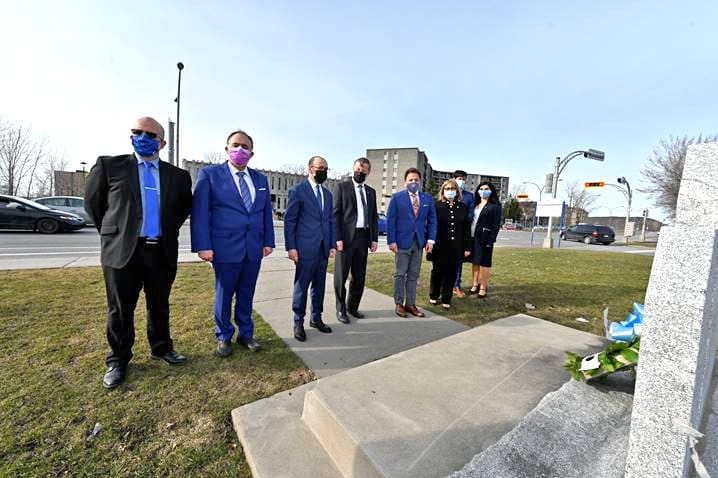
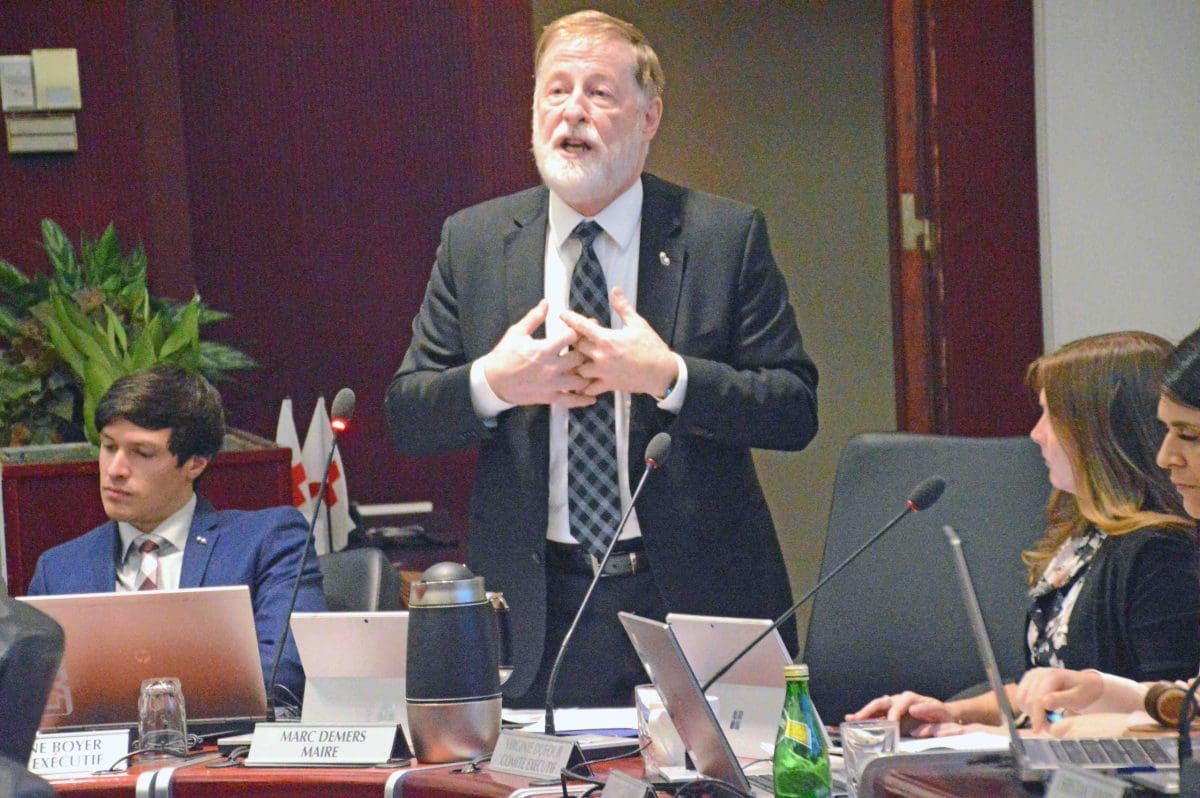
Committee members The City of Laval’s executive-committee meets regularly to make decisions on a variety of issues. The executive-committee includes the following people: Mayor Marc Demers, vice-president Stéphane Boyer (also councillor for Duvernay–Pont-Viau) councillors Sandra Desmeules (Concorde–Bois-de-Boulogne), Ray Khalil (Sainte-Dorothée), Virginie Dufour (Sainte-Rose) and associate members Nicholas Borne (Laval-les-Îles) and Yannick Langlois (L’Orée-des-Bois).

Council turns down Poissant’s downtown tree-planting idea

Independent Laval city councillor for Vimont Michel Poissant, who is running for mayor in the November municipal elections, says he is disappointed the Demers administration rejected a motion he tabled at the last city council meeting to motivate developers to plant more than 1,000 trees in Laval’s rapidly growing downtown sector.

Laval city councillor for Vimont and mayoralty candidate Michel Poissant.

While acknowledging that 1,000 trees would be little more than a symbolic gesture, Poissant, who has launched his own party (Laval citoyens), said in a statement that it would put pressure on private developers to follow the example and add trees of their own.

Poissant’s tree plan

Noting that the downtown area currently contains large parking lots with relatively little greenery, he suggested in his resolution that asphalt sections measuring 6 by 30 feet could be cut out, emptied of gravel and filled with earth, then surrounded by concrete borders and planted with trees, greenery and shrubs. According to Poissant, Trees Canada, a nation-wide non-profit group that promotes the planting of trees, had expressed an interest and was potentially ready to provide subsidies, he said. “Things can sometimes be done without affecting taxes,” said Poissant, while adding that “it just takes a little willingness.”

Federal election fever gets underway early in Laval-Les Îles

Conservatives nominate Spyros Pettas, though no date yet set by PM Trudeau

Under mounting opposition pressure over the government’s handling of the COVID-19 crisis, will Prime Minister Justin Trudeau follow through on a threat he made during an interview in early January and call an election before the end of this year?

Whatever his decision, you can be almost certain something is brewing among political organizers in Ottawa when the opposition parties start getting their act into gear.

So it was, and with relatively little fanfare late last month, that the Conservative Party of Canada announced its candidate for the next election (whenever that turns out to be) in the perpetually Liberal stronghold of Laval-Les Îles.

Runs an armored car company

He is Spyridonas Pettas, the founder and an associate partner at Arca Logistics Solutions Inc., a West Island Montreal-based security and armored car company specialized in commercial cash transportation, ATM servicing and cash management products.

Spyros, as most people call him, will be running against incumbent Liberal Laval-Les Îles MP Fayçal El-Khoury. The next election would normally be scheduled for Oct. 16, 2023, unless the Prime Minister calls for one before the end of this year in an attempt to shore up his beleaguered minority government.

Pettas was introduced during a Zoom webcast press conference by Conservative Senator Leo Housakos and the Conservative Party’s Quebec Lieutenant, Chicoutimi-Le-Fjord Member of Parliament Richard Martel.

“I’ve gotten to know Spyros for some time now and he is an extraordinary person,” said Martel. “He has good judgment, he knows the issues in the riding, and he’s someone who shows a lot of leadership.”

‘Hard worker,’ says Housakos

“Spyros Pettas is someone I’ve known for a good number of years,” said Housakos. “As for his qualities apart from his educational background and dedication to the community, he is a man who is ready to work hard. He is ready to assume the responsibilities to bring the wants and needs of the people of Laval-Les Îles to Ottawa, but not the interests of Ottawa to Laval-Les Îles.”

Regarding the date of the next election, Conservative Senator Leo Housakos said that “clearly it’s in the hands of Prime Minister Trudeau.”

Housakos said he was proud to be able to say that Spyros Pettas had been an active member of the Hellenic Board of Trade of Greater Montreal.

“As such, Mr. Pettas has been involved in local business, in community issues, and I feel certain and reassured that he will work with all his heart and strength to represent Conservative values in this riding with a lot of energy,” Housakos said.

Pettas was born in Athens, Greece in 1968, but has been a Canadian since age one. He is a Concordia University graduate with a Bachelor of Commerce. In addition to his expertise in business management and security systems, he has also served as an instructor in the methods of safe handling of firearms by novice hunters.

Community involvement

Some of his more recent community work was with Batshaw Youth and Family Services, which offers psychosocial, rehabilitation and social integration services to families in need. He is the father of two children, who are now young adults and pursuing studies, including one who is a reservist in the Canadian Armed Forces.

“I will work very hard and closely collaborate with the delegates from the municipal and provincial governments in order to work with my riding and its members in finding solutions,” Pettas said in a statement.

“I will also be pursuing in every possible way to find ways that the federal government can implement investments for greater opportunities in the riding for businesses and individuals as well. Presently the biggest challenge we have is being able to secure and deliver as quickly as possible the COVID-19 vaccinations to all our members in our community.”

Speculating on a 2021 election

Regarding the timing of the election, Housakos had this to say: “Clearly it’s in the hands of Prime Minister Trudeau. I know it’s a minority parliament, but we’ve seen the NDP has been more than determined to support the government and continue to support their reckless behaviour.

‘Presently the biggest challenge we have is being able to secure and deliver as quickly as possible the COVID-19 vaccinations to all our members in our community,’ said Tory candidate Spyros Pettas

“Having said that, it’s been clear, from signals that Prime Minister Trudeau, despite the COVID crisis and despite this existential crisis in Canada, [leaves us] fearful that he will put his electoral pursuit and interests ahead of the interests of Canadians. We’re hopeful that he won’t and he’ll continue to focus on COVID and the relief that Canadians need in these challenging times. But he will determine when that election will be.”

On a separate issue, that being the recent resignation of Governor General Julie Payette (who was unilaterally appointed by Trudeau without formal consultation), and a scathing report on her conduct towards employees at Rideau Hall, Pettas had the following assessment.

Payette and Trudeau’s judgment

“I feel that for Canadians at large the decision of Justin Trudeau was not fair,” he said. “And also, the aspect of not following due process causes implications such as now this person will be stepping down. There are costs associated and the taxpayers will be burdened for a long time.”

For his part, Housakos said, “At the end of the day, we have a prime minister who decided to ignore the regal vetting process that [former Prime Minister] Harper had put into place, which led us to having our former Governor General selected as Mr. David Johnston who represented the institution with honor and integrity. “Mr. Trudeau bypassed that,” Housakos continued. “He decided unilaterally and in a partisan fashion to choose the outgoing Governor General that we just had. And clearly Mr. Trudeau’s judgement failed the country. It’s unfortunate that now we’re found in another humiliating situation.”

Havre des Îles murder suspect’s court date still pending

A preliminary court date for the trial of a suspect arrested in conjunction with a murder on Havre des Îles Ave. on Dec. 4 has not yet been set, a spokeperson for the Laval Police Department told the Laval News on Wednesday.

According to LPD communications officer Évelyne Boudreau, the lead police investigator on the case confirmed the file is now in the hands of prosecution and defence attorneys at the Laval courthouse.

She said a date to present the results of a preliminary inquiry to the court hadn’t yet been set, although the suspect, identified as 58-year-old Albert Nathaniel, had his initial arraignment in early December and remains in custody.

Officers from the LPD were called to the scene of the murder on an upper storey of an apartment block at 2525 Havre des Îles Ave. on Île Du Tremblay on Dec. 4.

The 74-year-old female victim was found lying on the floor lifeless, with various indications on her body that she had been subjected to violence.

Albert Nathaniel, who was identified by the LPD as a resident of the same apartment as the victim, was placed under arrest and charged with second degree murder.

Newsfirst columnist Robert Vairo’s ‘That’s What I’m Thinking’

A brilliant idea, but nobody is listening

He’s a humanitarian so he’s expected to come up with these kinds of ideas. But this latest one I find brilliant. And I am absolutely stunned that Canada’s major networks never followed up on the story. I am referring to Stephen Lewis (former NDP leader and UN ambassador to Canada) who has urged manufacturers of the COVID vaccines to suspend their patent, at least during this pandemic.

I only saw the Stephen Lewis interview once, and it was on CTV’s Evan Solomon Power Play, an excellent show by Evan that strikes at the events of the day.

There was Lewis, not in studio, but Zooming from his lap top with the regular ‘I’m at home’ back drop we see on a regular basis now. Lewis says patents should never have been given to the pharmaceuticals because in large part, the “discovery, manufacturing and distribution” of the vaccines has been funded by taxpayer dollars. Why suspend the pharmaceutical patents? So that vaccines can be produced generically at a much lower cost. The World Trade Organization has said nothing about it, but Lewis claims well over 100 low- and medium-income countries requested and were refused by the W.T.O. And the ‘no’ votes came from Europe, the US and includes Canada. Why? Is it really that much to ask? Apparently, it is. As one reader accurately wrote me “I’m afraid our system of government in the western world wheels too little power over the money hungry pharmaceutical companies”. Now to be fair, at least two pharmaceuticals claim to be selling the vaccines at their cost, but there is no way to confirm. According to Healthline, and Bloomberg, on average, governments are paying anywhere from $4 to $37 US per vaccine. For example, Pfizer and BioNTech are charging $19.50 US for each of its two jabs, Moderna $32 to $37, Novavax $16.

At these prices the U.K. based Economist Intelligence Unit (EIU) projects it will take poorer countries until as late as 2024 to get vaccinated. I’m not saying these manufacturers should not be making a profit, but they did receive billions in taxpayer dollars for their research according to Fierce Pharma. This is a world pandemic. It’s a world emergency. Every human being on this earth is affected. No matter. For pharmaceuticals, it’s business as usual. According to Bloomberg, Pfizer is on track to generate $15 billion in revenue this year just from the Covid 19 vaccines. It’s a business after all and so they have to please the shareholder. And they have. Look at these 52-week averages. NOVAVAX stock went from a low of $6.26 to a high of $297.00. Moderna from $17.91 to $185.98. BioNTech from $28.00 to $131.00. AstraZeneca $36.15 to $64.94. Pfizer $27.88 to $43.08. Stock prices move are based on market expectations. So manufacturers are in for the long haul with these Covid vaccines. Once vaccinated, we’re still not sure how long immunity will last. Months, years? Epidemiologists tell us it depends on the vaccine but the goal of any vaccine should be to provide lifetime immunity, which rarely happens. It doesn’t sound like this one will be forever like a one-time polio vaccine. Pharmaceuticals don’t generate revenue under those conditions. We’ll no doubt require booster shots for COVID-19, or new vaccines all together if they are not effective against a variant virus.

So, congratulations to Stephen Lewis. It’s a great idea to propose patent removal for the duration of the pandemic, but unfortunately, no one is listening. Sad.

I had to chuckle when I heard our Prime Minister make a lame attempt to save face after repeated bungling of our vaccine procurement. After putting his trust in the devious Chinese, and failing to score a deal, Canada will now finally have its own vaccine production, he proudly announced. Ontario said it had empty buildings ready now for the manufacture, but no, our Quebec elected PM insisted a new building will be constructed by his friends at SNC Lavalin, in Quebec. And Novavax will start producing maybe by the end of 2021, maybe. Isn’t that reassuring.

So, what do you think of the mandatory supervised hotel quarantines? Not too many Canadians are opposed. Over 80% love it. And with good reason. New Zealand enacted the same restrictions when COVID -19 broke out, one year ago. And while we are under curfews, quarantines and masking it all the way, New Zealanders are today packing stadiums, partying with no masks, like the old days. Being an island in the middle of nowhere helps.

Some day, we too will be “partying like the old days”.

That’s What I’m Thinking.

Robert Vairo

robert@newsfirst.ca

The virus, the vaccine and the variant

Catching up with Dr. Chris Karatzios

If the title of this article conjures memories of westerns with harmonica soundtracks, it’s because I meant it to do that. We are living in a time when, apart from the surrealistic backdrop of the pandemic, we are bombarded with so much misinformation, fearmongering and crazy conspiracy theories that it gets harder and harder to deal with Covid while trying to maintain our sanity. “it looks like a movie” says Adele in her song and I concur.

I trust doctors! When they devote their entire lives to science, they are less likely to feed us misinformation and it is very reassuring when they actually say “I don’t know” rather than try to save face.

I know that because of the pandemic and the lockdowns it might be more appealing for some to start believing in giant Jewish lasers in space starting the California wildfires, but just remember that in every calamity there have been always crazies and witchdoctors roaming the empty streets. Anyone read about the black plague?

In order to find out more about the current state of things, I reached out to Dr. Chris Karatzios, Assistant Professor of Paediatrics/ Infectious Diseases at the Montréal Children’s Hospital. I asked him about the new vaccines, the variants and the virus.

Delaying the second dose

One of the sources of major angst for many of us is the decision of the Quebec government to delay the second dose of the vaccine contrary to Pfizer and Moderna’s guidelines. Dr. Karatzios said that first of all there is not enough supply and there are production issues. So, many governments are thinking that they need to vaccinate as many people as possible especially with the new variant threats. “The whole idea of let’s delay the second dose, is not crazy,” said Karatzios. There is precedent and Quebec has done this with other vaccines like the Prevnar vaccine for the Pneumococcal Pneumonia Bacteria, the Gardasil vaccine for cervical cancer and it is doing it now with the Infanrix Hexa for children. “They have shown that if you delay dosing between the first and second doses you might recruit more memory cells and when you actually do boost you get a higher level of antibodies compared to administering the doses close to each other. Of course, companies don’t like it because legally they are bound by the way the tested their vaccine.”

Quebec strategy

According to Dr. Karatzios, another interesting thing that Quebec has done in the past (it is a bit of a social experiment), is to wait a few months and maybe a year after the first dose measuring antibody levels. In many cases they have see that the levels of antibodies are pretty good. So, Quebec health authorities have actually dropped one of the Prevnar doses and they might drop one of the Gardasil doses. Pharma, of course, is not going to like that. Part of the money saved in the case of Quebec is directed to other vaccination programs so we get more free vaccines. “My thoughts on this are that it is probably fine. I doubt that even after 8 weeks or more, the antibody levels will drop or that your immune system will forget that you were primed with the 1st vaccine. There is a risk of course because of the fact that this is a new virus with new variants. We must also remember that the national immunisation committee here and in the other countries are not stupid-they have precedence. There is a bit of a gamble but based on previous studies and observations, covid vaccines shouldn’t behave any different than previous vaccines despite the fact that they are new technology,” concluded Karatzios

The variants and vaccine tweaking

According to the doctor, the new mutations of Covid-19 are more transmissible. The data shows that while the vaccines are showing a small decrease in their potency against the variants, they are still quite effective. These new genetic-based vaccines are the future because you can modify them easily by adding just another piece of genetic code after you have isolated the sequence of the new variant. Companies are saying it would take them 4 to 6 weeks to add the new code and tweak the vaccine against the new variants.

Colchicine: a Greek-Canadian thing

One of the exc i t i n g n e w discoveries was the effect of the anti-inflammatory drug Colchicine on COVID. The beneficial effects of this old drug used for gout and arthritis was first brought to light by the Greek study in the effects of colchicine in Covid-19 complications prevention (GRECCO19 study) and later confirmed by the ColCorona study here in Montreal.

Analysis of the study found that colchicine resulted in reductions in hospitalizations by 25 per cent, the need for mechanical ventilation by 50 per cent, and deaths by 44 per cent. Final results are expected to be released by the end of March.

How does the virus kill?

My final question to Dr. Karatzios brought up the most interesting answer. Even though covid attacks the lungs, a lot of the deaths are attributed to immune system overreaction. “The virus has two peaks of deadliness: the first peak is immediately within a week; you get a pneumonia and die from it. The second peak is the immune system overreaction with the blood clotting etc. and most of the people die from this,” concluded Dr. Karatzios.

Laval Police seek home invasion suspect

The Laval Police Department is asking the public to help find a crime suspect named Mathieu Hrycyk, who is wanted following a home invasion in which two persons were injured.

A warrant for his arrest was issued on Feb. 5 on charges of holding a person against their will, assault, making death threats and possession of a dangerous weapon.

During the night of Jan. 28, Hrycyk along with an accomplice allegedly turned up at a home in Fabreville. Once inside, they threatened and wounded two people with a knife.

One of the victims sustained a knife wound to the upper body, while the other was injured on the thigh. Both were taken to hospital with significant injuries, although they were released the same day.

The LPD says the dispute behind the incident remains unknown, although they know the home in question wasn’t chosen at random. According to the LPD, Mathieu Hrycyk’s accomplice was arrested on Jan. 29 and has been in custody since then.

Description of Mathieu Hrycyk

  • While male, age 20 years
  • Short blonde hair, blue/green eyes
  • Height: 1.85 metres (6 feet)
  • Has a tattoo on his neck under the jaw on the right side.

Anyone with information is invited to contact the LPD’s confidential Info-Line at (450) 662-INFO (4636), or call 9-1-1. The file number is LVL 210129001.

Laval News Volume 29-03

0

The current issue of the Laval News volume 29-03 published February 10th, 2021.
Covering Laval local news, politics, sports and our new section Mature Life.
(Click on the image to read the paper.)

Front page of the Laval News.
https://lavalnews.ca/wp-content/uploads/2021/02/TLN-29-03-WEB.pdfFront page of the Laval News, February 10th, 2021 issue.

Breakthrough in HIV therapy research for Laval-based INRS

Prompted by the need to improve conventional treatments for people infected with the human immunodeficiency virus (HIV-1), a team from the Laval-based Institut national de la recherche scientifique (INRS) has identified a therapeutic approach to restore the effectiveness of immune cells.

Their study, led by doctoral student Hamza Loucif and Professor Julien van Grevenynghe, was published in January in the journal Autophagy.

Most people infected with HIV-1 require daily antiretroviral therapy to control the infection. However, these drugs cause significant side effects without fully restoring the normal functioning of the immune system. Yet, a specific group of patients, called “elite controllers”, are able to live with the infection without any drug intervention.

“They represent an incredible model for detecting, at the molecular level, what needs to be improved for other patients,” says Professor Julien van Grevenynghe. “That’s why the team of immunologists wanted to find out what differentiates them from conventionally treated patients to develop new weapons against infection.”

Scientists demonstrated that the strength of elite controllers comes from their energy metabolism within CD8 lymphocytes.

“Cells require energy, produced in the mitochondria to protect the body and carry out their functions,” explains Professor van Grevenynghe, who has worked on HIV for 15 years. “However, this energy is not used effectively by treated patients. Due to a deregulation of the metabolism, the cells are weakened in their immune function.”

This energy deficiency is not permanent. Indeed, the research team demonstrated that CD8 lymphocytes can be “re-educated” using a soluble protein that optimizes their energy intake and immune function.

“The protein, called interleukin-21 (IL-21), restores mitochondrial energy metabolism through a cell recycling process called autophagy. For elite controllers, the degradation of lipid reserves through autophagy, or lipophagy, is highly effective,” explains the Ph.D. student.

“These results have an undeniable therapeutic interest, as the protein already exists! Moreover, the mere fact that elite controllers exist is proof in itself that we will one day be able to survive the infection without aggressive treatment,” Professor van Grevenynghe enthusiastically points out. “We might ultimately be thinking about ending the treatment. The cells could also respond better to vaccination and treatment with better energy efficiency.”

All the immune protection associated with CD8 lymphocytes comes from the presence of CD4 lymphocytes. These cells act as orchestra conductors’ cells of the immune system.

Therefore, the research team wants to determine if CD4 lymphocytes also have a metabolic advantage. Ultimately, the group wants to test their therapeutic approach in humanized mouse models and even macaques.

An additional benefit of this breakthrough is that the results of the study would not be limited to HIV-1 alone. “A comparison can be made with other pathologies associated with persistent inflammation, such as cancer, diabetes and even COVID-19 with lung inflammation,” notes Julien van Grevenynghe.

The article “Lipophagy confers a key metabolic advantage that ensures protective CD8A T-cell responses against HIV-1“, by Hamza Loucif, Xavier Dagenais-Lussier, Cherifa Beji, Léna Cassin, Hani Jrade, Roman Tellitchenko, Jean-Pierre Routy, David Olagnier, and Julien van Grevenynghe, was published on January 18, 2021 in the journal Autophagy.

The study was financially supported by the Natural Sciences and Engineering Research Council of Canada (NSERC) and the Fonds de recherche du Québec – Santé.

Weather

Laval
scattered clouds
23.4 ° C
23.5 °
22.7 °
63%
0.5m/s
36%
Tue
27 °
Wed
26 °
Thu
23 °
Fri
23 °
Sat
25 °