Two of the projects are in Vimy, while another is in Marc-Aurèle-Fortin
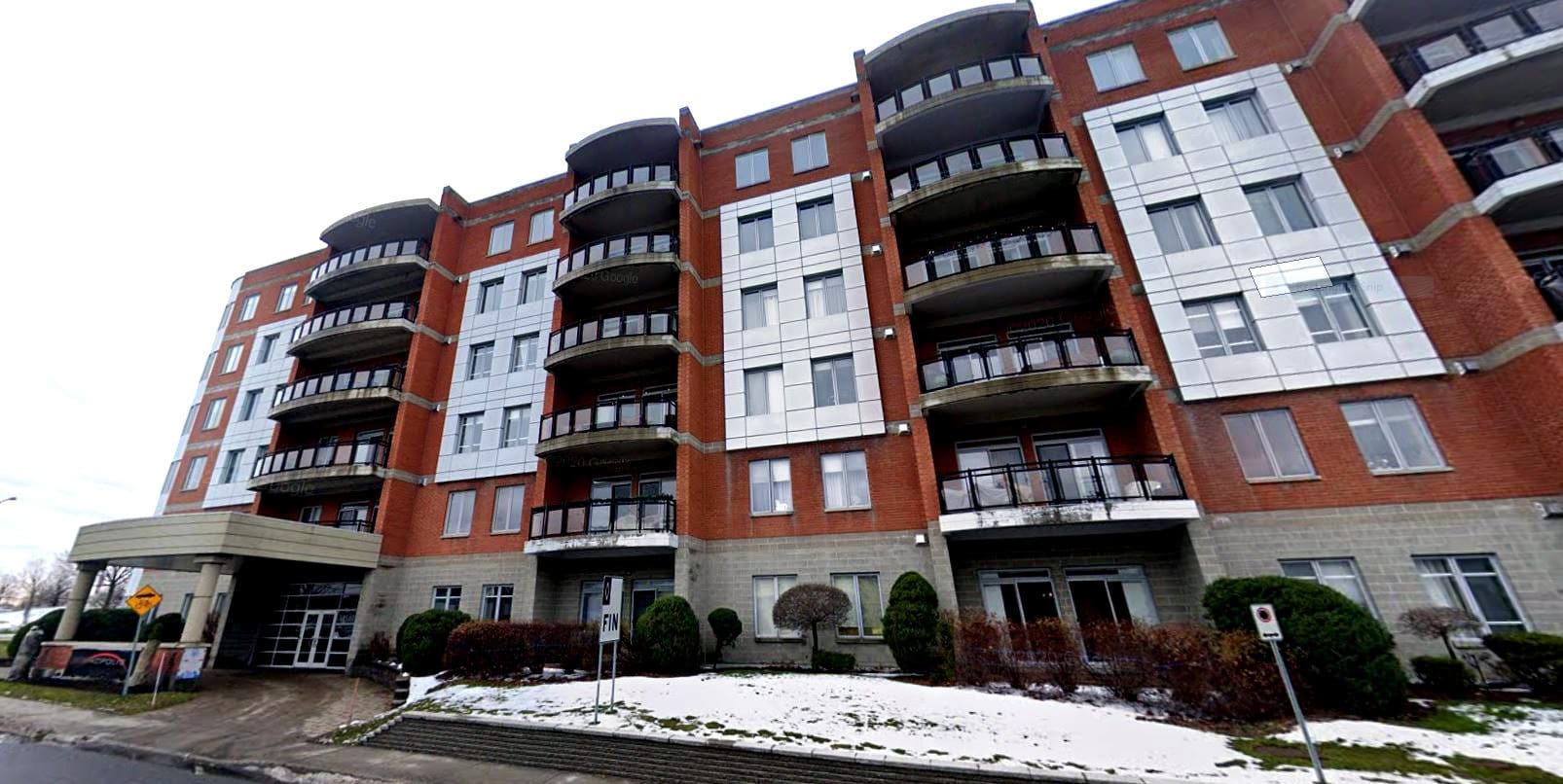
Quebec Environment and Climate Change Minister Benoit Charette and Sainte-Rose MNA Christopher Skeete have announced the conclusion of a more than $5 million agreement between the Société d’habitation du Québec (SHQ) and the Canada Mortgage and Housing Corp. (CMHC) for three projects to create 53 new social housing units in Laval.
According to a press release issued by Skeete and Charette, the new affordable housing units will be for women victimized by family violence, and for young adults with intellectual disabilities.
Under the agreement, the Quebec government commits to pay subsidies to supplement rents in some cases for a period of 20 years.
Those renting the units will be paying only 25 per cent of their revenue for their housing needs. Around $131.5 million is expected to be paid in total on all aspects of the project.
The following organizations in Laval are receiving funding to support social housing projects under their sponsorship:
Avenir de femmes
Laval
Laval
23
$2,459,396
Bouclier d’Athéna – Maison transitoire 2e étape
Laval
Laval
17
$1,679,552
La Maison du Pas Sage
Laval
Laval
13
$887,050
The announcement came on the same day when officials from Ottawa and Quebec were announcing an agreement for the construction of nearly 1,500 social housing units in 14 regions all over Quebec.
Highlights:
Nearly $180 million will be invested through the RHI to complete 68 projects across the province. This represents 1,491 new housing units that will be available as of April 1, 2022.
Projects receiving investments under the RHI will target clients with special housing needs. These include:
Women and children who are victims of domestic or family violence;
Seniors;
Indigenous populations;
People with mental health or addiction issues;
People who are homeless or at risk of homelessness;
People with disabilities, etc.
$1 billion will be invested through the RHI to create 3,000 new permanent affordable housing units across Canada to address urgent housing needs. The projects will be predominantly funded through the AccèsLogis Québec and AccèsLogis Montréal programs, funded by the Government of Quebec.
Pandemic pressures spur demand for women’s shelters
For nearly a year since the onset of COVID-19, Ottawa has been boosting funding to organizations dealing with gender-based violence – a phenomenon which has risen drastically during the pandemic, as have the pressures placed on individuals and families.
A statement on the federal Ministry for Women and Gender Equality website says, “The COVID-19 pandemic has created unprecedented challenges for those experiencing gender-based violence and the organizations that provide supports and services to them.”
Demand is up, says Monsef
In May 2020, the ministry announced $50 million in emergency funding for organizations providing support and services to those experiencing gender-based violence. In October, they announced an additional $50 million. Then in December, they announced further details on the distribution of additional funding from October.
The measures and investments, according to the government, are supporting shelters and transition housing that provide a safe space for women and their families experiencing violence, while ensuring that anyone facing gender-based violence also has a safe place to turn.
‘The rates of violence against women and girls and children are up and this is not acceptable,’ says Monsef
During an exclusive interview this week with Newsfirst Multimedia, Women and Gender Equality Minister Maryam Monsef said the ministry has been in daily contact lately with organizations in Quebec and the rest of the country that are providing support to those who are fleeing abuse and violence.
“We heard in Quebec, as has been the case across the country, that the demand for services has gone up, and that the pandemic has added greater pressures to families, to individuals,” said Monsef.
‘This violence is preventable’
“The rates of violence against women and girls and children are up and this is not acceptable – this violence is preventable. But our government has been there since the beginning of COVID to provide immediate support to front-line organizations across the country.”
According to Monsef, the Ministry for Women and Gender Equality has provided funding to more than 1,500 organizations over the past year, allowing the groups to stay open, to pay staff and to provide counselling and support services to families undergoing traumatic strife during the COVID-19 pandemic.
Given the uncertain prospects of a foreseeable end to the pandemic or its wide-ranging and long-term impacts, Monsef did not rule out the possibility that the Trudeau government might continue its support past the current commitments.
“Well, you’ve heard the Prime Minister say – and I hope Canadians and particularly those vulnerable women and gender non-binary folks who are in abusive homes and abusive relationships hear this too – that we will be there for you – for whatever it takes for as long as it takes,” she said.
Post-pandemic support
Monsef said that even before the onset of the COVID-19 pandemic in Canada early last year, the Liberal government had already begun increasing funding to groups providing services to those enduring gender-based violence.
“We were able to invest $100 million in emergency COVID funds for frontline organizations to support the most vulnerable in their hour of need,” she said. “And we will continue to be there not just for emergency support, but to help recover from the pandemic once we are able to move to the other side of it.”
Monsef said officials at the ministry are working proactively and taking their lead from the more than 1,500 organizations across Canada that are receiving assistance during the pandemic.
“They are the experts, they are creative, they are there to care for the most vulnerable, and we care about them. Every step of the way we’ve been working with them for the emergency response, but also to build better systems to put an end to violence against women and girls once and for all.”
Internet access accelerated
On a separate but related COVID-19 issue, involving Monsef in her capacity as Minister for Rural Economic Development, she said some of the hardships created by the pandemic motivated the government to accelerate deployment of high-speed internet service to 98 per cent of Canada’s rural and remote areas by 2026 (rather than 95 per cent by 2030, as previously planned).
“Life without internet access was hard before this pandemic and it is hard to endure during a pandemic,” she said. “Before COVID, we were able to provide support and funding so that close to 1,000 communities across the country were closer to getting high-speed internet. And by the end of 2020, tens of thousands of households who didn’t have that access before we formed the government had high-speed internet access.” Last November, according to Monsef, the government decided to accelerate the plan to connect all of the country to high-speed internet. She said the decision was directly related to the situation created by the pandemic. “Having that connectivity is essential right now,” she said. “It’s about health and safety, it enables online learning and telework, and also it makes sure that Canada is competitive.”
The current issue of the Laval News volume 29-02 published January 27th, 2021. Covering Laval local news, politics, sports and our new section Mature Life. (Click on the image to read the paper.)
The mother of 7-year-old Chomedey girl who suffered a gruesome death at home in early January was released on a $1,000 bail bond on Monday, with one condition of her freedom being that she not contact her other children.
The woman, who speaks the Afghani language Dari and required an interpreter during an appearance at the Laval courthouse, is charged with criminal negligence causing death.
While previous news reports said the girl had been the object of an intervention by Quebec’s child protection authority (DPJ), the DPJ was not alleging child abuse at that point.
However, according to a news report on Monday, the mother is currently also facing an assault charge against her daughter that dates back to last June.
The bail conditions, which were agreed upon by the defence and the prosecution, required, among other things, that the accused post a $1,000 bail bond and surrender her passport to court officials.
The conditions also require her to live at her current address on Le Boutillier St. in Chomedey.
She is also not allowed to communicate with certain people (including her other children), unless it becomes necessary to prepare her legal case with the assistance of a lawyer.
Her next court appearance has been scheduled for April 12. Neither the woman nor the victim can be identified because of a news publication ban currently in force.
An outbreak of COVID-19 at CHSLD Idola-Saint-Jean has resulted in 10 deaths, with 70 residents and workers testing positive for the coronavirus.
The CISSS de Laval says no visits to the CHSLD on Cartier Blvd. in Pont-Viau are being allowed until Jan. 23, with the exception of visits to those in the last stages of dying.
CHSLD Idola-Saint-Jean had an outbreak of COVID-19 in September last year, although it was contained and there were relatively few serious casualties.
With up to 20 centimetres of snow expected to fall this weekend, the City of Laval says its snow-clearing crews and equipment are ready for whatever nature throws at them.
According to the city, operations will be undertaken from the start of the snowfall with the spreading of abrasives on streets and sidewalks.
However, the city is reminding residents and private snow removal contractors that shovelling or moving snow out onto the street is forbidden.
The city offers the following advice to help facilitate snow removal operations:
Park 30 centimetres (around a foot) from the edge of the sidewalk to diminish risk of being struck by the sidewalk plow;
Shovel snow onto your own property rather than on the sidewalk;
On garbage or recycling days, avoid leaving your bins on the sidewalk or roadway;
Respect parking restrictions on signage warning of snow removal.
The progress of snow removal operations can followed online at neige.laval.ca.
The mother of 7-year-old Chomedey girl who died under apparently violent circumstances is expected to make a court appearance on Monday, after being arraigned and charged with criminal negligence causing death following her arrest last Friday.
According to published reports over the weekend, evidence gathered by the Laval Police Department suggests the alleged acts took place between Dec. 30 and Jan. 3.
Since a publication ban currently forbids revealing the identity of the victim, the identity of the accused also cannot be provided.
Emergency responders and police who were called to the home on Le Boutillier St. in Chomedey on Jan. 3 found the girl lifeless and her body already in rigor mortis.
Reports said the girl’s body appeared to show signs of severe abuse, including second-degree burns to 80 per cent of her body.
According to La Presse on Saturday, the LPD has the preliminary results of an autopsy, but is waiting for additional autopsy information before making a statement.
Although the pandemic was last year’s biggest story, it wasn’t the only one
What is there to say about a year that was so dominated by a single issue – the COVID-19 pandemic? Except perhaps to remember that 2020 was also the first year of a new decade – leading some perhaps to wonder what the next nine years hold in store.
That being said, however, the coronavirus wasn’t, in fact, the only issue that made news in 2020. It only seems so because of the sheer magnitude and continuing impact of the pandemic. In our first issue of 2021, the Laval News is reviewing last year’s events.
January
Despite the turmoil lying just ahead, the year started with good news at the front of our Jan. 8 issue that featured coverage of the recent victory in the sport of synchronized skating by Les Pirouettes de Laval.
In January, Quebec Immigration Minister Simon Jolin-Barrette (left) and Sainte-Rose MNA Christopher Skeete met municipal officials at Laval city hall.
The renowned Pirouettes de Laval’s pre-juvenile contingent scored 19.66 in the first phase and 17.45 in the second to reach the top of the podium where they were adorned with gold. Numbering 16, these U-12 skaters danced and dazzled for three exhilarating minutes to rousing cheers of on-lookers.
The not-so-well-kept secrets of the team’s top-level performance? Imaginative choreography and symphonically-synchronized teamwork that convinced the judges that they were the best.
“The principles on which they were judged included transitions, interpretation, skating skills, difficulty of elements, and ultimate performance,” Luigi Massimo, whose two daughters train with Les Pirouettes at pre-juvenile level, stated to TLN.
Microchipping and ID tags for pets became mandatory in Laval at the beginning of last year. All dog and cat owners had to obtain a permit for every one of their pets and had to make sure that each one wore an ID tag. The city had already announced a fee reduction for all pet IDs. In fact, dog ID tags were now $20 instead of $27 and cat IDs were $10 instead of $15 including their collar tag.
In police and crime news, two people robbed and shot at a man in Laval on the evening of Monday December 30th, in what may have been an internet sales meetup gone wrong. Bystanders called police around 5 p.m. and said they heard shots fired near the corner of Ampere Ave. and de Royan St., near De la Concorde Metro station.
Officers rushed to the scene and found an uninjured man, Laval police said. The man had agreed to meet up with two people to finalize an internet sale and had purchased an item legally from them before the interaction turned hostile, police said. The two suspects shot at him at least once and stole his money, police added. Witnesses saw two people in their 20s fleeing the scene.
Plane noise from Montreal’s Pierre Elliott Trudeau Airport prompted one citizens’ group to take action through an online app that monitors aircraft noise and forwards the gathered results to airport authorities to take action.
The app’s creator, Montréal-dB founder Bill Mavridis, claimed the ADM had been under-reporting airplane noise complaints since 2013. Based on the distribution of complaints by postal codes, potentially a total of 1,594,171 residents of the Montreal Metropolitan Community, including Laval, are affected by airplane noise, said Mavridis.
Once AÉROplainte is downloaded, anyone who wants to report a plane noise incident can activate the app and fill out a complaint form which is forwarded to the ADM’s automated online complaints system.
Quebec Immigration, Francization and Integration Minister Simon Jolin-Barrette made a trip from Quebec City to Laval to announce that the CAQ government planned to spend more than $8.3 million to help improve the French language skills of immigrant workers in the Laval region.
“The addition of these new resources for the Ministry of Immigration, Francization and Integration is good news for the Laval region,” said Sainte-Rose CAQ MNA Christopher Skeete who joined the minister and Laval city councillor Jocelyne Frédéric-Gauthier at Laval city hall for the announcement.
Federal Middle Class Prosperity Minister Mona Fortier, who was appointed to the Trudeau cabinet following the fall 2019 election, defended her dossier during a stop in Montreal that we covered in our Jan. 22 issue.
“The Prime Minister has asked me to look at how we can make sure that we have sound decisions on quality of life measures, affordability measures, to make sure that Canadians continue to grow the middle class,” she said in an interview.
On January 14, intelligent, articulate, and delightfully positive-minded Manon Ouellet was proudly celebrated by Laval Police Director Pierre Brochet, awarding her the city’s Medal of Merit for bringing justice and equity to a wide range of issues and having a profound impact on women in policing.
February
Our first issue in February brought the news that would impact everyone for the remainder of the year and beyond – the onset of the COVID-19 coronavirus pandemic.
On January 25, the Government of Ontario had reported the first case of 2019 nCoV in Canada. The case occurred in a person who had been in the city of Wuhan, China in the 14 days prior to becoming ill. Other provinces also began reporting cases and outbreaks.
Drivers and managers at Champlain Taxi were learning to adjust to Quebec’s new taxi regulations, in spite of competition from new players like Uber and Lyft.
Despite the pandemic and additional problems posed by drastic changes in the taxi industry, at least one Montreal-area taxi firm was weathering the turbulence.
As Taxi Champlain president George Boussios pointed out in an interview with the Laval News, the province’s new approach to managing the taxi sector opened it up to anyone willing to provide consumers with transportation services, the most notable examples being drivers for Uber and Lyft.
“Taxi companies may be able to survive if they just change the way they’ve been working over the last 40 years,” Boussios said. “Because now the market is open to anybody who has a car and just a regular license.”
Chomedey independent MNA Guy Ouellette told the Laval News he was waiting for the outcome of a police investigation before deciding whether to proceed with a lawsuit against Quebec for allowing him to be arrested by UPAC as a suspect allegedly involved in an information leak at the investigative agency.
In a controversial manoeuvre three years before to find the source of the suspected information leak, investigators with Quebec’s Unité permanente anticorruption (UPAC) used a cell phone text message to draw Ouellette to the residence of a leak suspect, where Ouellette ended up being arrested.
“We are waiting for the investigation by the Bureau des enquêtes indépendantes,” said Ouellette. “We would have to go to court and launch a file against the government for civil damages.”
As the pandemic wasn’t yet fully underway, the Sir Wilfrid Laurier Foundation’s annual January Gala took place as usual and raised $26,270 to help fund additional educational resources at Sir Wilfrid Laurier School Board schools and learning centres.
Held at the Embassy Plaza in Laval, the popular event featured a silent auction segment showcasing, among other things, a Montreal Canadiens jersey signed by Habs great Guy Lafleur, sports and rock and roll memorabilia, and many other items of art and jewelry.
The presence of two senior provincial government ministers for an announcement that the City of Laval was pushing forward to develop a large tract of land near the downtown core was a good sign Quebec was on board to see the project through, according to Mayor Marc Demers.
Carré Laval, as the area was called by Laval urban planners, is an almost perfectly square territory measuring approximately 4 million square feet – equal to 68 football fields. It is bounded in the east by the Laurentian autoroute, Daniel Johnson Blvd. to the west, Saint Martin Blvd. to the north and Souvenir Blvd. on the south side.
In the aftermath of news reports alleging three prominent Action Laval city councillors were in a perceived conflict of interest involving local real-estate dealings, Action Laval announced the departure from the party’s caucus of city councillors David De Cotis, Paolo Galati and Isabella Tassoni.
“I have nothing to hide,” De Cotis said in a phone interview with the Laval News, while noting that several e-mails from the city’s e-mail system that were leaked to the media didn’t contain any incriminating evidence or statements. The three were exonerated later in the year by provincial authorities who investigated the matter.
After a previous postponement of the City of Laval’s long-awaited Aquatic Complex project, officials with the municipality announced yet another delay: the cancellation of a contract with an architectural firm to produce the initial plans for the Aquatic Complex.
It was the second time Laval had postponed the project estimated by the city in late 2018 at $61 million. In the fall of 2018, the city also cancelled a call for bids when contractor applications came in 50 per cent higher than city estimates.
March
Officials with the City of Laval confirmed they had ratified a new collective agreement with the police force, which they said would lead to the improvement of services for citizens by allowing for better public security.
A restructuring of staff, creation of new policing units, construction of a new station in western Laval and a major increase in the number of patrol hours are just a few examples of new measures to be implemented following completion of the agreement.
Quebec Premier François Legault started announcing regulations for dealing with COVID-19 in March last year.
In the runup to a leadership election by Liberal Party of Quebec members later in the year, the Laval News had the opportunity to sit down for an interview with one of the only contenders – former Drummondville mayor Alexandre Cusson.
“We have to put an end to the us and them outlook that is currently the practice of the Legault government,” Cusson said in an interview, alluding to the CAQ’s overall outlook as expressed in legislation such as Bill 21 banning religious symbols.
While Cusson’s leadership of the PLQ might have boosted the party’s support in rural areas of the province, he eventually withdrew his candidacy and Dominique Anglade became the Quebec Liberal Party’s leader.
An offer you can’t refuse, a Sicilian/Calabrian message, cement shoes, or minced meat in the butcher’s shop. One of Laval’s finest actors on big and small screens was an integral part of the latest crime saga that had scored big with movie fans of all ages.
Gritty or romantic, disturbingly silent or loaded with tough talk, the movie, Mafia Inc. was heavy on red sauce and made plenty of room for Montreal’s most notorious mobsters. Actor Domenic Di Rosa, strikingly embodied the rotten force of a fresh-faced gangster butcher. That’s probably why what should have been a simple act of murder ended up spiraling out of control.
Our second issue in March brought more news of the escalating crisis over COVID-19. “In 2020, we are facing a new crisis and a severe challenge to the health and well-being of individuals, their families, and to the community-at-large – COVID-19,” the Laval News’s co-publishers, George Bakoyannis and George Guzmas, said in a statement on the crisis on the front page of our March 18 issue. Most of the issue’s coverage was devoted to getting out the latest information on the pandemic.
In our coverage, the City of Laval announced the pandemic measures it was taking. The established three priorities: protecting the health and well-being of its employees; maintaining services for residents; and respecting measures to be implemented by the Public Health Directorate at the Ministry of Health and Social Services.
Prime Minister Justin Trudeau also announced COVID-19 measures by the federal government. Among other things, Canada was barring entry to all travellers who were not Canadian citizens or permanent residents. “My top priority is the health and safety of all Canadians,” said Trudeau. “Our government is doing what it must to protect all Canadians, and to support workers and businesses.”
The Government of Quebec also took a number of measures to contain the spread, including, the adoption, on March 13, 2020, of an Order in Council declaring a health emergency throughout Quebec territory. The measures included voluntary isolation, as well as mandatory isolation. Our COVID-19 coverage in the Mar. 18 issued also included a long list of “myths” and inaccurate beliefs about COVID-19 compiled by the World Health Organization (WHO).
April
The cover of our April 1 issue was anything but an April Fool’s joke, as we announced the federal government’s initial $107 billion aid package to provide Canadian citizens and businesses with assistance and relief from the fallout of the pandemic.
On his return to Laval from Ottawa following the suspension of the House of Commons because of fears of infection by the coronavirus, Laval-Les Îles Liberal MP Fayçal El-Khoury said he immediately self-isolated at home in order to protect members of his family.
Laval-Les Îles MP Fayçal El-Khoury was among the local elected officials impacted by the pandemic.
“Due to the fact that I have to keep working, I isolated myself in my basement,” he said in an interview with The Laval News. “I have a large basement where I have a bedroom and I have my office. So when I need to eat or drink, my family brings it to me.”
With her offices closed in Ottawa as well as in Laval because of the COVID-19 virus restrictions, Vimy Liberal MP Annie Koutrakis said she was continuing to work from her Chomedey home, answering calls, e-mails and other messages from constituents as best as she can with staff support.
“This has all been quite trying for everybody,” Koutrakis said in an interview with The Laval News. She said that during this trying time, she was maintaining a distance from her 88-year-old father, but was not finding it easy.
In view of the coronavirus pandemic, the City of Laval’s executive-committee decided to postpone the date when residential property and business taxes would be due.
“While waiting for compensation measures that will be brought in by the government, residents who are affected by mandatory quarantines or the temporary closings of many businesses will be dealing with a loss of revenue,” said Mayor Marc Demers, explaining the move.
And the Société de transport de Laval also advised transit users that many of its buses had been re-scheduled in order to deal with the sudden drop in ridership brought about by fears of the pandemic.
The momentum of relief measures provided to deal with COVID-19 accelerated over the course of this month. In our April 15 issue, we provided up-to-date coverage of the federal government’s Canada Emergency Wage Subsidy. Passage of the legislation, followed by scrutiny by the Senate and royal assent by the Governor General, cleared the way for $73 billion in additional assistance to companies, families and individuals across Canada whose livelihoods were seriously disrupted by COVID-19.
“Without reservation, without pause, we must fight for every inch of ground against this disease,” said Prime Minister Trudeau. “We must be there for one another as we spare no effort to safeguard our collective future.” Although the Conservative opposition still had issues with the way the wage subsidy would be implemented, they agreed to allow the legislation to be passed anyway so that the recovery could get underway.
In the same Laval News issue, the former chief of the Laval Police Department, whose wife had been recently transferred to CHSLD Sainte-Dorothée, suggested that management at the long-term care facility was incompetent, after his wife and many other residents became infected with the COVID-19 virus.
“She became infected soon after her arrival,” said Jean-Pierre Gariépy. “The transmission took place stage by stage, through an employee who was badly prepared and badly protected. The management clearly was lacking leadership. CHSLD Sainte-Dorothée would go on to have one of the highest COVID-19 mortality rates in Quebec last year and is currently undergoing an investigation.
In response to a request from the Quebec government, the Canadian Armed Forces’ Joint Task Force East (JTFE) dispatched medically-trained military personnel to the Montreal region in late April to assist at nearly a half-dozen long-term care residences struggling with COVID-19 – including a CHSLD in the Laval area.
Quebec’s Ministry of Health and Social Services (MSSS) had identified long-term care centres (CHSLDs) as institutions requiring the most assistance. CHSLD Villa Val des Arbres on Saint-Martin Blvd. East in Laval was among the care centres selected for assistance. As if things weren’t bad enough with the pandemic, the City of Laval also had to keep an eye on the river waters surrounding Île Jésus, in case there was a recurrence of spring flooding as there had been in recent years. The city installed protective anti-flood barriers along certain streets near the waterfront, including streets in Laval-les-Îles, Souvenir-Labelle, L’Abord-à-Plouffe, Saint-François and l’Orée-des-Bois.
(To be continued in our next issue, January 27 2021.)
New shared taxi route for Sainte-Dorothée and Laval-sur-le-Lac
The Société de transport de Laval (STL) winter schedule, which came into effect last week, contains numerous service improvements.
By adding more buses weekdays, during morning and afternoon rush hours, the STL says it is looking to offer a safe commuting experience adapted to the needs of the people of Laval.
As announced in the fall, the exo6 Deux-Montagnes train line ceased running on Jan. 4. To offset this stoppage in service, the STL has introduced two new bus routes: buses 730 and 744.
New bus routes
As a result, Sainte-Dorothée commuters who normally transit to the Côte-Vertu metro station will be able to take Bus 744, and users of the Roxboro-Pierrefonds and Sunnybroke train stations will be able to avail themselves of Bus 730.
The STL is also adding a new shared taxi route, T27, for the areas of Laval-sur-le-Lac and Rang Saint-Antoine. Meanwhile, Taxi T26’s route is being broadened to also cover Île Bigras weekdays. These shared taxi routes will operate on-call and will transport users to the bus platform of the Sainte-Dorothée train station, where users will be able to take the shuttle bus 498, operated by exo, to downtown Montréal.
Easier time checks
The STL says it is now even easier and faster for Laval residents to check bus times, thanks to the new STL website, revamped to adapt to both mobile and desktop devices. Also, the STL’s itinerary calculator has been upgraded to include an interactive map that now makes address, bus route, and bus stop-based searches possible across the STL network.
Commute times and itineraries are quickly and directly provided on the map, including any detour information that might apply and estimates of how crowded the bus will be. To view the new schedule, go to stlaval.ca. You can also find the complete list of REM-work-related mitigation measures undertaken by the STL at stlaval.ca/rem.
Visitors not permitted, but caregivers are with some restrictions
The CISSS de Laval has announced adjustments to the usual hours for visiting its health and social services establishments in order to respect restrictions made necessary by the COVID-19 pandemic.
Since Jan. 9 and until the provincial government lifts the curfew regulations now in place for 30 days, all access at CISSS institutions will end at 7:30 pm. As well, access by visitors will not be permitted until further notice.
Access restricted
However, the CISSS says caregivers who are providing significant help will be able to have access to public and private CHSLDs, to intermediate resources of more than 20 beds, and to private residences for seniors as long as access is by one person maximum per 24-hour period.
For Cité-de-la-Santé hospital and the Jewish Rehabilitation Hospital, the CISSS says visits are temporarily limited.
Visitors and companions are not allowed for the time being, taking into account the alert currently underway, except for users admitted in palliative care and end of life where visits are permitted at all times with some conditions. However, caregiver visits will be permitted at the above two institutions, subject to prevailing visiting hours.
Suggested measures
The CISSS says it is counting on the cooperation of everyone to put into practice the prevention recommendations to stop the spread of COVID-19. These measures include hand sanitizing for at least 20 seconds when going in and when leaving establishments. The public is being asked to not visit any CISSS centres under the following conditions:
• If you have flu-like symptoms (fever, cough, breathing difficulties, muscle aches).
• If you are returning from a trip outside Canada in the last 14 days.
• If you have been in contact with a person returning from a trip or who was diagnosed with COVID-19.