Home Blog Page 163

PLQ surveys Laval’s wants and needs for a future ‘Charter of Regions’

City still fights its image as a suburb, despite population of more than 420,000

As Laval is Quebec’s third-largest city, it goes almost without saying that the Quebec Liberals included it on a list of regions where the National Assembly Official Opposition party has been holding online consultations on the wants and needs of people across the province.

During a consultation held for people in Laval on March 9, more than 50 persons decided to participate, although most did so as observers, leaving just a relative few who spoke and actively took part.

A regional charter

The consultations are being held by the PLQ as a prelude to the party’s preparation and adoption of a new and wide-ranging policy to be known as the Charter of Regions (Charte des régions).

According to a description of the project on a PLQ website, the Charter for Regions will include new recognition for regional governance bodies and will protect the individual regions’ political representation.

“It will strengthen each region’s right to development and prosperity on the basis of individual equality,” the PLQ states.

‘A tool to modernize’

“Indeed, it seeks to be an additional tool to ensure access to innovation throughout the territory, while acknowledging the regions’ contributions to Quebec’s prosperity through their differences and specificities. More broadly, this project would be a tool to modernize and enhance our relations with First Nations and Inuit peoples who inhabit Quebec’s regions.”

In some opening remarks, PLQ leader Dominique Anglade said Laval has aspects, including transportation and other economic factors, which sets it apart from other regions and which merit being treated from a much closer perspective.

A regional approach

Anglade suggested the Charter of Regions would eventually evolve from PLQ party policy into a full-fledged piece of legislation, focusing on each region in Quebec for its individual merits and economic potential, should the Liberals form the next provincial government.

On hand to wade into the issues from Laval’s perspective were four of the region’s MNAs who are Liberal: Monique Sauvé (Fabre), Jean Rousselle (Vimont), Francine Charbonneau (Mille-Îles) and Saul Polo (Laval-des-Rapides).

Some of the online participants in the PLQ’s Charter of Regions consultation held on March 9.

Sauvé suggested that in recent years, the Laval region has lost some of its sense of connection between groups and people and that she would like to see it restored.

Reflecting Laval’s uniqueness

“There is something in particular that is very meaningful that we have lost over the years,” she said, while adding that Laval is different from Montreal in that most people still know each other here, compared to Montreal where there is a great deal more anonymity.

Jean Rousselle agreed that there is a greater sense of kinship in Laval. “It may be a big city, but somehow we all know each other,” he said. “There are a lot of groups and organizations in Laval and they all know each other. I think we could maybe make an effort to get a little closer to these organizations and learn about people’s needs at the grassroots.”

He also suggested that the PLQ should conduct consultations on a regular basis. “Things change, reality changes, and sometimes opinions can change from one day to the next,” Rousselle said.

Only one hospital here

Patrice Allard of Sainte-Rose noted that even though Laval has a population of more than 422,000 residents, there is still just one hospital, just one CEGEP, and up to 30 per cent of the territory is still used for agriculture. He also pointed out that Laval is criss-crossed by one of the most extensive autoroute networks in the province and more than 300,000 vehicles pass through the A-15/A-440 intersection daily.

‘We are a city which is unique and we are entitled to take our rightful place,’ said Mille Îles Liberal MNA Francine Charbonneau

Francine Charbonneau pointed out that Laval is located in such a way that it acts as a buffer area between metropolitan Montreal and the rural regions of the province. “Often, people pass through us,” she said, noting that people from the regions north of Laval often come here or to Montreal to get better quality hospital service which is not available in their own area.

‘We are not Montreal’

“We are not Montreal and we are not a suburb either,” she continued. “We are a city which is unique and we are entitled to take our rightful place. The Charter of Regions would offer to us in Laval the possibility of accessing sums of money without being lumped together with Montreal.”

For his part, Saul Polo said recent indications suggest Laval is in the midst of an economic transformation that will have an impact on social conditions and the population in general. “Debates such as this one on the Charter of Regions help bring together the various players who are involved,” he said.

Quebec, Laval, CISSS officials pay homage to Laval’s COVID-19 victims

‘Far too many people left us far too quickly,’ said CAQ Minister Benoit Charette

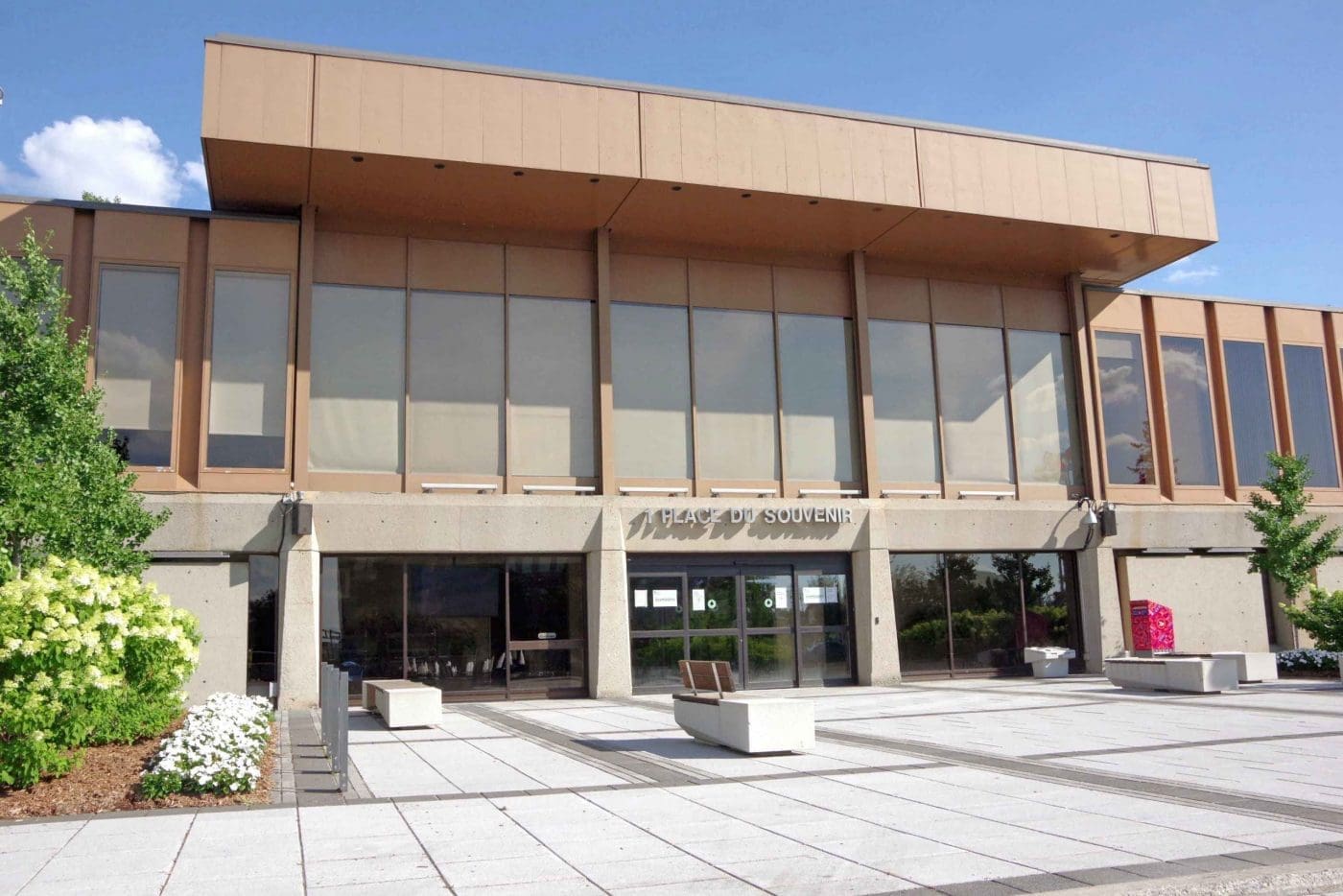
The lights inside Laval city council’s meeting chamber at city hall were kept on until daybreak, while spotlights outside city hall remained illuminated, as officials from the city gathered with their counterparts from the Quebec government and Laval’s health care agency to observe the first anniversary of the beginning of the COVID-19 pandemic.

Remembering the victims

During a webcast on March 11 from city hall, Mayor Marc Demers, Quebec cabinet minister Benoit Charette (who is Minister Responsible for the Laval Region), Director of Public Health for Laval Dr. Jean-Pierre Trépanier, CISSS de Laval CEO Christian Gagné and CHSLD Sainte Dorothée head nurse Mary-Sylvia Gédéon paid homage to the people from Laval who died of COVID-19 to that date.

“We take the time to gather here to reflect securely on the names of the 876 victims from Laval of the pandemic a well as their families,” said Demers.

Risked their health

“We are pausing to think of the caregivers, as well as the employees, and the volunteers with community groups who did great work on the frontline. We are thinking of you. We take off our hats to you. You did work that was essential, and this for more than a year while endangering and risking your own health.”

Charette noted that “far too many people left us far too quickly because of this virus. There is no way to avoid thinking of the families who in many cases were unable to experience their grief as they normally should. It is normal for people to have grief, but unfortunately many people’s lives were disrupted because of the circumstances.

Strength and endurance

“We never would have expected that a year later our daily lives would still be disrupted,” he added. “But as the Premier said a little earlier, Quebec and its people have shown incredible strength during this ordeal, and it allows us today to see some hope, whether it’s from the experience acquired over the past year, or from the increasing availability of the vaccine. We can, of course, hope that the worst is behind us, but we must still be aware of the lives that were interrupted and the lives that have been lost.”

A year ago, ‘an enemy arrived in our lives unannounced, unidentified, covertly and for the purpose of taking lives,’ said CHSLD Sainte-Dorothée head-nurse Mary-Sylvia Gédéon

Christian Gagné said that over the past year, the pandemic took an enormous toll on work at the CISSS de Laval, as well as on the lives of hundreds of people in Laval who suddenly found themselves in mourning. At the same time, he commended the many hundreds of health-care workers in Laval who put their lives on the line while struggling to deal with the pandemic.

Importance of compassion

“This has been a year when it was necessary to have compassion and, as citizens and colleagues, we must reorient our lives taking into account what we have been through,” said Gagné. “We will no longer be the same at the end of this pandemic.”

Left, Quebec Minister Responsible for Laval Benoit Charette, Mayor Marc Demers and others are seen here at Laval city hall during the recent ceremony to remember victims of the COVID-19 pandemic.

Mary-Sylvia Gédéon said, “I would like to express on behalf of all the staff in the health and social services network, and to all families impacted by this tragedy, all my heartfelt sympathy for the suffering and heartbreak they’ve endured, seeing their fathers, mothers, brothers and sisters leave without being able to hold their hand.

Impact on caregivers

“I, too, felt that suffering, that helplessness, when faced with the sudden death of several of your loved ones from this virus,” she continued. “This unscrupulous enemy tore loved ones away from you. For you they may have been parents. For us, they were residents to whom we felt attached profoundly.”

Gédéon said that March 2020, “the year, the month, the hours, the minutes and the seconds, will remain forever engraved in my memory. An enemy arrived in our lives unannounced, unidentified, covertly and for the purpose of taking lives. We knew nothing of him when he arrived, nor how he chose his victims or how he spread.”

Capital campaign launched for Giant Steps Autism Centre

Foundation hopes to raise $24 million for innovative $50.7 million project

The Giant Steps Foundation has launched a $24 million fundraising campaign to build the future Giant Steps Autism Centre in eastern Montreal, with the ultimate goal being to position Quebec as a leader in the field of autism education, services and research.

Autism services

The school that was started nearly 40 years ago by autism research pioneer Darlene Berringer, delivering education and therapeutic services for children on the autism spectrum, has decided to expand its mission and reach after being located in other areas of Montreal.

To date, the Giant Steps Foundation has secured commitments for the project totalling over $14 million from donors, such as Fondation Marcelle et Jean Coutu, Hewitt Foundation, the Molson Foundation and National Bank. An additional $1.3 million has come from parents. The campaign is being led by co-chairs Andrée Dalaire and André Bourbonnais.

Funds from Quebec sought

In addition, the parents have collectively pledged more than $1.3 million towards the project. The total cost is $50.7 million, for which Giant Steps is seeking a 50 per cent contribution from the Quebec government – hopefully in the provincial budget expected on March 25.

Giant Steps is seeking a 50 per cent contribution from Quebec, hopefully in the provincial budget on March 25

According to the foundation’s plans, the Giant Steps Autism Centre will include four independent but integrated pillars to help fill the gaps in the current service model. They are:

  • An expanded Giant Steps School;
  • An adult Education and Employment Centre;
  • A resource and Community Centre;
  • A research and Innovation Hub.

More than a school

In its nearly four-decade history, Giants Steps School has been located in several areas of west-end Montreal, including Westmount, then later in Notre Dame de Grâce. However, the new centre promises to be more than a school, according to Giants Steps board president Nicolas Katalifos.

“Obviously we have outgrown it,” Katalifos said in an interview with the Laval News, referring to Giant Steps School’s most recent home in a multi-storey former school and office building on Connaught Ave. in NDG.

Giant Steps School president Nick Katalifos
Giant Steps School president Nick Katalifos.

“There are a lot of kids that we don’t have enough room to accept. Because of space issues, we’ve been accepting only one out of 10 applicants, which is something that has been a burden on us. For years, we’ve been wanting to be able to accept more kids and to reach out more.”

‘Vision’ for the future

According to Katalifos, several years ago administrators and parents at the school embarked on a consultation process to determine what the needs of the Montreal-area autism community currently are. He said the outcome was a vision for the future Giant Steps Autism Centre. “We decided to go wide, as they say, and to launch the project officially to make people more aware of it,” said Katalifos.

The new 66,500-square-foot centre will be located in the Technopôle Angus neighbourhood of Rosemont in east-end Montreal, where it will have increased capacity for programs. As a result, the school will be going from an enrollment of 90 up to 120 students. The adult education and employment centre is expected to help 150 adults per year, up from the current 20.

A steady path forward

Katalifos agreed that every phase of Giant Steps School’s development from the beginning has been marked by major improvements and forward development.

“Our mandate has always been to serve the families and the kids at the school,” he said. “But we’ve also tried to go way beyond that by working on projects to expand awareness about autism and that can also help in specific areas.”

Case in point, he noted that part of the new centre will be used to treat autism as a life-long issue that goes on after persons with autism become adults. “Once an autistic person becomes a legal adult, services for them tend to just stop, and there is a huge concern currently over that,” he said.

A life-long issue

“So, part of the vision of this new centre is to look at autism as a life-long issue, and as a result to offer services that can benefit people with autism throughout the course of their lifetimes.”

He said that as things now stand, the unemployment rate among persons with autism is around 85 per cent.

“That’s ludicrous, because all the research shows that these are people who make exceptional employees and who do really well and they just need to be given a chance.”

Greek seniors briefed on COVID-19 during HCGM-sponsored web seminar

‘Variants’ expected to be the dominant COVID-19 virus by April, says infection expert

Senior citizens from the Montreal and Laval Greek communities were offered a better understanding of the COVID-19 pandemic on March 10 during an hour-long webconference and briefing on the situation provided by several epidemiology and microbiology experts.

Sponsored by the Hellenic Community of Greater Montreal with assistance from Chomedey MNA Guy Ouellette, the presentation featured director of public health for Laval Dr. Jean-Pierre Trépanier, CISSS de Laval infection-prevention officer Dr. Olivier Haeck, and Dr. Stephanie Susser, medical coordinator for environmental health at the CISSS de Laval.

A better understanding

“We are trying to reach out to as many people in the Greek community as possible,” said Ouellette in opening remarks, adding that information coming from experts would help to reassure a large segment of the population.

Chomedey MNA Guy Ouellette is seen here during the HCGM’s web conference on COVID-19 issues.

HCGM president Andreas Crilis thanked Ouellette for helping to bring the panel together “to give us a better understanding of what we’re living during this pandemic that is crippling the world. I expect this will be a very informative session to give us the necessary knowledge and information to transmit back to our people in need.”

Laval has been hard-hit

According to Dr. Trépanier, Laval has been an especially hard-hit region in Quebec for transmission of the coronavirus, despite preventions such as face masks and social distancing. There have been more than 25,000 cases of COVID-19 recorded in Laval since the beginning of the pandemic more than a year ago, although the trend has been downward since January, he added.

Dr. Trépanier said that 440,000 tests for COVID-19 infection have been conducted in Laval since last August, averaging 1,600 tests per day. However, as of March 6, there had been 871 fatalities in Laval from COVID-19, although most who became infected eventually recovered.

The ‘variants’ threat

Regarding the recent emergence of COVID-19 variants, Dr. Trépanier said, “They are expected to replace the original strain. That’s what happened in the United Kingdom and other countries where variants were found, and hence the importance for public health to follow the tracing of these variants.”

If a variant emerges which proves to be resistant to the current vaccines, “it may be a problem,” said Dr. Olivier Haeck, the CISSS de Laval’s infection-prevention officer

While initially public health officials estimated that variants accounted for 3 to 5 per cent of all COVID-19 cases, by the end of the first week of March variants accounted for up to 20 per cent of cases “and it’s going up,” added Dr. Trépanier, while also noting that “it is expected that these variants will become the principal strain as of the beginning of April. And so, we have to be prepared for that.”

On the vaccines

On the issue of vaccines, Dr. Haeck said researchers have found that the available vaccines take a little longer to take effect in older individuals. “It takes three weeks instead of two weeks, but it’s almost as effective,” he said, while pointing out that the vaccines can be less effective in persons with weakened immune systems.

Andreas Crilis, president of the Hellenic Community of Greater Montreal, is seen here during the HCGM’s web conference on COVID-19 issues.

Still, he said it remains just as important to be vaccinated if your immune system isn’t normal, “because you’re going to have at least a little protection against this virus which can be very dangerous for you or for other people.”

A potential problem

Regarding the variants, Dr. Haeck said that if a variant emerges which proves to be resistant to the current vaccines, “it may be a problem. That’s why right now we want to vaccinate as many people as we can to prevent any third wave with the variant.”

Dr. Susser explained that in the absence of an influenza season this past winter, flu-like symptoms now could easily be a sign of COVID-19. But because COVID-19 symptoms are often unspecific, the government created a decision-making tool for non-experts who are concerned they may be infected. And it is available on the web in a variety of languages – including Greek.

Arrested Laval resident is a drug ‘kingpin,’ SPVM claims

The Service de Police de Montréal says a Laval resident they arrested last week during a raid at his home is the leader of a network that distributed powerful opioids, crystal methamphetamine, speed and up to 17 other substances made illegally in clandestine labs.

Raids conducted at the home of Bruno Desjardins, age 38, as well in vehicles belonging to accomplices, resulted in the seizure of thousands of tablets of synthetic painkillers and meth, as well as two taser guns and $7,000 cash.

The accomplices were identified by the SPVM as Jean-Philippe Deneault, 46, Krystel Devoy Belec, 35, and Gabrielle Poissant, 28.

INRS researchers are exploring nervous system impact from coronavirus

A number of studies have shown that human coronaviruses, including SARS-CoV-2 which causes COVID-19, appear to attack neurons and the nervous system in vulnerable populations.

This neuroinvasion through the nasal cavity leads to the risk of neurological disorders in affected individuals.

Research conducted at the Laval-based Institut national de la recherche scientifique (INRS) has now identified ways to prevent the spread of infection within the central nervous system (CNS).

The study, led by Professor Pierre Talbot and his research associate Marc Desforges, now at CHU-Sainte-Justine, was published recently in the Journal of Virology.

Antiviral immunity to human coronaviruses

The research team is the first to make the demonstration of a direct link between neurovirulence, protein S cleavage by cellular proteases and innate immunity.

This antiviral immunity arises from the production of interferons, frontline proteins that help to detect early the presence of the virus.

“Using a common cold coronavirus, similar to SARS-CoV-2, we were able to show that cleavage of the S protein and interferon could prevent its spread to the brain and spinal cord in mice,” says Professor Talbot, who has been studying coronaviruses for nearly 40 years.

Two therapeutic approaches

According to Marc Desforges, currently a clinical specialist in medical biology at the CHU-Sainte-Justine virology laboratory, the cleavage of the S protein by various cellular proteases is essential for these viruses to effectively infect cells and spread to various organs and systems in the body, including the central nervous system (CNS).

“Our results demonstrate that interferon produced by different cells, including olfactory receptors and cerebrospinal fluid (CSF) producing cells in the brain, could modulate this cleavage.

“Thus, it could and does significantly limit the viral spread in the CNS and the severity of the associated disease,” says the specialist who worked for 16 years as a research associate at the Armand-Frappier Health Biotechnology Centre of the IRNS.

Taken together, these results point to two potential antiviral targets: protein S cleavage and effective interferon-related innate immunity.

“Understanding the mechanisms of infection and viral propagation in neuronal cells is essential to better design therapeutic approaches,” says Talbot.

The INRS maintains that this is especially important for vulnerable populations such as the elderly and immunocompromised, as the discovery opens the door to new therapeutic strategies.

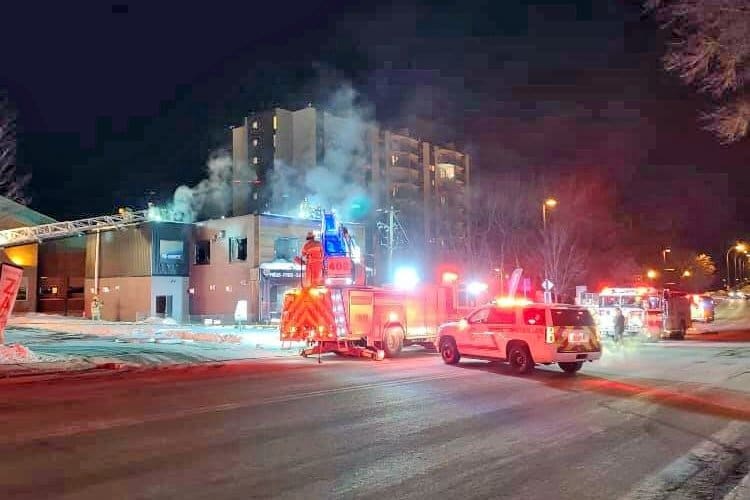
Fire damages two-storey home in Laval-Ouest

Firefighters with the City of Laval reported on their Twitter feed on Friday that a two-storey home on 16th Ave. in Laval-Ouest was damaged by a blaze to which they responded shortly after 1 pm.

“Upon the arrival of the firefighters, the smoke conditions were very difficult on the second storey and in the attic,” said the Association des Pompiers de Laval, the union representing the firefighters.

The APL said a 10-12 code was called in, meaning additional units were required.

Laval man faces gun-related charges in Ottawa

The Ottawa Police Department says that a Laval resident found to be in possession of an unlicensed handgun was disarmed and placed under arrest on Sunday afternoon following a traffic stop.

According to a release issued Monday, an OPD officer was actively patrolling the Vanier area of Ottawa, when he spotted a suspicious vehicle.

The OPD said the vehicle was seen to be traveling at a low rate of speed, and more than once hit the centre curb of the road.

The officer pulled the vehicle over to investigate and observed the handle of a handgun exposed from the driver’s handbag.

The driver was arrested without any incident and the firearm was seized (see photos).

Ammunition and a gun clip the Ottawa Police say they seized from Amine Ait Boudaoud.

The OPD said its Guns and Gangs Unit charged Amine AIT BOUDAOUD, 19, and a resident of Laval with the following charges:

  • Contravening section 117(H) Firearms Act Regulation, respecting storage and transport of a firearm and restricted weapon;
  • Possession of weapons dangerous to public peace;
  • Carrying a concealed weapon;
  • Possessing restricted or prohibited firearm without holding a license and registration certificate;
  • Possession of a prohibited/restricted weapon or prohibited device knowing no authority;
  • Occupying a motor vehicle with firearm;
  • Possession of a loaded regulated firearm;
  • Possession of a firearm obtained by crime;
  • Possession of a firearm with altered serial number;
  • Possessions of a firearm while prohibited X 4;
  • Breach of probation.

He was scheduled to be arraigned in court on Monday.

LPD seeks victims after arresting suspect for alleged sex assaults

The Laval Police Department said on Monday that it had arrested Michel Ianiri, 60, late last month based on allegations of sexual assaults he is suspected of having committed from 1980 to 2021.

The LPD says that during the 1980s, Ianiri, who went by the name Mike, managed a video game arcade on Laurier Blvd. in Laval-des-Rapides.

Witnesses have come forth claiming that Ianiri invited underage boys to his home where they used drugs together and where he allegedly engaged in sexual activities with them.

The LPD says that after first announcing the allegations more than a year ago, three new victims came forth, and that last February, Ianiri resumed engaging in these sorts of activities using a similar strategy.

The LPD thinks Ianiri had other victims and is urging them to contact the police.

Ianiri was arraigned before a judge on Feb. 26 through a video link-up, at which time he faced several criminal charges, including sexual assault, making death threats, and possession of drugs for the purposes of trafficking.

The LPD issued this photo of Michel Ianiri when he was younger.

He is currently in custody and was scheduled to make another court appearance on March 18.

The LPD says that anyone who thinks they may have been a victim should contact them at the special Info-Line at 450 662 INFO (4636), or call 9-1-1. The file number is LVL 210223-077.

Major COVID-19 outbreak at Manoir Soleil Laval

Staff at one of the largest private seniors’ retirement residences in Laval are dealing with a major outbreak of COVID-19.

The French-language TVA network was reporting on Friday that 96 of Manoir Soleil Laval’s 800 residents were infected with the coronavirus.

According to the television network, the administration of the residence on de l’Avenir Blvd. in central Laval has been tracking and trying to control the outbreak for the past three weeks.

While seven residents have recovered from the virus, there had been seven fatalities up to Friday.

The CISSS de Laval is providing support, including additional security personnel.

A COVID-19 vaccination campaign which had gotten underway at Manoir Soleil Laval is now postponed until the outbreak has been brought under control.

Weather

Laval
clear sky
8.5 ° C
8.5 °
8.5 °
28 %
3.6kmh
5 %
Tue
10 °
Wed
8 °
Thu
12 °
Fri
12 °
Sat
13 °