Home Blog Page 106

Panagiotopoulos family donates Sensory Room to Souvenir Elementary

‘Her dedication was a labour of love,’ principal says of Mrs. Panagiotopoulos’ help

On November 29, an inauguration was held for a sensory room at Souvenir Elementary School. The sensory room was made possible thanks to the generosity of the Panagiotopoulos Family.

The new sensory room at Souvenir Elementary School.

A sensory room is a therapeutic safe space with a variety of equipment that provides students with special needs or limited communication skills with personalized sensory input and helps them calm and focus themselves so they can be better prepared for learning and interacting with others.

The time children spend in a sensory room helps them improve their visual, auditory and tactile processing, as well as fine and gross motor skills. It also helps students manage negative thoughts and emotions.

Finding inner balance

Sensory rooms provide opportunities for engagement in prevention and crisis de-escalation strategies and promote self-care/self-nurturance, resilience and recovery. In a nutshell, sensory rooms help students find their inner-balance.

Mr. and Mrs. Panagiotopoulos met with the school principal, Ms. Kalipolidis, last year and informed her, that they wanted to leave a legacy in their son Bobby’s name for all the support, dedication and quality services he had been receiving during his journey at Souvenir Elementary School.

Everything was put in place so that the sensory room would be finished this year as Bobby is in grade six and moving on to high school next year. The school took care of getting the room ready with new flooring and fresh paint and the Panagiotopoulos Family took care of the rest.

‘A labour of love’

Not only did they contribute financially to the sensory room, Mrs. Panagiotopoulos would also come by the school often and donate her time. To quote principal Kalipolidis, “Her dedication was a labour of love.”

According to SWLSB chairman Paolo Galati, council was so touched by the Panagiotopoulos family’s generosity that the commissioners wanted to recognize the couple during the Nov. 14 council meeting. “Thank you so much for all you have done for the students of Souvenir Elementary School,” said Galati, while presenting them with a plaque in recognition of their help.

Laval Police bust a local stolen car ring

Investigators with the Laval Police Dept. have announced that on Dec. 15 they finally caught up and arrested several players involved in a Laval-based stolen car ring that was exporting hot vehicles to overseas destinations.

It’s worth noting that car thefts in Laval rose a staggering 84 per cent in just the first nine first months of 2022.

In 2021, according to the LPD, 686 vehicles were stolen in Laval.

To date this year, the number has risen to 1,557, and that figure is considered conservative since the last three months of this year aren’t taken into account.

If they haven’t yet been shipped out of the country, the cars end up at clandestine garages in places surrounding the Laval and Montreal regions. Last week, LPD investigators executed search and seizure warrants in Sainte-Sophie, Saint-Calixte, Mont-Tremblant, Sainte-Julienne and Montreal.

Six suspects were arrested, while a dozen or so vehicles were impounded, including a Ram pickup truck, a Jeep Sahara, a boat, six trailers, materials for disguising thefts, $50,000 cash USD and CAD, and 53 tires with sport mags.

At one of the raided locations in Montreal, the investigators found shipping containers, leading them to believe that stolen vehicles were being prepared and loaded onto ships from there. Currently, the vehicles stolen most often in Laval are Honda CR-V, Acura RDX, Ram 1500, Jeep Wrangler and Dodge Durango.

The police believe the modus operandi of the perpetrators was typically to open the vehicles manually with a hand tool, cut the alarm, use an electronic device to clone a copy of the starter key, after which they started the engine and left the scene, all in just a few minutes with a minimum of damage.

The LPD released the following names of suspects who were arrested: Pascal Lafleur and Nicolas Dufour, who were freed on bail, while Frédéric Caron, Raymond Abdelshaheed and Alexandre Jalbert were detained pending further bail proceedings.

Fire heavily damages Saint-Martin Blvd. residential multiplex

During the early morning hours of Saturday Dec. 10, a fire caused extensive damage to a multi-storey residential condo building at the western end of Saint-Martin Blvd. in Sainte-Dorothée.

While the cause hasn’t yet been determined, investigators know that a smoke detector system in the building was operational. In the meantime, it is believed the source of the fire was on the first floor.

The blaze required assistance from nine units from the Laval Fire Dept., for a total of 34 firefighters. Help from the Laval Police, Hydro Quebec, the Société de transport de Laval (STL) and City of Laval public works was also requested.

An early estimate of the damage estimated it at $300,000 for the building and $100,000 for materials inside. Eight residents were looking for new lodgings following the blaze, and the investigation has been transferred to the Laval Police since arson hasn’t been completely ruled out.

Arsonist targets Jaffa St. building linked to Accurso

A fire at a commercial building on Jaffa St. in Laval last week was one of two in the Montreal region which broke out at buildings owned by the spouse of the daughter of controversial public works contractor Tony Accurso.

Just before midnight, the Laval Police responded to a call about a fire at 1410 rue de Jaffa next to Autoroute 15. According to news sources, the office building is partly owned by companies belonging to Karol Fortin, husband of Accurso’s daughter.

At this fire, as well as at another in Saint-Jean-sur-Richelieu south of Montreal around the same time, investigators found traces of fire accelerants used by arsonists. A spokesperson for the LPD confirmed that at the rue de Jaffa address, an incendiary device (a Molotov cocktail) was thrown at the building’s front south-east window.

New Year, more taxes, says CFIB

Canadians’ take-home income to drop by up to $305 on January 1 due to EI, CPP hikes

The upcoming 2023 increase in payroll taxes will mean every Canadian worker will see up to $305 less in take-home income on January 1, unless their employer is able to make up the difference.

Dan Kelly, CEO of the Canadian Federation of Independent Business.

And as employers face Employment Insurance (EI) and Canada Pension Plan (CPP) hikes of up to 6.7%, many will struggle to meet even their existing payroll budgets, warns the Canadian Federation of Independent Business (CFIB).

As of January 1, the CPP premiums alone will rise by up to 7.3% due to an increase in both the CPP rate and the Yearly Maximum Pensionable Earnings (YMPE), costing workers and employers up to $255 more in contributions per employee.

Also on January 1, Employment Insurance (EI) premiums for employers are set to increase by as much as 5.2% per employee. All together, the increases in CPP and EI could cost business owners up to $325 more per employee — a 6.7% increase from 2022.

“The maximum additional amount that an employee will pay in EI and CPP contributions is $304.71. It may not seem like a lot, but $300 can cost one family a trip to the grocery store or pay for their transportation or utility bills. Payroll tax increases will hit Canadians at a time when most are already seeing their cost of living quickly increase,” said Dan Kelly, President at CFIB.

“The hikes will also affect small businesses. With rising input costs, staggering labour shortages and a potential recession, the economy is already in a bad shape. At minimum, government should be pressing pause until inflation is under control.”

Few small employers can afford to raise wages to offset CPP and EI increases. Over half (52%) of small businesses across Canada have not returned to normal levels of revenue, according to the latest Small Business Recovery Dashboard. And over half (58%) are still carrying pandemic-related debt averaging over $114,000.

“Some businesses are saying what they face these days is as bad, if not worse than during the pandemic. So now is not the time to raise taxes and drive more businesses into despair. Give them a break,” said Corinne Pohlmann, Senior Vice-President of National Affairs at CFIB. “During the pandemic, the government froze EI premiums in 2021 and 2022. The same approach should be taken next year as well.”

CFIB has sent a letter to Deputy Prime Minister Freeland calling on the federal government to do no harm and avoid burdening small businesses even further.

CFIB recommends Ottawa work with the provinces to freeze or offset the upcoming 2023 CPP hikes, freeze the 2023 EI increases or introduce a refundable credit, similar to the 2015-16 Small Business Job Credit, to offset the rate increases for small businesses.

Business owners can share their concerns with the upcoming payroll tax increases by signing CFIB’s petition here.

Boyer administration supports Action Laval soccer proposals

Opposition wants city to seek electronic voting and postpone property taxes

During the Dec. 5 session of Laval city council, Saint-Bruno city councillor David De Cotis tabled two resolutions aimed at supporting the development of soccer in Laval.

Action Laval city councillor for Saint-Bruno David De Cotis. (Photo: Martin C. Barry, Newsfirst Multimedia)

The first seeks to recognize soccer as a sport that is played year-around in Laval, while the second would impose certain conditions on the financial support provided to the Complex multisport de Laval.

Along with his Action Laval council colleague, Val-des-Arbres city councillor Achille Cifelli, De Cotis and Cifelli reacted positively recently to news that the city has decided to go ahead with the two proposals, and without necessitating a debate in council over.

As everyone who has been watching the 2022 FIFA World Cup matches from Qatar over the past few weeks can attest, soccer is stronger than ever in popularity in Laval, and its growth as a sport can only be expected to continue.

Action Laval city councillor for Val des Arbres Archie Cifelli.

Last winter, according to De Cotis and Cifelli, soccer clubs and teams in Laval registered 3,500 players, while several other sports practiced during the winter, including hockey, figure skating, ringuette, basketball, gymnastics and chearleading, had far fewer registrations.

“Thanks to our proposals, soccer players will be able to play not only during the summer, but year-around,” said De Cotis. This is yet another victory for Action Laval.”

The opposition party thanked Mayor Stéphane Boyer’s administration for its support, while noting that two resolutions that were drafted were withdrawn from the Dec. 5 council meeting agenda since the administration accepted them in principle.

“The work by our team has borne fruit,” said Cifelli. “We are happy to see that conditions for soccer teams are improving and that youths will more easily be able to join up with these sports teams.”

Electronic voting in 2025?

During the same council meeting, Action Laval also tabled a resolution calling on the city to submit its candidacy to the provincial government to become eligible to hold elections electronically in 2025.

The resolution notes that the City of Montreal has already expressed an interest in electronic balloting and that Élection Québec is considering the implementation of it in municipalities of 20,000 or more residents.

As well, the resolution says voter participation in the 2021 elections was 28 per cent, while maintaining that electronic voting might help improve participation in future elections.

Seeking tax bill deferral

And finally, Action Laval councillors tabled a resolution at the Dec. 5 meeting calling on the administration to postpone payment of municipal tax bills in 2023 so that property owners are given a break during these trying inflationary times.

“Inflation has a direct impact on the capacity to pay by Laval residents,” it states, noting that the coming year could be very challenging financially for families and individuals living in Laval, and that soaring interest rates are making things even harder. The resolution asks the city to postpone tax bill payments until June and September, whereas they are now due in March and June.

Canada Competition Bureau to study rumored ‘price fixing’ in grocery sector

Some blame major retailers like Loblaw, Metro and IGA for ‘greedflation’ phenomenon

With the New Year looming and some especially dark clouds hanging over the Canadian economy, the Competition Bureau of Canada as well as the country’s Parliamentarians are proceeding in 2023 with in-depth investigations into whether Canada’s leading grocery retailers have been colluding to fix food prices.

Who to blame?

Experts are attributing the rising costs of groceries (10.8 per cent in Canada over the past year, according to Statistics Canada) to a number of factors, including the COVID-19 pandemic and the resulting supply chain disruptions, severe weather from climate change, and higher costs for everything from labour to transportation.

And yet, two of Canada’s three major grocery chains posted increased profits in their most recent financial statements. Loblaw reported a quarterly profit of $387 million — an increase of $12 million, or 3.2 per cent, over the same quarter last year.

The Big 3’s profits up

In the meantime, Metro posted a $275 million quarterly profit, up from $252.4 million in the same quarter the year before. While Empire (which runs IGA) reported an increased profit in June, its latest financial statement showed a slight decline in profits.

Although senior officials with the country’s grocery retailers recently told the country’s Parliamentarians they were not to blame for the soaring prices and were only passing on costs, it’s notable that Loblaw (the largest of the three) announced in early October that it was freezing prices on its No Name products until the end of January.

A quick move

As noted by B.C.-based economist Jim Stanford in an October Toronto Star opinion piece, Loblaw’s announcement was made on the same day that month when the House of Commons voted in favour of an NDP motion to open an investigation into the grocery chains’ alleged “greedflation.”

The Conservatives’ newly-elected leader Pierre Poilièvre, whom one might expect would normally be disposed to defend big business, actually sided with the motion, which received unanimous support from MPs. The resulting investigation into Food Price Inflation by the Commons’ Standing Committee on Agriculture and Agri-Food is sure to be a focus of public attention over the coming year.

“With inflation on the rise, Canadian consumers have seen their purchasing power decline,” says the Competition Bureau of Canada

Working as one?

It’s worth noting that within hours of Loblaw’s price freeze announcement, Metro announced a similar move. While some may attribute this gesture to natural competitiveness in an open economy, others see it as evidence of large corporations working in tandem and effectively being able to fix prices monolithically as suits them best.

Accusations of price fixing are not new in Canada’s food production and retail industries. In 2018, federal business competition investigators opened an inquiry into whether the same three companies now facing scrutiny were colluding to fix the price of bread in the Canadian market. That investigation went nowhere, by the way, although it may now become appended to the larger one unfolding in the coming year.

For its part, the Ottawa-based Competition Bureau said in October that it is launching its study of grocery store competition in Canada in order to examine various issues “with the goal of recommending measures that governments can take” to help improve competition in the sector.

Purchase power down

“With inflation on the rise, Canadian consumers have seen their purchasing power decline,” the bureau said in a statement. “This is especially true when buying groceries. In fact, grocery prices in Canada are increasing at the fastest rate seen in 40 years.”

The bureau agrees with economic experts that many factors are thought to have impacted the price of food, including extreme weather, higher input costs, Russia’s invasion of Ukraine, and supply chain disruptions, while leaving the open question, “Are competition factors also at work?” To find out, the bureau will study the issue until June 2023.

Grocery prices in Canada are increasing at the fastest rate seen in 40 years, says the Canada Competition Bureau

The study will examine three main questions: To what extent are higher grocery prices a result of changing competitive dynamics? What can we learn from steps that other countries have taken to increase competition in the sector? And how can governments lower barriers to entry and expansion to stimulate competition for consumers?

Limited powers only

The bureau cautions that the study will not be an investigation into specific allegations of wrongdoing. However, if they do find evidence that someone is or may be acting against the law, then they will investigate and take appropriate action.

However, the bureau does not have formal investigative powers to compel information for the purpose of market studies.

Newsfirst Multimedia reached out to Vimy Liberal Member of Parliament Annie Koutrakis for her reaction to the launch of the two investigations. In a texted response, she declined to comment, referring our questions to the Competition Bureau of Canada’s website (cb-bc.gc.ca).

Laval retirees donate more than $404,000 to Centraide

In their 24th annual campaign, retired City of Laval employees raised and donated more than $400,000 for Centraide of Greater Montreal.

The money was gathered from employees, retirees and current City of Laval elected officials, as well as from corporate donations.

William Hupke, with Centraide du Grand Montréal; Stéphane Boyer, mayor of Laval; Christine Poirier, city councillor for Duvernay–Pont-Viau, and Tania Fonrose. (Photo: Vincent Girard)

More than 25 Laval-based charitable groups will be receiving financial assistance from Centraide. According to the city, nearly $3 million was given by Centraide to groups in Laval in 2021-2022.

“The City of Laval and Centraide have a history of productive collaboration since 1998,” says Laval executive-committee member and city councillor for Duvernay-Pont-Viau Christine Poirier. “I am proud of the commitment of our teams towards the neediest. Such generosity will almost certainly make a difference for a great many organizations in Laval.”

City unveils list of projects chosen after budget consultation

After initiating the City of Laval’s first consultative budget, municipal officials have announced 10 projects that were chosen and will be implemented over the coming years.

In a departure from the city’s usual budget allocation procedures, residents of Laval were invited in the past year to take part in the selection of community projects that would receive funding from the annual budget.

The selected projects involve sports, culture, as well as social support and development. In all, according to the city, more than 5,200 residents voted from Aug. 22 until Sept. 30 for their favourite projects either online or at branches of the municipal library network.

“Our administration is proud to see this initiative in participative democracy become a reality, and we would like to thank everybody who took part,” said Mayor Stéphane Boyer.

The 10 projects chosen were those which received the largest number of votes out of 21 project proposals. The projects’ themes involve landscaping to help deal with urban heat islands, the development of public marketplaces, refurbishment of certain streets, additional lighting in parks, mini-public libraries, green alleyways and other ideas.

The 10 projects will be receiving a total of $576,000, with an additional $24,000 set aside for any cost overruns. According to the city, 4,444 votes were made online, while an additional 777 votes were received at library branches. It is estimated that 1.18 per cent of the city’s population voted, with 1 per cent considered an acceptable rate by international best practice standards.

City’s snow clearance crews ready for winter

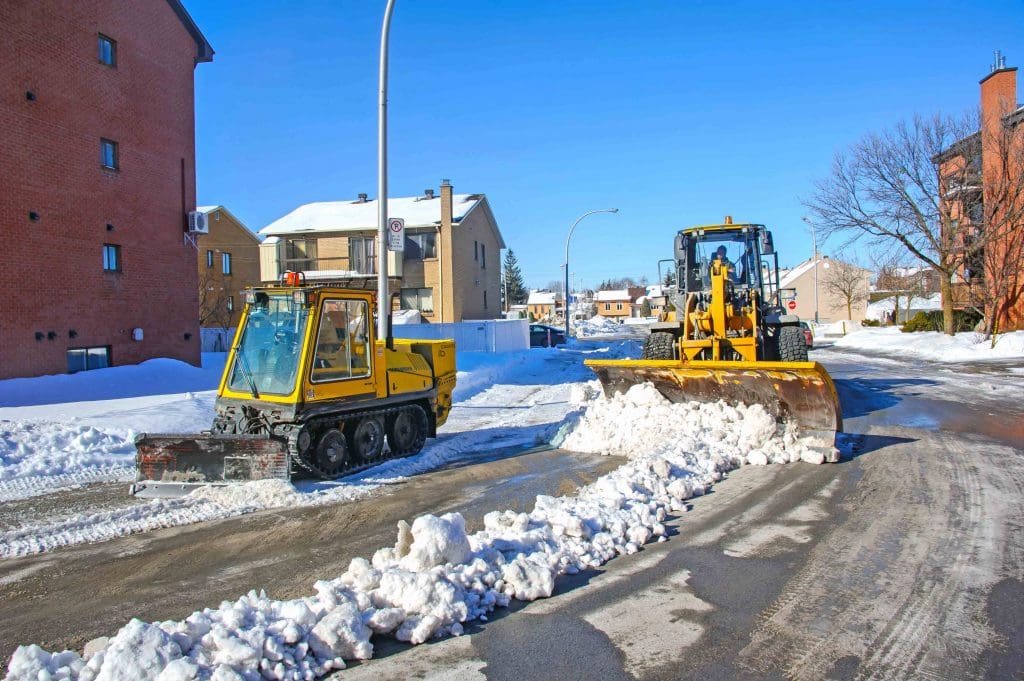
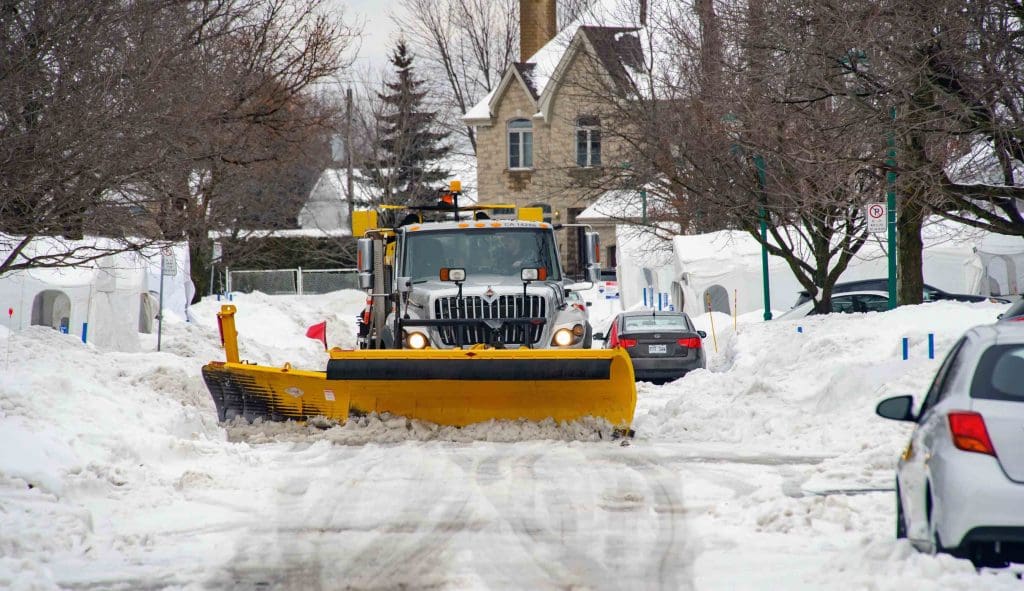
With the winter season now well underway, the City of Laval says its public works department is prepared for whatever Mother Nature sends this way.

Crews are standing ready with snow plows and snow removal trucks, as well as sidewalk tractors. Here’s what you can do to help make snow removal as easy and efficient as possible when storms blow through:

  •               When possible, park in your driveway on snow removal days. If you must park on the street, park your car at least 30 centimetres from the sidewalk so snow plows have clearance, while making sure there’s also room on the passenger side for police or emergency vehicles to pass by.
  •               Always shovel snow onto your own property, rather than onto the sidewalk or street.
  •               On recycling or trash pickup days, always place your bins on your property, rather than on the sidewalk or street.
  •               Always obey the instructions on parking signage.

Laval signs with Quebec for historic and heritage studies

Members of the city’s executive-committee last week approved the signing of an agreement with Quebec’s Culture and Communications Ministry, which will allow the city to conduct studies on the historic roots of some neighbourhoods where documentation has been lacking.

Since the end of the 1950s, several inventories of buildings of potential heritage and historic interest were conducted. The city has gradually been enlarging its knowledge of its historic past, including architectural development, over the past few decades.

Grande-Côte, now known as Avenue des Terrasses, in July 1948. (Photo: Archives City of Laval).

“We are pleased to have reached this agreement with the government of Quebec, which will allow the City of Laval to find on its territory the significant traces of heritage and history and land management in some of its neighbourhoods,” says Pierre Brabant, the city councillor for Vimont who is responsible for dossiers involving heritage and history.

Alice Abou-Khalil welcomes constituents to new riding office

Newly-elected Fabre MNA’s locale is in the heart of Sainte-Dorothée

Newly-elected Member of the National Assembly for Fabre Alice Abou-Khalil finally got a chance to touch base with some of her provincial riding’s constituents on the evening of Friday Dec. 16, when she held a pre-Christmas reception for the official opening of her new office.

Newly-elected Fabre MNA Alice Abou-Khalil welcomed all those, who despite winter road conditions, came to the inauguration of her new riding office. Her colleague, Sainte-Rose MNA Christopher Skeete was among her guests on Friday Dec. 16.

In a way, it’s not a new office – at least in the sense that Abou-Khalil opted to move into a locale at the corner of Principale and Hôtel de Ville in Sainte-Dorothée previously occupied by former MNA Monique Sauvé.

Official opening

In an interview with the Laval News, Abou-Khalil said she and her staff moved into the office around a month ago, but needed time to renovate a bit before inviting visitors in.

During the gathering, Abou-Khalil and her staff spent some time paying homage to the volunteers who helped with her political campaign leading up to the election last October. As well, representatives of local community groups dropped by. In all, around 120 people accepted the invitation.

“The message was very simple: to let them know that we’re here for them, the office we have here is for them,” she said.

Help available

“They can just make an appointment and come anytime from Monday to Friday,” Abou-Khalil continued. “We can see how we can be of help because we are here to help them. After all, I am their elected representative and they need to know that I am here.

“It’s also to wish them a Merry Christmas and hope that the year 2023 is a lot better than the last two years when there was Covid and other things,” she said. Alice Abou-Khalil’s constituency office is located at 538 rue Principale in Sainte-Dorothée (H7X 1C3). The office’s phone number is (450) 689-5516.

Work begins on Société de transport de Laval’s new all-electric garage

However, $246 million bill may rise to $308 million with inflated construction costs

STL general manager Guy Picard (seen with Transport Minister Geneviève Guilbault) said the transit agency is facing steep construction cost increases because of economic problems that include inflation (Photo: Martin C. Barry, Newsfirst Multimedia)

Federal, provincial and municipal officials were on hand last week at the Société de transport de Laval’s headquarters for the announcement of major new public transit funding, while at the same time turning the first shovels of gravel for the construction of the STL’s new 100 per cent electric garage.

Quebec Deputy Premier Geneviève Guilbault, who is also the Minister of Transport, announced $142 million in new funding to help the STL reach its goal of buying just electric-powered buses by the year 2025.

A growing electric fleet

And since the electric fleet will need supporting infrastructure, the STL is expanding its garage area by 50 per cent, while adding a 20-megawatt electrical input said to be several times the electrical power used at Laval’s Place Bell.

Quebec Transport Minister and Deputy Premier Geneviève Guilbault addresses guests and media last week at STL headquarters. (Photo: Martin C. Barry, Newsfirst Multimedia)

When completed, the all-electric garage will have the capacity to accommodate 145 electric buses. In all, the STL will be spending $246 million on the project, a significant amount of which will come from other sources, including the federal government.

Inflationary challenges

In the meantime, the STL, like other public transit agencies in Quebec, is facing enormous increases in costs for development projects because of mounting challenges for the province’s economy, such as astronomical inflation and overall instability in global finances.

“We are facing, just as with any other infrastructure project, cost increases,” STL general manager Guy Picard told journalists during a question-and-answer session at the STL garage. He said the transit agency currently is dealing with 25 – 50 per cent increases in costs for the construction projects it undertakes, although he insisted the STL is managing to keep the situation under control.

Laval mayor Stéphane Boyer (left) said the STL’s growth is a sign of ongoing progress towards developing a more prosperous City of Laval. (Photo: Martin C. Barry, Newsfirst Multimedia)

Will open in 2025

According to Picard, the electric garage project, which is scheduled to be completed in 2025, is on schedule in spite of the anticipated cost hikes. He told journalists that the $246 million originally set aside for the project may rise to $308 million. While Quebec and Ottawa are footing most of the bill, the STL is committed to shouldering 15 per cent (at least $18 million) of the eventual total cost.

In addition to the sums provided by Quebec, the federal government is also contributing to the project. “Mass transit plays an essential role in the attainment of our climate goals,” said Vimy Liberal MP Annie Koutrakis who was accompanied by fellow Laval-area MPs Fayçal El-Khoury and Angelo Iacono.

Important step: Koutrakis

The federal government allotted more than $85 million for the STL’s garage expansion, noted Vimy MP Annie Koutrakis. (Photo: Martin C. Barry, Newsfirst Multimedia)

“That is why I am pleased to be here today for the start of work on the enlargement of the Société de transport de Laval’s garage, to which our government allotted more than $85 million in federal funds,” she added “This is an important step towards electrification of the city’s bus fleet, which will help reduce its carbon footprint while encouraging sustainable development.”

“What’s important to see in the beginning of work on this garage is a vision for the development of Laval,” said Mayor Stéphane Boyer. “Here, road transport contributes 70 per cent of greenhouse gas emissions on our territory. There is no doubt whatever that the future lies in the development of green, efficient and easily accessible mass transit. I congratulate the STL for all the efforts it is making, and of course I thank the Quebec government for its generous financial participation.”

From the left, Vimy Liberal MP Annie Koutrakis, Sainte-Rose CAQ MNA Christopher Skeete, Quebec Deputy Premier Geneviève Guilbault, Laval mayor Stéphane Boyer and STL general manager Guy Picard turn the first shovels of earth and gravel to mark the beginning of work on the transit agency’s future all-electric garage. (Photo: Martin C. Barry, Newsfirst Multimedia)

Improved mobility: Skeete

“This project will allow for the modernization of infrastructures in order to offer to Laval residents better mobility,” said Sainte-Rose CAQ MNA Christopher Skeete, who is Minister Responsible for the Laval Region in the Legault government.

“Electrification of transport is necessary to reach our ambitious goals to address the issue of climate change. I would like to point out the work done by the team at the STL, which is showing itself to be proactive and greener, while finding better solutions in mass transit.”

Laval News Volume 30-29

0

The current issue of the Laval News, volume 30-29, published on December 21st, 2022.
Covering Laval local news, politics, sports, and our new section Mature Life.
(Click on the image to read the paper.)

Front page of the Laval News.
Front page of the Laval News, December 21st, 2022 issue.

Weather picture’s bleak just before Christmas

In a special weather statement now in effect, Environment Canada suggests that the 2-3 days leading up to December 25 will be tough on anyone who might have been expecting to get last minute shopping and chores done in time for Christmas.

According to the weather agency, an intense low pressure system will move over Western and Central Quebec beginning Thursday evening and affect these areas through Saturday.

Significant snowfall amounts, strong winds and blowing snow are expected over the areas to the north of the St Lawrence river, while over the areas to the south, some of the precipitation will fall as rain at times heavy.

Freezing rain is also likely in the snow-to-rain transition area.

As there is some uncertainty as to the system’s track, Environment Canada said on Tuesday afternoon that it was still too early to provide details regarding expected precipitation amounts.

However, by Saturday afternoon, in the wake of the system, snow squalls could also be possible over southern parts of Quebec with the passage of cold air over the Great Lakes.

The arrival of this cold air will see temperatures drop below seasonal values on Christmas Day and early next week.

Road conditions are expected to be difficult and power outages are also possible.

The weather service also cautions that wet and heavy snow may add significant weight to trees and some structures.