Laval News Volume 26-02
This issue covers local events such us politics, sports and human interest stories. It features editorials and other columns. Click on the image to read the paper.

Martin C. Barry
With Prime Minister Justin Trudeau’s Liberal government now half-way through its first mandate, Newsfirst Multimedia had the opportunity recently to touch base with one of the senior members of the Trudeau cabinet.
First elected an MP for the riding of Vancouver South in 2015, Harjit Sajjan was appointed Defence Minister by Justin Trudeau in November that year. Sajjan was the first Sikh Canadian to become Defence Minister.
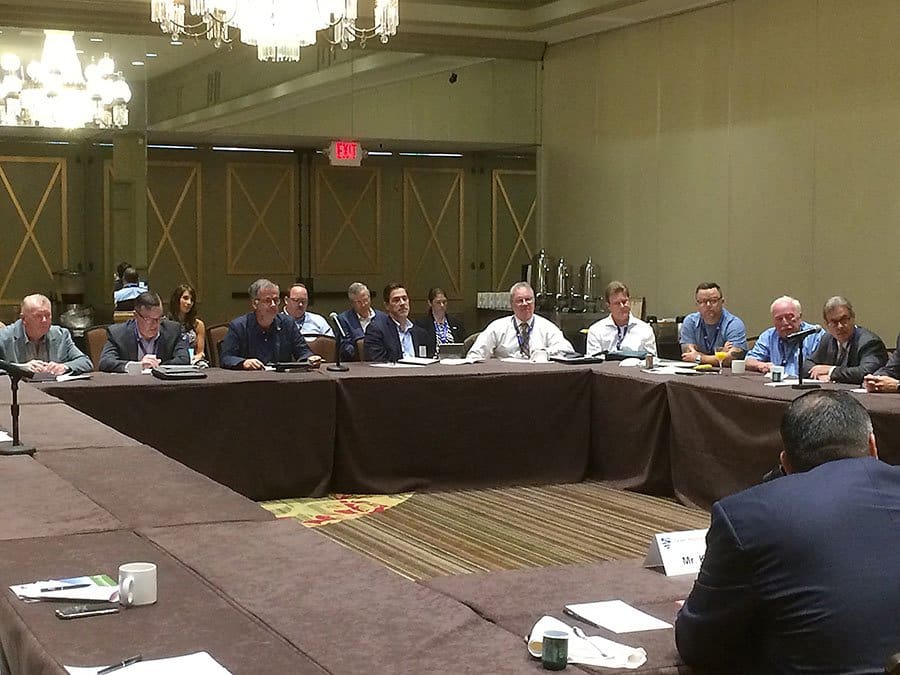
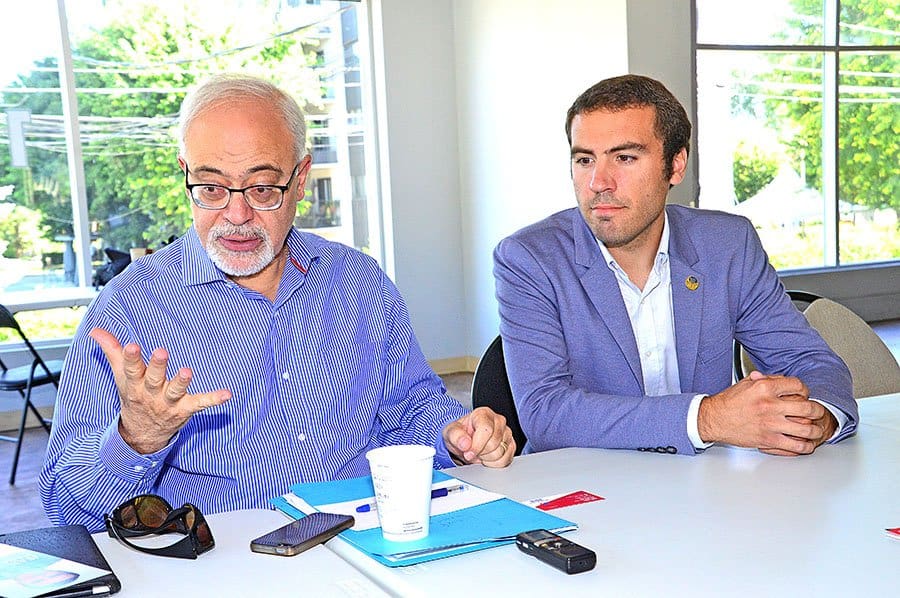
Newsfirst Multimedia Co-publisher George Guzmas and journalist Martin C. Barry had the privilege to sit down with Sajjan for an interview at the federal cabinet’s Quebec region offices in Old Montreal. What follows is an abbreviated transcript of the interview.

Newsfirst: As an Indo-Canadian, you are seen as a role model by many young people in the Indo-Canadian community, including a good number in one of our readership areas. What is your message to young people in general, including Indo-Canadian youths?
Harjit Sajjan: I look at it regardless of what your origins are. What’s important is to have the confidence to believe in yourself. People think that looks attract. I always feel that actually confidence attracts. What I always say is believe in yourself. Don’t let anybody tell you what you can’t do. Just have pride in yourself and if you want to learn more about your culture learn it. But, more importantly, learn about others. That’s the biggest thing: to genuinely learn about other cultures. And when you learn about each other, that’s when you break down those barriers. The ultimate thing is if you want to make a difference and it’s your choice, go for it. That’s what really excites me – how we can set an example. Because we had mentors in our lives who helped us and now it’s our responsibility to help the next generation.
Newsfirst: Canada held a joint exercise recently with the U.S. to simulate a nuclear attack on both countries. Can you tell us a little bit about Canada’s preparedness for the possibility of nuclear war?
Harjit Sajjan: Certainly when it comes to the safety of Canadians this is what the Canadian Armed Forces are for. We’re looking at foreign threats, we look at all conflicts and especially anything that can impact us back at home. And we conduct joint exercises with our allies. In fact, I can hardly even keep track of how many exercises. But more importantly, on a daily basis we work with the U.S. quite regularly. And that’s why in our defence policy a part of it is called A Secure North America, with our most important ally the U.S. In fact, we probably have 800 personnel actually in the U.S. We actually have generals who are deputy-commanders of the U.S. corps’s, in making cases working at headquarters like Pacific Command out of Hawaii and many other places including CENTCOM [United States Central Command]. So we do a lot of exercises. But this is what good militaries do – prudent planning, making sure that we train. We always want to make sure that we train well. But let’s never forget the most important thing is diplomacy. And [Foreign Affairs] Minister Freeland is working extremely hard. Especially when it comes to North Korea, we’re working with the U.S. and other allies to allow diplomacy to work.
Newsfirst: Has there been a growing awareness lately of the nuclear issue given the tensions over North Korea?
Harjit Sajjan: We’ve been monitoring the situation with North Korea for some time. Obviously we’ve seen an increase in some of the missile testing, which we unequivocally condemn. We asked them to de-escalate the situation. Because it’s not good for them, it’s not good for our allies in the region. And we’ll continue to find different ways. Our government is committed to working with our allies. And, as I stated, Minister Freeland has stated that she’ll be working with the U.S. and many other allies in terms of trying to come up with potential solutions to this. And until then we’ll always keep planning and making sure that Canadians are always safe.
Newsfirst: In terms of support for civilian infrastructure like electricity, water, fuel in the event of a military cataclysm, does the Ministry of Defence have any plans for providing support to civilians?
Harjit Sajjan: Canadian Forces are here to provide all the necessary support needed for any type of disasters. As we prepare for any type of horrible disasters that we hope we never come to, we have to keep in mind what are the things that we mainly respond to in natural disasters. So whether, for example, it’s floods and a week later it’s something else we have to deal with, those are the things. For example, in Quebec here we will always be quick to arrive and slow to leave to make sure Canadians are confident that the Canadian Armed Forces, with all the other security partners working with the provincial government and with the municipalities, will always be there for them to give that sense of calm. I’m very proud of all the work the Canadian Armed Forces have done, because I like to visit a lot of the communities in the region, as I’ve done for the fires situation in B.C. as well. We’ll always be there for Canadians.
Newsfirst: It seems that the current policy of the U.S. is not to intervene should Canada come under ballistic missile attack. How endangered might we be from an attack by North Korea, for example?
Harjit Sajjan: As I’ve stated, we monitor these situations extremely closely and we’ve been doing this for a very long time. In fact, this is one of the reasons why in our national defence policy we look at the various threats. In fact, we actually had our national defence committee go down to NORAD to take a look at what they do to make a recommendation. So what some people sometimes look at is the defensive aspect of missile defence. What I look at is what are we trying to protect ourselves from. So when we talk about the air threat from ballistic missiles, we fully understand that and we work very closely with NORAD – it’s a bi-national command that we have. But what I also want to do, and it’s in defence policy, is how do we look at all perils and threats. So I don’t want to just focus on one threat and then not be set up for the next. The military is there to also potentially look at flexibility for dealing with new threats. So when we do the analysis for this as we move forward, especially when it comes to North American defence and modernization, we’re going to be looking at all sorts of threats – from the air, land, surface, on the water, and also underwater as well. And that will allow us to figure out what are the things that we need. So we don’t just want to focus on one issue, we want to make sure that we’re looking at it from a completely holistic aspect of things, and then we’ll make some decisions.
Newsfirst: You served in Afghanistan. What sort of impact did that have on you personally, compared to other learning experiences in your lifetime?
Harjit Sajjan: When it comes to my experience, I’m very fortunate. I had the opportunity to serve. It allowed me to see the tremendous impact that our Canadian soldiers can have on the ground, and the need also for them. But we need to support them. And so as the minister now, I realize that if we’re going to sustain something like this we’re going to have to make sure that they’re well looked after, and our defence policy now does just that. And so it really helped form my thinking on this, and that’s one of the reasons for putting our people first – it’s because of our experience in Afghanistan. Coalition members always want us to be part of the solution when it comes to many different conflicts. So it also gives us a far better understanding of what type of tools are needed to understand conflict. And our defence policies put in the right resources into certain areas, especially when it comes to intelligence. That’s why we’re going to be making sure that our Canadian forces can have the technology and the tools for the future. But let’s never forget our number one asset is always our women and men in uniform. And looking after them and then giving them the right tools is really going to make the difference.
Newsfirst: There was controversy over your role in Operation Medusa in Afghanistan. We understand from reading various sources that you made a significant contribution to the operation in terms of intelligence gathering, although perhaps it has been misunderstood. Can you set the record straight on this matter?
Harjit Sajjan: I’ve been very clear on this. Regrettably, to talk about your own experience in this political realm, people often want to take it a different way. I’m very proud of my service. I got to meet people who served in those areas and I’ve very proud that I was able to serve with them. They know what I’ve accomplished and I know exactly what other people have accomplished. I think what people should know is that regardless of anything, you should be proud of the impact that you have. In fact, for me I found it very disappointing from the opposition on how they tried to portray and attack my service when at the end of the day it’s not what I did nor how I served. So I’ll always be very proud of my service, because when my children look at me, my daughter she looks at me to this day and she knows how long I’ve been away from her, and I have a son now who didn’t know this. So I want my children to be very proud of the fact so that they can have an impact on this world. My daughter knows that I gave up a career to go serve in Afghanistan. I actually gave up my policing career because I couldn’t get leave of absence to deploy a third time when I deployed with the Americans on their request. But I gave it up because my service was needed, so I went. So I am extremely proud of what I’ve been able to do and it serves me well as a minister now that I can ask the right questions, I can put the right resources, and it is my privilege to be able to serve them.
Newsfirst: In terms of Canada’s role as a peacekeeper, the government has said it wants the country to resume its past role as an international peacekeeper, although so far we are seeing relatively little of that resolve being turned into action. Is there more peacekeeping in Canada’s future?
Harjit Sajjan: It isn’t always just about peacekeeping, it’s about what is Canada’s contribution going to be to the U.N. on peace-support operations. And Canada is committed. We’ve made the announcement of how we’re going to do this. We committed a little over a year ago what we’re willing to contribute based on our analysis and how we’re going to do it. What we want to do is make sure that when we contribute something it’s actually going to have an impact on the ground. For any government, it is a difficult decision anytime you send your most precious treasure into conflict zones. So you want to make sure they’re going to have the right impact on the ground, and to do this they have to be well-supported, trained and equipped, have the right rules of engagement and the right mandate, as well. But what we’ve offered the U.N. right now is exactly what the U.N. was looking for: innovative ways on how to have an impact on their peace-support operations, rather than just picking locations and putting all your resources in one area and expecting a mass of changes, which is not going to happen. What we’re trying to do is, there are already missions that are ongoing, great work has been done. But there’s been challenges, as well. So what we want to do is our contributions have an impact and support the United Nations’ work that’s going on. At the same time, some of those challenges, for example, were troop-contributing nations having been part of the problem. There have been peacekeepers who have not done their jobs well. We need to make sure that these things change. And so we’ve offered up an initiative on how to help the entire peace-support operation. So what we’re trying to do is help the U.N. to make all their missions better. Imagine if other nations also followed suit in doing this with the principles we have outlined, now you might actually see for the long-term of having a substantial impact for not just one mission, but potentially across the board.
Newsfirst: Based on the allocation of budgets, in what state (equipment and personnel) are the Canadian Forces in now?
Harjit Sajjan: Our government’s new defence policy, Strong, Secure, Engaged, establishes a new vision and approach for defence. Our government has laid out an ambitious yet realistic plan so that Canada can meet defence challenges now and into the future. Defence spending will increase over the next 10 years from $18.9 billion to $32.7 billion annually. The regular force will grow by 3,500 members and the reserves by 1,500. Investments will also be made to acquire, maintain, and upgrade CAF capabilities.
Newsfirst: What would be the ideal number of troops and equipment for the Canadian Armed Forces?
Harjit Sajjan: To ensure the CAF has the people and capabilities it needs to succeed on its missions, we will increase the size of the regular force to 71,500 personnel, and the reserve force to 30,000, and better support their health and welfare. Our government will also undertake the largest defence modernization effort in decades, supported by a rigorous, evidence-based capability planning process. Additionally, we will invest in areas such as intelligence, targeting and Arctic capabilities. We will also pursue critical enablers in the space and cyber domains.
On November 23rd and 24th, Agape’s Kevin McLeod and Ian Williams took part in a 2 day exchange conference* in Quebec City put together by the Community Health and Social Services Network (CHSSN). The exchange conference “Building Together” joined over 20 community health and social service networks (NPIs) across Quebec along with many public partners from the Integrated Health and Social Services Centres (CISSS) and Integrated University Health and Social Services Centres (CIUSSS).

The event had four primary objectives: To highlight several Adaptation projects that were carried out in 2013-2018; To review the implementation of health projects aimed at English-speaking individuals and communities in Quebec; To highlight best practices and priorities for new projects in 2018-2023; To encourage networking between all of the partners.
The conference highlighted several success stories and the partnerships that have built successful results together. The conference was also a key opportunity to develop new ideas and collaborations for improving access to health and social services for English-speaking communities and individuals across the province. There was a deeper understanding of the issues facing many communities and how those issues have been addressed through creative programing and adaptation of services.

“It was great to see all of the organizations come together with great ideas and success stories, all benefiting the English-speaking minority population of Quebec.” said McLeod. “We have a good working relationship with the CISSS Laval (Health and Social Services Centre) and we look forward to continuing our partnership with them. The last census shows that there are 90,980 English-speakers in Laval which represents 21.8% of the Laval population. The numbers keep growing in our favor, services must do the same.”
Agape had the opportunity to share their own success stories as well as display the many services/projects offered to the English-speaking community of Laval such as the Adaptation of health and social services initiative*, Networking and Partnership Initiative (NPI)*, Health Promotion Projects (HPP)* for youth and seniors, Community Health Education Programs (CHEP)* and the McGill Training and Retention of Health Professionals Progam.*

“Agape has been around for many years now and we offer so much more than a food, clothing and furniture bank. It’s nice to see that Laval English-speakers are finally turning to Agape for many different services. ” McLeod added.
Welcomed at the reception were special guests Gaétan Barrette, Minister of Health and Social Services and Kathleen Weil, Minister responsible for Relations with English-Speaking Quebeckers, Minister responsible for Access to Information and the Reform of Democratic Institutions.
“We spoke with Minister Weil and we agreed to schedule a meeting in the New Year,” McLeod explained. “Agape would like to welcome her at our organization and we would like to introduce her to the English-speaking population of Laval.”
*Initiatives funded by Health Canada through the Roadmap for Canada’s Official Languages 2013-2018: Education, Immigration, Communities.


New park along the Rivière des Prairies
The members of the executive committee will forward a recommendation for municipal council approval concerning the acquisition of lot 3 936 659 of the cadastre of Quebec. This lot encompasses an area of approximately 5790 square meters and is located south of Bord-de-l’Eau Road bordering the Rivière des Prairies. The cost of the acquisition is $847,775 (net taxes included).
The site will first be used to store construction equipment and parts needed to support the ongoing reconstruction work on the Bigras and Verte Islands bridges. The immediate advantage is to return Jolibourg Park to its original vocation as it has been temporarily used as a warehousing site for this construction. After the renovation infrastructure projects have been completed the executive concluded that the land could be used for the development of a new park and or riverfront green space.
Acquisition of a lot in the Papineau woodlands for conservation purposes
The City of Laval will acquire lot 1 392 463 of the cadastre of Quebec at a cost of $13,925 (net taxes included) for conservation purposes. The land which covers an area of 697 square meters is located within the Papineau Woodland special ecological development zone, identified as such in the revised urban development master plan. The Bois Papineau wooded area is located in the Duvernay district in the heart of an urban area. It houses among other things, three nature reserves recognized for the diversity and richness of their ecosystems. Also the marked trails of this woodland allow for many activities such as hiking, snowshoeing and bird watching. The Papineau Wood Conservation Association has been active in promoting and developing this area since its creation in 1986.
Four lots ceded to the municipality in the permanent agricultural zone
Lots 1 981 504, 1 981 459, 1 981 540 and 1 981526 of the cadastre of Québec, located in the Saint-François district whose total area measures 26,185 square meters, will be transferred to the City by the owner for the nominal sum of one dollar. These lots are located within the permanent agricultural zone of Quebec, in a designated area that has been characterized by the regrouping of agricultural lands (consolidation site number 15). These lots are part of an area in Laval whose zoning cannot be altered and cannot be used for purposes other than agriculture.
Infrastructure work on part of Elsa-Triolet Street
Part of lot 5 096 940 (proposed lot 6 160 229) of the cadastre of Québec, of an area of 1,744 square meters, will be transferred to the City of Laval by the owner for the nominal sum of one dollar. The land thus acquired will be used to facilitate infrastructure projects on part of the Elsa-Triolet Street.
Destination Europe: Laval companies get help to open new markets oversees
Thanks to an agreement with Emploi-Québec; Laval’s Economic Development Department will support four Laval-based companies to acquire specific knowledge of potential European markets. With this expertise it is hoped that these companies will be able to develop a market strategy which will enable them to set up partnerships and business contacts in order to gain access to trade in these markets. This was made possible by grants as part of the Destination Europe project. This project will culminate for each participating company with the organization of a prospecting mission in the targeted country. To support them the City of Laval will retain the services of two consultants. The fees of these consultants totaling $ 40,000 will be entirely borne by Emploi-Québec ($ 22,000) and by businesses ($ 18,000).
The initiative Destination Europe is a business support project for market development in Europe. It is part of the opening of the Canada-European Union Comprehensive Economic and Trade Agreement (CETA) Interim Agreement, which will come into force on September 21st 2018. It will promote new opportunities for businesses, which will then have access to a market of nearly 500 million consumers. The agreement reached between the City and Emploi-Québec makes Destination Europe more accessible to more Laval companies as the grants provided in this agreement represent 41.51% of the overall project budget which is estimated at $53,000.
20th edition of the OSEntreprendre Contest
The Economic Development Department of the Ville de Laval will once again be responsible for organizing the regional component of the OSEntreprendre contest (formerly known as the Québec Entrepreneurship Contest) which will be celebrating its 20th edition in 2018. This is the only contest in Quebec to mobilize, promote and raise awareness for the development of the entrepreneurial culture. The regional awards ceremony will take place as part of the OSE Laval event, in which over 400 people took part last year. The contest is open to new companies in the start-up and conception phase as well as start-up companies just launched. Also an important component is the presentation of student entrepreneurship projects ranging from elementary to university age. Also former participants from 1998 to 2012 will vie for the Prix Réussite Inc prize which recognizes companies that have succeeded in their development.
The contest is being rolled out in Quebec’s 17 administrative regions at three levels: local, regional and provincial. However, since Laval is a city and a MRC there is no local level so all projects are directly referred to the regional committee. In all more than $ 600,000 in bursaries and scholarships will be awarded across all of the regions of Quebec as part of this event.
Intelligent Mobility Incubation and Acceleration Center in Laval (CIAMIL)
The members of the executive committee have forwarded a recommendation for city council approval of the memorandum agreed to with the Société de transport de Laval-STL Laval’s transportation agency. The agreement calls for the establishment of an Incubation Centre for the strategic development of Intelligent Mobility in Laval (CIAMIL- Centre d’incubation et d’accélération en mobilité intelligente à Laval). The non-profit organization which will ultimately be governed by a seven-person board of directors, will aim among other things, to mobilize existing companies to develop and implement innovative solutions for smart and sustainable mobility of people and goods in industrial parks, downtown and employment areas.
$12,000 grant to the Regional Council of Culture
A grant of $ 12,000 has been awarded to the Regional Council of Culture for the work of creating a regional culture development action plan. The organization will have the means to establish up to six independent teams that will focus on different cultural areas for development whose initial efforts will include scheduling forty meetings involving more than 60 regional partners (artists, cultural organizations, cultural professionals and other regional partners). These focus groups will have the goal to identify the priorities for cultural development in Laval over the next five years. As the official body assigned the task of organizing the local cultural assets in Laval the Regional Council of Culture has been mandated to develop this action plan in close collaboration with all its local partners working in this field. This initiative is part of the consultation process started this winter and whose results will be highlighted at the Summit of Culture meeting to be held in June 2018.
(TLN) On Nov. 20, around 1,000 children, parents, citizens, elected officials and representatives from community and school organizations walked along the streets of Laval before finishing up at Laval city hall during an event to mark the annual International Day for the Rights of Children.

The procession, which started at École des Quatre-Vents, concluded with five children reading key articles from the United Nations’ Convention on the Rights of Children, followed by short speeches by Mayor Marc Demers, CSDL president Louise Lortie, and Chantal Gignac, executive-director of the Maison des enfants Le Dauphin.

“Laval is the city of families par excellence,” said Demers. “It distinguishes itself by the choice place accorded to children through the city’s leisure programs as well as its policies, created to encourage their development while assuring their security. In short, children are at the heart of the priorities of the administration in Laval.”
TLN
On December 3, Vipers de Laval Nord and Panthères de Deux Montagnes “Stormed The Centre” and played a game at The Bell Centre and where “Be the Habs” for a day. The teams have taken part in Under Armour’s Storm The Centre competition and where participating in the Armour Cup on Sunday December 10. The teams will spend the day at The Bell Centre working with the Canadiens staff, get treated like the pros and enjoy a day of mentorship with Montreal Canadiens alumni Marc Denis and Gaston Gingras.