In
an effort to protect and enhance the heritage architecture on its territory,
the City of Laval, in keeping with a trend in other cities in Quebec, has
served noticed that it is drafting a new by-law dealing with the demolition of
buildings and other structures considered architecturally significant because
of their heritage value.
More
than 1,400 buildings and structures are targeted by the by-law. Almost all of
them are part of pre-inventory of the City of Laval’s heritage architecture
that was conducted in 2015 by the firm Patri-Arch. The list includes primary
and secondary buildings, roadside crosses, shrines, tombs and a vault.
Heritage protection
The
city’s by-law was developed in keeping with elements contained in a provincial
law on urban planning, which allows municipalities to have regulations to
control the demolition of buildings considered noteworthy – with special
emphasis on their heritage value.
“We
are very happy that this project is coming together which will certainly help
to avoid regrettable demolitions, attesting to our willingness to guarantee the
continuation of this collective wealth which is architectural heritage,” said
Laval councillor for Sainte-Rose Virginie Dufour, an executive-committee member.
Demolitions suspended
Since
the new by-law came into effect on Jan. 31, the issuing of demolition permits
has been suspended for buildings eyed by the city for possible preservation
based on their heritage value. This suspension will cease to be valid under the
following conditions:
If
the demolition by-law is not adopted within the two months following the
passing of the resolution; If the demolition by-law has not come into effect
within the four months following its adoption; When the demolition by-law comes
into effect.
Over
the past year, a groundbreaking public consultation was conducted by the city
among property owners potentially affected. Around 100 heritage buildings were
identified. During the consultations, around 30 people took part in four
working sessions between April and May 2018.
45 recommendations
The
participants came up with around 45 recommendations, which were presented to
members of the executive-committee. Some of the recommendations were taken up
by the executive-committee, including one that called for additional support
for a program to revitalize heritage buildings.
Among
the tasks that have already been accomplished: The creation of an inventory of
roadside crosses and shrines all over Laval’s territory; The creation of a study
on the history and heritage of the Saint-François de Sales sector; The
realization of a series of videos on Laval’s heritage and history; The
restoration of roadside crosses and shrines in Laval’s public areas.
From the left: Jonathan Dufour, president of the Association des pompiers de Laval
Sandra Desmeules, member of Laval executive-committee, René Daigneault, Laval Fire Department Director, Éric Morasse, city councillor for Saint-François, Ricardo Martinez, project leader from Bureau des grands projets de la Ville de Laval, and Yvon Léonard of the Musée des pompiers de Laval.
(TLN) Residents in the eastern half of the City of
Laval will be more protected than ever against fire with the opening of a new
firehall in the district of Saint-François.
Decentralized
plan
In its revised master plan for fire risk coverage 2015-2019,
the City of Laval made a commitment to decentralize the Saint-François firehall
in order to meet standards which required a minimum of 10 firefighters on the
scene of a blaze within 10 minutes of a call, in 90 per cent of cases.
According
to the city, this will allow rescue operations to take place more efficiently,
while ensuring safe evacuations and minimal losses of property.
Meeting
the needs
“The Saint-François firehall was among
the investments which were planned for in the revised plan for which an amount
of $31 million was allotted to meet the needs of the citizens while taking into
account all the risks needing to be covered on our cast territory,” said Mayor Marc Demers.
“I am happy for the citizens of the district of
Saint-François
and for Councillor Éric Morasse, who since being elected had always supported the
construction of this project for the new firehall number 5,” said Sandra
Desmeules, who sits on the executive-committee with responsibilities for public
security. “This represents an investment of more than $8 million to assure the
safety of our citizens.”
New equipment
An
improved striking force at the Laval Fire Department will be made possible with
new equipment at the Saint-François firehall, including two pumper trucks made for a crew of four
firefighters each, and a ladder truck with three firefighters, for a minimum of
11 firefighters at all times.
“Thanks to some new and efficient equipment at the new
Saint-François firehall, we will be able to respond for efficiently to the 400 calls and 50
fires per year in this area of Laval,” said René Daigneault,
director of the Laval Fire Department.
Feb 18 – Police are searching for a man who failed to
show up in court recently.
André Doré was arrested in 2014 and charged with multiple
drug-related offenses. He was released on bail but has failed to appear in
court since then.
The mug shot of Doré was taken when he was 56-years-old.
He is now 62.
According to police, he was living in Chertsey, in the
Laurentians, but his current whereabouts are unknown.
Police urge anyone with information about Doré’s location
to call their info-line and speak confidentially with an officer: 450-662-INFO
(4636)
Armed Standoff in
Fabreville Ends Quietly
Feb 15 – A section of Boul. Ste-Rose was closed off to
traffic on Friday afternoon as police dealt with an armed standoff situation.
Police say they received a call at 4:30 p.m. reporting an
armed man in a house on Bellemare St. in Fabreville. A neighbour had rung the
doorbell and had been greeted by a man with a gun at the door. The neighbour
retreated to his house and called 911.
Around
10 officers were dispatched to negotiate with the armed man. They eventually
convinced him to exit the house and the situation ended peacefully. The man was
detained and could face possible criminal charges including pointing a gun at
someone.
Ste-Rose Boulevard was closed for several hours between
31st Avenue and Frenette Street, as the standoff unfolded.
First Two Homicides
of 2019 Occur Only Days Apart
Feb 14 – Laval police were called to the scene of the
first two homicides of the year, which occurred only days apart from each
other. The provincial police has since taken over the investigation due to the
victims’ ties to organized crime.
The first murder happened on Feb 11.
Police responded to a call about an injured man in the
parking lot of an apartment building on Havre des Îles Avenue in Chomedey. It
was just after 4 a.m. Monday morning.
The victim, later identified as 35-year-old Eliot
Blanchard, was taken to hospital in serious condition but later died of his
wounds. Blanchard was well-known to police for previous drug-related offenses
and his connections to local organized crime.
The second murder to occur in Laval happened about three
days later.
Shortly before midnight on February 13, police received a
call reporting a man lying on the ground beside his car on Potier St near the
intersection of Edimbourg St. in Vimont. When police arrived, the victim was semi-conscious.
He had suffered obvious injuries as well as a bullet to the head. He was rushed
to hospital but subsequently died of his injuries.
The victim was identified as Ray Kahno, who police say,
was a well-known drug smuggler with strong ties to the Italian mafia.
Walking Prohibited
Along Snowmobile Trails
Feb 5 – Laval police want to remind everyone that walking
along snowmobile trails is prohibited by law.
Pedestrians are not permitted on the trails, unless it is
for the sole purpose of crossing the path safely and in the most direct manner.
Offenders may be subject to a fine of $150, plus fees.
Laval officers patrol the paths to ensure everyone’s
safety.
From the left: Valérie Grenon, president of the FIPEQ-CSQ, Francine Lessard, executive-director of the CQSEPE and Quebec Liberal MNA for Westmount-St. Louis Jennifer Maccarone who is the PLQ’s official critic for family issues.
Martin C. Barry
Jennifer
Maccarone, the Quebec Liberal Party’s official critic for family issues on the
National Assembly’s opposition benches, says that even though her party doesn’t
disapprove completely of the CAQ government’s plan to make children as young as
four attend pre-kindergarten, the PLQ thinks resources would be better used on
more pressing educational projects.
PLQ questions plan
Maccarone,
former president of the Quebec English School Boards Association and past
chairperson of the Sir Wilfrid Laurier School Board, was among the guests who
attended a press conference held in Laval on Feb. 11 at the Joyeux Bambins
children’s daycare in Fabreville by the Conseil québécois des services
éducatifs à la petite enfance (CQSEPE) and the Fédération des intervenantes en
petite enfance du Québec (FIPEQ-CSQ).
While
the Liberals question the government’s plan, the CQSEPE and the FIPEQ-CSQ both
want the CAQ government’s plan stopped altogether. “Childcare workers and
employers from the sector are agreed in calling for a stop to the development
of new kindergartens for all four-year-olds,” CQSEPE director Francine Lessard
and FIPEQ-CSQ president Valérie Grenon said in a statement.
Petition by PQ
Although
now reduced to 10 seats in the National Assembly, the Parti Québécois is also
behind the movement opposing the pre-kindergarten program for four-year-olds. A
petition launched by PQ MNA for Joliette Véronique Hivon last December is
gaining support.
In
the meantime, some of the
criticism has been directed at the CAQ’s only elected member of the National
Assembly from Laval – Sainte-Rose CAQ MNA Christopher Skeete.
“How can Christopher Skeete endorse the implementation
of four-year-olds kindergartens wall-to-wall when this is not the will of
fellow citizens,” said the FIPEQ-CSQ’s Valérie Grenon. “We are
calling on them to demand investments for our little ones in our public network
of children’s daycares.”
Opponents and critics of the CAQ government’s plan to introduce wall-to-wall pre-k for four-year-olds held a press conference at a Fabreville daycare on Feb. 11.
Against
wall-to-wall plan
In an interview with the Laval News, Maccarone said,
“We’re not against the idea of four-year-old pre-k – we’re against the idea of
wall-to-wall implementation. We believe in complementarity – in having a
complementary system. And we think what we need to do is to take some steps
back to evaluate.”
However, at this point the Liberals remain uncertain
as to how the CAQ is going to proceed implementing the plan, she added. “We now
know that the price tag has gone up from $250 million that they had announced
during their electoral campaign, to between $400 and $700 million.” But in the
meantime, Maccarone and her PLQ colleagues agree there is considerable
opposition to what the CAQ wants to do.
Léger
poll backs claims
“We have many stakeholder groups that are saying that
this isn’t the solution that we need to put into place today, from teachers to
specialists and researchers. And now we’ve added the voice of parents.” She
cited a recent survey conducted by the Léger polling firm indicating that just one of every five parents would
choose four-year-old pre-k in the education system over the daycare system.
“The minister is saying that this is the best way to
early diagnose some children that have potential difficulties. But the reality
is that four years old is too late – it has to happen much earlier. And so
rather than invest the $400 to $700 million in the school system to get
four-year-old pre-k, why not take that money and invest it in the daycare
system?
More
thinking needed
“Because if we’re talking about having professionals,
then we can certainly have those professionals available in alternatives that
work. And we know that our schools don’t have enough places. If we’re talking
just about the Francophone network especially, they are bursting at the seams.
“Many of our schools require significant investments
in infrastructure to improve the quality of the buildings. We also have a
shortage of teachers and a shortage of labour in general,” Maccarone added. “What
we need to be doing is focusing our attention elsewhere. So it’s not that
four-year-old pre-k is a bad idea – it’s just not well thought out.”
When former federal Conservative cabinet minister
Maxime Bernier was pondering what would make a good name for his new political
party, he as well as supporters had some initial misgivings about “People’s
Party of Canada.”
Naming
the party
“In the beginning we had a debate about the name of
our party,” Bernier recounted to a room full of followers who gathered in Côte
des Neiges recently to announce the PPC’s candidate in the upcoming
by-election in Outremont.
“People’s Party – that’s communist,” said Bernier, drawing
raucous laughter from the crowd, while recalling a typical reaction from PPCers
who are located a great deal more to the right on the political scale.
PPC leader Maxime Bernier, right, introduces the party’s candidate in the Feb. 25 Outremont by-election, Canadian Armed Forces veteran James Seale.
Vet
running in Outremont
However, in the end common sense prevailed when it was
suggested that the PPC needed an easily identifiable abbreviation so as not to
become confused with other parties. The party’s launch event was held to
officially announce the candidacy of Canadian Forces veteran James Seale as the
PPC’s candidate in the Feb. 25 Outremont by-election.
While Bernier was making his pitch to a largely ethnic
crowd in highly multicultural Côte des Neiges, he told them the PPC exists to unite Canadians under a
single party banner regardless of their cultural origins.
“If you’re a Canadian of Chinese origin or of Indian
origin you’re a Canadian and that’s important,” he said. “There’s no pandering.
We won’t speak to you as a Chinese Canadian or a Muslim Canadian. You are
Canadian first.”
A
different approach
He sought to differentiate the PPC’s approach from
most of the other federal parties, including the Liberals and the
Conservatives. “They try to please every special interest group or every ethnic
community in our country with special programs,” Bernier said.
Referring to Liberal Prime Minister Justin Trudeau and
“his cult of diversity,” Bernier said Trudeau is “saying that diversity is our
strength, and we all know that it is not that. It is what unites us that is our
strength. We must celebrate what unites us.”
Currently garnering up to 6 per cent support in Quebec
in recent Léger
opinion polls, Maxime Bernier is regarded by a rising number of
supporters as a dependable politician who is known for speaking his mind. He is
said to harbour strong beliefs in personal responsibility and freedom. In his
public statements, he expresses these values as well as an unwavering
commitment to reducing the size of government.
PPC candidate in Outremont James Seale, right, listens as party leader Maxime Bernier introduces him during a campaign event held recently in Côte des Neiges.
A fierce competitor
According
to an official biography posted on the PPC website, Bernier was born Jan. 18,
1963, in St-Georges-de-Beauce. He is the father of two girls. He is also a
dedicated and experienced runner and has participated in a number of marathons.
Regarded as a tough and determined competitor, Bernier once ran 106 kilometres
across his constituency, completing the run in 13 hours, while raising $165,000
for a Beauce food bank.
He
has a long-standing interest in business and during his career worked for
several financial and banking institutions before becoming executive vice-president
of the Montreal Economic Institute in 2005. Various people from his region
encouraged him to enter politics. He took up the challenge and was elected the
MP for Beauce on January 23, 2006, with the largest majority outside Alberta.
He was appointed to Cabinet on February 6, 2006 as Minister of Industry.
Quit the Tories last year
Under
the Conservatives, Bernier also served as Minister of Foreign Affairs. He was
re-elected to represent Beauce on October 14, 2008. Re-elected again in May
2011, he was appointed Minister of State for Small Business and Tourism.
Although
re-elected another time in November 2015, on Aug. 23, 2018, he left the
Conservative Party of Canada to sit as an independent MP and soon announced the
launch of the PPC. Since receiving official party recognition in January,
Bernier and the PPC have been increasingly perceived as a thorn in the side of
the Conservatives.
People’s Party of Canada candidate in the Outremont by-election James Seale, left, explains some of his positions as PPC leader Maxime Bernier looks on.
Highly critical of the CPC
In
a statement he issued last August explaining his decision, Bernier stated: “I
know that the free-market conservative philosophy has the best solutions to
ensure our society is more prosperous, secure, and peaceful. However, my
party’s stands on several issues have convinced me that under the current
leadership it has all but abandoned its core conservative principles.
“Instead
of leading as a principled Conservative and defending the interests of Canada
and Canadians, Andrew Scheer is following the Trudeau Liberals,” he continued. “A
Conservative party that supports free markets should also advocate the end of
corporate welfare … I am now convinced that what we will get if Andrew Scheer
becomes prime minister is just a more moderate version of the disastrous
Trudeau government.”
The current issue of the Laval News volume 27-04 published February 20, 2019, (Laval’s English Newspaper) covers local events such as politics, sports and human-interest stories. It features editorials and other columns. Click on the image to read the paper.
Front page of Laval News, Vol. 27-04
February 20, 2019.
“The Table de concertation de Laval en condition féminine will be able to continue this noble mission they’ve chosen,” says Nassif (right).
Martin C. Barry
Vimy
Liberal MP Eva Nassif has announced that a local umbrella group of women’s
organizations will receive $295,725 in funding for a 36-month project whose
goal will be to remove systemic barriers to employment for vulnerable women in
the Laval region.
The
Table de concertation de Laval en condition féminine will collaborate with
local partners in key employment sectors, service providers and women in Laval,
whose lived experience of employment barriers include domestic abuse, poverty,
housing, mental and physical health issues.
Goal is a regional model
According
to the organization and Nassif, a gender-based analysis will be applied to
existing policies to determine common service gaps and barriers in
transportation, access to child care, training opportunities, job-matching
methods and other job placement issues. New procedures and protocols will be
piloted through three community partners to create a model that can be
incorporated into practices at the regional level.
“I
believe that with this important project, and with the help of key partners,
the Table de concertation de Laval en condition féminine will be able to
continue this noble mission they’ve chosen, which is to provide a more secure
future for women in need, and to fight alongside them so their rights will be
recognized,” Nassif said during an announcement made at the Centre
communautaire Saint-Joseph last week.
Advancing equality
“I
am proud that the Government of Canada is committed to supporting their efforts
through the Women’s Program at the Department for Women and Gender Equality,”
Nassif continued. “Advancing equality continues to be at the heart of our
government decision-making. It’s not just the right thing to do. It’s the smart
thing to do. We know that we when we invest in women we are strengthening the
economy for everyone.”
Established
in Laval around 30 years ago, the Table de concertation de Laval en condition
féminine draws together more than 30 groups and organizations, nearly a dozen
of which concern themselves primarily with women’s equality issues.
From the left, Table de concertation de Laval en condition féminine coordinator Marie-Ève Surprenant, Vimy Liberal MP Eva Nassif, and TCLCF members Jeanne Reynolds and Nadjeda Toussaint.
Needed: quality jobs
“We
are all very happy today to be participating in this announcement and to be
launching this project that will improve the chances of women to get and obtain
jobs, especially quality jobs through which they will be able to improve their
economic security while ensuring their financial autonomy as well as their
children’s,” said Table de concertation coordinator Marie-Ève Surprenant.
According
to Surprenant, financial uncertainty was the most common problem her
organization’s initial research discovered among women in Laval who will be
benefiting from the program. Health and emotional problems, which tend to
accumulate when women are faced with financial problems, also worsen, she
added. “When you have these problems, it becomes difficult to hold down a job
and ensure one’s economic security,” said Surprenant.
Improving employability
The
subsidy will be spent on a program whose goal will be to improve the
employability prospects of women facing poverty, homelessness, mental and
physical health issues and other types of situations. The Table de
concertation’s partner members will be called upon to contribute and take part
in the program. The McKinsey Global Institute research organization maintains
that women continue to be disproportionately affected by economic insecurity.
In 2015, women in Canada earned 87 cents for every dollar earned by men.
The
institute estimates that by taking steps to advance equality for women – such
as employing more women in technology and boosting women’s participation in the
workforce – Canada could add $150 billion to its economy by 2026. The institute
also says that women are much more likely to work on a part-time basis, making
up 76 per cent of all part-time workers, with 25 per cent of women reporting
childcare responsibilities as their reason for working part-time.
Sophia relaxing with a good book and a cup of coffee during her visit to Montreal
Editor’s note: This is the second in a series of profiles TLN will be publishing in recognition of outstanding accomplishments of current and former Laval residents in ventures at home and abroad. Today we feature the exceptional strides made by Sophia Trozzo, born and bred in Laval, now coordinating educational and cultural projects of international relevance and multinational importance. Here is Sophia’s story, so far, as told to Renata Isopo
Tell us about your love of
writing
In
high school I took every writing opportunity, co-editing the yearbook, and taking
natural-fit courses like journalism. Journalism class offered a taste of what
the trade demanded: non-negotiable tenacity, dedication, critical thinking and
great writing.
I
was mentored by Renata Isopo, vibrant educator, consummate journalist, worldly,
cultural, and fond of sharing treasures of wisdom and knowledge with students.
I greatly admire her unapologetic unconventional philosophy of life. Having a
teacher of positive influence at a young age, is a rare gift. I don’t underestimate how this has continued
to shape me throughout adulthood.
High-school
journalism led to internship at Courrier Laval, first real insight into how journalists
should conduct themselves professionally. I realized a great journalist of
integrity requires more than great writing. You need tenacity, attention to
detail, and strong ethics.
Editor
John Fasciano taught me that essence and substance are central to fair
reporting, that I should think deeply about what questions to ask, to
understand if I was motivated by prejudice or ignorance or simply to extract truth
from facts. I was profoundly struck by his editorial philosophy that it was
crucial for journalists to exercise the dual responsibility of “getting the
right story and getting the story right.” And that’s a lesson four years of
Journalism school tried to teach me over again.
I had learned it at 18.
From
Dawson College’s Honours Communication to Concordia Journalism, graduating in
2013 with Philosophy and Political Science minors. Study choices flowed from belief
in thoughtful questions and genuine curiosity about the world.
I will always have Paris
At
university, I spent a semester in France, studying Human Rights and
International Relations at l’Institut d’études
politiques de Paris Sciences Po, assisted by a Quebec government bursary
for academic excellence.
Subsequently,
I became digital project manager for MS Media, while tutoring English and Math at
Oxford Learning. Creating a travel website, I published my photography and interviews
with some of the world’s most extensively travelled people. At McGill University,
I participated in the Women in House
Program (2013), shadowing a Member of Parliament in Ottawa for a day, leading to volunteer work for New Democratic
Party MP Rosane
Doré Lefebvre, (Alfred-Pellan constituency), doing data entry and French
to English translation.
From
two summers of teaching English to children in Italy and travelling extensively
across the peninsula, I discovered deep passion for roots, moving to Italy for
a career in education. Intending to continue teaching, I was offered private-school
work in Rome, but declined when the company I had been working for offered full-time
recruitment-officer responsibilities at Sanremo headquarters. Four years later,
I am still International Recruitment Manager, based on the Italian Riviera.
Since 2015, I have recruited 1200 educators from Canada, UK, U.S.A. South Africa,
New Zealand and Ireland, for English summer camps in Italy.
It’s
rigorous, demanding, fast-paced bilingual work, maintaining communication with
international applicants and EDUCO coordinators across Italy. I deploy tutors
to 200 summer camps country-wide, as the main point of contact for conflict
management and general human resources.
Sophia visiting beautiful Laval’s “Centre de la Nature”
What do you love most
about your work?
Sharing
love of Italy with hundreds of people in summer programs, many of whom have
never been here before, or come with certain stereotypes/expectations in mind,
like the idea that only Florence, Venice or Rome are worth exploring. After
summers in small towns in the mountains of Brescia, in the Emilia Romagna
countryside, or sea-side in Puglia and Calabria, they gain entirely new
perspectives.
I’ve
had the joy of creating several teachers’ courses, including English literature,
based in Oxford, England, performing-arts school visits to Sweden, a MulticulturalLondon tour, and Italian cultural programs for tutors, taking place
in the mountain village of Bajardo (Liguria). Since 2015 I have maintained
partnerships between EDUCO and UNITED WORLD SCHOOLS (London based Charity),
fundraising for their Myanmar schools.
EDUCO and summer camps
A
non-profit organization, EDUCO promotes student-centred learning through
theatre/drama. Accredited by Italy’s
Ministry of Education, EDUCO was one of the first in Italy to utilize theatre/ drama power within learning frameworks, spending11
years successfully teaching English to Italian children through our touring
theatre-in-education company, TEATRINO and ‘Theatre-in-Education
Days’ (‘T.I.E. Days’). Annually, 100,000 Italians take part in our English Summer
Camps.
EDUCO recruits English-speaking actors, performers,
musicians, tutors and trainers from all over the world; our ever-expanding team
of collaborators work out of Sanremo, Milan, Naples, Rome and Sicily.
Our
summer program, an introductory TEFL (Teaching English as a Foreign Language)
course, promotes performance and play. Recognized by the World TEFL Accreditation
Association we’re also accredited the Italian government. Tutors attend a
mandatory five-day orientation training course facilitated by our didactic team.
Many are qualified teachers in TEFL, or CELTA (Certificate in English Language Teaching
to Adults),
or pursuing education degrees. We focus on learning language through songs,
games and drama-based activities. We assist Italy’s educational system, working
with thousands of teachers on how to implement successful language acquisition
strategies (games, workshops, songs, drama-based activities) in their
classroom.
Assigning
tutors to camps – north, south, and the islands (Sicily), EDUCO pays
transportation and places students with Italian families who provide room,
board, meals, and delicious cultural experiences.
Sacrifice…Why Italy?
La
Bella Italia is much more complicated than a romantic summer of gelatos and
gondolas. Prolonged time is needed to grasp how deep the problems run. To live
here, you have to sacrifice high salaries. Wages are low, even for managers. I
can’t complain, I’m much better off than many, but like others, I have to cope
with overwhelming bureaucracy.
So
why Italy? Because you can hop on a train, any direction, stop at any small
town, find poetry. Because “slowness of life” is vital to memory, mental peace,
true joy. Because life is not linear,
that you need to confront chaos in order to build order, and because I love a
good maze.
The
greatest sacrifice is not having family close. With my daughter’s birth, I
understood and felt its impact more than ever. With much grace, my family
accepted my move to another continent, with my daughter by my side. For this, I
am truly grateful.
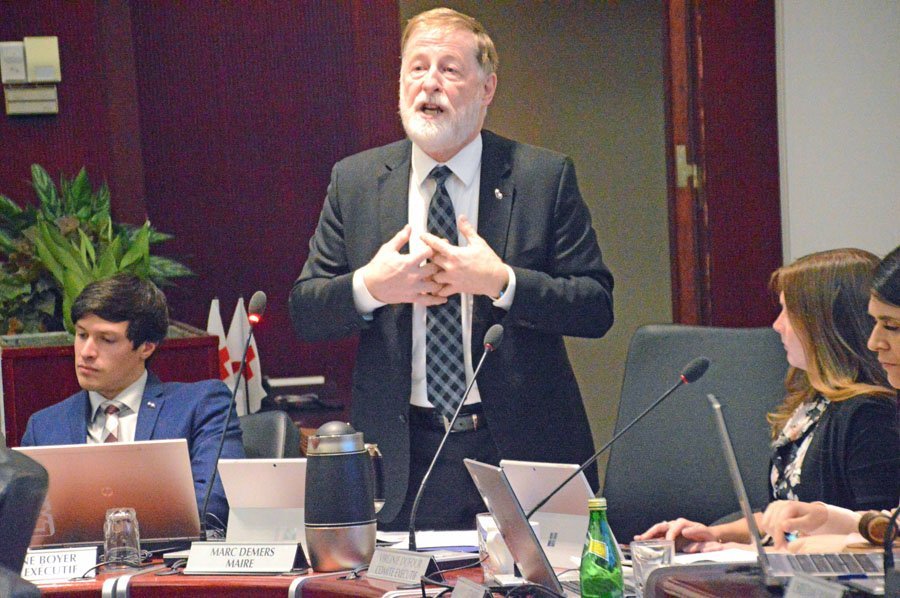
In spite of assurances by Mayor Marc Demers that
changes he is seeking for Laval’s municipal charter won’t lead to abuses by his
administration, a group of opposition city councillors is urging Quebec not to
allow the changes – even though the government already has for five other large
municipalities.
Councillors’
denunciation
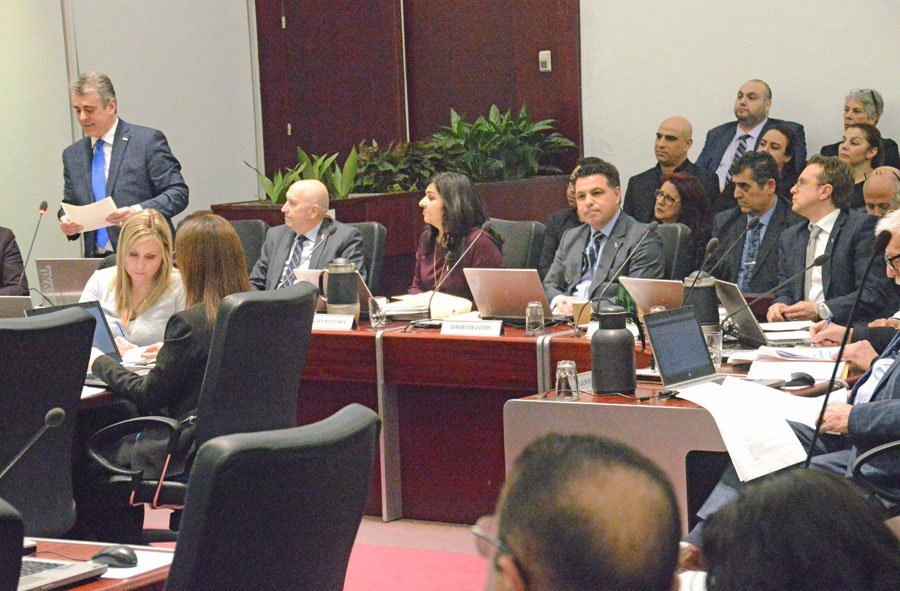
In their letter addressed to Quebec Municipal
Affairs Minister Andrée Laforest, Laval city councillors David De Cotis
(Saint-Bruno), Michel Poissant (Vimont), Isabella Tassoni (Laval-des-Rapides),
Aglaia Revelakis (Chomedey), Paolo Galati (Saint-Vincent-de-Paul) and Daniel
Hébert (Marigot) said they were “denouncing” Mayor Marc Demers’ attempt to modify
two clauses from Laval’s charter.
Although four of the group
are disaffected former Mouvement Lavallois members, Revelakis is the sole
remaining elected member of Action Laval on city council.
‘Too much power’
“While analysts of municipal
politics agree that the present Charter of the City of Laval gives too much
power to the executive-committee, the new version which allows the
executive-committee to make its own internal rules will go even further,” they
said, noting that the City of Laval was placed under trusteeship six years ago
as its political and administrative situations spun out of control.
“When the city was placed in trusteeship, the
trustees saw that this Charter had allowed Gilles Vaillancourt to act outside
the scrutiny of the municipal council. It should be recalled that the
executive-committee is presided by the mayor and that the councillors who sit
on it are appointed by him. He could thus govern without the Council
intervening.
No
to additional powers
“It is for all these reasons that we are asking you
to take a stand against any modification of the City of Laval’s Charter which
would give additional powers to the executive-committee, some of which already
caused considerable harm to Laval residents in the past,” added the
councillors.
In a statement responding to the letter, Mayor Marc
Demers maintained that there appeared to be confusion as to the extent of the
impact the requested changes would make.
“At this time, these powers are delegated through
the adoption of a by-law by a vote of simple majority,” said Demers. “The
proposed modification would be such that this delegation by by-law would
require a vote by 2/3 of the members of the municipal council. This would not
significantly increase the powers of the executive.”
Other
cities have the same
According to the mayor, the change the city wants
made to its charter would allow the executive-committee to pass an internal
by-law delegating certain powers to senior administrators. At the same time, he
noted that some of this power currently exists in the municipal charters for
the cities of Montreal, Longueuil, Lévis, Gatineau and Québec.
While
pointing out that officials with the City of Laval are currently working on a
new version of the municipality’s charter, Demers said that in the meantime
city council needs to be able to pass internal by-laws allowing it to delegate
certain powers.
In
an interview with the Laval News, De Cotis, who publicly split last year from
the mayor and the Mouvement Lavallois, said the dissident group’s current
demand comes following a refusal by Demers to explain the charter amendments
during the last city council meeting.
‘Blank
cheque,’ says De Cotis
“He’s
asking for a blank cheque, asking the Legault government to approve
modifications to the charter that would allow executive-committee members to
really pass any by-law they want, and in a sense create their own government
within the executive-committee,” claimed De Cotis.
Although De Cotis didn’t know of any administrative
abuses committed in the five other cities since they received the powers being
sought by Laval, he said the city’s well-documented history of corruption and
administrative abuse should serve as enough of a warning to refuse the charter
change request.
For her part, Aglaia Revelakis told the Laval News she
agreed with the other councillors that Demers was being unreasonable by not
disclosing exactly what changes he wanted to make to the city’s charter. “We
don’t know what they’re planning to change,” she said. “So why would we vote
for something when we don’t even know what we’re going to be voting for?”
The current issue of the Laval News volume 27-03 published February 6, 2019, (Laval’s English Newspaper) covers local events such as politics, sports and human-interest stories. It features editorials and other columns. Click on the image to read the paper.
Front page of Laval News, Vol. 27-03
February 6th, 2019.