Liberal MNA for Saint-Henri/Sainte-Anne Dominique Anglade, has won the race for the Quebec Liberal Party’s leadership.
The Quebec Liberal Party’s executive-committee announced on Monday that, following the withdrawal of Alexandre Cusson from the PLQ’s leadership race, Dominique Anglade (who was the only other contender) has been declared the winner and is now the Quebec Liberal Party’s new leader.
Anglade, who is currently Liberal MNA for Saint-Henri/Sainte-Anne, becomes the first woman in the Quebec Liberal Party’s history to lead the PLQ.
The CISSS de Laval reports that as of Monday May 11, 387 persons in Laval had died of COVID-19 since the beginning of the pandemic, while there were 4,233 confirmed cases of infection, 128 people in hospital, 23 people in intensive care, and 1,739 persons who recovered.
CISSS de Laval has broken down COVID-19 data for Laval into six districts.
Staff tested
In addition, according to the regional health authority, 408 CISSS de Laval employees had tested positive for the infection as of May 7.
The CISSS noted that the above data, compiled for six geographic sectors within the Laval region, doesn’t include results for CHSLDs, retirement homes and other closed residences, which account for 1,273 cases, according to the agency.
Per establishment
For these establishments, the CISSS broke down the results as follows:
Centre d’hébergement et de soins de longue durée Sainte-Dorothée: Cases – 204, Deaths – 86.
Centre d’hébergement et de soins de longue durée La Pinière: Cases – 71, Deaths – 42.
Centre d’hébergement et de soins de longue durée Fernand-Larocque: Cases – 71, Deaths – 24.
Centre d’hébergement et de soins de longue durée ldola-Saint-Jean: Cases – 7, Deaths – 2.
Centre d’hébergement et de soins de longue durée Sainte-Rose: Cases – 4, Deaths – 1.
Beginning on May 11, it will be possible for a caregiver with a close relationship to someone living in a CHSLD to provide help and support for that person in a long-term care residence within the CISSS de Laval network.
The CISSS de Laval is easing some restrictions on caregivers to allow them more access to loved ones in CHSLDs as the COVID-19 pandemic goes on.
Despite the current COVID-19 pandemic, the CISSS says it has put into place new measures to better welcome and protect caregivers who had previously been making regular visits to loved ones living in a CHLSD.
According to the CISSS, recognized caregivers will be contacted by a CISSS representative for an appointment. Those who are not contacted but who also wish to care for a loved one must take an appointment by contacting the CHSLD on the phone. A social worker will follow up and provide information on the rules that must be followed.
Restrictions apply
There can be no visits without first making arrangements during an appointment. The CISSS says that for the health and safety of residents and staff, a caregiver who does not respect the rules could be denied access to the CHSLD. Here are some of the rules to be followed:
• Only one caregiver at a time may be present (and the caregiver must also be someone previously known for their significant relationship to the resident).
Only recognized caregivers to be allowed visits, says CISSS
• It will be forbidden to freely walk around the unit at the CHSLD.
• Cargivers will not be able to attend if they have symptoms that include fever, cough, difficulty breathing, or lost of taste or smell).
More rules
• It will be mandatory to respect all the protection and prevention rules (hand washing, wearing protective gear, including mask, visor, gown and gloves).
• Caregivers must use only the protective gear furnished by the CHSLD (personal masks not allowed).
• Personal belongings (handbags, phones, etc.) not allowed in the CHSLD.
• During the first visits, a staff member will accompany caregivers to the room of the resident.
• During each visit, caregivers must submit to a screening process that is obligatory. Staff will be available to answer questions and guide caregivers around.
• A social worker will meet the caregiver before the caregiver leaves the CHSLD in order to hear comments and answer questions if there are any.
At private residences
Regarding private CHSLDs, intermediary resources and private retirement residences in Laval, the CISSS de Laval says it is currently assisting the management at these institutions in order to assure that appropriate measures are in place.
Additional information (in French) can be found on the CISSS web site: https://www.lavalensante.com/soins-et-services/information-pratique/info-covid-19/proches-aidants. For information about caregivers, the following online publication (also in French) is available from the Quebec Ministry of Health and Social Services: https://publications.msss.gouv.qc.ca/msss/fichiers/2020/20-210-46W.pdf.
The City of Laval confirmed on Thursday May 7 that it is cancelling or postponing all of its special cultural events that had been planned for the coming summer – including the June 24 Fête nationale celebration – saying they can’t be done safely during the COVID-19 pandemic.
The City of Laval has postponed or cancelled major cultural gatherings like this one, because of widespread restrictions to safeguard against the spread of COVID-19.
This after Mayor Marc Demers said during the April city council meeting last month that neither he nor other officials at city hall had made up their minds yet as to whether they should cancel a more than $662,000 deal with a sub-contractor hired for the Fête nationale show at the Centre de la Nature, and that artists and performers had to be consulted first.
According to the city, that consultation has now been done and Laval will be putting together a support program to compensate artists and performers suffering a drop in revenue because of the change of plans.
“Following discussions, we took this decision by common agreement,” Demers said Thursday in a statement. “In effect, it is evident that it would be difficult to get the recommendations by public health respected – notably concerning social distancing – during activities where there are large gatherings. We are, of course, completely aware of the impacts of this decision on citizens, cultural organizations, workers and artists.”
In addition to the Fête nationale, two other major events that are also cancelled are the annual Fête de la Famille at the Centre de la Nature in late summer, and the Laval à Vélo bicycling event at around the same time. In all, 600 or so cultural events which had been planned for this summer are now also cancelled or delayed to a later date.
Martin C. Barry, Local Journalism Initiative Reporter for the Laval News, marty@newsfirst.ca
Health Canada issued a warning to Canadians on Thursday May 7 not to buy home diagnostic test kits, including mail-in sample collection kits claiming to diagnose or detect COVID-19, because they may provide inaccurate or false results.
“These products have not been authorized by Health Canada, which means they have not been reviewed for safety, quality or effectiveness,” the federal ministry said in a statement. However, Health Canada says it has authorized COVID-19 test kits intended for use only by healthcare professionals or trained operators.
Health Canada says it is continuing to monitor websites for false claims and is working with online retailers to ensure that unauthorized COVID-19 diagnostic or detection test kits are removed from their websites.
Health Canada says it is also working with the RCMP to take action when unauthorized test kits are found to be sold in Canada, including a recent seizure of over 1500 test kits in B.C.
The federal ministry warns that selling or advertising health products that make false or misleading claims is illegal in Canada, and that it takes the issue seriously and will use all mechanisms and tools at its disposal to stop such activities.
What to do: If you have purchased an unauthorized test kit that claims to diagnose or detect COVID‑19, Health Canada advises you not use it or rely on its results. They say you should consult your local health authority for recommendations on testing and testing services for COVID-19. And if you have any information on the potential false or misleading advertising or sale of products that have not been authorized by Health Canada, you are advised to report it.
Martin C. Barry, Local Journalism Initiative Reporter for the Laval News, marty@newsfirst.ca
The Laval Police Department is reporting on its Twitter feed that the force had issued a total of 380 tickets related to COVID-19 infractions, such as non-distancing or gathering in groups, up to May 4.
According to the Laval Police Department’s community relations department, the LPD’s officers have been advised to evaluate each situation after intervening and question those persons they suspect are not obeying the rules, following which tickets can be issued. Those tickets start at $1,000 and increase for repeated offenses.
Martin C. Barry, Local Journalism Initiative Reporter for the Laval News, marty@newsfirst.ca
This cell phone tower in Chomedey, behind a shopping mall on Samson Blvd., was among the towers set on fire since last week.
Sûreté du Québec officials in Sainte Adèle said on Friday that they have now charged a man and a woman suspected of having set up to seven cellular telephone service towers on fire in the Laurentians and in Laval – including cell towers in Chomedey and Fabreville.
Following reports of more cell tower fires in Sainte Jérôme and Blainville this week, the SQ said it had arrested Justin-Philippe Pauley, 28, and Jessica Kallas, 25, described as being in their 20s, around 1:30 am on May 7. Over the past week, there were also fires at cell phone towers in Prévost and Piedmont in the Laurentians.
In recent years there have been incidents in some parts of the world involving vandalism to 5G cell phone towers. The incidents are thought to be linked to unfounded rumours 5G towers help spread COVID-19. As well, there has been controversy over the Chinese government’s high-pressure campaign to have its 5G system made by Huawei installed in western countries. In some incidents, it is believed, vandals mistook 3G and 4G towers for 5G.
They are charged with setting fire to Telus cell phone towers in St-Jerome and Blainville, according to the court filing. Pauley and Kallas were also charged with mischief. Provincial police say there have been seven such blazes in the past week.
On Wednesday night, Prime Minister Justin Trudeau tweeted about the fires. “Vandalizing cellphone towers does nothing but threaten emergency services and impact the daily lives of Canadians across the country,” Trudeau wrote. “These recent acts are serious criminal offences and carry severe penalties.”
The Laval News received word on Wednesday May 6 that former Sir Wilfrid Laurier School Board chairman Steve Bletas died suddenly at his home. On May 7, the Société de transport de Laval, where Bletas sat as a member of the board of directors, issued a statement stating their condolences.
Steve Bletas served as chairman of the SWLSB from 1998 to 2013.
Bletas served as the SWLSB’s first chairman from 1998 (when the board was started and as the provincial government was creating new linguistic school commissions to replace the former religously-based ones) until May 2012.
“It is with sadness that the STL recently learned of the passing of Steve Bletas,” the STL said, noting that Bletas had been a devoted member of the STL board since 2015 and that he represented paratransit service users. “Steve was always actively involved in the Laval community. He was a model of dedication and cooperation,” said STL chairman Éric Morasse.
Steve Bletas also sat on the executive-committee of the Quebec English School Boards Association, and he was a member of numerous neighbourhood and provincial round tables. “All board members and the entire STL team join me in conveying our deepest sympathies to Steve’s family and loved ones,” said STL general manager Guy Picard.
Martin C. Barry, Local Journalism Initiative Reporter for the Laval News, marty@newsfirst.ca
The Correctional Service of Canada has announced that an inmate from the Federal Training Centre, multi-level unit, in Laval, died as an apparent result of complications related to COVID-19 on May 3.
The inmate’s next of kin were notified of the death and CSC extended its condolences to the family. As in all cases involving the death of an inmate, CSC also notified the coroner’s office, which will review the circumstances of the death.
According to the CSC, it was the second death related to COVID-19 among federally sentenced inmates. The corrections agency said their protocols during the current COVID-19 crisis call for medically-isolating inmates who show symptoms or test positive for COVID-19, in order to prevent the spread of infection.
A prisoner has died of COVID-19 at the Federal Training Centre in Laval, says the Correctional Service of Canada.
“We have modified routines, and put in place measures such as physical distancing, enhanced hygiene practices, cleaning and disinfecting protocols,” a spokesperson for the CSC said in a statement, while adding that all CSC workers and inmates are also provided with masks to prevent spread.
The CSC says it has dedicated health services and medical professionals in all of its institutions. They say they also work closely and collaboratively with local public health partners and hospitals to provide complete and quality medical care to those who need it and to prevent further spread of COVID-19.
Martin C. Barry, Local Journalism Initiative Reporter for the Laval News, marty@newsfirst.ca
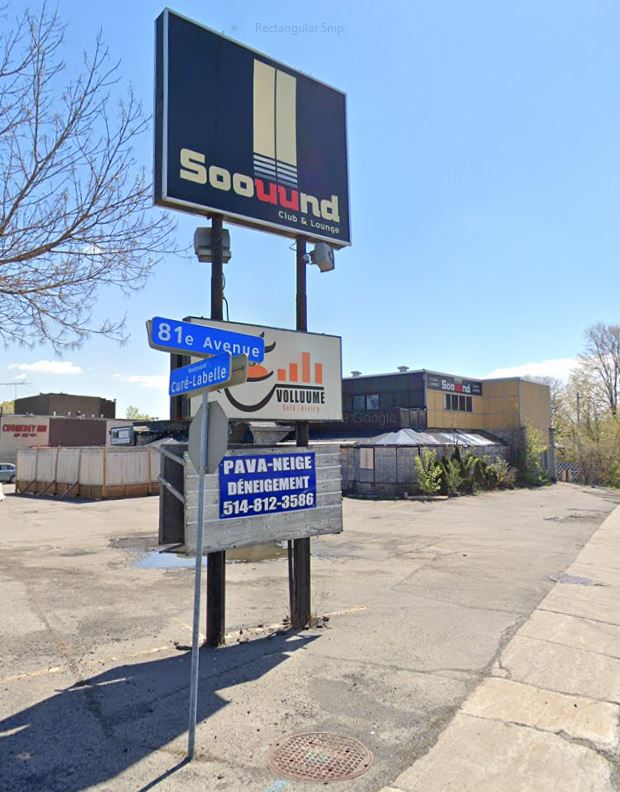
The Laval Fire Department has mandated the Laval Police Department to investigate whether there were any criminal motives behind two fires since 2017 at side-by-side businesses on Curé Labelle Blvd. – the second of which destroyed a bar during the night of Tuesday May 5.
The first business, the former Soouund Bar at the corner of 81st Ave., was destroyed by a fire in March 2017. Firefighters responded to another fire this past Tuesday around 10:30 pm and were confronted with a blaze that was already out of control. They estimated the building to be a write-off, with damage amounting to around $200,000.
Martin C. Barry, Local Journalism Initiative Reporter for the Laval News, marty@newsfirst.ca