During the July 7 online meeting of Laval city council, the council members modified By-Law L-12430 in order to better protect dogs and other pets, as well as members of the public, on Laval’s territory.
Among other things, the new rules will better describe and define certain species of animals being kept as pets:
In a back yard shared by multiple dwelling tenants or owners, a dog will have to be kept on a leash measuring 1.85 meters.
Regarding potentially dangerous dogs:
New conditions for dog owners: rabies vaccination is obligatory, as is a front harness.
The conditions are permanent.
The city now has the power to seize animals if the conditions aren’t respected more than once.
In a public area, a dog that has been declared potentially dangereous must at all times be muzzled.
A warning of the presence of a dangerous dog must be posted outside a property.
Luxury condos and resort would be built at former home of Céline Dion
After several years of relative peace with its urban development dossiers, the City of Laval’s administrators and elected officials are facing a possible public backlash over a developer’s plans to convert a small island in the Rivière des Mille Îles – which was once the home of internationally-acclaimed singer Céline Dion – into a luxurious private resort.
Next to public park
While it’s not the first time a developer has set its sights on transforming the island, the task of turning Île Gagnon into an exclusive luxury destination is made all the more challenging by the fact it is located directly across a small inlet from the Parc de la Rivière-des-Mille-Îles, a public wildlife reserve where access is open to everyone.
According to initial plans by property developer François Duplantie, 700 condos, a hotel, a spa, a gym and two restaurants would be built on Île Gagnon starting in 2022. A second phase of the project would take place later in nearby Sainte-Rose where development would include 970 apartments or condos, a retirement residence, a CHSLD and an entertainment auditorium.
Opposition gathering
Although the City of Laval is currently conducting a poll among residents of the area to determine their support or opposition to the project, some members of the Laval city council opposition already are rejecting it outright.
The massive gates to the private Île Gagnon property where Céline Dion once lived, and where a developer wants to build an exclusive resort. Photo: Martin C. Barry
While acknowledging that the project will bring in massive investment and help improve services in Sainte-Rose, independent city councillor for Saint-Bruno David De Cotis launched an opposing petition last week, while also demanding that the city hold a full public consultation.
In an interview this week with The Laval News, Mayor Marc Demers said nothing has been decided at this point, although the developer has yet to formally apply to the city for permission to begin his project.
No commitment, says Demers
“We have insisted to the developer that he make a presentation on his own,” said Demers. “There is no obligation on his part, although we wanted the presentation to be up to certain standards. And at one point residents of Sainte-Rose were even invited to take part. But there is nothing more we can do until the developer comes to us asking for construction permits.”
Demers said the poll will help the city make a decision about the project. “Unfortunately, there is a lot of disinformation now taking place on social media,” he said. “The course we decide to take will be guided by our surveys and by public opinion. But at this point there is no commitment on our part towards this developer one way or the other.”
In a last minute development on Tuesday as we went to press, the City of Laval announced that the closing date for the survey underway in Ste-Rose has been postponed to July 31. The intial deadline had been July 12.
Quebec’s provincial police force conducted a series of raids in Laval and Rosemère on Tuesday while cracking down on internet-based fraud artists who succeeded recently in breaking into the e-mail boxes of several businesses where they gained acccess to banking information that allowed them to re-direct deposits into their own accounts.
According to the Sûreté du Québec, several hundred thousand dollars were stolen in this way by the suspects who are accused of breaking into e-mail between May 12 and June 4. After gaining access, they allegedly sent false e-mails to the business’s clients, telling them to send payments to new bank accounts.
“We encourage business owners to verify and strengthen as needed their computerized security systems and to double check with their customers, ideally while speaking with them, when it’s a question of changing a bank account or dealing with a transfer payment,” the SQ said in a statement.
The current issue of the Laval News volume 28-14 published July 8th, 2020. Covering Laval local news, politics, sports and our new section Mature Life. (Click on the image to read the paper.)
Front page of the Laval News, July 8th, 2020 issue.
Quebec Finance Minister Éric Girard and Minister for Senior Citizens and Caregivers Minister Marguerite Blais marked the start of construction work Tuesday on a new long-term care residence (CHSLD) that will be located on a new street near Autoroute 440 in Val-des-Brises to be called Michel-Ange Boulevard.
Seen in this Sept. 2019 Laval News file photo, Quebec Finance Minister Éric Girard and Senior Citizens’ Minister Marguerite Blais have announced the start of work on a new Laval-area CHSLD. (Photo: Martin C. Barry, Laval News)
According to a statement issued by the CAQ government, the new residence will accommodate 242 people who are afflicted by loss of autonomy. The building is being conceived with the some of the latest ideas for long-term care residences, including an emphasis on privacy.
“With the start of work, this new CHSLD project in Laval has completed an important stage going towards its accomplishment,” said Girard. “I am very happy for the seniors in the community as well as their families. We are firmly committed towards assuring the well-being, security, quality of life and comfort of our seniors.”
“Our government is pursuing its major goal, which is the transformation of residential services for seniors,” said Blais. “The new CHSLD in Laval will be built in keeping with the principles for seniors’ residences. It will offer an environment with quality of life to residents and will ensure they have a physical environment that is secure and adapted to their needs.”
Completion of the project is expected to be in 2021, with the first residents moving in by February 2022. The units will be available on a rental basis, with annual fees expected to be moderate.
CAQ government provides support during COVID-19 pandemic recovery
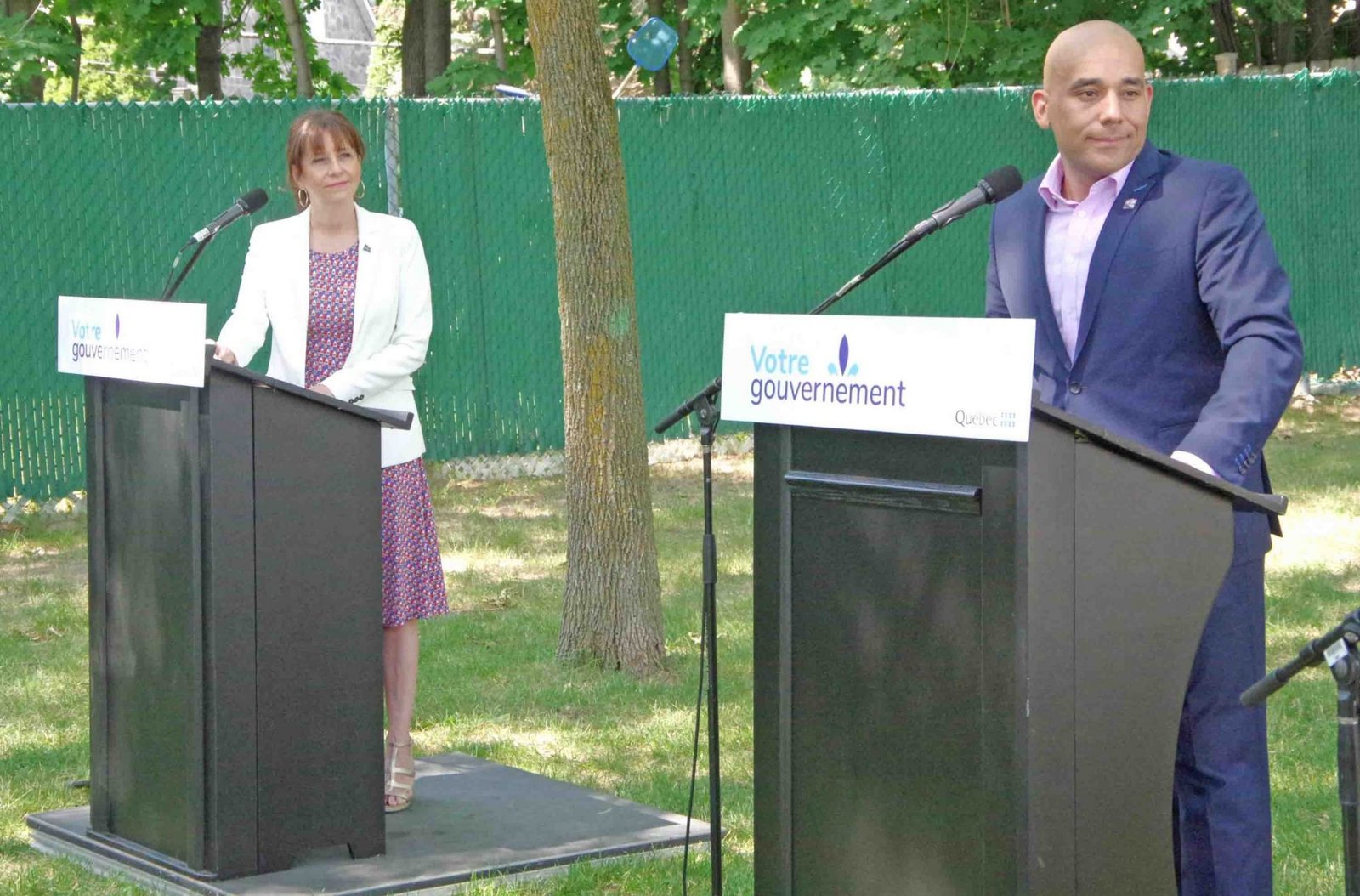
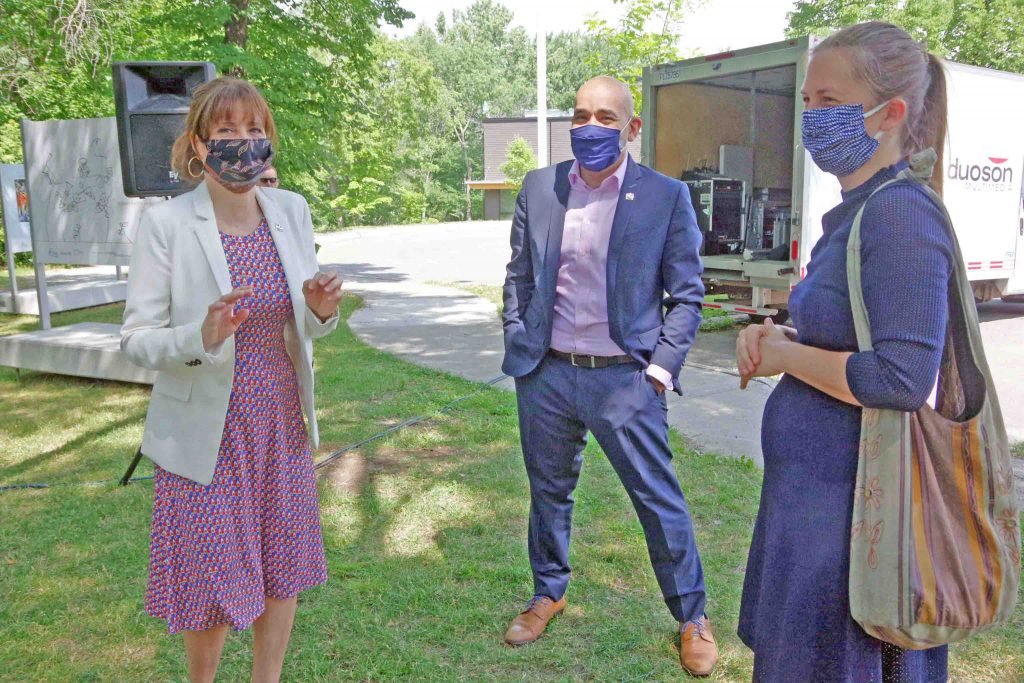
Quebec Culture and Communications Minister Nathalie Roy announced nearly $3.7 million in provincial subsidies for 16 of Quebec’s science-based museums during an outdoor press conference held at the Parc de la Rivière-des-Mille-Îles in Laval’s Sainte-Rose district on Tuesday.
Four Laval museums
Four of the institutions are located in Laval. They are the Centre d’interprétation de l’eau (in Sainte-Rose), the Musée Armand-Frappier on the eastern edge of Chomedey, the Cosmodôme in central Laval, and the Parc de la Rivière-des-Mille-Îles.
While some of the museums (such as the Zoo Ecomuseum at the western tip of Montreal Island in Sainte-Anne-de-Bellevue) are located within the Montreal region, many others are located in more isolated but picturesque rural regions of the province, such as Gaspésie and the Eastern Townships, where tourism is currently in need of a big boost in the aftermath of the first wave of the COVID-19 pandemic.
More support coming
The institutions in Laval are receiving a total of $950,000 from the package. According to the Culture and Communications Ministry, additional sums to be awarded to the museums across Quebec over the next four years will raise the amount of subsidies to $20 million over that period.
Quebec Culture and Communications Minister Nathalie Roy, left, speaks with Laval city councillor for Sainte-Rose Virginie Dufour, with CAQ MNA Christopher Skeete behind them, at the Parc de la Rivière-des-Mille Îles on Tuesday.
Another $5.03 million will be available during the same period to the 16 institutions as part of the government’s overall post-COVID-19 economic recovery plan, the ministry added. The provincial government has also been providing subsidies to more than 100 museums of various themes and types in Quebec.
Improving knowledge
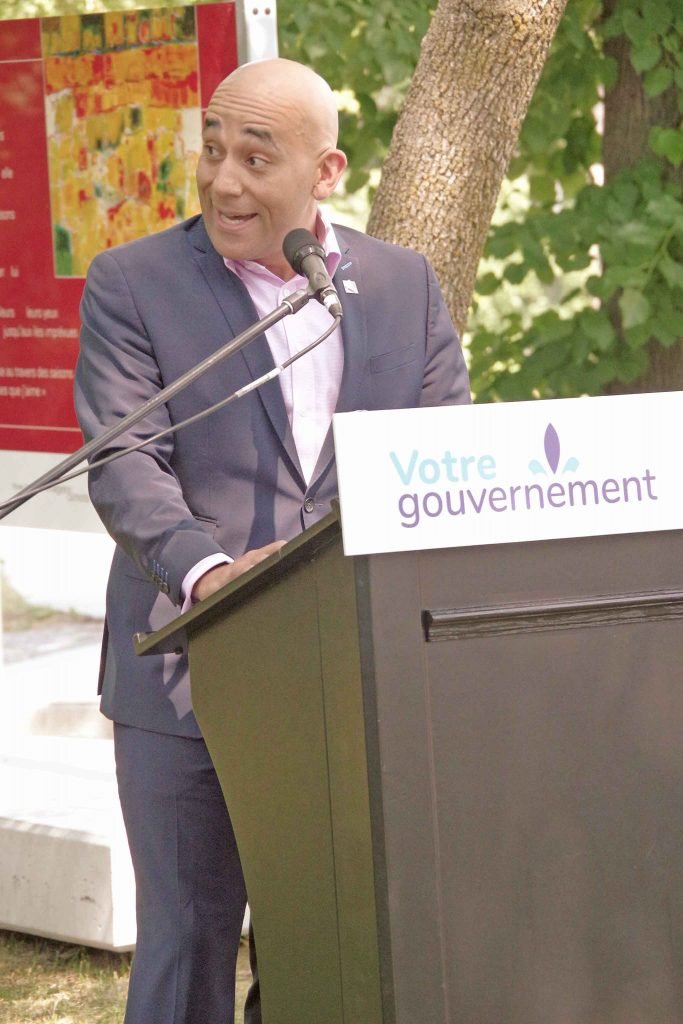
CAQ MNA for Sainte-Rose Christopher Skeete.
“It is with great pleasure that I greet the announcement of this financial assistance destined for museums and institutions with scientific and technological vocations,” said Sainte-Rose CAQ MNA Christopher Skeete, who is the CAQ government’s delegated representative for the province’s English-speaking community.
“Thanks to this support, institutions in our region, such as the Parc de la Rivière-des-Mille-Îles and the Centre d’interprétation de l’eau, which are both located in the riding of Sainte-Rose, will be able to pursue their activities and their mission to the great enjoyment of all Quebecers,” added Skeete. “They will thus continue to shine a spotlight on Laval within Quebec’s scientific museum landscape.”
Help during pandemic
“Our government recognizes the essential need for scientific museums in terms of the role they play in education, research, understanding and conservation,” said the Culture and Communications Minister. “In the context of the current pandemic, I wanted to see that we acted quickly in order to financially support these museum institutions which were made vulnerable by the pandemic crisis.
“Their mission is in line with our goal to see that Quebec’s culture, of which were are proud, gets promoted and is made accessible,” she continued. “And so we will be pleased to support them over the course of the next five years.”
Health Canada has issued yet another advisory to Canadians regarding hand sanitizers that may pose health risks.
The warning comes following previous notices issued by the federal agency on other hand sanitizer products.
The latest advisory concerns hand sanitizers made with industrial-grade ethanol, which is not authorized for use in hand sanitizers, and may pose health risks.
This is the latest list of hand sanitizers on Health Canada’s watch.
Product
Recalling Company
NPN or DIN
Lot Number(s)
Expiry Date
Date Added
Biogel
Groupe Savon Olympics, Inc.
80098684
0D991 0D992 0D963 0D964 0E998 0E997 0E994
April 2022
July 3, 2020
eSafe
Groupe Enov, Inc.
Unlicensed (no NPN or DIN on label)
20-115 20-120 20-121
April 2021
July 3, 2020
20-125 20-126 20-181
May 2021
Hand Sanitizer Alco-San
Crown Chemical Products, Inc.
Unlicensed (no NPN or DIN on label)
51420-21 51520-20
Not printed on the label
July 3, 2020
Healthcare Plus Sanitizing Hand Gel
The Color Group, Division of Canadian Custom Packaging
Health Canada maintains a list of hand sanitizers that may pose health risks, so that Canadians can easily identify products they may have purchased and take appropriate action. Canadians are encouraged to check the list regularly for updates. For more information, including what Canadians should do, visit the online safety alert.
A new milestone was reached in Quebec this week during the ongoing COVID-19 pandemic when provincial health authorities revealed that CHSLD Sainte-Dorothée in western Laval had reached 100 fatalities, making it the province’s public long-term care residence that has been most impacted by COVID-19 since the beginning of the pandemic more than four months ago.
With a capacity for 285 residents, the news means that more than a third of the residents of CHSLD Sainte-Dorothée succumbed to COVID-19. The latest fatality count was published in a province-wide update of the COVID-19 toll issued by the Quebec Ministry of Health and Social Services on July 2.
One hundred people have died of COVID-19 at CHSLD Sainte-Dorothée since the beginning of the pandemic more than four months ago.
Two other CHSLDs in Laval made the list, although with slightly more moderate numbers. CHSLD Sainte-Jude on Saint-Martin Blvd. had recorded 71 fatalities up to July 1. However, it wasn’t all bad news. CHSLD Idola-Saint-Jean on Cartier Blvd. in Laval des Rapides has had only three fatalities since the start of the pandemic.
CHSLD Sainte-Dorothée’s record is only slightly greater than the number of COVID-19 fatalities reached at two Montreal CHSLDs. The Centre d’Hébergement Notre-Dame-de-la-Merci on Gouin Blvd. has had 94 deaths, while CHSLD Laurendeau also on Gouin Blvd. has had 92 fatalities.
According to the figures released by the provincial health ministry, a total of 968 people have died in Quebec’s CHSLDs since the beginning of the pandemic.
Police in the Greater Toronto Area say that following a joint-forces fraud investigation of alleged “distraction thefts,” they have two suspects in custody – one of whom was arrested in Laval.
The Toronto Police Service says that, between March 8 and June 11, Constantin Liteanu, 46, of Burlington ON, and Laurentiu Avram, 35, of Vaughan ON, were involved in a series of distraction thefts in the Toronto, Peel, Halton, Guelph, Niagara, Durham and Barrie regions. The police say Avram was arrested in Laval.
According to the allegations, the two men would approach other drivers while out on the road and claim they were having car trouble. While one would distract the victim, the other would steal debit and credit cards in the targeted vehicle. The cards would then be used fraudulently to make bank withdrawals and purchases.
The Toronto Police allege that Constantin Liteanu, left, and Laurentiu Avram, right, who was arrested in Laval, distracted victims in order to steal debit and credit cards from them. (Photo: Toronto Police Service handout)
Avram was scheduled to be arraigned later this week. The charges against him include:
Three counts of Theft of a Credit Card
23 counts of Possession of Property Obtained by Crime Under $5,000
Four counts of Unauthorized Use of Credit Card Data
23 counts of Fraud Under $5,000
13 counts of Possessing Proceeds of Crime Under $5,000
11 counts of Theft Under $5,000
12 counts of Possessing/Using Credit Card Obtained by Crime
The Toronto Police say the investigation continues and anyone with information is asked to contact them at 416-808-1400, Crime Stoppers anonymously at 416-222-TIPS (8477), online at www.222tips.com, online on their Facebook Leave a Tip page, or text TOR and your message to CRIMES (274637).
Laval-based Couche-Tard convenience stores, one of the remaining crown jewels of corporate Quebec, managed to greatly increase its profits since last year, despite a setback this year caused by the COVID-19 pandemic, the company says in its latest annual report to shareholders.
Couche-Tard, founded with a single outlet in Laval by Alain Bouchard 40 years ago, reported that it earned $576.3 million USD, or 52 cents per share, for the period ended this past April 26, compared to $293.1 million USD, or 26 cents per share, a year earlier.
“This year, Couche-Tard became a better, and stronger company,” Couche-Tard CEO Brian Hannasch said in a statement, while adding that the company’s decentralized structure and managerial improvements allowed Couche-Tard to “face the unprecedented challenges of the COVID-19 crisis and fare far better than many other businesses.”
Hannasch believes Couche-Tard benefited from changes in customer behavior during the pandemic, such as purchasing more during each visit, and buying more impulse and emergency items. On the downside, Couche-Tard said it was negatively impacted by lower gasoline sales because of fewer drivers on the road during the pandemic.
Couche-Tard currently has 15,000 stores under various brand names, including Couche-Tard, 7-Jours, Circle K and On the Run, located in Canada, the United States, Mexico, Norway, Sweden, Denmark, Estonia, Latvia, Lithuania, Poland, Russia, Japan, China, and Indonesia.