Home Blog Page 189

City of Laval acquires a wooded lot in Sainte-Rose

Laval extends its green spaces along the Mille Îles River

The City of Laval says it recently acquired a wooded lot in Sainte-Rose along the banks of the Mille Îles River, with financial help from the provincial government and the CMM, with the ultimate goal of conserving forested areas in the area.

According to the city, the move, which was also assisted by the Éco-Nature environmental group, will allow Laval to extend the amount of territory it has along the riverside to more than 1,200 metres. The city’s ultimate goal is to make as much space along the river accessible to residents and visitors.

Part of bigger plan

The city says the purchase is part of the overall goals set out in its strategic master urban plan, as well as the Communauté métropolitaine de Montréal’s Plan métropolitain d’aménagement et de développement (PMAD).

Total cost for the purchase was $845,000, to which Laval contributed $311,667. The Quebec government also contributed $233,333. Éco-Nature contributed $300,000 $, which it obtained through the Canada Nature Fund.

According to the city, the newly-acquired land will be annexed to the Berge des Baigneurs, also along the river, and which is an area the City of Laval currently has set out to improve.

A promising project

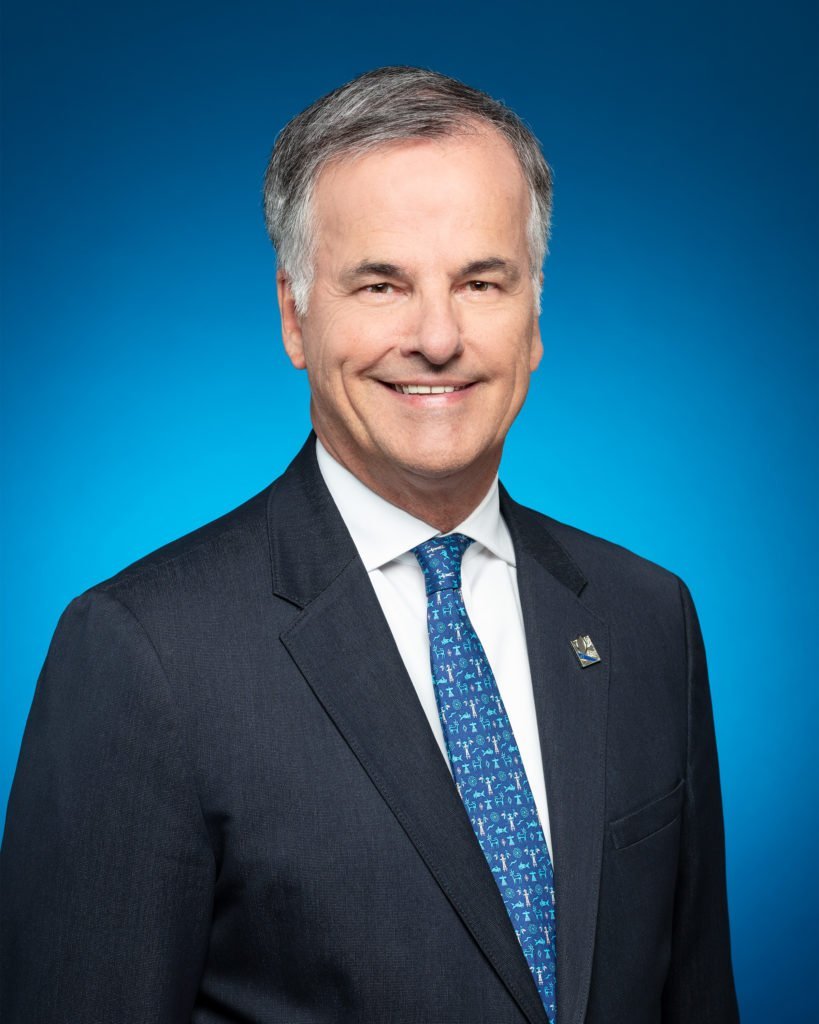
“Thanks to the support of outstanding partners, this promising project demonstrates our willingness to turn Laval into a city that is greener and more welcoming and determined to develop the urban fabric with sustainability in mind,” said Mayor Marc Demers.

“There can be no doubt that our insularity is a strength. That is why we wish to develop this unique character, which starts with the preservation and accessibility to our river banks.”

‘This promising project demonstrates our willingness to turn Laval into a city that is greener and more welcoming,’ says Mayor Marc Demers

“The government of Quebec is happy to have supported the acquisition of a precious space for Laval and the greater metropolitan region,” said delegated Transport Minister and Minister Responsible for the Laval Region Chantal Rouleau.

Conserving heritage

“This is a concrete gesture which we have taken together for the conservation of natural heritage that is so rich and fragile. I share the pride of all those who contributed to this project that will benefit the population, most notably by allowing access to the river sides.”

“This initiative by the City of Laval is excellent news for the region and its citizens now and in the future, but also for visitors,” said Montreal mayor Valerie Plante who also presides the CMM.

“It allows us to make one more step towards our common objective, which is to protect 17 per cent to the metropolitan territory, while contributing to the preservation of the banks of this treasure which is the Mille Îles River, one of the strong identifying symbols of the region.”


Back to school 2020: Get me off safely!

0
Laval Police Department related news

A few days before the start of the school year, the officers of
the Service de police de Laval (SPL) will shortly begin awareness-raising operations. Through the Disembark me in complete
safety campaign, they invite road users and parents to respect
road safety rules around schools in the area.


In this particular school year, due to the pandemic, an increased
number of vehicles is expected around schools. In order to
ensure the safety of students and to relieve congestion in the
immediate school environment, the SPL invites parents to follow
the following instructions and recommendations:

• Determine a safe route so that their child can walk to school, when possible;
• Use the surrounding streets to park their cars, when it is
not possible for their child to cover the entire route on foot;
• Encourage their child to cross at intersections where there
is a school crossing guard;
• Avoid blocking vehicular traffic and doorways with their
vehicle.

“When the new school year begins, the police will be present
around 13 schools in Laval to make motorists aware of the
right behaviors to adopt and to guarantee everyone’s safety.
In addition, because of the pandemic, they will ensure that
the sanitary measures in force on public roads are respected,”
explains the director of the SPL, Pierre Brochet. “Obviously, the
police will encourage parents and children to trust the crossing
guards. Their presence around schools greatly contributes to
student safety.”

“School crossing guards are, in fact, great and instrumental
collaborators of the school network and of the Laval Police
Department. They protect children by showing them the safety
rules to follow and the route that leads to their school. They also
contribute to the flow of traffic. Their role is essential,” added
Mayor Marc Demers.

Ensure road safety throughout the school year
The police will be present during four key periods during the
school year. Different themes will be discussed to remind road
users of the right behaviors to adopt:

  1. The start of the school year: from August 31 to October 9
  2. The month of the pedestrian and the arrival of darkness:
    from November 2 to 6
  3. The return of the holidays, Winter and its challenges,
    from January 11 to 22
  4. The arrival of good weather, safety on bicycles and on
    foot: from May 3 to 14.
    For more details, please consult the SPL website.

Hot dogs were on the menu at Aglaia Revelakis’ summer BBQ event

Face masks were taken off long enough to enjoy the great food

A question. How do you eat a hot dog through a COVID-19 protective face mask?

If there is a way, the folks who showed up last Saturday outside Mourelatos supermarket in Chomedey for a hot dog barbecue sponsored by local city councillor Aglaia Revelakis would know. Because almost everyone there was wearing one.

This marked the first year that Revelakis held her annual summer outdoor gathering at Mourelatos, rather than in one of the district’s parks.

Everyone pitching in

“But because this year we had been confined and were under more strict rules for COVID-19 and we have to keep social distance, we decided to do it at Mourelatos,” she said in an interview with The Laval News.

Among the supporters who came out for Aglaia Revelakis’s annual summer BBQ outside Mourelatos supermarket on Notre Dame Blvd. last Saturday were many local residents as well as colleagues from city council. (Photo: Martin C. Barry, Newsfirst Multimedia)

While Mourelatos owner Efthymios Mourelatos contributed the outdoor space for the event, Harvey’s restaurants franchise owner Alireza Arzani donated a big supply of hot dogs, buns and other supplies for the barbecue. Desserts were supplied by Mr. Puffs, there was popcorn from Bad Monkey, and Agga supplied the coffee.

“This is a great opportunity to come out and meet the local city councillor, while trying out some of the delicious offerings we have on the menu,” Revelakis added.

Fans of Aglaia

Among the many Chomedey residents and Revelakis supporters who turned up were Evie and Irving Applebee. They were raving about the Harvey’s hot dogs, although Irving insisted the restaurant’s hamburgers ranked second compared to his own.

It was a great opportunity for people from Chomedey to come out and meet their local city councillor

Another couple, George and Anastasia Maziotis, were also big fans of Revelakis. “We’re here supporting Aglaia,” said George, noting that the local city councillor has also helped to keep the Action Laval party well-anchored through thick and thin. “She has a lot to offer and has dedicated herself to the cause,” he said.

A season for gatherings

Saint-Bruno city councillor David De Cotis, who is holding a similar event on Saturday Aug. 29 from 10 am to 3 pm at Euro Marché on Bellerose Blvd. East, praised Revelakis as a councillor who “is on the ground and interacts with the citizens.

“She is a people person, which is important especially in municipal politics,” he added. “You can see today that so many people are coming out just to be here today for Aglaia’s event. It’s important for an elected official always to be in contact with the citizens.”

After staging a gathering for his constituents in July, Saint-Vincent-de-Paul councillor Paolo Galati said he will be holding another in mid-September on a date to be determined. “It’s always to give back to the citizens as much as possible,” said Galati. “It’s a way to stay in touch with the people and to give back to the community.”

Canadians worried about closure of local businesses, CFIB says

Small/medium business lobby group wants Ottawa to modify COVID-19 aid programs

Four in five Canadians are worried their favourite local businesses may close down as a result of the pandemic, according to new public opinion research conducted by Maru/Matchbox for the Canadian Federation of Independent Business (CFIB)’s Small Business Recovery Dashboard.

The poll found:

  • 82 per cent of Canadians are worried that their favourite local businesses will close down;
  • 69 per cent are concerned the economy is not recovering fast enough;
  • 76 per cent believe we need to start focusing more on economic recovery;
  • 95 per cent believe supporting small business is key to keeping the economy healthy.

‘A pivotal moment’

“We are in a pivotal moment for small business recovery,” said CFIB president Dan Kelly and CFIB vice-president for Quebec François Vincent.

“Canadians’ concern that some of their favourite businesses may close is not misplaced. CFIB’s research shows that Canada may lose 158,000 small businesses before the end of the pandemic, particularly as many continue to face dramatically lower sales.”

The latest bi-weekly data from CFIB’s Small Business Recovery Dashboard also shows:

  • 63 per cent of small businesses are fully open;
  • 39 per cent are fully staffed;
  • 26 per cent are making normal sales.

Impact on local emerging

“Back in June, we saw that Canadians were starting to be more comfortable with eating at dine-in restaurants and going to their barbers or stylists for a haircut. Now, Canadians are realizing that a slow economic recovery will hurt their favourite local businesses and community as a whole,” said Kyle Davies, Senior Vice President at Maru/Matchbox.

CFIB is encouraging Canadians to get involved in helping small businesses survive by shopping at their local, independent businesses. At smallbusinesseveryday.ca, consumers can participate in interesting challenges to support local businesses, and find information about other initiatives aimed at small business recovery.

Shop at small businesses

One of those initiatives is American Express’s Shop Small campaign, which is encouraging cardholders to shop at small businesses by offering a $5 credit when they spend at least $10 with their registered card, at up to 10 different participating businesses until September 13.

‘We are in a pivotal moment for small business recovery,’ says CFIB president Dan Kelly and vice-president for Quebec François Vincent

“There’s a reason we all have a favourite independent coffee shop, gym, or flower shop — they give us terrific service, grow local economies and make our communities more vibrant and unique,” added Vincent and Kelly. “Buying local is one of the most important things Canadians can do to help our economy recover quickly.”

Changes sought to COVID aid

According to the CFIB, small business owners are also joining forces to demand important changes to the federal government’s COVID-19 aid programs through an online petition.

“Small businesses have been battered by months of closures, reduced sales and new costs, and three quarters of entrepreneurs still not making their normal levels of sales. As a result, CFIB estimates 158,000 small firms (one in seven) may close,” said Vincent and Kelly. 

Some businesses ineligible

While many small firms have been helped by the three major government support programs, according to the CFIB tens of thousands remain ineligible — particularly for the CEBA loan program and the commercial rent subsidy (CECRA).

CFIB has asked government to make the following changes to current aid programs: Canada Emergency Business Account (CEBA): (a) extend the deadline for the program (b) immediately expand access to more firms (those using personal bank accounts, new firms and those with less than $40,000 in non-deferrable expenses), (c) provide clear reasons for rejection, and (d) increase the loan amount to $60,000 and the forgivable portion to 50 per cent

Other CFIB recommedations

Canada Emergency Commercial Rent Assistance (CECRA): (a) allow tenants to access rent support directly, regardless of their landlord’s participation, (b) expand coverage to more firms with lower levels of business losses and (c) extend over the summer and fall

Canada Emergency Response Benefit (CERB): (a) extend CERB for those without work, but ensure benefits stop if an employee is offered their old job back (other than for sickness/family issues), and (b) allow recipients to earn more than $1,000/month without losing benefits

Canada Emergency Wage Subsidy (CEWS): (a) simplify the application process and (b) ensure business owners and their family members working in the business can have some of their dividend income covered

More than 7,000 business owners have already signed CFIB’s petition calling for changes.

STL head Éric Morasse says action plan to be tabled at October council

Transit corp. overdue for an administrative overhaul, says David De Cotis

The president of the Société de transport de Laval says corrective action is being taken at the STL, following criticism from former STL president David De Cotis, who accused the public transit agency of failing to address shortcomings that were outlined in the City of Laval auditor general’s most recent annual report.

House cleaning

De Cotis, who was vice-president of the City of Laval’s executive-committee and president of the STL until a controversial break from Mayor Marc Demers’s Mouvement lavallois, says the person who replaced him, Councillor Éric Morasse (Saint-François), needs to do a house cleaning at the STL based on conclusions in the auditor-general’s report.

“Mr. Morasse needs to show leadership,” De Cotis said in a statement. “The auditor-general found several important shortcomings in the management of a large number of dossiers and the management sees nothing significant in this. A plan of corrections must be quickly presented to fix the situation.”

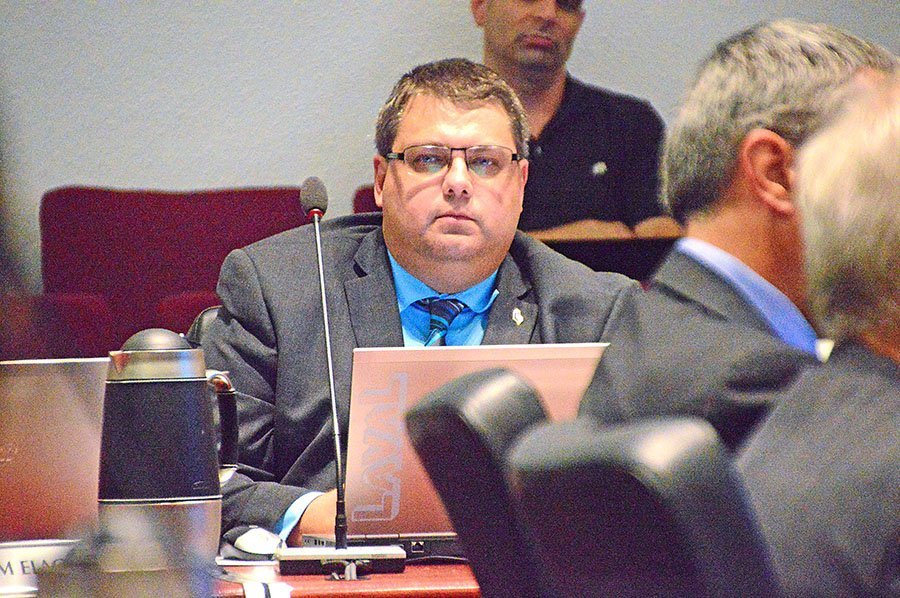
Former STL president David De Cotis, centre, is critical of how the transit agency is run. (Newsfirst file photo)

A-G made 16 suggestions

In her report, the auditor-general made 16 recommendations to improve the STL’s management. De Cotis said Morasse should feel compelled by the report to table a plan in city council with a timeline for when the shortcomings will be fixed.

Among the auditor-general’s criticisms, she noted that the STL’s internal auditor might sometimes be called upon to participate in the management of operations that he might later have to audit. As well, she suggested that there is no mechanism in place so that an employee in the STL management can declare when he is in a conflict of interest situation when contracts are awarded.

Serious issues, De Cotis says

“These are crucial factors that can be at the root of administrative mishandling,” De Cotis commented. “Some conclusions by the auditor-general are serious. The documents handed over to the STL board are scattered, lack precision and are incomplete. How do you expect to have ethical management that is responsible and transparent? This is not a situation to be taken lightly. Corrections must be made.”

With all this in mind, De Cotis drafted a resolution to be tabled at the October city council meeting, calling on STL president Éric Morasse to come up with a detailed plan and a timeline for getting the STL back on track, based on the recommendations contained in the Laval auditor-general’s 2019 report.

STL head Morasse reacts

Councillor Morasse issued a statement to The Laval News last Monday, reacting to De Cotis’s remarks. “First of all, we are aware of the report by the auditor-general and we are pleased to report that things are looking good at the STL when it comes to good management and governance,” he said.

‘Some conclusions by the auditor-general are serious,’ SAYS De Cotis

“The STL is showing itself to be working hard and the administrative board favourably welcomes the recommendations from the auditor-general with a great deal of openness. Besides, among the issues raised by the audit, several of them have already been addressed and fixed.

Plan coming, says Morasse

“We have been working for several months on an action plan aimed at taking into account elements from the audit, notably regarding the documentation from different procedures of contract management. As agreed with the auditor-general, this action plan will be tabled in October. “Our administrative board has been showing leadership throughout the year,” added Morasse.

“We didn’t wait for the Mr. De Cotis’s proposals to get into action. I would like to point out that in 2019 we received the Prix Performance Québec, the highest distinction issued by the Quebec government, for the quality of our overall performance. We are the first transit corporation to receive this distinction.”

Government of Quebec suffers another legal defeat on Bill 40

Attempt to immediately overturn the stay on legislation rejected

Bill 40, the CAQ government’s legislation to replace school boards with service centres, will remain in limbo for the time being where the province’s English school boards are concerned. Last week, an appeals court judge postponed a decision until mid-September.

Quebec Superior Court granted a stay last week to the English school boards before Bill 40 can be implemented.

Quebec Education Minister Jean-François Roberge had previously said the government would appeal the decision, saying he is “convinced that we are respecting the rights of Anglophone communities to manage and control” their school boards.

However, last week judge Benoit Moore refused to reverse the Superior Court’s decision by Justice Sylvain Lussier. All of which is to say that the suspension of the law for now stays in effect for the English school boards.

QESBA reaction

The Quebec English School Boards Association (QESBA) issued a statement reacting to the new developments. “The Quebec English School Boards Association (QESBA) takes note of the decision of Justice Moore of the Québec Court of Appeal to not grant the Government of Québec’s leave to appeal the August 10th decision by Justice Lussier at this time,” the QESBA said.

“Justice Moore deferred a ruling on the permission to appeal to a hearing of the Court of Appeal before a minimum of three Justices, which he scheduled for September 14.  In the same decision, Justice Moore also refused to lift the stay granted by Justice Lussier, deferring this issue as well to the September 14 hearing date.

‘Our community has been steadfast in the defence of our rights to manage and control our minority language educational institutions,’ says Quebec English School Boards Association

“The Québec Government had filed a leave to appeal the stay of Bill 40 and furthermore, requested that the Judge immediately reverse the original judgement on the stay. This is the second reversal for the Attorney General of Québec in this case in the last two weeks.

Minority language issue

“Our community has been steadfast in the defence of our rights to manage and control our minority language educational institutions under Section 23 of the Canadian Charter of Rights and Freedoms,” said the QESBA. “This is bigger than those of us who are here now. Our Community is fighting for the vitality and future of our minority community to benefit this generation and those to come.

“Given that the implementation of Bill 40 continues to be suspended for English school boards until at least September 14, the holding of school elections on November 1 becomes totally impractical. We once again call upon the Government of Québec to postpone the November 1 school elections until 2021 and to extend the mandates of current commissioners until those elections are held. This is the only respectful and reasonable response to the current situation.”

SWLSB’s reaction

Sir Wilfrid Laurier School Board chairman Paolo Galati also issued a statement regarding the new developments in the ongoing contestation of Bill 40.

“In early July there was a three-day hearing on the court challenge of Bill 40 with Judge Lussier,” Galati said. “The Sir Wilfrid Laurier School Board and the other eight English school boards believe that Bill 40 denies our constitutional right granted in Section 23 of the Canadian Charter of Rights and Freedoms granting an exclusive power of management and control over minority language instruction and facilities to rightsholders or their representatives.

Stay granted

“August 10, Judge Lussier granted the stay and will be hearing the court challenge in its entirety two or three months from now,” he continued. “The CAQ Government, which is relentless, challenged Judge Lussier’s decision to grant the stay and on August 20. Justice Moore decided not to rule on the government’s request to quash the stay and furthermore has decided to refer both requests including the appeal of the stay to a panel of at least three judges during the week of September 14.

“The CAQ Government is relentless,” Galati added. “They need to stop fighting everything, and focus on real solutions. Elections are supposed to be the public’s way to exercise their democratic rights. An improperly planned election serves nobody. They should simply extend council terms like they did two years ago, even if only until the spring, and drop the appeal. Let the courts hear the constitutional challenge … They need to stop fighting everything, and focus on real solutions for our back to school.”

Back to school 2020

It is that time of the year again and our most
beloved treasures are heading back to school.
Our paper to reminds everyone of the basic
driving precautions to protect our children
around the school zones.


It is important to respect the signage in the
loading areas around schools. The objective is to
allow all parents to drop their child off at school
in complete safety. It is therefore important to
leave the space when your child has reached
the schoolyard.

If your child does not use school transport and you are going to take it back to school and
pick it up after the end of the day, you have an
important role to play, especially if you are there
during the arrival of other pupils and children as
well as school buses. The recklessness of parents
in too much of a hurry endangers the lives of
young children walking around the school.
Drivers need to be aware and alert around
school zones. That is why they were created.
Children get hit every year because of reckless
drivers and as the authorities remined everyone,
being in a hurry is not an excuse to put a child’s
life in danger. Here are some supplementary tips
for safe driving behaviors around school zones.


Reduced Speed Signs
We have all seen the school zone signs. In
Quebec, the common speed around School
Zones is 30km. Remember, the fine for speeding
and not obeying traffic laws in school zones is
usually much higher than in other areas.
Watch for Children
School zones are there to protect the kids. Even
when you are following all the rules, driving
cautiously and not speeding, it is still possible
for accidents to happen. A driver should always
be alert because a child does not always think to
make sure they look both ways, wait for traffic to
pass or not play near the street. When they are
not looking, it is up to the driver to be careful
and protect the child’s life.


School Buses
In Quebec when a school bus turns on its flashing lights or deploys its stop sign, you must stop
at least 5 meters from the bus, whether you are
travelling in the same direction or approaching
from the opposite direction. Offenders face: a
fine of $200 to $300 and a great reduction of
your demerit points.
Be Prepared to Brake
When you are going 30 km an hour, there is
really no need to be stepping on the accelerator.
Instead, coasting is preferable. Keep your foot
above the brake pedal so you can react quickly
in an emergency as you were taught in drivers
training.


Never Text
This goes for anytime you are behind the wheel.
Driving a car is a big responsibility, and not
one to be taken lightly. You must always be on
attentive when operating a vehicle. Texting while
driving, or inattentive driving in general, is an
easy way to injure or kill someone. With so many
more opportunities for bad things to happen, it
is even more important that you put down the
phone and focus on driving in School Zones.

Crosswalk Signs

While not exclusively a School Zone sign, the
yellow and black crosswalk signs are almost
always located within School Zones, as well as
other places. When you spot one of these signs,
watch for pedestrians crossing the street. Many
parents walk their children to and from school,
or allow their young ones to walk on their own.
Yield to pedestrians in crosswalks. They have
the right of way.


Surprising stats
According to CAA, below are some surprising
statistics about dangerous behaviors in school
zones
Nearly a quarter of drivers reported witnessing a near miss or collision in a school zone,
more than half of which involved a child (CAA
polling, 2019).
Nearly 1/2 of Canadians say they
witnessed a distracted driver in a
school zone (CAA polling, 2019).
Nearly 6 in 10 Canadians say there
are more unsafe driving practices in
school zones today than in the past
(CAA polling, 2019).
70% of Canadians say they have
witnessed speeding in school zones, an
increase from polling done in 2016
(CAA polling, 2019).


The top three unsafe motorist
behaviours seen in Canadian school
zones are speeding, illegal parking
or stopping and texting and driving or
distracted driving (CAA polling, 2019).
621 drivers were found speeding in a
one-day assessment that at looked at
13 Quebec school zones between
7:00 a.m. and 8:30 a.m.
(CAA-Quebec, 2012).


267 drivers did not stop at a stop
sign and 227 pedestrians jaywalked
in a one-day assessment that looked
at a Saskatchewan-based school zone
between 7:30 to 9:00 am and
2:30 to 4:00 pm
(CAA Saskatchewan, 2019).
September is a dangerous month for pedestrians with more fatalities occurring during this
month than any other (Transport Canada, 2017).

Laval taking a new approach for annual blood donor clinic

Residents invited to make appointments for this year’s two-day event

In order to ensure the safety of citizens and volunteers during the COVID-19 pandemic, the City of Laval’s blood donor clinic will be taking place this year on an appointment basis only.

As well, it will be taking place over two days, Sept. 10 and 11, in order to in order to allow the maximum number of donors to take part in the clinic at the Centre sportif Bois-de-Boulogne.

According to the city, a new approach for the clinic will allow crowding to be better controlled while accelerating the process.

Appointment necessary

Laval residents will be able to make appointments for one of the two days. The appointments are from 10 am to 7 pm on each day. Reservations can be made by phone at 1 800 343-7264, or by e-mail at jedonne@hema-quebec.qc.ca.

‘This year, the gift of blood is even more important, taking into account the pandemic,’ says Mayor Marc Demers

“For the past 47 years, people from Laval have been making a commitment to save lives,” said Mayor Marc Demers. “This year, the gift of blood is even more important, taking into account the pandemic. This is why we are counting on the generous participation of Laval residents to take an hour of their time to save lives.”

CAQ government shelves Bill 61, plans to rewrite and replace it, says MNA Ouellette

Ouellette, petitioners warn COVID-19 law would give government unlimited power

Chomedey MNA Guy Ouellette says Quebec’s CAQ government will probably be reintroducing an omnibus bill with COVID-19 emergency measures in a form virtually identical to Bill 61. That piece of legislation was recently withdrawn after tens of thousands of Quebecers signed petitions objecting, because it would allow the government to proceed without National Assembly oversight.

No consultation

Bill 61 was first tabled in the National Assembly on May 31. The most important element would essentially have allowed the CAQ government to take measures deemed necessary for the ongoing fight against COVID-19, although without first having to consult the legislature.

Ouellette pleased with injunction forcing immigration dossier process
Chomedey Independent MNA Guy Ouellette.

Last week, Quebec Treasury Board president Sonia Lebel announced that Bill 61 was being postponed until at least the middle of September as the government rewrote the legislation. “I think it will be quite similar to the first one,” Ouellette said in an interview last Monday with The Laval News.

The petition was started by Élizabeth Dufresne-Gagnon on the Change.org website where it had garnered nearly 200,000 signatures two weeks ago and has grown even longer since then.

Petition opposing Bill 61

However, to submit a petition to the National Assembly, it must have been signed on the Assembly’s website. Thus, a version of the petition was placed on the National Assembly web pages, where it amassed even more signatures.

“This means that the citizens want to send a message to the government that they don’t want Bill 61 to come back as something similar,” Ouellette said.

‘The citizens want to send a message to the government that they don’t want Bill 61 to come back as something similar,’ says Ouellette

Among other things, Bill 61 would have allowed the government to enforce the measures continuously and without having to return to the National Assembly every 10 days.

The spectre of collusion

This would not only give the government almost unlimited power, said Ouellette, but would also have provided the government with the possibility of giving out optional contracts without scrutiny by the National Assembly, as would normally be the case.

He suggested this would be a recipe for collusion and corruption among contractors competing for outsourced work.

“This is exactly the sort of way to be telling criminals that this is where collusion will be tolerated,” said Ouellette, noting that past governments went to great lengths in recent years to try to eliminate collusion in the awarding of government contracts.

Laval City-Watch

Recent Laval executive-committee decisions

Some of the latest work by the City of Laval’s executive-committee during its meetings on Aug. 12 and 19 included decisions to award subsidies to Centraide Montréal, the Maison des Jeunes de Laval-Ouest, the CISSS de Laval and a group that helps people suffering from anxiety and panic attacks.

Subsidy to Centraide

First, some background. During the closing session for the July 8 Laval city council meeting, Duvernay-Pont Viau city councillor Stéphane Boyer was appointed president of the retirement fund committee for City of Laval employees. Then on July 25, Boyer said he was renouncing the remuneration normally paid to the committee’s president for the duration of this mandate.

At the same time, he said it was his wish that the sum that ordinarily would have been paid to him should be given instead to Centraide du Grand Montréal in order to support part of its mission which is helping organizations in Laval that assist needy people.

Thus, the City of Laval is contributing $28,953 to Centraide Montreal. Payments will be made on a monthly basis at the same rate as the salary that Boyer would have been receiving during the same period.

Subsidies to groups

In addition, the executive-committee allotted a subsidy for $10,000 to La Ressource ATP (Anxiété et Trouble Panique), as well as a subsidy worth $6,000 to the Maison des jeunes de Laval-Ouest. The money will be used by ATP to move to a new location, while the Maison des Jeunes will be using theirs to install a new furnace/thermopump.

The members of the executive-committee also awarded a subsidy, this time for $10,000, to the Centre intégré de santé et de services sociaux de Laval (CISSSL) to hold the 13th annual Journée de l’arbre (Day of the Tree). This event helps to raise awareness among Laval residents of the importance of taking measures against “heat islands” while also maintaining air quality.

Tree Day in Laval

Held annually since 2008, the event has contributed to efforts which have seen nearly 2,000 trees planted at facilities operated by the CISSSL in Laval. The subsidy will help pay the cost of purchasing trees, maintenance supplies and labour. The City of Laval has been supporting the event since 2008, except for 2013 and 2016.

The City of Laval’s executive-committee discusses and makes major decisions on key issues affecting the city. The members are: Mayor Marc Demers, vice-president Stéphane Boyer (Duvernay–Pont-Viau), and city councillors Sandra Desmeules (Concorde–Bois-de-Boulogne), Ray Khalil (Sainte-Dorothée), Virginie Dufour (Sainte-Rose) and Nicholas Borne (Laval-les-Îles) and Yannick Langlois (L’Orée-des-Bois) who are associate members.

Laval moves forward with Pont-Viau beautification

Laval city council recently awarded a contract worth nearly $800,000 for landscape and architecture planning for a major project that will see the main street entrance to the Pont-Viau district improved and upgraded.

This marks the beginning of an undertaking that involves expropriation of a building, 1 rue de Nevers, at the street’s intersection with des Laurentides Blvd. The city wants to harmonize and beautify an area of several street blocks by adding new parkland and green spaces.

“These decisions are a significant advancement for this project about the city’s Pont-Viau entrance, which is at the heart of the work being done for the revitalization for the Cartier sector,” said Laval executive-committee vice-president Stéphane Boyer, who is city councillor for Duvernay-Pont-Viau.

Anticipated project

“The acquisition of the building on rue de Nevers in order to convert this space into a park was very much anticipated by residents of the sector, and we are happy to have finally arrived at an understanding,” he added.

According to the city, the work will eventually involve replacing infrastructures under the streets, as well as re-landscaping part of the riversides.

The city sees the areas in question becoming a great deal more welcoming for people strolling in the area. The city held a public consultation in 2018, during which many residents were receptive to the planned program of improvements.

The city plans to conduct similar beautifications and upgrades at other points of entry into Laval, including at the Lachapelle Bridge along Curé Labelle Blvd. in Chomedey.

Weather

Laval
overcast clouds
4.1 ° C
4.1 °
4.1 °
80 %
3.7kmh
99 %
Sat
8 °
Sun
9 °
Mon
14 °
Tue
14 °
Wed
14 °