The Laval Police Department has launched an investigation into the cause of death of a seven-year-old girl at a home in Chomedey on Sunday.
The LPD received a call around 2:30 pm from a family living at a home on Le Boutillier St.
The LPD says the girl was found in cardio-pulmonary arrest and was transported by paramedics to hospital, where she was declared dead.
Although the LPD says it wanted to question up to seven people who were at the home, a language barrier was encountered and an interpreter was called in.
The LPD said on Sunday evening they were waiting for the results of an autopsy confirming the cause of death, but were not ruling out physical harm as a potential factor.
Three emergency room physicians are listed as being among six employees at Laval’s Cité de la Santé who have come down with COVID-19 over the past week, according to a union representing hospital workers.
Although the hospital’s staff of emergency room doctors has been reduced to 27 by the COVID infections, patients are in no immediate danger, but that could change if the situation were to deteriorate, a spokesman for the Syndicat des infirmières, inhalothérapeutes et infirmières auxiliaires de Laval (SIIIAL-CSQ) said on Jan. 1.
According to CISSS de Laval spokesperson Geneviève Goudreault, COVID testing of employees, which had been taking place once weekly, is being increased to three times a week for the next seven days.
She said that only Cité de la Santé’s emergency department had been affected so far by the surge in COVID-19 infections.
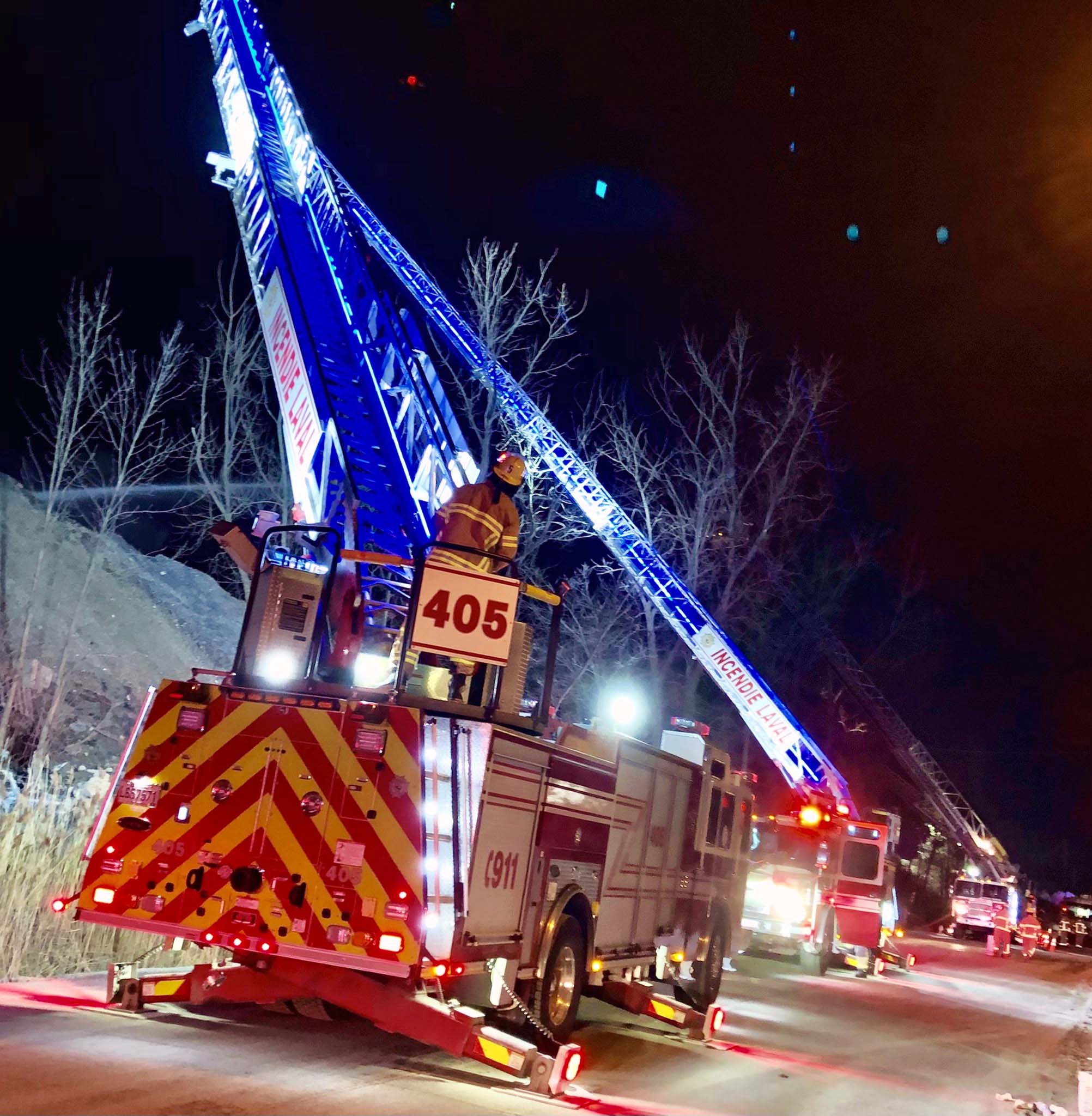
The City of Laval issued a statement on Thursday afternoon, saying that a fire in a recycling yard in Vimont that had burned since last Saturday is finally under control.
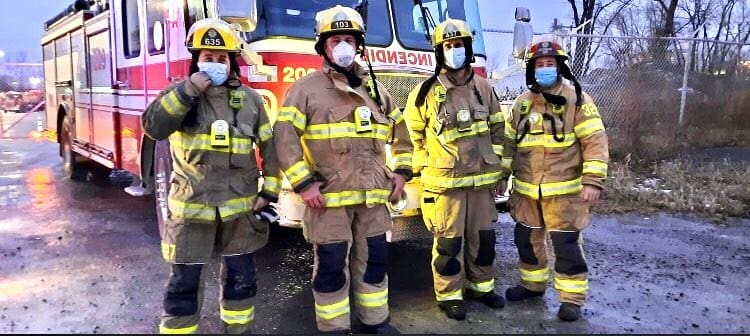
“Laval’s firefighters are ending the year with a sense of accomplishment,” said the statement issued by the city’s public affairs department and the mayor’s office.
According to the city, the Laval Fire Department will continue monitoring the site over the coming days to ensure there is no flareup.
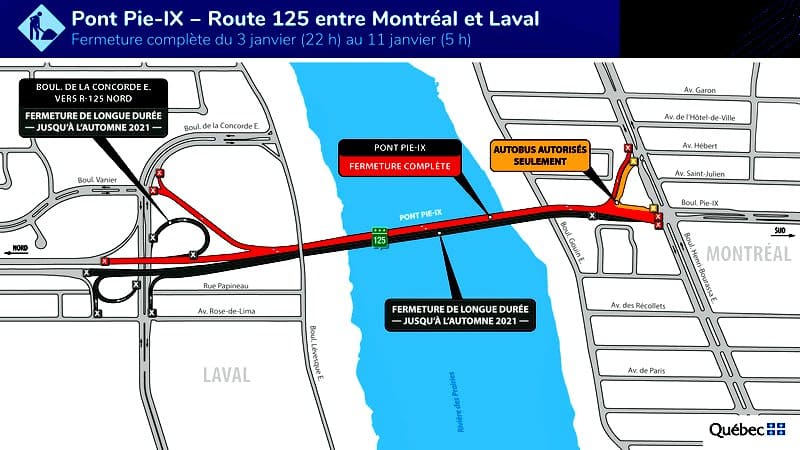
The Pie-IX Bridge between Montreal North and Laval’s Duvernay district will be closed from Jan. 3 to Jan. 11 to facilitate work on the bridge’s steel beams, says the provincial transport ministry.
Transport Québec says it wants to take advantage of a lull in traffic during the extended COVID-19 holiday decreed by the government recently to get the work done.
The ministry says:
Route 125 in both directions between Henri-Bourassa Blvd. in Montreal and de la Concorde Blvd. East in Laval will be shut from Jan. 3 at 10 pm until Jan. 11 at 5 am.
Detours will be set up via the Papineau-Leblanc Bridge (Autoroute 19 between Montreal and Laval).
As well, says the ministry, the Pie-IX Bridge will be closed for several weekends after Jan. 11, with exact dates and times to be announced.
Finally, Transport Québec says prevailing weather conditions in January could cause the work to be postponed if necessary.
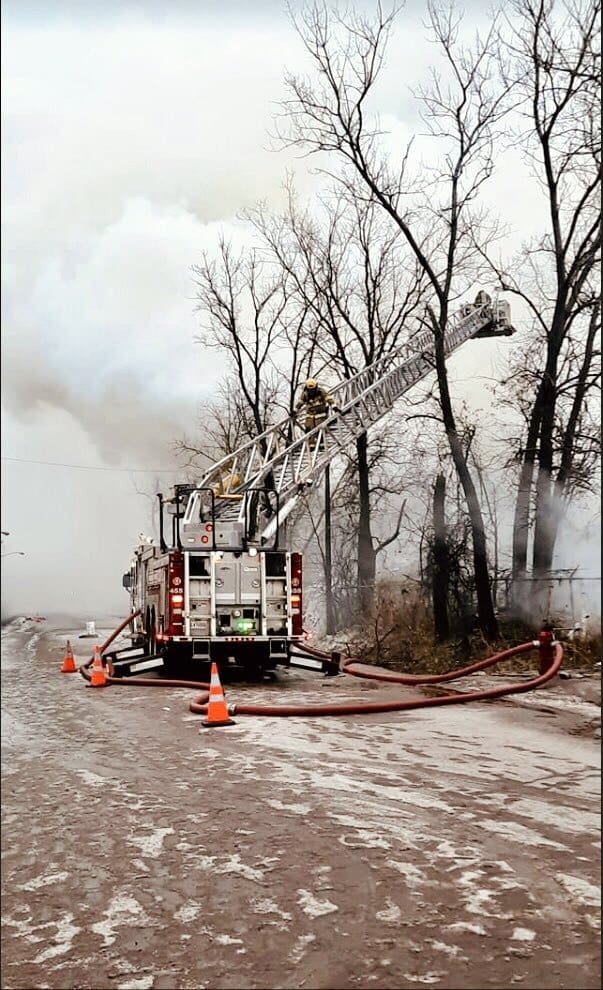
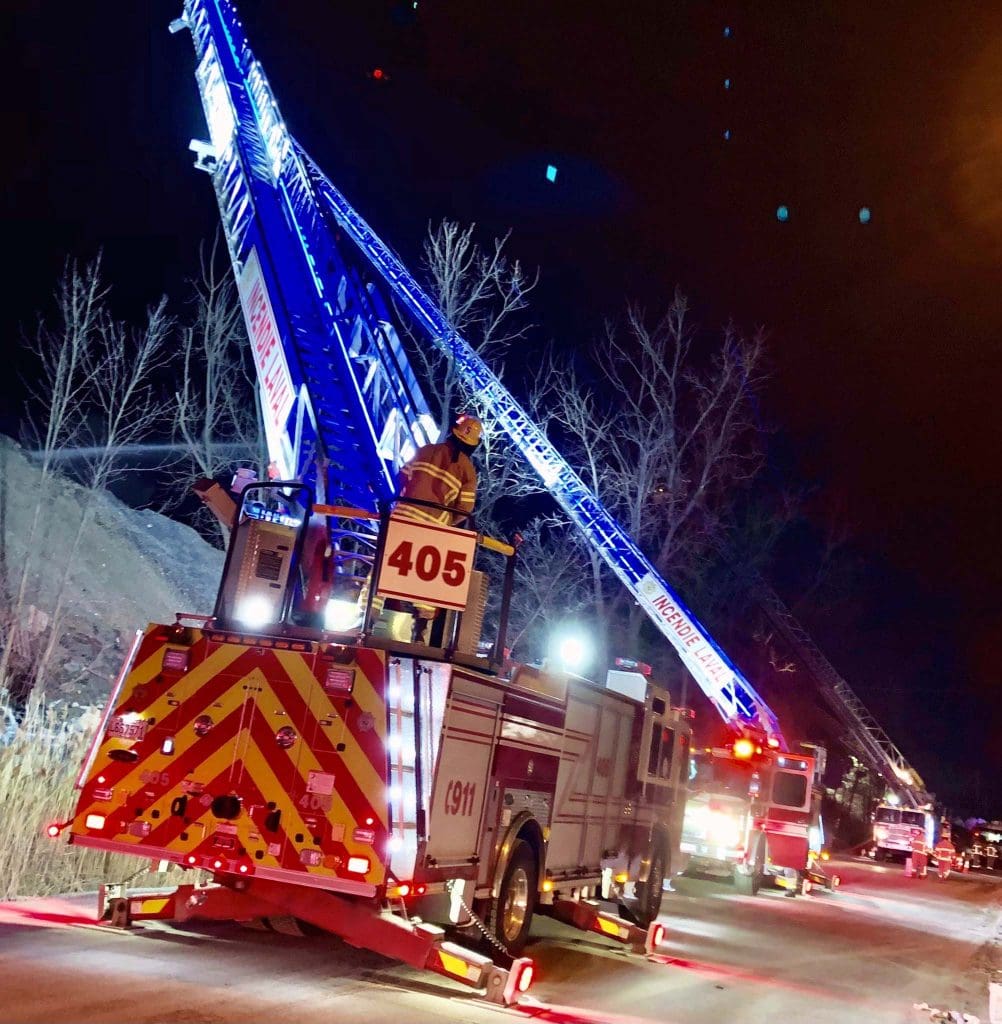
Units from the Laval Fire Department were still active Wednesday at a recycling dump on Saulnier St. in Vimont where a fire has been burning since last Saturday in a large pile of recycled construction materials.
According to the Laval Fire Department, the firefighters are expected to continue trying to douse the heavily smoking pile for days to come, as there are still no signs of it going out.
Smoke from the smouldering pile has been drifting across Autoroute 440 towards Cité de la Santé hospital on René Laennec Blvd., where employees have been complaining of irritated eyes, sore throats, dizziness and headaches from the smoke.
Firefighers from Laval have been working day and night to extinguish the smouldering blaze in a recycling yard in Vimont near Autoroute 440. (Photo: courtesy APL)
While there were reports that the smoke was entering the hospital’s ventilation system, the system can’t be turned off because of current COVID-19 sanitary requirements.
The pile, made up mostly of old and dry scrap wood as well as other remaindered construction scrap, was first reported to be ablaze around 9 am on Saturday, said the Laval Fire Department.
According to the Association des Pompiers de Laval, smoke and flames were visible from nearby Autoroute 440, as well as Route 335, and Autoroute 19 which intersects the A-440.
(Photo: Courtesy of APL)
On Wednesday, the APL Tweeted that the firefighters were continuing to pour water on the smoking mass after five days and nights.
They have been trying to extinguish the source of the blaze, which is at the centre of one of the piles in the yard.
The fire department has ruled out arson as the cause. They say it is more likely a case of spontaneous ignition caused by intense heat generated deep inside the pile as the materials decomposed.
They believe the fire probably started weeks ago, but was only noticed in the last few days as the smoke and flames became obvious.
A source who contacted the Laval News by e-mail last Monday night referred to the recycling yard as “toxic” and an unhealthy place to work for low pay.
On Monday, provincial environmental damage assessment workers were on the scene monitoring the smoke for potentially toxic content.
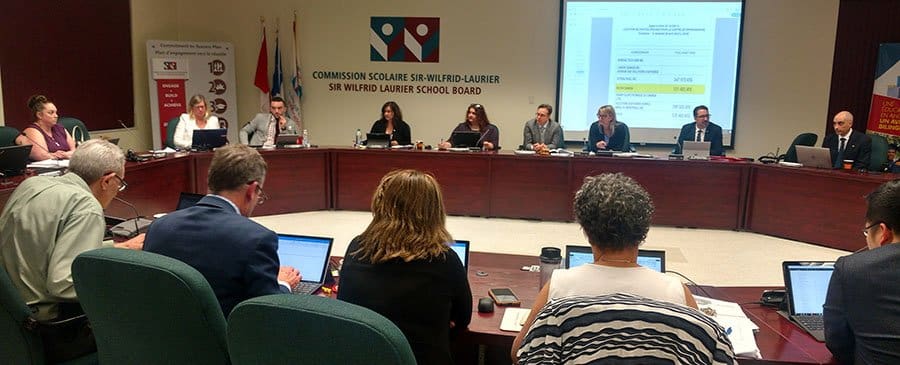
In two recent measures taken to deal with the ongoing COVID-19 pandemic, the Sir Wilfrid Laurier School Board ordered more than 200 air purifiers to provide extra protection for staff and students, while also asking Premier François Legault to make school board employees a priority group for inoculation.
A resolution passed by the council of commissioners mandated the director of the SWLSB’s material resources department to proceed with a call to tender for the purchase of around 220 air purifiers.
“Even though the Minister of Education has mandated school boards and school service centers to conduct air quality tests, our council wanted to ensure that we do everything in our power to provide an additional level of protection,” said SWLSB chair Paolo Galati.
At the same meeting, the commissioners also adopted a resolution to formally request that Premier Legault and public health authorities recognize and include all employees working in the education sector as part of the priority groups for the vaccination schedule.
“Mr. Legault himself has recognized that schools are one of the two main areas where outbreaks are at a peak in the province,” said Galati.
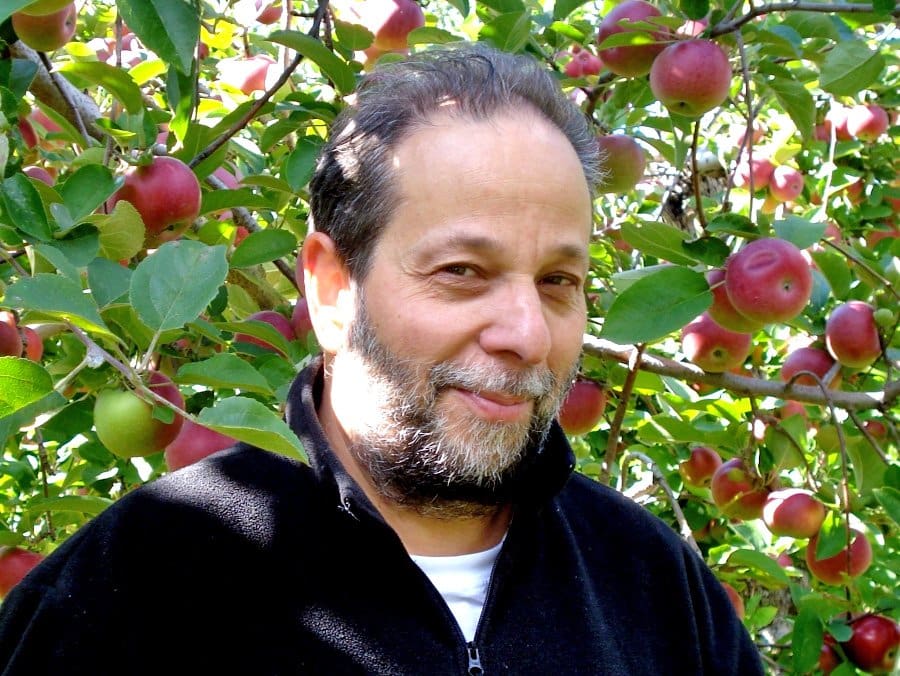
Members of Montreal’s literary community were paying their respects online on Friday to Joel Yanofsky, one of Quebec’s leading English-language literary figures, who grew up in the western Laval neighbourhood of Chomedey.
Yanofsky passed away at age 65 following a lengthy battle with cancer. He was a longtime contributor to the literary and books pages at the Montreal Gazette.
Yanofsky won awards for non-fiction writing on two occasions from the Quebec Writers’ Federation for his books Mordecai & Me (an unauthorized biography of Mordecai Richler), and Bad Animals (about Yanofsky’s life with his son who had autism).
Joel Yanofsky was said to have been working on a final book – a memoir about his personal experiences in Chomedey – where at one time a significant percentage of the community was Jewish, although that number has declined significantly in recent decades.
Yanofsky was pre-deceased by his parents, Bernard and Jean Yanofsky. A sister, Renee, died in 2013, while another sister, Marilyn, passed away in 2018. He leaves behind his wife, Cynthia Davis, and their son, Jonah.
The first person in Laval to be inoculated against COVID-19 is a health care worker.
On Dec. 23, Sylvie Schaffro was the first of an initial 250 health care workers in Laval who are slated to receive the first of two doses of the Pfizer vaccine.
Health authorities in Laval decided to prioritize health workers caring for people at risk, rather than elderly residents at retirement homes, for logistical reasons having to do with the number of doses now available and the number of recipients in a single location who would receive it.
The Laval region has been allotted fewer than 3,000 doses of the Pfizer vaccine for now. At two doses per recipient, that means only 1,500 people can be immunized for the time being.
But since the Pfizer vaccine has to be kept in extraordinarily cold storage, making it more complicated to administer, and for other logistical considerations, the shots are being given at a special inoculation clinic for health workers set up at Cité de la Santé.
The impending arrival of the Moderna vaccine, after it was approved by Health Canada on Dec. 23, is expected to speed up the vaccination process, since the Moderna shot is easier to store and to transport from location to location.
The Laval Police Department is urging possible victims of an alleged pedophile who worked as a special educator from 2017 to 2019 to come forward as they seeking additional evidence.
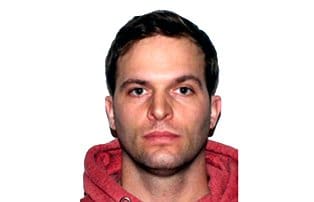
According to a statement issued on Tuesday by the LPD, David Gingras, 31, was arrested on Dec. 9 and faces charges of sexual assault allegedly commmitted in Laval and on the North Shore.
The LPD says Gingras worked as a special education technician at various schools and community organizations in Laval, Deux-Montagnes and Mirabel.
The charges stem from incidents alleged to have taken place at his home. The victims were 11 to 16 years of age, said the LPD.
Gingras made one court appearance at the Laval courthouse on Dec. 10. The charges included sexual assault and possession of child pornography.
He was freed on bail with conditions and is scheduled to make his next court appearance on March 19.
The LPD says that anyone who is a victim or feels they have information relevant to the case should call the force’s Info-Line at 450 662-INFO (4636), or 9-1-1, and refer to file LVL 200821 057.
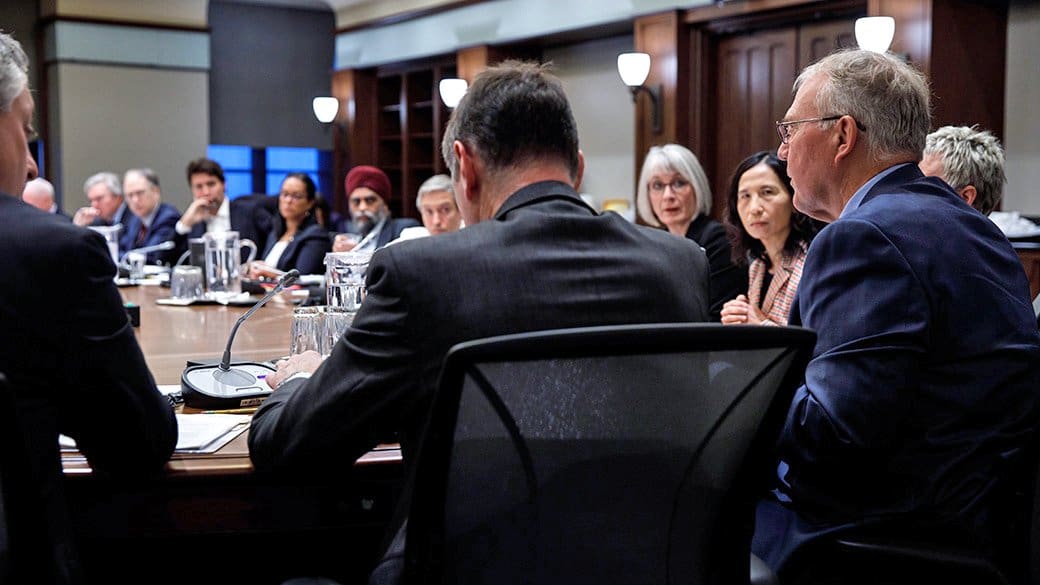
The office of Prime Minister Justin Trudeau announced Sunday evening that Trudeau convened the Incident Response Group to discuss new measures Canada is taking in response to a new variant of COVID-19, which has been identified in the United Kingdom.
According to a statement issued by the PMO, Minister of Health Patty Hajdu, Minister of Public Safety and Emergency Preparedness Bill Blair, Minister of Transport Marc Garneau, President of the Queen’s Privy Council for Canada and Minister of Intergovernmental Affairs Dominic LeBlanc, and Minister of Foreign Affairs François-Philippe Champagne participated in the meeting, along with Chief Public Health Officer of Canada Dr. Theresa Tam and Government of Canada officials.
Dr. Tam and Minister Hajdu updated the group on the variant’s properties, including its reportedly higher transmissibility. Minister Hajdu, Minister Blair, and Minister Garneau informed the group of measures to be implemented in Canada to give public health officials time to gather further evidence and conduct additional research on the new variant.
The new measures include a 72-hour suspension of all commercial and private passenger flights from the United Kingdom effective midnight Sunday, and secondary screening of all travellers who arrived in Canada from the United Kingdom in the last day.
The PMO said the new measures are in addition to travel restrictions and border measures that have been in place since March, notably mandatory quarantine measures that require travellers to quarantine or isolate for 14 days immediately upon entry to Canada.
Minister Champagne discussed similar measures being taken by other countries in response to the new variant, noting bans on flights from the United Kingdom in several European Union countries.
The PMO said the Prime Minister and the cabinet ministers “will continue to work directly with our allies and partners as part of a robust global effort to stop COVID-19 and address its devastating health, social, and economic impacts on people across the world.”