Home Blog Page 166

Is imitation the sincerest form of flattery?

Action Laval’s De Cotis says administration’s been stealing their ideas

If, as the saying goes, imitation is the sincerest form of flattery, Action Laval seems to have been earning a lot of silent praise lately from Mayor Marc Demers and his Mouvement lavallois administration.

Giving credit where due

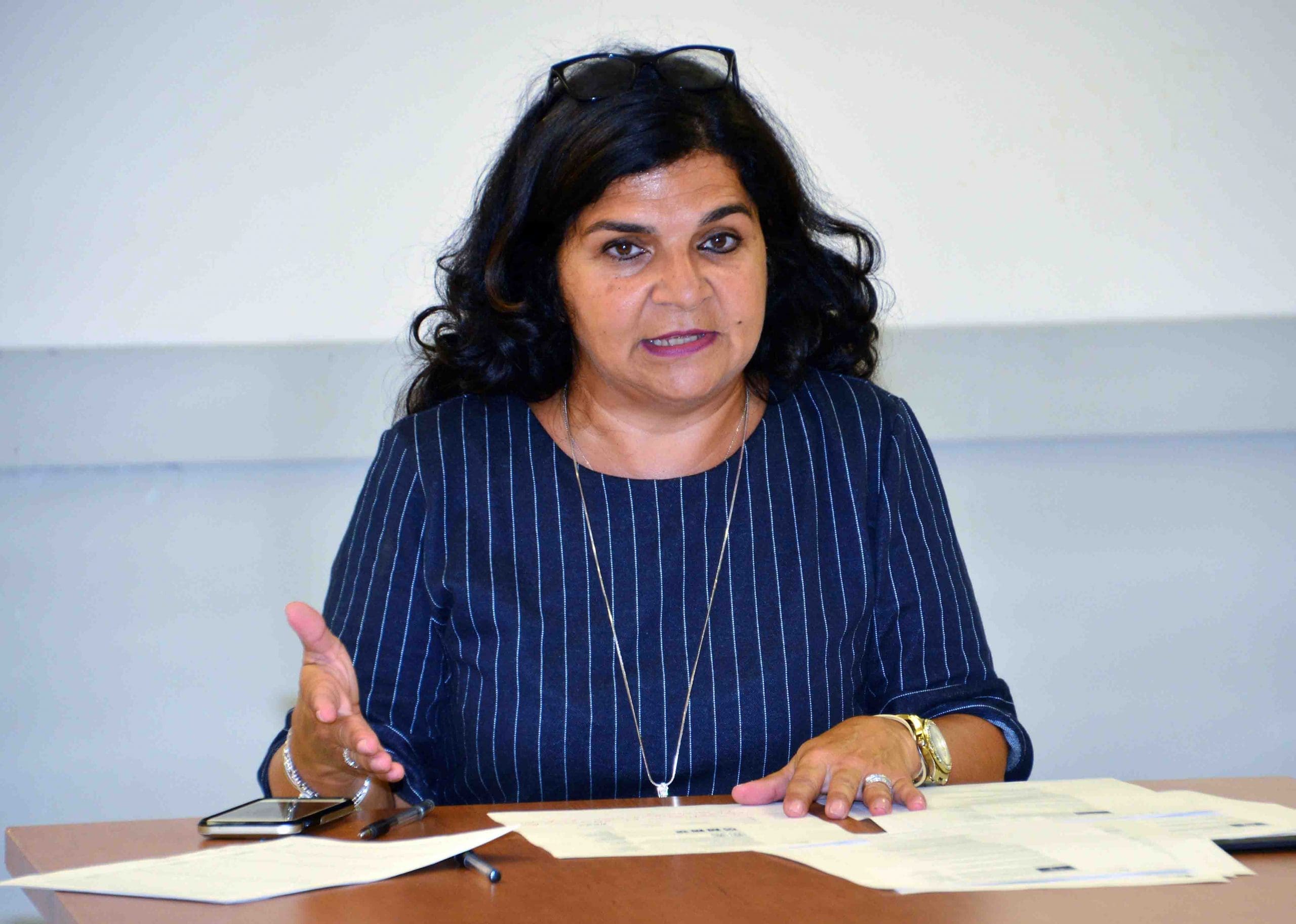
According to Action Laval city councillor for Saint-Bruno David De Cotis, the party he belongs to has tabled several motions in Laval city council since last year which were rejected by the Mouvement lavallois majority. However, the administration later went on to table and adopt similar actions, while seemingly taking credit for the work behind them.

In the first of the resolutions, dating from the October 2020 city council meeting, De Cotis and Action Laval asked the Demers administration to implement a property tax freeze in the 2021 budget, taking into account the financial hardships on Laval residents that were brought about by the COVID-19 pandemic.

Plentiful surpluses, says De Cotis

At the same time, the resolution noted that the city was sitting on plentiful surpluses, and that other municipalities in the Montreal region had announced property tax freezes for similar reasons.

As sometimes happens in parliamentary systems, the government or administration sometimes sees the wisdom or advantages of suggestions made by the opposition, although it isn’t often that the source for these decisions is acknowledged.

‘We make propositions, but then they take them for their own – that’s exactly what they’ve been doing for the last year’

So, although the Mouvement lavallois majority voted down the motion during the October council meeting, around a week before the 2021 budget was tabled, Mayor Demers announced a tax freeze in November last year.

Tax deferral motion

At the January 2021 city council meeting, De Cotis, with the support of his party, tabled a second pandemic-inspired, property tax-related resolution. This one asked the administration to defer the dates for paying 2021 City of Laval property tax bills (which would normally be on March 1 and June 1) to June 1 and Sept. 1 instead.

And in a third motion tabled at the March 9 city council meeting, De Cotis and Action Laval asked council to support his suggestion that the city’s finance department not charge interest on overdue property taxes in 2021, taking into account the economic impact of the pandemic on most residents.

Wants interest dropped

“The city is charging an annual interest rate of 13.5 per cent,” said De Cotis. “That’s why I was asking the city to just remove the penalty.” He noted that the City of Laval’s surplus funds at the end of the 2020 fiscal year stood at $29 million and the city closed 2019 with a surplus of $59 million.

In addition to these resolutions, De Cotis said that a motion he tabled at the February council meeting, to allow senior citizens 65 years of age and older to vote with mail-in ballots in the Nov. 7 municipal elections, was initially defeated in council by the administration, although he said the city subsequently announced it would allow mail-in voting.

Stealing their thunder

“We make propositions, but then they take them for their own – that’s exactly what they’ve been doing for the last year,” De Cotis said. On the upside, he said the fact Action Laval’s ideas are being adopted makes him “very happy, as long as the citizens of Laval benefit. As long as it’s in their interest I’m very happy.”

However, he lamented that the administration, which has a $1.4 million budget to conduct research into ideas and proposals, can’t do better than to copy the ideas of an opposition party which has almost no financial resources at its disposal.

As Laval’s English-speaking population increases, the SWLSB’s enrollment is still falling

Blame falls on private schools, enrollment at other boards and Quebec’s language legislation

Even with the impact of Quebec’s Bill 101 included to account for a decades-long decline in enrolment of English-speaking students from Laval, the Sir Wilfrid Laurier School Board might never have anticipated other factors, such as changing demographics or students whose parents prefer to enroll them in private schools rather than in the public sector.

Laval pop. increased

But the ironic fact is that even as the City of Laval’s population of Anglophone residents has continued to grow to the point where more than 21 per cent of people in Laval are now considered to be English-speaking, enrollment of students from Laval at the SWLSB only continued at the same time to spiral downward.

According to figures based on Canadian statistical data released recently by the Agape-Networking Partners Initiative (Agape-NPI), Laval’s English-speaking population continued to grow (by approximately 40 per cent) since the 2001 (53,390) census until the last census in 2016 (90,975), using the First Official Language Spoken definition as the identifying basis.

SWLSB enrollment declined

Laval’s latest count of English-speakers is 90,975, based on those numbers. The SWLSB, the third-largest school board in Quebec, has an enrollment of more than 14,000 students spread over a vast urban and rural territory, including the Laval region.

It’s no secret among analysts of the province’s education sector that English public schools in Quebec were “bleeding students at an alarming rate” for more than a decade, Jon Bradley and Sam Allison, a retired McGill University education faculty member and an education system critic respectively, wrote in an op-ed piece published in the Montreal Gazette in July 2017.

100 students lost annually

At the SWLSB, board chairman Paolo Galati confirmed to the Laval News that the situation is real. “We lose roughly 100 students from the Sir Wilfrid Laurier School Board every year,” he said in an interview. He said it’s the result largely of SWLSB students transferring to private schools, or else enrolling in enriched-curriculum schools run by the English Montreal School Board across the Rivière des Prairies in Montreal.

Sir Wilfrid Laurier School Board chairman Paolo Galati says student enrollment is starting to rise in the board’s Launaudière/Laurentians areas, but still lags in Laval. (Photo: Courtesy of Quebec English School Boards Association)

As for how much of the decline can be attributed to Bill 101, which first came into effect in 1977, while essentially shutting down what had been until then an open tap for English-speaking enrollment at the province’s Anglophone school boards, Galati said, “That’s pretty complex, in that you have to realize is that it has been limiting the amount of kids that can be allowed into our English school board.”

Lure of the private sector

According to Bradley and Allison’s figures (which came from a 2017 Fraser Institute national study), Quebec had the second-highest percentage of students enrolled in private schools, at 12.3 per cent. From 2000-2001 and 2014-15, the number of students attending private schools in Quebec increased from 105,000 to 122,000, a 16 per cent hike. However, the Fraser report also noted that every Canadian province had seen a decline in students enrolled in the public school system during the same period.

While Galati said that over the past few years enrollment in SWLSB schools in the territories north of Laval (Laurentians/Lower Laurentians/Lanaudière) has started increasing, largely because of rising enrollment in pre-k programs, there’s still been “a slight decrease” in enrollment in Laval, he said.

Another cause: Demographics

Galati explained the lagging numbers in Laval as a phenomenon related to a demographic shift. “We think that the clientele seems to be moving north of Montreal in the past few years,” he said, while noting that the board is responding with the planned construction of new schools in the northern territories, although a new school is also planned for Laval.

Regarding the influence of private schools on the situation, Galati suggested this is currently the main challenge facing enrollment from Laval. He said a significant number of students graduating from the SWLSB grade school program choose afterwards to enroll in EMSB high-school programs in Montreal.

The EMSB’s enriched programs

“The decrease in Laval is the result of kids going to schools such as Royal West and Vincent Massey,” he said, adding that the reason for this is that these EMSB schools offer enriched mathematics and science programs.

However, the SWLSB is currently in the midst of setting up such programs at schools in Laval to stem the loss of students to off-island. Galati said the SWLSB is in talks with the Quebec education ministry to possibly adapt an existing high-school in Laval for the enriched math and science programs.

City suspends work on changing name of Saint-François Arena

The Laval city councillor responsible for the naming of places in Laval has announced the suspension of work by a committee that had been examining the possibility of changing the name of the Saint-François Arena to the Jacques St-Jean Arena on account of a recent controversy involving the former city councillor.

Recent news reports revealed that St-Jean, who served as city councillor for the district of Saint-François for decades, is facing influence-peddling charges related to community work he had done.

“The toponymy committee is of the opinion that if necessary, on the one hand, to conserve the presumption of innocence for Mr. St-Jean, that on the other hand we must proceed with a responsible analysis of the dossier until the legal processes are completed,” said Councillor Yannick Langlois who presides the committee.

The members of Laval city council agreed unanimously during their monthly public meeting last Jan. 12 to rename the arena for St-Jean, who was also a hockey coach and hockey school operator for decades.

According to Langlois, the naming of places in Laval is based on 19 criteria. The toponymy committee’s recommendations are made to the City of Laval’s executive-committee and to city council, which ultimately make any naming decisions.

Contract awarded for Berge des Baigneurs rejuvenation work

The City of Laval has awarded a more than $4 million contract to Cusson-Morin Construction for work to significantly upgrade the grounds, landscaping and overall layout of the Berge des Baigneurs in Vieux Sainte-Rose, a setting for several of Laval’s annual outdoor celebrations.

A landscape designer’s impression of the new layout the city plans to implement at the Berge des Baigneurs in Vieux Sainte-Rose.

According to a statement issued by the city, the parking lot and grounds surrounding the Sainte-Rose-de-Lima church next to the Berge des Baigneurs will be greatly improved in a first phase of the project.

“This is an important step we are completing in view of the work being done on the entrance towards the Berge des Baigneurs, an exceptional site that is highly appreciated by Laval residents,” said Sainte-Rose city councillor Virginie Dufour, who sits on the executive-committee.

She pointed out that the Berge des Baigneurs is one of the Laval region’s only riverside parks to be found at the heart of a neighbourhood as picturesque as Vieux Sainte-Rose.

“The revitalization that this site will be undergoing will be subject to changes adapted to the needs of visitors with regards to mobility, security and types of activities, as well as by easier access to the facilities and the Rivière des Mille Îles,” she continued.

Laval reached an agreement with church officials before setting the parameters for the work to be done. Last summer, an archeological excavation done on the site turned up some interesting artifacts which have been set aside for preservation.

Laval adopts new public consultation policy

During their April 13 meeting, members of Laval city council adopted a revised policy for public consultations and citizen participation.

According to the city, the new policy formalizes practices which have been in place since 2014 and which are meant to encourage participation by the population and interested organizations in the implementation of municipal projects.

The policy establishes five governing principles aimed at ensuring that proper procedures are followed and that all rules are observed. The policy also establishes conditions for the sharing of information and for defining the roles and responsibilities of all who are participating in public consultations.

“Over the past few years, we have put into place practices aimed at placing our population at the heart of decision-making,” said city councillor for Duvernay-Pont Viau Stéphane Boyer, who is alternate mayor and vice-president of the executive-committee. “Since 2014, more than 10,000 citizens have been gathered around more than 100 projects or consultative efforts,” he added. “The public consultation and participation policy reflects these exemplary practices. It is the best democratic tool to reinforce the bond of confidence between citizens and their elected representatives, to encourage a healthy relationship based on listening, dialogue and collaboration.”

Trying to Find a ‘Balance’ is Not Working, Newsfirst opinion columnist says

The role of politicians is not to upset us and make us angry because after all, they have to be re-elected every four years, and they’ll need our ‘x’. So, they try to keep us happy with cheques during hard times, not restricting our freedom, too much, or at least not for too long, trying to keep businesses happy, and allowing the respective health officials to have their say, not necessarily their way. So, as you can sense, they are trying to find a middle ground. They’ve called it a “balance”. And that is the problem.

Not sure if you remember Alex Trebek saying to an interviewer that he didn’t gamble because “winning a hundred dollars doesn’t give me great pleasure. But losing a hundred dollars really pisses me off.” In behavioral economics there is such a thing as “prospect theory” that basically says all kinds of emotions are at play in an economic decision, and that “satisfaction and dissatisfaction are not linear”. For example, losing a hundred dollars does not upset you twice as much as losing fifty, even though it’s twice the amount lost. And similarly, we aren’t twice as happy winning one hundred than winning fifty. But winning fifty dollars twice is a whole lot better than winning one hundred once. Alex was right. (Everybody loved Alex, bless his soul).

And so our happiness and unhappiness are not linear.

Here is the connection to Covid, suggested by a Canadian physician with a master’s degree in public administration, and a research professor at Carlton, Hasan and Munir Sheikh. In a lock down, reopen only once, “because if you do have to impose a second or third lockdown, the gains from reopening are less than the pain from the lockdown”. Well said. Politicians don’t understand human behaviour. Their inconsistent action has proven fatal. They are not prepared to risk re-election with a total smackdown shut down, for as long as infection cases deflate to near zero, and re-open only once, and only if there is a robust system of tracers on hand, to snuff out new cases. 26 countries did it, according to healthing.ca. Canada did not. But our Maritime provinces did. They are much more disciplined Canadians than the rest of us, and, there’s political will. Their ‘Atlantic bubble’ worked.

But in the rest of the country, closing, reopening, curfew hours imposed, then changed, closing, reopening. It’s not about “a changing science” as our Premier Legault said. It’s about not understanding that a middle ground simply does not, and has not worked.

The other reasons are obvious. People are skipping out of their hotel quarantines, dozens land in Montreal, Toronto and Vancouver airports Covid infected, delays and uncertain vaccine deliveries, the AstraZeneca controversy. So we throw up our hands. That’s why people are understandably fed up and not even listening to our Health folks anymore. Their professional advice doesn’t matter anymore. It applies to our Dr Arruda, Dr Tam, Alberta’s Dr Hinshaw, BC’S Dr Bonnie Henry, and Ontario’s Dr Williams. The “prospect theory” has eroded our trust, our patience, and swelled our frustration. The people who do have our attention, are those on the front lines of this war, those who are living the nightmare every day, those who are making decisions about who lives and who has to wait to get medical attention and care.

Then there is the race against the variants. Some areas have had to close vaccination centers because there are no more vaccines. How is that possible when our federal government told us they had signed agreements “with more pharmaceuticals than anyone else in the world”? Wow, were we mislead! In some cities and towns, Canadians have cancelled their appointment or are simply choosing not to get vaccinated. Fully 33% of Canadians say they will not get vaccinated. How can we beat this virus with this going on?

The expert opinions vary from 60 to 75% of the population to be vaccinated to even reach herd immunity. Add to that, the contrarian opinion that we can afford to wait a third of a year for the second vaccine. Isn’t that tossing caution to the wind when manufacturers of these vaccines are telling us 21 days between shots, and the US CDC says 42 days, maximum? One jab in many is better than both jabs in fewer? Perhaps. But I see it as arrogance and condescension, politicians stretching it out for their own gain.

Governments need to inspire confidence to build trust, and that has not happened.

That’s What I’m Thinking

Robert Vairo

City faces more questions over controversial Ave. des Bois tree-cutting

Official opposition says new by-law needed to protect trees from construction projects

Laval needs a new by-law to protect its trees from damage during major development projects – like the one that saw the creation of new public transit reserved lanes on Avenue des Bois last year, leading to the destruction of nature trails – official opposition leader Michel Trottier argued during the April 13 webcast of Laval’s monthly city council meeting.

Responding to Trottier’s suggestion, Mayor Marc Demers said Laval already has a tree-protection by-law on its books, although “it dates from another era and the sums of money, the penalties are no longer up to our expectations.”

Update needed, Demers said

According to Demers, changing the by-law would require the modification of the City of Laval’s charter, in order to establish new areas of jurisdiction which the city currently doesn’t have. However, he noted the major efforts the city has made to plant and protect trees over the past seven years.

Trottier, who is leader of the Parti Laval party, was responding to questions from several residents, including Jonathan Tremblay and Nathalie Léonard, regarding the controversial tree-cutting operation on Avenue des Bois. It drew a heated reaction from environmentalists and nature conservationists last year.

Laval city councillor for Marc-Aurèle-Fortin Michel Trottier responded to questions about controversial tree-cutting operations in Laval during the April 13 webcast of the city council meeting.

“Around a year ago, on April 3 2020, the City of Laval was announcing with great enthusiasm the enlargement of Avenue des Bois,” Léonard said in an e-mail submitted for the council’s public question period.

Ave. des Bois nature trails

“What a letdown to realize today that Laval, which is responsible for the work, had only enough environmental or ecological vision to install a massive steel fence between the enormous ditch and the forest trail.”

Addressing opposition councillors Michel Trottier, Michel Poissant, David De Cotis and administration councillor Nicholas Borne, she asked, among other things, how the City of Laval can consider it acceptable to manage the nature trail this way when the city is largely responsible for the area.

“The cutting of trees on Avenue des Bois was something very serious,” replied De Cotis, agreeing that the city bears responsibility for the cutting. “I think that as an elected representative and as a member of Action Laval, we would never approve the cutting of trees without the appropriate environmental authorizations.”

Fines insufficient: De Cotis

While saying that the city probably did its best to follow environmental conservation requirements, De Cotis added that if the company that carried out the work didn’t follow all the rules, they should be held responsible and should be fined or pay damages. De Cotis also said that the $5,000 – $6,000 fine that was imposed by the city “doesn’t match the harm done. We really need to raise the fine for something as serious as this.”

Trottier suggested that a stricter tree-protection by-law would help deal more effectively with situations that have come up not only on Avenue des Bois, but also more recently in Laval’s Val-des-Brises and Champfleury neighbourhoods.

“I sincerely believe that such a by-law would be necessary,” he said. “A mature tree is a valuable resource for a city. The money that we spend to try to save and maintain trees, despite construction taking place around them, is money well spent for many years to come. So, I believe we must do what is necessary.”

‘Don’t dramatize,’ said Borne

Councillor Borne, who represents the district of Laval-Les-Îles and also sits as an associate member on the executive-committee, suggested that emotions have perhaps distorted some of the issues. “I think we shouldn’t overly dramatize the situation,” he said. “Things aren’t as grim in this dossier. Quite the opposite.” He said the work on Avenue des Bois hadn’t yet been completed, although 60 per cent has been done by now.

Demers acknowledged Laval’s current tree protection by-law ‘dates from another era and the sums of money, the penalties are no longer up to our expectations’

Borne said the fence alongside the trail on Avenue des Bois was put there to comply with standards established by the Quebec Ministry of Transport. “Because of the closeness of the ditch, the planners judged that it was necessary to have a fence,” he said. He said future plans involve planting shrubbery next to the fence to conceal it, and that thousands of new trees will be planted to replace the estimated 2,000 or so trees that were cut.

Curé Labelle sidewalks

Also during question period, a Laval resident identified as Mr. Vézina asked Mayor Demers when the city is going to take action to repair the roadway and sidewalks along Curé Labelle Blvd. south of Samson Blvd., “because they are in a lamentable state,” he said.

He also asked Saint-Martin city councillor Aline Dib whether the city will be installing a traffic light at the corner of 100th Ave. and Saint Martin Blvd. Councillor Dib confirmed that a traffic light will be installed at that location, and that sidewalks will be built along Montgolfier St. near Saint-Martin Blvd. Mayor Demers said the sidewalks along Curé Labelle are scheduled to be fixed.

Laval News Volume 29-10

0

The current issue of the Laval News volume 29-10 published April 21st, 2021.
Covering Laval local news, politics, sports and our new section Mature Life.
(Click on the image to read the paper.)

Front page of the Laval News.
https://lavalnews.ca/wp-content/uploads/2021/04/TLN-29-10-WEB.pdfFront page of the Laval News, April 21st, 2021 issue.

Skeete grants $10,000 to Laval sexual assault recovery centre

Sainte-Rose MNA Christopher Skeete has announced a $10,000 subsidy to the Centre d’intervention en délinquance sexuelle de Laval.

According to an announcement issued last week by Skeete’s riding office, the sum issued is in accordance with the CAQ government’s policy of taking action against sexual assault.

Skeete’s office noted that Quebec Finance Minister Éric Girard set aside $10.5 million in the latest provincial budget to deal with sexual violence, especially when it affects women.

“We must all be ready to fight against sexual assault,” said Skeete. “In Laval, we are fortunate to be able to count on the CIDS to follow adults or adolescents who are snared by deviant behaviours.

“As a member of the special commission on the sexual exploitation of minors, I repeat that this scourge remains a national priority,” he continued. “Very happy to be able to help the centre in the pursuit of its mission.”

Hydro-Québec responds to mystery of missing overpass lights

City blamed ‘incompatibility’ for non-functioning street lights

Responding to some recent coverage by the Laval News regarding malfunctioning street lights along des Laurentides Blvd. on an overpass over Autoroute 440, Hydro-Québec says delays caused by the COVID-19 pandemic have slowed their operations, but that the lights should be functioning in a few weeks time.

When Laval city councillor for Vimont Michel Poissant first reported the situation, a spokesperson for the City of Laval blamed the failure on incompatibility with Hydro-Québec electrical equipment, while saying the city was working towards fixing the problem as quickly as possible.

An ironic situation

Poissant had drawn attention to the problem, noting that the city was encouraging residents to report broken streetlights through an online web portal or through a smartphone app.

Ironically, part of the City of Laval’s promotion campaign recently included outdoor advertising billboards, one of which stands on the edge of the des Laurentides Blvd. overpass, adding irony to the issue.

A spokesperson for the City of Laval said in an e-mailed response to questions from the Laval News that the city is doing its best to fix the problem.

“We are aware of the problem in that sector and we are actively working to fix everything,” said Anne-Marie Braconnier, adding that the city recently undertook a major program to furnish and install new LED street lighting.

‘Incompatibility’ blamed

“During the connection of these new lights, we ran into major a technical issue, this being an incompatibility with the existing Hydro-Québec network in this sector,” she continued.

“We are currently working in narrow collaboration with Hydro-Québec so that the situation gets fixed quickly, since we are aware of the importance of lighting in this very busy sector.”

When asked whether the city had set an approximate date when the lights would be operating, Braconnier added: “The city’s goal is to re-establish as quickly as possible. We do not currently have a date set. As stated previously, this requires coordination with Hydro-Québec and we are actively working on it.”

‘We will be in a position to carry out the requested work over the coming weeks,’ a Hydro-Québec spokesperson said

This week, in response to an e-mail from the Laval News, Hydro-Québec spokesperson Marie-Annick Gariépy gave the following explanation for the delay. “Hydro-Québec effectively received on February 11 2021 a request to connect the streetlights in question,” she said.

A fix in a few weeks

“Hydro-Québec must carry out modifications to the electric line and its equipment in order to reach a good level of tension required for the installation of the new lighting on the street. We are cooperating with the City of Laval in order to make the adjustments on the new network within the briefest delays possible. We will be in a position to carry out the requested work over the coming weeks. It should be noted that these delays are normal for this type of request which requires several stages (notably the drawing-up of engineering plans).

“In spite of our efforts, the months of slowdown of our activities because of the pandemic, as well as a number of new requests that are more important since the beginning of the year, have had the effect on our capacity to respond to all of these demands. In this context, we are doing everything we can in order to prioritize the requests to be connected for [households and businesses] moving and new construction.”

CPE managers and workers in discussions for new collective agreement

Increased sharing of duties and responsibilities among the issues to be discussed

Following the start of regional negotiations prior to renewing a collective agreement with daycare centre employees, an association representing daycare managers in Laval and Montreal says it wants to draw attention to the principal role and responsibilities of managers in daycare centres.

Managers’ responsibilities

According to the Association patronale des CPE Montréal-Laval (APCPE), general managers at the Laval and Montreal CPEs are responsible among other things for planning and organizing work teams, managing and evaluating programs, and fulfilling the needs of children and parents.

The APCPE, which represents 64 CPEs, says its CPE general managers are expected to have the necessary qualifications to fulfill all the following tasks:

Development of services

Strategic planning

Ability to adapt services according to needs

Project development

Quality control of services

Leadership

Personnel management

Ability to adapt

Coaching

Mobilization of personnel

Operational management

Optimisation of activities and resources

Problem solving

Decision-taking

Recruitment

Schedule management

Interpersonal relations and communication

Efficient communications

Conflict resolution

The APCPE says its CPE general managers are dealing on a daily basis with support staff, educators, food service workers and other types of employees. The APCPE also says that the current negotiations with CPE staff are taking place with other issues in the background, including labour shortages, potential impacts on children being served, quality of services and financial considerations.

Lilia Lemire-Bertrand, director-general of CPE Génies en Herbe on Saint-Martin Blvd. in Pont-Viau, said in an interview with the Laval News that the question of “co-management” or increased sharing of responsibilities was an issue that came up in past negotiations between CPE managers and the workers.

Smooth negotiations expected

“Each time we have had negotiations, this has been part of the discussions between the union and the management side,” she said. “To understand the context, we are just beginning the negotiations and we have every hope that they will go well.”

Despite the managers’ position as overseers of CPEs, Lemire-Bertrand maintained that their role isn’t authoritarian and there are many shared tasks. “For example, I work on a daily basis with the entire work team and we all work together,” she said.

‘Everything we do is for the children and their parents,’ says Lilia Lemire-Bertrand, general manager of CPE Génies en Herbe on Saint-Martin Blvd. in Pont-Viau

“When we talk about co-management, this takes into account that the team is always working together in all decisions, because we work together daily. And with the pandemic, this has become even more so because we needed to adapt to the situation quickly.”

Many issues on the table

Asked whether the negotiations could lead to a clearer division of duties between managers and employees, Lemire-Bertrand said, “For sure that in the various aspects there will be details to be worked out. On the other hand, the present negotiations are not just about co-management.

“Everything is being taken into account to ensure that we continue to work together on all the issues, including the labour shortage, to ensure that we continue to have the means to work efficiently and flexibly. We can’t continue to manage as it was done 20, 30 or 40 years ago.

“We have to modernize our ways of doing things, and we also have to have stability in our operations,” she added. “And, of course, everything we do is for the children and their parents. So, we take that greatly into consideration in all the decisions we make.”

City of Laval and ADRIQ sign cooperative agreement

The City of Laval announced last week that it has signed an agreement with the Association pour le développement de la recherche et de l’innovation du Québec (ADRIQ) for a strategic partnership whose goals will include organizing webinars and training sessions.

The themes for these activities will revolve around innovation, digital transformation, and the adoption of disruptive technologies, some of these being 5G, the Internet of Objects and Artificial Intelligence.

Expert advice

According to a press release issued by the city, businesses in Laval will get access to an important network of experts through the new agreement with ADRIQ.

“Businesses in Laval let us know, during the major economic forum we held in September last year, about the importance they place on digital transformation and innovation,” says Laval executive-committee vice-president Stéphane Boyer who is responsible for economic development dossiers.

“This new agreement with ADRIQ illustrates our willingness to work with partners who will have a direct effect on the businesses regarding technological transformation issues or digital change,” he adds.

Coming innovation

“This new agreement with the City of Laval consolidates even more our willingness to support innovation of businesses in Quebec,” says Pascal Monette, president and CEO of ADRIQ.

“By working together on different targeted activities, we will be in a position to propose Trans Num, our digital transformation program to all the businesses on Laval’s territory.”

Businesses from Laval’s industrial sector are invited to take part free of charge in the first webinar, dealing with artificial intelligence and the Internet of Objects, during an innovation clinic being held on Wednesday April 14 from noon to 1:15 pm.

Fire safety starts in the kitchen, says Laval Fire Dept.

While noting that up to 22 per cent of fires in Laval can be traced to cooking, the Laval Fire Department says it wants to raise awareness among people of all ages of the fire dangers lurking in the kitchen.

“Unfortunately, burns and smoke inhalation, but also fatalities and significant damages to property, are often caused by distractions,” says City of Laval executive-committee member Sandra Desmeules, who is responsible for public safety issues.

Lurking fire dangers

“The fire department is thus hoping to raise awareness among all our citizens of the dangers that inattention can cause,” she adds.

According to the Laval Fire Department, inattention and distraction are the most important causes of cooking fires, accounting for 43.7 per cent of directly-related injuries, while also needlessly setting off sensors and alarms.

The LFD says that in 2019 alone, 520 fire calls were made because of food-related incidents which never actually ended up causing a fire.

Distraction and fire

The LFD has decided to draw attention to its latest fire safety message with a campaign that uses a slogan urging people not to combine certain activities with cooking, such as doing a manicure, working at the computer or taking smartphone selfies – because distractions cause fires.

Here are a few other tips offered by the LFD for safety in the kitchen: Always stay near the kitchen; avoid distractions; use a timer when cooking; make sure the kids stay away from the stove.

Weather

Laval
clear sky
27.1 ° C
27.9 °
26 °
49%
0.9m/s
0%
Sat
29 °
Sun
30 °
Mon
29 °
Tue
28 °
Wed
24 °