Prime Minister Justin Trudeau issued the following statement to announce the Government of Canada’s designation of March 11, 2021 as a National Day of Observance to commemorate the people who lost their lives and the significant impacts felt because of COVID-19:
“Early last year, our lives, and the lives of everyone around the world, were forever changed by the emergence of COVID-19. Today – one year after the first known death of a Canadian to the disease – we now mourn the tragic loss of more than 22,000 parents, siblings, friends, and loved ones.
“COVID-19 has infected over 864,000 other Canadians, and has had an immeasurable impact on how we all work and learn, connect with friends and family, and live our daily lives. All Canadians have experienced sacrifice and loss over the past year. Our kids have missed birthday parties, seniors have felt isolated from the ones they love, and for far too many, this virus has meant the loss of their job or the closure of their business.
“Our health care and other essential workers have put themselves at risk, working long hours, so we could get the services and care we needed. And as efforts continue to get vaccines to every Canadian as quickly as possible, we thank them now more than ever.
“During this crisis, Canadians have remained resilient. They have helped neighbours, given to organizations, put signs in their windows to support our health care workers, and lent a hand wherever possible. As we continue to deal with the impacts of the global pandemic, your government will continue to do whatever it takes, for however long it takes, to support you – because here in Canada, we help each other through challenging times.
“We all have a role to play in ending this pandemic, and the crisis is not over yet. In recognition of how far we have come and how far we still have to go, the Government of Canada is designating March 11, 2021, as a National Day of Observance. On this day, I invite all Canadians to join together in honouring the memory of those we have lost, and the people they left behind. We will also recognize everyone who has been impacted by COVID-19, and pay tribute to all those who continue to work hard and make incredible sacrifices in our fight against the virus. Together, we will beat COVID-19.”
Two Laval men suspects in alleged Toronto fraud scheme
A Laval man is one of several people charged by the Toronto Police Department following a year-long investigation of an employment fraud scheme where victims deposited fraudsters’ fake cheques but ended up losing cash of their own.
Enosch Falaise, 32, of Laval, Que. is charged with having instruments for counterfeiting, possession of proceeds of crime, and fraud over $5,000.
Jerry Revolus, 29, also of Laval is charged with fraud over $5,000 and conspiracy to commit an indictable offence.
Toronto police said that in February of last year, they received a number of complaints about a “sophisticated scam” targeting people in the Greater Toronto Area.
The investigation, referred to as Project Drop, found that individuals were repeatedly sending out hundreds of thousands of text messages to cell phones across Toronto advertising employment opportunities for couriers.
The texts claimed that interested applicants could work for a small lending company by delivering loans.
Victims were instructed to pick up and deposit what they thought were legitimate business cheques, then pay funds to other individuals in cash, Bitcoin or e-transfer. Police said that all of the cheques were eventually discovered to be elaborate forgeries.
LPD still on the lookout for pervert, after Chomedey woman’s report
A spokesperson for the Laval Police Department says they are continuing to work on a dossier involving a middle-aged male suspect who may have performed an indecent act in a public place late last year, but they are waiting for additional information to move forward.
A woman from Chomedey (whose name we are withholding to protect her identity) contacted the Laval News last week to say that last Dec. 29 she filed a police report because of a man who was following her performing a publicly indecent act on himself in his car.
“He then drove recklessly a block in reverse trying to hide his plate,” she said. “I provided all information to the police as well as his plate and his photo. All evidence.
“I have heard nothing from the Laval police department,” she added. “Here’s hoping you’ll be able to maybe bring some attention to this situation and help protect the public.”
The Laval News contacted the LPD last week. LPD community relations officer Évelyne Boudreau replied and had this to say in response.
“What I can see in the police file is that we did meet up with her and took from her a declaration of the situation,” said Boudreau.
“But since she says that the guy was hiding so that she wouldn’t see him, it’s not the usual exhibitionist,” she added.
“But we still do have the plate number and a description of the individual and the police report is between the hands of the lieutenant-detective in the squad for reports of a sexual nature.”
Officers injured in 180 km. car chase into Laurentians
Police in the Laurentians arrested a man in his 40s on the afternoon of March 4 after he led them on a 180-kilometre chase from Laval to Rivière-Rouge, damaging four police cars and injuring two police officers while at it.
The adventure started around 8:35 am that morning when the LPD received a call regarding an armed theft that had taken place a short time before at a dépanneur in Sainte-Dorothée.
When the suspect’s debit card wouldn’t complete a payment transaction for food he was trying to buy, he got into a fight and injured the attendant then fled.
The man’s truck, a GMC Sierra, was spotted by LPD patrol cars shortly afterwards, making its way northward along Autoroute 13. He managed to evade them, after colliding with the police vehicles and injuring an officer.
The Sûreté du Québec later caught up with the suspect, although he also collided with their vehicles and an SQ officer was seriously injured.
After unsuccessfully trying to stop him with a nail carpet laid down on the highway, police finally caught up to the suspect in Rivière-Rouge where he lived. He now faces a range of charges, including armed theft, fleeing the police, car theft and dangerous driving.
Just 20 per cent have agreed to be inoculated, according to reports
Although recent surveys suggest there is a growing sense of trust in the general population for the various vaccines now coming out to prevent COVID-19, there are also signs that a significant number of employees in health care establishments and retirement residences are refusing to be vaccinated.
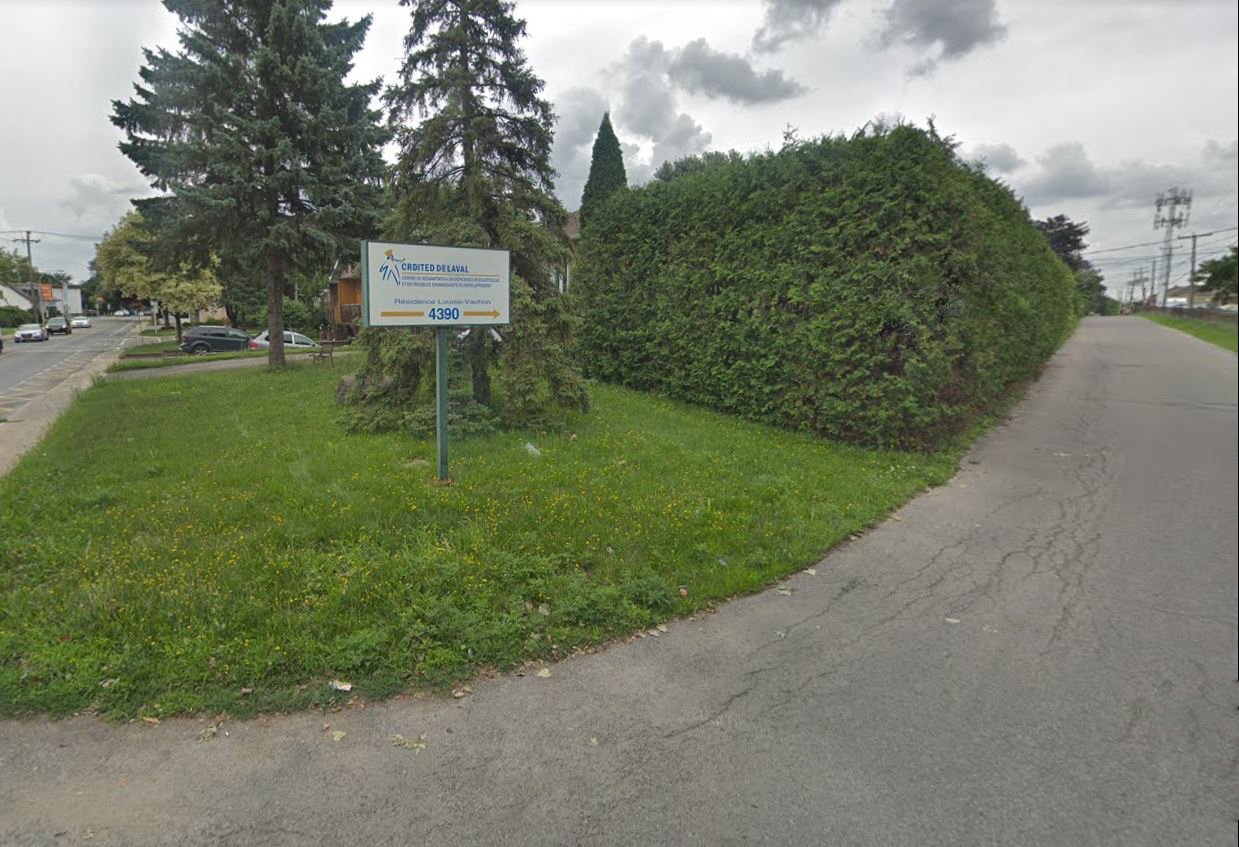
According to recent news reports, just 20 per cent of workers at the Louise Vachon residence on Saint-Martin Blvd. in Chomedey agreed to be vaccinated, despite the fact the entire staff was prioritized to receive the shot since the beginning of February.
Correlating infections
The health employees’ stance coincides with an uptick in the number of confirmed COVID-19 infections at the residence, which is home to persons with behavioral problems, including autism and intellectual disabilities.
According to reports last week, three residents and an employee have become infected. Questions have been raised since then with the CISSS de Laval as to whether all possible preventive measures were taken.
While the CISSS de Laval insists that all reasonable precautions have been and continue to be taken, the workers’s union maintains that the residents, many of whom have multiple disabilities, are in a particularly high category of risk should they become infected with COVID-19.
On March 11 last year, the World Health Organization declared a global pandemic
If there is one feeling that many people are probably experiencing now more than 12 months after the beginning of the COVID-19 pandemic, it is perhaps that sometimes a year can feel more like a decade (or even a century) when you’re trying to cope with the stresses and inconveniences from a global health emergency like this.
Although the impact of the pandemic didn’t begin to be felt in Canada and Quebec until at least February last year, globally it had started in January when the first grim reports emerged from China.
There, what had previously seemed unimaginable was actually happening: complete curfews and lockdowns, bringing life in that part of the the world to a complete halt. And yet, soon afterwards, that haunting scenario would become part of our lives.
While the first known case of COVID-19 in Canada (a man returning from China) was reported on Jan. 29 last year, it would only be on Feb. 27 that Quebec’s first known case was reported: a woman from Montreal who returned from Iran with COVID-19 symptoms.
March 2020
On March 11 last year, the World Health Organization (WHO) officially declared COVID-19 (which had initially been regarded as a health crisis) to be a full-blown global pandemic.
And so it was that on March 14 last year, the Quebec government officially declared a public health emergency across the province. As part of the first measures, Quebec asked seniors over the age of 70 to stay home to prevent spread, while hospitals and seniors’ residences were declared closed to visitors.
In one of the first local acknowledgments of the outbreak, one of the Laval News’s March issues carried an announcement from the City of Laval that it was following the example of the federal and provincial governments and putting into place new measures to prevent further spread of the coronavirus.
On March 14 last year, the Quebec government officially declared a public health emergency
“The health and security of our citizens and our employees are fundamental,” said Mayor Marc Demers. “The city will be making all the necessary efforts at its various facilities. The goal is to limit as best possible the spread of the virus. For that, the city will be cooperating narrowly with the Centre intégré de santé et de services sociaux (CISSS) de Laval. Be assured that that we are following the situation from very close.”
Given the ease with which fraudsters take advantage of people today, it wasn’t long before the Royal Canadian Mounted Police’s national anti-fraud division was warning people across the country about an increasing number of scam attempts being made by fraud artists taking advantage of the COVID-19 crisis.
The RCMP said everyone should think very seriously before deciding to share personal information with a stranger over the phone, or by clicking on one of the many COVID-19 links that have popped up on the internet.
In an editorial on the COVID-19 pandemic published by the Laval News around this time, we observed that for the Trudeau Liberal government, COVID-19 was without a doubt the steepest challenge it faced since first being elected in 2015.
“After five years of almost unrestrained spending, justified by the belief that a strong economy will pay for the rising mountain of debt, the Liberals now face a gargantuan bill for COVID-19 measures as well as for the resulting economic fallout,” we said.
With the economic fallout of the pandemic becoming all too apparent early on last year, Canada’s largest lobby group for small and medium businesses reacted favourably to measures introduced the Plante administration in the City of Montreal to offset the impact – while warning that tough times lay ahead before recovery.
The Canadian Federation of Independent Business said it agreed with a statement made by Quebec Premier François Legault that part of the economic hardship would be the almost unavoidable loss of the most vulnerable businesses in the province.
Quebec Premier François Legault started announcing regulations for dealing with COVID-19 in March last year.
A theme that emerged early during the onset of the pandemic was that stress would be taking a major toll on people and on society’s overall mental health. As such, the CISSS de Laval was making special psychosocial assistance available to Laval residents who were in need of help for dealing with emotional turmoil brought on by the COVID-19 crisis.
“Pandemics can affect people on a physical basis, but also psychologically,” said Carol Ladouceur, director of mental health and substance abuse recovery programs at CISSS de Laval. “We consider it important, given the current context, that CISSS de Laval offer psychosocial support to the many people who might be experiencing stress, anxiety and depression.”
In order to free up beds at Laval’s Cité-de-la-Santé hospital for expected COVID-19 patients, the CISSS de Laval was renting an entire hotel to accommodate various kinds of patients. Officials at the CISSS said the unidentified hotel had been appropriately refurbished in order to meet medical and security requirements for the patients who would be treated there.
In one of the first signs of serious financial relief to be provided by a government during the pandemic, the City of Laval’s executive-committee announced that it had decided to postpone the date when residential property and business taxes would be due.
“While waiting for compensation measures that will be brought in by the government, residents who are affected by mandatory quarantines or the temporary closings of many businesses will be dealing with a loss of revenue,” said Mayor Marc Demers.
April
By April, the grimmest reality of all during the pandemic was beginning to sink in with rising death tolls at the province’s retirement and long-term care facilities. The CISSS de Laval confirmed the death toll from the COVID-19 virus was rising and out of the control at CHSLD Sainte-Dorothée. It would eventually climb to at least 100 fatalities, before the situation was under control.
As the severity of the situation grew more apparent, the Quebec government was calling on the organizers of public events over last summer to cancel or postpone at least until Aug. 31 because of the ongoing COVID-19 situation.
“The government of Quebec has had to make a difficult but necessary decision,” Quebec Tourism Minister Caroline Proulx said. “We are aware of the impacts this represents for organizers, and we thank them for their contribution to the collective effort. We will be there to prepare a strong recovery in order to see Quebec and its festivities shine brightly a soon as possible.”
The province’s announcement came after Mayor Marc Demers had stated during the April city council meeting that he preferred to wait until May before deciding whether to cancel Laval’s Fête nationale celebration and the more than $600,000 expense it entailed. In the end, he would decide to follow the government’s recommendation.
Also in April, Quebec’s director-general for public health, Horacio Arruda, ordered an inquiry by his department into the high rate of infection and mortality at the CHSLD Sainte-Dorothée, as well as at other health institutions in the province where there have been severe outbreaks of COVID-19 infection. Hearings for that inquiry have yet to begin, as they were postponed until this autumn.
Despite the overall negative perspective during the pandemic, there were some brighter spots at least. COVID-19 crisis or not, demolition of the old and abandoned Récréathèque in Laval’s Chomedey district was started in April last year to make way for an eight-storey, 347-unit residential building. Construction of the new project is now well underway.
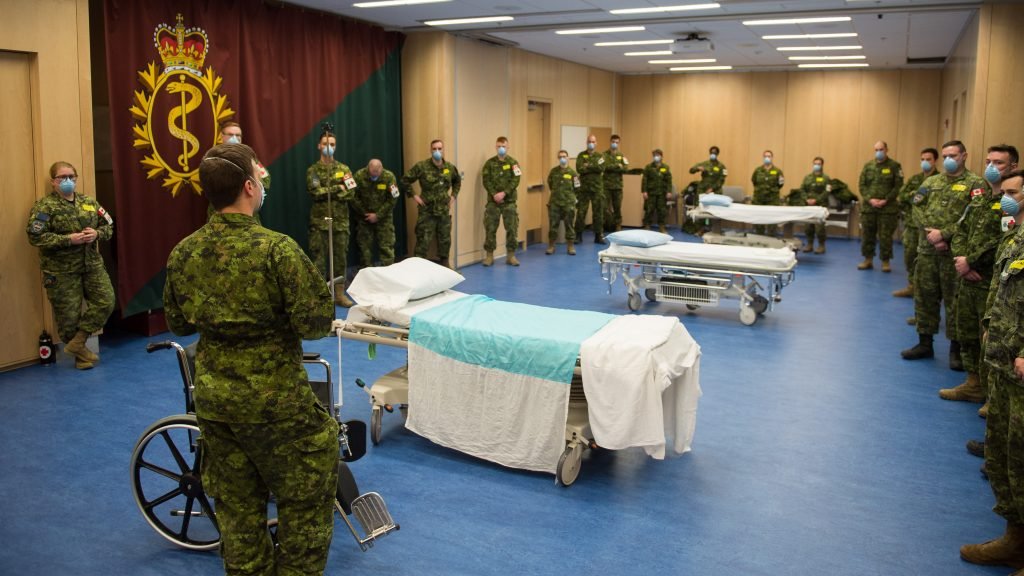
By April last year, the Canadian Armed Forces’ Joint Task Force East (JTFE) had responded to a request for assistance dispatched medically-trained military personnel to the Montreal region to assist at nearly a half-dozen long-term care residences struggling with COVID-19 – including a CHSLD in the Laval area.
The MSSS had identified long-term care centres (CHSLDs) as institutions requiring the most assistance. CHSLD Villa Val des Arbres on Saint-Martin Blvd. East in Laval was among the care centres selected for assistance.
Still in April, the son of an elderly woman who was among the many people who died of COVID-19 at CHSLD Sainte-Dorothée in Laval was seeking permission from a Quebec court to file a class action lawsuit against the long-term care residence.
Jean-Pierre Daubois, whose mother Anna José Marquet died at the age of 94 on April 3 after she contracted COVID-19 at the CHSLD, filed initial paperwork in Quebec Superior Court for the suit against CHSLD Sainte-Dorothée. The suit named CISSS de Laval, the regional health authority that oversees the residence on Samson Blvd. in Laval’s Sainte-Dorothée neighbourhood.
May
By May last year, police forces across the province had campaigns well underway to ticket persons not following social distancing and other COVID-19 sanitary protocols in public places. The Laval Police Department was reporting on its Twitter feed that the force had issued a total of 380 tickets related to COVID-19 infractions, such as non-distancing or gathering in groups, up to the first week of May.
The Laval Police Department’s community relations department said LPD officers were advised to evaluate each situation after intervening and question those persons they suspected were not obeying the rules, following which tickets could be issued. Those tickets start at $1,000 (plus $550 processing fees) and increased for repeat offenses.
Also in May last year, the City of Laval’s Place Bell multipurpose arena and entertainment venue was called into service to take in an overflow of COVID-19-infected patients who could not be accommodated at the region’s Cité de la Santé hospital, the Centre intégré de santé et de services sociaux (CISSS) de Laval confirmed.
The action was taken as the number of COVID-19 infections across the province showed few signs of slowing, while the government of Premier François Legault continued efforts towards reopening the economy after two months of strict lockdown measures to keep the coronavirus infection from spreading.
The CISSS de Laval reported that as of Monday May 11, 387 persons in Laval had died of COVID-19 since the beginning of the pandemic, while there were 4,233 confirmed cases of infection, 128 people in hospital, 23 people in intensive care, and 1,739 persons who recovered.
June
Citing an economic prediction made by the International Monetary Fund (IMF), Quebec International Relations Minister Nadine Girault told an online gathering of members of the Laval Chamber of Commerce and Industry that the year 2020 could see the worst global recession since the 1929 crash and the Great Depression that followed it.
Girault maintained that the recession stood to be worse than the 2008 downturn, because this time it wouldn’t be only a financial crisis, “but a crisis that concerns a real economy,” she said.
Members of the Canadian Armed Forces’ 4 Health Services Group were deployed to Laval last year to help deal with the COVID-19 crisis.
As we announced in June, homeless people in Laval, who were left largely without anywhere to stay since the start of the COVID-19 pandemic, gained a measure of security with an announcement by the CISSS de Laval of the opening of a temporary shelter at the Place des Aînés in Chomedey.
The CISSS was sponsoring the shelter, which opened on June 3 in the senior citizens’ community centre on Curé Labelle Blvd. which remained closed during the COVID-19 pandemic. The new site replaced a homeless shelter that was being operated at the Centre Josée-Faucher in Laval-des-Rapides.
Professors Nicolas Doucet and Yves St-Pierre of the Laval-based Institut national de la recherche scientifique (INRS) were contributing their expertise in structural and cell biology to the race for a vaccine against COVID-19.
In partnership with Glycovax Pharma, a company with operations also in Laval, the two researchers were evaluating the feasibility of a vaccine strategy targeting carbohydrate molecules located on the surface of the coronavirus Spike protein.
July
With a high wind of optimism blowing through its sails, the City of Laval is moving ahead this week with a sweeping new economic development strategy designed to give a badly needed boost to the city’s waning economy in the uncertain aftermath of the COVID-19 pandemic.
Dubbed ‘Laval, capital of opportunities’ by the Demers administration, the primary focus of the campaign is to provide support to entrepreneurs and business owners during the economically-challenged post-pandemic period.
In a statement issued by the City of Laval prior to Demers’ official presentation of the policy during the July city council meeting, city officials acknowledged that Laval has been as impacted by the fallout from COVID-19 as any other municipality in Quebec or around the world.
Months after being forced to close because of the COVID-19 pandemic, the province’s movie theatres were reopening – albeit only briefly before being ordered shut again. They had new rules that limited the number of viewers to 50 per screening room in multiplex cinemas.
It was no secret that the COVID-19 pandemic forced the shutdown of a good number of major film productions since the beginning of the year. As such, the selection of movies in theatres was expected to be much slimmer than it would normally be at the time of year.
August
While some of Canada’s leading economists were suggesting Ottawa wouldn’t be able to deal with a second wave of COVID-19 with the same financial largesse it had had previously, federal Economic Development Minister Melanie Jolie told the Laval News the Liberal government was well positioned to continue along the path it had been on since the beginning of the pandemic.
“We’re in the best position and we still have firepower in terms of fiscal capacity,” she said
While everyone at the federal, provincial or municipal levels seems to be talking about economic recovery during the pandemic, the Laval Chamber of Commerce and Industry believed the local business community needed to understand what help was available in order to seize the opportunities offered by the three levels of government.
That at least was a leading point offered by the LCCI prior to an online Zoom video forum they sponsored on post-COVID-19 recovery efforts. Among the many elected officials who took part were Quebec Finance Minister Éric Girard who is also Minister Responsible for Laval.
“In five years, we will have returned to a balanced budget,” Girard pledged during the exchange. On a more somber note, he added that “we will have to live according to our means, that is with a level of expenses in conjunction with the revenues of the government.”
Elementary school students in Quebec from the fifth grade up would be required to wear protective face masks, although they would be allowed to take them off in classrooms, Education Minister Jean-François Roberge announced.
In addition to the senior elementary school students, the mask requirement would also apply to high-schoolers, as well as older students enrolled in vocational or adult training programs, in hallways and while walking around commons areas in schools.
September
With uncertainty abounding over the prospects of a second wave of COVID-19, the Director of Public Health for Quebec joined public health officials in Laval to state that the province and the region would be well-prepared should there be a resurgence of the pandemic in the fall.
“COVID-19 posed considerable challenges,” interim assistant director-general of the CISSS de Laval Geneviève Goudreault said during a press conference covered in one of our September issues. It was attended by Quebec Public Health Director Dr. Horacio Arruda, and reported on progress made by the regional health agency in its efforts to deal with the pandemic.
“Laval was one of the regions most affected in the number of cases and the number of deaths per 100,000 residents,” said Goudreault. “We had to adapt our practices and assign our employees so as to respond to the emergency. We learned lessons from this first wave and have established our plan to be ready when the second wave manifests itself.”
Concerned that Quebec might one day be unable to import essential foods like fruits and vegetables during a crisis like the current COVID-19 pandemic, Premier François Legault said during an online CAQ policy discussion this month that the government hoped to launch a major greenhouse farming project, with power provided by Quebec’s vast hydro electric network.
“For me, one the great fears I had as I was trying to reassure everyone last March was that we would not be able to import fruits and vegetables during the crisis,” he said in a keynote address delivered during the event, alluding to the start of the COVID-19 crisis.
October
A provincial investigative report completed last but only released by Quebec in October on the reasons behind the deadly COVID-19 outbreak at CHSLD Sainte-Dorothée laid the blame on technical shortcomings as well as a lack of personnel at the long-term care facility.
The report on CHSLD Sainte-Dorothée was tabled by Minister for Senior Citizens and Caregivers Marguerite Blais and Health and Social Services Minister Christian Dubé, together with another report on the even more devastating outbreak which took place around the same time last year at the Herron private residence for seniors in Dorval.
Both Blais and Dubé insisted that, after the revelations about the devastation from COVID-19 that was taking place at the two residences became known, government and health authorities had already begun to take action so there would be no repeated situations.
More than 100 fatalities from COVID-19 were recorded at CHSLD Sainte-Dorothée by the middle of last summer, ranking the residence among the hardest-hit in the province during the ongoing pandemic.
The Quebec government announced additional protective measures for schools, sports facilities and teams in the province’s “red” zones – including Laval – which would be in place beginning Oct. 8 until at least Oct. 28. Wearing a face mask became mandatory at all times for students attending high-schools located in the red zones, including inside classrooms and outdoor areas.
“Today we are announcing an important reinforcement of the existing sanitary measures, as well as the deployment of additional measures, for school establishments located in red zones,” said Education Minister Jean-François Roberge.
Laval mayor Marc Demers announced that the city would be freezing taxes in the 2021 budget for residential, commercial, industrial and agricultural property owners. The move came after the City of Montreal and other Quebec municipalities previously announced they were freezing their property taxes in order to soften the COVID-19 economic on property owners.
November
With the COVID-19 pandemic limiting public gatherings, the City of Laval launched a new kind of public consultation process this month on its urban planning rules using a computerized platform to stage a “virtual open house.”
Federal Immigration, Refugees and Citizenship Minister Marco Mendicino tabled the Trudeau government’s latest Immigration Levels Plan, setting a path for moderate increases to immigration to help the Canadian economy recover from COVID-19, while also trying to stimulate future business and employment growth.
“Immigration is essential to getting us through the pandemic, but also to our short-term economic recovery and our long-term economic growth,” said Mendicino. “Canadians have seen how newcomers are playing an outsized role in our hospitals and care homes, and helping us to keep food on the table.
The Société de transport de Laval (STL) was presented on Nov. 5, during an online “virtual gala,” with the Association québécoise des transport’s Grand Prix d’Excellence en Transport award hosted by the AQTR for the STL’s online tool that tells riders how crowded their bus could be.
The digital tool provided riders with an estimate of the number of passengers they could expect not only when they board, but also during the course of their entire bus trip – which is a first in Canada. As the COVID-19 pandemic made social distancing in public transit situations a core concern for everyone, the crowd estimator supplied information tailored to individual transit users.
In spite of infection rates rising again during the second phase of the COVID-19 pandemic, Quebec Premier François Legault delivered a message of hope to members of the Coalition Avenir Québec and to all Quebecers during a webcast CAQ policy convention.
In a keynote speech to CAQ members during the event Nov. 7, Legault said the government remained focused on restoring and expanding the province’s economy. But at the same time, he suggested there might be economic advantages to be gained despite the pandemic.
With flu season threatening to complicate the COVID-19 situation, on Nov. 6 and 11 the Agape charitable organization provided flu shots to approximately 117 seniors at the Senior Wellness Centre in Laval in its latest effort to promote the health and well-being of Laval’s English-speaking language minority community.
“This was such an important event for us,” said Kevin McLeod, executive director at Agape. “This would never have been possible if it weren’t for our local partners at the 24-hour Pharmaprix close to our centre. When we approached pharmacist-owners Issam Merrouni, Mohamed Suhel Jetha and Mahmoud El-Achkar, they were very excited about the idea, stating that they wanted to give back to the community.”
December
An inquiry by the Quebec Coroner’s Office was expected get underway into the circumstances that led to a seemingly uncontrolled outbreak of COVID-19 at CHSLD Sainte-Dorothée during the first wave in the spring last year of the coronavirus pandemic.
According to a media report, the CISSS de Laval sent a memo to CHSLD Sainte-Dorothée employees, advising them that the inquiry was about to get underway.
There were more than 100 fatalities from COVID-19 at the CHSLD during the pandemic’s first wave – well above the norm at most other similar facilities in the province. In addition to the coroner’s investigation, a class-action lawsuit was launched.
There were at least 100 COVID-19 fatalities at CHSLD Sainte-Dorothée during the pandemic’s first wave, far higher than the norm at similar institutions across Quebec.
In the memo to employees, the CISSS said they could soon be asked to sit and be interviewed by Sûreté du Québec investigators and that they might wish to be accompanied by legal counsel when this took place.
The CISSS pointed out to the employees that not all information could necessarily be shared with the SQ as it might be considered confidential and privileged under medical ethics rules. The inquiry has since been postponed to later this year.
In keeping with a pledge announced in October by Mayor Marc Demers, the average residential property owner in Laval wouldn’t be getting a tax increase in 2021, according to the city’s latest annual budget which was tabled during a webcast from Laval city hall on Dec. 7.
With the economic impact of the COVID-19 pandemic probably on most people’s minds, the city decided to increase the economic development department’s budget by a whopping 26 per cent in order to help revive the impacted economy.
As part of the increase, the city also allotted $20 million as a sort of economic development contingency fund to meet additional needs should they suddenly manifest themselves, and as might become the case during these unpredictable times.
January 2021
As the second year of the pandemic was dawning, planning for a future with COVID-19 was getting underway, Among the questions being raised: What role would women entrepreneurs be playing in the revival of the Canadian economy when the pandemic is finally over?
That was the big issue raised during a webcast discussion between federal Minister for Small Business Mary Ng, Vimy MP Annie Koutrakis and a dozen women entrepreneurs from Laval and other cities, on advancing women’s economic empowerment while dealing with the COVID-19 pandemic.
“We are all aware of the disproportional impact that the pandemic has had on women across the country,” said Koutrakis, noting that a large proportion of Canada’s population of women work in sectors of the economy that have been most affected.
At the same time, she pointed out that many women have been forced by work obligations during the pandemic to make difficult choices, such as choosing between a career or temporarily putting aside responsibilities towards children and family.
For her part, Minister Ng highlighted the government’s commitment to helping women grow their businesses and access new markets through the Women Entrepreneurship Strategy, a nearly $5-billion initiative that provides women with access to financing, expertise and networks.
“I often like to say that, you know, my job is to help companies start up, scale up and to enter the market,” she said, while adding that her department offers businesses operated by women tools, such as the services of trade commissioners, in 160 locations around the world.
As part of an ever-evolving roster of rules imposed by Quebec in efforts to control the spread of the coronavirus, police in Montreal and Laval said in January that they were ready to enforce new regulations imposed by the province for a 30-day 8 pm – 5 am curfew, which was subsequently extended and is still in force.
Public Security Minister Geneviève Guilbault said she was counting on police officers across the province to “act diligently” and use their judgment in enforcing the measures. She said the government’s goal wasn’t to make people’s lives more difficult, but instead to rein in the minority of Quebecers who are not yet following the rules.
Curfew breakers remain liable to fines ranging from $1,000 to $6,000 (plus hundreds of dollars in court expenses) if they are unable to adequately justify why they are outside the home. Young people 14 years of age and over are subject to a $500 fine.
February
“If you develop symptoms of a respiratory tract infection and if you live with someone who has tested positive for COVID-19, unfortunately you almost certainly have it too,” Dr. Stéphanie Susser, medical coordinator for environmental health at the Centre intégré de santé et de services sociaux de Laval, told an online information session for senior citizens organized by Congregation Shaar Shalom in Chomedey.
She said knowledge of COVID-19 is evolving very quickly, and recent studies suggest that a significant proportion of infected people may not exhibit any symptoms at all.
“There is also evidence that people are contagious before the first signs and symptoms appear. This finding has led the government to recommend the precaution of voluntary face coverings to reduce the risk that people with few or no symptoms spread the virus in public places where it’s difficult to stay two metres away from others.”
According to Dr. Susser, the risk of serious complications from COVID-19 increases with age, “but even young people are at risk,” she said.
In spite of a pledge by Quebec Premier François Legault to compensate movie theatre owners for revenue lost after not being allowed to sell snacks when theatres reopened in pandemic red zones on Feb. 26, Cinémas Guzzo owner Vince Guzzo turned down the offer, saying it was not worth the trouble.
Film theatres in Quebec were closed since earlier this year when the provincial government decided to reimpose wide-ranging measures to prevent the spread of COVID-19, including an 8 pm – 5 am curfew.
Guzzo was adamant that, given the current conditions offered by the province, Cinémas Guzzo would not be reopening on the date proclaimed by Quebec. “I will be waiting for the food restrictions to be removed,” he said.
First elected in 2013, Vimont councillor’s political journey has been circuitous
As founder of the new Laval Citoyens party and as a mayoralty candidate in the municipal elections in November, one could easily be left with the impression that Michel Poissant is starting the race a few places behind pole position.
Unlike the Mouvement lavallois, the current party in power whose roots date back to when former Mayor Gilles Vaillancourt was in office, or Action Laval which ran its first candidates in 2013, or the Parti Laval which has been around since 2016, Laval Citoyens has a steep hill to climb if it hopes to win the confidence of Laval’s voters by Nov. 7 in such a short time.
Plain spoken
Poissant, a Chartered Professional Accountant (CPA) and former Fonds de solidarité des Travailleurs du Québec financial administrator who is now CFO at a Saint-Laurent-based telecommunications company, has a gift for plain-speaking and the ability to appeal to the common woman or man.
Although he willingly converses in English, it seems fairly clear that his strongest support is most likely to come from voters in Laval’s predominantly French-speaking districts, with a broader base of support should he manage to recruit and place appropriate candidates in English-speaking areas.
Seeks undecided voters
“I believe that in the upcoming election we’re starting from scratch,” Poissant admitted candidly in an exclusive in-person interview with the Laval News recently following a mayoralty campaign launch that other media chose to attend only as online participants.
While acknowledging the uphill battle lying ahead from now to next November, Poissant believes that at least 50 per cent of voters in the City of Laval are undecided – “That’s my gut feeling,” he said – and Laval Citoyens has its work cut out to win their support.
“People have been voting from election to election for one party or the other. So, this time, the citizens will have to ask, okay, which one they want to have managing things for the City of Laval, considering the values, the vision, the experience and while having both feet on the ground.”
‘We can deliver,” he says
With seven years experience sitting on Laval city council as the councillor for Vimont, Poissant says he and his team have the knowledge, leadership ability and experience “to make sure that we can deliver” impressive projects such as the city’s currently stalled aquatic complex.
‘You can have the best plans and the best PowerPoints. But you know what’s hardest? It’s to deliver,’ says Poissant
“You are no doubt aware that we are one of the few cities that does not have an interior pool,” Poissant pointed out, while alluding to decisions by the Demers administration to postpone construction of the planned aquatic complex because of higher-than-expected contract bid estimates, followed by cancelled architectural plans. “We’ve been waiting for it for years, but they took the wrong approach,” he said.
Walking the talk
Using the colloquial Québécois expression, “Il faut que les babines suivent les bottines,” meaning roughly “You have to walk the talk,” Poissant suggested the mayor and his party, the Mouvement lavallois, have lost touch with reality and that its failure to deliver the aquatic complex project is a prime example.
“You have to be a realist,” he said. “When you manage a business – and I have managed a good number of them – you can have the best plans and the best PowerPoints. But you know what’s hardest? It’s to deliver.”
While Poissant’s time in Laval municipal politics amounts to not much more than a half-dozen years, he managed to wander around quite a bit between the parties in that time.
He was part of the first wave of opposition to the iron-rule on Laval city council that was former mayor Gilles Vaillancourt’s Parti PRO des Lavallois. After the Parti PRO got turfed, Poissant and other Mouvement lavallois candidates were on hand to ride the resulting tidal wave and won their first majority on council.
Disillusioned by ML
Poissant, who describes himself as community-minded with a “citizen-driven” mindset, said his initial loyalty to the ML began to wane when he saw the ML administration becoming “bureaucratic-driven, red tape-driven, with bosses everywhere, but not such much action.”
So, in 2018 he and at least nine dissenting city councillors decided to leave the ML and “cross the floor” as it were to join the Action Laval opposition. (Since then, several of the dissenters agreed to return to the Mouvement lavallois fold where they remain.)
That didn’t mark the end of Poissant’s wandering, however. In May last year, after sitting with Action Laval since late 2019, he and city councillor for Marigot Daniel Hébert decided to abandon Action Laval, leaving behind rumours that Poissant had harbored leadership ambitions within that opposition party that other members were unwilling to support.
Not impressed by Action Laval
Explaining why he decided to leave Action Laval, Poissant said it was because of “the land problems and ethical problems,” referring to a controversy last year when three Action Laval city councillors were suspended from the party caucus following conflict-of-interest allegations published in the Journal de Montréal.
Although they were eventually exonerated, Poissant insisted that a perception persists among people in Laval. “In politics, credibility is everything,” he said.
Although he said Laval Citoyens won’t be unveiling a detailed platform until the election campaign is officially underway, he hinted that some elements could focus on improving the city’s downtown area which is now in a phase of intensive development.
Some candidates chosen
Earlier this year, a suggestion he made to the Demers administration, that it undertake a vast tree-planting campaign in the mostly concrete and glass downtown area, was rejected. However, Poissant suggested during our interview that he hasn’t given up on the idea and that it could serve as inspiration for broader policies later. As of last week, Laval Citoyens had announced five candidates (one being English-speaking), with more to be announced in the coming months for the 21 seats on Laval council. The current candidates are: Hugo Martin (l’Abord-à-Plouffe), Yann Caron (Saint-Vincent-de-Paul), Christelle Unubemba (Auteuil), Anna Del Bello (Saint-Bruno) and Louis-Martin Beaumont (Laval-Les Îles).
Despite COVID downturn, film theatres still have a future, says Kim McCraw
If it’s been a few decades since Kim McCraw was a teen sitting around with friends scoffing fries at Granby’s Cantine Chez Ben, the highly successful Quebec film producer feels just as much at home now that she lives on the edge of the Rivière des Mille Îles in Fabreville/Laval.
For anyone who’s ever had the good fortune to pass through Granby in the Eastern Townships south of Montreal, Ben’s – with its giant neon sign (‘Chez Ben on s’bour la bedaine’) on the edge of old Route 112 – is a long-time landmark.
Originally from Granby
McCraw, co-founder of the Montreal-based film production company micro_scope with Luc Déry, has come a long way professionally since her days as a CEGEP student in Granby where she aspired to one day become a player in the filmmaking business.
Their company’s most notable production success was probably the 2010 film Incendies, directed by Denis Villeneuve (who also directed Blade Runner 2049), followed in 2011 by Monsieur Lazhar (directed by Philippe Falardeau). Both won Genie Awards for Best Motion Picture, as well as being nominated for the Academy Award for Best Foreign Language Film.
‘My Salinger’ is their latest
While the jury may still be out, McCraw’s latest impending success is Philippe Falardeau’s most recent film, My Salinger Year. Starring Academy Award-nominated actress Sigourney Weaver (the Alien franchise) and Margaret Qualley (seen most prominently recently in Quentin Tarantino’s Once Upon a Time in Hollywood), the film is based on a memoir of the same name by Joanna Rakoff, documenting her time working for a powerful New York literary agent (played by Weaver in the film).
Worldwide distribution
The film is also being distributed in many countries and territories (United States, South America, Japan, China, Korea, Russia, United Kingdom, and throughout Europe, among others). According to the film’s distributor (Métropole Films), My Salinger Year had a very promising first theatrical release in Australia, where it was among the top box office sellers in its first week of release.
‘Cinémas remain super important in the long chain of film production,’ says producer Kim Mccraw
Distributed in 26 theatres despite a 50 per cent reduction in capacity due to COVID-19 sanitary measures, the film grossed $160,000 AUD (roughly equivalent in Canadian currency). In the Montreal region, where many theatres remain closed, the film has been available since March 5 as VOD.
Fell in love with Laval
After living for a number of years in Montreal, McCraw decided five years ago that she was looking for a new place in the region that she could call home. However, what she was looking for was a setting that might perfectly combine some of the benefits of city living with certain other aspects more typical of the countryside. As it turned out, she found exactly what she was looking for in Laval.
Film producer Kim McCraw, whose micro_scope film production company was behind the recent Sigourney Weaver film My Salinger Year, says she decided to make her home in Fabreville after finding an ideal setting along one of the area’s many riverfronts.
While the City of Laval has been promoting a strategic vision of its future with the slogan “Urbaine de nature” (suggesting Laval is an area where rural and urban overlap into an ideal living environment), McCraw said she basically found what she and her family were looking for in Laval.
“I was looking for something that was sort of out in the country, like a little chalet,” she said in an interview earlier this week with the Laval News. “It needed to be not far from Montreal, maybe 20 minutes from my work, but with a country atmosphere. What I ended up finding is located next to the river and it’s just what I was looking for. I am very pleased with what I found.”
The producer’s role
McCraw’s and Déry’s production company is basically a one-stop-shop for major Quebec film directors when they hope to make a film that holds initial promise. With production responsibilities that include financing and legal, as well as fine tuning of creative elements, McCraw said that each film can take up to five years of her time from beginning to end in the production process.
While acknowledging that producing My Salinger Year presented unique challenges because of the impact of the COVID-19 pandemic on film theatres, McCraw said she was confident that cinémas will continue to be an important part of the filmmaking business. “Cinémas remain super important in the long chain of film production,” she said. “We certainly aren’t interested in seeing film theatres die out. They remain a place where everyone goes to see a film together. There’s nothing better than seeing a film with other people.”
Quebec pharmacies are set to participate in mass vaccination campaign
MATIAS BRUNET-KIRK
The provincial government updated Quebecers on the vaccination campaign on Tuesday, outlining their plan to use pharmacies as vaccination centers. Quebecers will therefore be able to get their COVID-19 shot at local pharmacies.
The program will be rolled out as of Mar. 15 in participating pharmacists in Montreal, said Minister of Health and Social Services Christian Dubé at a press conference on Tuesday.
This will be added to with a subsequent rollout of the program in over 1400 participating pharmacies across the province. “This is really good news,” said Minister Dubé.
Appointments will nonetheless be made through the government’s official website or over the phone, where people will be able to choose a location where to get the vaccine.
Pharmacies will still follow the same age group guidelines the government has outlined, making the program a complimentary service to the immunization efforts in mass vaccination centers.
Weapon of massive risk reduction
Minister Dubé said that “vaccination is our weapon of massive risk reduction,” pointing specifically to the current situation in Montreal where case numbers remain concerning. Vaccination efforts will therefore be concentrated to reduce the spread of the virus.
Dubé highlighted the importance of the campaign in the Greater Montreal area where he said “the epidemiological situation is interesting,” due to the growth in numbers of the B.1.1.7 strain, popularly known as the British variant
“12-15% of positive cases are of that variant,” said Dubé, adding that “if it keeps going up, next week could become very dangerous.”
“We are working under the assumption all over Quebec that these are all variants,” said National Director of Public Health Dr. Horacio Arruda.
Calm before the storm
The Health Minister said he was “weighing his words,” but felt “scared about the situation,” where Montreal could be “the calm before the storm.”
“It will lower our level of risk,” said Dubé about vaccination, but cautiously added that “we still have a long way to go to control the contagion.”
The plateau in cases many are seeing at the moment could be misleading, said the Ministry of Health, as the lowering curve of the old variant and the rising curve of the British variant, could be cancelling themselves out.
Lessons learnt
Vaccination efforts in Montreal continued to grow this week. Over 16,000 vaccines were administered throughout Greater Montreal on Monday, said Daniel Paré Director of the vaccination efforts, adding that many lessons had been learnt on how best to operate.
“We are really pleased that people accept to be vaccinated,” said Paré, but said measures were being taken to further increase vaccination capacity and options for booking appointments. Dubé added that more chairs would also be provided for the elderly people waiting in line.
Minister Dubé asked all those with an appointment to not arrive too early. I know you don’t want to miss it but you don’t have to worry your vaccine is reserved,” he said, adding that arriving 5 to 10 minutes before was sufficient.
He also stressed that to reduce the number of people waiting in line, no one should arrive without an appointment and that only one caregiver could accompany the person being vaccinated.
Different situations throughout the province
The Ministry also reminded Quebecers that vaccine rollout was different between regions due to the different conditions.
“Each region has a unique epidemiological situation,” said Dubé, adding that for example, the Montérégie region has more senior facilities that are of higher priority for vaccination. Therefore authorities have to slightly delay the rollout for other segments of the population.
As more vaccines become available and the capacity for appointments increases, the government will open up slots to larger portions of the population.
How to book an appointment
People who are 70 years or older can now book an appointment for a vaccine. Those who are caring for a loved one over the age of 85 years more than three times a week are also eligible.
Residents are only required to bring photo identification and proof of residence. The process will be paperless with little to no contact.
The government says the easiest way to book an appointment is through their website at Québec. ca/vaccinCOVID. If some have difficulties doing this, they can also book their appointment by calling 1 877 644-4545. The closest vaccination centre currently active for Parc-Extension residents is at the ParcExtension CLSC, located at 7085 Hutchison Street. Québec.ca/vaccinCOVID 1 (877) 644-4545.
Officials with the City of Laval are inviting residents to take part on Thursday March 11 at 6:30 pm in a webcast ceremony paying homage to the many residents who died or fell ill over the past year during the COVID-19 pandemic.
The webcast can be followed at the following address: webdiffusion.laval.ca. The ceremony will be attended by:
Mayor Marc Demers;
Benoit Charrette, Quebec Minister of the Environment and Climate Chage, as well as Minister Responsible for the Laval region;
Dr. Jean-Pierre Trépanier, director of public health at the Centre intégré de santé et de services sociaux (CISSS) de Laval;
Christian Gagné, CEO and executive-director of the Centre intégré de santé et de services sociaux (CISSS) de Laval;
And Mary-Sylvia Gédéon, nurse and unit head at the Centre d’hébergement Sainte-Dorothée.
CISSS de Laval has three clinics up and running, and a fourth expected soon
With Laval among the areas in Greater Montreal where a COVID-19 “red zone” remains in effect, it’s clear that efforts to deal with the coronavirus pandemic are still far from over, although there is more hope than before with the start of a widescale vaccination program.
So, while gymnasiums, restaurants, theatres and cinemas can now open on a limited basis in “orange” zones in the rest of the province, the red zone restrictions continue in Laval and the rest of the Montreal region for the time being.
Thousands vaccinated
In Laval, several COVID-19 vaccination clinics opened last week. As of the beginning of March, thousands of Laval residents had already been vaccinated. With up to three vaccination clinics in Laval operating as of this week, a total of four clinics are expected to be up and running in Laval in the coming weeks.
Stéphanie Daigneault, a spokesperson for CISSS de Laval, told the Laval News that the first week the clinics opened went smoothly. “We had 300 appointments on day one of each clinic,” she said. “Day two, three and four we had 600 appointments, and then after that it was 800 appointments a day.”
Three vaccination locations
As of this week, the CISSS de Laval has three vaccination clinics up and running (by appointment). They are located at the Méga Centre shopping mall Notre-Dame in Laval’s west end, at the Quartier Laval shopping centre in central Laval, and at the SmartCentre Laval Est in eastern Laval.
The CISSS emphasizes that vaccination remains the most efficient, reliable and secure way to protect one’s self and others from COVID-19. As part of the ongoing vaccination campaign, the CISSS and the Quebec health ministry have set up a priority list of persons in groups to be vaccinated.
Continue following measures
According to the health ministry, the groups of persons scheduled to be vaccinated are being changed or expanded as the quantities of vaccines being received from manufacturers increase. In the meantime, they urge everyone to continue following preventive measures, including rigorous hand-washing and wearing of face masks.
The CISSS emphasizes that vaccination remains the most efficient, reliable and secure way to protect one’s self and others from COVID-19
The health ministry says vaccines will become available “gradually,” and that as soon as they become more available across the country, the vaccination program here will be expanded to include a growing number of persons.
The current order of priority is considered preliminary, but is led off by persons considered to be vulnerable and suffering a great loss of autonomy and who are living in health care residences and CHLSDs or in group homes.
Priority groups for vaccination
Others in the priority list are as follows:
Workers in health care institutions who are coming into contact with patients or residents.
Underway
Persons with autonomy living in seniors’ residences.
Underway
Isolated communities or at great distances from urban settings.
N/A
Persons 85 years old and over.
Underway
Persons 80 years old and over.
Underway
Persons 70 years to 79 years old.
Underway
Persons 60 years to 69 years old.
To come
Adults 60 years old or less suffering from a chronic illness or a health problem made potentially more hazardous by COVID-19.
To come
Adults 60 years old or less without chronic illnesses or other health problems, but who have responsibility for persons with those types of health problems at risk from COVID-19.
To come
The rest of the adult population.
To come
The health ministry says that a schedule for vaccination of children and pregnant women will be determined after studies on the safety for these groups has been completed.
What ever happened to the truth? Why is that we are lied to, time and time again? Why is it that politicians can’t look us straight in the eyes and speak frankly to Canadians? Imagine having a friend who is evasive, shifty, lies, but keeps giving you gifts to make it all better. That’s how I feel about the people who make up the Government of Canada.
Did you know for example that two million surgical masks destined for the provinces were stolen from Hamilton airport? This happened eight months ago, on the night of July 4th, 2020 when we were scrambling for PPE, but the government didn’t want us to know. Senior members in Trudeau’s office discussed with ministers withholding information on the government’s inability to procure sufficient personal protective equipment for our front-line health workers, like N95masks, gloves, scrubs etc.
Only today do we learn that Hamilton police “continue to investigate the theft of a trailer at Hamilton Airport”. It is only thanks to some crafty and persistent journalist from Blacklock News, an Ottawa media outlet, that we are today aware that the Procurement Minister Anita Anand made sure word of this embarrassing theft would not reach Canadians. Why not tell us then? Remember the days, not long ago, when Justin Trudeau would walk out of Rideau Cottage and announce another several more billion dollars for one cause or another. Internal memos, directed at Trudeau, urged the PM not reveal details but to keep the message “generic” so as not to raise questions about where and how the funds were handled and directed.
What makes this even worse, is the Prime Minister clearly stated on March 27th, that “transparency around the investments we’re making to support Canadians is important not just from a democratic and parliamentary principle…” What a croc!
And the latest is the snail pace flow of vaccines into Canada. Remember when Trudeau told us “Canada has procured more doses per capita than any country in the world”. It was a shamefully misleading statement. The fact is, we may have told the pharmaceuticals we wanted their vaccines and signed for them, but there is no commitment on when or how many, by any of the pharmaceuticals. And because he naively believed in global supply chains, we are now forced to delay the second shot, for weeks and up to a riskier four months, with circling variants ready to pounce.
I must mention this. While the Prime Minister maintained publicly he was “disappointed” with President Biden’s decision to cancel Keystone XL pipeline crossing the border to the US, one publication quotes the prime minister as saying privately, “thank you” to Biden for cancelling the project, saving Trudeau the international embarrassment of tarnishing his social activist image for a clean environment. So much for “transparency”. So much for honesty.
The wage and rent subsidy program announced just last week was extended, at an additional cost of 15 billion dollars. Is it necessary? Statistics show that either intentionally, or through incompetence, the federal government has already given out far more that is necessary to maintain a stable economy during the pandemic. Our economy actually grew, and substantially more than economists predicted. That’s wonderful isn’t it? No, it is not. It is borrowed money that Canada does not have, and is spent unwisely. As a result, Canadians have managed to actually save, yes save during a pandemic, and in record amount.
Philip Cross, economist at the Macdonald-Laurier Institute, says the support programs were “excessive and poorly targeted”. CERB and the rest of the federal programs were meant to compensate for lost income but they did much more than compensate. Instead of targeting lower income Canadians, a lot of money went to people who did not need it, so they banked it. According to a CIBC report, Canadians “are sitting atop $90 billion in excess cash — easily the highest in the country’s history and equal to about four per cent of consumer spending. Canadian businesses, are hoarding another $80 billion.”
That’s a whole lot of cash (all on government credit cards) that will spill into the economy. The Liberals sure know how to win elections don’t they? Buying our love and affection, and our votes.
In the meantime, after you get jabbed, have fun. Spend like ‘The Roaring 20s’. And remember on election day who gave you all that spending power.
Oh, and don’t worry about paying it all back. Our grandkids, and their kids, will take care of that.