A tunnel under the Rivière des Prairies is among the options being looked at
Alto, the company mandated by Ottawa to create an electrified high-speed rail network between Toronto and Quebec City with stops in between, is contemplating digging a tunnel under the Rivière des Prairies to connect the line to an Alto station to be set up in Laval.
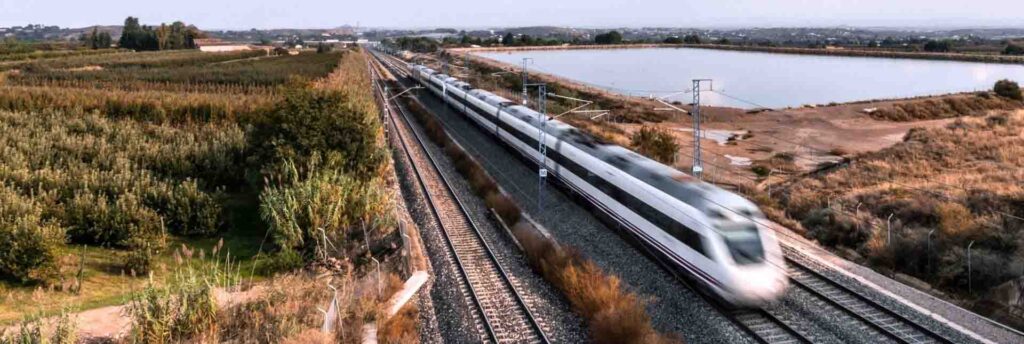
New tunnel possible
“We’re talking about maybe tunneling from Laval under the Rivière des Prairies,” Ben Bourdeau, an Alto spokesperson, told The Laval News during a public consultation session on the project held last week at the Laval Sheraton.
As things are now, a tunnel carrying the Société de transport de Montreal’s underground Metro off the island of Montreal to the Cartier and Montmorency stations in Laval passes through a tunnel under the river, passing near des Laurentides Blvd.
Link to downtown Montreal
“One of the options is a tunnel because it’s less disruptive,” Bourdeau said. “It’s something that offers protection in case there’s a snow storm. It would be basically under the Rivière des Prairies going straight downtown.”
While a tunnel would present a few challenges, such as some additional cost, “we’re building this for a hundred years,” he continued. “So, in the long run, it would be much more beneficial.”
Although the location for an Alto station that would serve passengers from Laval hasn’t been chosen, a map displayed during last week’s consultation indicated Alto wants to place it within a central area east of old Laval city hall (currently being renovated) and the downtown core.
It would be somewhere in the vicinity of de la Concorde Blvd., Collège Montmorency and Place Bell.

Three-hour trip to Toronto
Alto, also known as Toronto–Quebec City High-Speed Rail Network, was announced around a year ago by then-Prime Minister Justin Trudeau. While a design phase has been projected to cost $3.9 billion and last for up to five years, the total completion cost is $80 to $120 billion, with gradual opening of the system taking place between 2035 and 2044.
Trains on the dedicated 1,000-kilometre rail route would reach top speeds of up to 300 km/h, which is nearly double what Via Rail can currently offer now. Besides Toronto, Quebec City and Laval, there will also be stations in Peterborough, Ottawa, Montreal and Trois-Rivières.
When the line is completed, a transit between Montreal and Toronto would take around 3 hours (compared to 5 hours 30 minutes now on Via Rail), while the time on Alto from Montreal to Quebec City would be just under 1 hour and 30 minutes (compared to about 3 hours 17 minutes now on Via Rail). A transit to Ottawa would take around an hour.
A hub for Laval and North Shore

With a population that will soon be reaching 440,000 – a total of 1.2 million when you factor in the population of Montreal’s North Shore – Laval is seen as the most logical location for an Alto station because of its strategic proximity to the northern suburbs, where the population also continues to expand.
“Everyone from the suburbs north of Laval will come to Laval to take a train to go to Toronto, to go to Quebec City,” said Bourdeau. “Laval will be a hub. They won’t have to go down to Montreal’s Central Station to take a train to go anywhere. It’s going to be in Laval. This will be much more convenient for everyone. These people won’t have to transit through Montreal.”
While passenger trains continue to flourish in Europe and to some extent also in the U.S., critics of public transit in this country generally agree that Canada has lagged badly behind. “We don’t have a train culture in Canada,” said Bourdeau, noting that Via Rail has never been able to reach its potential because it operates on tracks owned by CN and CPKC, whose freight trains get scheduling priority.