Home Blog Page 291

Sunday Blaze in Chomedey Laval

On Sunday, a blaze in a 3-Storey, building in the sector of Chomedey, Laval caused 4500 homes to be without electricity, and at least 20 people had to be evacuated from their homes.  When the firefighters arrived at the 8-unit apartment, the roof was in flames. The fire started at about 15:45pm at 760 boulevard Laval and was contained by 18h45pm.

No injuries were reported.  The cause of the fire was due to an electrical fault.

Don’t bring credit card knives to the airport

The Canadian Air Transport Security Authority (CATSA) would like to remind air travelers that credit card-size utility knives are not permitted in carry-on or checked baggage. These items are concealed knives and, as such, are illegal under the Criminal Code of Canada. Recently, CATSA has seen a marked increase in the number of credit card knives being intercepted across security checkpoints.

When a screening officer finds a credit card knife, the police must be notified. This causes undue delays at the checkpoint for all passengers and can lead to criminal charges and prosecution against the person carrying the item.

Before going to the airport, passengers are invited to consult the CATSA Website for information and tips on how to prepare for security screening.  Questions can also be directed to 1-800-294-2202 or on Twitter @catsa_gc.

CATSA is a Crown corporation responsible for:

  • Pre-board screening – the screening of passengers, their carry-on baggage and their personal belongings;
  • Hold-baggage screening – the screening of checked baggage;
  • Non-passenger screening – the random screening of non-passengers; and
  • Restricted Area Identity Card – the administration of access control to airport restricted areas through biometric identifiers.

(SOURCE: Canadian Air Transport Security Authority (CATSA) )

Nicolas Macrozonaris is training a new generation of sprinters


Martin C. Barry

If you were training in track and field either for self development or for the more serious purpose of one-day competing in the Olympics, wouldn’t it be nice knowing that your trainer is one of the top three sprinters Canada ever produced?

Six years after retiring from competition, Chomedey-born Olympian Nicolas Macrozonaris – who became the third-fastest Canadian in history behind sprinting legends Bruny Surin and Donovan Bailey – is training a new generation of sprinters out of his Finalpush Athletics Track Club which meets at the Claude Robillard Sports Complex in Montreal.

The making of a sprinter

Since Nicolas’ mentor and agent was Surin himself, who won the gold for Canada in the 4×100-metre relay at the 1996 Atlanta Olympic Games, there’s every reason to believe that Nic – who competed in two Olympics and in 2003 managed to beat then-world sprinting record holder Tim Montgomery – will be giving back to the sports community by helping raise two highly promising sprinters to the best they can achieve.

Nicolas’s top two protégés are Costa Blidjios, a 60-meter junior provincial champion, and Praise Omogbai, a 60-meter and 200-meter juvenile provincial champ. Both are western Laval residents. They went to provincial indoor championships held in Sherbrooke earlier this year where, according to Nicolas, “they competed with the best in the province” and won.

Sprinters
The two sprinters’ times have improved quite dramatically, according to Macrozonaris.

Inspiring athletic excellence

While they’re both Quebec champions now, Nic describes Praise as “amongst the best in the country right now in her age category. Both are phenomenal athletes. Both are extremely hard workers. I feel that sometimes working so hard for such long periods of time just gives them more and motivation to go further. That’s why I’m glad to share the news about them to hopefully inspire other young kids in our region and our communities towards athletic excellence.”

Praise, 13, a grade-eight student at Laval Junior Academy, is a double gold medalist having won medals in provincial 60-meters and 200-meters sprinting events, while Costa, 18, and a second-year student at Montreal’s Vanier College, is a 60-meter champion in his age category.

Before deciding to concentrate on sprinting, Costa played high school football for five years. Prior to that he trained in martial arts. Nicolas Macrozonaris was the catalyst who ignited Costa’s zeal first for track and field and then for sprinting.

Training with the best

“I hadn’t even thought about track and field until I met Nic and he asked me to come train with him,” he said. “I don’t think I could have found a coach that was any better than Nic. I mean he’s been there, he’s done that so he really knows his stuff.”

Praise started to acquire her taste for track and field at an earlier age than Costa, albeit with some reluctance at first. “When I was in grade five and six I was part of a track team, but I wasn’t really serious about it, I didn’t really like it,” she said. Then her parents began encouraging her “and I started liking it more and more.”

In addition to her sprinting interest she also plays basketball at Laval Junior Academy and has proven to be fairly proficient at longjump. “I think Nic has really helped me to improve more and more,” she said of her trainer. “I’ve gotten faster. The training really helps.”

Macrozonaris Sprint Trainees

Surmounting challenges

Nicolas described how Costa first had to surmount challenges before he could succeed. “When he went to the provincial championships where it all counts and they give out all the medals, that’s where he was able to execute and run the best race of his life.” Costa agreed that faced with reality, it was at the provincials that everything he’d done leading up to the moment finally connected.

Nicolas described Praise as an athlete who has worked “very consistently and very hard and she’s very cerebral as an athlete. She understands quickly. There’s a saying, ‘Learn fast or get left behind quick.’ She understands quickly what needs to be done. She started off with good times and continously has worked hard to become faster and faster.” According to Nic, Praise competed at the provincials with girls three years older and finished a highly respectable third despite the age difference.

Some notable improvements

Since training with Nicolas, Costa’s time in 60 meters has gone from 7.77 secs. to 7.23. “In the world of running that’s a big improvement,” said Nic. For her part, Praise started off the current season at 8.30 secs in 60 meters and has dropped to 7.79, which her trainer calls “a huge improvement.” For the record, Nic’s 60-metre personal best, set in Montreal in 2002, was 6.56 secs.

While Costa’s sprinting dreams are fairly modest (he wants to make the McGill University track and field team) while studying medicine at McGill at the same time, Nic said about Praise, “I think she has potential to do very, very well at the international level.” Looking far ahead, she’s considering medicine as a possible career choice.

What Nic always tells his protégés is that “school is a priority. If they can use the sport to experience things in life, great. But I feel that they both have a bright future in academics, but also in athletics. Athletics is temporary, but education will be with them for the rest of their lives.”

CAQ’s François Legault not disappointed by Bill 86 withdrawal


Martin C. Barry

On a stop in Saint-Eustache last week, Coalition Avenir Québec leader François Legault said in an interview with the Laval News that he’s not disappointed the Liberals decided to kill Bill 86 – the government’s controversial legislation which would have done away with elected school boards across the province.

We spoke to Legault last week just a few days after the Liberals announced they were withdrawing Bill 86. It would have fundamentally changed the province’s education system by replacing school commissions with a new and non-elected form of governance.

“I think it’s a good thing,” Legault said, “because right now we have to focus on services, not on structures. But it’s clear that we have a government that improvises. It doesn’t make sense that after two years – they’re not there since two weeks but two years – and still they don’t know what they want to do with school boards.”

Copy catting the CAQ

Legault noted that new recommendations by Liberal Education Minister Sébastien Proulx, including kindergarten starting at age four, were originally suggestions that had been made by the CAQ. “We had proposed putting in place school starting at four years old like they have in Ontario and many other places,” he said.

Legault speculated on what motivated Premier Philippe Couillard to back down from his earlier hardline stance on education reform which saw the education minister’s portfolio change hands several times. “He saw that after three ministers of education he was still not going anywhere. He didn’t have a clear idea of what he wanted to do.

“You must remember that during the last electoral campaign, he was against our proposals,” he continued. “So he changed his mind to focus on CAQ’s proposals about decentralization, but he still doesn’t know what to do. It’s improvisation in education. It doesn’t make sense. I was minister of education for three years in a row, but now for the last two years we’ve had three ministers of education in a row. This is not good for our children.”

Laval Caquiste Skeete wades in

Christopher Skeete, a Laval resident who ran for the CAQ in 2014 in Fabre and who is currently vice-president of the CAQ’s western Quebec political association, said the government’s emulation of CAQ ideas “is just another example of them copying everything that we propose.

“And what’s really funny this time is that they’re copying us less than a week after,” he added. “What really matters to us is that the right policies get put into place and we’re just happy to make sure that we can deliver for the kids. We’re not worried about who gets the credit. We know that people are aware that they’re our ideas and we’re the ones who are proposing them in the first place.”

When announcing during the QLP’s recent party convention the government’s intention to drop Bill 86, Premier Couillard also mentioned that he felt the province’s English-language school boards were a model of governance that should be looked at as an example by all in the sector. Legault agreed with that assessment.

“I’ve been saying that for a long time,” said Legault. “We see that success rates are higher on the English side. But I would also suggest to Mr. Couillard to see what’s happening in the Jewish community. In the 10 or 12 schools of the Jewish community in Quebec, the diploma rate is 99 per cent. Why is that? Because it’s a question of valuing education, it’s a question of decentralization also.”

Vehicle registration surtax

On another topic, Legault said the CAQ is aiming to win all provincial ridings in Montreal’s North Shore region as well as in the Lower Laurentians in the Quebec general election in the fall of 2018. If the CAQ does indeed succeed in augmenting its share in ridings where the PQ currently holds sway, some of it may be the result of recently implemented Liberal policies in transportation and public transit, which could end up impacting the common man’s pocketbook.

Last week, as the finishing touches were put on Bill 76, the ruling Liberal government’s legislation to even the field in greater Montreal for the allocation of public transit services while determining who should pay the cost, the CAQ pointed out that the law will force drivers who live on the North Shore to pay a punitive $45 surtax on their usual vehicle registration fee.

A disincentive to drive

The surcharge is a disincentive to North Shore residents for using the car and an incentive for ditching the vehicle and switching to public transportation. In the 2014 provincial election, the CAQ gained four seats to rise from 18 to 22 ridings in the National Assembly. It remains to be seen if the vehicle registration issue will change anything at the ballot box in the 2018 general election.

“When we look at the surveys we are consistently rising,” said Legault. At the same time, he pointed out that there’s a “dissatisfaction” with the government “that doesn’t stop going up.” All in all, according to Legault, the province’s voters aren’t interested in Quebec sovereignty. “But what they need to understand is that we are the alternative – not the Liberal Party,” he said.

City of Laval wins UMQ award after major reorganization

(TLN)

The City of Laval won an Ovation Award (UMQ Award) for human resources, management and contract operations during the recent annual gathering of the Union des Municipalités du Québec (UMQ).

In November 2014, a partnership between Laval and the École nationale d’administration publique (ENAP) was formed to study and research the general reorganization of the City of Laval’s administration. The report on the endeavour was judged by the UMQ awards committee to be worthy of an Ovation Award.

ENAP study

“When were reorganizing our administration, we sought out input from experts in order to get a critical examination of our work,” said Mayor Marc Demers. “It turned out to be a good decision and the city has become an example to be followed as a result.

“Above being a revision of ways to do things, it’s also a change of culture that was introduced,” he added. “More important, though, our goal is to give confidence back to our citizens and to our employees. From what I see, that’s what this award is all about.”

Quebec allots $303,000 for Sainte-Rose-de-Lima church repairs

Stonework and other repairs to take place this summer

(TLN) Sainte-Rose Liberal MNA Jean Habel has announced a grant of $303,027 from the Quebec government for restoration and repair work to be conducted at Église Sainte-Rose-de-Lima in Laval’s Sainte-Rose neighbourhood.

Sainte-Rose-de-Lima Church
Sainte-Rose Liberal MNA Jean Habel has announced a grant of $303,027 from the Quebec government for restoration and repair work of Église Sainte-Rose-de-Lima

Religious heritage

“Religious heritage is an important witness to the evolution of Quebec society,” Quebec Culture and Communications Minister Hélène David said in a statement. “Its conservation is essential in order to favour a better interpretation of the contributions of our predecessors.

“By giving out financial aid to ensure the maintenance of these infrastructures, our government wants to ensure they are preserved so that they can be passed on to future generations,” she added.

Habel said he was very pleased to see major restoration work about to begin on the church to ensure the continuation of a magnificent building. “Whoever has entered this place has left impressed by the beauty of this heritage building,” he said. “It is thus part of our duty to make the necessary efforts so that this unique church is kept in a good state.”

Conducted in phases

According to the provincial government, the work at the church will be conducted in two phases. The first will see the stonework on the north and north-west sides of the church repointed. A second phase involving restoration of a covered structure adjoining the church on the west side will take place over the course of this summer.

“We are pleased to announce the beginning of the restoration work on our church,” said church pastor Michel Bouchard. “I would like to thank the government of Quebec for its financial assistance.”


Mandatory reporting of drug shortages and discontinuances

CNW

Drug shortages and discontinuances are a source of tremendous concern and anxiety

– Many Canadians have health conditions that require the ongoing use of medication. For these individuals and their families, drug shortages and discontinuances are a source of tremendous concern and anxiety. The Government of Canada is committed to doing its part to address this complex issue.

Today, Health Canada moved a step closer to mandatory public reporting for drug companies experiencing shortages and discontinuances, by inviting prequalified contractors to submit proposals to develop and maintain a website for the reporting of this information.

The new website will eventually replace the current industry-run site drugshortages.ca. When completed, the site will include a number of improvements from the voluntary system, such as better notification features and a mobile application. In addition, the site will also provide information for healthcare providers and patients, including shortage management toolkits and guidance materials.

During consultations, Canadians said that the current voluntary approach to reporting is not meeting their needs, and called for mandatory reporting. As a result, a regulatory proposal has been developed and consulted on with the public, and the department is working toward finalizing these regulations in summer 2016, through publication in Canada Gazette, Part II.

During this process, Health Canada will continue to work with players from across the drug supply chain, including our provincial and territorial partners to confirm the details and status of shortages, coordinate information sharing, and identifying collaborative mitigation strategies.

This collaborative approach has already yielded many positive results. By continuing to work together, we are finding new creative ways to help ensure Canadians are able to access the medications they need when they need them.

Rates of return for the Canada Pension Plan

By Jason Clemens
Executive Vice President, Fraser Institute

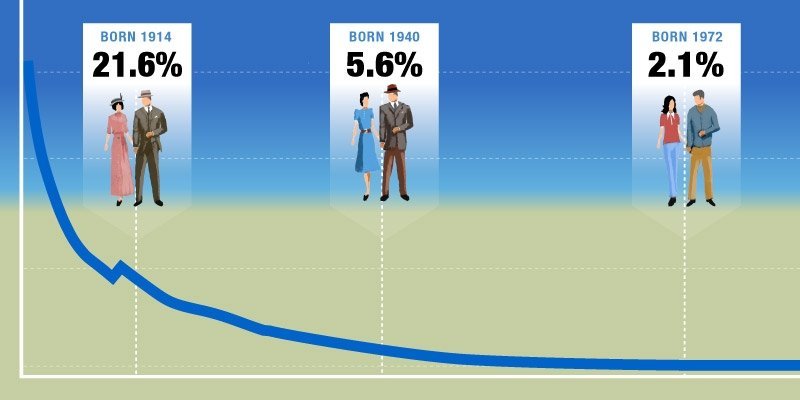
There is confusion regarding the rates of return earned by the Canada Pension Plan Investment Board (CPPIB), which manages the investable funds of the Canada Pension Plan (CPP) with the returns received by individual Canadian workers in the form of CPP retirement benefits. The returns of the CPPIB do not in any direct way influence the CPP retirement benefits received by individual Canadian workers. CPP retirement benefits are basically determined by the number of years a person works, their earnings in each year (relative to the maximum under the CPP), and the age at which they retire. The returns to the CPPIB, however, do benefit workers and retirees indirectly. Specifically, the returns earned by the CPPIB can reduce the need for higher contribution rates. In addition, sustained over-performance by the CPPIB over time could allow for a reduction in the contribution rate and/ or an increase in the benefits paid. However, the opposite is also plausible, whereby under-performance by the CPPIB could necessitate higher contribution rates and/or reduced benefits. Based on the model employed in this paper (which assumes workers retire at age 65), the real rates of return enjoyed by Canadian workers from their CPP retirement benefits ranged from an incredible 45.5 percent in 1969 to just 3.6 percent in 2015.Specifically, there was an initial steep decline from the 45.5 percent real rate of return observed for retirees in 1969 to less than one-third that rate in 1989 (12.6 percent). By 2003, the real rate of return for CPP retirees was halved to 6.3 percent. By 2015, the real rate of return for CPP retirees had declined to 3.6 percent. The projected real rates of return for the CPP continue to fall to 2.1 percent for those retiring in 2037, stabilizing thereafter. In other words, Canadian workers retiring after 2036 (people born in or after 1972) can expect a real rate of return of 2.1 percent from the CPP. The rates of return noted above are further reduced if certain assumptions are changed. For example, making maximum contributions over the entire course of one’s working life (ages 18–65)—rather than assuming zero contributions for the first eight years (which are exempted from the retirement benefit calculation), as done in the first set of calculations—reduces the real rate of return to 1.7 percent for workers retiring in 2037 or later (compared to 2.1 percent).A different way to think about the returns received by Canadian workers from their CPP retirement benefits, particularly those borne after 1971, is to compare the expected rate of return (2.1 percent real rate of return) with the required real rate of return for the CPPIB of 4.0 percent. In other words, Canadian workers born after 1971 pay into a fund that must generate a 4.0 percent real rate of return to meet its obligations, a fund which provides a 2.1 real rate of return in the form of CPP retirement benefits. There are two principal reasons for the decline in the rates of return. The first is the difference in the periods of contribution for Canadian workers, particularly in the early years of the CPP. For instance, in the initial years of the plan, only ten years of maximum contributions were required to receive a full CPP benefit. That period is currently 39 years. The second principal reason for the decline in the rates of return is the increasing contribution rate to the CPP (i.e., the tax rate). The CPP was launched in 1966 with a contribution rate of 3.6 percent. The CPP contribution rate climbed steadily beginning in 1987, and stabilized at 9.9 percent in 2003. It’s worth noting that the stabilized CPP contribution rate is nearly three times higher than the original contribution rate of 3.6 percent.

Laval City Watch – May 28, 2016

Disaster assistance for Fort McMurray victims

The mayor of Laval, Marc Demers, communicated with the President of the Federation of Canadian Municipalities (FCM) Raymond Louie on May 5th 2016, to encourage the mobilization of aid from Canadian municipalities for the victims of the Fort McMurray wild forest fires.

“I believe that as members of the Federation of Canadian Municipalities, we must back up our talk with concrete gestures and provide financial support for these victims, residents of this immense disaster. I hope that our effort resonates with all of my elected colleagues of Canada,” wrote Mayor Demers to the FCM president in a gesture of solidarity on behalf of his Albertan counterparts.

The Mayor of Laval has responded to the call for the solidarity of the Union of Quebec Municipalities by asking the executive committee to donate $ 10,000 to the Canadian Red Cross.Mayor Demers believes that if this gift is matched by other Canadian cities it will grow to provide a significant contribution to the Canadian Red Cross relief efforts.

Fight against climate change

In 2013, the City of Laval and the Ministry of Sustainable Development, Environment and the Fight against Climate Change (MDDELCC) signed an agreement to help achieve three objectives in the Municipalities Climate Change Program. The first intention of the program was to measure and update the volume of greenhouse gas (GHG) emissions on Laval’s territory which was approved by the MDDELCC in April 2015. The plan to address the reduction of GHGs received approval in July 2015. Finally Laval’s plan of action to transition to a low carbon emission world has received approval from the Ministry in March 2016.

Laval is one of five Quebec cities to have provided such a plan. The Executive Committee therefore authorized the Environmental Service to submit the third and final report to the MDDELCC in order to receive the subsidies that the government has earmarked for municipalities taking such initiatives.

According to the Government of Québec the fight against climate change is a fundamental and top priority issue for Québec’s future. With income derived mainly from the carbon market, the Government of Québec supports companies, Québec municipalities and private citizens in the transition to a low carbon world. By 2020, Québec will have invested more than 3.3 billion dollars to implement the measures set out in the 2013-2020 Climate Change Action Plans, measures that will enable the reduction of GHG emissions and allow a better adaption to the consequences of climate change.

It is believed that these measures call upon innovative solutions from scientists and entrepreneurs and open the door to developing Québec expertise in cutting-edge niche markets that will enable Québec to accelerate its shift to a sustainable economy. The fight against climate change is also a promising pathway towards developing an economy that is both robust and low carbon able to generate more energy from low-carbon sources like solar, wind and nuclear power.

Program courses and activities at the outdoor pools

The Executive Committee authorized the Department of Culture, Recreation and Sport and Social Development to retain the services of the organization Mouvement Aquatique Laval. This organization created in 1975 is dedicated to the promotion of aquatic activities throughout Laval. Swimming lessons and water sports activities are offered in collaboration with many partners including the City of Laval, aquatic sports clubs and recreational committees.

The services that have been contracted are for the coordination and implementation of municipal aquatic programs in the city’s outdoor swimming pools for the summer period of 2016. The administration has agreed to compensate the organization a sum of $73,500 which also covers the costs of advanced and specialized training.

Financial assistance to the project Rendezvous of elders

On March 19th 2015 an agreement was signed between the Centre Communautaire Le Rendez-vous des ainés (Seniors Community Centre Le Rendezvous) and the Local Development Centre (CLD) of Laval which provided the association a grant of $ 50,000 for their services and activities. An initial payment of $ 30,000 was funded in March 2015. As the CLD activities are now transferred to the City of Laval, the Executive Committee agreed to provide the balance of funding of $ 20,000 to the Community Centre Le Rendez-vous des ainés. The monies will be disbursed from the Social Economy Fund operational budget of the city in 2016.

The goal of this association is to provide seniors a place of  belonging to combat solitude, develop mutual support and empower people aged 50 and over Laval.

Financial assistance to the Laval Meals on Wheels Association

Following the integration of UNCCD activities of Laval in the Economic Development Department, the Executive Committee members have provided funding of $ 1,000 to the Laval Meals on Wheels Association to extend strategic support for the coordination of the services. Laval is served by eight different Meals on Wheels providers with well-defined territories. They are all members of the “Laval Meals on Wheels Association” and conform to uniform guidelines and directions.

These organizations provide hot meals delivered at individual homes between 10h45 and 12h45, from Monday to Friday. The average cost for a meal stands between $5, 00 and $6, 00. It includes a soup, a main dish, prepared without excessive amounts of salt and fat, and a dessert.

Any Laval resident with autonomy loss, with no regards to his or her age or salary can benefit from this service. Examples of eligible users include: a person with cognitive troubles; a care giver; a person recovering from a recent surgery and any person with physical incapacities (tiredness, pain, and handicap).

Disposing of hazardous waste

A contract was awarded to Enviro PB Inc. for the transportation, packaging, recovery and or disposal of the material ‘collasse’ a key binding component used for the paving and asphalting of roads. This material is considered a hazardous material and must be disposed of professionally.

The administration is also holding its annual spring collection of household hazardous waste (HHW). The spring collection is held this Saturday May 28th from 8:00 am to 3:30 pm on the city hall grounds. The collection of household hazardous waste is for Laval residents only and requires proof of residency. Companies and entrepreneurs are not admitted.

The following examples are all materials accepted by Laval during the collection of hazardous household waste; acids, aerosol containers, compact fluorescent lamps, propane cylinders, ink cartridges and glue, paint thinners and solvents, engine oil and oil filters as well as computer hardware, small electronic appliances, batteries, tires and even cellular phones and televisions. The following waste materials are not accepted: ammunition, syringes and other biomedical waste.

Laval library’s annual used materials sale a success

(TLN)

Organized by the City of Laval’s public library network, a mega sale of books and used materials proved to be highly successful when it was held recently. Held on May 6 and 7 at the Cartier Arena, more than 4,000 people attended and $38,920.48 in sales were recorded by the staff.

Laval Library Annual Book Sale
Book shoppers looking for that special book…

During the annual event, library staff bring together books, magazines, CDs, DVDs, encyclopedias and many other materials coming from surplus library stock and donations made by citizens. This year more than 38,685 documents were on sale at a cost of $3 per kilo.

The money gathered is reinvested each year in cultural programs offered at branches of the Laval public library network during the fall, winter and summer. They include discussions, conferences, creative workshops, shows and training sessions in new technologies.

Unsold materials are offered free of charge to non-profit organizations in Laval which are recognized by the municipality. This year, 16 such organizations were able to benefit from these donated materials.

Weather

Laval
broken clouds
1.5 ° C
2.2 °
-1.2 °
69 %
4.6kmh
75 %
Sat
2 °
Sun
-7 °
Mon
-10 °
Tue
-1 °
Wed
-1 °