Home Blog Page 237

Beware Conservative budget cuts, Liberal govt’s Duclos warns before election

Beware Conservative budget cuts, Liberal govt’s Duclos warns before election
Martin C. Barry

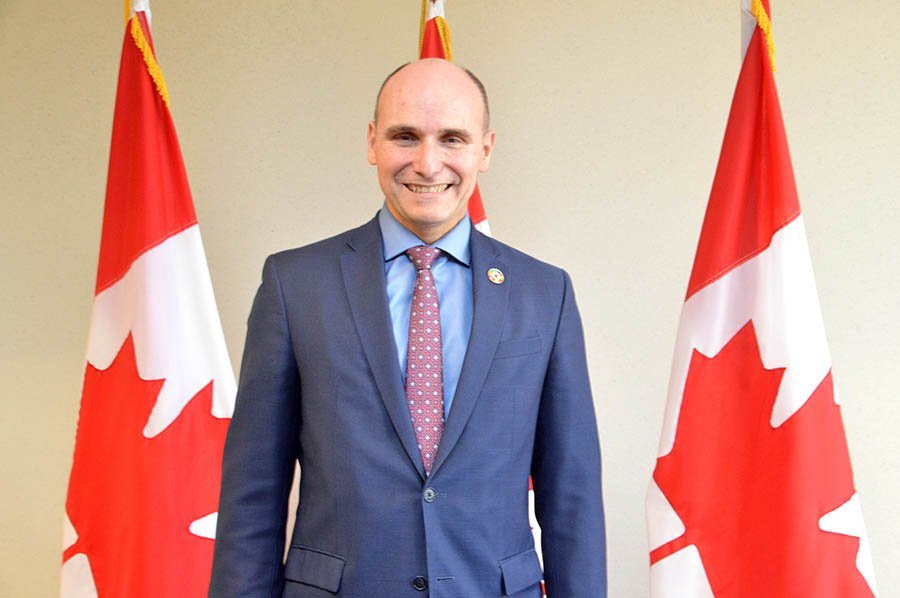
With a federal election due to take place on Oct. 21, the incumbent Liberal government’s Minister for Families, Children and Social Development says he’s concerned that a Conservative government, if elected, would make drastic cuts to a vast array of family-oriented and social welfare programs implemented since 2015 by the Liberals.

Jean-Yves Duclos made the comments during an interview with Newsfirst Multimedia on the same day the conservative provincial government of Ontario led by Premier Doug Ford released its first budget containing widespread austerity measures designed to eliminate the province’s debt by 2024.

Wary of Conservatives

“Conservatives are known for two things,” said Duclos. “First they cut the benefits and services to middle-class Canadians. And second they give tax advantages to the wealthiest Canadians. That’s what they typically do and that’s unfortunately what they will probably also want to do in their election platform.

“We have a very different agenda,” added Duclos. “Our agenda is around supporting middle-class Canadians, and this agenda is working. Because since 2016 we have seen one of the highest growth rates of among the G7 countries.

“Canadians have created 900,000 new jobs. We have the lowest unemployment rate in four decades. We have lifted 825,000 Canadians out of poverty. This is working – strong economic growth – and growth that benefits everyone.

‘A different agenda,’ says Duclos

“The Conservatives have a totally different agenda,” said Duclos, a professional economist. “They are in 19th century economics where they believe that the only way to grow the economy is to help the wealthiest Canadians. But that’s not how it works in the 21st century.”

Duclos is a member of Prime Minister Justin Trudeau’s original cabinet which was sworn in on Nov. 4, 2015 following the Oct. 19 general election. Despite a number of cabinet shuffles that have moved some cabinet members to new portfolios while sidelining others, Duclos has consistently retained his responsibilities for a ministry with a fair amount of oversight, despite its sometimes low profile.

A Quebec City native

Duclos hails from the Quebec City area, where he was one of only two Liberals to win seats in the 2015 general election. In that election, Duclos found himself in a tight race against second-place incumbent Annick Papillon of the NDP who’d been elected four years before in the NDP ‘Orange Crush’. She finished exactly 1,000 votes behind him.

The 53-year-old Duclos is a highly-respected academic. He was Director of the Department of Economics and a tenured professor at Université Laval. He earned a Bachelor of Arts in Economics (First-Class Honours) from the University of Alberta, and his master’s and doctoral degrees in Economics from the London School of Economics and Political Science. In 2014, he was elected a Fellow of the Royal Society of Canada, the highest accolade bestowed on Canadian researchers.

Beware Conservative budget cuts, Liberal govt’s Duclos warns before election
Federal Liberal Minister for Families, Children and Social Development Jean-Yves Duclos says Ottawa needs to prevent as well as reduce homelessness.

Federal homelessness program

Among the major programs Duclos’ ministry is currently promoting is Reaching Home: Canada’s Homelessness Strategy, which was officially launched this past April 1. First announced in June last year, Reaching Home replaces the existing Homelessness Partnering Strategy, with a goal of reducing chronic homelessness by 50 per cent nationally by 2027-28.

“The most important thing is to recognize that to be homeless in 2019 is unacceptable,” Duclos told Newsfirst Multimedia. “We have a developed country, yet we have not the ability to look after each other. What should be is that no one should be left alone on the streets.

“But the second thing is that homelessness comes both from lack of affordable housing – and we know that housing is not affordable for many people – but also sometimes because of challenges: it could be health challenges, mental health, addictions.

The roots of homelessness

“It could be because of handicaps, youths coming out of institutions or people with disabilities who find it difficult to access proper housing. So homelessness doesn’t appear out of nowhere. It appears because there are unfortunately barriers for people to have an affordable and safe place to live.”

Ottawa has committed a total of $2.2 billion over 10 years to the Reaching Home program. By 2021–22, the amount allotted in 2015–16 would double, depending on who is in power in Ottawa by then.

Duclos acknowledges that homelessness has been on the increase everywhere in Canada for the past 20 years. While saying that funding from Ottawa to deal with the problem was consistent from 1998 to 2015, he suggested it could perhaps be used in a more targeted fashion. “It’s an issue of reducing homelessness, but also preventing it,” said Duclos.

How to fight homelessness

“That involves looking at the different challenges: women in domestic violence, younger Canadians coming out of institutional care, veterans, people with handicaps, with mental health issues. So having housing, but also services, to protect these people and prevent them from being homeless again.”

Asked whether he ever understood why the problem continues growing, Duclos responded, “Because of economic and social changes. Economic changes because work is more precarious and people lose their jobs more easily now. Also because of family separation which is more prevalent. And also an increase in mental health issues and addictions across the country. And again because of the lack of housing affordability.”


Alice Erciu Marachlian: One of Life’s Miracles

Renata Isopo
Alice Erciu Marachlian: One of Life’s Miracles

Chronic illness can generate feelings of denial, anger, grief. But at some point emotions subside and the harsh reality strikes that you are no longer the person you once were. The illness robs you of your sense of identity and purpose. Can a meaningful life be rebuilt? Yes, if an incredibly strong, courageous fighter who never let go of her will to live, a survivor, one of life’s miracles is any example of how to celebrate life by lighting a candle instead of cursing the darkness. Here’s Alice’s heroic story, told in her own words of inspiration to all.

Uncharted territory

“Rebuilding or redefining normal is a long process,” she says. After spending my teenage years at St. Justine’s Children’s Hospital as a permanent resident, and consequently at the Jewish General Hospital as soon as I turned 20, I felt that things couldn’t get worse. Rebuilding my life required that I explore uncharted territory.”

 What did you miss most about high school?

“It was bleak. I missed my friends, going to class, the activities, and just being a regular teenager. I was home-schooled but too sick even for that. Most days were spent in the hospital. I wanted to graduate with my classmates. My home-school teachers did their best, but it was too hard, they stopped coming, except for one who never gave up and made sure I would graduate with everyone else.

I left the hospital to attend the Laurier Senior High School Graduation Ceremony, an emotional day for me and family, flooded with tears of joy although I was still in much pain. To go on stage for my certificate was my greatest accomplishment, something I will never forget.”

Alice Erciu Marachlian: One of Life’s Miracles
Alice at Laurier Senior graduation ceremony

Did you ever lose hope?

“No. I never said, ‘Why me?’ – no matter what debilitating state I was in. On tons of medication, I underwent chemo, cortisone, and radiation therapy although I didn’t have cancer. Often delirious, I developed allergies, and lost my hair several times. I was unrecognizably bloated, weighing 200 pounds from medication and treatments, one experiment after another, hoping the next one would be it. 

My doctor travelled overseas to learn about my illness (Purpura Trombose Trombocitopenique) and how to treat it since very few people are known to suffer the condition. She wasn’t very successful, just more experiments which I willingly took. There was nothing else. Only 14 when struck with the disease, I didn’t understand it, but I learned a lot about it through my medical team.  Explanations and research from across the world helped me face what I was up against.  I never lost hope, knowing God was with me.”

How did the illness affect your family?

“Everyone was affected. It changed their responsibilities and boundaries. For my mom, it was emotionally and physically devastating, pulled in all directions, back and forth to doctors, hospitals, and home. She gave up her job since she slept at the hospital. She became a permanent fixture in my hospital room, was always there, a tower of strength never giving up hope even when there seemed to be no hope in sight. My dad suffered financial strains since he spent days at my bedside also. It was emasculating and frustrating for him to watch his child deteriorating, in pain, hooked to life-support machines.”

After seven years, what is your message to others who are chronically ill?

“Well, my family and I had to create a ‘new normal’ to better understand and find meaning in everyday challenges. To survive, you take it a day at a time, it’s all you can do. Take nothing for granted and realize you’re stronger and more capable than you ever thought you could be.

Never lose hope, stay faithful and true to yourself. Be thankful and positive, things can and often do change for the better. I lost over 100 pounds, still more to go, living at home now. I go for weekly for treatments, but I’m really much better, thank God. I’m planning my future although there are always crisis-mode moments. I’ve been through a lot, but in my heart I believe the best is still yet to come.”

City’s operations returning to normal post-ice storm

City’s operations returning to normal post-ice storm
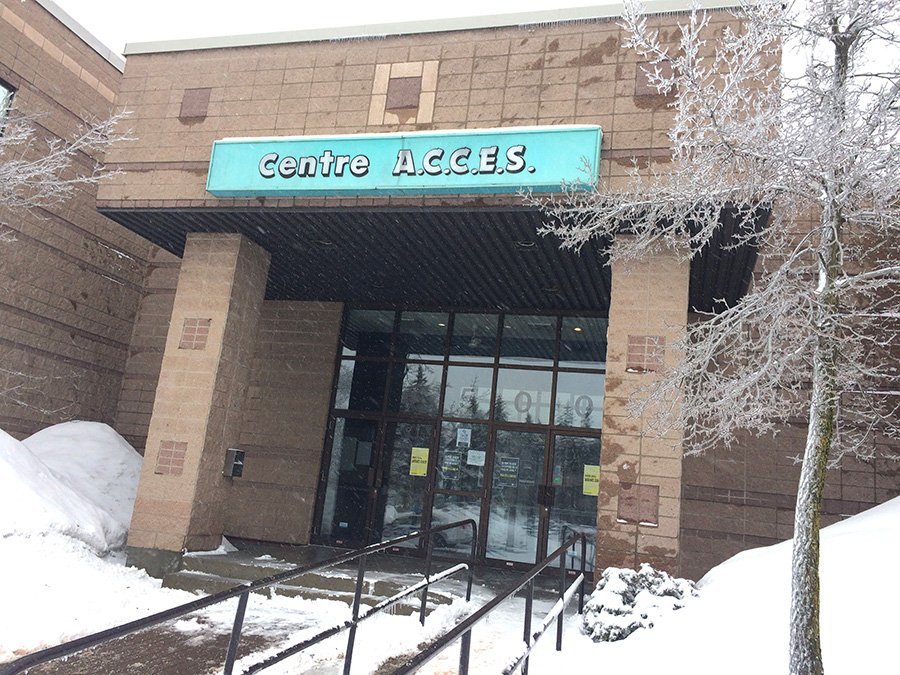
The centre communautaire Accès in Laval-Ouest was one of two emergency shelters designated by the City of Laval to accommodate residents impacted by last week’s freezing rain and ice storm.

(TLN) Last week as Ice Storm 2019 faded into memory, the City of Laval reported that during the last 72 hours of the crisis, up to half Laval’s residents were affected by major electric power blackouts caused by accumulated ice and trees which had fallen.

Winding down

As of last Thursday, 1,179 Hydro Quebec clients were still waiting to be reconnected. In the district of Vimont, the Lausanne community centre remained open up to last Thursday night at 11 pm taking in residents whose homes were dark and cold because they didn’t have electric power.

At the height of the crisis, when 200 calls per hour were being received at Laval’s 9-1-1 centre, Laval’s firemen, police, forestry experts, road repair crews and health personnel were all working together.

In all, the Laval Fire Department completed 796 emergency interventions for outdoor fires, security concerns, alarms and reports of flooding. The Laval Police Department made regular patrols with roof flashers switched on in sectors of Laval that were without electricity in order to reassure residents and assist those in need.

Special safety checks

In addition, staff from the Laval Fire Department also made 1,277 visits to residences occupied by retired and elderly people to check they were safe and their fire alarm systems were working. The Laval Police for their part watched key intersections carefully during rush hours for accidents, especially at intersections where traffic lights were out of order.

Employees of the City of Laval’s 3-1-1 public works line answered nearly 5,300 calls. Those calling to report lengthy power outages were told they could seek shelter from the cold at two Laval community centres where nearly 300 people took up the offer. Showers were available and meals were served. More than 100 residents spent the night on cots that were set up. Laval’s public libraries also saw an increase in use during the period of the ice storm.

City’s operations returning to normal post-ice storm
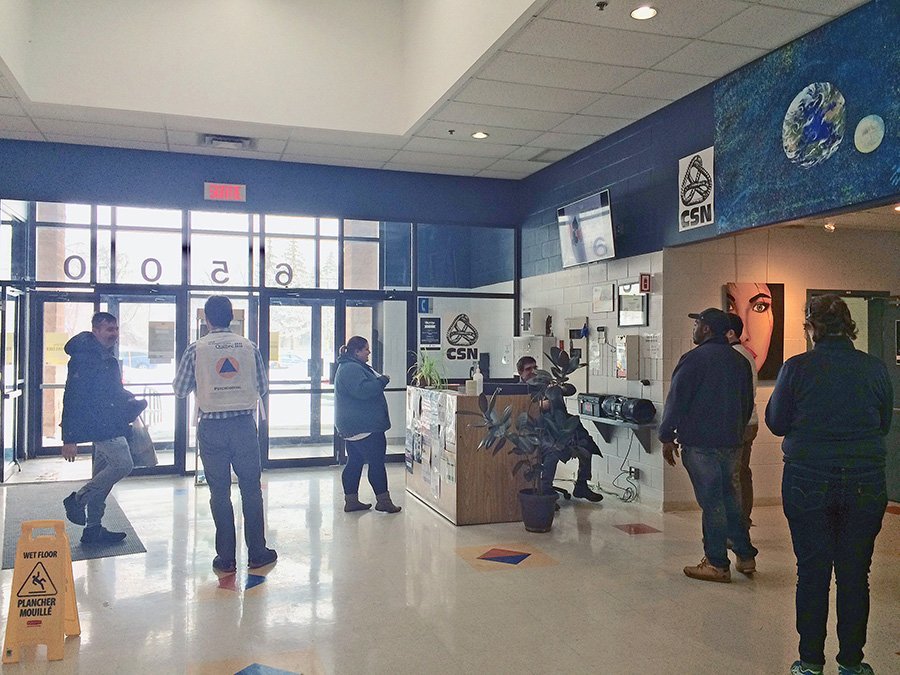
This was the scene in the lobby of the Accès community centre in Laval-Ouest as public safety volunteers helped accommodate hundreds of Laval residents displaced by the ice storm.

A job well done

“Over the last few days we were able to see for ourselves the incredible efficiency of our employees,” said Mayor Marc Demers. “From the beginning of the blackouts, our teams were deployed quickly to take care of residents who had problems. They showed themselves to be very professional and devoted without ever stopping. I would thus like to thank them warmly for their efforts up to now and for those remaining to be done. We can all be proud of the work accomplished.”

According to the city, the Accès community centre in Laval-Ouest and the Lausanne community centre in Vimont are returning to their regular schedules of activities after serving last week as emergency shelters.

In the meantime, a big cleanup is underway and the city is offering to cart away branches gathered from private properties free of charge. The city also says that the usual cost for a permit authorizing the cutting of a tree is waived. However, requests for both these services must be made by April 19 by calling 3-1-1.

‘Carrousel BGL’ art piece displayed at Collège Montmorency

‘Carrousel BGL’ art piece displayed at Collège Montmorency
Among the first to use the Carrousel were Collège Montmorency director-general Olivier Simard and Laval executive-committee vice-president Stéphane Boyer during a recent unveiling ceremony.

(TLN) From April 2 – 4, a notable work of contemporary art was on display in the parking lot at Collège Montmorency (in front of the Metro station on de l’Avenir Blvd.) The Carousel BGL was created by a collective of Quebec artists.

The artists behind the work are: Sébastien Bilodeau, Jasmin Giguère and Nicolas Laverdière. The work, which has already travelled around parts of Canada, was in Laval as part of the third Semaine des arts du cégep lavallois.

The interactive work of art was created in such a way as to invite onlookers to get aboard and actually become involved in its operation. Around 75 people, including officials from Collège Montmorency, Laval Mayor Marc Demers and Laval executive-committee vice-president Stéphane Boyer, were on hand for the unveiling of the work.

Fewer cases being sent to UPAC, says Laval anti-corruption unit

Fewer cases being sent to UPAC, says Laval anti-corruption unit
Laval Police director Pierre Brochet, left, is seen here with Service de Police de Terrebonne director Marc Brisson at Laval Police headquarters on April 4 when the Laval Ethics and Integrity Office’s 2018 report was released.
Martin C. Barry

For the fifth year since the Laval Ethics and Integrity Bureau (BIEL) first started, Laval Police chief Pierre Brochet has tabled his latest report on continuing efforts to track and prevent acts of corruption within the City of Laval’s administration.

The BIEL was created shortly after Brochet was hired, in the aftermath of the highly-publicized corruption and municipal contracts kickback scandal involving disgraced former mayor Gilles Vaillancourt.

Arm’s length from city

The office, which operates at arm’s length from the city administration, was given a mandate to oversee internal investigations, while working in conjunction with the Laval Police Department.

“I am truly proud of the results and accomplishments of the BIEL, and all the more so when we know that several municipalities are expressing a wish to create their own integrity bureaus,” Brochet said during a press conference held at Laval Police headquarters on Chomedey Blvd. on April 4 to release the results.

Leading the way

“It is an honour for us to have developed the expertise for a team responsible for investigations of this type,” he added. “Mostly a team that has had to be ahead of things by developing responses, as well as codes of conduct adapted to the reality of the employees and elected officials of Laval.”

According to a summary of the report, just three cases out of a total of 86 potential administrative wrongdoings ended up being reported for in-depth investigation to the Unité permanente anticorruption (UPAC), the Quebec government’s specialized agency that fights corruption, collusion and other economic crimes involving provincial government procurement.

Fewer cases being sent to UPAC, says Laval anti-corruption unit
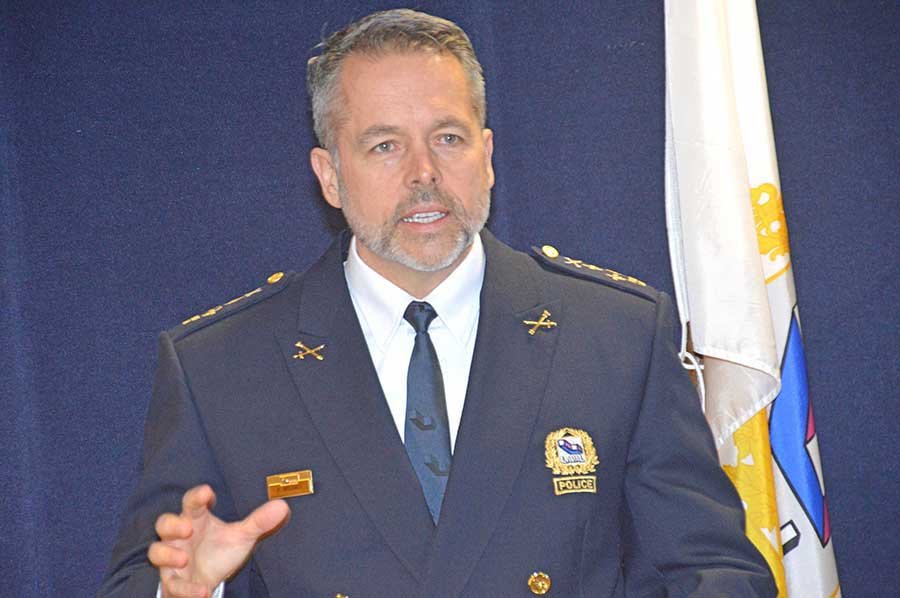
Laval Police director Pierre Brochet says he is pleased with the progress the BIEL has made tracking and controlling potential corruption in the city administration.

Fewer cases went to UPAC

In comparison, four cases went to UPAC in 2017, eight in 2016, 10 in 2015 and 11 in 2014. Out of the 86 potential administrative wrongdoing cases in 2018, 10 cases were deemed serious enough to merit being investigated by the local police, while 73 others were judged to be administrative problems that could be resolved internally.

The statistics from last year for the 73 administrative cases show that conflict of interest ranked high among commonly reported problems, while breaching confidentiality was also on the radar. The most serious cases in 2018 involved allegations of fraud and theft. However, only one case led to criminal charges. According to last year’s BIEL report, a supervisor was arrested after being seen while in the act of stealing equipment that was the property of the city. He was subsequently fired.

Drivers ‘under the influence’

The report says the BIEL also became involved last year when it was discovered that drivers for some sub-contractors working for the city were operating while under the influence of alcohol or drugs. Measures were taken by the BIEL as well as by the Laval Police to warn the sub-contractors about their responsibilities.

The BIEL oversaw workshops where up to 2,000 employees received instruction in the ethical standards they are expected to live up to. As well, the BIEL received requests from employees seeking orientation for specific situations involving ethical decision-making.

Six years since crackdown

This most recent report contrasts sharply with the situation in May six years ago, when 37 people – including engineers, contractors and managers – were arrested in the massive police sweep that preceded the City of Laval’s being placed in trusteeship after the departure of ex-mayor Vaillancourt.

Among the compromising situations faced by city employees every year are conflicts of interest. The City of Laval’s code of ethics now clearly spells out the potential for ethical conflicts when employees are holding down a second job somewhere else, or are related to individuals with vested interests.

Fewer cases being sent to UPAC, says Laval anti-corruption unit
Service de Police de Terrebonne director Marc Brisson, right, is pleased with his city’s decision to emulate Laval and set up a BIEL office of its own

BIEL seems to be paying off

Some cases can also involve unauthorized use of municipal resources or access to confidential or privileged information. BIEL statistics compiled over the past five years show the City of Laval’s employees have been increasingly consulting the BIEL for guidance when they face uncertain situations ethically.

After releasing the report, Brochet announced that the Laval Police will continue an agreement with the City of Terrebonne on the North Shore which will see them working cooperatively to counter corruption and collusion on their respective territories. Terrebonne is basing an investigative unit of its own on Laval’s BIEL.

Partnership with Terrebonne

“The implementation of this partnership sends a message to all those involved working in the municipal domain in our region,” Brochet said. “Collusion and corruption are not acceptable or tolerated and we are making all the efforts necessary to prevent and control together this sort of crime.”

Service de Police de Terrebonne Marc Brisson said: “The decision to enter into a partnership with the BIEL through the opening of an integrity office by the City of Terrebonne makes sense economically and strategically at the same time. Economically, since it allows for the sharing of a large number of resources, such as offices and personnel. Strategically, since it allows us to share expertise, exchange contractual information and coordinate investigation files more efficiently.”

Laval Jeux du Québec committee names mascot

Laval Jeux du Québec committee names mascot
Seen in the photo are Philippe Dutin, assistant director general of the Laval 2020 organizing committee, Raphaël Bélanger of École L’Envol, Dynamik, Flavie Pauzé of École Hébert, and Roseline Filion, Olympic diving champ and official spokesperson for the committee.

(TLN) On March 26, the organizing committee for the 55th finals for the 2020 Jeux du Québec taking place in Laval next year announced the winners of a contest to name the mascot.

A ‘Dynamik’ mascot

Dynamik is the name that was chosen. Children from grade schools all over Laval had been invited to help choose the name. The winning name was submitted by two students: Flavie Pauzé of École Hébert in Saint-François and Raphaël Bélanger of École l’Envol in Saint-Vincent-de-Paul.

Last October, Fabiana Marin, a visual arts student from Collège Montmorency, won a competition to draw the mascot. “The mascot is an important member of the Jeux du Québec’s big family,” said Olympic medalist in diving Roseline Filion who hosted the ceremony to announce the mascot name winners.

Like a big family

“It is a great honour to be part of this family,” she continued. “I myself participated in the Jeux du Québec for Chaudière-Appalaches in 1997 and I remember very well that the mascot was considered very important.”

As winners, Flavie and Raphaël will each receive the following gifts: 1 stay at Space Camp for parents and children at the Cosmodôme; 1 family pass to Immersia “escape room” games (a $117 value); 1 family pass to the Maison des arts de Laval (a $64 value); and a visit by the mascot to their schools.

School kids took part

More than 225 youths from the Commission scolaire de Laval (CSDL) and the Sir Wilfrid-Laurier School Board (SWLSB) took part in the naming contest. All name suggestions were submitted to a jury made up of five members from the committee organizing the 2020 Jeux du Québec finals in Laval.

Dynamik will be making the rounds of schools and community events in Laval, while also attending important events leading towards the opening of the Jeux du Québec finals in Laval next year. The mascot will also be featured in ads and other promotions for the games.

Laval Action Table for Entrepreneurialism awards bursaries

Laval Action Table for Entrepreneurialism awards bursaries
Laval Action Table for Entrepreneurialism’s four bursary winners are seen here with organizers, supporters and sponsors during a presentation ceremony held on March 21.
Martin C. Barry

The Laval Action Table for Entrepreneurialism announced the four winners of its honorary bursaries on March 21, awarded by the Government of Quebec.

In addition to the recognition, the winners also were awarded strategic support and mentoring from Réseau M, with additional assistance provided the Fondation de l’entrepreneurship, as well as automatic participation in StartupFest sponsored by Laval innov.

Honorary bursaries

In order to complement a traditional offer of financing and to stimulate entrepreneurship in Quebec, the Quebec Ministry of the Economy and Innovation offered the honorary bursaries, worth $25,000 each, to entrepreneurs 18 to 35 years old who are working on projects involving the creation of a new business, or the development of a business that has been active for less than five years.

In addition to being a motivator for entrepreneurs to solidify their ideas for businesses or help with their development, the bursaries aim to acknowledge the entrepreneurial spirit and the qualities that go with it, including boldness, determination and innovative spirit.

Four Laval finalists

From this year’s contestants in Laval, four finalists were selected by a jury composed of members of the Laval Action Table for Entrepreneurialism. Each finalist will be receiving a $25,000 bursary, one year of personalized accompaniment by Réseau M and a ticket to participate in Startupfest 2019.

The four finalists are: Myriam Tellier of Planette produits écologiques inc.; Mathieu Benoit of Mathben informatique; Patrick Vigeant of Boursify; and Vyckie Vaillancourt of O’Citrus.

About the finalists

Planette produits écologiques inc. specializes in the manufacture and distribution of natural and ecologically-responsible household cleaning products. Mathben informatique offers expert services in software development as well as support for the development of virtual reality games.

Boursify has developed a software program that simulates stock and investment market strategies, while also offering software support to high-schools, CEGEPs and universities. O’Citrus is specialized in the greenhouse production of fine citrus, including yuzu, Buddha’s hand, caviar lime, kaffir lime, sudachi, finger lime, calamondin, kumquat and pomelo.

Laurier School Board’s Council of Commissioners swings its hammer at Bill 21

Renata Isopo

In a nutshell, the March 27th Council of Commissioners meeting was an elaborate presentation of all the events, activities, planning, and successes executed in the month of March. The Laurier Board also came out swinging in condemnation of Bill 21 (religious symbols).

The long list of activities included breakfast with Argenteuil mayor Christian St. Pierre, a tour of Crestview Elementary, Vocational Training, Leadership Summit at Laval Junior Academy, partnership with Le Centre de Formation Construct-Plus, a visit to La Chambre Commerce St. Eustache, and a student leadership event “Food for All” at Laval Senior Academy.

Director General, Gaelle Absolonne announced preliminary enrolment of 12,715 students for 2019-20; six more students than the MEQ’s 12,709 projection – “an encouraging and positive upswing” says Absolonne. 

Feasibility Ecosystem Study

Material Resources reported on the financial implications of the Ecosystem feasibility study, which leaves SWLSB with two options: award the contract in September 2019 to move forward with the project or, stop altogether. $350,358 will be allocated for Ecosystem’s detailed feasibility study if savings are confirmed.

In its submission, Ecosystem scored 90.5%, also meeting minimum requirements for two mandatory criteria. Subsequently the “8 envelopes” containing financial figures were opened. According to documentation presented, Ecosystem submitted the best weighted assessment at $1,970 520 for 20 buildings, reducing energy costs 23%, savings of $281,112.

Of trees and seat belts

Commissioner Peter MacLaurin announced that a commemorative tree and plaque have been donated by the Quebec English School Boards Association (QESBA) to former Chairperson Jennifer Maccarone in recognition of her diligent work with SWLSB. Thrilled, Maccarone requested that the tree be planted at board headquarters.

Commissioner Emilio Migliozzi proposed mandatory seat belts on school buses. The next bus contract renewal is in 2022, thus the seat belt implementation must be part of the contract negotiation. “It’s a safety issue and can’t be ignored,” he stated. “This must also be communicated to the Minister of Transport of the Government of Quebec and to the MEQ.”  The potential economic impact of seat belt requirement is unclear until discussions with the bus company take place.

Commissioner Peter MacLaurin made a plea to the Council that each member contact his MNA, communicate to them that the commissioners are doing their jobs. “They are doing what they should be doing,” he stated. This is part of the QESBA, Quebec English School Boards Association, success plan in their fight for retention of school boards.

Public funds disclosure put on hold  

Commissioner Guy Gagnon struck a sour note with Council when he moved to publish expense reports on the Board’s website, proposing that the data be published proactively. “It’s about time the expenses are made public. The last time it was put on the table was in 2015.”

Commissioner Melissa Wall was not convinced of the need, and did not wish to vote on it, stating that this information can be obtained through Access to Information.  Commissioners Bob Pellerin and James Di Sano did not support Gagnon’s motion and moved to postpone it. 

A war of words

Discussion bounced around the definition/difference between the words postpone and table.  Secretary General Stephane Krenn, stated that to table means to “postpone” and was based on the precision and clarity of the words. Commissioner Gagnon objected to move to “Table”. Gagnon also stated that the Lester B. Pearson School Board, publishes reports on line and there’s no reason why SWLSB does not do the same. “It should have been done a long time ago,” he stated. There seemed to be an apparent aversion to being open with the public. TLN’s efforts to obtain comment from commissioner Gagnon were fruitless as he stated that he did not wish to answer any questions from the media. However, TLN requested one response to the question, ”Does the Council prepare and submit monthly expense reports?” He responded, “Not necessarily.” Chairperson Paolo Galati stated that Council should discuss the matter further in order to clarify the process and implications. “I am in favour transparency,” he told TLN.  It was decided to resume the discussion at the April 24th meeting.

Bill 21

As stated at Council and officially delivered by Communications Coordinator Maxeen Jolin, “The Council of Commissioners unanimously adopted a resolution against Bill 21 prohibiting anyone in a position of authority, including school principals and teachers from wearing religious symbols in the performance of their functions and duties.  Council believes that Bill 21 will alter the Quebec Charter of Human Rights and Freedoms, and for this reason owes it to its communities to take a stance against this legislation. SWLSB is proud to be part of a diverse community and has long embraced values of inclusion and respect.”

Hundreds attend Greek Independence Day gala dinner

Hundreds attend Greek Independence Day gala dinner
Continuing his tradition, Prime Minister Justin Trudeau came to encourage the parade participants accompanied by cabinet ministers and Liberal MPs.

Several hundred patriotic Greek Montrealers gathered at the Hellenic Community Centre in Côte des Neiges on the evening of Friday March 22 for a gala dinner to celebrate one of the most important dates in the history of the Hellenes – Greek Independence Day.

For Greeks around the world, March 25, 1821 marked the beginning of the revolutionary fight that ended 400 years of Ottoman rule. Following a protracted war in which Greek patriots received support from Russia, Britain and France, Greece finally received recognition from the world as an independent nation in 1832.

At the head table

Among the dignitaries seated at the head table were Greek Consul General in Montreal Michalis Gavriilidis, Saint-Laurent Liberal MP Emmanuella Lambropoulos, Villeray/St-Michel/Parc Extension Borough Mayor Giuliana Fumagalli, Park Extension city councillor Mary Deros, Bordeaux-Cartierville city councillor Effie Giannou, Laval-Les Îles Liberal MP Fayçal El-Khoury, Laval city councillor for Chomedey Aglaia Revelakis, Saint-Laurent Borough Mayor Alan DeSousa and Hellenic Community of Greater Montreal President Nicholaos T. Pagonis.

A choir of children from Montreal-area Greek schools demonstrated their proficiency in the Greek language while performing Hellenic folk songs and reciting works of Greek poetry. The national anthems of Greece and Canada were sung by Ioustini Montzenigos, a secondary two student at École Socrates-Démosthène and Christina Mihalakos, a secondary one student at the Montreal campus of École Aristotelis.

Official Parade Marshall

Hundreds attend Greek Independence Day gala dinner

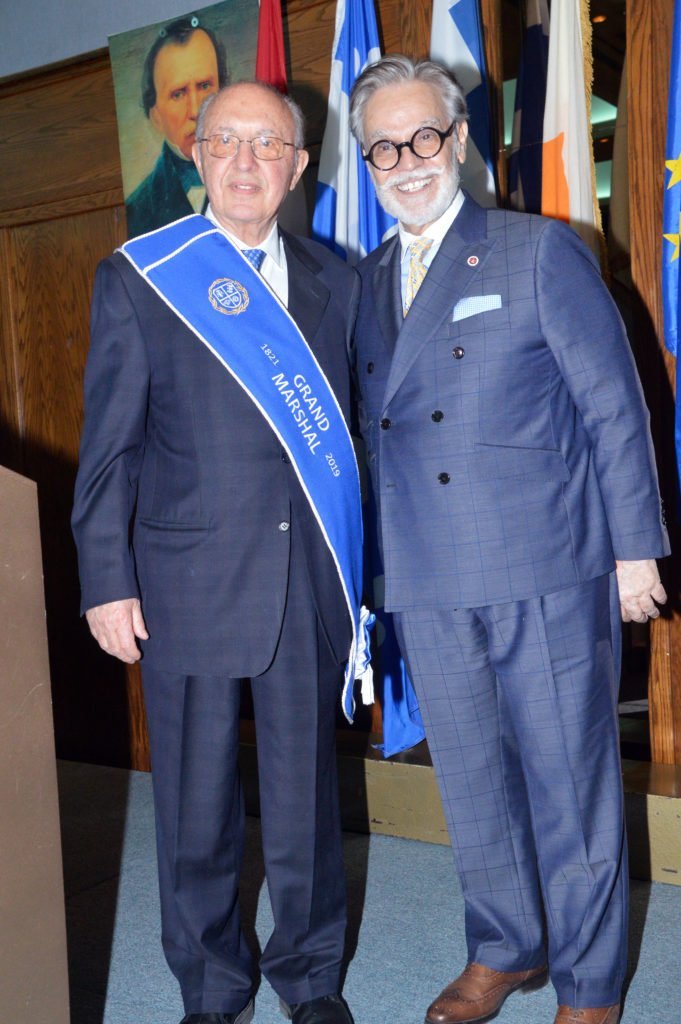
As is customary at the Independence Day gala each year, the official “Marshall” for the parade on Sunday was introduced. This year it was Dr. Apostolos Papageorgiou, Chief of Pediatrics and Neonatology at the Jewish General Hospital. Papageorgiou is also a Professor of Pediatrics, Obstetrics and Gynecology at McGill University.

“This goes straight to the heart,” Dr. Papageorgiou said in an interview with Newsfirst Multimedia. Although he has received many professional recognitions during his 40-year career in medicine, he said the Montreal Greek community’s gesture of acknowledgement touched him deeply.

Hellene of the Year

Hundreds attend Greek Independence Day gala dinner

The 2019 Hellene of the Year (chosen by a nominating committee that included Rev. Fr. Dimitrios Antonopoulos, Dr. Lila Amiralli of the McGill University Department of Child Psychiatry and HCGM vice-president Andy Crilis) was Dimitri Tzotzis.

Born in western Macedonia, Tzotzis came to Montreal in 1976 with his wife Tasoula with whom he had two children. Since then, Tzotzis has become renowned among Greeks in Montreal, across Canada and in the U.S. for his promotion of traditional Hellenic folk dancing and the traditional costumes worn by the dancers.

Gathering at Laval City Hall marks 198th Greek Independence Day

Gathering at Laval City Hall marks 198th Greek Independence Day
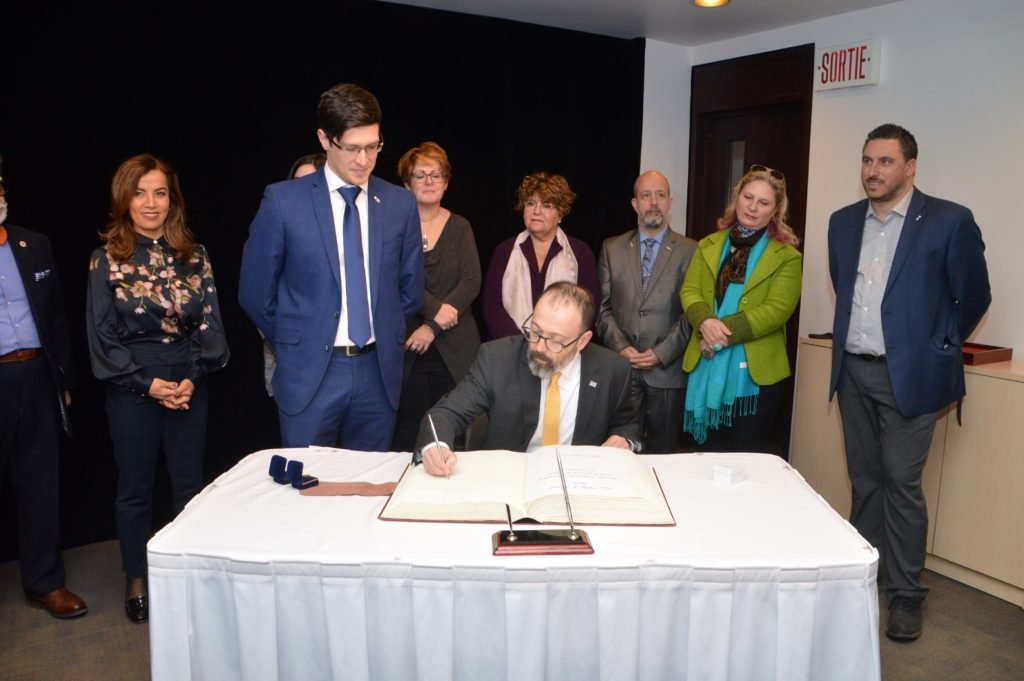
Consul General for Greece in Montreal Michalis Gravriilidis was invited by executive-committee vice-president Stéphane Boyer to sign the Laval’s Golden Book.
Martin C. Barry

Elected officials from federal, provincial and municipal governments gathered alongside Laval residents of Greek heritage at the War Cenotaph near Laval city hall on March 23 to pay homage to the early 19th century Greeks who fought valiantly so the modern day Greek Republic would be independent.

Important historic event

On March 25, 1821 in what was then Ottoman-dominated Greece, Bishop Germanos of the metropolis of Patras blessed a Greek flag and proclaimed an uprising by the Greeks against the occupying Ottomans. The event marked the beginning of the Greek Revolution which continued until 1832 when the Republic of Greece was proclaimed and was recognized by the world’s nations.

To honour those who gave their lives so that Greece would be free, Greeks from Laval and from all over the Montreal region go each year to the cenotaph outside Laval city hall to deposit commemorative wreaths and to spend a moment in silent contemplation. In the Montreal region, Laval has the highest concentration of residents of Greek heritage.

Remembering the heroes

Gathering at Laval City Hall marks 198th Greek Independence Day
Laval-Les Îles Liberal MP Fayçal El-Khoury, Vimy MP Eva Nassif and St-Laurent MP Emmanuella Lambropoulos layed a wreath on behalf of the Canadian Government.

Among those depositing commemorative wreaths at the base of the monument were Consul General for Greece in Montreal Michalis Gavriilidis, Liberal MPs Fayçal El-Khoury, Eva Nassif and Emmanuella Lambropoulos, Quebec Liberal MNA Monique Sauvé, Laval city councillors Aglaia Revelakis, Vasilios Karidogiannis and executive-committee vice-president Stéphane Boyer, and Villeray/St-Michel/Parc Extension Borough Mayor Giuliana Fumagalli.

As well, wreaths were left by officials from the Hellenic Community of Quebec, the Hellenic Community of Greater Montreal and Greek Canadian armed forces veterans. Immediately after the ceremony, those attending were invited into Laval city hall where a reception was held, and a few dignitaries gave speeches and signed the City of Laval’s Golden Book for visitors.

More than a century here

Gathering at Laval City Hall marks 198th Greek Independence Day
Representing Mayor Marc Demers, executive-committee vice-president Stéphane Boyer layed a wreath accompanied by city councillors Aglaia Revelakis and Vasilios Karidogiannis.

Representing Mayor Marc Demers, executive-committee vice-president Stéphane Boyer spoke briefly at the beginning of the reception. “As you no doubt already know, the Greek community has been present in Quebec for more than 100 years and is more and more present in Laval,” he noted.

“In Laval, we have around 17,000 persons who speak Greek often, and when you take into consideration second and third generations there are nearly 30,000 people in Laval who are of Greek origin. This is something considerable and is one of the largest and most important communities in Laval.”

Boyer pointed out that Greeks also play an important role in Laval’s economy, as well as in its political and cultural spheres. “And so it is a community that is extremely important for us. We are very, very pleased that you are here today,” he added.

Greek Consul General in Montreal Michalis Gavriilidis thanked all those who turned out on a sunny but cool and blustery day. “It may be cold outside, but it is warm in our hearts today,” he said.

“In Quebec there is Greek community which has been established quite a long time, and which is flourishing within Canada,” said Gavriilidis. “I am very happy to be here today to see your success.”

He said he looked forward to continuing the tradition of gathering for Greek Independence Day at Laval city hall around March 25 every year.

Weather

Laval
overcast clouds
14.2 ° C
15.5 °
12.8 °
40 %
8.8kmh
100 %
Mon
13 °
Tue
9 °
Wed
1 °
Thu
-0 °
Fri
4 °