Home Blog Page 198

STL unveils new online tool for safe distancing in the COVID-19 era

Transit authority used existing data to create new crowd tracking system

Beginning last week, the Société de transport de Laval (STL) started making available on its website a new tool that will help tell users how crowded a bus is before they go and take it, thus minimizing possible exposure to the COVID-19 virus.

Another STL first

According to the STL, what makes this innovative new technology so unique is that it provides an estimate of the number of passengers to be expected not only when they board, but also during the course of an entire bus trip – making it a first in Canada, claims the STL.

“Since the project was already in the pipeline, we decided to push up the launch to make it available to users as soon as possible,” STL president Éric Morasse said during an online launch held last week. “Which is why this is a beta release for now, and the STL is asking everyone for their feedback, comments, and suggested improvements that we will integrate as we move forward.

Making informed decisions

In this screenshot from last week’s online presentation by the STL on their new crowd tracking system, the emplacements of sensors above front and rear bus doors is shown.

“We believe in the role public transit plays in supporting the reopening of the economy,” Morasse added. “But we also know it is no longer always possible to social distance on buses. Together with continuing to insist on the importance of wearing a mask, this new tool will enable Laval residents to make fully informed decisions about their bus commutes.”

The COVID-19 pandemic has made social distancing in public transit situations a core concern for users. As such, this new tool, says the STL, will enable transit users to make informed decisions depending on bus crowdedness, as well as on the comfort level of users.

Post-COVID transit use growing

“It’s clear that with deconfinement along with the startup of the economy, in buses it is often impossible, and will be even more so, to maintain physical distancing rules given that transit use is growing every week for the past month by 10 per cent a week,” said Pierre Lavigueur, head of innovation and development at the STL.

“So we are really seeing an increase in transit use and regular activity returning to normal, although this is not happening without people’s concerns growing.” According to Lavigueur, the STL’s researchers and developers saw they had large quantities of data that were being gathered for several years by equipment that was already installed on buses, and this presented the perfect opportunity to use it constructively, he said.

‘Since the project was already in the pipeline, we decided to push up the launch to make it available to users as soon as possible,’ said STL president Éric Morasse

How it works

STL vehicles have been equipped with GPS technology and passenger counters for years. Each day, they record occupancy levels at each bus stop, for each bus route, at each scheduled bus time. The data is then used to calculate an estimate of how many passengers are on the bus at a specified stop, at a specific time, based on the average trending during the five previous days.

The calculations are updated daily. For now, says the STL, estimates will be available for weekday bus service only. The current release is a beta version, which will be improved continually based on user experiences and comments. It is available at stlaval.ca/passengers, for computers and smartphones.

Using the new tool online in four steps:

To find out the expected bus crowdedness on the web site, simply select:

Bus route and direction;

Your starting bus stop;

Your destination bus stop;

Your departure time.

Thus, based on the commute you’ve selected in steps 1-2-3, the tool posts the maximum number of passengers you should expect on the bus for all of your day’s trips.

Different ways to see the numbers

Shown on a color gradient ranging from light (low occupancy) to dark (more crowded), you get a map of bus stops with an estimate of how many passengers will be on the bus along each stop of the selected commute, as well as a timeline of the estimated number of passengers on the bus along each stop; the number of minutes and percent of trip spent with X passengers (pie chart); a detailed list of bus stops, scheduled bus times and expected bus crowdedness.

STL COVID-19 survey

In May, the STL rolled out a survey process intended to periodically take the pulse of its users. There have so far been two surveys: May and June, with one To Be Determined. May’s findings show that 64 per cent of respondents are worried about resuming using public transit, and that for 49 per cent of respondents the main worry is social distancing on buses. For a complete rundown of COVID-19 measures in place, visit bit.ly/STL-COVID19.

Quebec projecting $14.9-billion deficit for this fiscal year

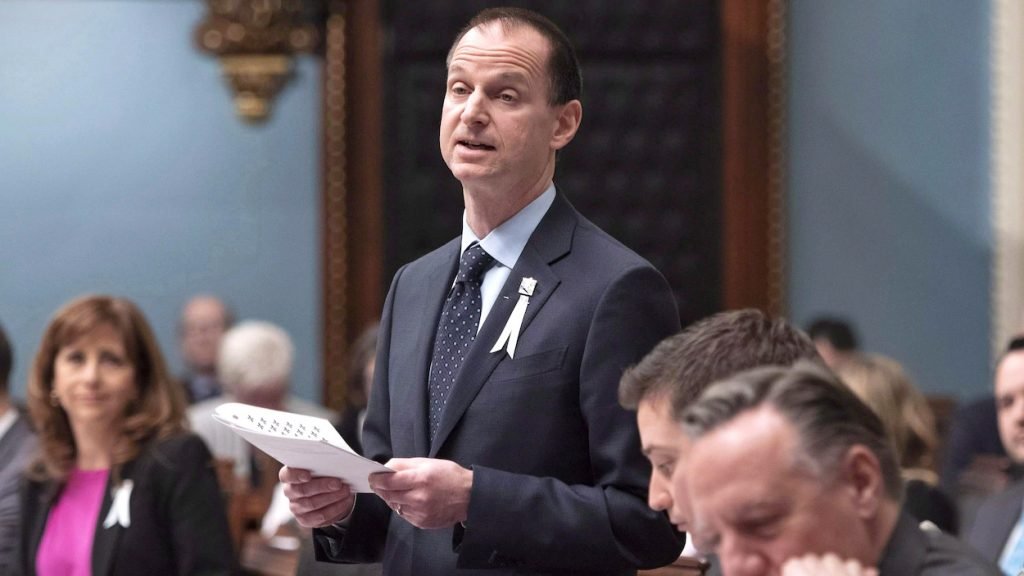
Quebec Finance Minister Éric Girard.

Quebec Finance Minister Eric Girard says
that while the province is living through an
unprecedented crisis, the economy should rebound by the end of 2021. Projecting a record $14.9-billion deficit for
the fiscal year, the government has spent $6.6
billion on recovery efforts while having lost
revenue due to decreased consumer spending
and export demand.


Girard said the government will borrow the
entire $14.9-billion value of the reserve to
cover this year’s historic deficit.
“We don’t know what is ahead of us,” Girard
said at a news conference last Friday morning
to outline the state of the province’s economy.
But he said that the spending on aid and loss
of revenue is only temporary, and pointed out
Quebec’s economy was in good shape before
the crisis. About 40 per cent of the province’s economic activity was paused this spring, which put
hundreds of thousands of Quebecers out of work.


Between February and May, Quebec lost
589,600 jobs, and GDP in the province is expected to decrease by 6.5 per cent this year.
However, the recovery will be uneven: the
report says that the restaurant and tourism
industries in particular will prevent the province from attaining its pre-pandemic employment levels in the short term.
“We are doing everything that we can to
improve potential growth,” he said, such as
fast-tracking infrastructure projects and
maintaining tax credits for business innovation.
The report says the government’s financial aid
so far has freed up $28 billion to Quebecers
and Quebec businesses.


“We had good reserves, but now we must revive the economy quickly,” Premier François
Legault said following Girard’s announcement.
$4B more for COVID-19 relief
With the severity of a second wave of infections this fall still uncertain, the government
is budgeting $4 billion in additional aid for
Quebecers and businesses.
Girard said the government will be watching to see how the economy fares in the next
several months to determine what kind of aid
would be needed.
“We are ready for a second wave. We have
more equipment, we have more tests,” Girard
said.


Quebec will balance the 2020-2021 budget using an accounting mechanism known as the
stabilization reserve. In exceptional circumstances, the government can borrow money
to balance the budget.
The government will rely on rebounding productivity, not tax hikes, to refill its coffers, he
said, forecasting a six-per-cent increase in
GDP in 2021.
But if the public health situation does not
improve, he acknowledged reaching his GDP
targets would be “very difficult.

Province announces schools will reopen for in-person education

Children 6 to 16 years old must attend school in September

Quebec’s education ministers announced on June 16 that all schools will reopen in September. Jean-Francois Roberge makes this announcement just as the government is progressively loosening distancing guidelines.

Quebec Education Minister Jean-François Roberge.

Schools in the province closed when the
province declared a public health emergency
in mid-March due to a rise in COVID-19 cases.
“Today, we have a game plan which is the
first of many exchanges,” Roberge said. “I am
confirming that as of September, all school
establishments in Quebec will reopen their
doors.”
Under the government’s game plan, all
preschools, elementary schools and high
schools will reopen physically end of August.
However, students will follow specific guidelines
to reduce the spread of COVID-19.
“Unless there is a medical condition that is
very specific, children will have to attend school,
and teenagers as well, from six to 16 years of
age,” Roberge said.

The bubble
Safely returning to school involves creating
a “bubble” for each student. Students will not
have to worry about physical distancing within
their bubble.
This method is quite effective, according to Dr
Richard Massé, Quebec’s senior public health
advisor, who accompanied Roberge at the press
briefing.
“The concept of the bubble has been used quite
a bit in Europe, we’ve been discussing about
that, and that’s quite secure,” Dr Massé said.
Teachers will move from one bubble of
students to the next one.
However, the bubble approach will not look
the same for younger and older students.
Pre-school to Secondary 3 (Grade 9)
Bubbles of six students
Students in pre-school to secondary 3 will
be broken off into sub-groups of six students.
Within those groups, no distancing is needed.
“We can treat them just like our brothers and
sisters,” Roberge said.
Students stay 2 meters away from teachers
One sub-group should stay 1 meter away from
another sub-group. However, all groups will stay
2 meters away from their teacher. After class,
students remain seated, while teachers move
on to another room.
Secondary 4 and 5 (Grade 10 and Grade 11)
Optional courses make it difficult for older
high school students to stay in the same groups
and classrooms.
For Secondary 4 and 5 students, schools will
can use the “bubble” model, where students stay
in the same room and teachers come to them.
Alternatively, schools can also use a “hybrid”
model. For instance, students could learn from
home one day and attend school the next day.
This way, students spend less time physically
in school.
The Plan B
Schools will also need to have a Plan B protocol, in case COVID-19 cases rise again.
The Plan B responds to concerns for a second
wave of COVID-19 infections. Experts warn of
a second wave, which would infect a new set of
populations.
“We suppose that it will hit us, but we don’t
know when or how it will be, so the ministry
will table what we call emergency protocols
to be ready to face the possibility of a second
wave,” Roberge said.
The Plan B involves resuming at-home education if the COVID-19 emergency escalates in
fall.
Roberge admitted the education system was
not ready to start at-home education. However,
he believes the additional time will allow the
system to adapt in time for September.
Getting hands on tech
Moreover, Roberge says schools can develop
protocols for their specific needs. For example,
access to technology is a big concern for all
families.
However, the province has announced May
31 an investment of $ 150 million for schools
to purchase computer equipment that they
can lend in September. The education ministry
estimates nearly 80,000 students don’t have
access to technology this summer. With the
province’s investment, schools could acquire at
least 200,000 tablets and laptops by September.
Finally, Roberge said the province will develop
content for TV and web broadcast in case
at-home education needs to resume.

Newsfirst columnist Robert Vairo’s ‘That’s What I’m Thinking’

0
Robert Vairo

How Did Things Ever Get So Far?

“How did things ever get so far. I don’t know” The line is from the scene in the Godfather
where Don Corleone (Marlon Brando) seeks peace from the warring heads of the five
families. How DID we get so far, so fast? What is happening? An unprepared world for an
incurable Covid-19, a world economic shutdown, governments printing trillions of dollars
with no plan on how to resolve this massive debt, police brutality, protests, riots, killings.
You and I have never witnessed our world in such a turbulent state. Will all this be resolved?
I do not have an answer.

It’s business as usual for Elon Musk who continues to make Teslas and rocket ships that
send humanity into space. It’s business as usual for swindlers, identity thieves and organized
crime seizing another opportunity to milk an untold amount from Canada’s billions handed
out in CERB. It’s business as usual for the stock market that has in large part recovered its
losses of the last three months. It’s business nowhere near as usual for businesses. It will
take years to make up the eight million who depend on CERB, delayed in part by generous
Ottawa programs that often make it worth staying home rather than returning to work.

It is not business as usual for medical front liners still fighting the battle in hospitals and LTCH. It’s
not business as usual as we practice social distancing, don masks, shop in line or on line. It
is not business as ususal on our streets and cities. From Montreal to Whitehorse, Seattle to
Atlanta, to London, Paris, Hong Kong… shootings and killings continue. Pacifist anti racism
protests ruined by anarchists and so called Antifa bent on violence and destruction. And in
Canada police are still abusing their power after the George Floyd tragic arrest for allegedly
using a counterfeit bill.

I doubt the best of authors has ever written, or could write this kind of script. I’m even in
disbelief as I write this stuff.

Solutions. “Defund police departments”. What a dumb founded idiotic idea. Over the
decades police departments have been asked to perform more duties than they can handle,
and not trained to do them. Police are sworn to defend and protect people. They enforce
laws, prevent crimes, respond to emergencies, and provide support services. They serve
us very well. But the wise use of discretion by some RCMP, local, provincial police, is now
questioned. Why is someone unarmed shot dead running away from an arresting officer?
It’s a needless use of force. Why do police have to respond alone to ‘a mental wellness call’?
Most can’t handle that because they’re not trained for it. Allocate some of that police budget
to specialized social workers who can work in tandem with police when called to a scene
involving the mentally sick and others more vulnerable to society. Yes, wear body cameras,
and leave them on. Yes, allow for budgets to rethink and reform police response methods
and accountability.

But above all, stop beating and stop killing unarmed people. Even if they
have a knife, use your brains and bravery instilled at the Police Academy and apply tactics
to disarm. But not a gun. A threat should not mean the use of deadly force. Use of a police
firearm is an absolute last resort. Now it’s easy for me to write about this in my calm and quiet
environment, but in the heat of the moment, when the adrenalin is rushing, hyperventilating,
and events happen with lightning speed, judgement is blurred. I understand that. As a radio/
TV reporter, I have been there. That’s why being properly trained is vital. NY Gov Cuomo
has the right idea with new police accountability legislation. Token if not political gestures
taken by Montreal, Quebec and Toronto.

I like the idea of a civilian committee overseeing a
police officer’s questionable conduct. Some cities and provinces have one but their decisions
are not binding, and no ordinary folks, no black or indigenous sit on them. Police should
be there too. Not the high ranking officers, but the cop in the cruiser, front line to crime.
Jurists should have a seat, like a retired judge, lawyer. A social and medical worker who can
articulate mental state and condition of suspect or subject. Let’s make it a small committee
to avoid discussion log jams. Render a quick, binding decision. It may all sound radical, but
we have never lived through times like the present. We require radically creative ideas. I’m
not saying this is the answer. But as proud Canadians, we absolutely need to think this out
and act now to stop this insanity. That’s what I’m thinking.

Have you received any COVID-19 travel ban tickets lately?

0

Rights lawyer Julius Grey knows of few people who are contesting

So, since the beginning of the COVID-19 pandemic and all the restrictions that have come with it, were you among the people reported to have received tickets from the police for not obeying distancing rules or for leaving your region without proper authorization?

Where are they?

Montreal lawyer and human rights specialist Julius Grey would like to know the whereabouts of those who were ticketed. Because as far as he’s concerned, few if any have come his way over the past few months to contest the constitutionality of the charges brought against them.

The Laval Police Department issued statements towards the beginning of the pandemic in March and April that they were indeed ticketing people in public places who were visibly not maintaining a proper 2-metre distance from others on playing fields and in public parks.

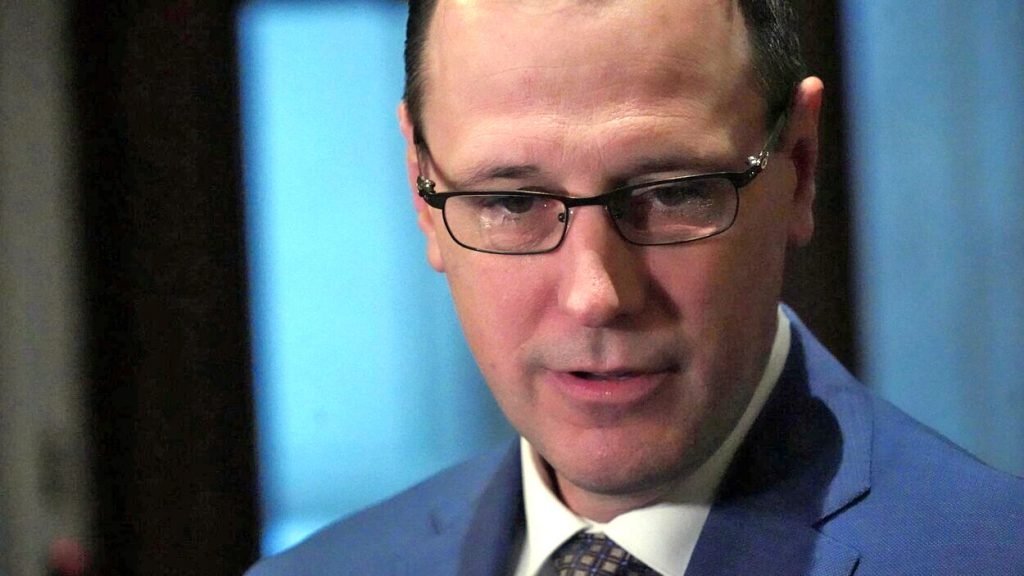
Montreal rights lawyer Julius Grey says he has had almost no clients contesting tickets issued for breakiong COVID-19 distancing rules or for travelling from region to region without proper authorization

Broke travel restriction

As well, the Laval News heard at least one unverified anecdote involving a woman from Laval who claimed she was ticketed by police for leaving the Laval region and crossing over the Lachapelle Bridge into Cartierville, ostensibly in violation of provincial rules forbidding travel from region to region during the COVID-19 pandemic.

Adding insult to injury, the story continued, she claimed to have been issued a second ticket when trying to cross from Montreal Island over to the South Shore on the same day. The Laval News tried to authenticate the story from the woman in question, although she declined to be interviewed.

However, a friend of hers told us that the woman received two tickets amounting to $1,500 each and that she is currently fighting them through Ticket911, a Montreal law firm specializing in the contestation of traffic tickets issued in Quebec.

Grey unsure about rules

“I don’t have any tickets of that sort,” Grey said in an interview with the Laval News. At the same time, he expressed doubt as to whether there ever was any specific rule about moving from region to region. “I don’t know that there’s any rule that you can’t go from one district to another. Where would it come from? Would it have been legislated by the cities? By the province?”

Grey wondered whether the tickets in question might actually have been issued for another offence. “Are you sure they weren’t speeding at the same time? Or something that’s more conventional?” he said. He said the only case with any similarity he dealt with recently involved a man who was being prevented by the COVID-19 lockdown rules from crossing from Quebec into Ontario.

Handled just one recent case

“I had a case where a man who lived way up north on the Ottawa River, and had a business in Ontario and a residence in Quebec, wasn’t allowed to go to his business,” he said, noting it was an inter-provincial issue, rather than an inter-regional one. “He had to argue back and forth. But in the end they agreed to let him through when he said he’d go to court.”

He suggested the law, if any, creating the restrictions might have been vague. “Initially, they said no one should go very far, that you shouldn’t go downtown or to other places,” he said. “But for instance, I go to visit my mother in Côte St. Luc and I live in Westmount and nobody has ever stopped me. They may have meant Laval and the island of Montreal being separate regions and otherwise you can anywhere you want within those regions.

Show me the law, says Grey

“But I’d like to know what is the basis,” Grey added. “There has to be a law. You can’t just issue a ticket if there isn’t a law. So there has to be either a provincial law or regulation or a municipal one. But I’ll bet there’s not a municipal one.”

Grey said he hadn’t heard from anyone complaining about being forbidden to move about as they wished because of COVID-19 travel rules. “Nobody has come to tell me that he has been prevented from going somewhere,” he said.

“I know that in some areas, if you come from Montreal, they’ll make you quarantine, because Montreal is more affected than other places.” As well, he said he had no clients contesting tickets for non-distancing, while acknowledging that the police were indeed actively ticketing the worst offenders. “Nobody’s ever come to me with a ticket like that,” he said.

Laval/Montreal autoroute links closed partly Monday night into early Tuesday morning

Transport Quebec has announced the partial closing of several key stretches of the Montreal autoroute network – including two in Laval – tonight (Monday), extending into the early hours on Tuesday morning, while repairs are being done.

A-13  |  AUTOROUTE CHOMEDEY
Between Montreal (around Pierrefonds-Roxboro) to Laval
on the Louis-Bisson Bridge, heading over the Rivière des Prairies
northbound.

  • Partial closing of two lanes out of 4, from Monday 7 pm to Tuesday 5 am

Note: Southbound, three lanes will be available on the bridge (as regulated by the gate system), but the roadside weigh scale will be closed during the same period.

LAVAL

A-15  |  Laurentian Autoroute
Laval
Direction southbound
Exit 7 (De la Concorde, Notre-Dame and Cartier boulevards)

  • Closure of the exit: from Monday 9 pm to Tuesday 4 am.

Detour: via the 4-E exit (De Salaberry St. East) in Montreal, make a U-turn and A-15 North.

On the service road
Between Saint-Martin and Notre-Dame boulevards

  • Complete closure, from Monday 9 pm to Tuesday 4 am

Detour: via Saint-Martin ouest, Chomedey south and Notre-Dame east

Closings by default:

  • The entrance to Saint-Martin Blvd. east. Detour via Le Corbusier south and de la Concorde west boulevards.
  • Entrance to Saint-Martin Blvd. west.

Transport Québec re-asphalting parts of A-25, A-440 starting June 28 until October

Transport Québec has announced the start of re-paving operations on parts of Autoroutes 440 and 25 in the eastern half of Laval beginning on June 28 and running through this summer until the beginning of October.

According to the provincial roads and highways ministry, the work on the A-440 (which merges with the A-25 around Marcel Villeneuve Ave.) will be taking place between Pie-IX Blvd. and des Mille-Îles Blvd.

The work will be taking place mostly at night and it will be carried out a section at a time to minimize inconveniences.

How the work will be carried out:
Autoroute 440, from Pie-IX Blvd. to rang du Bas-Saint-François

  • Partial closing of two or three lanes headed east;
  • Partial closing of two or three lanes headed west;
  • Complete closing of access ramps leading towards autoroute, headed east and west;

Autoroute 25, from Autoroute 440 to des Mille-Îles Blvd.

  • Partial closing of two or three lanes headed north and south;
  • Complete closing of access ramps headed towards Autoroute 25*.
    *During closures southbound, access to the weigh station will no be possible.

Laval News Volume 28-13

The current issue of the Laval News volume 28-13 published June 24th, 2020.
Covering Laval local news, politics, sports and our new section Mature Life.
(Click on the image to read the paper.)

This weeks issue front page of the Laval News.
Current issue of the Laval News volume 28-13 published June 24th, 2020.

Fire breaks out at abandoned garage on Curé Labelle Blvd.

0

The Laval Fire Department has asked the Laval Police to open an investigation into the cause of a fire that broke out and did extensive damage Sunday morning to an abandoned automotive garage located on Curé Labelle Blvd. in Chomedey.

Firefighters received an initial call just after 7:30 am. Upon arriving just a few minutes later, they were able to see that flames appeared to have started on the ground floor of the two-storey building and were beginning to spread.

However, according to the LFD, the blaze didn’t get much beyond that point and the firefighters had everything under control by 8:10 am.

According to the fire department, no one was seen in the immediate vicinity of the burning building and there were no injuries to firefighters.

However, they said it appeared the fire was set on the outside of the building, and it spread inside. The LPD has been asked to investigate as arson is considered to be a possible cause.

Heat wave forces CISSS de Laval to again postpone mobile COVID-19 testing

The CISSS de Laval says it is prolonging its suspension of operations by its mobile COVID-19 testing clinics for another 24 hours because of the ongoing heat wave rolling through the Laval region.

The mobile testing facilities will not be up and operating again until Thursday June 25, says CISSS de Laval spokesperson Judith Goudreau.

Weather

Laval
overcast clouds
9 ° C
9 °
9 °
43 %
6.1kmh
100 %
Sat
10 °
Sun
9 °
Mon
14 °
Tue
17 °
Wed
16 °