The Laval Police confirmed last week that it arrested one of its own, Constable Anthony De Melo, to face charges of luring and transmitting sexually explicit materials to a person believed to be a minor.
De Melo was arraigned in Quebec Court, with the LPD noting that the alleged offences occurred outside of the police officer’s working hours.
Initial information released by the LPD indicate the alleged offences took place place last March in the Châteauguay region south of Montreal.
The 46-year-old officer was exposed following efforts made by amateur pedophile hunters.
19-year-old hospitalized after stabbing outside Laval movie theatre
A 19-year-old man is in hospital after an armed assault outside of Laval’s Colossus movie theatre on the night of Sunday September 21.
At around 9:55 p.m., the LPD received a 911 call regarding the stabbing. Upon arrival, the 19-year-old male victim was found with serious stab wounds.
He was taken to hospital for treatment of life-threatening injuries, according to the LPD. In the meantime, the force’s Crimes Against Persons unit has taken over the investigation.
The crime scene was analyzed by investigators and crime scene technicians Sunday night, the SPL said, although no arrests had been made by early Monday.
Recent LFD fire calls
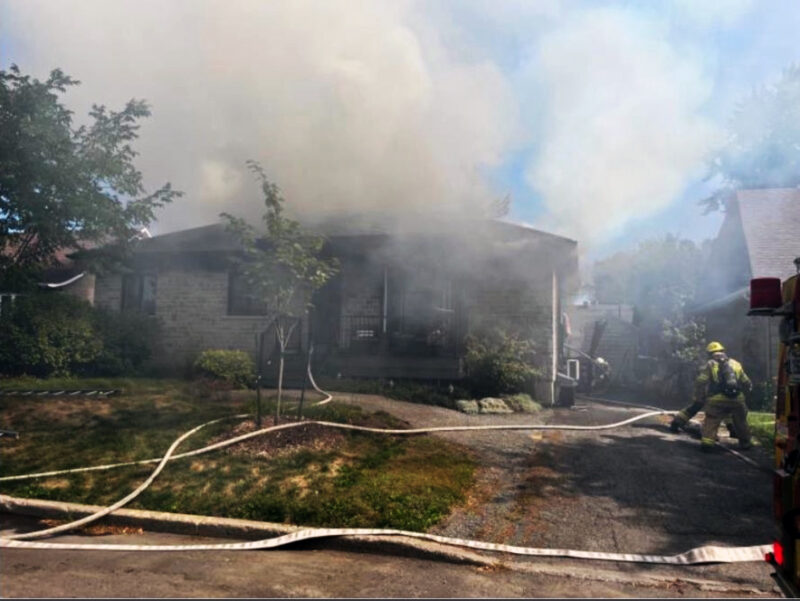
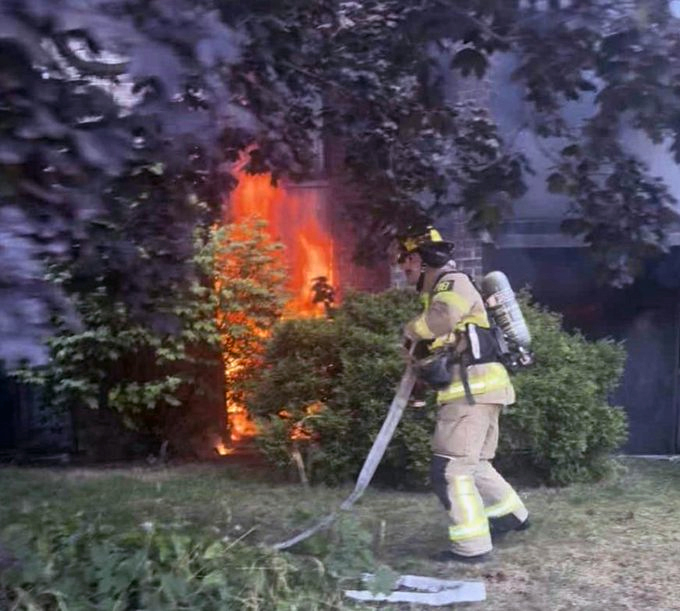
16 September 11:09 am // Building fire on Place des Sarcelles in the district of Sainte-Rose. One-storey residential building. Flames were visible on the roof upon arrival of firefighters. Fire code 10-12, meaning a alarm was called in.
20 September 08:17 am // Building fire on Jean-Picard St. in the district of Chomedey. Multi-unit residential structure. Flames apparent in basement to firefighters upon their arrival. Code 10-07, necessitating intervention.
21 September 12:36 pm // Building fire on La Perière St. in district of Saint-François. Residential structure. Flames apparent on the roof. Code 10-09, meaning full intervention required secours engagé à plein, with aggravating circumstances possible.
Group’s founder is seeking someone willing to take on a new leadership role
With the searing heat of summer finally over, what could be more fitting for fitness-conscious seniors than a brisk walk around the block, when the sun is high in the sky, while enjoying the cool autumn air?
For a certain number of senior citizens from Laval who are loyal supporters of FILIA, the group’s September Walk a Thon is an outdoor event at Saint Norbert Park in eastern Chomedey never to be missed.
The 19th annual Walk a Thon on Sept. 15 drew a loyal following of FILIA members, as well as a few elected officials who have provided a significant amount help to the organization for years.
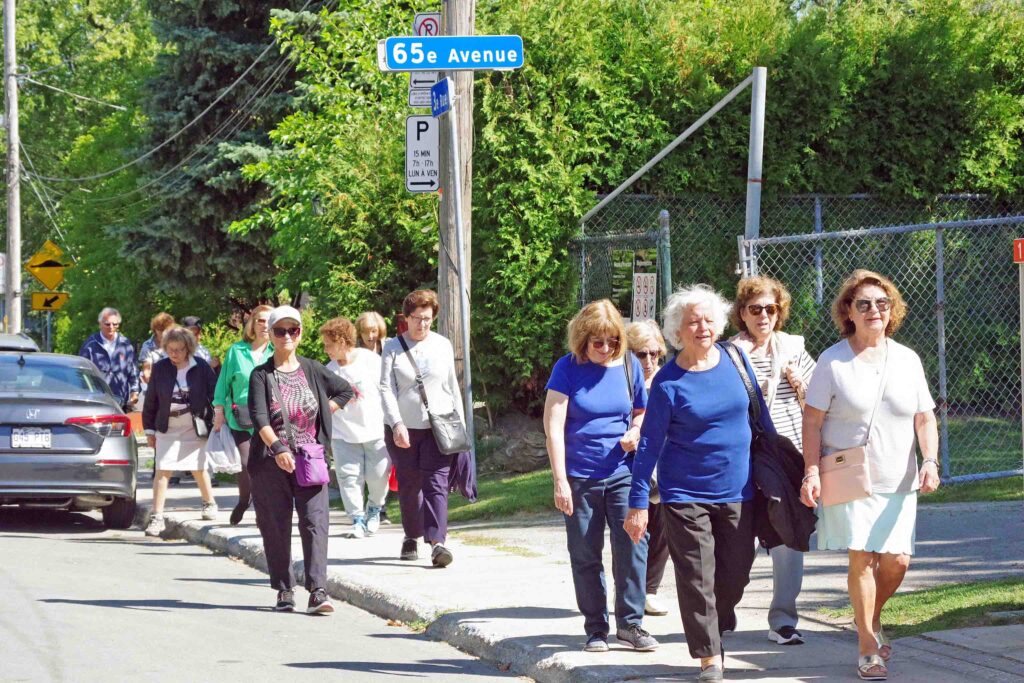
FILIA supporters walk along Third St. at the corner of 65th Ave. in Chomedey during the 2024 Walk a Thon on Sept. 16. (Photo: Martin C. Barry, Laval News)
A range of services
The goal of the day was to raise awareness of the needs of senior citizens – including regular physical exercise – while also raising funds for FILIA so it can continue providing a range of crucial services to seniors, such as a meals-on-wheels program, but also interesting field trips to locations in and outside the Montreal region.
Led for around 30 years by Johanna Tsoublekas who continues to provide guidance and management, FILIA’s services include home housekeeping and supervision, volunteer training and a healthcare clinic for the feet.
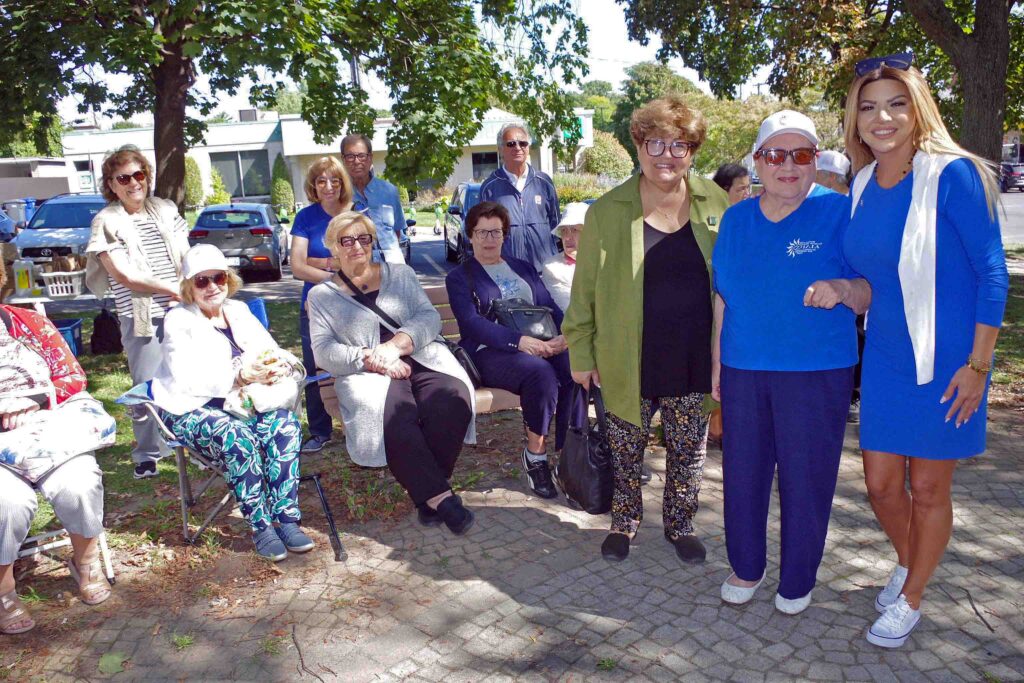
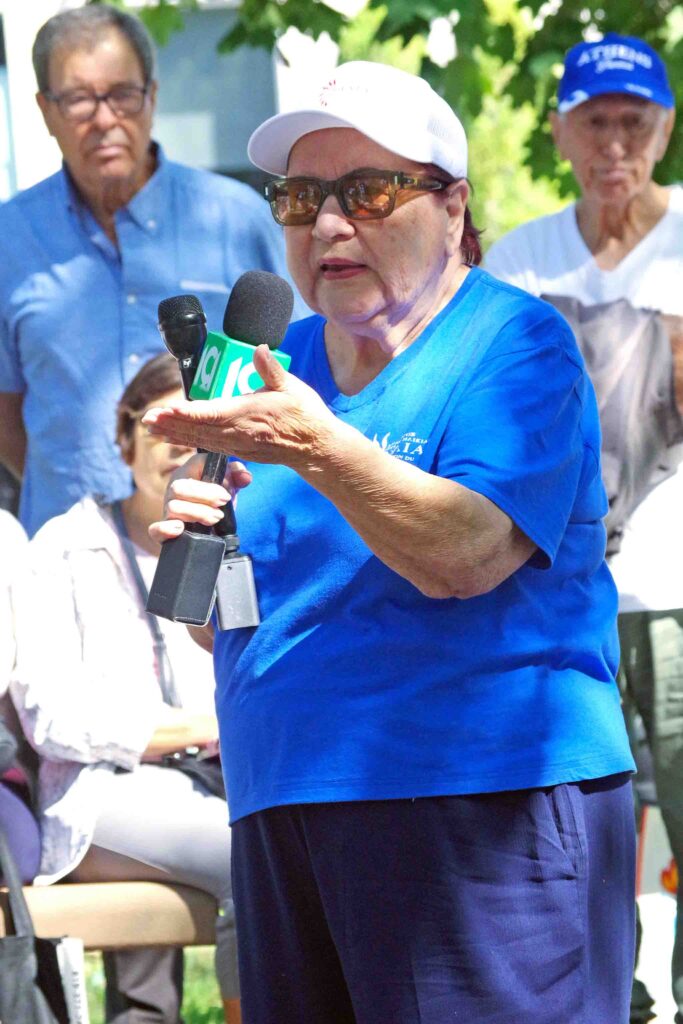
From the left (foreground standing), Montreal city councillor for Parc Extension Mary Deros, FILIA leader Johanna Tsoublekas and Laval city councillor Sandra El Helou (responsible for senior citizens’ issues, are seen here in Saint Norbert Park in eastern Chomedey before the start of the annual FILIA Walk a Thon on Sept. 15. (Photo: Martin C. Barry, Laval News)
“For me, this is a must annual gathering,” said Laval city councillor for Souvenir-Labelle Sandra El Helou who is responsible for senior citizen dossiers on city council. “It’s nearly eight years I’ve been following FILIA and its mission, and it is as important as ever to provide support,” she added.
Deros loves FILIA
FILIA leader Johanna Tsoublekas summarized the group’s activities over the past year prior to the start of the Walk a Thon in Chomedey. (Photo: Martin C. Barry, Laval News)
“It’s great to see the number of people who come out here year after year to participate and support the meals-on-wheels program,” said Montreal city councillor for Parc Extension Mary Deros. (FILIA was initially based in her district, but relocated to Chomedey as Montreal’s Greek population migrated here.)
“Joahanna brings people together,” said Deros. “She provides the FILIA members with a reason for being. She keeps them active in mind and in body, which is a great accomplishment. Especially when you come to a certain age, sometimes you want to be alone or quiet. But she gets them out of that and keeps everybody active.”
Passing on the torch
Although FILIA’s mission at one time was to provide assistance to Greek women of the Parc Extension Hellenic community, then later throughout the Montreal region, the organization’s mandate now is to serve senior citizens and people from all backgrounds – with a growing emphasis on the population of Chomedey.
With advancing age, Johanna has been looking over the past two years for someone who might be willing to take over at least some of her responsibilities. In the meantime, her son, Bill, has stepped in, and he was on hand at the Walk a Thon providing assistance.
‘We are building entire neighbourhoods,” says Mayor Boyer, highlighting the renewal of the area
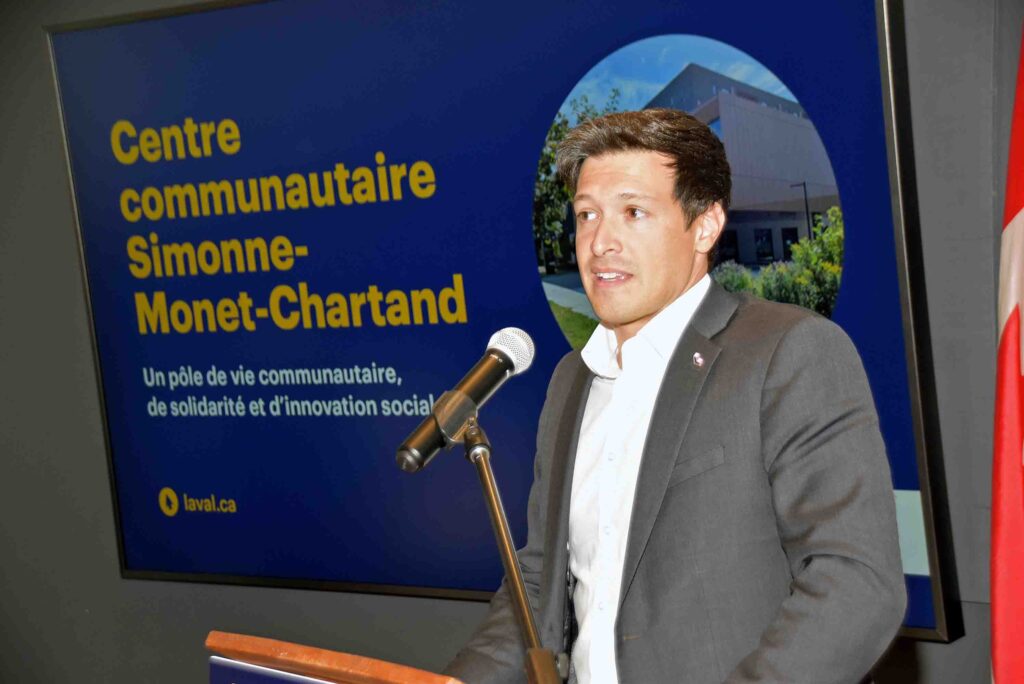
A new municipal community centre in one of Laval’s more disadvantaged neighbourhoods was officially declared open earlier this month by officials from the city as well as community activists who had long urged Laval to move forward with the project.
The Centre communautaire Simonne-Monet-Chartrand is located on Notre-Dame Blvd. on the boundary that separates the city’s Chomedey and l’Abord-à-Plouffe neighbourhoods.
Designed to primarily serve residents of the nearby Val-Martin social housing district, the community centre (costing $17 million, not including the housing) was conceived to fit in snugly with a seven-storey subsidized residential building.
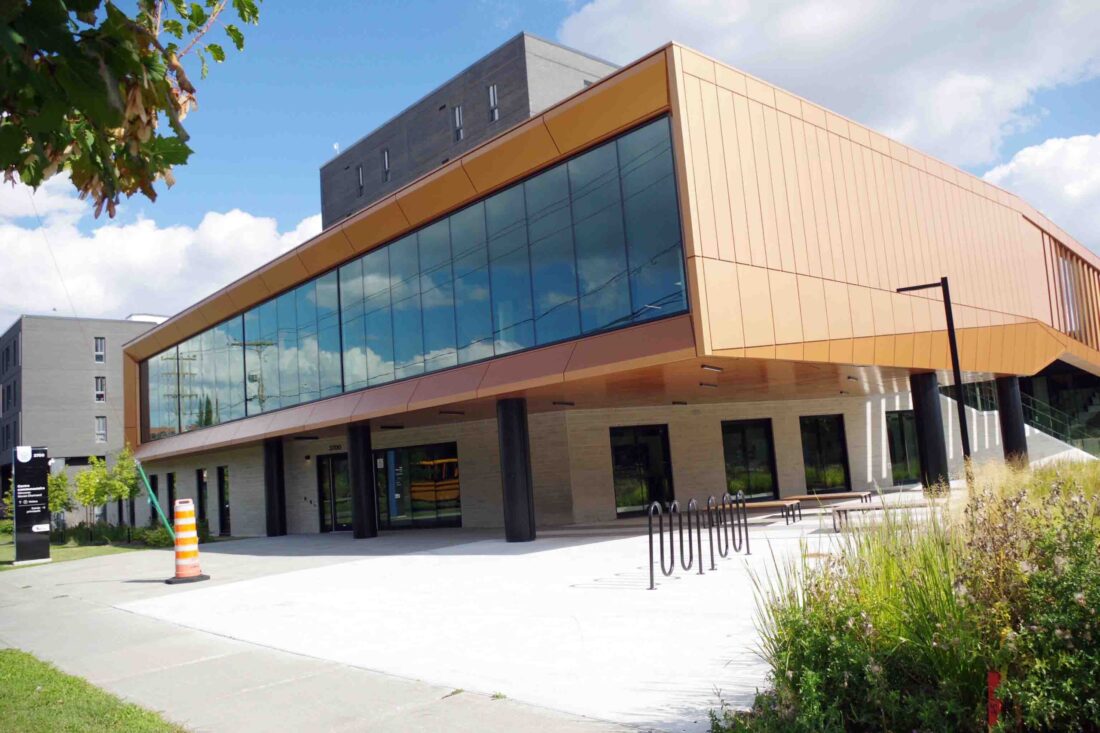
The recently-completed Centre communautaire Simonne-Monet-Chartrand on Notre Dame Blvd. (Photo: Martin C. Barry, Laval News)
Old replaced with new
Completion of the project also marked the culmination of the first phase of a major overhaul of the Val-Martin neighbourhood, which was started by former Laval mayor Marc Demers and continued under Mayor Stéphane Boyer.
At one time, Val-Martin was notorious for its run-down and mould-infested subsidized housing units, many of which were condemned and demolished.
And indeed, a certain number of the old units can still be seen on nearby streets, boarded over and abandoned, as new units (paid for largely with sums from higher levels of government) are gradually built to replace them.
Phase One completed
According to a press release issued by the City of Laval, this was the conclusion of the first of several phases to revitalize Val-Martin.
It was a process that was kickstarted in 2016 by the municipal housing department (Office municipal d’habitation de Laval OMHL), in conjunction with the Société d’habitation du Québec (SHQ) and the Canada Mortgage and Housing Corp (CMHC). In all, 359 new social housing units will have been completed when all is said and done.
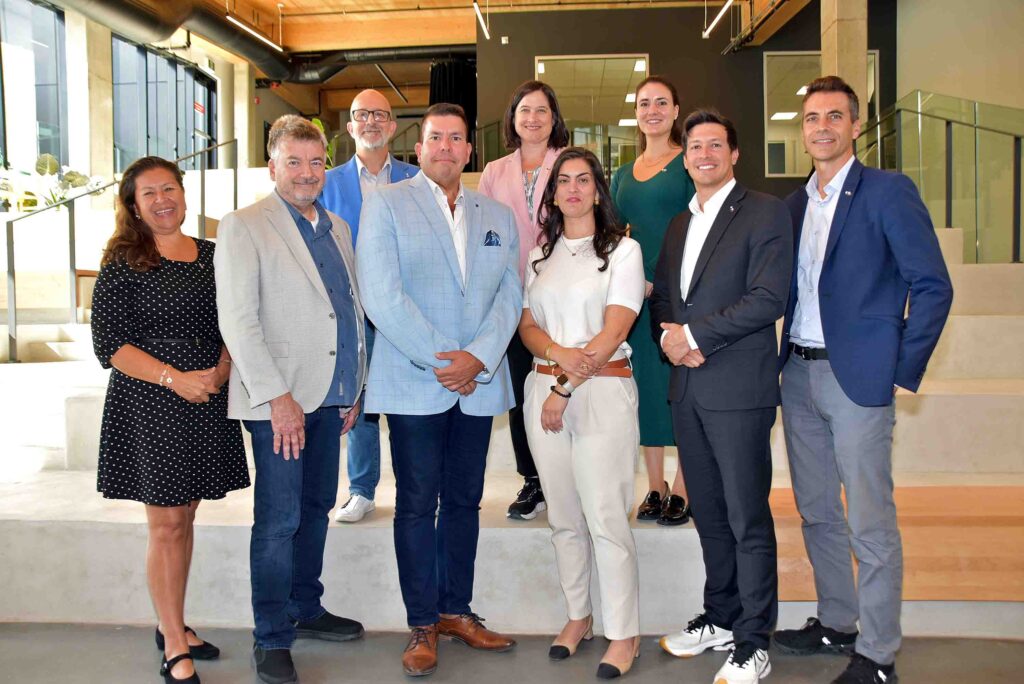
Among the officials on hand for the official opening of the Centre communautaire Simonne-Monet-Chartrand were a half-dozen city councillors, Mayor Stéphane Boyer, as well as the executive-directors of the city’s housing authority and the centre itself. (Photo: Martin C. Barry, Laval News)
The centre was named after labor activist, feminist writer and pacifist Simonne Monet-Chartrand. In addition to her social activism, she was married to Quebec labor leader Michel Chartrand.
A multifunctional place
Conceived to encourage inclusion, creativity and communal living, the centre includes focused facilities for youths and families, a food bank and a community kitchen, a large communal gathering space, multifunctional rooms, as well as interior spaces for dancing and other types of artistic and cultural events.
With the task of building now accomplished, the City of Laval is seeking to have the Centre communautaire Simonne-Monet-Chartrand certified LEED Gold as an internationally-recognized, environmentally-sustainable facility. Worth noting is that the centre was designed to be easily accessible by pedestrians and by public transit.
“Taking into consideration the scarcity of affordable housing, the inauguration of the Simonne-Monet-Chartrand community centre demonstrates that Laval acts decisively to create living spaces that are accessible, sustainable and unifying,” said Mayor Stéphane Boyer.
‘Building neighbourhoods’
“This project demonstrates our willingness to go higher than the simple construction of housing,” he continued. “We are building entire neighbourhoods where apartments, services and meeting spaces are side by side. With our partners, we are setting down the bases for an exemplary revitalization that restores dignity, hope and a sense of belonging to the families of Val-Martin, and, more widely, to the entire community in Laval.”
“This project demonstrates our willingness to go higher than the simple construction of housing,” Mayor Stéphane Boyer said at the centre’s official dedication. (Photo: Martin C. Barry, Laval News)
“The centre is much more than just a building,” said the centre’s executive-director, Noémie Barolet. “Our vision is a clear one: to make Chomedey a neighbourhood where you can grow. With the Centre Simonne-Monet-Chartrand, we are laying down a cornerstone to get there, by wagering on the strength of the collective, along with citizen creativity and solidarity.”
A ‘magnificent project,’ says opposition
The project’s completion received praise not only from the mayor’s side of the Laval city council chamber (it’s located just within the boundaries of l’Abord-à-Plouffe councillor Vasilios Karidogiannis’s district), but also from Claude Larochelle, leader of the Parti Laval (the official opposition).
“It’s a magnificent project,” Larochelle said in an interview with The Laval News, while adding that the city chose to locate the centre in the best possible place where it was most needed. “This is a place where a project like this was most needed. That said, my hat’s off to a good project in the right location.”
Nearly a year after the initial implementation of a municipal efficiency plan, officials with the City of Laval say they have achieved some real improvements in services offered to the city’s population.
Laval mayor Stéphane Boyer. (File photo: Martin C. Barry, Laval News)
“By setting clear objectives, transparent management and a structured accountability, the administration is modernizing its practices in order to offer its citizens an experience that’s smoother, more efficient and better adapted to the population’s needs,” the city states in a press release issued last week.
“We were looking for some in-depth change and the results are there,” said Mayor Stéphane Boyer. “The services are faster, more accessible, more efficient and simpler.
“This is the result of some hard work, of a clear vision and commitment from everyone in the organization,” he continued. “Modernizing our administration means we are fully taking up our responsibility towards all citizens, which is to offer quality services, at a fair cost while meeting expectations.”
The city reports that during the first months this year, the average waiting time for callers to its 311 centralized info service fell to 63 seconds, representing an 87 per cent improvement over 496 seconds in 2021.
During the same period, 81 per cent of requests were dealt with within that time frame, for a 10 per cent improvement compared to 2024. The city says this was in spite of an 11 per cent increase in the number of calls received.
The improvements were achieved, according to the city, through the use of a digital platform, the Mon Dossier web portal, which was developed internally. More than 85 per cent of requests received for things such as permits, subsidies or declarations are processed via this platform now.
“By going for digital solutions like the Mon Dossier portal, we are simplifying access to services, while also making the internal process lighter,” said Tania Fonrose, director of the city’s citizen experience department.
“This reorganization of work allows not only an improvement in citizen experience, but also for better use of resources. The 311 service, for example, was able to absorb a significant increase in requests with additional staff, thanks to the efficiency gains generated.”
Beginning this winter, permit applications and certificates from the urban planning department can be obtained online through the Mon Dossier portal. The City of Laval has won a number of awards for its work on resolving these issues, including some from the Institut d’administration publique du Québec (IAPQ), the Réseau de l’informatique municipale du Québec (RIMQ) and the Project Management Institute of Montreal.
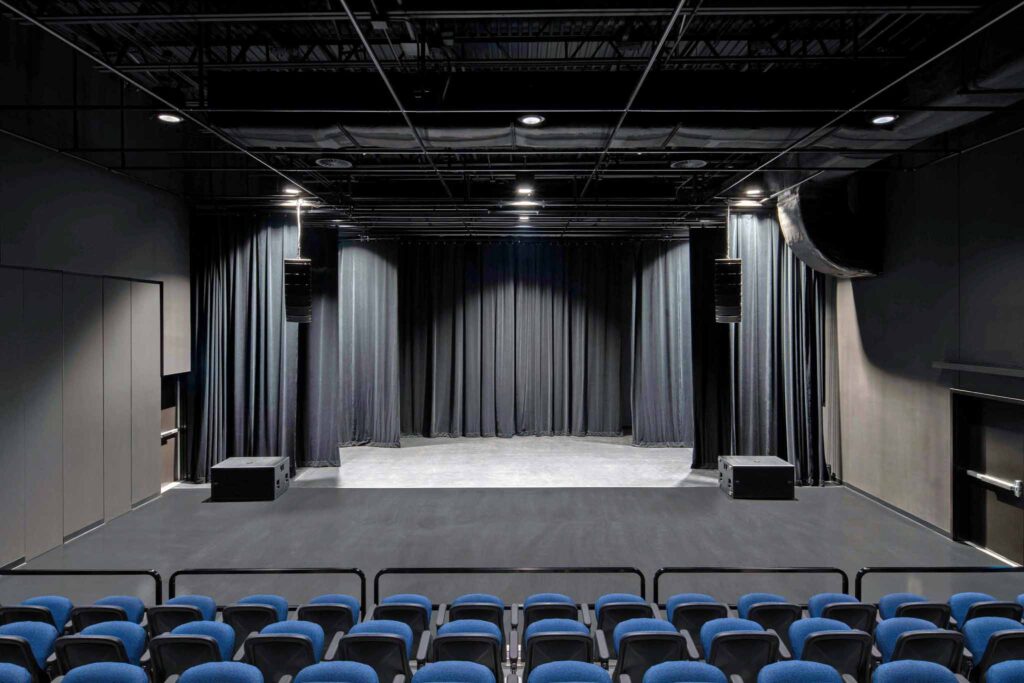
A new concert hall and events venue opens in Saint-François
Residents from all over Laval will be able to enjoy a range of shows and entertainments at the latest concert hall and events venue to be completed and opened by the city.
Located in the Espace citoyen des Confluents (ECC) in the district of Saint-François, the multipurpose hall hosted its first show on September 20, although there will be more to come, according to the city.
“As the first professional quality concert hall in eastern Laval, it offers 180 seats in a modern and quality building,” says Laval city councillor for Sainte-Rose Flavia Alexandra Novac, who is responsible for cultural dossiers on city council.
“With the opening of this new hall, the ECC will be a gathering place that’s even more outstanding for the community of Laval, especially those from the east end of the island,” added Novac.
Some of the events and shows on the schedule at the hall over the coming months:
Liberté Big Band: A jazz and classical ensemble made up of seasoned and professional musicians.
Guided tour: On the city’s Journées de la culture, learn more about the workings of a professional concert hall, including acoustics.
Boubacar Ndiaye: A spoken word event combining art and music.
Salsalazar: Music from Québec, Cuba, Peru Colombia and Chile.
Kutsi Merki: Folklore from Bulgaria with dance.
Dead Gong: Jazz with Turkish and Ethiopian influences.
Until now, the 2025 municipal election campaign is unfolding in an unusually hushed manner.
Political parties, traditionally eager to court public attention through rallies, debates, and media coverage, have opted for a minimalist approach this year.
Instead of inviting journalists to cover their events or engaging in public discourse, they are relying almost exclusively on press releases to communicate their platforms and activities on social media.
This shift toward a “silent campaign” raises troubling questions about transparency, accountability, and the health of democratic participation in Laval.
The 2025 campaign feels more like a corporate rollout than a democratic exercise. Candidates and parties are issuing carefully worded press releases, often devoid of meaningful detail or direct engagement.
This strategy may be efficient, but it is also exclusionary. By avoiding live events and direct media interaction, political actors sidestep scrutiny. There are no follow-up questions, no spontaneous moments, no opportunities for journalists to probe inconsistencies or challenge vague promises. The result is a sanitized narrative that benefits incumbents and well-resourced campaigns while leaving voters in the dark.
Democracy thrives on debate, dissent, and dialogue. When political parties choose to bypass the media, they also bypass the public conversation. Press releases, no matter how informative, cannot replace the dynamic exchange of ideas that occurs in interviews, debates, and town halls.
Residents rely on their two newspapers, Laval News and Courrier Laval, for election coverages. Throughout their existence, they have proven their journalistic integrity.
Without access to events where they can ask pertinent questions, their ability to inform the public is severely limited. The media’s role is not just to report—it is to challenge, contextualize, and amplify. When political parties exclude journalists, they undermine this role and weaken the democratic fabric of the city.
Citizens deserve better
Laval’s residents deserve a campaign that respects their intelligence and values their participation. They deserve candidates who are willing to speak openly, answer tough questions, and engage with the community.
The silent campaign may be convenient for political actors, but it is a disservice to the electorate. It fosters apathy, erodes trust, and diminishes the legitimacy of the electoral process.
A call to action
It’s not too late to change course. Political parties in Laval should reconsider their approach and invite the media back into the fold. Citizens should demand more from those who seek to represent them.
Karidogiannis submits motion for a memorial recognizing contributions of Laval’s Greeks
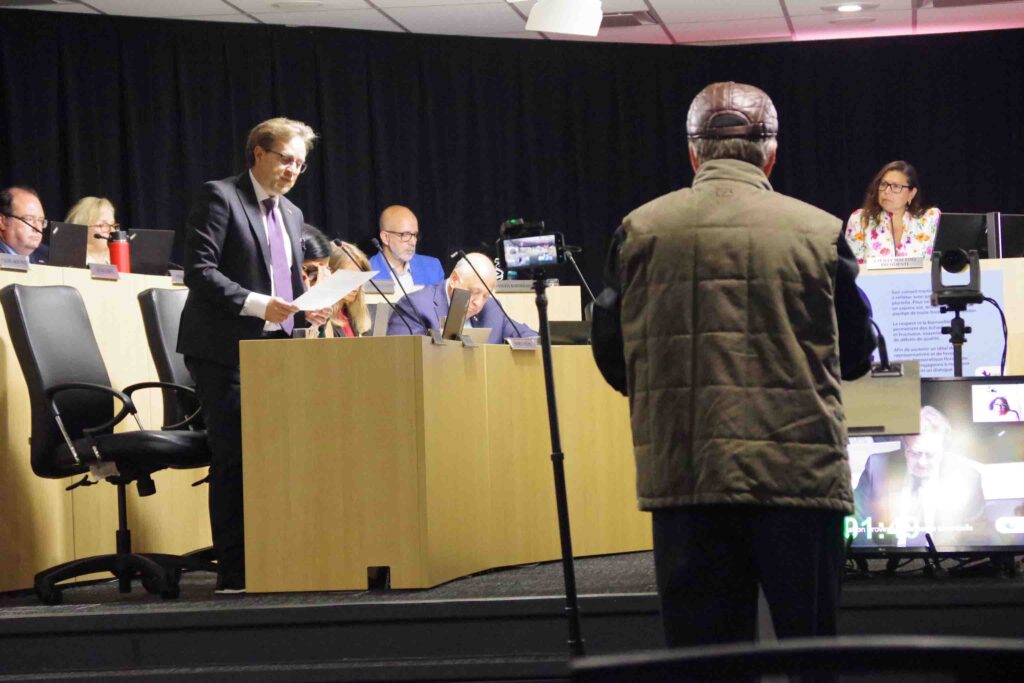
In a municipality of the size and as populous as the City of Laval, one of the many things that takes place during city council meetings is the tabling of petitions from residents seeking interventions on a range of issues.
At every monthly council meeting, there is a period around the beginning when councillors in the 21 districts formally present the petitions, which are accepted and registered by the city’s chief clerk.
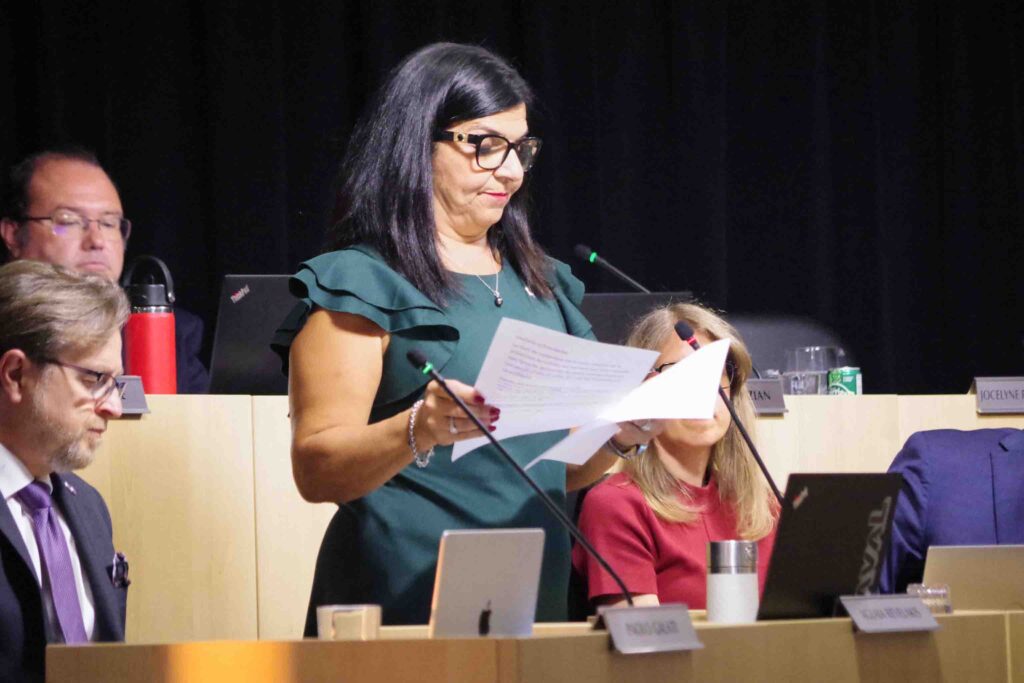
Independent Saint-Vincent-de-Paul city councillor Paolo Galati speaks during the September 9 meeting of Laval city council. (Photo: Martin C. Barry, Laval News)
Petitions tabled during meeting
During the September 9 council meeting, Laval-Les Îles councillor Nicholas Borne presented a petition started by Robert Papillon of Pesant St. in the district, asking that the city conduct an analysis of speed bumps installed on the street. According to Councillor Borne, 43 residents of the street signed the petition.
A petition was also tabled by Duvernay district councillor Achille Cifelli, regarding a skating rink at Val-des-Arbres Park, where, according to the 222 residents who signed the petition, the rink is in poor condition and has been moved to various locations over time, most recently to make space for a dog park.
Safety issues on Lévesque Blvd.
Independent city councillor for Saint-Vincent-de-Paul Paolo Galati tabled a petition gathered by residents of St-Jean St. and Lévesque Blvd. East in his district, expressing concern about the safety of pedestrians, many of them children, as well as public transit users, because of traffic hazards on Lévesque Blvd.
“Traffic on Lévesque Blvd. East has become much too fast and too dense,” Galati said while tabling the petition.
“Vehicles are passing regularly at an excessive speed, making it extremely dangerous to cross, especially for children going to school, to the park or to neighbourhood activities, as well as for families who must cross this artery, and users of the STL who most cross to get to bus stops.”
Girl killed by car in 2016
Galati said that over the years, he’s often raised the issue, and that in 2016 a young girl was killed after being hit by a car on Lévesque while she was walking along with her father, her grandmother and another child.
He said the residents are therefore demanding that the city act urgently and concretely by implementing the following measures: installation of a pedestrian crosswalk with an adapted traffic light, reduction of the maximum speed to 40 km/h between des Cépages Blvd. and Roger Lortie Ave., and addition of a solar panel with a digital speed display.
“This citizen initiative is a pressing appeal for prevention in order to avoid that a serious accident, or worse a tragedy like the one in 2016, does not happen again,” added Galati, demanding that the city’s traffic department develop an action plan quickly.
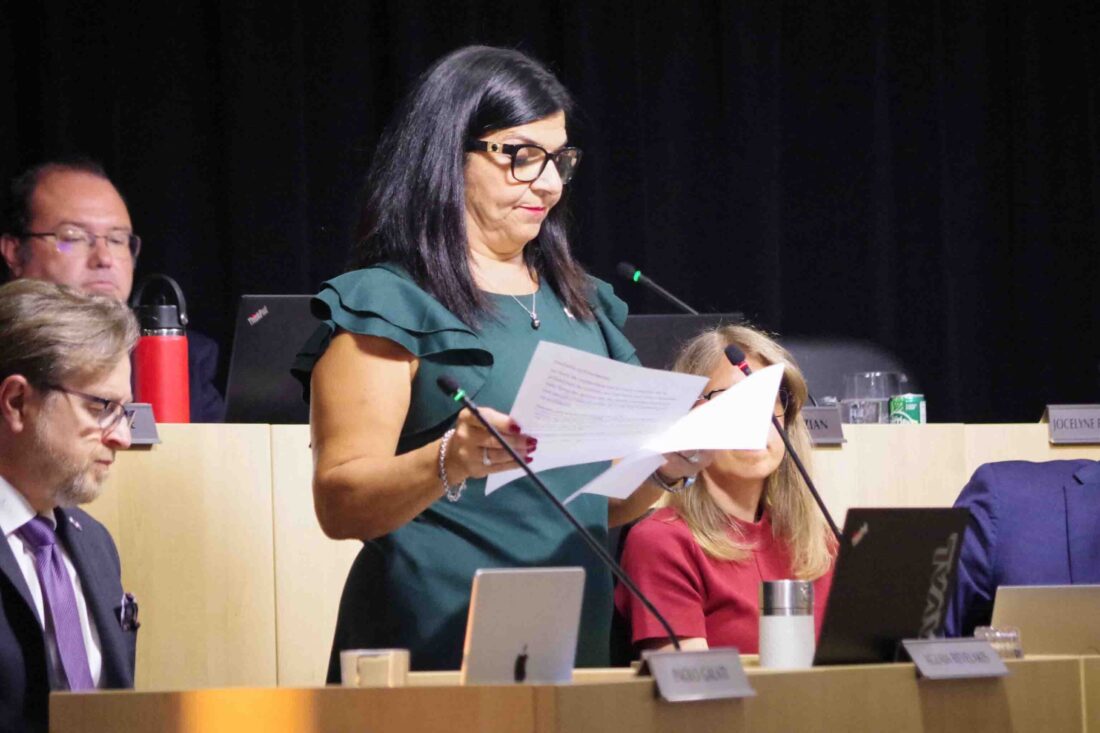
Chomedey city councillor Aglaia Revelakis noted during the most recent council meeting that September is the National Month for the Prevention of Suicide. (Photo: Martin C. Barry, Laval News)
Suicide Prevention Month
During a period reserved for councillors’ statements and new business, Chomedey independent councillor Aglaia Revelakis noted that September has been set aside on the calendar as the National Month for the Prevention of Suicide.
“This is a moment that reminds us undeniably of those persons in our community who are in need of help, as well as those who have been impacted by this problem,” said Revelakis.
“Mental health is important and asking for help is a sign of strength rather than weakness,” she continued. “Together, let us create a community where support, compassion and understanding make all the difference.”
At the same time, Revelakis wished her Jewish constituents a happy Rosh Hashanah, and she wished good luck to all the incumbent and new candidates in the upcoming municipal elections taking place on November 2.
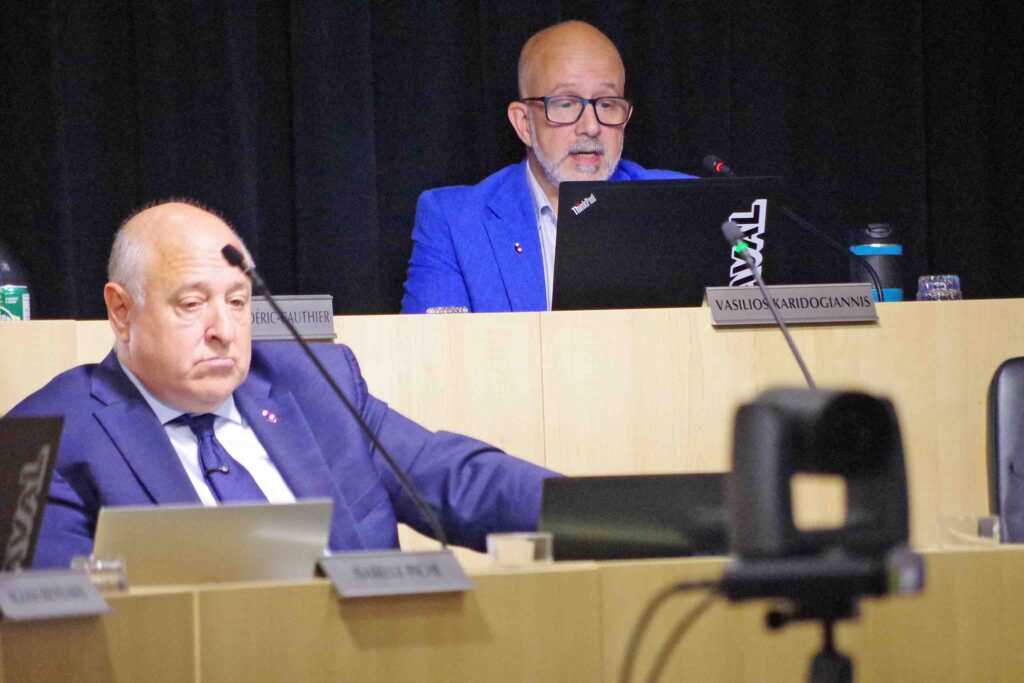
L;Abord-à-Plouffe city councillor Vasilios Karidogiannis (behind) hopes to create a monument or memorial honoring the contributions of Laval’s Greek community. (Photo: Martin C. Barry, Laval News)
Memorial sought for Greeks
L’Abord-à-Plouffe city councillor Vasilios Karidogiannis noted that he recently met with the newly-elected president of the Hellenic Community of Greater Montreal, Basile Angelopoulos, to discuss a variety of issues.
Karidogiannis added that Laval’s Greek population is among the five most significant multicultural communities in the city, with more than 20,000 people being of Hellenic heritage.
He tabled a resolution during the council meeting proposing the installation in a public place along Souvenir Blvd. of a memorial of some kind paying homage to the contributions made in Laval by the Greek diaspora.
By Matthew Daldalian — Local Journalism Initiative Reporter
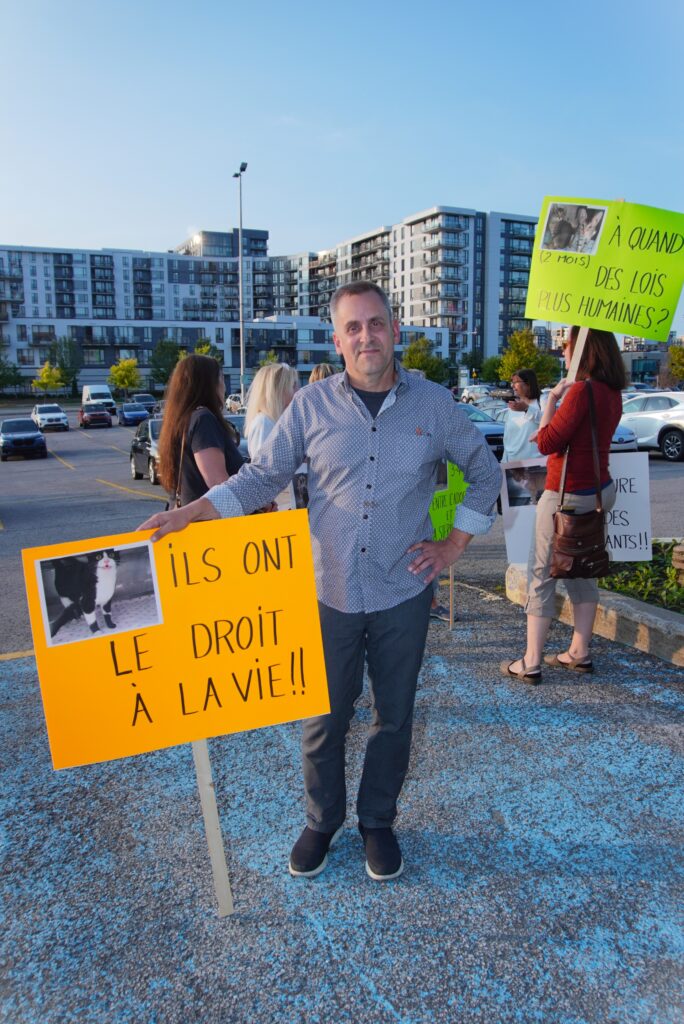
At Laval’s most recent city council meeting, animal welfare concerns once again took centre stage. Protestors and residents demanded accountability over the city’s ongoing contract with Le Berger Blanc, the private shelter and animal control service that has faced criticism for years.
The push follows a June demonstration outside the facility where protestors raised red flags about adoption practices, euthanasia rates, and what they described as a lack of transparency. This time, citizens brought their concerns directly to councillors and Mayor Stéphane Boyer.
Access to information sparks outrage
Among those speaking was Sylvie Desrosiers, a Laval resident who used Quebec’s access to information law to request euthanasia statistics from the city earlier this year.
“I’ve been there on several occasions,” she said. “The animals, to visit them, you have to take them out in the parking lot. They clearly aren’t being taken outside otherwise. No volunteers, no enrichment. It raises real questions about the conditions they live in.”
Desrosiers said she was “shocked” when she reviewed the figures. Between 2023 and April 2025, a total of 1,906 animals were euthanized at the shelter, while 944 were adopted and 413 reclaimed by their owners. In 2024 alone, 960 dogs and cats— about 45 per cent of the animals housed there— were put down.
“The volume of animals that pass through Berger Blanc is immense,” she said. “It’s worrying.”
Calls for systemic reform
Patrick Devos, a retired hospital worker who now advocates for animal welfare, urged the city to consider a broader rethink of how animal services are run in Quebec.
Devos pointed to a 400-page “livre blanc” (white book) authored by former Mont-Saint-Hilaire official Denise Loiselle, which proposes creating a provincial Crown corporation to oversee animal services, replacing for-profit contracts with publicly run or nonprofit centres.
Patrick Devos, a retired hospital worker who now advocates for animal welfare, urged the city to consider a broader rethink of how animal services are run in Quebec. Photo taken September 9 2025 (Photo: Matthew Daldalian, Laval News)
“I think that in 2025, we should have the money to improve the living conditions of animals so that there will no longer be pounds, but rather animal centers that are ethical and have practices that promote animal welfare,” Devos said
The former hospital worker hopes Laval officials will agree to meet with Loiselle and hear her proposals.
“The city has adopted an ethical and animal welfare philosophy… we have to walk the talk,” Devos said.
Organizers keep pressure on
For Any Vézina, a protest organizer who also addressed council, the stakes are too high to ignore.
“We want answers on why there’s no transparency, why cages are so small, why so many animals are euthanized,” she said. “We want to know why, when the city does its four inspections a year, they don’t see what regular citizens see in a single visit.”
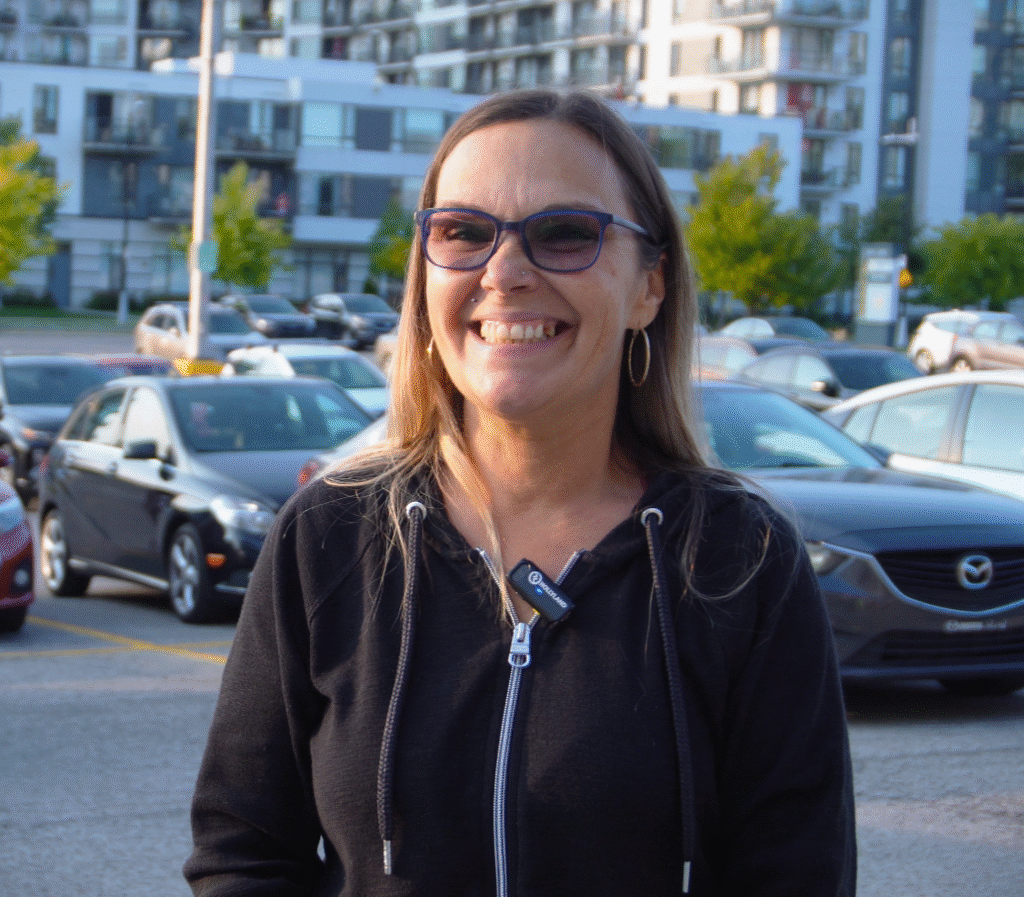
Any Vézina, a protest organizer who also addressed council, believes the stakes are too high to ignore. Photo taken September 9 2025. (Photo: Matthew Daldalian, Laval News)
Vézina warned that unless change comes soon, demonstrators will return each month. “It’s impossible that so many of us can witness irregularities, but the city sees nothing,” she said.
Political response
Parti Laval councillors Claude Larochelle (Fabreville) and Louise Lortie (Marc-Aurèle-Fortin) both expressed support for protestors during the council meeting. Lortie, who previously met with demonstrators outside the shelter, spoke about her personal experience hearing about Berger Blanc’s conditions.
Both pledged that, if elected in this fall’s municipal election, their party would introduce a CSRM program— capture, sterilization, return, and maintenance— focused mainly on stray cats. The model, already in place in other Quebec municipalities, reduces feral populations through vaccination and neutering rather than euthanasia.
Boyer defends city oversight
Mayor Stéphane Boyer acknowledged residents’ concerns but defended the city’s approach, stressing that Berger Blanc has changed since its widely publicized scandals of 2011.
He said the city receives regular reports and statistics, uses independent veterinarians, and investigates complaints.
Boyer did concede that Berger Blanc’s lack of a social media presence limits its reach. “In 2025, it’s probably a good idea to be on Facebook to get animals adopted,” he said, promising to consider adding such requirements in future contracts.
Debate not going away
For many, including Desrosiers, the city’s assurances do little to dispel doubts. “I myself called Berger Blanc a few times. Depending on who you talk to, you get different versions,” she said. “It doesn’t really advocate transparency.”
With Laval paying Berger Blanc $1 million annually to manage animal control, critics argue that taxpayers deserve greater transparency. The tension reflects a broader debate over whether animal services should be profit-driven at all— a concern echoed in June by Montreal SPCA director Sophie Gaillard, who said municipal or nonprofit models remain the gold standard.
As Vézina put it: “They are living beings. They deserve respect. And if necessary, we will come here every month until we have reached our goal.”
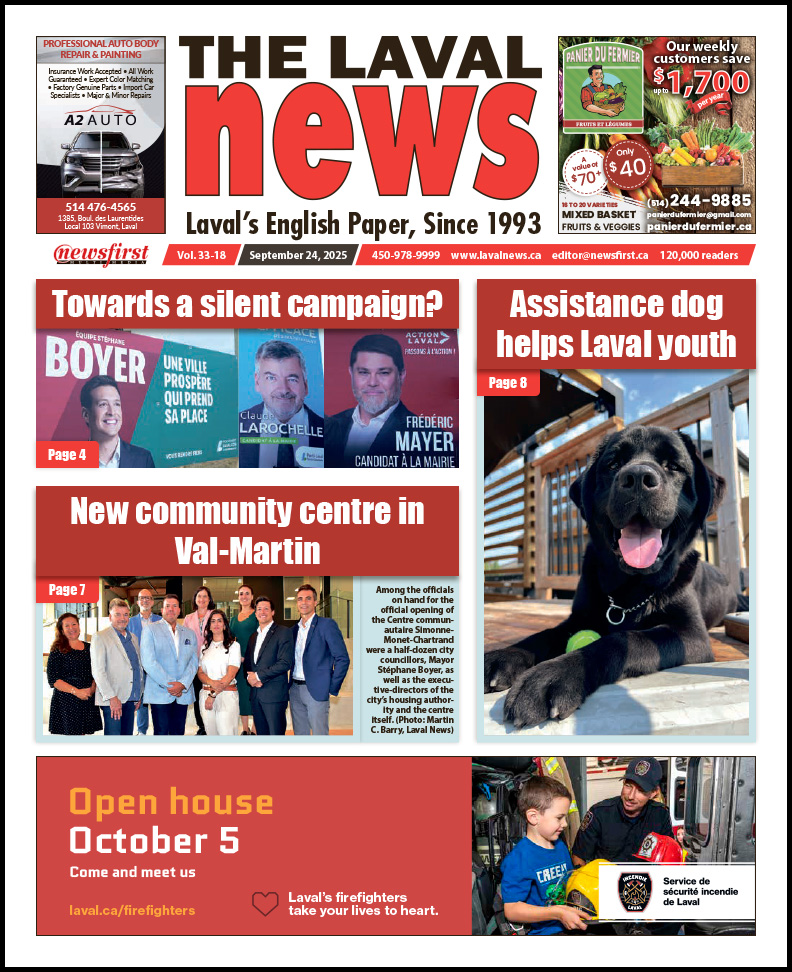
The current issue of the Laval News, volume 33-18, published on September 24th, 2025. Covering Laval local news, politics, and sports. (Click on the image to read the paper.)
By Matthew Daldalian –Local Journalism Initiative Reporter
The annual Val-des-Brises Neighbourhood festival turned into both a block party and a political stage Sunday as hundreds filled the streets for food, games and face-to-face time with Quebec’s Liberal leaders.
The community festival, now in its 16th year, closed off roads in the Duvernay district and spilled into Parc du Royal-22e Régiment for a day of music, inflatable games for kids, a small train ride and even a live-horse carousel. Food trucks lined the pavement— including one from Tim Hortons— while local businesses set up booths offering everything from gym memberships to real estate advice.
Organizers billed the event as a way to bring residents together and raise money for community causes. Volunteers in orange shirts oversaw activities while families mingled under late-summer sun. All proceeds from this year’s edition were donated to the Centre de services scolaire de Laval and to the Sir Wilfrid Laurier School Board Foundation to fund local educational and community projects.
A political showcase
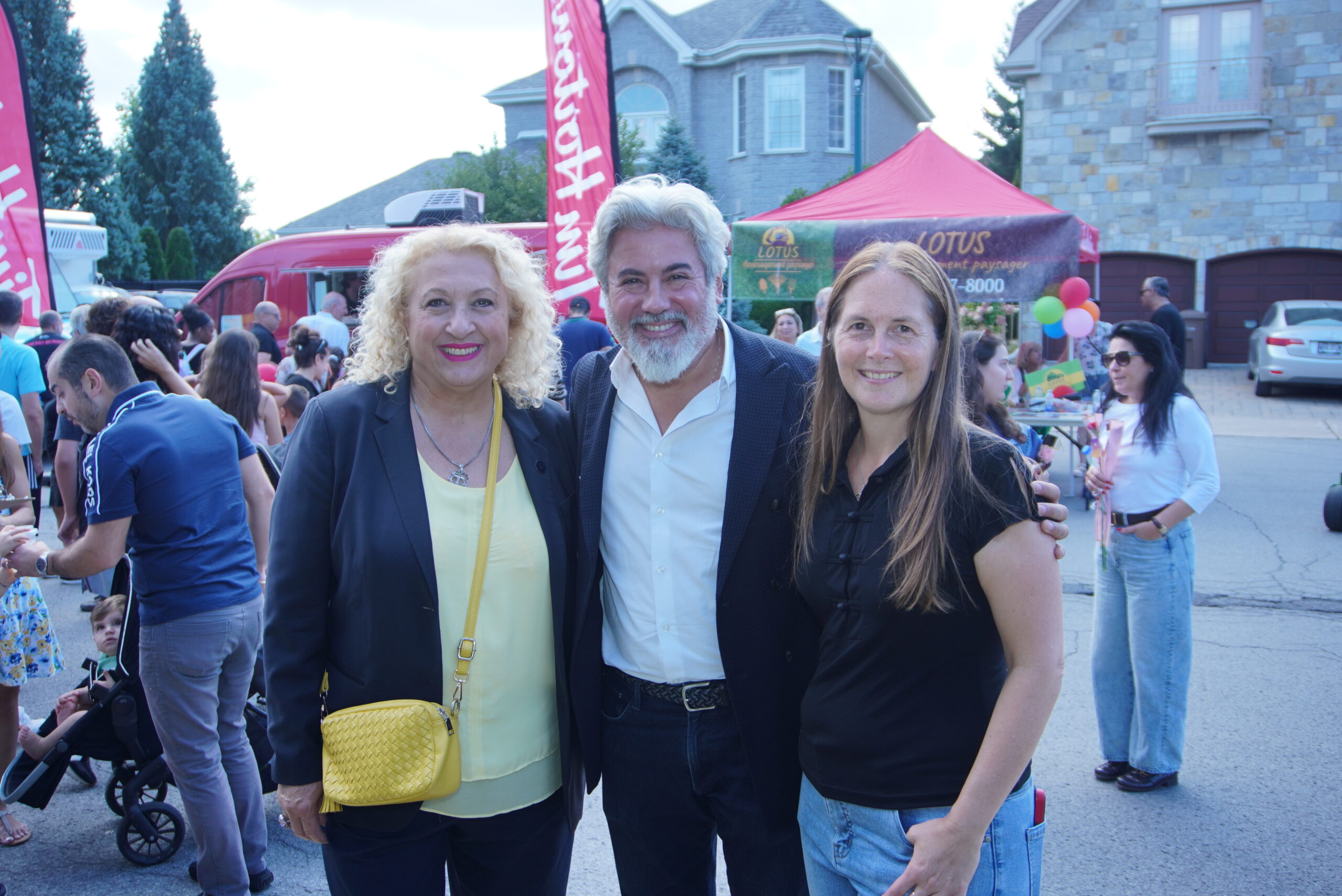
Leader of Quebec’s Liberal party, Pablo Rodriguez used the stop to underline his party’s momentum ahead of the 2026 provincial election. Surrounded by Laval MNAs Virginie Dufour and Sona Lakhoyan Olivier, he praised the grassroots energy on display.
“When you look at all the orange shirts, it’s amazing,” Rodriguez said, pointing to the volunteers staffing the festival. “If all the work done by volunteers had to be paid by the government, we couldn’t do this. Hats off to them.”
Leader of Quebec’s Liberal party, Pablo Rodriguez (center) with Laval MNAs Virginie Dufour (right) and Sona Lakhoyan Olivier (left) on September 14 2025. (Photo: Matthew Daldalian, NewsFirst Multimedia)He told attendees the Liberals are climbing in the polls and cast the event as proof of a party re-energized in Laval.
He told attendees the Liberals are climbing in the polls and cast the event as proof of a party re-energized in Laval.
Dufour, who represents Mille-Îles, said residents are showing new openness after years of frustration with the governing Coalition Avenir Québec. “People are listening. They’re happy to see us. They’re happy to see that the Liberals are back,” she said.
Lakhoyan Olivier, MNA for Chomedey, struck a similar note, saying locals were eager to meet Rodriguez in person. “Whoever sees Pablo, even today, wherever we are, they run to say hello,” she said.
Community front and centre
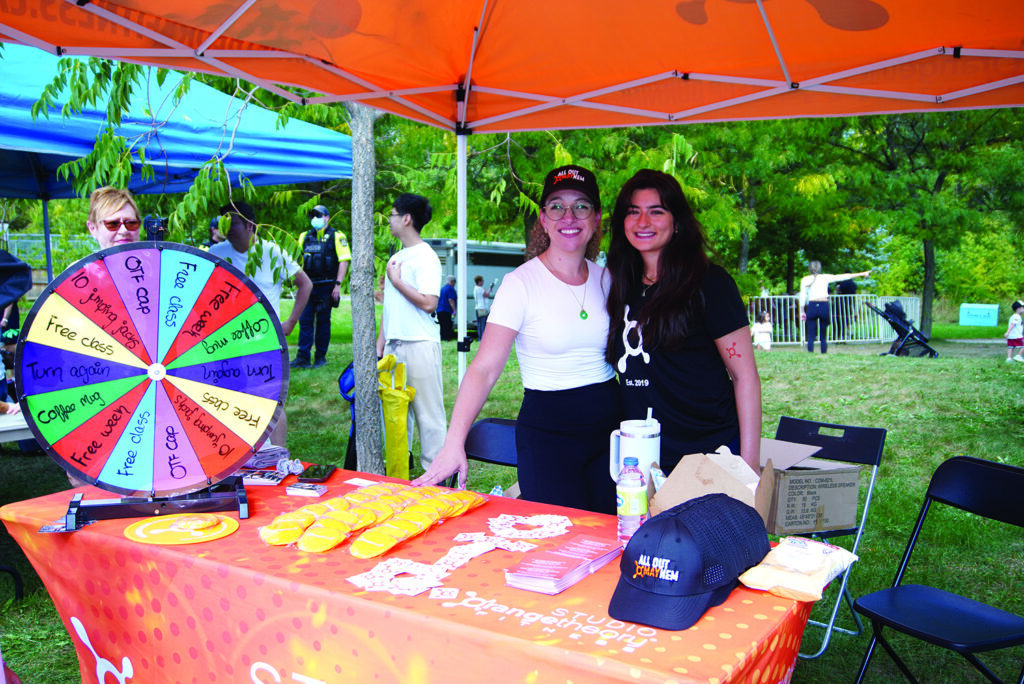
Still, politics were only one part of the day. Booths from local businesses drew steady traffic from passersby. Victoria Belluscio, representing Orange Theory Laval East, a fitness studio said the festival helps cement ties with residents.
“There’s a lot of energy today,” she said. “We already have a lot of people from Val-des-Brises who come to the gym, so this is just getting more integrated with the community.”
A wheel of prizes at her table offered free classes, week passes and merchandise, attracting curious families and first-time gym-goers.
Victoria Belluscio (right), representing Orange Theory Laval East, a fitness studio said the festival helps cement ties with residents on September 14 2025 (Photo: Matthew Daldalian, Laval News)
Real estate agent Alex Haddou, taking part for the eighth year, said his team sees the event as a chance to give back. “It’s not only about the business. It’s more about community,” he said, recalling past partnerships with local grocers and sports clubs.
Children gravitated to his booth for balloons and other giveaways while parents lined up to ask about the housing market.
A block party feel
Residents described the festival as one of the rare occasions where neighbours from across Val-des-Brises come together on such a scale. Streets were filled with families moving from booth to booth, music echoing over the crowd and the smell of food wafting from the trucks.
Rodriguez, who at one point joked about trying the cannoli on offer, said the chance to share food and conversation is what he values most about the festival. “Meet people, shake hands and try some food,” he said.
The event was organized by Achille Cifelli, municipal councillor for Val-des-Arbres, with all proceeds from this year’s edition going to the Sir Wilfrid Laurier Foundation to fund educational and community projects for local students.
Looking ahead
For Liberals, the festival was an early test of their ability to connect with voters on the ground. Rodriguez positioned his party as a responsible alternative ready to take over in 2026.
“We have to help [small and medium-sized businesses] to become more productive through innovation, through research and development,” he said, tying economic priorities to the family-focused setting of the fair.
But for most who came out, politics were secondary to the sense of neighbourhood belonging. From children laughing on the carousel to parents balancing bags of fried food and drinks, the Fête de quartier de Val-des-Brises again proved itself as Laval’s late-summer block party— one where residents, businesses and politicians share the same street.
By Matthew Daldalian –Local Journalism Initiative Reporter
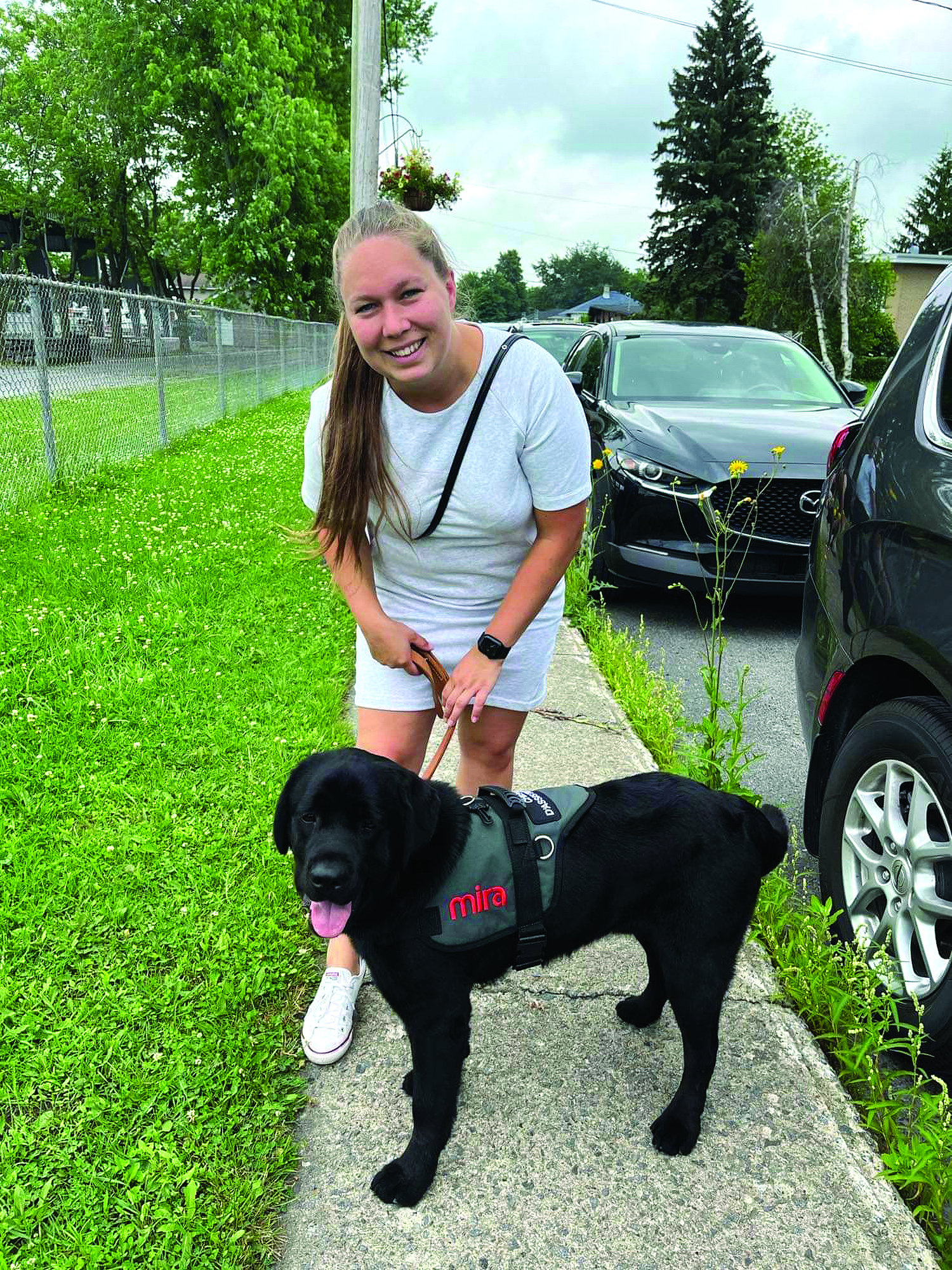
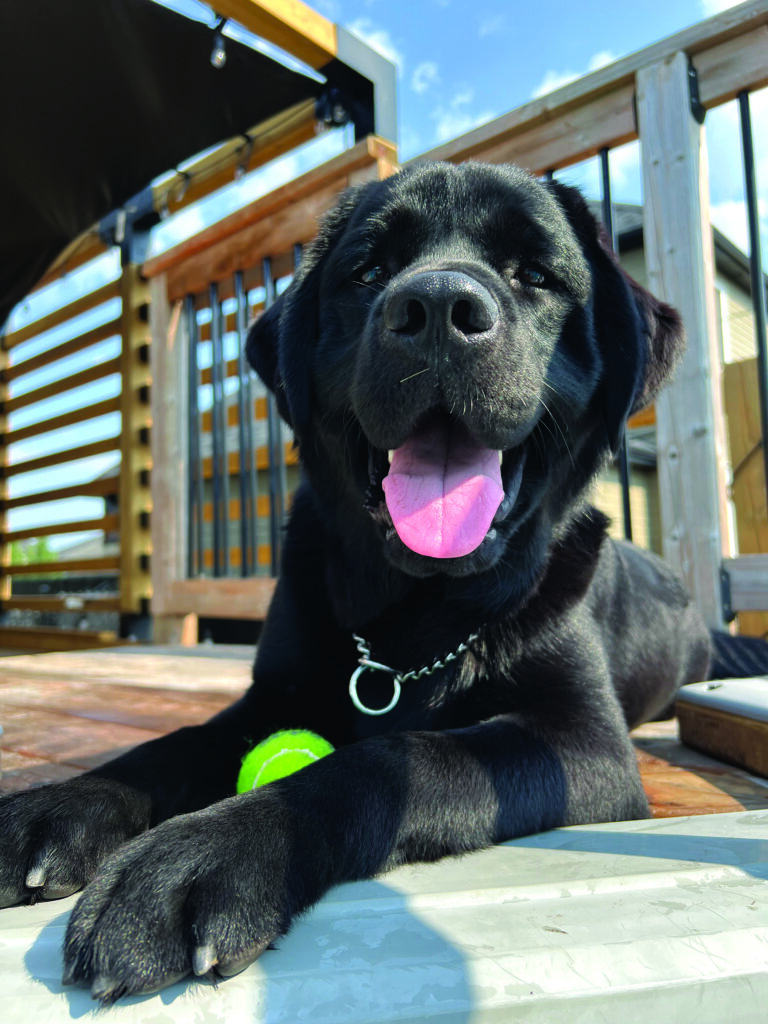
Two years after his arrival, an assistance dog named Mac is being credited with helping hundreds of children navigate some of the most difficult moments of their lives in Laval’s youth protection system.
The Centre Intégré de Santé et de Services Sociaux (CISSS) de Laval says the furry companion, trained by the MIRA Foundation, has taken part in more than 300 interventions since 2023. The dog works alongside criminologist Daphnée Morency Mac Donald at the Direction de la Protection de la Jeunesse (DPJ).
Officials describe Mac’s presence as a way to reduce anxiety and build trust when children face interviews, court proceedings or emotionally charged announcements. “Mac acts as a bridge between the child and the caregiver. He reduces anxiety, eases tension, and opens the way to authentic exchanges in moments when speaking is sometimes difficult.,” Mac Donald said in a CISSS presse release.
Frontline role
In an interview with The Laval News, Mac Donald noted that Mac’s role is specific to youth protection interventions. “There really is a nuance,” she said.
That can mean accompanying a child during a police video interview, sitting quietly at their side in court, or simply being present during the delivery of difficult news such as a foster placement or the death of a parent.
“It doesn’t necessarily make the task easier, but it does make it more calming for the child because of the dog’s presence,” Mac Donald said.
She noted that children also interact with Mac during less formal moments, such as waiting for appointments or during supervised visits. Sometimes they simply play with Mac in the corridor, giving them what she described as “a more normal time.”
Concrete impact
Mac Donald recalled cases where Mac’s presence shifted the outcome. In one file, a teenage girl requested the dog’s support at multiple steps of her journey, from youth protection meetings to appointments with a psychiatrist.
“Mac brought some comfort in what was coming for her,” Mac Donald said.
Another case involved a child with selective mutism who had not spoken during earlier interventions. With Mac in the room, she said, the child began to verbalize. “Once the dog was there, we saw that the process was moving forward.”
According to Mac Donald, colleagues in other units also requested the dog’s support for their cases, with his growing reputation inside the DPJ.
A steady companion
Mac Donald noted that part of Mac’s effectiveness comes from his ability to remain calm and available for long periods “except when there are moments when he can allow himself not to.” She credits this tendency to switch between modes to his effectiveness in dealing with children.
The CISSS said the project was made possible with funding from the Fondation Cité de la Santé. Jean-François Payette, director of youth protection in Laval, called it a hopeful example of innovation in social services. “This assessment is a source of hope. It shows that innovation in health and social services can take unexpected, but profoundly effective forms,” she said.
Broader context
The CISSS de Laval employs more than 13,000 people across over 30 facilities, including the Hôpital de la Cité-de-la-Santé and several youth and rehabilitation centres. Affiliated with Université de Montréal and McGill University, it has positioned Mac as part of a larger push to test human-centred approaches.
For Mac Donald, the results speak for themselves. From quiet companionship in a courtroom to playful moments in a hallway, she said, the dog has become a steady presence for children facing upheaval.