It was with much enthusiasm that the Sir Wifrid Laurier School Board’s Council of Commissioners recently appointed three students as student representatives to the Council of Commissioners.
The students are also members of the Central Students’ Committee, composed of one representative and one alternate from each school and centre of the SWLSB.
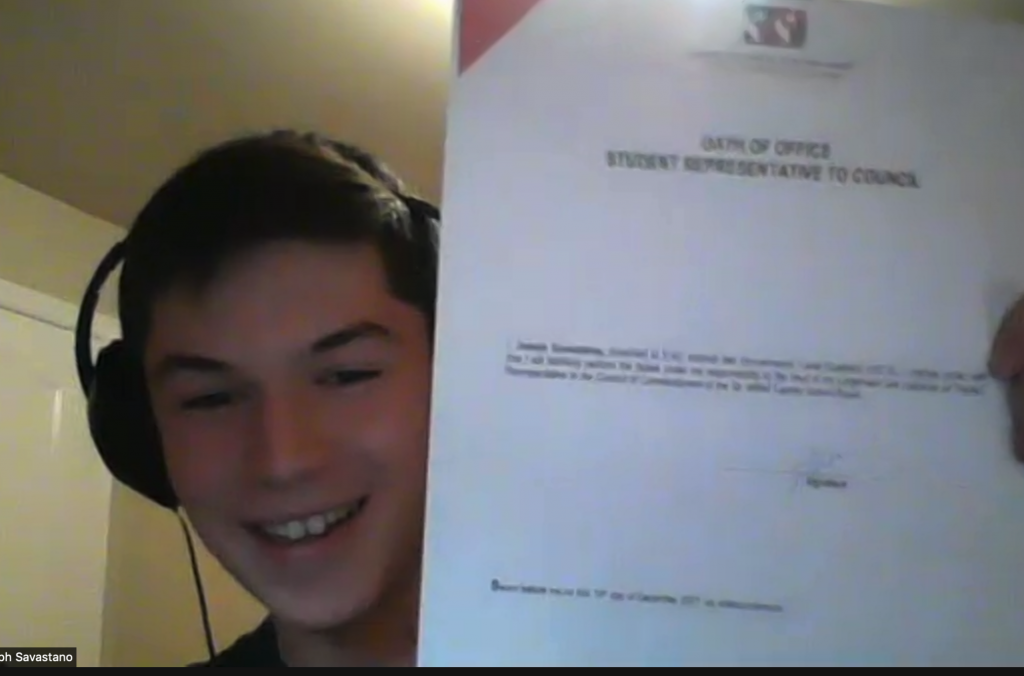
The three secondary 5 students appointed on Dec. 16 are Ève Boucher (Rosemere High School), Joseph Savastano (Laval Senior Academy), and as substitute representative, Andrew Wylie (Laval Senior Academy).
Moving forward, according to the SWLSB, they will take part in meetings with the Council of Commissioners and may be consulted on various topics at the Council’s direction.
The responsible commissioners leading the Central Students’ Committee are committee Chair Olivia Landry (ward 4), James Di Sano (ward 7), Vincent Cammisano (ward 8) and Parent Commissioner Stéphane Henley.
The committee members held their first meeting on November 30and will hold four more meetings from now until the end of the school year.
Joseph Savastano.
Ève Boucher.
Andrew Wylie.
“It has been Council’s wish to have students represented on the Council of Commissioner for a long time and I could not be prouder that we have finally made it happen. Students have a voice and we want to hear it,” said SWLSB chairperson Paolo Galati.
“Students are always at the forefront of all decisions made by Council,” he added. “Having students represented on the Council of Commissioners will not only give students valuable learning opportunities, but will also give Council members some valuable insights from the student body.
“I am confident that Ève, Joseph and Andrew will do an outstanding job and I look forward to their participation in Council meetings in the coming months.” According to the SWLSB, the objective of the Student Representation policy is to introduce students to democracy and encourage student involvement.
The Laval Police Department is asking members of the public for help in identifying two suspects who are believed to have threatened to commit arson at a residential condo building in Sainte-Dorothée.
On Dec. 6 around 10:50 pm, the two male suspects turned up in the entrance lobby of the building, after which they made their way to an apartment where they left a device for the purpose of starting a fire.
The LPD hasn’t revealed who the target of the threat was, nor the extent of any ensuing damage.
The first suspect is a Black male, 6’3” tall, weighing around 250 lbs. At the time of the incident, he was wearing blue slacks with a Nike logo and blue and white shoes. He spoke French.
The other suspect was a Black male, 5’7” tall, weighing around 150 lbs. He was wearing a black coat, black slacks and black and white shoes. Anyone who believes they have information that could help the LPD find these individuals is encouraged to call the LPD’s Info-Line at 450 662-INFO (4636).
Autoroute 15 closes after driver slams into overhead sign
The southbound Autoroute 15 towards Montreal reopened to traffic on Dec. 14 after it had to be closed for a few hours by the Quebec Ministry of Transport following the collision by a car with the structure supporting an overhead piece of signage, weakening and rendering it hazardous.
The heavily-trafficked provincial artery was shut for several hours after 1:50 am between Autoroute 640 and Sainte-Rose Blvd., in order to allow the MTQ to carry out repairs on the signage, a large part of which ended up smashing through the roof of the vehicle after the collision.
The driver, said to be in his 20s, lost control of his vehicle around kilometre 15, leaving the road and slamming into the supports for the signage. He had to be cut with special equipment from the wreck, following which he was taken by ambulance to hospital with serious but not life-threatening injuries.
Laval restaurant shuts temporarily after 30 infected with Covid
The Boating Club restaurant in Laval announced on Dec. 16 it was voluntarily closing for a week after a staff member and about 30 patrons caught COVID-19 during a party at the restaurant.
At least one of the infections linked to the establishment on Curé Labelle Blvd. in Sainte-Roe is believed to be the highly-contagious Omicron variant.
According to Laval public health spokesperson Marie-Eve Despatie-Gagnon, the outbreak may have been an early sign of the virulence of Omicron, a new mutation of the Covid virus. The restaurant closed voluntarily rather than being ordered to shut by local health authorities.
Last week, Laval was tied with the City of Montreal for the third-highest COVID-19 rate in Quebec. Both had 259 active cases per 100,000 population.
Distribution of gifts and toys
On Suturday December 18, nearly 50 police officers and employees of the LPD were distributing gifts to the children selected as part of the Sharing Tree on a voluntary basis! In total, 400 children were visited by the police.
The Police Department would like to thank the great generosity of all the donors and their partners Rocket de Laval and Guy Saint-Jean Éditeur who made this second edition a great success!
Local hockey team prevails under pressure to become champions
After a rough 1-0 overtime loss in the quarter finals, the Riverains de Laval had one thing in mind: to win the 2021 Monteuil de Laval tournament.
So, after a hard battle and a 5-0 record in the tournament, the Riverains finally brought the championship home.
According to Riverains management, it had been a challenging year-and-a-half for everyone, but mostly for the young hockey players who had missed a whole year of their sport.
Off to a good start
The game started with a bang, and it only took the Riverains 2:01 to get on the board with a beautiful goal by Dayron Jimenez-Giraldo, assisted by Davide Petrangelo. It then took 1:29 for Gianluca Garippo to put his team ahead 2-0 with the help of Justin Iannetti and Ethan L’Ecuyer.
The period ended with a 2-0 lead. After two periods, it was 2-1 for the Riverains and their goalie Ayoub Halhoul stood on his toes to ensure his team was in a good spot entering the third period.
The third period started with another quick goal by Gianluca Garippo with a snipe top corner to ease the stress off the team.
Empty net goal
At the end of the period, the battle between both Laval teams was intense and incredible to watch. However, with only a minute left in the game, Justin Iannetti secured the lead for his team and pulled off an empty net goal.
With only seconds remaining, the team began to celebrate. Finally, when all was said and done and the final buzzer went off, the Riverains threw their gloves and helmets high with excitement because they could finally call themselves champions.
They got the job done
According to team management, it was not an easy journey despite what anyone says. They worked hard every shift and in every game with one goal in mind and they got the job done.
With the hard work of all the players, the encouragement from all the parents, the dedication of the coaching staff and, most importantly, the hard work of manager Paolo Girardi, Riverains de Laval are the champions of the 2021 Monteuil de Laval tournament.
Ground broken for comprehensive new facility at Technopôle Angus
A groundbreaking ceremony was held on Dec. 13 marking the start of construction of the Giant Steps Autism Centre, a new facility that supporters say will make Quebec a leader in autism education, research and services across Canada.
Excavation work began this month and the doors of the centre are scheduled to open in the summer of 2023. A state-of-the-art building with a surface area of 66,500 square feet is being erected in the Technopôle Angus neighbourhood of the City of Montreal’s Rosemont district.
Designed by the architectural firm Provencher Roy, the centre will be meeting specific sensory and perceptual needs of autistic people, particularly in terms of the organization of spaces, the choice of materials and the types of lighting used.
Focused on four services
The Giant Steps Autism Centre will offer lifelong services grouped into four areas: the Giant Steps School, the Adult Education and Employment Centre, the Resource and Community Centre and the Research and Innovation Hub.
Officials from the Quebec government, from the Giant Steps School and from Technopôle Angus are seen here on Dec. 13 ceremonially turning the first ground for the future Giant Steps Autism Centre in the Rosemont district of Montreal.
With a major investment of $15 million by the Quebec government as well as contributions from donors from the private sector and the autism community, 84 per cent of the total fundraising goal has been reached, although more than $7 million is still to be raised.
As part of the ‘Take a Giant Step for Autism’ fundraising campaign which is still underway, the organization is looking to raise the balance in the private sector as well as from the federal government.
‘Simply delighted,’ said Metropolis Minister
“A few weeks after announcing the government’s investment in the construction of the Centre À pas de Géant, we are already at the ground-breaking, and I am simply delighted,” said Minister Responsible for the Metropolis and the Montréal Region Chantal Rouleau who was among those attending the groundbreaking.
“I am very proud that this project is taking root here in Montreal, at the heart of one of our most inclusive living environments,” she added. “This centre, which will reach many young people and adults with autism, will benefit their close friends and loved ones, their families, and the entire community.”
A ‘milestone,’ said Roberge
“This is a major milestone not only for the Giant Steps Centre, but also, and especially, for young people living with an autism spectrum disorder and for their families,” Minister of Education Jean-François Roberge said in a statement.
“These young people will soon have access to a school environment designed and built with their specific needs in mind. I am very happy for the young people who will attend this school. The support they will receive there will enable them to develop their full potential.”
“It is a real pleasure for us to welcome and contribute directly to the development of this unique project, which is so close to our hearts,” said Christian Yaccarini, president and CEO of the Société de développement Angus. “The start of construction is just one of the major steps ahead that will reinforce our pride in being part of it.”
More inclusive society
Among autism experts and community supporters, there is a growing conviction that autistic adults have the potential to become active members of the workforce and to contribute actively to the post-Covid economic recovery now getting underway, as well as the development of a more inclusive society.
While news report suggest that a critical labour shortage is holding back the province’s economic recovery, supporters from the autism community say a surprising majority of adults with autism (approximately 86 per cent) are still unemployed or are underemployed.
However, they add, many employers who have hired autistic individuals report above average overall job performance, less absenteeism, higher levels of accuracy in their tasks and other positive qualities. They say there are also many positive impacts on company culture, on the pride of other employees, on a company’s image and even on customer loyalty.
Building for the future
Having already assisted many autistic adults find employment with Quebec companies, Giant Steps administrators say they are determined to continue in this direction. They believe that by helping people with autism build on their positive characteristics and strengths, sharing their knowledge, and partnering with businesses and organizations, they will create a more inclusive society and new opportunities for everyone.
Construction of the Giant Steps Autism Centre is scheduled to be completed by the summer of 2023.
“There is a clear business case for hiring autistic individuals,” said Andre Pereira, Project Manager – Employment Initiatives at Giant Steps School. “This is not about charity or social responsibility, but rather about creating a more diversified workforce with employees who think outside the box, are loyal, productive and detail-oriented.”
A unique approach
Giant Steps has been regarded as one of the leaders in autism education for more than 40 years. The school’s intensive educational and therapeutic programs, offered in both French and English to 90 students ages 4 to 21, are recognized as unique in Quebec and have been emulated worldwide.
“Giant Steps provides a learning environment where the diversity and unique strengths of each individual are celebrated,” said Thomas Henderson, director-general of Giant Steps School. “Today’s event reminds us that we will soon be able to do more and better to enable people with autism to develop to their full potential.”
Four-term Liberal MNA served Mille-Îles riding for more than 12 years
After more than a dozen years in office, Mille-Îles Liberal MNA Francine Charbonneau says she will not be seeking a fifth term in the provincial general election taking place in October 2022.
First elected in 2008, Charbonneau served as a cabinet minister under former Premier Philippe Couillard. From 2014 to 2018, she was Minister Responsible for Senior Citizens, as well as for families, and for anti-intimidation.
Many roles at National Assembly
From 2008 to 2012, she was a Parliamentary Secretary. She was the spokesperson for the official opposition from 2012 to 2014 for dossiers involving primary and secondary school education.
Her current role in the Liberal opposition shadow cabinet is party spokesperson for issues involving forestry, fauna, parks, professional training and adult education.
Mille-Îles Liberal MNA Francine Charbonneau will not be running in the 2022 provincial election.
Among other things, she is considered to have made important contributions to the National Assembly’s research on legislation regarding death and dying in dignity and the legislation on end-of-life care that followed.
As well, Francine Charbonneau guided the process leading towards the National Assembly’s adoption of its first legislation putting in place elements for the protection of senior citizens.
A real ‘people person’
In a statement released by Charbonneau’s office this week, she said her greatest satisfaction was the personal interaction she had with all the constituents who came to her with questions or seeking help from her team.
Quebec Liberal Party leader Dominique Anglade issued the following statement after learning of Francine Charbonneau’s decision.
“I would like to point out the great political contribution made by Francine towards the improvement in the lives of Quebecers,” said Anglade. “For more than a decade, she worked with all her heart and with devotion towards the advancement of our society.
Praised by PLQ leader
“Francine is a committed elected official from the Laval community, a model of persistence for all those who are thinking of jumping into politics,” Anglade added.
‘I would like to point out the great political contribution made by Francine towards the improvement in the lives of Quebecers,’ said the PLQ’s leader
“More than a remarkable Member of the National Assembly, Francine is also very much liked by her peers as well as by all those who have had the pleasure of meeting her along the way.”
For her part, Charbonneau said the following: “To represent the citizens of Mille-Îles is an honour that I live every day as though it is a gift. Working to improve the well-being of people has always driven me and that is what continues to guide me every day.
“I am therefore leaving with my head held high, sincerely honoured by the privilege that my constituents offered me by granting me their confidence.”
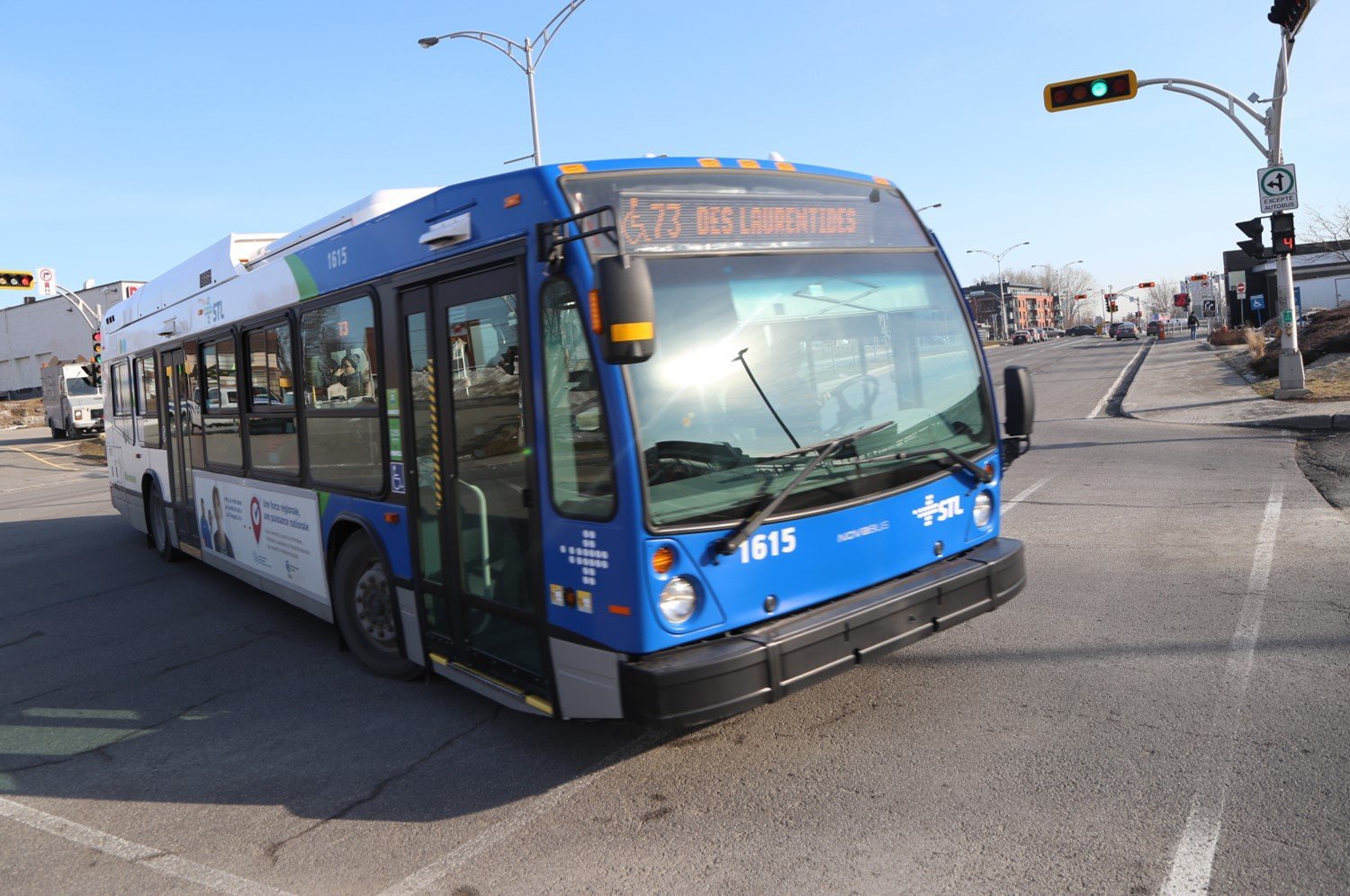
After receiving a third strike notice from the drivers’ union for Saturday Dec. 18 and Sunday Dec. 19, the Société de transport de Laval (STL) said it asked the union to provide at least minimum service to the public.
The STL said its request was rejected by the union and that it regretted the union’s decision to leave Laval residents without any public transit for the weekend before the Christmas holidays.
“This decision needlessly hurts transit users,” the transit agency said in a statement. “Not to mention local businesses that will inevitably suffer the consequences of this lack of transit service. The STL still believes in reaching a settlement through negotiations, not through actions that hurt transit users.”
STL management noted that public transit has been severely impacted by the pandemic, resulting in a significant drop in ridership and a considerable decline in revenues for the entire Montreal metropolitan region. They said that in Laval as of last week, ridership had returned to about 65 per cent of the 2019 level.
The STL said that as it continues to navigate challenging financial times, it just recently renewed collective agreements with the maintenance and clerical workers’ unions. They said the overall proposal made to the bus drivers’ union “is fair and comparable to those agreements,” according to the STL.
Last weekend, no STL bus was running in Laval as of 4 a.m. Saturday until service resumed at 4 a.m. Monday December 20. The following routes were also cancelled:
360 shuttle bus to downtown Laval
Illumi shuttle bus
Place Bell shuttle bus
However, the STL said there was no impact to regular service which was being maintained on the following services:
All shared taxi routes
Paratransit service
They said delays were to be expected as there would probably be an increase in ridership.
Tourisme Laval to administer Quebec business tourism fund
Tourisme Laval has been chosen by the Quebec government to administer a new provincial fund that will support the post-Covid resurgence of business tourism across the province.
The fund, containing $2.5 million in seed money allotted by Premier François Legault’s Coalition Avenir Québec government, was announced by Quebec Tourism Minister Caroline Proulx at the Sheraton Laval on Dec. 6.
Business tourism
Seen from the left at the Sheraton Laval on Dec. 6, Tourisme Laval executive-director and CEO Geneviève Roy, Quebec Tourism Minister Caroline Proulx and Quebec Environment Minister Benoit Charette who is also Minister Responsible for the Laval Region. (Photo: Martin C. Barry, Newsfirst Multimedia)
Tourisme Laval is an independent agency set up by the City of Laval to promote tourism in the Laval region.
The fund will be administered by a board within Tourisme Laval made up of representatives from the tourism industry as well as from the Quebec Ministry of Tourism.
“Business tourism is a very important sector for the Quebec economy and our government is taking decisive action to support it during its resurgence and its return to growth,” said Proulx.
Tapping their expertise
$2.5 million to be overseen by tourism industry players and Ministry
“Touristic businesses in Quebec have the opportunity to be guided by an association that has developed valuable expertise in business tourism,” said Environment Minister Benoit Charette who is also Minister Responsible for the Laval Region.
“Tourisme Laval thanks the Ministry of Tourism for creating this fund, which will be furnishing the support necessary to the business tourism sector all over Quebec so that all the players can go from the current crisis to a rebirth,” said Tourisme Laval executive-director and CEO Geneviève Roy.
Parents sue Quebec over Covid decree banning unvaccinated teens from sports
More than 100 families from across Quebec – including some from Laval – are suing the provincial government over a National Assembly decree which forbids their children from taking part in extra-curricular group sports or physical activities if they haven’t been vaccinated against COVID-19.
The families who have signed on maintain that the fundamental rights of their children are being violated by the government’s insistence their teenage children must have vaccine passports.
National Assembly decree
The decree, which was passed by the National Assembly on Sept. 1, effectively forbids children 13 years of age and older from taking part in sports competitions, in organized leagues or in tournaments.
Gatineau, QC lawyer Me William Desrochers is presenting the case of more than 100 parents from across Quebec who are contesting the provincial government’s decree preventing teenaged students age 13-17 from participating in extra-curricular sports if they are not vaccinated against COVID-19.
The claim, filed at the Montreal courthouse last month, maintains that the decree unjustifiably impedes upon several of their children’s fundamental rights and liberties and that it thus must be declared non-applicable in part.
“Basically, it’s an action about the vaccine passports, but only for the teenagers who are 13 to 17 years,” says Me William Desrochers, a lawyer in Gatineau QC who is representing the parents. “What the decree says is that you cannot do anything that falls outside the regular school program.
Limited in taking part
“So, if you’re in a sports/study program and you’re doing maybe volleyball, then you can do physical education, you can do volleyball six or eight hours a week. But once you have a competition on a Saturday, you cannot go. If you have an extra practice on a Monday night, you cannot go.
“And it’s not only that. If you can’t do the practice with the team, they’re not going to put you in the front position – you’re not going to be the quarterback on the football team if you can’t play. You end up being left out or only in practice or even sitting on the bench. It’s something that’s extremely hard on these kids and we feel that the decree is an infringement of several human rights and not reasonable under the circumstances.”
Is it reasonable and why?
Among the issues the lawsuit hopes to raise is the scientific validity of the government’s insisting that all school children must be vaccinated in order to fully participate in the sports programs.
‘It’s something that’s extremely hard on these kids,’ says Me William Desrochers who filed the lawsuit on behalf of the parents
“We understand or we believe that the vaccination rate is pretty high,” Desrochers added. “Sometimes if you’re in a program in school, you might have one kid who is not vaccinated. So, how is it so important that this kid must be vaccinated at all cost? That is the question: Is it reasonable and why? That is the question we’re raising here.”
Case to be heard by May
Desrochers said he expected the case to be heard by next May, hopefully with a decision rendered before the beginning in the fall of 2022 of the next school year.
In the meantime, he said the parents were pleased with the government’s announcement that mandatory vaccine passports would not be demanded for younger students.
“Still, for 13 to 17 years old it still raises the question as to why is it okay for them, but it’s not okay for the five or eleven or twelve-year-olds,” he said.
At this-time-of-year, bombarded with ‘happy’ and “merry” from every direction, an inward/outward look into what and where we are at end of 2021 is worth exploring.
Happy greetings abound in cards, store windows, e-mails. Colourful lights flash happiness everywhere. Beaming Santas, frolicking reindeer, smiling snowmen, and scenes of ‘happy’ family gatherings surround us. Messages/ Texts wish happy Christmas, happy holiday, happy new year and while we’re at it – happy life!
Too much happy? Excessive? Demanding too much happiness of ourselves and others? Is narrowing expectations to this single emotion good for us? Might other forces want to crash our festive celebrations? As a third extraordinary year of Covid-19 bodes more difficulties, complications, trials, and tribulations – might we do better to challenge this ‘happy’ time? True, some of us will welcome guests into our castles, but we may have to share home-sweet-home with other not-so-pleasant visitors.
These are desperate times, too many of us living lives of quiet desperation. Has it ever been this bad, we ask? Has humanity ever been threatened with anything similar to the apocalyptic threat of Covid-19? Yes, it has, and worse, much worse. In retrospect, the Spanish Flu pandemic of the early 20th century proves that today’s crisis is neither new nor unique, and apparently much-less-deadly.
That was then…
A century ago, 1918, the advisory – Beware the mistletoe – warned about the lingering pandemic: “Not only should you resist the temptation of holiday kisses and hugs, but you shouldn’t even be at social gatherings where it might come up.” Sounds familiar? In hindsight the catastrophic flu of 1918-1919 remains the deadliest event in modern history, apart from world wars, taking 50 million lives from 500 million infections. To date, 5.31 million have died from Covid-19 world-wide since March 2020; from 271m infections), a drop-in-the-bucket. Fatal to 30,000 Canadians (1.86m infections), and 798,000 Americans (50.1m infections), Covid-19 pales in comparison to tragic losses from Spanish Flu.
We’re confronting critical periods of humankind’s history, engendering reflection on how the planet survived the last pandemic, origins of which are debated; England, France, China, U.S. considered possible sources. Naming it the Spanish Flu resulted from Allied media censorship by the military during World War I, suppressing public reports of the virus and its high tolls among soldiers. In neutral Spain the media publicly signaled high incidences of death from the illness, thus the Spanish link. The flu’s pandemic’s effects cannot be underplayed. Children sang haunting playground nursery rhymes: ‘I had a little bird, its name was Enza, I opened the window, And in-flu-enza.’
Just weeks after Christmas 1918, the virus’s third wave swept Europe, lasting to Summer 1919, adding substantially to death-tolls. Sounds familiar? Moving fast, it killed entire families, hours or days after symptoms, with high mortality among children five-and-under, adults-20-40 and over 65. Patients struggled to breathe as fluid filled lungs; starved of oxygen faces, lips, ears, fingers, toes turned blue. Social-economic inequality exacerbated suffering, also true of Covid-19.
December 1918, after three Christmases with little to celebrate during World War I, Europe faced constraints comparable to Covid-19. In its path, the flu infected one-third of the world’s population, costing 228,000 lives in Britain alone. Mysteriously, by December 1918, weekly British deaths dropped to 1,029, after reaching November deadly-peaks when 8,000 people died first-week alone.
With no explanation for these dramatic drops, deprived of peacetime Christmas for three years, residents were left with difficult decisions – to meet with family over the holidays? Many did. Gift-buying rushes were commonplace. Shopkeepers applied one-in-one-out practices now familiar to us as social-distancing.
Some businesses closed or prohibited those under 14 from entering. Dancehalls, cinemas, theatres were shuttered. Schools with significant infections closed, but churches stayed open for worship. No central lockdown was imposed but local councils had power over closures.
To Canada, come from away
The 1918 pandemic came to Canada with returning troops, infecting even remote communities, wiping out entire villages. Labrador, Québec, First Nations reserves were hard-hit. Quarantine measures failed. Overextended medical facilities compelled set-ups of infirmaries in schools and hotels. Unlike most strains of influenza, dangerous for those with reduced immunity (elderly, very young, pre-existing conditions), the 1918 flu inexplicably killed young and hearty alike. Pneumonia developed by flu-weakened patients, rather than influenza itself, was the major cause of death. Long-term consequences, for some, included parkinsonian syndromes and marked tremors.
The pandemic brought death, suffering and social/economic hardship. Children became parentless, families lost wage-earners. Businesses profits declined from lack of demand and/or inability to meet demand due to reduced work forces.
To control the spread, Canadian municipal governments closed all except necessary services. Quarantines and public mask-wearing became mandatory. Although Canadians unhappily accepted these restrictions, they defied federal government requests for postponement of end-of-war-celebrations. Positively, the pandemic gave birth to Canada’s Department of Health in 1919. As good as these measures were, it was too-little-too-late for Canadians in tens of thousands.
And this is now…
Christmas 2021 isn’t Christmas 1918. No cures/vaccines came from the Spanish Flu. Its sudden disappearance proved as puzzling as its origins. Herd immunity? Less-lethal mutation? Simple burn-out? Running out of new live hosts to infect? Most crucial, now that there’s another contagious and deadly pathogen in the world, have we learned enough to make better choices? Home for Christmas?
Third/fourth waves of Covid-19 are out there. U.S. deaths are the highest ever, showing no signs of waning. But the Spanish Flu killed far more Americans (675,000) and Canadians (50,000) in much smaller populations, than has Covid-19. It isn’t over by-any-means. A world-wide Omicron wave has already struck whether Christmas likes it or not.
Despite serious variant increases, we don’t need to pour salt into wounds by recapping the misery touching every part of the globe, or citing divisiveness and anger tinging pandemic-altered days for so many. Struggling to get through to 2022, even those who have it relatively good are fearful of incoming uncertainty. Unavoidable job losses portend toward overwhelming financial/social challenges.
To pay bills, savings/retirement nest-eggs may have to be tapped. Lost gigs, pay-cuts, investment-gutting of portfolios have wreaked havoc, provoking worries about mortgages, personal illness or that of others, and more. Need we throw in the scourge of galloping inflation of 2021? Amid this misery, is it futile to talk Merry Christmas/Happy New Year?
Understandably, as Christmas rapidly approaches, generous giving may not suffice to deflect Covid’s negative effect on our celebration-and-gifting-traditions. Yes, surveys show that people feel like Christmas 2021 will be normal, but a majority of hosts will only invite double-vaccinated guests and two-in-five will demand Covid-19 tests for visitors, with 25% admitting anxiety about carriers.
Begging your pardon, Covid-19 be damned
Sadly, faint-of-heart folks will show love for parents, brothers, sisters by staying home, with others risking family-reunions and parties, vaxxed or not. No doubt, most will exercise “caution” until we’re out of the woods, whenever that may be.
In the meantime, let’s affirm that sooner or later, in tomorrows around the corner or far-off in the unfolding-of-the universe, humankind will fundamentally re-embrace the best of yet to come, prevailing with the hope, courage, strength, humility and grace of the good news delivered by the child in the manger, for there is no Christmas without Christ and no Christ without Christmas … the truth of which will never be lost to time, pandemic or not …
On behalf of The Laval News, I’ll impose on John Lennon for last words, in his timeless insight into what’s ahead for humanity:
“And so, this is Christmas for weak and for strong, For the rich and the poor ones, the road is so long. A very Merry Christmas and a Happy New Year, Let’s hope it’s a good one, without any fear.”
Annual fiscal exercise includes a $29 million hike for employees’ salaries
While the City of Laval’s latest operating budget calls for the average property owner to pay just 1.9 per cent more in taxes in 2022, the $969.9 million fiscal exercise includes spending that is 4.3 per cent higher than it was last year.
City sets priorities
In a statement issued by the city last Thursday when the budget was released, finance department officials said their priorities over the coming year will focus primarily on improving the security of residents as well as municipal employees, optimizing services to citizens, following sound environmental practices, enhancing the quality of life and managing finances responsibly.
Although much of the operating budget consists of business-as-usual expenditures adjusted slightly upwards to take inflation into consideration, there are a few notable exceptions. Perhaps most outstanding among these is a significant increase in the city’s payroll expenses, which is the total amount Laval expects to pay in 2022 to its thousands of employees.
$29 million more in salaries
Answering questions from journalists about the budget last week, Pierre Beaudet, the city’s director of finance, said the payroll is going up by two per cent or roughly $29 million next year. The city will be paying its employees around $412 million in 2022 (not including more than $100 million more for social benefits).
The two per cent hike reflects not only salary increases written into unionized workers’ contracts, but also the fact that the city is hiring 269 new employees. In an interview with the Laval News, Mayor Stéphane Boyer explained that as the City of Laval expands and its population rises, the municipality has no choice but to hire new employees almost every year to meet the rising demand on services.
Hiring for growing population
“To maintain the level of service, we have to hire, because each year we have more kilometres of streets to clear of snow, more residents who want to access municipal services,” he said. “There’s always an increase that is due simply to an increase in the population.” Mayor Boyer pointed out that the 269 new workers includes 60 who are re-hired annually on one-year contracts which are renewed. He said the actual number of new positions is 111.
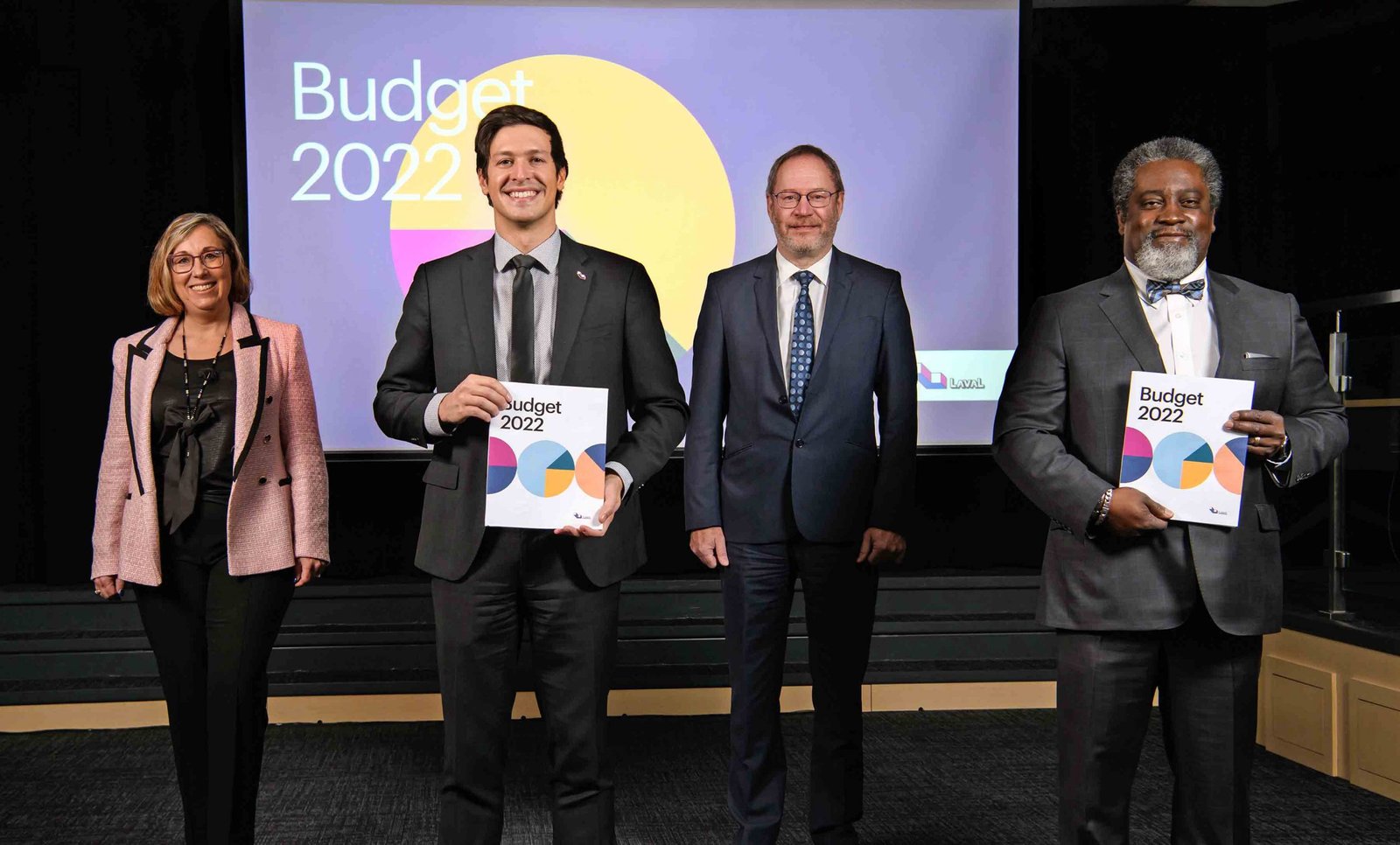
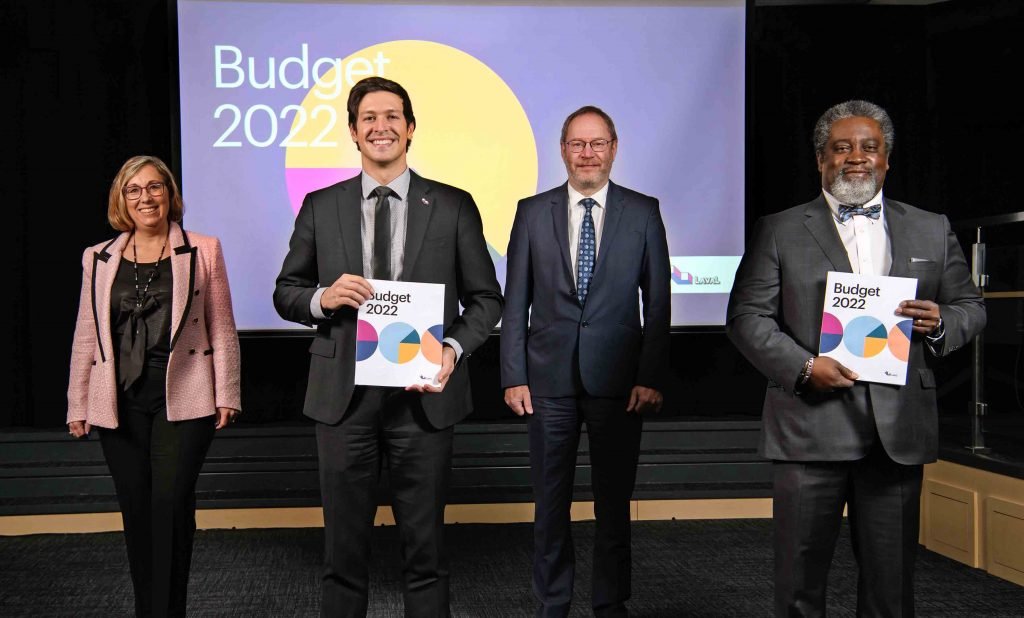
Mayor Stéphane Boyer, city manager Jacques Ulysse and municipal finance officials are seen here following the presentation of the City of Laval’s 2022 budget last week.
Although the Covid pandemic is taking a toll on the city’s expenses, it’s not as devastating as might otherwise be expected. According to the new budget, $15 million has been allotted for pandemic-related costs in the coming year.
Some of this will be going towards the purchase of PPE (personal protective equipment) to safeguard employees against viral spread. As well, the city has found it necessary to purchase laptop computers and other equipment so that employees can work from home during periods of mandatory isolation.
Covid pandemic expenses
But that’s not all. Around $6 million of the sum will be going to the Société de transport de Laval to make up for the STL’s steep decline in revenue from the loss of passenger traffic during the pandemic. Thorough cleaning of municipal offices to minimize the risk of Covid spread is also an additional expense resulting from the pandemic.
The city has also made room on the 2022 budget for better public security. Laval has allotted $1.7 million to provide its police force with better resources to deal with sexual exploitation by pimps, as well as the illegal spread of firearms and the presence of organized crime on the city’s territory. The city says more than $2 million has been set aside for programs to encourage inclusion and diversity within institutional settings.
$65K to protect firefighters
The city plans to spend $65,000 next year implementing a new system designed to protect its firefighters from hazardous and potentially carcinogenic smoke and fumes. The fire department will be purchasing an additive to be fed into the water that’s poured onto fires; it is designed to chemically absorb carbon molecules and smoke, thus minimizing the health impact on firefighting personnel.
The city is allotting $1.9 million to improve snow removal, and an additional $1.7 million to improve the current system of alternative street parking during snow removal operations. As well, the city says it is continuing to improve traffic management with the purchase of more illuminated speed indication signage.
Jeux du Québec next year
The city is allotting $285,000 to support the opening in the fall of 2022 of the Centre d’interprétation des biosciences Armand-Frappier. Currently located on des Prairies Blvd. in Laval-des-Rapides, the museum is moving next fall into a brand-new facility next to the Cosmodôme in central Laval.
And finally, despite all the turmoil and postponements brought about by the COVID-19 pandemic, the city hasn’t forgotten its commitment to hosting the Finals for the Jeux du Québec which were supposed to take place in 2020.
According to next year’s budget, $2 million has been set aside for the provincial athletics and sporting event scheduled to be held in Laval sometime next year.