The current issue of the Laval News, volume 33-18, published on September 24th, 2025.
Covering Laval local news, politics, and sports.
(Click on the image to read the paper.)

By Matthew Daldalian – Local Journalism Initiative Reporter
The annual Val-des-Brises Neighbourhood festival turned into both a block party and a political stage Sunday as hundreds filled the streets for food, games and face-to-face time with Quebec’s Liberal leaders.
The community festival, now in its 16th year, closed off roads in the Duvernay district and spilled into Parc du Royal-22e Régiment for a day of music, inflatable games for kids, a small train ride and even a live-horse carousel. Food trucks lined the pavement— including one from Tim Hortons— while local businesses set up booths offering everything from gym memberships to real estate advice.
Organizers billed the event as a way to bring residents together and raise money for community causes. Volunteers in orange shirts oversaw activities while families mingled under late-summer sun. All proceeds from this year’s edition were donated to the Centre de services scolaire de Laval and to the Sir Wilfrid Laurier School Board Foundation to fund local educational and community projects.
A political showcase
Leader of Quebec’s Liberal party, Pablo Rodriguez used the stop to underline his party’s momentum ahead of the 2026 provincial election. Surrounded by Laval MNAs Virginie Dufour and Sona Lakhoyan Olivier, he praised the grassroots energy on display.
“When you look at all the orange shirts, it’s amazing,” Rodriguez said, pointing to the volunteers staffing the festival. “If all the work done by volunteers had to be paid by the government, we couldn’t do this. Hats off to them.”

Leader of Quebec’s Liberal party, Pablo Rodriguez (center) with Laval MNAs Virginie Dufour (right) and Sona Lakhoyan Olivier (left) on September 14 2025. (Photo: Matthew Daldalian, NewsFirst Multimedia)He told attendees the Liberals are climbing in the polls and cast the event as proof of a party re-energized in Laval.
He told attendees the Liberals are climbing in the polls and cast the event as proof of a party re-energized in Laval.
Dufour, who represents Mille-Îles, said residents are showing new openness after years of frustration with the governing Coalition Avenir Québec. “People are listening. They’re happy to see us. They’re happy to see that the Liberals are back,” she said.
Lakhoyan Olivier, MNA for Chomedey, struck a similar note, saying locals were eager to meet Rodriguez in person. “Whoever sees Pablo, even today, wherever we are, they run to say hello,” she said.
Community front and centre
Still, politics were only one part of the day. Booths from local businesses drew steady traffic from passersby. Victoria Belluscio, representing Orange Theory Laval East, a fitness studio said the festival helps cement ties with residents.
“There’s a lot of energy today,” she said. “We already have a lot of people from Val-des-Brises who come to the gym, so this is just getting more integrated with the community.”
A wheel of prizes at her table offered free classes, week passes and merchandise, attracting curious families and first-time gym-goers.

Victoria Belluscio (right), representing Orange Theory Laval East, a fitness studio said the festival helps cement ties with residents on September 14 2025 (Photo: Matthew Daldalian, Laval News)
Real estate agent Alex Haddou, taking part for the eighth year, said his team sees the event as a chance to give back. “It’s not only about the business. It’s more about community,” he said, recalling past partnerships with local grocers and sports clubs.
Children gravitated to his booth for balloons and other giveaways while parents lined up to ask about the housing market.
A block party feel
Residents described the festival as one of the rare occasions where neighbours from across Val-des-Brises come together on such a scale. Streets were filled with families moving from booth to booth, music echoing over the crowd and the smell of food wafting from the trucks.
Rodriguez, who at one point joked about trying the cannoli on offer, said the chance to share food and conversation is what he values most about the festival. “Meet people, shake hands and try some food,” he said.
The event was organized by Achille Cifelli, municipal councillor for Val-des-Arbres, with all proceeds from this year’s edition going to the Sir Wilfrid Laurier Foundation to fund educational and community projects for local students.
Looking ahead
For Liberals, the festival was an early test of their ability to connect with voters on the ground. Rodriguez positioned his party as a responsible alternative ready to take over in 2026.
“We have to help [small and medium-sized businesses] to become more productive through innovation, through research and development,” he said, tying economic priorities to the family-focused setting of the fair.
But for most who came out, politics were secondary to the sense of neighbourhood belonging. From children laughing on the carousel to parents balancing bags of fried food and drinks, the Fête de quartier de Val-des-Brises again proved itself as Laval’s late-summer block party— one where residents, businesses and politicians share the same street.
By Matthew Daldalian – Local Journalism Initiative Reporter
Two years after his arrival, an assistance dog named Mac is being credited with helping hundreds of children navigate some of the most difficult moments of their lives in Laval’s youth protection system.
The Centre Intégré de Santé et de Services Sociaux (CISSS) de Laval says the furry companion, trained by the MIRA Foundation, has taken part in more than 300 interventions since 2023. The dog works alongside criminologist Daphnée Morency Mac Donald at the Direction de la Protection de la Jeunesse (DPJ).
Officials describe Mac’s presence as a way to reduce anxiety and build trust when children face interviews, court proceedings or emotionally charged announcements. “Mac acts as a bridge between the child and the caregiver. He reduces anxiety, eases tension, and opens the way to authentic exchanges in moments when speaking is sometimes difficult.,” Mac Donald said in a CISSS presse release.
In an interview with The Laval News, Mac Donald noted that Mac’s role is specific to youth protection interventions. “There really is a nuance,” she said.
That can mean accompanying a child during a police video interview, sitting quietly at their side in court, or simply being present during the delivery of difficult news such as a foster placement or the death of a parent.

“It doesn’t necessarily make the task easier, but it does make it more calming for the child because of the dog’s presence,” Mac Donald said.
She noted that children also interact with Mac during less formal moments, such as waiting for appointments or during supervised visits. Sometimes they simply play with Mac in the corridor, giving them what she described as “a more normal time.”
Mac Donald recalled cases where Mac’s presence shifted the outcome. In one file, a teenage girl requested the dog’s support at multiple steps of her journey, from youth protection meetings to appointments with a psychiatrist.
“Mac brought some comfort in what was coming for her,” Mac Donald said.
Another case involved a child with selective mutism who had not spoken during earlier interventions. With Mac in the room, she said, the child began to verbalize. “Once the dog was there, we saw that the process was moving forward.”
According to Mac Donald, colleagues in other units also requested the dog’s support for their cases, with his growing reputation inside the DPJ.
Mac Donald noted that part of Mac’s effectiveness comes from his ability to remain calm and available for long periods “except when there are moments when he can allow himself not to.” She credits this tendency to switch between modes to his effectiveness in dealing with children.
The CISSS said the project was made possible with funding from the Fondation Cité de la Santé. Jean-François Payette, director of youth protection in Laval, called it a hopeful example of innovation in social services. “This assessment is a source of hope. It shows that innovation in health and social services can take unexpected, but profoundly effective forms,” she said.
Broader context
The CISSS de Laval employs more than 13,000 people across over 30 facilities, including the Hôpital de la Cité-de-la-Santé and several youth and rehabilitation centres. Affiliated with Université de Montréal and McGill University, it has positioned Mac as part of a larger push to test human-centred approaches.
For Mac Donald, the results speak for themselves. From quiet companionship in a courtroom to playful moments in a hallway, she said, the dog has become a steady presence for children facing upheaval.
By Matthew Daldalian — Local Journalism Initiative Reporter
Nearly a month after Air Canada’s four-day strike stranded hundreds of thousands of passengers worldwide, Laval residents are now wading through the airline’s compensation process. While some report relatively smooth experiences, others say they are still waiting for answers.
The strike by more than 10,000 flight attendants between August 16 and 19 disrupted more than 3,000 flights and left some 550,000 people scrambling for alternatives. It was the first flight attendant walkout since 2011 not immediately halted by federal back-to-work legislation.
Filing claims
For Laval resident Rosy Trimboli, whose family trip to Europe was stretched into an exhausting ordeal, the aftermath has been surprisingly straightforward.
“I submitted the… out of pocket expenses for extra week. So Airbnb, food, taxis, all the extra expenses incurred as a result of the strike. And within, I think it was the next day, I received a confirmation with a case number,” she said.
Trimboli also filed for additional compensation under EU261, a European regulation that entitles travellers departing from the EU to up to 600 euros per passenger.
The airline confirmed her claim. “Everyone got confirmation that their request had been received and they were entitled to the compensation of €600 per passenger plus the expenses that I submitted out of pocket,” she said. “All in all, I’m quite content with the outcome, to be honest. It was still stressful. It was, you know, it wasn’t a fun five days. But I didn’t have to fight too much.”
She added that the payout could take “up to four to six weeks” but said she is reassured by the confirmation number and approval notice.
Others still waiting
Other passengers say the process is less straightforward.
Christine, another Laval resident whose family trip was disrupted by the strike, said she applied for compensation but has not yet received a response. She expects the delay to stretch until at least the end of September, since Air Canada told her the timeline for claims is four to six weeks.
Similarly, Laval resident Jennifer Bovin said her family’s request is still in process. She confirmed the claim has been filed but that she has not heard back from the airline.
The differences reflect a patchwork system where outcomes depend on the jurisdiction of travel. Under Canada’s Air Passenger Protection Regulations (APPR), a strike is considered outside of an airline’s control, meaning passengers are not entitled to cash compensation— only refunds or rebooking. But under EU and U.K. rules, the strike is considered within the airline’s control, making customers eligible for compensation on top of reimbursement.
Millions potentially owed
According to Toronto-based startup Airfairness, Air Canada could owe passengers more than $66 million under EU261 and UK261 rules alone. The firm, which scrapes aviation data to help travellers file claims, estimates that thousands of passengers are eligible for sums of up to 600 euros or 520 pounds sterling depending on the jurisdiction.
Air Canada, for its part, previously told the Toronto Star that it is processing claims on a rolling basis and said it follows all applicable regulations in the jurisdictions where it operates.
Long waits
Online forums such as the Air Passenger Rights Facebook group, which Trimboli credited for guiding her claim, remain filled with frustrated passengers comparing experiences. Some cite days of silence, while others say the airline has rejected receipts or delayed reimbursements.
The Canadian Transportation Agency, which enforces the APPR, reported a backlog of more than 85,000 complaints even before the August strike. Advocates argue that Canada’s protections remain weaker than those in Europe.
For Trimboli, persistence and paperwork paid off. “I had entered all my expenses, I had scanned all the invoices or the receipts, submitted everything. I mean it was work,” she said. I was surprised, but it’s fair and it was rather quick.”
But for others like Christine and Bovin, the wait continues.
Legal proceedings got underway at the Palais de Justice de Laval earlier this week to determine if a high-risk offender status should be imposed on a 53-year-old former STL bus driver previously found not criminally responsible for killing two children and injuring six others while driving a Laval city bus into a daycare in February two years ago.
Former bus driver Pierre Ny St-Amand was declared not criminally responsible after a Superior Court Justice accepted a joint recommendation from the Crown and defence that he was probably psychotic and unable to determine right from wrong when he crashed the bus.

Earlier this week, Ny St-Amand was present in the courtroom, not handcuffed, but inside a secured area where he listened during the hearing.
Members of families with children from the daycare were also present.
Being declared a high-risk offender would mean that Ny St-Amand would be held at a psychiatric facility under strict conditions, especially as regards temporary leaves or absences.
The judge hearing testimony set aside one week for arguments from prosecutors and the defence.
The defence has said it will challenge whether the high-risk offender status is constitutional.
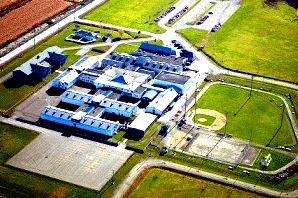
Quebec’s Ministry of Public Security reported recently that the vigilance and rapid action of staff at the Leclerc-de-Laval Detention Facility led to the seizure of several prohibited items, including tobacco and narcotics, with an estimated institutional value of nearly $49,000, thus preventing their entry into the facility.
According to the ministry, several measures are being implemented in Quebec detention facilities to counter the smuggling of illicit goods.

“The detection and recovery of prohibited items contributes to achieving the primary objective of ensuring the safety of individuals and premises,” a ministry spokesperson said in a statement.
They say the province’s correctional services division is taking action to combat contraband to maintain and strengthen security in detention facilities.
To this end, significant investments were announced in October 2023.
The Ministry of Public Security says that since then it has implemented self-supporting fences, window screens, body scanners and security arches to combat contraband in its detention facilities.
Last June 3, the ministry also announced a series of technological measures to combat the delivery of contraband by drones and to facilitate searches by correctional services officers across Quebec.
These measures include a new generation of more efficient drone detectors, cell phone detection devices, and mobile X-ray detectors.
The owners of a home on Chicoutimi Avenue in Laval’s Duvernay district are $80,000 in the hole after a fire that is believed to have been set off by a malfunctioning microwave oven.
Around 5:15 pm on Sunday September 7, Laval firefighters received a call via 9-1-1 and were on the scene five minutes later.
A paramedic crew from Urgences Santé was dispatched to the scene to deal with at least one smoke inhalation casualty, but Laval Fire Dept. firefighters had things under control in a short time.

Damages to the structure of the house were estimated at $60,000, with an additional $20,000 damages to interior furnishings. Fire investigators were able to pinpoint the origin of the blaze as being in the kitchen.
Former Laval-Ouest gas station turned restaurant burns up
A former roadside gas station on Arthur Sauvé Blvd. in Laval-Ouest was reduced to rubble on August 26 in a fire that the LFD has turned over to the police for an arson investigation.
The Moyasu Sushi Fusion restaurant at 949 Arthur Sauvé was torched overnight from August 25-26. It took LFD personnel just 30 minutes to get it under control, but by then the damage was done.

The LFD had been to the same address for a report of a fire the day before.
Vehicles torched at 440 Ford car dealership
Arsonists are believed to have been responsible for vehicle fires that broke out in the parking lot at the 440 Ford car dealership on Chomedey Blvd. overnight on September 8,
Around 2 am, a call was received by Laval Police from a witness that several parked cars were aflame, bringing Laval Fire Dept. personnel rapidly to the scene.
After LFD fire investigators quickly found evidence of accelerants being used to start the blaze, they transferred the dossier to the police for a criminal investigation, including forensic examination for fingerprint and DNA evidence.

According to news reports, the car dealership had also been the target of an arson attack in April 2024. No arrests were reported as of earlier this week in conjunction with either incident.
Water main break on residential street in Laval nearly swallows car
A water main break on Rue Adrien in Laval’s St-François sector caused the ground under a parked car to collapse, almost submerging the vehicle.
City of Laval crews were repairing the road, closing a 150-metre stretch of the street.
“Our teams were informed of a leak accompanied by subsidence of the roadway on Adrien Street in St-François,” the city said in a statement.
“They immediately intervened to secure the area by installing a safety perimeter and began assessing the necessary corrective work, including the condition of gas lines and other underground infrastructure.
“Following this assessment, a team was mobilized today to carry out the required repairs and restore traffic,” added the statement.
“The water main has been repaired, and work continues to fully restore the area. Residents’ water supply was not interrupted during the work.”
As a precaution, the city issued a boil water advisory for residents. Crews were still investigating the cause of the leak.
Although many kids who visited the Centre de la nature for the city’s Fête de la famille on Labour Day weekend were probably still primed for action by the end of the day, a lot of parents were more likely to have been exhausted and ready to hit the sack by the time it was all over.
It is a measure of the sheer vastness of the city’s largest outdoor park in Laval’s Duvernay district that it’s difficult to visit the place from end to end over the space of a few hours without coming away in a state of at least partial exhaustion.
Unless, of course, you have the inexhaustible energy of a growing child.


Saturday a washout
Among the many moms, dads and kids taking in the ambience on Sunday afternoon were Jason and his two pre-school kids from Laval’s Sainte-Dorothée district. While it was not their first time visiting the nature park, it was their first foray onto the vast grounds during a Fête de la famille celebration.

While Saturday may have been a rainy washout for some who’d planned to attend the first day of the outdoor celebration, the good news was that all-day sunshine prevailed on Sunday.
The city decided to stage a two-day celebration this year, instead of a single day as usual, given fact that 2025 is the 60th anniversary of the City of Laval’s founding in 1965. With an emphasis on sports and games, there was a multitude of activities, shows and hosted activities for children as well as adults.
Fun for everybody
Among the many fun things to do were an overhead Zip Line, a climbing wall, a dance workshop, sports challenges, an exposition of public works heavy equipment, members of the Laval Rocket hockey team, officers from the Laval Police with their mascot Flair, BMX stunt bike riding and an initiation to pumptrack cycling.
There were also science workshops, nature talks and exhibits, a mobile library, giant games, digital challenges with the Laval public library’s Espace numérique, an exposition of archeological artifacts, and a section about animal protection.


Unlike several mayoralty candidates who were seeking re-election in Quebec’s third-largest city over the past few decades, incumbent Laval mayor Stéphane Boyer will not be dangling the prospect of flashy new projects – like Place Bell or the Aquatic Complex, as his predecessors did – when he’s out campaigning before election day on November 2.
A focus by past City of Laval administrations on projects like those, which also tended to be located in or near downtown Laval rather than in the more residential outlying areas, provided fodder over the years to city council opposition councillors, such as those from Action Laval.

Dismisses opposition claims
Rightly or wrongly, they accused Boyer’s predecessor, Mayor Marc Demers who also led the Mouvement lavallois, of ignoring the more common needs of Laval’s tax-paying residents (including upgrades to park infrastructure and new local arenas) in neighborhoods all over Île Jésus where the vast majority of Laval’s bedroom community population is situated.
With a little more than a month and a half left until the people of Laval decide who will lead the city for the next four years, Mayor Boyer, 37, said late last week in a wide-ranging pre-election interview with The Laval News that he disagreed fundamentally with the opposition’s claims,
He maintained that his party, the Mouvement lavallois, has succeeded in striking a proper balance between big and small projects in line with the needs of Laval’s residents.
“The opposition always wants to do wedge politics, while telling people that they are forgotten in their neighbourhoods,” said Boyer.
Focused on big and small, says Boyer
“The reality is that, yes, there are a few big projects, because we are Quebec’s third-largest city. But there are a lot of small projects in the neighbourhoods. It’s just that we don’t talk as much about it.”
As examples of smaller and more local projects in recent years, Boyer cited the renewal and opening of a long-neglected beach area alongside the Rivière des Mille Îles in Laval-Ouest, as well as the inauguration of a new library branch and culture centre in Saint-François.
In numbers, according to the mayor, no more than 18 per cent on average of the City of Laval’s budgeted annual expenses gets allotted for major projects, including the upcoming central library and cultural complex in the Montmorency sector, while the rest goes towards the city’s everyday needs as well as smaller projects in neighbourhoods.

So, what is Stéphane Boyer’s pledge to voters should they choose to re-elect him? “What I am proposing to the citizens for the next few years is to concentrate on the essentials,” he said.
Making Laval more resilient
Noting that a good deal of Laval’s essential infrastructure, including major roadways, dates from the 1960s and 1970s when the population grew by 100,000 over a relative few years, he said a re-elected Mouvement lavallois administration would concentrate on basics like road maintenance, while keeping a focus on issues directly impacting homeowners such as flooding, ice storms and wind damage linked to climate change.
“So, my main focus for the next few years would be maintenance of infrastructure, to make the city more resilient and to better protect our citizens,” he said, while claiming that 94 per cent of the pledges the Mouvement lavallois made prior to the 2021 election are now accomplished or are underway.
Few details on Carré Laval project
The mayor does, in fact, have one project he announced a year ago that could be considered major, although it is longer-term. Carré Laval envisions the development in the space of 20 years of a large tract of land near Autoroute 15 in eastern Chomedey (formerly serving as a snow dump) into a mixed residential/commercial/light industrial sector.
Ironically, the opposition at city hall has criticized Boyer for not saying enough about this dossier. Boyer has justified his administration’s reluctance to say more, insisting it would be inappropriate to discuss in detail a project that’s only now getting off the ground.
Earlier this year, Mayor Boyer garnered a fair bit of media attention after he revealed that he suffered from a type of arthritis affecting the spinal cord, limiting some of his activities, although he said that he still intended to run for re-election.
Back problem not limiting him
As he explained in last week’s interview, the discomfort he experiences makes it more difficult for him to stand for lengths of time at the frequent receptions politicians are expected to attend. “After half an hour I need to sit down,” he said.
Boyer, who first entered Laval city politics in 2013 during the post-Gilles Vaillancourt surge that brought the Mouvement lavallois into office, served at first as the city councillor for Laval’s Duvernay-Pont-Viau district and as a senior member of the executive-committee. At the time of his election as mayor four years ago when he was 33, he was the youngest mayor in the City of Laval’s history.
While acknowledging that he owns and lives in a house in Laval-des-Rapides, Boyer was reluctant to reveal more about his personal circumstances. “I don’t talk about my personal life,” he said, while adding, “I want my family to be able to have their own private life.” What is better known about Boyer is his love of outdoor activities, including hiking, kayaking, rock climbing and sailing.

He has less time for leisure
While he is also known to have travelled in his younger years to some distant parts of the world like South Africa and New Zealand, his role as mayor over the past four years has constrained his ability to continue travelling as extensively, he admitted.
“I don’t do it as much as I would like to now that I am mayor because I work six or seven days a week now and don’t have that much free time,” said Boyer.
Famously, one of the pledges Mayor Boyer made when running for the mayoralty in 2021 was that he would roll his salary (which was the second-highest among Quebec towns and cities at the time) back by $30,000 if elected.
Today, minus that amount, he earns around $200,000 a year. Although he has no intention of renewing the pledge, the mayor pointed out that his current salary is less than the salaries paid to the city manager and the assistant city manager.
On track to low property taxes
One of the inescapable truths about municipal election years is that the annual budgets that precede voting day almost always go easy on property taxpayers. As such, the budget by the Boyer administration in December last year held the tax increase to 1.9 per cent. The increase the year before was 4.8 per cent.
Noting that Laval’s economic development projections for the current year as well as for 2026 indicate continuing growth in the number of housing units built here, Boyer said the city is on track to break all previous records before the end of this year, allowing the city to maintain a correspondingly low tax rate because of the additional revenue.
By Matthew Daldalian, LJI Reporter
The city of Laval has turned a big-box parking lot into a three-week experiment in ‘smart’ retail it says could help bring life back to its main streets.
The pop-up, branded ‘Lab Achetons plus ici’ (“Buy More Here”), runs until Sept. 28 and puts automation front and centre: self-scanning on smartphones, Radio Frequency Identification (RFID) checkout that rings up a basket in one pass, and wired inventory systems. Officials describe it as a real-world trial before asking independent merchants to adopt anything more widely.

A Radio Frequency Identification (RFID) checkout inside the ‘Achetons plus ici’ lab on the RONA Pont-Viau lot on September 8 2025. (Matthew Daldalian, NewsFirst Multimedia)
“The ‘Achetons plus ici’ Lab demonstrates our desire to collaborate with local businesses to boost the local economic fabric and modernize our commercial arteries,” said Christine Poirier, the councillor for Duvernay–Pont-Viau.
For Laval Économique, which is steering the project, the aim is as much urban as technical. “The goal of the laboratory is to see how we can transform commercial arteries, how we can change a little the way customers see commercial streets and shopkeepers,” said Lidia Divry, director of the city’s economic development arm, in an interview. She called the set-up “more of an experimental approach,” an invitation for residents to handle the tools themselves and for shopkeepers to judge whether any of it could make them “more efficient, more competitive.”
The pilot lands on a stretch of boulevard des Laurentides by design, said Professor Fabien Durif, who leads Université du Québec à Montréal’s (UQAM) Observatoire de la Consommation Responsable and helped design the project. “We’re really in a format that is a connected, autonomous, temporary micro-business,” he said. The immediate target isn’t ringing tills so much as people on the sidewalk. “The objective is to see if we can increase foot traffic so there really is this idea of revitalization.”

The ‘Achetons plus ici’ lab outside on the RONA Pont-Viau lot on September 8 2025. (Matthew Daldalian, NewsFirst Multimedia)
Inside the compact, seasonal micro-store, the merchandise is deliberately ordinary— batteries, rugs, tools, fertilizers, cleaners, paint and stain— so the friction (or ease) of the tech is the point. Shoppers can scan and pay on their phones, or pass tagged goods near a reader that tallies everything at once. Labels from Les Produits du Québec mark certified local products.
What counts as success? Not sales, at least not at first, Durif said. “Success isn’t necessarily sales. Success is the number of people who will come in, who will want to test the technologies, who will want to take part in the studies.” His team will track where visitors come from and how they traveled.
Divry described the effort as a proof of concept: “We’re in innovation. So this first project, it’s really to test innovation, to test the proof of concept.” Part of that means understanding hesitations and limits. Some residents will arrive ready to tap-to-pay; others will need reassurance or help. One hard constraint is built in. “It’s clear that you need to have a cellphone in this case,” she said, adding, however, that many older adults became comfortable with online purchasing during the pandemic as retail itself moved toward automation.

(From left to right) Bernard Pitre, Fabien Durif, Lidia Divry, and Youri Cupidon outside the ‘Achetons plus ici’ lab on the RONA Pont-Viau lot on September 8 2025. (Matthew Daldalian, NewsFirst Multimedia)
The project is being run by Laval Économique with UQAM’s business school, where Professor Fabien Durif’s observatory and GreenUXlab are studying how people use the technology. RONA is providing the store site, and Les Produits du Québec is making sure local products are highlighted. Funding comes from a 2023–2026 regional innovation agreement supported by Quebec and the City of Laval.
After Sept. 28, officials say they will weigh the findings and decide whether the automation tested in Pont-Viau belongs on Laval’s shopping streets. Residents can try the systems during the run and leave feedback. The numbers and how people feel will determine what survives beyond a RONA lot.