Home Blog Page 107

Quebec allots $3 million to Laval, so city centre business recovery can get underway

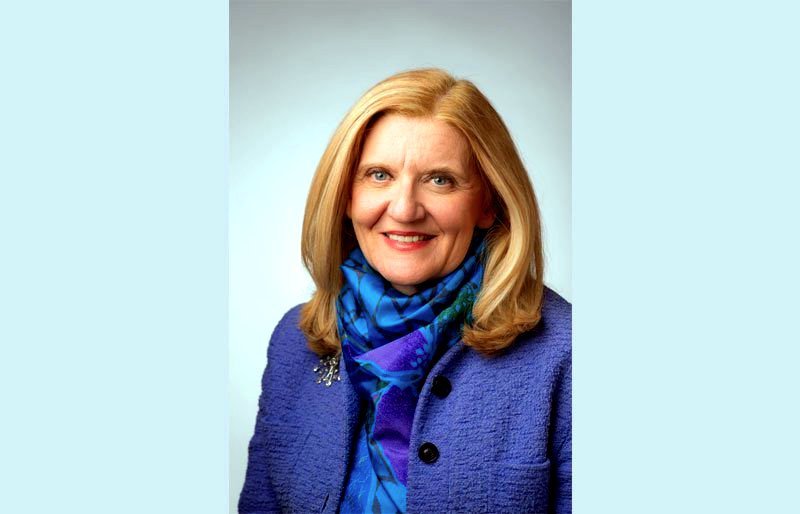
‘Downtown areas are important,’ says delegated CAQ Economy Minister Lucie Lecours

With municipalities all over Quebec starting to enter a true economic recovery following several false starts during the pandemic in the past two years, the CAQ government’s delegated Minister for the Economy Lucie Lecours was at Laval city hall last week to announce that $3 million of an overall $25 million has been set aside by Quebec for the recovery of businesses in Laval’s downtown core.

From the left, Lidia Divry, director-general of the economic development corporation Laval économique, Sainte-Rose MNA Christopher Skeete, delegated Quebec Economy Minister Lucie Lecours, and Laval city councillor for Duvernay–Pont-Viau Christine Poirier, who is the executive-committee member responsible for economic development dossiers, are seen here at Laval’s interim city hall on June 6. (Photo: Martin C. Barry, Newsfirst Multimedia)

Recovery underway

Lecours, who was accompanied by CAQ MNA for Saint-Rose Christopher Skeete and Laval executive-committee member Christine Poirier, confirmed that the provincial government has reviewed and accepted an economic recovery plan submitted by the City of Laval.

According to a statement issued by Lecours’ ministry last week, the City of Laval’s plan includes six initiatives which are expected to help boost business prospects and revenues in the downtown sector.

Encouraging digital

The plan also includes special subsidies, a major awareness-raising event, and a digital transformation element whose purpose will be to encourage downtown enterprises to focus on doing more business on the web.

“The economic recovery is accelerating in Quebec,” said Lecours.

“Our government continues to offer the right financial tools to municipalities for restore their confidence, while helping them rediscover their momentum from before the pandemic. Downtown areas are important economic engines, and must be able to resume their economic activities while getting back up to full-speed as quickly as possible.”

Laval’s downtown sector provides employment for up to 40,000 people

Challenges to meet

“The city is very happy to know it can count on this financial assistance from the government of Quebec for the recovery of its city centre,” said Laval councillor for Duvernay–Pont-Viau Christine Poirier, who is the executive-committee member responsible for economic development dossiers. “Our economy is facing great challenges, and we need the right tools to meet them.”

Laval city councillor for Duvernay–Pont-Viau Christine Poirier, who is the executive-committee member responsible for economic development dossiers, noted that 26,000 jobs were lost in the city centre at the peak of the Covid pandemic. (Photo: Martin C. Barry, Newsfirst Multimedia)

Noting that Laval’s downtown sector provides employment for up to 40,000 people, she said the pandemic caused the loss of 26,000 jobs, although the city reacted quickly with a range of support programs for businesses to minimize the damage. She said Laval was the region in Quebec that was hardest hit job-wise during the pandemic, with unemployment reaching 12 per cent at one point.

Skeete optimistic

“Entrepreneurialism is one of the pillars for regional development, as well as an important indicator of the economic and social well-being of populations,” said Skeete. “The recovery in downtown areas will breathe new life into the businesses and restaurant owners who were weakened by the slowdown or stop of their activities. This help will benefit not only the City of Laval, but also all of Quebec.”

“We want to get the word out about Laval’s city centre,” said Lidia Divry, director-general of the economic development corporation Laval économique, adding that the agency wants to make Laval’s downtown area a kind of destination that stands out on maps. She said another goal is to begin holding important events in the city core in order to attract more pedestrian traffic.


Laval backs away from digital currencies as a tool for economic growth

Idea was first proposed in 2020, before the pandemic shook up the economy

Have you ever considered investing some of your time and energy in any of the dozens of digital currencies that have sprung up like so many mushrooms in the global economy in recent years?

The City of Laval has given it a bit of thought, although economic development officials working in conjunction with the municipality seem to have decided to forego the opportunity.

Which ought not be too surprising, considering the turbulence and volatility which have characterized the performance of digital currencies over the past year.

City’s ‘buy local’ initiative

Two years ago, when the City of Laval had first begun taking measures to counter the economic flack resulting from the first wave of the COVID-19 pandemic, among the programs announced was a “buy local” initiative that local merchants and businesses were encouraged to support through subscription.

The program was accompanied by a perk for merchants’ customers called Freebees, which had already enjoyed some success in other regions of Quebec in the previous years.

City has withdrawn from Freebees retail perks program

Freebies program cancelled

Among other things, the program would have allowed business owners in the Laval region an additional option: to support the creation of a local digital currency as a tool to help generate customer loyalty, while stimulating the Laval economy at the same time.

According to Lidia Divry, director-general of the economic development corporation Laval économique, businesses and merchants in Laval have shown relatively little interest in the creation of a local digital currency as an economic stimulus. (Photo: Martin C. Barry, Newsfirst Multimedia)

Last week during a visit by delegated Quebec Minister for the Economy Lucie Lecours to announce new provincial funding for Laval’s ongoing post-Covid recovery, Lidia Divry, director-general of the economic development corporation, Laval économique, acknowledged that the city has distanced itself from Freebees.

Merchants weren’t interested

“We stopped it because it was launched at the same time as there were closings on account of [sanitary measure] decrees made by the provincial government,” she said during a brief interview last week with The Laval News.

Although some other aspects of the Freebees program generated a degree of interest from businesses and merchants in Laval, Divry said they showed no enthusiasm for the idea of a digital currency. But at the same time, she didn’t disagree that the turbulence afflicting crypto and digital currencies probably has been a factor as well.

Interest rates, affordability and availability pose challenges

Half of non-homeowners unlikely to enter housing market, says new CPA study

Despite historically being one of the top life goals for Canadians, the prospect of home ownership for non-owners remains far from reach, according to a new study conducted by Chartered Professional Accountants of Canada.

The Housing Headache study found that half of Canadians who do not currently own a home believe it is unlikely that they will ever be able to purchase one. And, while the other half are optimistic about home ownership, only one-in-five (21 per cent) think it is very likely they’ll enter the housing market, while 29 per cent think it is just somewhat likely.

The hurdles to home ownership

According to CPA Canada’s Housing Headache study, currently just over half of respondents own a house (53 per cent), while 45 per cent rent or lease. The study dived deeper into the reasons that prevent renters becoming owners and, not surprisingly, 89 per cent of respondents cited the threat of interest rates increasing as the greatest challenge to owning their own home. Other hurdles cited include:

  • Affording a down payment (84 per cent).
  • Affording renovations for 83 per cent, meanwhile an equal number cite housing availability in their desired area as a challenge.
  • Affording taxes and mortgage payments are equal at 81 per cent.
  • Income stability worried 69 per cent.

“Home ownership remains a priority for many yet what it takes to get there for so many Canadians is becoming increasingly challenging,” said Doretta Thompson, CPA Canada’s financial literacy leader. “The popular wisdom used to be to buy the largest house you could possibly afford, however it’s important to define your personal goals, balance them with means and look to multiple ways to ensure financial security. Owning a physical asset isn’t the only definition of success.”

CPA Canada financial literacy leader Doretta Thompson.

Gender and generational divides

Across the board, women tend to be more likely than men to view home ownership considerations as representing challenges for them. For example, interest rate hikes are a concern for 93 per cent of women compared to 85 per cent of men and affording a down payment is daunting for 86 per cent of women versus 81 per cent of men.

Additionally, 31 per cent of parents with adult children living in their house report that their kids are still living at home because housing is too expensive. Despite this, of those who currently don’t own a home, three-in-four Gen Z respondents and seven-in-10 Millennials remain confident they will buy a house in the future. While their rates of current homeownership are much higher than the younger cohorts, of those older Canadians who do not own a home, optimism about ever doing so is much lower at just 38 per cent for Gen X and 13 per cent for Boomers.

Homeowners still face challenges

The housing headache persists for those who do own their homes. Many Canadians are struggling with the very things that renters identified as barriers to home ownership:

  • Three-in-five homeowners say that affording necessary renovations is challenging for them; meanwhile, 46 per cent are struggling with the costs of basic home maintenance.
  • Two-in-five indicate that mortgage payments and property taxes are hard to keep up with, while 35 per cent find utility payments challenging.

Easing the housing headache

Although home ownership feels far away for many Canadians, it doesn’t mean the goals of a happy lifestyle and long-term financial security are beyond reach. “Shifting your mindset and taking a hard look at expectations can be a good place to start when it comes to managing the housing headache,” stated Thompson.

“Weigh your needs against wants and consider what you can afford based on your income and lifestyle. For some, that may mean rethinking the size and or location of a housing purchase. For others, it might mean a longer-term rental strategy – or even an indefinite rental strategy – with complementary saving and investment goals to secure your long-term financial future.”

Stéphane Boyer joins mayors saying homelessness must be tackled

Laval’s mayor was at Federation of Canadian Municipalities’ annual conference

Laval Mayor Stéphane Boyer agrees with mayors across Canada that homelessness in cities has reached crisis proportions. (Photo: Martin C. Barry, Newsfirst Multimedia)

Politicians from across Canada, including the City of Laval, spent a recent weekend in Regina, Sask. as they looked to plan a post-COVID future for the country.

Among many of the elected officials, homelessness and housing affordability appeared to be the central topic up for discussion during the Federation of Canadian Municipalities 2022 annual conference.

A housing crisis

Halifax Mayor Mike Savage, who chairs the FCM’s big city mayors’ caucus, was joined by Laval mayor Stéphane Boyer and by Regina mayor Sandra Masters. The three stressed that it’s important to start increasing the supply of affordable homes in an attempt to address the ongoing housing crisis.

Discussions about bringing all three levels of government together to tackle the housing problem took place between municipal officials and Dominic LeBlanc, Canada’s minister of Intergovernmental Affairs, Infrastructure and Communities.

Laval’s first eco-centre opens on June 15

Beginning on June 15, residents of Laval are able to access all the services at the city’s very first eco-centre, located at 1205 Dagenais Blvd. West, near Bellerose Blvd. in Vimont.

The first of a planned four ecocentres will allow the city to gather no less than 15,000 tons of recyclable materials annually.

Fabreville city councillor Claude Larochelle, Mayor Stéphane Boyer and Laval-des-Rapides councillor Alexandre Warnet officially opened Laval’s first ecocentre recently.

“The opening of the first of four ecocentres is paving the way towards new habits that Laval residents will be adopting,” says Mayor Stéphane Boyer.

“This is an important step we are taking for the sustainable management of residual materials. Without a doubt, this is a plus for the protection of our environment.”

The new eco-centre will allow residents as well as businesses in Laval to rid themselves of many kinds of things in a way that is safe and in keeping with environmental sustainability principles. The new eco-centre will be open during the following hours:

  • Monday and Tuesday, from 8:30 am to 5:30 pm;
  • Wednesday, Thursday and Friday, from 8 am to 7:30 pm;
  • Saturday and Sunday, from 8 am to 5:30 pm.

Among the materials that will be accepted are hazardous domestic waste (paints, solvents, corrosives, etc.), electronic components, construction materials, mattresses, household appliances including refrigerators, propane cannisters, tires, clothing, branches and cardboard.

45 hectares of natural spaces now protected in Laval

With the recent acquisition of Île Locas, the City of Laval says that since 2021 it has acquired 12 natural spaces all over its territory which will be protected as park and green spaces for use by the public from now on.

The $17 million in purchases were made with the assistance of the Communauté métropolitaine de Montréal (CMM) through the CMM’s Trame verte et bleue regional land acquisition program.

The CMM ultimately hopes to link all the parklands in Laval and elsewhere in the Montreal region into a connected green belt where water, vegetation and wild animals can flourish.

“After a year, we can say without any doubt at all that the Trame verte et bleue is already a great success,” said Laval city councillor and executive-committee member Alexandre Warnet, who is responsible to environment dossiers.

“Its implementation has led to the protection of our precious natural areas, which are now conserved for future generations of humans and non-humans alike,” he added.

“What’s more the Trame verte et bleue allows us to have a collective vision for the Greater Montreal region, which is essential since the issues related to loss of biodiversity and climate change don’t stop at municipal boundaries and are interlinked. Strengthened by this success, I am excited by the idea that this is only the start.”

Green space acquisitionAreaAmount invested by City of Laval
Île Locas137 808 m²$8,574,896
Berge Armand-Frappier27 715 m²$6,840,480
Bois de l’Orée-des-Bois381 m²$20,500
Val-des-Brises929 m²$27,000
Bois du secteur de la montée Champagne923 m²$10,000
Bois d’Auteuil1 117 m²$21,000
Bois de l’Équerre91 637 m²$796,176
Bois d’Auteuil17 587 m²$82,240
Bois du secteur Mattawa2471 m²$6,000
Île Saint-Pierre929 m²$13,300
Bois Sainte-Dorothée59 180 m²$114,662
Bois Saint-François113 188 m²$451,566

Laval auditor-general chastises city for failure to adequately maintain roads and streets

Public works data tends to be incomplete and disorganized, says Véronique Boily

In her annual audit report on the City of Laval’s administration and finances for the year 2021, auditor-general Véronique Boily gives the Boyer administration a failing grade on the way it maintains Laval’s streets and roadways, saying the money being spent isn’t guaranteeing that the work will be done properly.

Road repairs neglected

“The procedures currently being followed by the city do not give any assurance that the investments agreed upon to maintain or improve the street beds in its roads network will provide the best results,” said Boily.

Mrs. Véronique Boily
Véronique Boily, the City of Laval’s auditor-general.

“While the city proceeds with the evaluation of its roads network at a pace that is in keeping with accepted practices, the data on the roads tend to be incomplete and are disorganized,” she added.

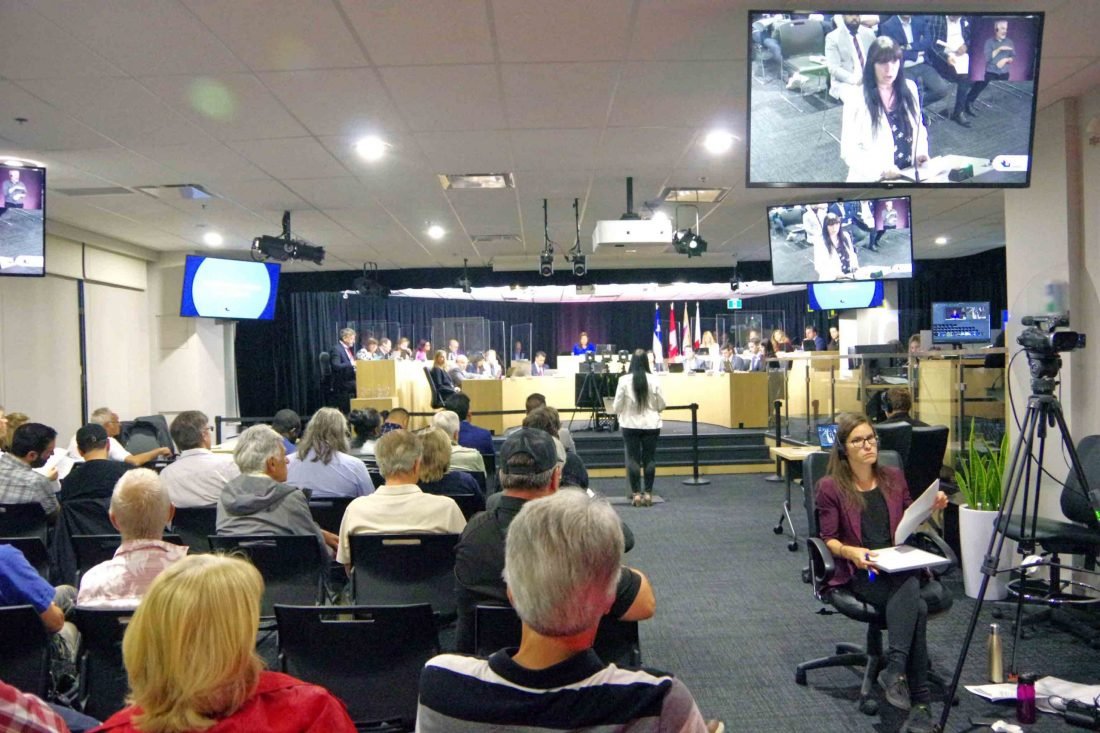
Boily tabled her 2021 report at the June 8 meeting of Laval city council. As she has done for several years, she provided an independent analysis of the administration’s performance, on the reliability of its finances, and on the state of the municipality’s conformity to rules and regulations.

Shortfall being ignored

Regarding the city’s maintenance of its streets, Boily said Laval hasn’t yet set a specific goal for the level of service for street and road maintenance it wishes to provide, while the city is ignoring the extent of the shortfall.

“And, since the maintenance strategy for the current assets is essentially palliative and the invested sums are insufficient to maintain the network in its current state, the state of the infrastructures is at risk of continuing to deteriorate, while their maintenance will become more costly,” added Boily.

Improvement needed

Regarding the awarding of contracts for work done by the city’s public works service, Boily said the process could do with improvement. “The roles and responsibilities are not clearly established, which discredits the imputability of the principal interveners involved in the process,” she said. She made 13 recommendations to the city’s public works service, as well as the supplies service.

Commenting on the auditor-general’s latest report, Action Laval city councillors David De Cotis (Saint-Bruno) and Achille Cifelli (Val-des-Arbres) said it confirmed what many Laval residents had long suspected: The city’s streets are in bad shape, while the city doesn’t seem to have any real plan to bring them up to grade.

Throwing money at problem

“We are very happy to see that this wasn’t just an impression, but a fact,” De Cotis said. “The Boyer administration hasn’t got the know-how to be positioned to make the right decisions. For the team in power, the solution is simple: When they have a problem, they throw money at it.”

‘The state of the infrastructures is at risk of continuing to deteriorate, while their maintenance will become more costly’

Said Cifelli, “They’re managing as if by the week. There is no planning, no strategy, not even information to be able to make informed decisions. The Boyer team doesn’t know how to implement good management tools.”

Action Laval pointed out that year over year, the city’s auditor-general has been issuing reports which are highly critical of the administration’s management, prompting Laval’s number two opposition party to propose two years ago that a rectification plan be put into place by the Boyer team.

Opposition ‘not surprised’

Over the past year, Action Laval has, in fact, made several attempts to obtain specific data used by the city in managing its various dossiers, especially regarding the city’s 3-1-1 service.

“The conclusion of the auditor-general is not surprising – they have no data,” says a statement issued by Action Laval last week, adding that other than furnishing an account of the total number of calls made to 3-1-1, the administration was unable to furnish any other management information regarding the phone service.

#NewsMatters: The National Assembly Report

By Raquel Fletcher

Marie-Chantal Chassé’s short-lived political career was not an easy one: the former environment minister, relegated to the backbenches early on in the CAQ’s mandate was publicly ridiculed for her apparent lack of confidence when speaking with the media.

Quebec City correspondent for QCNA Raquel Fletcher.

In an emotional and moving speech last week in the house, she said goodbye to her colleagues and her constituents. She is one of more than a dozen women MNAs who have announced they will not be seeking re-election, a number of whom after only serving one term. Politics is, after all, a nasty business.

However, Chassé’s final address was surprisingly positive: “I began this adventure with courage, with audacity and with a lot, a lot of enthusiasm. And I found myself at that moment with the file of the utmost importance for humanity… For my children, I couldn’t say no,” she said.

When things did not go as planned, she explained, she got back up, also for her children, three daughters, and set out to rebuild her credibility one person at a time.

“I also got up again for women because I want them to believe that we can be daring, that we can take leaps in the dark, take leaps ahead, that we can trip, get up and end up stronger through it all,” she said, before delivering her powerful clincher:

“I hope with all my heart that my journey will not deter other women from daring to make these leaps… We are often hesitant, perfectionist, we are never good enough. I say to women, I have a responsibility to say to you: ‘Go, girl, go!’ Prove to me, girls, that the fact that I got up again inspires you, dares you to take chances – that my journey helps you to believe even more in yourselves.”

It was an eloquent message addressed to those women who might just feel compelled to take that baton Chassé is passing on to them, if not for her party than for one of the opposition parties gearing up for the upcoming fall election.

While all bets are on François Legault and the CAQ forming another strong majority government, there’s no end of issues to be debated which might draw in new candidates ready to take that leap of faith into the world of politics.

Legault, who is running on his track record overall, will have a much tougher time convincing Anglophones his track record with them is worth voting for. Bill 96, scrapping the Dawson College expansion, and refusing to participate in an English language debate have created strong divisions between his party and English-speaking Quebecers. Still, as he did in 2018, the premier is asking them to “join us.”

“My message to anglophones is still the same,” he said at his end of session press conference last Friday. “But we have to all agree that it’s important to protect French in Quebec.”

“People are extremely frustrated, but not only the Anglophones, people in general,” said Liberal Leader Dominique Anglade at her end of session press conference, also on Friday. “We have to stop dividing ourselves because what’s ahead of us is going to be also a tough period in terms of the economy.”

Anglade is also trying to get back into the good graces of her Anglophone base after her party proposed an amendment to Bill 96, which will now require students attending English CEGEPs to take more classes in French. Anglade has recognized on more than one occasion that this unpopular amendment was a mistake, but if elected, she said it won’t be repealed.

For Quebec Solidaire, the ballot box question will be the rising cost of living.

“We are in the middle of the worst inflation crisis in 30 years,” said QS co-spokesperson Gabriel Nadeau-Dubois. “François Legault’s $500 has already been spent a long time ago.”

He continued: “The CAQ has become the party of François Legault’s obsessions: Louisiana, immigration. I think Quebecers have other priorities.”

Although he has been heavily criticized for his comments that Quebec could become the next Louisiana if it didn’t do more to protect the French language, the premier is sticking to his position.

“It might shock some people to say that Quebec wants more powers when it comes to immigration to protect French, but I’m a more or less straight forward guy who doesn’t beat around the bush. So I think it’s a question of saying clearly to Quebecers where we stand,” he explained.

Despite the CAQ’s recruiting two high-profile former sovereigntist candidates (Bernard Drainville and Caroline St-Hilaire), the Parti Quebecois still isn’t convinced a nationalist approach is the best bet for Quebec.

“It’s crystal clear that, no matter how many CAQ representatives there will be in this house after the next election, it will not change the fact that Ottawa will not say yes to things that, according to the Premier, are vital to the survival of our nation,” said PQ Leader St-Pierre Plamondon. Independence is “the reason of our existence,” he said and he plans to campaign on that point “with all the energy possible.”

Chomedey MNA Guy Ouellette awards 10 National Assembly Medals

Community leaders receive distinctive honor recognizing their efforts

(Newsfirst) Chomedey Independent MNA Guy Ouellette had no political announcements to make on June 2.

That evening at the Château Royal belonged to 10 people who either live or work in Chomedey and who were presented by Ouellette with the National Assembly Medal.

Noting the great number of cultural communities who make their homes in Chomedey – including the Armenians, the Portuguese and the Greeks – Ouellette said the riding he has served for the past 15 years is rich with cultural diversity, while also having a very strong sense of community spirit.

The 10 National Assembly Medal recipients as seen at the Château Royal on June 2 with Chomedey MNA Guy Ouellette. (Photo: Newsfirst Multimedia)

The names of this year’s recipients

  • France Boisclair (for her efforts as community activist);
  • Odette Sonia Baudelot (for her efforts as a community volunteer);
  • Adel Iskander (for achievements and contributions to the Laval and Quebec social community);
  • L’Association des projets Charitables Islamiques (AICP) (involvement by members in the improvement of Laval and Quebec communities);
  • Demetre Costopoulos (for volunteering and achievements promoting Greek culture to the Laval and Quebec social Communities);
  • Denis Marinos (for friendship and contributions to the Laval and Quebec social communities);
  • Emanuel De Medeiros (for contributing to the Portuguese and Laval communities);
  • Hovig Tufenkjian (for friendship, social commitment and contributions towards advancing Armenian culture in Laval and Quebec);
  • Soeur Mariette Desrochers (an outstanding woman who has made a difference for more than 20 years for those in Laval who are in need);
  • Martin C. Barry (for achievements and contributions to the Quebec social community over the last 15 years, as a Laval News journalist and photographer, for covering political and community issues with transparency and rigor).

Who gets the Medals

Among the recipients of National Assembly Medals presented by Chomedey MNA Guy Ouellette on June 2 was long-time Laval News reporter and photographer Martin C. Barry. (Photo: Newsfirst Multimedia)

According to a description on the Quebec National Assembly website, the National Assembly Medal is awarded by the Members of the Assembly:

  • To people of their choice who are deserving of recognition, or
  • As an official gift to Members of other parliaments, elected officials or other public figures during parliamentary missions outside Quebec or protocol receptions at the Parliament Building.

Medal Characteristics

  • Composition: bronze, lacquered antique finish;

Reverse: effigy of Jean-Antoine Panet, the first Speaker of the House of Assembly of Lower Canada (before 1968, the President of the Assembly was called the Speaker). The effigy reproduces part of the painting, The Language Debate, by Charles Huot, that hangs in the National Assembly Chamber of the Parliament Building. A miniature replica of the Medal of the National Assembly is also sold at the National Assembly gift shop.

Council proposal would ban door-to-door circulars – unless permitted

Revelakis asks city to back motion recognizing ‘genocide’ in Sri Lanka

A motion calling for the City of Laval’s executive-committee to authorize the administration to study the possibility of limiting the door-to-door distribution of plastic bags stuffed with retail circulars and community newspapers will be tabled at a future Laval city council meeting.

Banning store circulars

The proposal was tabled by Laval-des-Rapides city councillor Alexandre Warnet, the executive-committee associate member responsible for environment dossiers.

He noted during the June 8 extended meeting of Laval city council that the city had already taken the initiative some years back to ban the use of plastic bags by retailers, as well as the use of single-use plastic forks and knives by take-out restauranteurs.

Laval city councillor for Laval-des-Rapides Alexandre Warnet, who is responsible for environment dossiers on the executive-committee, has tabled a notice of motion for a new regulation prohibiting door-to-door distribution of bagged circulars, except to households that specifically request it.

Under the measure proposed by Warnet, households in Laval would automatically not receive the handout bags (commonly known by the brand name PubliSac), unless they post a notice on the front door stating they wish to receive the printed materials.

Wasteful, says Warnet

“Our local media are important and we count on them,” Warnet insisted, emphasizing that the purpose of the proposed measure is not to undermine local newspapers, which are largely distributed along with weekly commercial circulars, but rather to reduce the environmental impact of large amounts of printed materials often ending up in the recycling box, frequently without even being seen.

Parti Laval city councillor for Fabreville Claude Larochelle was reluctant to endorse Warnet’s motion as presented.

Seniors use circulars

He said it isn’t a decision that should be made by the city’s bureaucracy, but rather ought to be handled by a special committee consisting of city council members and representatives of the businesses and individuals who stand to be impacted.

He pointed out that the individuals most frequently using the circulars are senior citizens who tend to not be on the Internet as much as younger people, as well as persons who are less well off financially, and newly-arrived immigrants who haven’t quite settled down yet.

Larochelle’s proposed amendment was defeated, although the Action Laval opposition councillors voted to support it.

Automatic non-delivery

The way Laval’s retail circular distribution system works now, householders who would rather not receive circulars must request a special pictogram sticker from the city, which is then affixed to the home’s front door to advise the circular delivery person.

Under the proposed new system, the default mode would be non-delivery and the door sticker would advise the deliverer that circulars are welcome at that address. Warnet said there are alternative ways to provide discount coupons and sales information to people lacking Internet access.

“I feel certain that with all the intelligent input from around the table, including consultation with the local media, we will reach an intelligent conclusion, with the goal being to reduce our ecological impact,” he said.

‘Genocide’ in Sri Lanka

Laval city councillor for Chomedey Aglaia Revelakis (second from left) is seen here with Venoth Navajeevanantha, president of the Quebec Tamil Community Center (second from right), and two other leaders from the Montreal Tamil community. (Photo: Martin C. Barry, Newsfirst Multimedia)

During the city councillors’ announcements portion of the June 7 meeting, Chomedey councillor Aglaia Revelakis served a notice that she intends to table a resolution at the July council meeting calling on Laval city council to recognize the extreme violence committed against the Tamil people in Sri Lanka as a genocide.

Her motion refers to the civil war in Sri Lanka (1983 – 2009), during which up to 40,000 civilians were killed, according to United Nations estimates made in 2009 when the civil war ended. Revelakis is urging Laval city council to recognize certain actions that took place during the civil war as constituting genocidal conduct.

Attending the council meeting on June 7 was Venoth Navajeevanantha, president of the Quebec Tamil Community Center, along with two of his colleagues. Revelakis asked for and was granted a minute of silence in the council chamber in memory of the Sri Lankan civil war’s victims.

Laval News Volume 30-17

The current issue of the Laval News, volume 30-17, published on June 15th, 2022.
Covering Laval local news, politics, sports, and our new section Mature Life.
(Click on the image to read the paper.)

Front page of the Laval News.
Front page of the Laval News, June 15th, 2022 issue.

Weather

Laval
broken clouds
6.8 ° C
6.8 °
6.8 °
52 %
3.6kmh
81 %
Sun
8 °
Mon
14 °
Tue
17 °
Wed
15 °
Thu
9 °