‘Our population’s travel habits are changing,’ says transit agency’s president Pierre Brabant
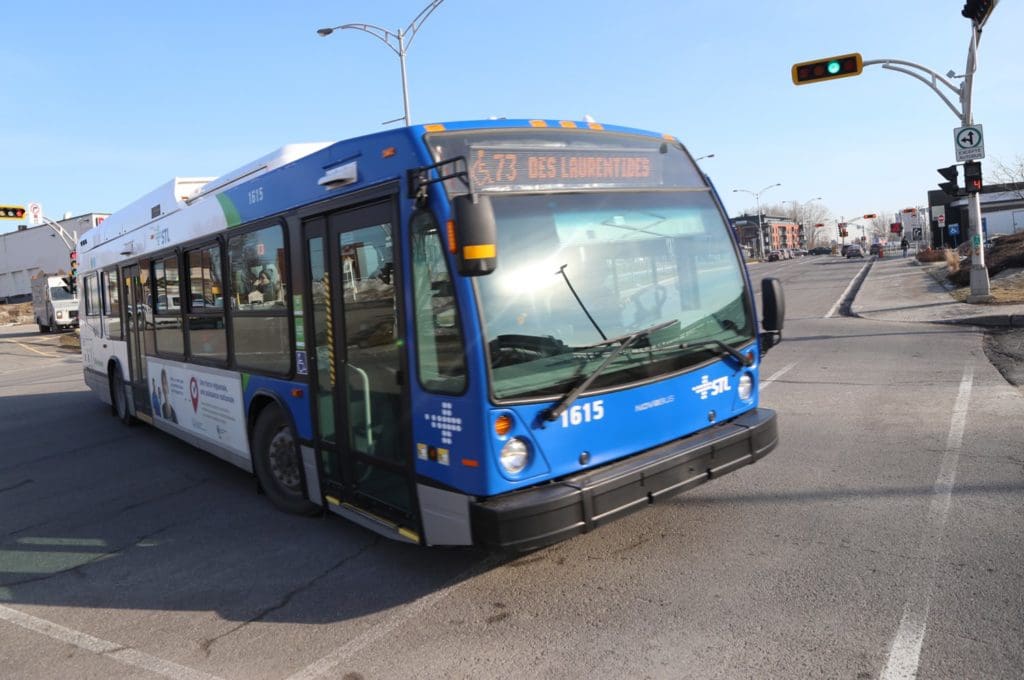
The Laval region’s public transit agency says it is embarking on a crucial phase for the redesign of its bus network by launching a broad-based and multi-platform public consultation.
Between now and the end of October, Laval residents, and especially public transit users, are invited to participate in what the Société de transport de Laval (STL) says will be a “collective reflection” through various initiatives.
According to the STL, the goal of the process will be to gather information on the needs, concerns and ideas of residents, users, partners and stakeholders of the STL.
This in turn, the STL says in a statement, will serve as one of the bases to redesign, optimize and maximize the efficiency of the transit network, “while making it better suited to today’s and tomorrow’s mobility realities,” leading towards a planned redesign of the STL’s main network by 2028.
‘A priority,’ says Laval’s mayor
“Better adapting our bus network to the current needs of the population is a priority,” Laval mayor Stéphane Boyer said in a statement.
“Our neighborhoods and habits have changed considerably over the past twenty years,” he continued. “Now, more Laval residents travel within their own city rather than to Montreal.
“In this context, it is important to offer everyone an efficient option so that more Laval residents choose public transit for their daily commutes,” said Boyer. “This network overhaul is a key priority for the STL and I applaud the launch of this initiative.”
In an interview with The Laval News, STL president and Vimont city councillor Pierre Brabant said the current structure of the STL transit network dates back to the opening of the Metro stations in Laval in 2007.
“Since then, our city has experienced sustained urban growth, new sectors are developing, activity hubs are transforming, and our population’s travel habits are changing,” he said.
Redesigning the transit network
“This evolution presents an opportunity for the STL to redesign its network to make it more frequent, simpler, more efficient and above all, better adapted to the urban development of the region.”
It’s no secret that public transit agencies all over Quebec are enduring significant financial hardships, partly from having never fully recovered from the economic downturn brought on for several years by the Covid pandemic.
In the City of Montreal, the Société de transport de Montréal (STM) has already visibly begun to rationalize its services. One of the most visible signs is a reduction in the number of assigned stops on bus routes. However, according to Brabant, the STL hasn’t followed through with similar measures and has no plans to take actions until after completing its consultation.
While governing officials will often hear complaints from the public that consultations are a mere formality for policies that have already been decided, Brabant insisted the STL has every intention of taking the feedback received from the public seriously, while adding that no decisions have yet been made.
Tailoring STL to users’ needs
“With the consultation process we are launching today, we are listening to the ideas and concerns of the Laval community to envision a network tailored to its needs, while taking into account the existing financial framework and the metropolitan mobility objectives defined by the Regional Metropolitan Transportation Authority (ARTM),” said Josée Roy, general manager of the STL.
The STL says it aims to rethink its service offering to better meet travel needs within Laval and between Laval and neighboring municipalities. The redesign work is structured around three main objectives:
- To make the STL transit network more attractive and align it with metropolitan mobility guidelines;
- To improve access to points of interest and activities from a social equity perspective;
- And to improve the STL’s operational efficiency through network optimization, while respecting the existing financial framework.
Three ways to be consulted
In order to reach a wide range of citizens and stakeholders, the STL says it will implement a participatory approach comprising three complementary modes of participation in the consultation.
First, the public will be able to consult a website dedicated to the initiative, which offers several online consultation tools, including a questionnaire on evaluating the current network and the priorities to be considered for the future.
As well, in early October two dedicated teams will meet with citizens in strategic, high-traffic locations to gather their feedback directly on the ground. The STL says particular attention will be paid to consulting young people, who currently represent nearly 60 per cent of the STL’s public transit ridership.
Public sessions also planned
Finally, three participatory public sessions will bring together citizens, customers, associations and industry representatives for thematic discussions. The dates and locations of these sessions will be available online on the project website.
The STL says the information gathered through this process will inform the development of a network scenario, which will be presented during an information phase scheduled for spring 2027.
“For the STL, which is celebrating its 55th anniversary this year, this initiative represents a unique opportunity to work closely with the community to build a network capable of supporting Laval’s growth and the evolving needs of its population,” added Brabant.
“The redesign of the regular network is therefore a key lever to promote smoother, more efficient, and truly sustainable mobility.” To participate, Laval residents are invited to go to stlaval.ca/consultations on the web to learn more about the process and the various participation opportunities available this fall.