Laval News Volume 25-15

This issue covers local events such us politics, sports and human interest stories. It features editorials and other columns

This issue covers local events such us politics, sports and human interest stories. It features editorials and other columns
Martin C. Barry
Two coaches at the Chomedey Soccer Club say they are working towards a deal with one of Greece’s top professional soccer associations that hopefully will lead to the establishment of a first-rate soccer academy in Chomedey as early as next summer in conjunction with the Thessaloniki-based soccer team.
According to Bill Zagakos, who coaches U-13 and U-10 boys as well as U-7 to U-15 girls’ soccer with the Chomedey Soccer Club, the club is considering an offer made by Greece’s PAOK F.C. (Panthessalonikios Athlitikos Omilos Konstantinoupoliton), which is based in the country’s second-largest city.
The matter first came up about three years ago when it was raised with some veteran PAOK players who run soccer academies in Greece and who were visiting Chomedey. “They loved the idea,” said Zagakos, adding that PAOK people were back on July 4 for a promotional soccer match at Parc Berthiaume-du Tremblay that drew more than 1,000 enthusiasts.
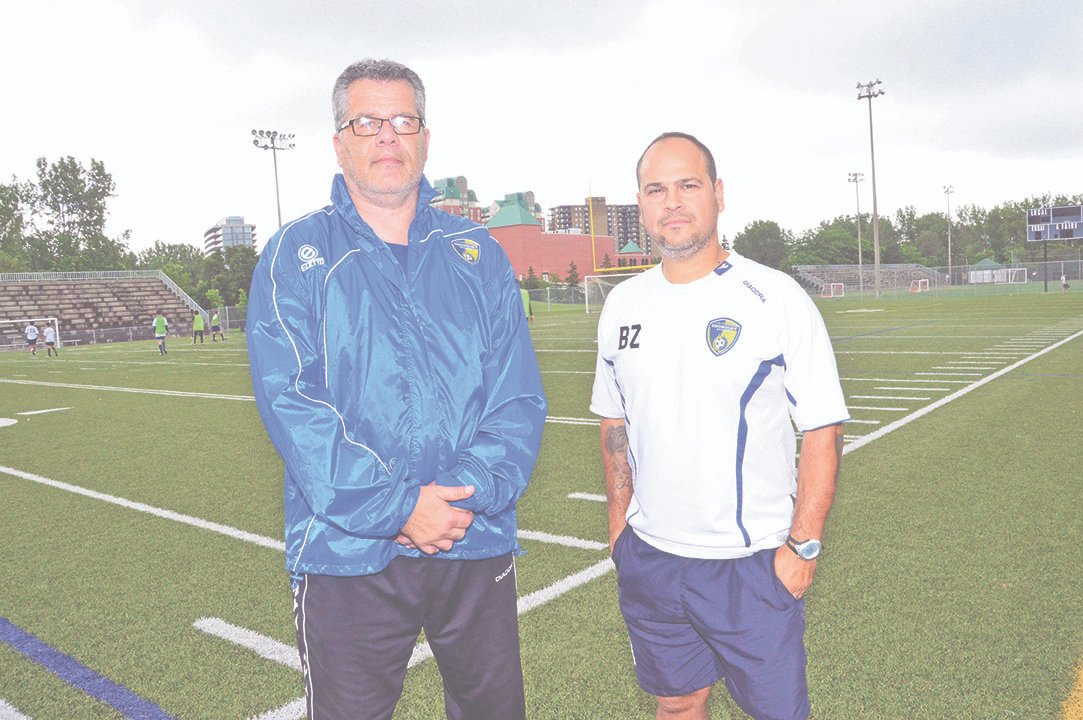
“They’re open to it. Our club is also open to the idea. It would be good for our players that professional level coaches would be seeing them every year. These are the first steps.” He said additional steps could be worked out this week when Zagakos is scheduled to be in Greece to meet PAOK officials for further discussions.
PAOK F.C. is owned by Ivan Savvidis, a Russian Greek businessman and political official. Ranked by Forbes as being among the top-30 wealthiest Russians, Savvidis has two principal residences, one of which is in Thessaloniki. It’s also common knowledge that Savvidis is part of a relatively small circle of insiders who are close to Russian president Vladimir Putin. “He’s one of Vladimir Putin’s main men,” Zagakos noted with a laugh.
Should the pieces fall into place, a crew of three top PAOK F.C. coaches would come to Chomedey once or twice a year to conduct training sessions for as long as a week each time. Zagakos maintains that PAOK F.C. is without equal in Greece for the quality of its soccer academies for U-15 to U-20. “Kids, especially from the areas of Laval, Chomedey and even Montreal, could come to these seminars,” he said.
While the deal probably won’t cost Chomedey Soccer Club anything since PAOK F.C. will be footing the bill, PAOK (which has already established soccer academies in Sweden, Germany and other countries) hopes to expand its talent-farming capabilities in North America, according to Zagakos. “If they are able to find a few talented players, it will be good for the players, good for the parents, good for our club,” he said.
Nick Babalis, who oversees boys’ coaching in the Chomedey Soccer Club, is confident an agreement with the Greek soccer club can be worked out and that any obstacles here can be surmounted.
“We’re not just diving into this,” he said, pointing out that the Chomedey club is proceeding carefully. “It might take a little bit longer than usual, but at the end of the day it’s the proper way. There are rules and steps to follow and that’s what we want to be sure of.”

A Laval man whose wife and unborn child were involved in a serious car accident nine years ago caused by a driver who was texting has just launched a device that prevents texting while driving.
Patrick Dubois’s device, which he calls the Roadbudee, connects to a car’s computer system. In order to start the car, the owner’s smartphone must be connected to the device. The Roadbudee stops texts from being sent or received and only allows Bluetooth phone calls.
Dubois, who saw firsthand the consequences of texting and driving, wants a law passed that would make the installation of such a device mandatory in all vehicles. In the meantime, he thinks parents should go to the trouble of installing the device in cars driven by teenagers who are notorious for texting while driving.

Martin C. Barry
Thousands of people of Hellenic heritage from all over Quebec had the opportunity on Canada Day weekend to take a refresher in their cultural origins when the Laval Greek Orthodox community held its annual Hellenic Summer Festival on the grounds of Holy Cross Church on Souvenir Rd. in Chomedey.
The Laval Hellenic Summer Festival is one of the biggest Greek cultural events that takes place in Quebec each year. People arrive from as far as Ottawa and Toronto eager to meet and greet old friends as well as members of their families.
In Laval alone there are an estimated 39,000 Greek residents, with their numbers rising. All proceeds from each year’s festival support local Greek educational needs, as well as charitable causes in the Greek community.
This year, stirring performances of traditional Greek dancing were given by students attending schools supported by the Greek Orthodox community of Laval. Another highlight each year on July 1 is a Canada Day celebration with a large Canadian flag cake.

While the weather this past Canada Day for the V.I.P. event was rainy all day, by early evening the sun had started breaking through the clouds and it finally shone for a few hours before setting.
Denis Marinos, president of the Laval chapter of the Hellenic Community of Greater Montreal, said the weather had “made a big impact” on festival attendance which was off all day, but picked up that evening as Greek folk dancers were getting festival-goers into the mood to party.
“Hopefully things will hold up for us now and we’re going to have a good evening,” he told Newsfirst Multimedia. He was heartened by the fact that on the evening before, several hundred people turned up in the last few hours, contributing to the festival’s overall headcount.


Click here to read the Laval News Volume 25-14 online
This is a archived copy in PDF format of the Laval News Volume 25-14 that was published and distributed July 12, 2017.
This issue covers local events such us politics, sports and human interest stories. It features editorials and other columns
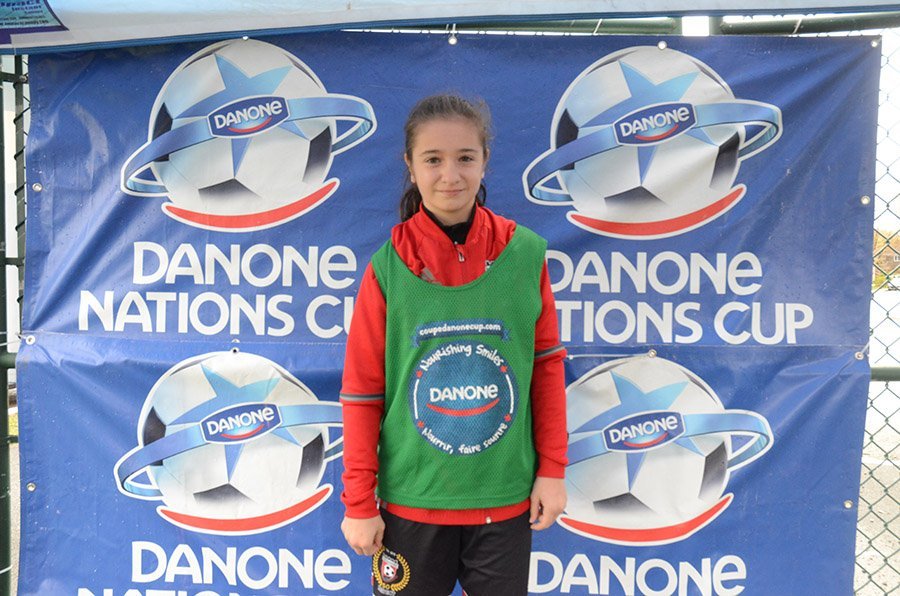
Twenty four of Canada’s most talented youth soccer players are set to head to Boucherville on July 6 for the national final of the Danone Nations Cup, the last step in their quest to earn a spot on the teams that will represent Canada at the world tournament in New York City in September.
The world’s premier youth soccer tournament, the annual Danone Nations Cup offers a once-in-a-lifetime experience to talented players between 10 and 12 years of age. As a special edition in 2017, Canada will send separate boys’ and girls’ teams to the world final. The 12 boys and 12 girls from Quebec who will participate in the final stage of the Team Canada selection process were chosen from a pool of over 700 candidates at camps that took place on April 21, 22 and 23 in Ottawa and Toronto.
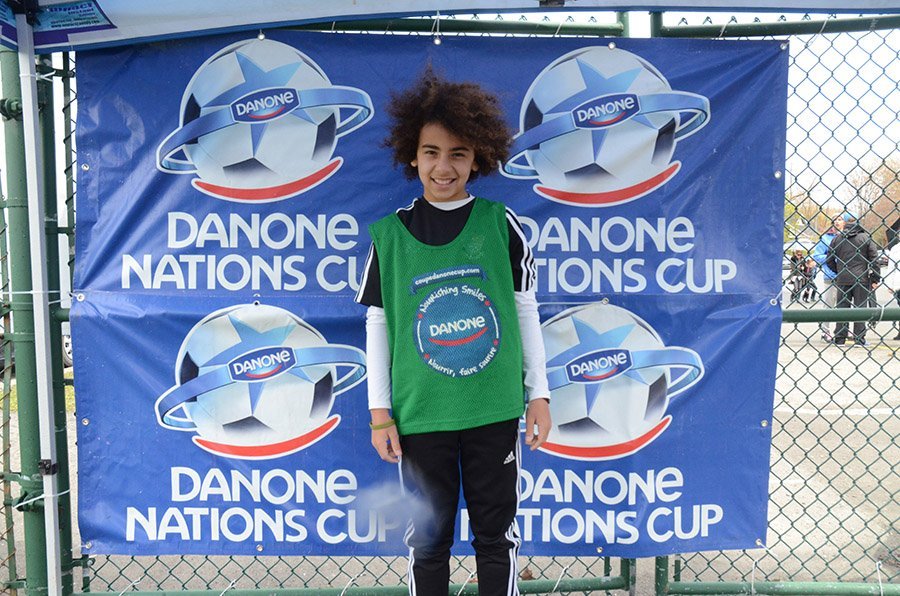
Among those selected are local Laval soccer stars Adam Aouissi, Emilian Blaga and Eva Liakakos. Past participants of the Danone Nations Cup tournament include Ashton Morgan (Toronto FC), Maxime Crépeau (Montreal Impact), Fraser Aird (Vancouver Whitecaps) and Marie Levasseur (Canada’s Women National Soccer Team).
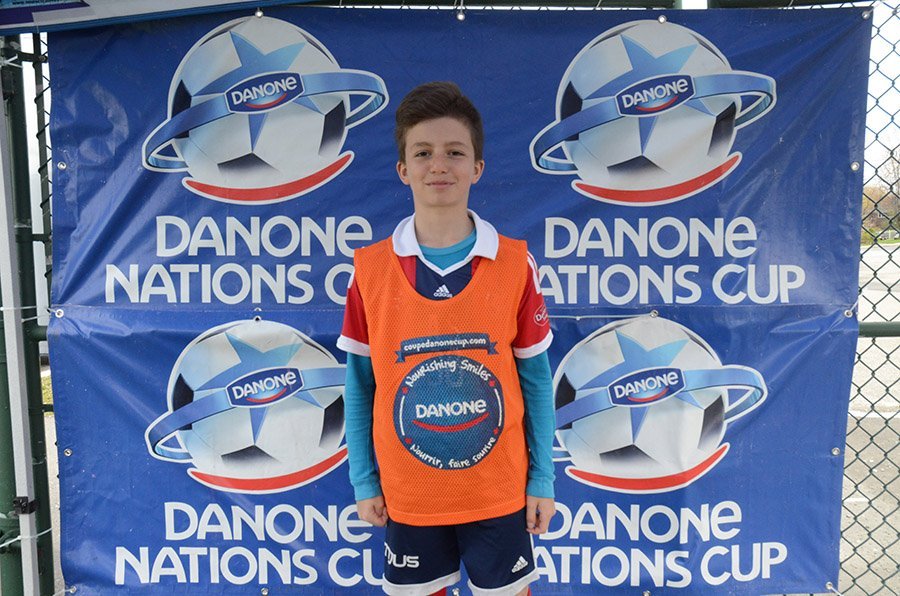
At the national final in Boucherville, the players will team up with the 24 finalists from the Ontario selection process to form four groups that will face off in separate boys’ and girls’ final matches on July 6. The two victorious groups will travel to New York City to represent Canada at the Danone Nations Cup world final in September 2017.
As the head coach for the first-ever Canadian girls’ team, Kristina Kiss, past Team Canada player and Pam Am Games medalist, is eager to share her passion and leadership with the young players. “I am so impressed with the level of talent at the Danone Nations Cup, and I am very excited to live this experience and make a dream come true for the team of girls that will head to New York. Sports help build lifelong healthy habits, and I applaud Danone for motivating Canada’s next generation of athletic talent,” she said.
According to Patrick Leduc, former Montreal Impact player and coach for the Danone Nations Cup, the tournament creates lifelong memories for players. “Danone has created a truly unique event that gives children the opportunity to play on the international stage. We have a wealth of soccer talent here in Canada, and the tournament gives us the chance to show the world the development of our boys and girls,” he said. “I am always amazed at the talent, athleticism and sense of fair play shown by these young soccer players. I am pleased to once again be part of this amazing experience.”

Martin C. Barry
The Laval News has learned that one of the people recently appointed by Mayor Marc Demers to the city’s new Place-du-Souvenir Fund committee was herself at one time a political attaché for former mayor Gilles Vaillancourt.
The Place-du-Souvenir Fund committee will be overseeing a $10 million settlement the City of Laval received from the disgraced ex-mayor who is now serving a prison sentence after being convicted of official corruption.
In an October 1996 article in La Presse, the Montreal daily recounted Vaillancourt’s efforts to have Lynda Tousignant – one of those named on June 19 by Demers to the Place-du-Souvenir committee – appointed a Justice of the Peace in Laval’s municipal court system.
In a handout furnished last week by the City of Laval, Tousignant is identified as a member of the Barreau du Québec (Quebec Bar Association) since 1983 and an ex-employee of Laval’s legal affairs department, serving from 1998 to 2011.
However, the city’s summary of Tousignant’s background doesn’t mention that she was also a candidate for the Parti Québécois in the Laval riding of Vimont for the 2012 election. Demers, who would be elected mayor of Laval in 2013, was also a PQ candidate in 2012 in the nearby Laval-des-Rapides riding.
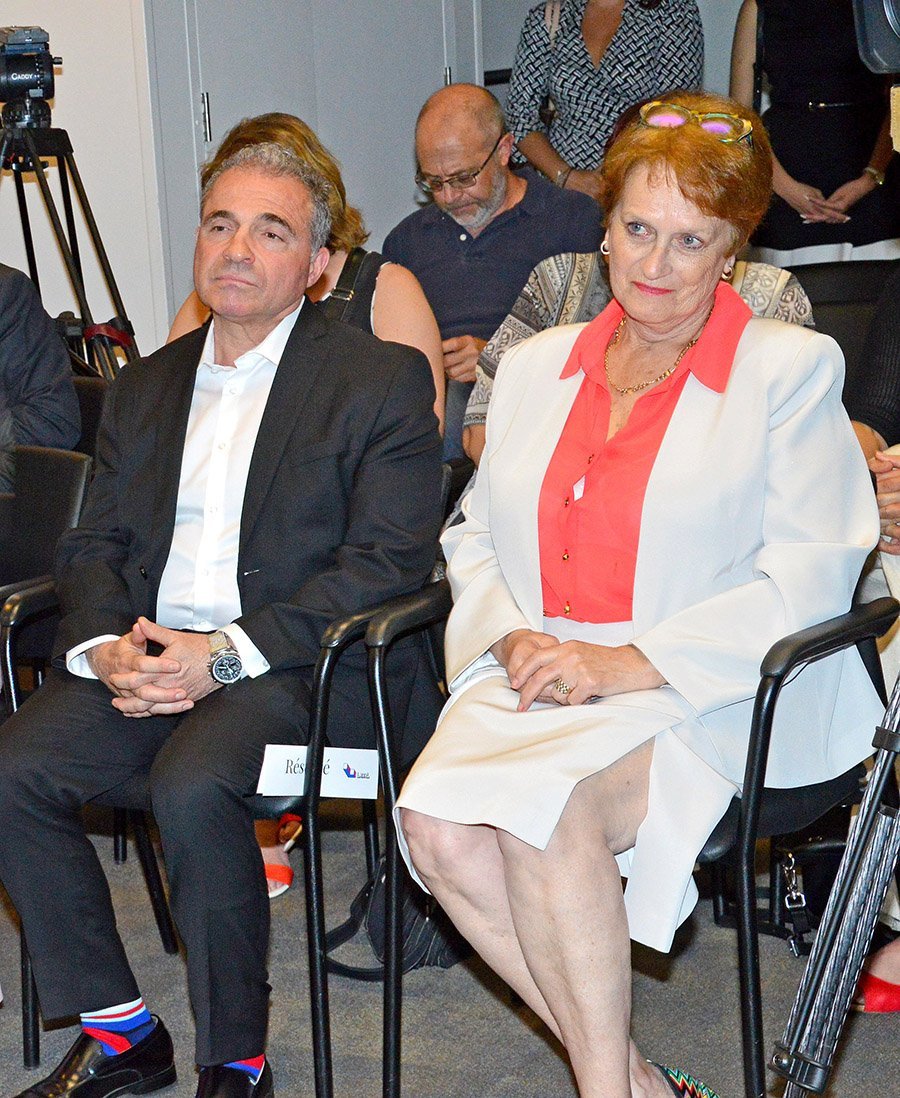
In addition, the La Presse report noted that Tousignant was a candidate for former mayor Gilles Vaillancourt’s now defunct and discredited Parti PRO des Lavallois in the 1989 municipal election. Following her defeat (the paper said she was the only Parti PRO candidate that year who failed to be elected), she was hired by Vaillancourt as an attaché.
According to La Presse, Tousignant took an unpaid leave in 1995 from her job as Vaillancourt’s assistant. The following year, the paper said, she was one of four City of Laval administration employees that Vaillancourt recommended to Quebec for appointment as Justices of the Peace to deal with a backlog of legal files in Laval’s municipal court system.
While, according to La Presse, Vaillancourt and the city argued that the appointments wouldn’t cost Laval more because the employees would be paid their existing salaries, the Quebec Ministry of Justice ruled they didn’t have the right kind of qualifications for Justices of the Peace, and Quebec refused to make the appointments, La Presse stated.
Reached by the Laval News at her home in Duvernay, Tousignant acknowledged she was an employee from 1990 to 1995 in Vaillancourt’s office as counsellor for legal and administrative affairs. As well, she said her tenure with the city’s legal affairs department was from 1996 to 2011.
Tousignant also acknowledged that the ran for the Parti PRO des Lavallois in 1989 in the district of Saint-Sylvain which no longer exists. Asked to explain why neither she nor the current City of Laval administration bothered to mention her past involvement with the Vaillancourt administration – especially when she’s now a trustee for a fund consisting of money that came from the former mayor’s corruption – Tousignant responded:
“You can perhaps understand that I had left the mayor of Laval’s office so long ago that I really didn’t see the relevance. I realize it must seem ironic that I find myself here. Mr. Demers knows very well that I used to work in Mr. Vaillancourt’s office. I take this as a sign of the confidence he has in me and in my integrity.
“As for what happened to Mr. Vaillancourt, Mr. Vaillancourt was found guilty and he surrendered sums of money,” she continued. “Now what do we do with those sums? Mr. Demers and city council decided to place them in a fund dedicated to children and that is what attracted me – being able to help the children of Laval.”

Martin C. Barry
The City of Laval has decided to enhance a program of safety measures for autistic persons with the implementation of a new training module for the Laval’s public safety employees so that they will be fully prepared to deal with individuals in the midst of autism crises.
The training kit was created in conjunction with the Montreal-based Giant Steps School for autism. Prior to the announcement of this program, the City of Laval had already begun positioning itself as a leader among municipalities in matters concerning the autistic by first declaring an overall policy of inclusion towards those who suffer from autism.
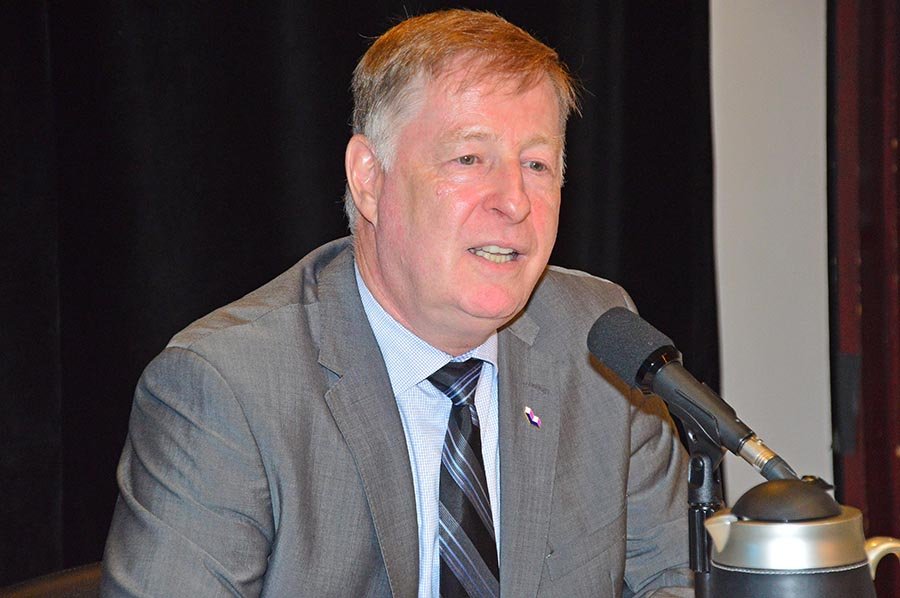
“In 2005, we decided it was important to train our personnel to improve the quality of life in emergency interventions for most of the population, but notably for persons affected by autism spectrum disorders,” Mayor Marc Demers said during an announcement on June 20 at Laval city hall.
“It was our first attempt and a first step in the right direction. Today I believe we can say that we are headed the right way and we are getting the idea of what needs to be done. The Laval Police and the firemen can be proud of the work that’s been done. What we are doing as a city is catching on and showing other cities the path that they too should follow.”
The program developed by the the Giant Steps School with the city includes explanatory presentations, videos, specially-adapted educational materials and a security kit. They are meant primarily for the police, firefighters and other emergency situation personnel so that they can be fully acquainted with the types of situations that can take place when they are dealing with persons suffering from autism.
According to a press release from the city, all the materials can be downloaded from the Internet from a link on the City of Laval’s web site. Thomas Henderson, executive-director of the Giant Steps School, explained the importance of key public safety staff being able to identify situations involving autism.
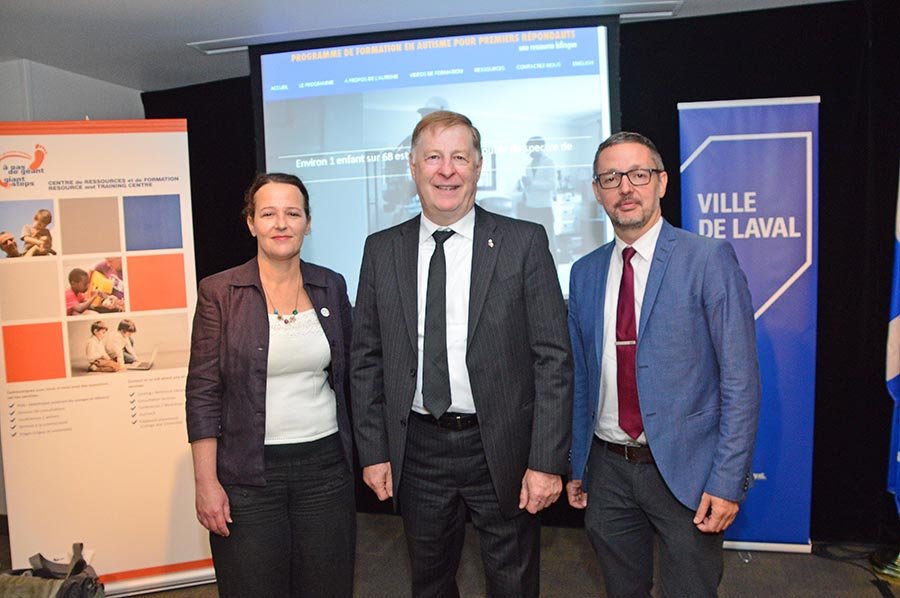
“It is very important that the interveners understand the type of behaviours that an autistic person has in an emergency situation in order to respond in the most efficient and properly adapted manner possible,” Henderson said.
“I want to thank and congratulate the City of Laval for taking a leadership role with us at Giant Steps and collaborating on this important project,” he added. “It’s part of a larger project in partnership aimed at developing initiatives to create a more inclusive and accessible city for people with autism.
“We’re extremely proud of the results of this project,” Henderson continued. “The resources are being picked up by other emergency services across the country, and we are confident that as a direct result of improved resources and training people on the spectrum will be better prepared for emergencies and better served by the emergency services that are there to support them.”
Henderson said that with financial support from the autism advocacy group Autism Speaks Canada, over the past year and a half Giant Steps developed the autism training program for emergency responders. An advisory committee that worked on the process was made up of police and firefighters, persons with autism, as well as parents and professionals.
In addition, the committee developed a safety resource kit that includes a wide variety of tools to help people with autism and their families to be more safe in the community, while knowing how to access emergency services more effectively. Educational resources were also developed for children and youths with autism to teach them about fire and community safety.
Martin C. Barry
Officials with the City of Laval have come up with a way to put that $10 million they succeeded in reclaiming from disgraced former mayor Gilles Vaillancourt to good use.
Beginning next year, $600,000 in annual interest will be paid out to community groups in Laval that deal with children and adolescents from infancy up to 17 years of age. However, because 2017 is already half over, the payout this year is just $300,000.
Mayor Marc Demers made the announcement at city hall last week with four of the five newly-appointed members of a new consultative committee that will be responsible for making recommendations on how subsidies from the fund should be allotted.
The committee’s members are former Olympic diving medallist Roseline Filion, former City of Laval civil servant and lawyer Lynda Tousignant, women’s business networking executive Eve Dalphond, Laval Families owner and editor Luigi Morabito, and former City of Laval culture and leisure activities department employee Jean-Pierre Tessier.

“We are pleased and honoured that these persons of great quality willingly accepted to watch over the Place-du-Souvenir Fund, a tool which will allow us to give back to young Laval residents the money they would otherwise have had if it had not been skimmed off by corruption, ” Mayor Marc Demers said during an announcement made at Laval city hall on June 19.
According to Demers, the idea behind the creation of the new Fonds Place-du-Souvenir was that all children and teenagers in Laval should be able to count on the support of their families as well as the local community as they mature and develop into adults.
“We will directly be supporting Laval’s youths by intervening in four key areas,” added Demers. “We will be joining the fight against poverty and social exclusion. We will also be encouraging academic perseverance and success in school. We will be facilitating the social integration of young immigrants. Finally, we will be encouraging access to cultural activities, since the democratization of access to culture is a value to be shared.”
According to the city, the fund will be administered at no cost by the city’s retired employees committee, with a set rate of investment return of 6 per cent. The choice of name was quite deliberate, said the mayor, pointing out that the money in question was successfully claimed back by Laval from former mayor Vaillancourt who is currently serving a prison term after being found guilty of collusion and corruption while in office for around two decades.
Laval city hall’s two opposition parties, Action Laval and the Parti Laval, reacted negatively for the most part to news of the fund’s creation. Both parties maintain that the timing – some five months before the next municipal elections – makes the fund look as though it was motivated by partisan interests.
“I have no problem with the overall goal of the fund, just the way the money is being used,” said Parti Laval leader Michel Trottier, who didn’t agree with the city’s choice of fund committee members. Trottier noted that two of the members, Lynda Tousignant and Luigi Morabito, are listed in public records as having made donations in recent years to the Mouvement Lavallois/Équipe Marc Demers.
“I have reason to doubt the integrity of the decisions which could be made,” Trottier said regarding the committee’s work. While the mayor said he was announcing the creation of the Place-du-Souvenir Fund now so that students returning to school in the fall could draw benefits from it, Trottier added, “I think it’s just an electoral announcement made before the elections.”
Action Laval leader Jean-Claude Gobé declined to single out anyone chosen to sit on the committee, although he concurred with the Parti Laval leader’s view that the announcement was motivated by electoral interests. “This is an election year,” said Gobé. He suggested that the organizations destined to receive the funding are being used by the city administration “to generate political capital for themselves.”

Martin C. Barry
Despite an onerous weight of responsibilities over the past two years following the unexpected arrival of hundreds of refugees in Laval, Agape social services in Chomedey has closed last year’s ledgers with a surplus of around $10,000, which was slightly better than the year before when they just managed to finish in the black.
According to Agape secretary-treasurer Betty McLeod who presented the organization’s financial statements during their annual general meeting on June 20, Agape was able to report the surplus because a subsidy that had been overdue for a year finally came in.
“It was money that was owing to us from a year back,” she said, noting that receiving grants and subsidies late from various governments and agencies is an almost standard condition for charitable organizations.
“Had they not paid us we would have been in the red,” she said. However, if it’s any consolation, Agape finished the year a little better off than the previous one, when Agape reported just $2,165 left over when funding also arrived at the last moment.
“Very often when you’re running a charitable organization the problem is that funding promises always come in later,” said Kevin McLeod, Agape’s executive-director. “So very often you have to make your own funding to pay your employees because the funding doesn’t arrive until later.

“As a result, you have to make sure that you cover yourself with your own financing,” he added. “Which is why Agape does so many fundraisers in a year because we have to auto-finance a big portion of what we do.”
Agape holds four fundraisers each year. The most successful of them last year was the Lois Hashimoto Annual Memorial Walk in September which brought in a net profit of $8,505. Although Agape’s Annual Golf Tournament was second most successful with a net return of more than $6,000, its future is currently under revision, although the 2017 tournament is still scheduled to take place on Tuesday Sept. 12.
The two other Agape fundraisers are the Denise Williams Annual Seniors’ Love Walk which generated a net profit of $3,611.55, and the Agape Annual Christmas Dinner which produced a profit of $2,224.00.
According to Agape’s latest annual report, the organization received 218 refugee families for a total of 719 persons between April 1, 2016 and March 31, 2017. Being the only English-speaking charitable organization in Laval, Agape was targeted as a centre of support and help for newly-arrived refugees and immigrants.
“We have been successful in providing members with food, clothing, furniture and services,” the report stated, while adding that a total of 1,401 food baskets were distributed at Christmas 2016 and the demands continued to pour in over the new year. The years 2017-2018 also promise to be challenging years for demands by refugees and immigrants.
“Our generous English speaking community, our Laval English schools, churches and private companies are the reason why we have been able to continue our mission,” said Agape. “We sincerely thank them all for their continued support and look forward to working with them through the new fiscal year.”
According to the report, refugees and immigrants continue to benefit from low cost housing at Agape’s Transition House, and the same services will be offered in 2017-2018. With the support of Health Services Canada (through the Entente Canada-Quebec), Agape received a $20,000 grant enabling the organization to work with the victims of dependencies on alcohol, drugs, gambling, etc. The project was approved for 2016-2017, but the 2017-2018 renewal remained unconfirmed as Agape filed its latest report.
The following people are members of Agape’s 2016-2017 board of directors: Gregory Young (president), Rev. Father Michael Leclerc (vice-president), Elizabeth McLeod (secretary-treasurer), Roderick McLeod (financial advisor), Silvana Sandrin (resource person), Steve Bletas (resource person) and Mike Campolieto (resource person).