Laval will be receiving more than $23 million this year from the federal Gas Tax Fund, made possible through taxes collected at the gas pump.
The City of Laval will be getting $23,303,973 from the federal government this year as one of the 1,125 municipalities across Quebec that will also be receiving their share of the Gas Tax Fund which is apportioned out between cities across the country annually.
Federal Infrastructure and Communities Minister Catherine McKenna made the announcement on Wednesday that municipalities in Quebec have received $495.7 million through the GTF for the 2020–21 fiscal year. The GTF is funded through a tax on gasoline levied at the pump.
Noting that the GTF provides municipalities with funding for their infrastructure needs, the federal ministry pointed out in a statement that Laval used its GTF funding in recent years to add a new line of electric buses which will help reduce greenhouse gas emissions.
The City of Laval is giving away more than 5,000 kits containing fun items to children and teenagers in Laval.
The City of Laval has decided to hand out more than 5,000 kits containing toys, games and other fun things to children and adolescents in Laval whose lives were impacted for more than two months by the COVID-19 pandemic. The city is using $160,000 from its Fonds Place-du-Souvenir fund to pay for the kits.
The 5,000 kits are being handed out to children from 6 to 12 years of age. They contain a ball, a jump rope, a magnifying glass, sidewalk chalk, a coloring book, wax crayons and other items. The city is handing out the kits in conjunction with 4-H Clubs of Quebec and Groupe Promo-Santé Laval.
According to the city, the kits will be distributed through local community organizations sometime this month. Additional kits will be handed out to teens at the Centre jeunesse de Laval. These will contain gear for babyfoot and table tennis, e-readers, construction kits, MP3 players and headphones.
“In these difficult times without precedent, we are especially thinking of the well-being of families, children and the teenagers in Laval,” said Mayor Marc Demers. “Every day we are increasing our efforts, in conjunction with our partners, to overcome the difficulties created by the pandemic.
“It is our hope that these kits and these items will make life a little easier for these young people, while also allowing parents to take have a little bit of time to rest,” the mayor added.
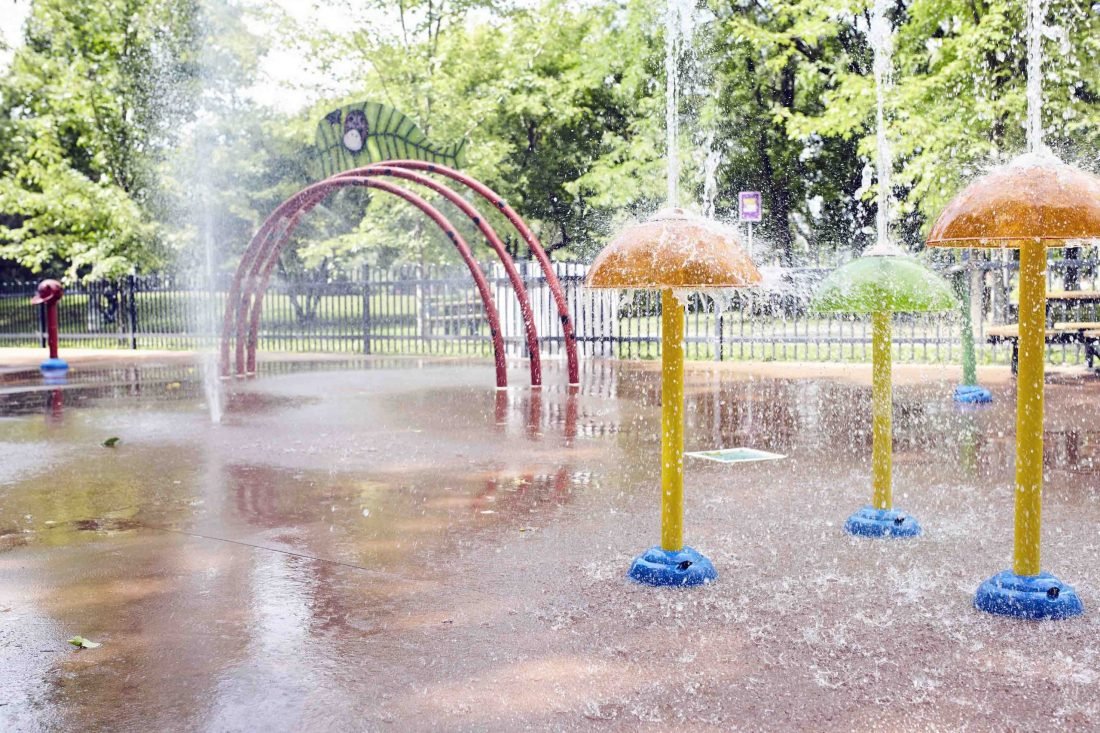
The city announced on Wednesday that some of its aquatic installations will be re-opening gradually, although with reduced service at first, on June 20, with safeguards against COVID-19 infection being enforced.
Before turning up at a pool or other aquatic facility, residents are being invited by the city to consult this list of outdoor aquatic installations that will be open, as well as the hours and safety rules to be followed. As well, registration will be necessary in order to access a pool. As such, the city says an online registration system will be in place soon.
The City of Laval has announced the gradual re-opening of its pools, water parks and wading facilities as the COVID-19 pandemic starts to recede.
Residents are being invited to follow these three steps, so that everyone’s swimming experience takes place safely:
Read the rules and respect them, so that everyone is treated fairly;
Be patient: since service at pools will be lower than usual, you may have to wait in line a while.
Here are some other rules to follow:
Children 11 years old and younger must be accompanied by an adult at all times.
A shower with soap for 30 seconds will be mandatory before entering the pool.
Swim suits are obligatory.
It is not allowed to enter the pool while wearing a face mask or protective gloves.
Walking around the pool will only take place in one direction, and this rule must be respected.
Duration of time in the pool will not exceed one hour.
People with COVID-19 symptoms should not participate.
Access to the chalet, locker rooms and toilets will be limited. Changing on the outdoor terrace will not be allowed. Those using the pool must put on their bathing suit at home before arriving.
It is possible that users will be asked to pass a swimming test, at the request of the lifeguard; those without required swimming skills will be asked to wear a flotation device.
Upsurge in pool sales predicted, following COVID-19 pandemic
In view of a drastic increase in backyard swimming pool sales anticipated this summer because of distancing rules made necessary by the COVID-19 pandemic, the Quebec Municipal Affairs Ministry has issued a reminder to potential new pool owners about the regulations regarding the installation of this type of equipment in Quebec.
Quebec is reminding pool owners or those about to buy one of the regulations which make certain safety precautions mandatory around backyard pools.
Among other things, the rules state that all new swimming pools must be surrounded by a protective fence, unless it is an above-ground pool with a height of at least 1.2 metres, or at least 1.4 metres in the case of a pool that can be taken apart.
In the case of a protective fence, it must be 1.2 metres high, and must be able to prevent a spherical object measuring 10 centimetres from passing through. As well, it must be built in such a way as to not facilitate anyone climbing on it.
Rules to be followed
In addition, any access gate to the pool must be equipped with a security mechanism that allows the gate to close and lock automatically. Any patio or terrace adjacent to the pool must be equipped with a surrounding fence and gate in order to restrict access.
A municipal permit is required to build, install or to replace a pool, or to erect any kind of structure giving access to or restricting access to a swimming pool. The ministry noted that municipalities may adopt stricter rules than those contained in the provincial regulations. Pool owners are invited to learn more from their respective municipal authorities about the local regulations governing swimming pools.
Small/medium businesses will be protected from evictions and property seizures
The Quebec branch of the Canadian Federation for Independent Business says it is pleased with amendments the Legault government has decided to make to Bill 61, the law enshrining the re-launch of the post-COVID-19 economy, since the changes reflect suggestions the CFIB had made.
Amendments welcomed
Among the amendments, the Quebec CFIB said in a statement issued last week, were suggestions apparently taken up by the government with potential impact on small and medium enterprises facing eviction from leased premises, and regulations affecting liquor license owners making things a little easier for them during the COVID-19 recovery period.
“Numerous SMEs, especially affected by the crisis, weren’t seeing their preoccupations being taken into consideration by the proposed law that was tabled,” François Vincent, vice-president for Quebec of the CFIB, said last week.
No commercial evictions
“But today, things changed,” he said a day later. “They are pleased to see that the amendments will make it possible to protect those who are in difficulty against evictions or seizure of property on leased premises, and they will also offer several restauranteurs new avenues to explore. In the name of these SMEs, I thank the government for improving on its proposed law.”
According to the Quebec CFIB, the following measures will now be included:
Protection of commercial lease-holders against all forms of eviction or seizure of property on rented or leased premises (Article 35.1); Loosening of rules for liquor permit holders, allowing them to provide up to one-third of their business in the form of deliveries (Article 38.1); Permission to differentiate prices for alcoholic beverages sold for consumption on premises from those sold for take-out (Article 38.2).
A concerted effort
These CFIB suggestions were also included: A reduction in the cost of a seasonal alcohol permit in proportion to the prorate number of days it isn’t used (Article 40.5); Permission to continue selling alcohol or bar service to certain clients even when food service is over (Articles 40.3 and 40.4); Loosening of rules surrounding promotion and publicity for alcoholic beverages (Article 40.5).
“To get through this crisis which is without precedent, the cooperation of all players as well as action by government are necessary,” François Vincent added. “Today, we are taking another step forward to protect businesses in all the municipalities of Quebec. Now it’s the turn of parliamentarians to make good these measures by adopting this draft law before the end of the session.”
Quebec forgetting home-based support workers, who are still earning $23,000 a year
More than two months after the COVID-19 pandemic started, an organization representing the interests of home-based personal support workers says the PSWs are being taken for granted by the Quebec government, leaving elderly and handicapped home-bound patients helpless, they claim.
According the réseau de coopération des entreprises d’économie sociale en aide à domicile EÉSAD,home services provided by the member PSWs are currently on “life support” for several reasons.The federal government’s Canada Emergency Response Benefit (CERB) is motivating home-based PSWs to stay off the job because it pays more, the group says.
Workers drawn away
As well, they say the provincial government’s new salary increases (up to $49,000 annually) to personal assistants working at CHSLDs is also drawing away home-based PSWs (who are typically paid around $23,000 annually). As well, the CHSLD personal assistants will be receiving new benefits as government workers, which their EÉSAD counterparts will not be entitled to.
“All these measures put into place are helping to decimate, from week to week, the EÉSAD network which is trying to serve elderly or vulnerable persons who have chosen to live in their own homes,” said Josée Massicotte, a spokesperson for the at-home PSWs.
Since the start of the pandemic, according to Massicotte, the PSW work force has dwindled from 550 PSWs to only 83 who are still working. The association is suggesting that home-based PSW’s salaries should be greatly increased, the work of the PSWs should be given more professional recognition, and the financial stability of the EÉSAD network should be increased.
Their clients are suffering
Massiccotte provided several examples of EÉSAD clients and what they are going through now.
Jonathan is severely handicapped and quadriplegic. As such, he can’t do his own housekeeping nor can he prepare his own food. Before the COVID-19 pandemic started, a PSW went into his home once a week to clean and every two weeks to prepare meals. Now after more than 10 weeks, his home has become very untidy, and he also needs help doing his clothes washing. While he’s been an EÉSAD client for years, they have no workers available to tend to his needs.
Marthe and Jocelyn are parents in a family that is currently being supervised by the Quebec youth protection office. Marthe has mental health problems and suffers from depression. Jocelyn is confined to a motorized wheelchair and has to receive nourishment in liquid form through a straw. They have a four-year-old son who has an attention-deficit disorder. The youth protection office has ordered that their housekeeping should be done by a PSW once a week, and this is a condition for them to keep their child. However, according to Massicotte, this family hasn’t been able to receive help from an EÉSAD PSW through most of the COVID-19 pandemic.
Unable to get PSW help
Nicole lives in a subsidized low-rent housing project and has reduced autonomy. She tends not to do proper housekeeping in her apartment. Her sister who lives outside Montreal used to come help her, but can no longer do so because of COVID-19 travel restrictions. A worker at the housing project informed the EÉSAD that Nicole had become depressed and was no longer eating. As well, her apartment is now very untidy, garbage is accumulating and not being disposed of properly and the smell is getting out into the public hallway. The EÉSAD has almost no one to help her.
Finally, Rita is 96 years old and has had a leg amputated. Currently, she is receiving EÉSAD service at home. However, at the beginning of the pandemic she didn’t receive service for two weeks. Isolated and regarded as highly vulnerable, she has no family to provide help and no other other means other than EÉSAD support to receive food. According to the EÉSAD network, her usual PSW has been contemplating quitting to seek the better-remunerated work at CHSLDs.
COVID-19 has made things worse for those with no roof over their heads
Homeless people in Laval – who’ve been left largely without anywhere to stay overnight since the start of the COVID-19 pandemic – are gaining a measure of security with an announcement by the CISSS de Laval of the opening of a temporary shelter at the former Place des Aînés in Chomedey to accommodate up to 30 homeless.
Caring for the homeless
The CISSS is sponsoring the shelter, which opened on June 3 in the senior citizens’ community centre on Curé Labelle Blvd., which remains closed during the COVID-19 pandemic. This new site replaces a homeless shelter that was being operated at the Centre Josée-Faucher in Laval-des-Rapides until June 1.
In keeping with provincial government directives to ensure that the needs of the homeless were being met during the pandemic, and to prevent COVID-19 from being spread unnecessarily, the CISSS de Laval worked in conjunction with the City of Laval and with Travail de rue de l’île de Laval (TRIL), which helps the homeless, to provide the homeless in Laval with meals, medical help and wash-up facilities for their well-being and comfort.
According to the CISSS, the shelter will be offering its services to men and women with no fixed address from 4 pm to 8 am every day.
A collaborative effort
Other groups and organizations that contributed resources to making the shelter possible include the Commission scolaire de Laval, École Mont-de-Lasalle, Carrefour jeunesse Emploi, the Centre d’intégration libre de Laval, Diapason-Jeunesse, L’Aviron, Mesures alternatives jeunesse de Laval, the Oasis mobile intervention unit and SPHÈRE santé sexuelle globale.
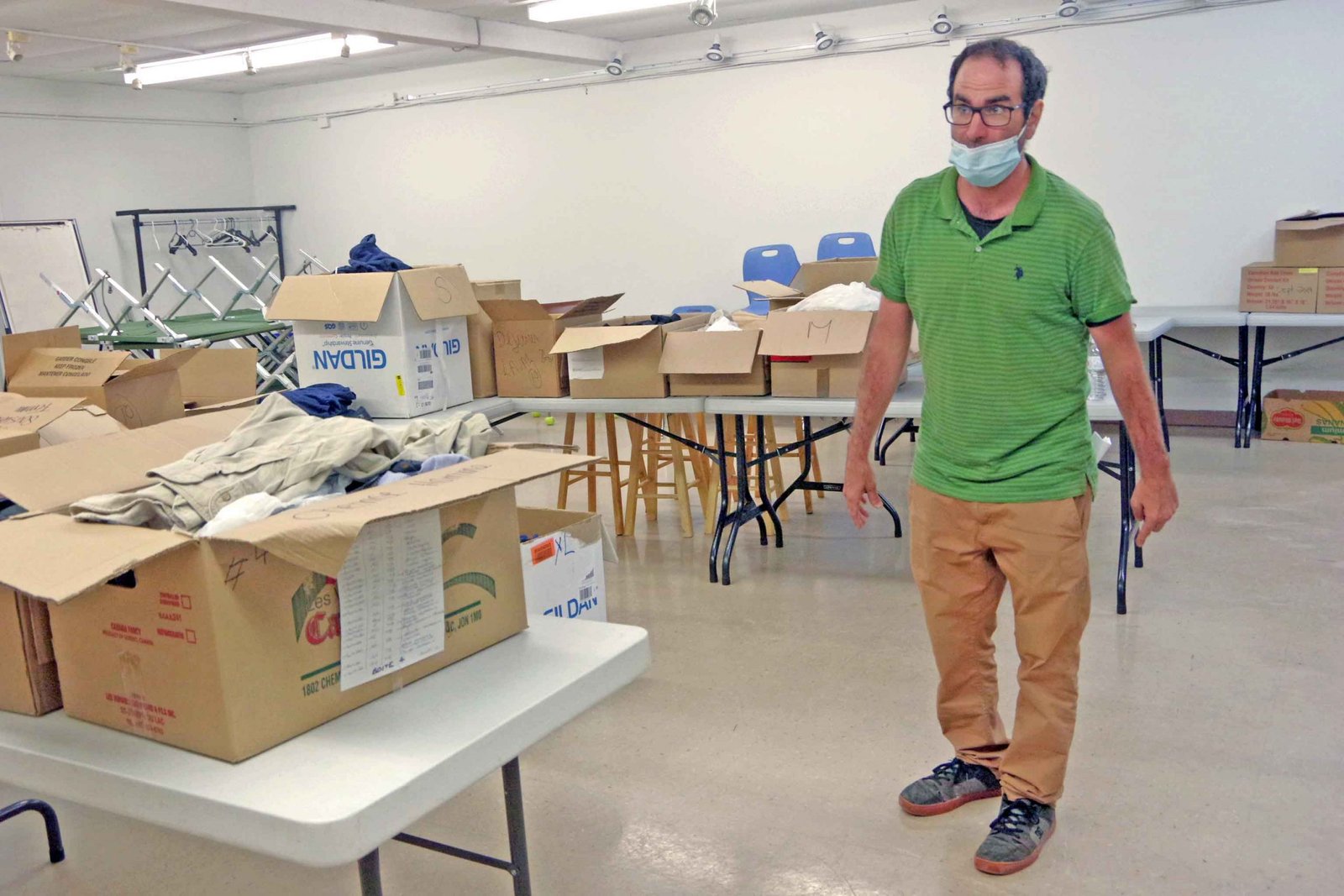
Michaël Beaulieu, a street worker with TRIL Laval, is seen here explaining how homeless people’s basic needs for clothing and other items will be met through a distribution centre located at the new homeless centre at Place des Aînés (now known as Axion) in Chomedey. Photo: Martin C. Barry
Community groups in Laval, which normally provide support to the homeless, were forced to greatly curtail their services because of confinement issues. “Because of the economic damage linked to COVID-19, they told us that some people could find themselves without a fixed address,” said Jean Fallon, a community relations intervener with CISSS de Laval.
More homeless now?
A big question being asked now in the midst of the COVID-19 pandemic is whether the crisis has indeed driven the numbers of homeless in Laval higher. Over the last two years or so, the CISSS has estimated the number of chronically homeless in Laval to be fewer than 150. Still, Fallon acknowledged to journalists touring the new homeless shelter, some have been living in cars and in other ways just on the margin of homelessness.
TRIL had been operating the homeless shelter at the Centre sportif Josée-Faucher since March 13, allowing 86 people to receive shelter and nourishment in a safe environment. However, the CSDL was taking back the facility for its own purposes, making it necessary to set up the new shelter in Chomedey.
No other place to go
Michaël Beaulieu, a street worker with TRIL, noted that with the forced closing of their usual overnight shelters, persons with no fixed address would otherwise find themselves without access to washrooms and toilets, since restaurants and shopping centres, where they normally go, are closed during the pandemic.
While a safe and comfortable place to sleep at night is important to many homeless, others also appreciate being able to drop by the shelter during the hours it will be open during the day. The sleeping areas will be divided between men and women and there will be security personnel on hand. The shelter has the support of the Laval Police Department and it is expected to remain open for the duration of the COVID-19 pandemic.
Action Laval city councillor for Laval-des-Rapides Isabella Tassoni tabled a motion during the June 2 council meeting calling on the city to provide funding for a public consultation and plans to be drawn up for the future preservation of the Trait-Carré Woods.
Debate over future
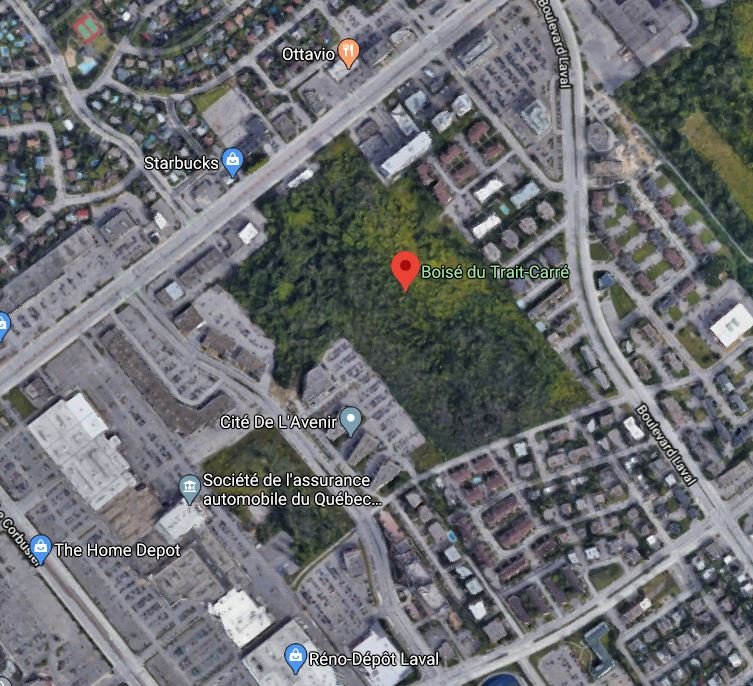
The Boisé du Trait Carré (as it is known more commonly) is a 12-hectare wooded lot located in central Laval which has been the subject of extended debate on its future in the last few years.
The small forest was given a protected status by the City of Laval two years ago following a public outcry and through lobbying by Tassoni.
Laval city councillor for Laval-des-Rapides Isabella Tassoni.
“I am proud that these woods were protected, which I believe was the main battle of my mandate for the citizens of Laval-des-Rapides, a true victory, but it’s not over,” Tassoni said in a statement.
Although the lot is now the property of the city and protected from private development, Tassoni wants a public consultation held on its future. Tassoni believes she should preside the consultation.
Generational project
“More than 4,000 citizens have already expressed their wish to make this space an urban park, and environmental groups have even proposed to help us. I believe this is a project for an entire generation and our choices regarding these woods will have an impact on the territorial organization of our downtown forever.”
Tassoni is calling upon her colleagues on city council to support her proposal during the next meeting of city council in July. “There has already been too much partisanry on this subject and we are faced with a consensus: the citizens want these woods to be cared for,” she said. “It’s their democratic choice. Let’s do it together.”
A key green space
The Trait-Carré Woods are regarded as the most important wooded green space in central Laval. The woods are located a relatively short distance from Laval’s educational centre, where Collège Montmorency, the University of Montreal’s Laval campus and other educational institutions are also situated. Tassoni’s motion to initiate a consultation and planning would require an estimated $125,00 – $200,000 investment by the city.
Snow removal ranked high in complaints during winter 2018-2019
In her seventh annual report released on June 3, City of Laval Ombudsman Nadine Mailloux says her office’s activities are steadily increasing, as 24 per cent more Laval residents were using the service last year compared to the year before.
Over the past seven years, the Laval Ombudsman’s office has dealt with 2,894 dossiers, each representing an occasion when the Ombudsman was able to serve as a liaison between the municipal administration and residents to smooth things over when there were disputes, or to help redress an error or injustice when necessary.
Nearly 2,900 dossiers
Nadine Mailloux, the city’s ombudsman for the past seven years, is leaving to step into a similar position with the City of Montreal.
According to the report for the year 2019, the Laval Ombudsman’s office dealt with 58 per cent of dossiers received in less than 30 days. Fifty-seven per cent of the complaints received concerned the public works, engineering and urban planning departments.
Various types of complaint
The Ombudsman’s office claims they were able to resolve 44 per cent of the cases by informing complainants of their rights, and by putting them in contact with the municipal administration or some other organization. The Ombudsman says 21 per cent of cases ended up being dealt with directly by the administration at Laval city hall, and that 35 per cent of these were serious enough to merit being looked into more thoroughly.
According to the Ombudsman, one of the most frequent types of complaint received concerns public works carried out in such a way as to compromise the integrity of private property by damaging or even destroying it. As well, there are complaints regarding inadequately executed work by the city or by sub-contractors.
Guidelines were needed
Ombudsman Mailloux said her office concluded that it was becoming necessary for the city to clarify its position and the protocols to follow when public work is carried out in a way that overlaps onto private property. As such, her office recommended the adoption of clear guidelines for when the city does work on or near private property.
The Ombudsman’s office received an inordinately high number of complaints regarding snow removal during the winter of 2018-2019. Mailloux said her office took the matter up with the central administration. Following this, she added, the administration made a commitment to implement several new strategies in order to improve snow removal operations and efficiency.
Dangerous intersection
In another dossier Mailloux’s office dealt with last year, she said a Laval resident came forward with a complaint about a particular street intersection that he found dangerous. On one of the converging streets there was a stop sign, while on the other (on which there was a bicycle path) there was no stop.
The problem was made worse by the fact a tall hedge impeded the view for those approaching the four-way intersection on one of the streets. The Ombudsman’s office ended up recommending that the city enforce a rule concerning the height of hedges in locations such as this, while also carrying out some other modifications to make the intersection more secure.
Nadine Mailloux leaving
On a final note, Mailloux, who has served as the City of Laval’s Ombudsman since 2013, announced along with her office’s latest report that she is leaving the post to take up a similar position with the City of Montreal. “It was an honor and a privilege to create the office of the Ombudsman of Laval in 2013 and to direct it until today,” she said. “I am very happy with the work accomplished over the past seven years.”
Mailloux pointed out that the office was created at a time when the City of Laval was under trusteeship. “Since then, with patience and determination, we set out to weave a link of confidence with Laval residents. The pertinence and the positive impact of our interventions can be seen daily. I sincerely thank the City of Laval, the citizens and, more particularly, Teresa Ciciotti, my valuable collaborator responsible for administrative support, for the confidence they all placed in me over these many years.”
During the June 2 public meeting of Laval city council, the council members gave the go-ahead for a $25 million expenditure to carry out work for the construction of a new highway interchange overpass on Autoroute 440 in the district of Val-des-Brises.
Since the structure will be passing over a provincial highway, the work and its supervision will be done by the Quebec Ministry of Transport and its appointed sub-contractors. As such, the City of Laval has authorized the MTQ to proceed with the awarding of the contract as manager of the project.
Two years work
Laval city councillor for Val-des-Brises Christiane Yoakim.
Once the contract is signed, according to the city, work on the new interchange over Autoroute 440, between Autoroute 19 and Pie-IX Blvd., will be able to start, probably this summer, and will take place over the next two years.
The work will include the construction of the new overpass, as well as the realigning of nearby streets and ramps to and from the A-440 East. When it’s completed, Robert Bourassa Blvd. will join up with Gaumont St. via the new Michel-Ange Blvd.
“This is great news, especially for the people of the Val-des-Brises sector,” said Val-des-Brises city councillor Christiane Yoakim. “In addition to allowing them to travel about more easily, they will see traffic in their area diminish. As well, this link will facilitate transit on foot and on bicycles from either side of the autoroute, which is positive for the development of active transportation on the island.”
Work on Ave. des Bois
During the same council meeting, the council members also approved a contract for the creation of preferential bus measures on Avenue des Bois in Laval-Ouest, on part of Autoroute 440 and on Chomedey Blvd. The work, which is scheduled to begin this month, is to be done by Roxboro Excavation.
The contractor has been mandated to carry out the following steps:
Preferential measures for buses on the road shoulder;
Priority measures for traffic lights;
Geometrical modifications at intersections;
Modifications to traffic lights;
Creation of a temporary incentive parking lot (around 500 spaces);
Appropriate attenuation measures for natural surroundings in conformity with recommendations by the Quebec Ministry of the Environment;
Planting of trees and shrubs in work areas, with the exception of agricultural lands, and restoration to its original state of a nature trail that passes through the area.
Attenuation measures
“I am extremely pleased that the attenuation measures which were asked for during the construction of the Réseau express métropolitain (REM) are taking shape,” said Nicholas Borne, member of the executive-committee responsible for transit dossiers and councillor for Laval-les-Îles. “When finished, it will most certainly be an attractive solution for replacing the automobile.”
It should be recalled that in February, the City of Laval announced that it had been mandated by the Autorité régionale de transport métropolitain (ARTM) to ensure the planning and realization of infrastructures needed for the implementation of preferential measures for buses (MPB) on a trajectory that included Avenue des Bois.
Laval adopts new measures for threatened wetlands
The City of Laval’s executive-committee also recently recommended to city council that it adopt an important new by-law aimed at protecting and conserving key wetlands located osn Laval’s territory. The new regulations would add 1,062 hectares of wetlands to those already recognized by the city.
Having seen several large wetlands on its territory disappear over the last few years, the city was determined to preserve its remaining wetlands, while becoming one of the first large cities in Quebec to take this approach.
A leadership role
“It is Laval’s hope to take on a new role as a leader when it comes to protecting wetlands,” says Laval city councillor for Sainte-Rose Virginie Dufour, who sits on the executive-committee with responsibilities for environmental issues. “This ambitious project will allow the city to raise by 12 per cent the amount of natural areas protected by by-laws and regulations on the territory, bringing us closer the level of 14 per cent protection.”
In order to define wetlands of interest to be conserved, the city developed a matrix with criteria to be developed. It took into account several factors, including ecological value, perenity, diversity, ecological services, adaptation to climate changes, distribution of wetlands on the territory and planning.
‘Urban by nature’
Recognizing the undeniable ecological importance of wetlands and the necessity of ensuring their conservation, Laval undertook a regional plan for wetlands and humid areas, with the theme of its guiding vision (Urban by nature) as the guiding principle. This aspect defines the City of Laval’s overall orientations for future development.
“Congratulations to the City of Laval for its colossal work identifying the wetlands of interest on its territory,” said Guy Garand, executive-director of the Conseil régional de l’environnement de Laval. “The CRE de Laval is proud to have contributed.”