Action Laval and resident ask mayor to reconsider a public consultation
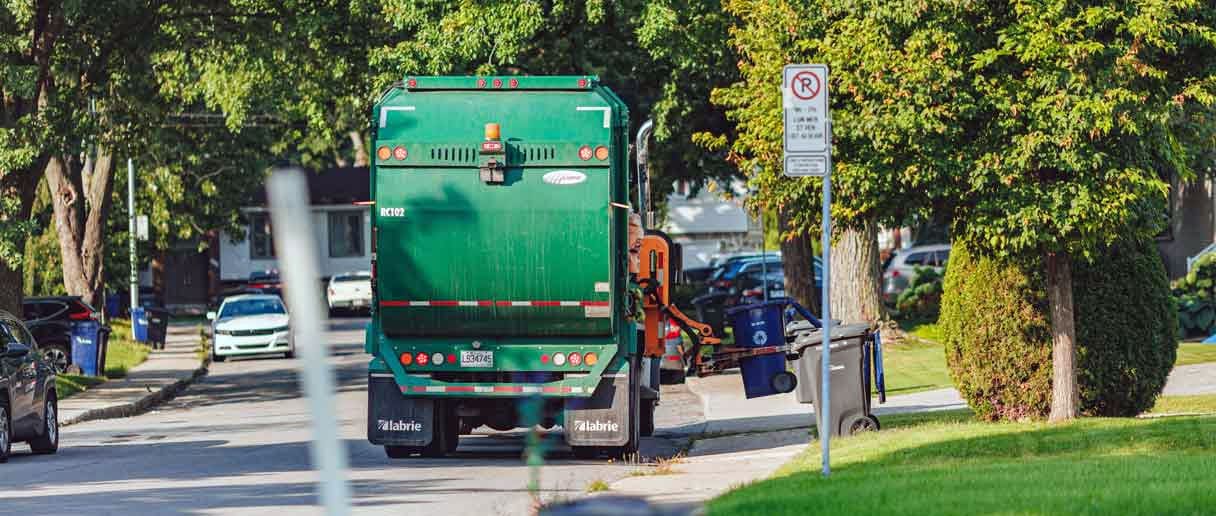
Action Laval city councillor for Saint-Bruno David De Cotis has announced that, along with Laval resident Wael Hamdar, he has sent a joint letter to Laval mayor Stéphane Boyer, asking him to reconsider a decision to refuse to hold a public consultation on the switch to bi-weekly garbage collection, scheduled to begin on April 1.
The request comes as a citizen petition demanding the continuation of weekly collection has nearly reached 9,000 signatures.
No public acceptance, says AL
Action Laval maintains that this clearly demonstrates the lack of public acceptance of the new measure imposed without consultation by the mayor and his team. The petition will be officially tabled next week at the March city council meeting.
“When nearly 9,000 people express their dissatisfaction by signing a petition, the least we can do is open a dialogue,” De Cotis said in a statement. “Refusing any consultation in this context sends the message that citizens’ opinions don’t matter,” he added.
Action Laval maintains that the decision to reduce the frequency of garbage collection was announced in June 2025 without prior consultation with citizens.
Proposal rejected by mayor
The following month, Action Laval city councillor David De Cotis submitted a proposal for a public consultation before the change took effect. The proposal was subsequently rejected by the mayor and his councillors who hold the majority of city council seats.
“Continuing to refuse a public consultation gives the impression that the decision has already been set in stone, regardless of the concerns expressed,” said Wael Hamdar, the resident who launched the petition. “At this point, the mayor must explain why he is choosing to ignore this citizen voice.”
De Cotis and Hamdar are asking the mayor to show openness and to reconsider his position in light of the strong citizen mobilization, in order to allow a genuine public discussion before the change comes into effect.
According to the Canadian Infrastructure Council (whose primary focus is developing national infrastructure assessments that provide an evidence-based picture of Canada’s long-term infrastructure needs), Ontario and parts of Quebec are within a decade of possibly running out of existing authorized landfill capacity.
According to the CIC, landfilling remains the primary method of municipal waste disposal in Canada. Modern landfills collect and treat leachate, the rainwater that accumulates and becomes contaminated as it travels through waste, says the CIC, while landfills equipped with the proper equipment can also capture methane, which can then be used for energy production.
The CIC views landfills as a cost-effective way of managing solid waste, although they do not lead to resource efficiency as a considerable portion of the waste disposed of could have been reused, recycled or composted.
“The nature of the Canadian economy makes landfilling more ideal than recycling in many cases, as both landfilling and raw materials are relatively affordable in Canada,” the CIC states in Solid Waste Management Systems in Canada, a technical paper posted on the CIC website.
Canada is home to over 1,500 active landfills, the majority of which are small and service the many rural communities across the country, adds the CIC.
The contents of landfills can include garbage, which is not processed, and also residual material from processing operations (e.g., material recovery facility residues, incinerator ash, organic processing residues).
Although in theory there is no shortage of land for new landfill sites, environmental, social and legal considerations limit what areas can be developed into landfills.
“In 2022, the Government of Quebec identified that several communities could face local landfills reaching capacity within ten years,” the CIC states in its paper.
“With waste disposal volumes remaining at 2019 levels and no new capacity added to existing landfills, 9 of Quebec’s 38 engineered landfill sites are projected to reach capacity before 2030, and 13 by 2040. Only 16 sites are expected to maintain residual capacity after 2041,” they continue.
They refer to this situaiton as “particularly concerning as engineered landfills account for 92 per cent of disposed waste in Quebec, while noting that some landfills may reach capacity by 2025, and “many of those close to Metro Montreal would reach capacity by 2030 to 2040.”