Sunday, February 22, 2026
8 C
Laval
spot_img
Home Blog Page 163

Laval Police seek Chomedey gas station arson suspects

The Laval Police Department is asking the public for help to identify two suspects who attempted twice to set fire to a gas station located at 470  Chomedey Blvd. in Chomedey recently.

According to the LPD, on Jan. 26 not long after 5 am, the two suspects were spotted by a security camera set up at the gas station.

In the video, the suspects are seen approaching the station and tossing flammable materials towards the gas pumps, as well as at vehicles parked nearby.

Following this, they are seen breaking a window on the gas station building and tossing in more flammable materials, after which they flee.

The LPD says this was the second such incident at the gas station. On Jan. 9 around 4:45 am, two suspects were also seen attempting to start a fire, although they didn’t succeed.

The LPD said they don’t know if the suspects were the same individuals in both instances.

Anyone with information on either of these incidents is asked to contact the LPD through its Info-Line at (450) 662-INFO (4636), or call 9-1-1. The incident file number is LVL 210126008.

Snowfall Tuesday could dump 20 centimeters of snow on Laval

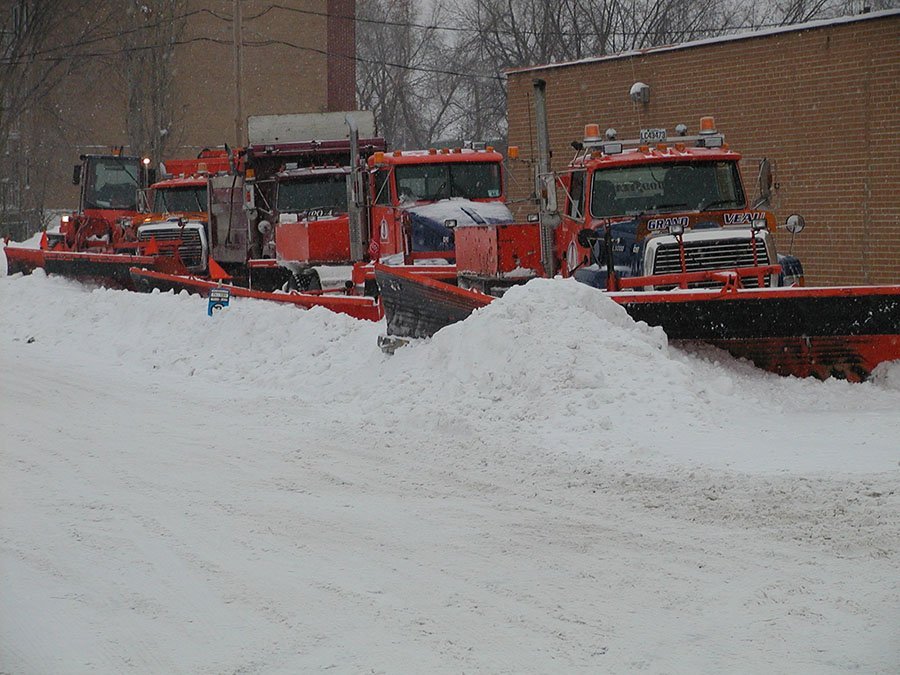
The remnants of a blizzard that has been making its way up the east coast of the U.S. this weekend are expected to still be packing enough power to dump at least 20 centimeters of snow on Laval and the Montreal region on Tuesday.

The storm is expected to start some time during the day Tuesday and continue into the evening.

The wind is expected to be high – around 60 to 80 km/h – causing blowing snow conditions.

Laval Police seek suspect wanted for Jan. 6 Sainte-Dorothée firebombing

0

The Laval Police are seeking the public’s help to indentify a suspect seen in a security camera video throwing a molotov cocktail on the night of Jan. 6 at a home on Bord-de-l ‘Eau Rd. in Sainte-Dorothée, causing a fire.

According to the LPD, the suspect broke a window, then hurled the firebomb inside the home where it caused an unspecified amount of damage. Images of the suspect captured by a security camera show him leaving along Bord-de-l‘Eau Rd. towards Samson Blvd.

A video of the suspect in action: https://youtu.be/lv4KFCXu6eE

Any information that could help identify the suspect can be shared with the LPD through their confidential Info-Line at 450 662 INFO (4636), or by calling 9-1-1. The file number is LVL 210106 008.

Early plasma biomarkers for Alzheimer’s discovered with help from Laval-based INRS

A Quebec research team supported by the Laval-based Institut national de recherche scientifique (INRS) has discovered two early plasma markers to detect Alzheimer’s disease five years before its onset.

The results of this recent study led by the doctoral student Mohamed Raâfet Ben Khedher and postdoctoral student Mohamed Haddad, and directed by Professor Charles Ramassamy of the INRS, have just been published in the prestigious scientific journal Alzheimer’s & Dementia: Translational Research & Clinical Interventions (TRCI).

The diagnosis of Alzheimer’s disease is usually based on a series of psychometric tests assessing cognitive function, brain imaging and cerebrospinal fluid analysis. Yet, these tests have their limitations.

“The lumbar puncture is invasive, while brain imaging is expensive and not 100% reliable. This complicates regular follow-up,” says Professor Ramassamy.

Moreover, people with the disease are often being diagnosed at a late stage of the disease.

“We need to find more and more early markers so we can act as soon as possible. When the disease is symptomatic, there is little, if any, way back,” he explains.  

The research team took up this challenge by discovering two markers, detectable through a blood test, enabling them to follow the progression of the disease.

These markers are found in plasma extracellular vesicles, pockets that are released by all cells in the body and circulate in the bloodstream.    

The variation of markers

The team focused specifically on the “sporadic” Alzheimer’s disease, the most common type of Alzheimer’s. It stems mainly from the presence of the APOE4 susceptibility gene, the E4 variant of the gene coding for apolipoprotein.

Patients with this gene who developed the disease five years later had markers present that varied with the progression of the disease.

The research was carried out by analyzing blood samples collected as part of the Canadian Study of Health and Aging (CSHA).

The population studied consisted of patients with cognitive problems, but not suffering from dementia, only some of whom developed Alzheimer’s disease.

Professor Ramassamy hopes to analyze a larger population with pre- and post-disease samples. This would allow him to determine the progression of markers after the onset of symptoms.

His research on the markers located in the vesicles, opens up the possibility for studying other diseases, such as vascular dementia.

About the study
The article “Apolipoprotein E4-driven effects on inflammatory and neurotrophic factors in peripheral extracellular vesicles from cognitively impaired not demented participants converted to Alzheimer’s disease” follows a study published in February 2020.

The research was supported by a donation from the Charron family through the Armand-Frappier Foundation, as part of the Louise and André Charron Research Chair in Alzheimer’s Disease, enabling the acquisition of a crucial piece of equipment, the NanoSight NS300.

Five types of digestive cancer have been linked to tobacco use

Quebec Council for Tobacco and Health observes Tobacco-Free Week

When most people think of the harm to health caused by tobacco smoking, what’s perhaps more likely than anything else to come to mind are breathing-related health problems such as emphysema and lung cancer.

But how many are aware that smoking, as well as secondary smoke, can also cause five different types of cancers affecting the body’s digestive system?

According to the Quebec Council for Tobacco and Health (CQTS), which marked Quebec Tobacco-Free Week recently, tobacco smoking and secondary smoke account for up to 44 per cent of the development of digestive system cancers, including cancers of the liver, rectum, pancreas, stomach and esophagus.

Digestive system cancers

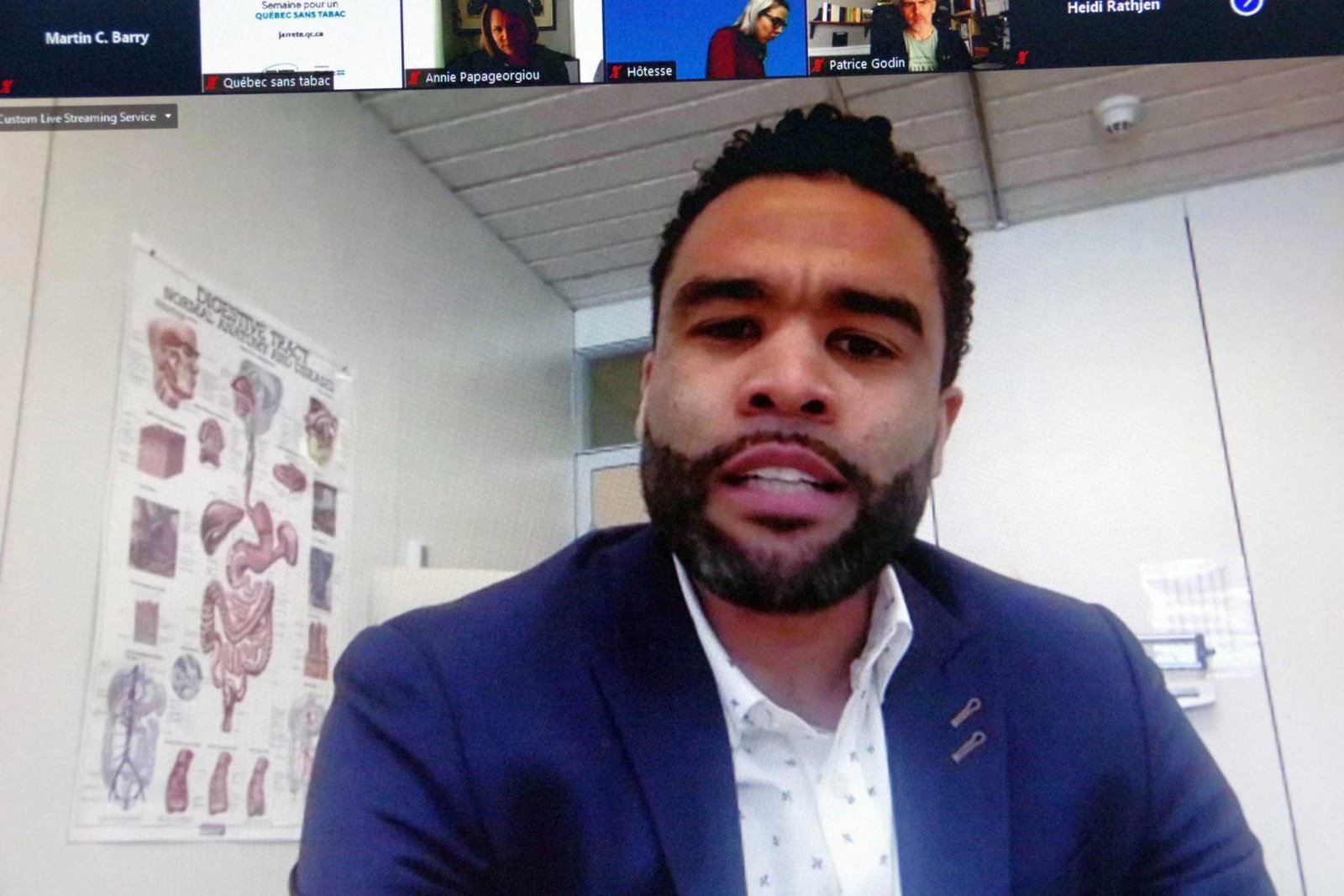
“In Quebec, a significant proportion of digestive system cancers are linked to tobacco smoking,” Annie Papageorgiou, executive-director of the CQTS, said during an online webcast. “These cancers have serious consequences. When you think about it, the risk is high, especially since these cancers can be avoided. We must inform and protect people from the harm done by tobacco.”

Tobacco smoking and secondary smoke account for up to 44 per cent of the development of digestive system cancers

According to the CQTS, one liver cancer in four, one pancreas cancer in five, more than one colorectal cancer n 10, one stomach cancer in five and nearly half the cancers of the esophagus are caused by tobacco smoking.

In addition to this, digestive system cancers are associated with low survival rates. Generally speaking, these types of cancer aren’t detected early enough because symptoms are usually not very apparent.

Quality of life impacted

“Blood in the stool and cancerous masses only appear during late stages of digestive system cancers,” said Dr. Nicolas Benoît, a Montérégie-based gastroenterologist who took part in the webcast. When such cancers don’t prove fatal, they often lead to other consequences that limit living life to the fullest.

For those who’ve smoked for years and don’t think they can quit, the message from the CQTS is that giving up tobacco has long-lasting benefits that safeguard you from digestive system cancers.

Quebec film, TV and stage star Patrice Godin, who was the CQTS’s official spokesperson for the anti-smoking campaign for a second consecutive year, delivered a personal testimonial on his own struggles to quit smoking.

Shortens the lifespan

“On average, smoking reduces a lifespan by 10 years,” he noted. “That’s a lot. That’s why I was looking forward to being back for a second year as spokesperson. There is still so much work to be done to control tobacco abuse in Quebec. It can be through quitting tobacco, helping someone else to stop or raising the awareness of a young person to the importance of not starting to smoke.”

“Effectively under the current circumstances, it is more important than ever to watch out for one’s health,” added Annie Papageorgiou, noting the risks of other types of cancer in conjunction with the ongoing COVID-19 pandemic.

Smoking and COVID-19

“Apart from digestive system cancers, tobacco abuse also affects the respiratory system and smokers are at a greater risk of coming down with a more severe form of COVID-19 than non-smokers,” she said.

According to the CQTS, last year in Quebec 17 per cent of the population 12 years of age and older smoked, for a total of 1.2 million persons. That represents more than one person in six. In this respect, Quebec ranks higher than the Canadian average, which stands at 15.8 per cent of Canadians who are smokers.

Want to speak with a specialist to help you quit smoking? Call the I QUIT NOW helpline. It’s free. Telephone support to quit smoking is available from the CQTS at 1-866-527-7383. Monday to Thursday: 8 A.M. to 9 P.M. Friday: 8 A.M. to 8 P.M.

Mayor’s office welcomes Dufour back onto Laval executive-committee

Council rejects opposition motion that members with election finance issues be suspended

Despite news late last week that councillor and executive-committee member Virginie Dufour is finally being allowed to resume her duties following a recent brush with controversy, opposition council members continue to maintain that Dufour won’t be fully exonerated until a provincial inquiry has been completed.

Mayor Marc Demers’ office issued a statement on Friday last week, saying that Dufour “will remain on the executive-committee of the city” and is back on the committee once again.

After withdrawing from the caucus last November following the public disclosure of a recording on which her election campaign manager appeared to acknowledge the reimbursement of cash donations, Dufour, who represents the district of Sainte-Rose, claimed she was innocent of wrongdoing and asked the Quebec Director General of Elections to investigate.

Donation controversy

In the recording, which was obtained by a francophone Montreal daily and dated from last July, Normand Cusson, who managed at least one of Fournier’s electoral campaigns, was heard speaking with his spouse about serving as a “frontman” for contributions made to Dufour, and how the amounts were reimbursed afterwards.

Citing DGEQ policy, Parti Laval councillor Claude Larochelle noted that the charge against Dufour amounts to electoral fraud and the potential penalty is disqualification from running in elections for five years

Under Canadian and Quebec electoral regulations, serving as a frontman to conceal the contributions of another person or organization is illegal. Penalties ranging up to $20,000 can be imposed on the donor as well as the candidate who refunds a donation.

Illegal financing issues

The issue of illegal campaign fundraising is an especially sensitive one in Laval. Former mayor Gilles Vaillancourt’s Parti PRO des Lavallois was found to have extensively used frontman fundraising tactics. Vaillancourt was convicted of corruption charges and sentenced to six years imprisonment in 2016. As well, six Parti PRO city councillors were censured by the DGEQ for engaging in illegal political financing practices.

On Jan. 13 during the second day of the monthly public city council webcast meeting, executive-committee vice-president Stéphane Boyer (who is currently acting as mayor while Marc Demers takes time off to tend to family issues) noted that virtually all the information regarding Dufour has come through the media.

Allegations ‘serious’: Boyer

While acknowledging during the council meeting that the allegations against Dufour “are serious,” Boyer said he disagreed fundamentally with a resolution tabled by the official opposition Parti Laval. The motion called for council to suspend from committees any city councillor who faces allegations of electoral financial irregularities, and that their committee renumeration also be suspended until the matter is settled.

Boyer suggested that underlying what was heard in the recording was a personal conflict between Fournier’s campaign manager and his wife, who is also heard in the recording, because “he [the campaign manager] was giving a lot of his time to Mme Dufour,” Boyer said.

Electoral disqualification

“I don’t think this is something that it is up to us to deliberate on as a city council,” said Boyer, adding that the DGEQ is mandated to deal with campaign financing irregularities. “There are institutions that are mandated to deal with such situations and that can impose penalties if that becomes necessary.”

Parti Laval opposition councillor for Fabreville Claude Larochelle pointed out that the charge still pending against Dufour with the DGEQ amounts essentially to electoral fraud and that the potential penalty is disqualification from running in elections for five years.

He noted that the resolution tabled by Parti Laval leader Michel Trottier didn’t call for the resignation of Dufour. But Larochelle insisted Dufour should recuse herself for the time being from participating on committees, including some inter-municipal ones on which she represents the City of Laval, for the sake of the city’s reputation.

Winter parking motion defeated

During the same council session, a motion by opposition Action Laval city councillor for Chomedey Aglaia Revelakis, calling on the city to suspend its alternative street parking program during the provincial government’s curfew for COVID-19, was defeated by the administration with support from the Parti Laval.

“I am stunned that our proposal was voted on and rejected forthwith by the party of the mayor and even by Mr. Trottier,” Action Laval leader Sonia Baudelot said afterwards in a statement. “The provincial government is asking us all to stay home to prevent the spread of the virus, and so there are many more cars parked in Laval’s streets than would ordinarily be the case.” Revelakis stated, “We were suggesting a quick and temporary solution to this problem, which hopefully will become only a bad memory. All the same, the administration of Laval has in its hands all the resources necessary to do efficient snow removal, even without alternative parking, just as it is done in other cities in Quebec.”

Saint-François Arena to be renamed in honor of Jacques St-Jean

Action Laval leader and mayoralty candidate Sonia Baudelot joined St-Bruno city councillor David De Cotis last week in paying homage to former councillor for Saint-François Jacques St-Jean by successfully getting a motion passed in city council to rename the Saint-François Arena in honour of St-Jean.

From the left, Action Laval leader Sonia Baudelot, former Laval city councillor Jacques St-Jean and St-Bruno city councillor David De Cotis are seen here outside the Saint-François Arena, which will soon be called Aréna Jacques-St-Jean.

The resolution was proposed by De Cotis and was passed unanimously. The renamed Jacques-St-Jean Arena recognizes Jacques St-Jean’s accomplishments not only as a longtime Laval city councillor, but also his longstanding devotion to promoting team sports among several generations of young Laval residents.

A well-known guy

“Even before I became involved in politics in Laval, I already knew very well the name of Mr. St-Jean,” said De Cotis. “His devotion to the people of Saint-François, as well as his involvement in the community life of his area, along with his many years of coaching young hockey players, added to his reputation as a builder. It should not be surprising that his citizens placed their confidence in him for so many years.”

‘I accomplished what I did because I believe that participation in municipal life is the best way to improve our society,’ said St-Jean

In addition to being a city councillor from 1989 to 2017, St-Jean also managed a hockey school named after him since 1975. A member of the Quebec Hockey Hall of Fame since 1996, Jacques St-Jean played a key role in training and coaching a good number of professional players, including Mike Bossy. St-Jean was also involved for many years in municipal sports and leisure activities in Laval.

Recognizing achievement

“We could not ignore his important contribution to life in our city,” said Baudelot. “It is citizens such as Mr. St-Jean who make Laval such a wonderful place to live. Underscoring the work he did by naming an arena after him was something that had to be done.”

Said Jacques St-Jean, “I welcome this honour with humility. I accomplished what I did because I believe that participation in municipal life is the best way to improve our society. Preparing youths for the world of tomorrow, while gathering citizens around worthwhile projects, was the best thing I could do.” The name change, from Saint-François Arena to Jacques-St-Jean Arena is expected to take over in the coming weeks.

Laval successfully deals with winter’s second major snowfall

The City of Laval’s public works department claims it had great success recently in cleaning up the snow that fell on Laval’s roads, streets and sidewalks during the second significant snowfall of the 2020-2021 winter season.

2nd big snowfall

According to the city, 25 centimeters of snow accumulated in Laval. The city says that crews were active for a few days afterwards tying up the loose ends and throwing down abrasives to deal with patches of ice.

“Operations are going full-speed,” city councillor for Sainte-Dorothée Ray Khalil, who managers the public works dossiers on city council, said last week.

He maintained that the city had received positive feedback from many residents on the efficiency of this snow removal operation through e-mail, social media and the city’s 3-1-1 phone line.

New snow removal gear

The city recently purchased 18 new sidewalk tractor plows, some of which were put into action during the snowfall. Laval’s snow clearning operations can be followed digitally through the website neige.laval.ca. A special app for iOS and Android can also be downloaded from app sites, and the city operates an interactive map of snow removal operations at appneigelaval.laval.ca.

City of Laval defers tax payments to June 16 and Sept. 15

Given the current economic hardship being faced by many homeowners, City of Laval executive-committee vice-president Stéphane Boyer has announced that the city has decided to defer tax payments – normally due in March and June – to June and September.

According to a statement issued by the city last week, the first payment now will come due on June 16, while the second payment will be due on Sept. 15.

‘We are aware that the pandemic is producing terrible consequences for many families,’ says executive-committee vice-president Stéphane Boyer

“We are aware that the pandemic is producing terrible consequences for many families,” Boyer said in a statement, while adding that a tax freeze announced last fall is also among the measures the city is implementing to take into account the financial hardships caused by the COVID-19 pandemic.

Support from city

Boyer said the additional help will offer some concrete support “that will allow the people of Laval to benefit from several months of respite in order to better plan their budgets in the context of their situations. We also wanted to offer a helping hand to our business owners who are experiencing cash-flow problems while waiting for the resumption of economic activities.” According to the city, tax bills will be sent out to property owners on Feb. 16. Last year, the two tax payments were also deferred to Sept. 1 2020 at the latest. Additional information on property tax payments to the city can be obtained on the City of Laval’s website: www.laval.ca.

Newsfirst columnist Robert Vairo’s ‘That’s What I’m Thinking’

A National Emergency Demands Leadership

I watched with envy as some NBC TV affiliate out of Seattle Washington was telecasting a report on how municipal and state governments, and corporations like Starbucks and Microsoft were lending their people to facilitate distribution of 50 thousand vaccines a day. Microsoft will actually set up a drive by location to help health workers inoculate at the rate of five thousand a day. One location, one day, 5 000 arms! I thought wow, all these vaccines and this amazing cooperation from the corporate sector. Excellent public relations, but still, generous of corporate America to step up in time of crisis. But there was more. The reporter then informs the viewer that two thousand pharmacies are set up to administer additional vaccines pouring into the state. What a fantastic logistical set up. And Washington state last week reached another plateau. They’ve moved on to the next round of vaccines for the 65 and over.

What the hell happened to Canada? We don’t know when we’ll be vaccinated, much less where. No need to worry about that this week because we’re not receiving any vaccines, at all.

Less than 2%, about 600 thousand Canadians have received at least the first doze, while the US is close to 15%, Israel had 30% of its population done, and the United Arab Emirates 50% by the end of March.

Why the discrepancy? We have an exemplary health care system, but both of the Trudeau government’s key ministers in this Covid pandemic, have no experience in their roles that is affecting the lives of 38 million Canadians. Health Minister Patty Hajdu was a graphic designer and event organizer before becoming Health Minister. The person responsible for purchasing our vaccines, our life line during this pandemic, Services and Procurement Minister, Anita Anand, with 12 months in politics, was a professor at U of T. Are you still wondering why vaccines are only trickling in by the few thousands for the millions of us? Are you still wondering why many of us have lost faith in this kind of lame authority? This is a national emergency! Where are the heavy weights? Where is the leadership?

It starts at the top. No corporate experience, no business skills, no economic savvy, no background in law, none in science. What do you expect?

The firing, oops, resignation of the Governor General starts with the person who hired her. Justin Trudeau single handedly hired the ex-astronaut to be Canada’s representative. There was a much better way. But he disbanded the nonpartisan committee that provided choices for such a function.

This Prime Minister does not lead, but seems to simply react to how Canadians feel. When we learned vaccines would stop this week from a mere trickle in the last few weeks, Canadians were enraged, and left helpless. Where was our Prime Minister? While other world leaders are constantly in contact with Pfizer, pressuring the pharma giant to speed up delivery, our PM was silent. It took the Premier of Ontario, so often criticized by Trudeau’s minister, to light a fire. “I’d be sticking a ying yang up..” Ford says he doesn’t accept Pfizer’s explanation for delays. “We have a contract. Deliver”.

Five days after the Pfizer announcement, Trudeau finally tweeted he had called Pfizer CEO Dr Albert Bourla. “I have been promised…” We’ve heard that before.

Which brings me to the new American President Joe Biden cancelling our Keystone XL pipeline. This is a blow not only to Alberta. Biden has taken away jobs and income from Canada. Biden paid a debt by penalizing Canada. He promised to appease his left-wing Democrats, at Canada’s expense.

Keystone XL is a politically symbolic pipeline, and it’s hypocritical to stop it. Forbes reports “we track nearly 40 pipelines covering 11,000 miles either being built or in pre-construction development in the U.S.” since 2008 when Trans Canada applied for a permit.

And our Canadian reaction is pathetic. While the US has taken away a chunk of our income our Transport Minister Marc Garneau responds with “I respect their decision”. That’s really sad. Some Premiers were more realistic “a gut punch” and “you don’t do that to a friend”.

On Canada’s west coast, BC ‘s John Horgan promised to make things better if elected with a majority in the snap election last Sept. Since his majority win, Covid infections in BC have increased 667%, sadly, deaths up 393%. (thebreaker.news) Leadership?

And so it goes my friends. Mr. Trudeau may not take the lead but let’s hope he at least reacts to Francois Legault and other Premiers’ demand to close our borders to vacationers, or have snow birds pay their hotel to guarantee their quarantine for two weeks. Beau travail Me Legault!

That’s What I’m Thinking

Robert Vairo

Fifty-three new social housing units for vulnerable persons in Laval

Two of the projects are in Vimy, while another is in Marc-Aurèle-Fortin

Quebec Environment and Climate Change Minister Benoit Charette and Sainte-Rose MNA Christopher Skeete have announced the conclusion of a more than $5 million agreement between the Société d’habitation du Québec (SHQ) and the Canada Mortgage and Housing Corp. (CMHC) for three projects to create 53 new social housing units in Laval.

According to a press release issued by Skeete and Charette, the new affordable housing units will be for women victimized by family violence, and for young adults with intellectual disabilities.

Under the agreement, the Quebec government commits to pay subsidies to supplement rents in some cases for a period of 20 years.

Those renting the units will be paying only 25 per cent of their revenue for their housing needs. Around $131.5 million is expected to be paid in total on all aspects of the project.

The following organizations in Laval are receiving funding to support social housing projects under their sponsorship:

Avenir de femmesLavalLaval23$2,459,396
Bouclier d’Athéna – Maison transitoire 2e étapeLavalLaval17$1,679,552
La Maison du Pas SageLavalLaval13$887,050

The announcement came on the same day when officials from Ottawa and Quebec were announcing an agreement for the construction of nearly 1,500 social housing units in 14 regions all over Quebec.

Highlights:

Nearly $180 million will be invested through the RHI to complete 68 projects across the province. This represents 1,491 new housing units that will be available as of April 1, 2022.

Projects receiving investments under the RHI will target clients with special housing needs. These include:

  • Women and children who are victims of domestic or family violence;
  • Seniors;
  • Indigenous populations;
  • People with mental health or addiction issues;
  • People who are homeless or at risk of homelessness;
  • People with disabilities, etc.

$1 billion will be invested through the RHI to create 3,000 new permanent affordable housing units across Canada to address urgent housing needs. The projects will be predominantly funded through the AccèsLogis Québec and AccèsLogis Montréal programs, funded by the Government of Quebec.

Minister Monsef: ‘Ottawa is spending $100 million, as domestic violence spikes’

Pandemic pressures spur demand for women’s shelters

For nearly a year since the onset of COVID-19, Ottawa has been boosting funding to organizations dealing with gender-based violence – a phenomenon which has risen drastically during the pandemic, as have the pressures placed on individuals and families.

A statement on the federal Ministry for Women and Gender Equality website says, “The COVID-19 pandemic has created unprecedented challenges for those experiencing gender-based violence and the organizations that provide supports and services to them.”

Demand is up, says Monsef

In May 2020, the ministry announced $50 million in emergency funding for organizations providing support and services to those experiencing gender-based violence. In October, they announced an additional $50 million. Then in December, they announced further details on the distribution of additional funding from October.

The measures and investments, according to the government, are supporting shelters and transition housing that provide a safe space for women and their families experiencing violence, while ensuring that anyone facing gender-based violence also has a safe place to turn.

‘The rates of violence against women and girls and children are up and this is not acceptable,’ says Monsef

During an exclusive interview this week with Newsfirst Multimedia, Women and Gender Equality Minister Maryam Monsef said the ministry has been in daily contact lately with organizations in Quebec and the rest of the country that are providing support to those who are fleeing abuse and violence.

“We heard in Quebec, as has been the case across the country, that the demand for services has gone up, and that the pandemic has added greater pressures to families, to individuals,” said Monsef.

‘This violence is preventable’

“The rates of violence against women and girls and children are up and this is not acceptable – this violence is preventable. But our government has been there since the beginning of COVID to provide immediate support to front-line organizations across the country.”

According to Monsef, the Ministry for Women and Gender Equality has provided funding to more than 1,500 organizations over the past year, allowing the groups to stay open, to pay staff and to provide counselling and support services to families undergoing traumatic strife during the COVID-19 pandemic.

Given the uncertain prospects of a foreseeable end to the pandemic or its wide-ranging and long-term impacts, Monsef did not rule out the possibility that the Trudeau government might continue its support past the current commitments.

“Well, you’ve heard the Prime Minister say – and I hope Canadians and particularly those vulnerable women and gender non-binary folks who are in abusive homes and abusive relationships hear this too – that we will be there for you – for whatever it takes for as long as it takes,” she said.

Post-pandemic support

Monsef said that even before the onset of the COVID-19 pandemic in Canada early last year, the Liberal government had already begun increasing funding to groups providing services to those enduring gender-based violence.

“We were able to invest $100 million in emergency COVID funds for frontline organizations to support the most vulnerable in their hour of need,” she said. “And we will continue to be there not just for emergency support, but to help recover from the pandemic once we are able to move to the other side of it.”

Monsef said officials at the ministry are working proactively and taking their lead from the more than 1,500 organizations across Canada that are receiving assistance during the pandemic.

“They are the experts, they are creative, they are there to care for the most vulnerable, and we care about them. Every step of the way we’ve been working with them for the emergency response, but also to build better systems to put an end to violence against women and girls once and for all.”

Internet access accelerated

On a separate but related COVID-19 issue, involving Monsef in her capacity as Minister for Rural Economic Development, she said some of the hardships created by the pandemic motivated the government to accelerate deployment of high-speed internet service to 98 per cent of Canada’s rural and remote areas by 2026 (rather than 95 per cent by 2030, as previously planned).

“Life without internet access was hard before this pandemic and it is hard to endure during a pandemic,” she said. “Before COVID, we were able to provide support and funding so that close to 1,000 communities across the country were closer to getting high-speed internet. And by the end of 2020, tens of thousands of households who didn’t have that access before we formed the government had high-speed internet access.” Last November, according to Monsef, the government decided to accelerate the plan to connect all of the country to high-speed internet. She said the decision was directly related to the situation created by the pandemic. “Having that connectivity is essential right now,” she said. “It’s about health and safety, it enables online learning and telework, and also it makes sure that Canada is competitive.”


Weather

Laval
few clouds
-11.1 ° C
-10 °
-12.1 °
85 %
4.1kmh
20 %
Sun
-1 °
Mon
-2 °
Tue
-7 °
Wed
-6 °
Thu
-2 °