Thursday, February 19, 2026
8 C
Laval
spot_img
Home Blog Page 122

Praise for Government, Crazy Grocery Prices, Christmas

It never ceases to amaze me how governments consistently bungle projects that they were elected and well paid to manage professionally and effectively. And so it’s refreshing to be able to write about the optimism that’s emanating from our west coast. It was a horrific scene of floods and destruction. It is Canada’s worst disaster.

The BC government, corporations and ordinary folk have reacted with swiftness, courage and determination to this horrible and catastrophic blow dealt by Mother Nature. And they are getting it done.

Trans Mountain and Enbridge, that transport gasoline and natural gas from Alberta to most of British Columbians, quickly stopped the flow for precautionary reasons when the rains came (the floods unearthed the pipelines, leaving them exposed or underwater). The BC government, foes in court with these same pipeline companies, actually praised and thanked the corporations.

Newsfirst columnist Robert Vairo.

B.C. acted swiftly in declaring a Provincial State of Emergency to mitigate impacts on transportation networks and movement of essential goods and supplies. It also allowed various government departments to order repairs and reconstruction done immediately, and disburse money in days, which would otherwise have taken months. Victims received an immediate two thousand dollars, a small but well received amount, with more to follow. There was swift and efficient prioritizing and organization. Emergency services went to work literally within hours to assess damage, block roads because of highway wash outs, snapped bridges, and mudslides obstructing routes. They rerouted traffic, closed some roads, and arranged for single lane traffic to allow only emergency and essential vehicles.

The unsung heroes are the farmers affected. Even though some had lost cattle, chickens, hogs, and homes, they didn’t immediately seek shelter but helped neighbours move their livestock first. There are some unbelievable human stories. School kids with fund raisers, Telus $1 million, Stormtech Performance Apparel $600,000 in new clothes, and the list goes on of corporate and private help and donations.

The government ordinance gave powers to their Public Safety Minister Mike Farnworth to freeze gasoline prices that were in effect ten days earlier. Retailers were served with hefty fines for gouging. There was none reported.

British Columbians were told to drive only if necessary, and resume working from home. Fill up was limited to 30 liters at a time except for emergency and essential vehicles, to preserve what gasoline remained There were some cheaters, as there always are, but most abided.

The main transportation highway, the 600 km Coquihalla, the shortest route from Edmonton to Vancouver was scheduled to reopen only at the end of January. Because of the voluminous machinery and manpower dispatched, and the Canadian Armed Forces, some crews working under lights around the clock, ‘the Coq’, (pronounced ‘coke’) as it’s called there, is expected to be back in business some time after Christmas.

There is anger too. The Americans have done little to mitigate flood waters from Washington state from spilling into Canada. The U.S. Nooksack River, is a powerful contributor to floods in Abbotsford BC. There are grounds for a law suit.

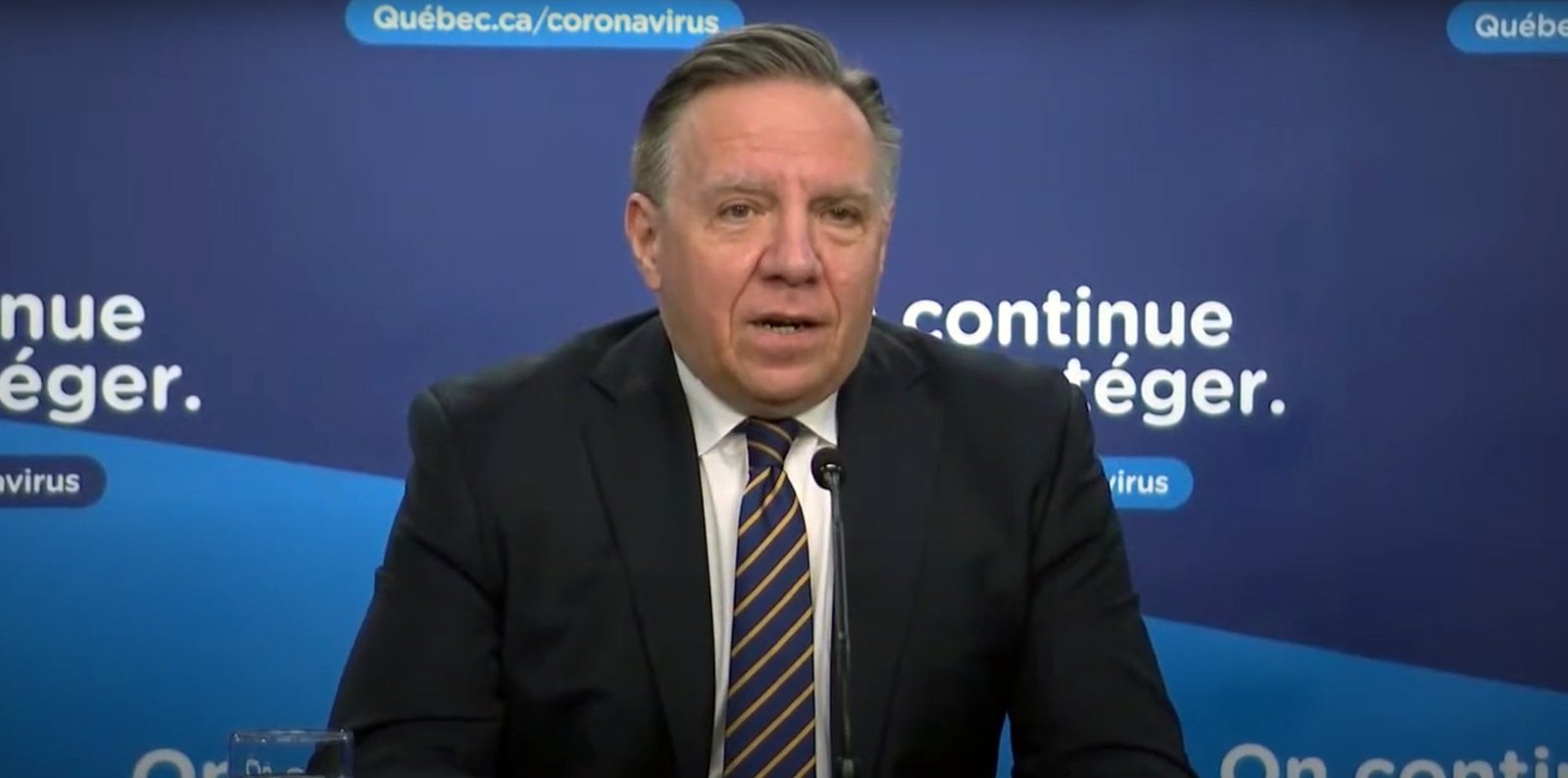
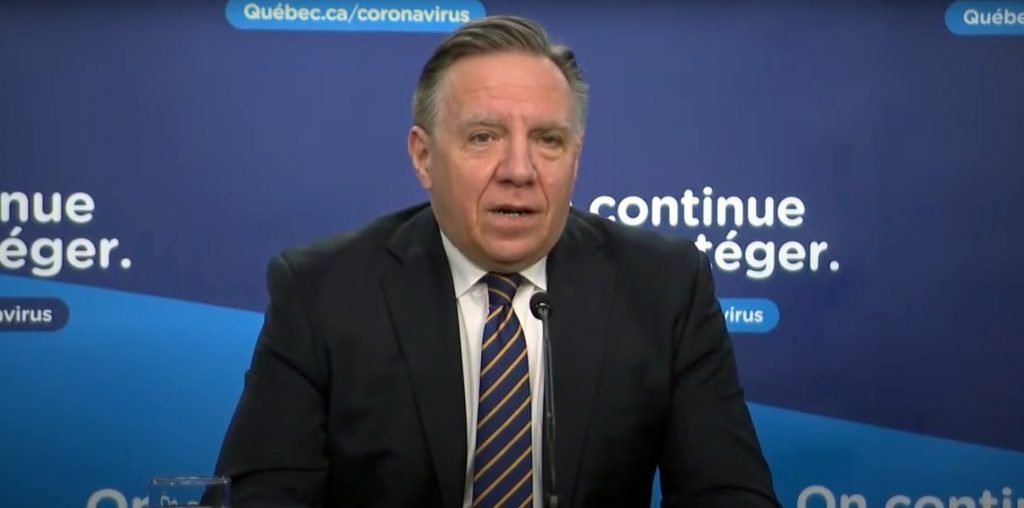
What is also in Canadians’ conversation coast to coast, is COVID-19 infections on the rise, and Omicron expected to quadruple daily case counts. Even at this late stage there is no accountability by the Legault government for “10 times the number of deaths in care homes more than anywhere else in Canada.”

The center stage chatter has to be the stratospheric rise in the cost of everything. We are all noticing because the surge in prices is affecting what we need and buy daily, like food, energy and housing. Inflation in Canada will likely be over 5% this month, it was approaching 7% in the U.S.

Yes, inflation is world wide, but it has domestic roots. And what is astounding is our liberal government’s inability and unwillingness to address grocery store prices, while continuing to plan more record spending.

And this continuous spending has resulted in a warning from the National Bank’s chief economist Stéfane Marion. “We are bleeding capital”. With no new projects allowed, private investment in Canada has slowed since 2015. There is investment in residential real estate though. It now exceeds investment in all the other sectors of the economy for the first time since 1961. That’s not a good economic indicator. Not even Canadian pension funds are investing in Canada. 130 billion dollars have left this country that otherwise would have funded expansion, more employment, especially for the record increase to 400 thousand immigrants now allowed into Canada, one of the highest per capita rates of permanent immigration in the world. Says Marion ““Clearly we are not doing well when our own domestic pension funds prefer to invest heavily abroad rather than in Canada.”

It’s true, the pandemic has dampened toy drives, visits with mall Santas, and annual Christmas parades, but that should not prevent us from enjoying safe, festive, family gatherings.

Hope you had a great Hanukkah, and have a very Merry Christmas.

That’s what I’m Thinking.

Robert Vairo

robert@newsfirst.ca

Mayor and council face questions over ongoing STL labour problems

Responding to 3-1-1 service criticism, Boyer says six new operators hired

The Société de transport de Laval’s ongoing labour dispute and rotating service disruptions were the focus of questions from a concerned resident to Mayor Stéphane Boyer and other elected officials during the first regular public meeting of Laval city council since last month’s municipal elections.

‘Users held hostage’

In an e-mail to the mayor read out during question period at the Dec. 7 meeting, Steve Vézina asked whether the City of Laval has any powers to deal with the pressure tactics currently being used by the unionized STL bus drivers, “because this is completely unacceptable that the users are being held hostage by slowdowns, cancellations and service stoppages,” he said.

Mayor Stéphane Boyer said during the Dec. 7 Laval city council meeting that Laval is doing all it can to resolve the ongoing Société de transport de Laval labour dispute.

While pointing out that many residents of Laval depend on STL bus service to get to work or to appointments, Vézina asked leaders of the opposition as well as the new mayor when the STL could be expected to settle the situation “because we are at wit’s end.”

3-1-1 service criticized

Vézina also complained about the quality of service on the city’s 3-1-1 public works hotline, which suffers from sometimes lengthy delays.

“I am in complete agreement with you that the population should not be held hostage,” said Parti Laval city councillor for Fabreville Claude Larochelle, noting that a few days earlier there was no STL service available at all, while adding that the bus drivers have been without a collective agreement for nearly two years.

Larochelle said he was not in a position to comment on the state of 3-1-1 because the past administration never furnished performance status information on the service to the opposition in spite of their requests.

Depends when you call

Larochelle suggested residents not call during busy hours, such as Monday mornings, but preferably during weekends when the line is far less busy.

Action Laval city councillor for Saint-Bruno David De Cotis, who presided the Société de transport de Laval when he was a member of former mayor Marc Demers’ administration, said he felt confident the STL’s current leadership would eventually reach an agreement with the union.

Mayor Boyer said the STL has been losing immense sums of money since the beginning of the Covid pandemic last year because of lower ridership

As for 3-1-1, De Cotis acknowledged that callers must sometimes wait on the phone from 30 minutes up to an hour for a call to be answered by an operator when the lines are most busy. However, he said the city appears to be heeding advice offered by the opposition last year and the service hopefully will improve under the new administration.

STL losing money, said Boyer

For his part, Mayor Boyer said the STL has been losing immense sums of money since the beginning of the Covid pandemic last year because of lower ridership, although he acknowledged the City of Laval and the Quebec government have been absorbing most of the impact.

“So, when there is talk of improving working conditions and remuneration, the will is there but this would require a particular financial maneuver, and not only in Laval but all over Quebec and elsewhere in the world, so there is this challenge to meet at the moment,” he said. For the time being, he added, negotiations remain underway between STL management and the bus drivers’ union.

More 3-1-1 operators

Regarding 3-1-1, the mayor insisted that most of the time it runs smoothly, although he admitted that the level of service can vary widely depending on the time of year or the day of the week. He said the number of operators on duty can vary and unexpected events such as weather disturbances or power failures can cause the system to become choked with callers.

Members of Laval City Council held their first regular monthly public meeting on Dec. 7 at Laval’s interim city hall on Saint-Martin Blvd.

While maintaining that wait times on Laval’s 3-1-1 service can vary from two minutes up to a half-hour, Mayor Boyer said the city decided recently to hire six more operators. As well, he pledged to begin sharing information and data from the 3-1-1 service with councillors who are members of the opposition.

Polytechnique Massacre

As Dec. 6 was the anniversary of the École Polytechnique Massacre in 1989, a minute of silence was observed at the opening of the meeting and the mayor and several councillors later also made statements.

Boyer noted that the past year saw a significant increase in the number or women murdered in Laval. “It’s a reality which sadly is still among us and that is obviously unacceptable,” he said.

“As a society, we must do everything we can about this problem. In Laval, we have some basic resources to help women who are enduring domestic abuse. We will see what more we can do to support them in the future. We are already supporting them, but we will see what else we can do to go further.”

Laval News volume 29-44

0

The current issue of the Laval News volume 29-44 published December 15th, 2021.
Covering Laval local news, politics, sports and our new section Mature Life.
(Click on the image to read the paper.)

Front page of the Laval News.
Front page of the Laval News, December15th, 2021 issue.

Meteorological Service of Canada issues ‘freezing rain’ warning

The Meteorological Service of Canada issued a weather warning on Tuesday that freezing rain is possible in the Laval and Montreal regions this week on Wednesday and Thursday.

According to the federal weather forecaster, a warm front associated with a low pressure system from the American Midwest will move through the province of Quebec beginning on Wednesday.

Along this front, an area of freezing rain could develop, mainly affecting regions north of the St Lawrence River from Wednesday evening into Thursday morning.

As such, surfaces such as highways, roads, walkways and parking lots could become icy and slippery. As well, the Thursday morning commute could be significantly impacted in urban areas.

LPD arrests man for online threats to health-care workers

A 42-year-old man from Laval was arrested by the Laval Police last week after he allegedly posted threats against health-care workers administering COVID-19 vaccines.

According to Radio-Canada, the man seemed to be a follower of a Canadian sub-group adhering to Qanon conspiracy theories, led in part by a woman from British Columbia.

In a private online chat room, the suspect from Laval posted a press release for a vaccination program at his daughter’s school, claimed Radio-Canada.

Along with the release, he was reported to have written, “It’s time to go hunting bang bang.” The LPD said in a statement issued last week that they took the man’s comments “seriously” and immediately opened a file.

On Dec. 2, he was arrested and met with LPD investigators before being released. He was given conditions to observe, and signed a declaration in which he promised to appear in court at a later date. However, the LPD did not identify the man since he has not been formally charged.

Anyone who feels they have information regarding these kinds of threats they would like to share is asked to contact the LPD at their Info Line 450-662-INFO (4636), or by calling 9-1-1. The file number LVL 211126-085.

Laval man among suspects in RCMP firearms seizure

A 25-year-old man from Laval was among the suspects arrested on Nov. 26 by members of the Integrated RCMP Cornwall Border Integrity Team who intervened for a suspected firearms smuggling operation after a boat crossed the St. Lawrence River and made landfall near Cornwall.

According to the RCMP, three large bags were unloaded from the boat into a vehicle which departed the area. Soon after, the RCMP conducted a roadside stop of the vehicle and found a large number of restricted and prohibited firearms and high-capacity magazines.

Inti Falero-Delgado, 25 years old, from Laval, and Vladimir Souffrant, 49 years old, from Montreal, were arrested. The investigation found a total of 53 restricted and prohibited pistols, 6 prohibited rifles and 110 high-capacity magazines.

The RCMP believes the firearms in question were destined for criminal networks and illicit gun trafficking groups within Canada. The two suspects were charged with unauthorized possession of a firearm, possession of firearm knowing its possession is unauthorized, and possession of weapons for purpose of trafficking.

They are also subject to additional charges under the Criminal Code and Customs Act. Falero-Delgado appeared in court to seek bail and was released with conditions, including a $10,000 bond and an electronic monitoring device he must wear. Vladimir Souffrant also appeared in court and was released with conditions, including a $2,000 bond. They are scheduled to appear again in court by video on January 11 next year.

City of Laval wants Quebec to set city council members’ salaries

Newly-elected mayor Boyer meets Municipal Affairs Minister Laforest a first time

Having recently announced his decision to take a salary cut along with four other Quebec mayors, newly-elected Laval mayor Stéphane Boyer is asking Quebec to pass a law setting the salaries paid to all elected municipal officials, rather than allowing them to decide what they are paid on their own.

A level playing field

A low-key meeting took place last week at Laval’s interim city hall on Saint Martin Blvd. between Mayor Boyer and Quebec Housing and Municipal Affairs Minister Andrée Laforest, ostensibly to allow them to “touch base” for the first time since the Nov. 7 municipal elections.

In the meantime, an illustrated booklet published by the city, concurrent with Laforest’s visit, outlined several dossiers the Boyer administration hoped to emphasize – including the remuneration of municipal elected officials.

Quebec Minister of Housing and Municipal Affairs Andrée Laforest and newly-elected Laval mayor Stéphane Boyer met last week to “touch base” on a range of issues the municipality hopes Quebec will act on. (Photo: Martin C. Barry, Newsfirst Multimedia)

Boyer announced during the election campaign and shortly after taking office that he would join three other Quebec mayors who agreed to reduce their salaries. According to the booklet, Laval is now asking Laforest’s ministry to standardize the salaries of all elected members of city councils across the province.

Quebec would set salaries

As things are now, the responsibility for determining the remuneration paid to mayors and city councillors belongs to the elected officials themselves in each municipality. The new Boyer administration wants the municipal affairs ministry to do what is necessary to level the playing field in all municipalities across the province, rather than allowing the process to take place on a piecemeal basis.

The booklet refers to the manner by which salaries are set now as “leading to sometimes significant salary inequalities between the elected officials in the various cities of the province. A revision is overdue to remedy the situation.

“It must be led by the government of Quebec for the municipalities altogether and according to clear markers that would allow the establishment of a more equitable method that takes into account the size of each city and the responsibilities assumed by the elected officials.”

Local housing problems

A second dossier Mayor Boyer brought up with Laforest concerns the housing element of her ministry. Mayor Boyer drew attention to the significant rent increases and house purchase price hikes that have hit Quebecers over the past year. He suggests the provincial housing ministry can play a positive role by finding the means to control construction costs so that they are not passed along to the public.

Thus, the cities of Laval and Longueuil are both asking the provincial housing ministry to hold a province-wide summit dealing just with the housing issue, and which would bring together several provincial ministries, the private sector, municipal officials and the population.

Boyer’s meeting with Minister Laforest took place a day before the city announced a $400,000 subsidy to boost food security in Laval, with assistance provided from Laforest’s ministry and a private foundation.

Food security subsidy

According to a press release issued by the city on Dec. 1, Laval is giving the subsidy to a community-based collective group which has been offering a vegetable distribution service in Laval for several years, using produce grown on farms located on Laval’s territory.

The six-figure subsidy made to the group, which is working in conjunction with a local meals-on-wheels organization, includes funding not only from the city and the province, but also from the Fondation Lucie et André Chagnon, and will help set up a door-to-door delivery service.

As stated in the priorities booklet, the new Boyer administration also wants to focus on the creation of a comprehensive nature sanctuary on the north shore of Île Jésus that would stretch along a vast area of the Rivière des Mille Îles.

Future nature sanctuary

Although some parts of the plan are already in place (the largest being the Parc de la Rivière des Mille Îles, for example), they are disconnected and the city wants to tie them together with a comprehensive strategy.

And while the Parc de la Rivière des Mille Îles currently consists of 26 hectares of territory, the Boyer administration wants to eventually expand that to up to 500 hectares, which would have a protected status as a nature sanctuary accorded by the province. Among other things, the city’s purchase of Île aux Vaches and Île Saint Pierre with financial help from Quebec will add 160 hectares to the goal. If Laval were to get some neighbouring municipalities to agree to provide additional territory, the park would become Quebec’s largest nature sanctuary in an urban environment.

The Val-des-Brises autoroute interchange is now open

Officials from the City of Laval and from the provincial government were on hand at the edge of Autoroute 440 near Route 125 and Pie-IX Blvd. on Nov. 3 for the official opening of the new Val-des-Brises traffic interchange.

The new traffic link, located between the A-440 and Route 125, cost the City of Laval $25 million, although the construction work was done primarily by the provincial government, and the project was completed six months ahead of schedule. The interchange is expected to help relieve traffic congestion on several nearby streets.

In addition to the overpass structure spanning the autoroute, the project also included the reconfiguration of several adjacent streets, as well as several access ramps.

Northward, Robert-Bourassa Blvd. is now linked to Gaumont St. to the south by way of the new Michel-Ange Blvd. Landscaping work is expected to be completed in the spring of 2022.

From the left, project engineer Farid Rahli, Mayor Stéphane Boyer, François Nadaia (a City of Laval engineering project manager), Sainte-Rose MNA Christopher Skeete, and Carl Denis, a Transport Quebec engineering project manager.

“This link, now an essential one between the north and south of the island, will help calm transiting traffic on streets in the Val-des-Brises sector, while also improving the mobility of Laval residents, by offering better access to areas where there is employment and businesses,” said Mayor Stéphane Boyer.

“It will also be one physical barrier less for active mobility since infrastructure for bicycles and pedestrians have been included in the project,” he added.

“The new Val-des-Brises interchange is a project that was long awaited by the community,” said Sainte-Rose CAQ MNA Christopher Skeete, representing the government. This new link will help facilitate travel between industrial, residential and commercial areas near Autoroute 440.

“These infrastructures will fit in well with the active way of life of those using them thanks to the bicycle paths and sidewalks, which link with the municipal network,” he continued. “The quality of life of all Laval residents and regional economic development will be greatly improved.”

Some facts about the project:

  • Cost: $25 million;
  • 16 months of work;
  • Two lanes (3.5 metres each) in both directions;
  • One concrete sidewalk (1.5 metres) both directions;
  • Bicycle path (1.7 metres) in both directions, a multifunction path along Gaumont St., and extension of sidewalks along Robert-Bourassa Blvd. as they approach the interchange;
  • A central mall 1.5 metres wide;
  • Landscaping.

It’s a go for the 24th Défi OSEntreprendre entrepreneur contest

On Dec. 3, representatives of the City of Laval were on hand for the official launch of the 24th edition of the regional Défi OSEntreprendre entrepreneurs’ contest.

Each year, Défi OSEntreprendre allows thousands of entrepreneurial initiatives from across the province to be placed in competition with one another.

The contest includes segments for youths from grade school to university, for new entrepreneurs, for experienced entrepreneurs, as well as for advanced entrepreneurs whose acquired skills and methods can be learning tools for the less experienced.

“Entrepreneurialism is at the centre of our vision and our actions,” says Mayor Stéphane Boyer. The Défi OSEntreprendre is a window for shining light on the talent and creativity of Laval residents who commit themselves to participating in the vitality of their surroundings and the prosperity of our economy.

“So, I invite those from schools, as well as students who have an entrepreneurial project, including entrepreneurs who are about or who are launching a new business, to register in order to see their project become a reality.”

Participants in the Défi OSEntreprendre become eligible to receive bursaries while also having the opportunity to get media exposure for their entrepreneurial projects.

The deadline to register a project is March 15, 2022 at 4 pm. Information on the criteria for eligibility are available on the Défi OSEntreprendre website. The winners from Laval will be announced in April. A gala will be held in June to honour all the participants from across Quebec.

Skeete skeptical of PQ surge in 2022, while defending CAQ’s brand of nationalism

Is Premier François Legault trying to outpace the PQ with his nationalistic proclamations?

Regardless of where the shifting political layout may go heading towards next year’s Quebec provincial election, Sainte-Rose MNA Christopher Skeete says he isn’t a bit worried about the Parti Québécois or the Liberals nipping at the heels of the CAQ.

Leastways, not with the Coalition Avenir Québec still riding high on the cresting wave of its popularity.

CAQ’s ongoing popularity

Although the Quebec Liberals are the official opposition, they remain buried in a deep valley of unpopularity among Quebec’s voters. The PLQ currently holds just 27 seats, compared to the governing CAQ’s 74 in the 125-seat National Assembly.

And while Québec Solidaire has made great strides in its 15-year history to achieve an all-time high 10-seat standing, they are still regarded in many people’s minds as not much more than a peripheral party that answers mostly to the needs of the province’s marginal classes.

“To say that the PQ is what we’re looking at I think is simplistic,” says Sainte-Rose CAQ MNA Christopher Skeete, the sole Anglophone in the François Legault government. (Photo: Martin C. Barry, Newsfirst Multimedia)

In the meantime, the Parti Québécois, which last formed a government in 2012 – and a minority one at that – currently has just seven seats in the provincial parliament.

CAQ’s ‘economic nationalism’

Although the CAQ has largely succeeded in winning the hearts of a majority of French-speaking Quebecers through its own distinctive brand of Quebec “economic” nationalism, Skeete – the lone Anglophone in the CAQ government – distinguishes between his party’s nationalistic spin, and the sovereignty-centered approach favoured by the Parti Québécois.

Still, as political trends in recent years in the province have demonstrated (the election of the CAQ four years ago being a case in point), the political wind in Quebec can be unpredictable. So, the idea of the Parti Québécois surging back into an influential position, while riding an even greater surge of Quebec nationalism, can not be ruled out.

Bill 22 and surging nationalism

Another case in point. In 1976, two years after Robert Bourassa’s Liberals passed Bill 22 – Quebec’s first comprehensive language law, responding to a rising tide of nationalism among Francophone Quebecers – the Liberal government, although expecting a relatively easy win, was defeated by the Parti Québécois, largely, analysts later concluded, because Bill 22 didn’t go far enough as far as the French-speaking majority was concerned.

‘We need to replace maybe the PQ, but not become the PQ,’ Skeete says, comparing the CAQ with the sovereignist party

Today, looking back, it would almost seem that the CAQ government and its leader, Premier François Legault, are playing a similar game: Trying to keep pace or trying to outpace the latter-day Parti Québécois with his increasingly nationalistic proclamations that fall just short of the PQ’s sovereignist rhetoric. None of this worries Skeete a bit, though.

Comparing CAQ and PLQ

“We’ve shown that it’s possible to be a proud nationalist government and be strong in the economy,” he said in an interview with the Laval News at his Vieux Sainte-Rose office.

“As for the PQ, the only thing that’s left for the PQ then is sovereignty. And, well, that’s been tried and people said no. Twice. So, can the PQ really make a gain? Possibly. I think there will always be separatists in Quebec.”

However, Skeete dismisses the comparison between today’s political landscape and the scenario involving the Liberals and the PQ back in the mid-1970s. “I get the comparison, but history will tell us who’s right,” he said. “But for me, though, that argument underestimates where we are today versus where we were then.

Replacing the PQ, not becoming

“We’ve already tried the PQ. We’ve already tried the sovereignist movement in Quebec, and Quebecers have said no. My take is Quebecers have said, you know, we want a strong Quebec, but we don’t want to leave Canada. What they’re looking for is a way of being and assuring another 400 years of French in North America without leaving.

“And I think that’s the strength that the CAQ brings,” he added. “Which is why I think the PQ is off-base because I think they go too far. So, sure we feel pressure in the sense that we need to give Quebecers that comfort that the language and the culture will continue. But to say that the PQ is what we’re looking at I think is simplistic. We need to replace maybe the PQ, but not become the PQ.”

‘The proof is pretty shoddy’

Collège Letendre ‘no stopping’ tickets denounced as a ‘scam’

Is it a scam or a legit way for the City of Laval to give out tickets and collect fines for ‘no parking’ and ‘no stopping’ infractions allegedly committed by parents waiting for their kids outside a school? You be the judge.

Will they stand legally?

While the Laval Police Department admits it has been working with the city’s parking tickets department to issue citations to car owners whose license plate numbers the ticket agents jot down, a legal expert consulted by the Laval News questions the validity of those tickets, suggesting they might not stand up if contested in court.

Whatever ambiguities there may be, there is no doubt in the mind of George Ziakas that the partnership between the parking agents and the LPD, as well as the method they are using, is no more than a con job.

In this photo also taken by George Ziakas in October, vehicles can be seen outside Collège Letendre parked and double-parked during one of the school’s two rush-hours.

The Saint-Martin district resident, whose children attend Collège Letendre on de l’Avenir Blvd. in downtown Laval, has been ticketed several times in recent months while dropping off or picking up his children before and after school.

Tickets came by mail

Problem is that each time he’s been given a ticket, it came by mail, instead of being issued to him personally by a parking agent or a police officer as is the normal procedure.

As is so often the case at schools in many neighbourhoods, Collège Letendre has had its share of problems managing the dozens of parents’ vehicles that stop and idle outside the school during the morning and afternoon rush hours – sometimes double or even triple-parked on one of Laval’s busiest arteries.

Street signage on de l’Avenir Blvd. outside the school states clearly that no stopping is allowed at any time. A small drop-off area a little further south but still in front of the school, with space for five or six cars, allows drivers 15 minutes of parking.

Parking problems at school

The school has apparently sent out e-mail notices to parents on numerous occasions, warning them of the hazard when drivers illegally stop, double-park or even triple-park on de l’Avenir Blvd.

In an e-mail to the Laval News, Ziakas described the actions of one parking agent who parked his vehicle for more than an hour on the grounds of the school, while jotting down the license plate numbers of cars on the street.

According to Ziakas, the agent may take down the numbers from more than three dozen license plates when he’s assigned to work outside Collège Letendre. “He writes up to 40 license plate numbers the days he is present without physically giving out any tickets,” he said.

In this photo taken in late October by George Ziakas, a City of Laval parking agent can be seen jotting down license plate numbers of vehicles parked on the street (left) while allegedly in violation of the posted parking and no stopping rules.

Ziakas suggests that this is a haphazard way of determining which car owners are actually guilty of illegally stopping or parking because it’s too easy to make errors.

Police issue the tickets

“He’s just making notes of whoever is parking or stopped there for maybe a second or five seconds,” he said. “The way they’re doing it, the guy is just taking notes of license plates, then he passes the information onto the police department, and then the police department sends out the tickets.”

Ziakas noted that over the past 15 years, Collège Letendre’s student population has grown from 700 students to around 1,700 now. “More students equals more cars,” he said.

Chantal Moreau of the Laval Police Department’s public affairs department told the Laval News that the LPD had been receiving complaints about the situation outside Collège Letendre for years and that they tried many different approaches before resorting to a more drastic strategy.

LPD confirms using strategy

“If the parking agent or the police officer were to take the time to verify and check with the people in each vehicle, then we will never be able to fix the problem,” she said, noting that there are simply too many vehicles breaking the no stopping and limited time parking rules to be dealt with effectively.

“Yes, someone is taking down the license plate numbers, they are taking down the most they can,” she confirmed, while adding, “The infraction citation is filled out by the parking agent and is sent out by mail.”

Legal expert questions validity of infraction statements because of ‘hearsay’ factor

Avi Levy, a former Montreal crown prosecutor who co-founded the legal firm Ticket911 specializing in driving and parking violations, questions the validity of the tickets issued using the two-step strategy. “It’s clear that the parking agent is not a peace officer or a police officer,” he said.

Calls agent’s report ‘hearsay’

“So, the parking agent’s report is going to be hearsay as far as the proof and the ticket. Which means the only time it will be valid is if the police counter-signs the report. And if the police counter-signs the report, then the agent will have to go to court and testify. And if he doesn’t, then the ticket will probably get thrown out.”

Overall, he described the tickets in question as “not the best tickets, it’s not the best proof. The proof is pretty shoddy. And I think that if we were to challenge them, we would probably have a high rate of success.”

The Laval News reached out to Collège Letendre for their take on the situation, but they had not responded to a voice mail we left on their phone system last week in time for our deadline.

Laval News Volume 29-43

0

The current issue of the Laval News volume 29-43 published December 8th, 2021.
Covering Laval local news, politics, sports and our new section Mature Life.
(Click on the image to read the paper.)

Front page of the Laval News.
Front page of the Laval News, December 8TH, 2021 issue.

Weather

Laval
broken clouds
-1.5 ° C
-0.6 °
-3.1 °
53 %
3.1kmh
75 %
Thu
-2 °
Fri
-4 °
Sat
-6 °
Sun
-0 °
Mon
-3 °