Thursday, February 19, 2026
8 C
Laval
spot_img
Home Blog Page 114

Laval News Volume 30-07

0

The current issue of the Laval News volume 30-07 published February 23rd, 2022.
Covering Laval local news, politics, sports and our new section Mature Life.
(Click on the image to read the paper.)

Front page of the Laval News.
Front page of the Laval News, February 23rd, 2022 issue.

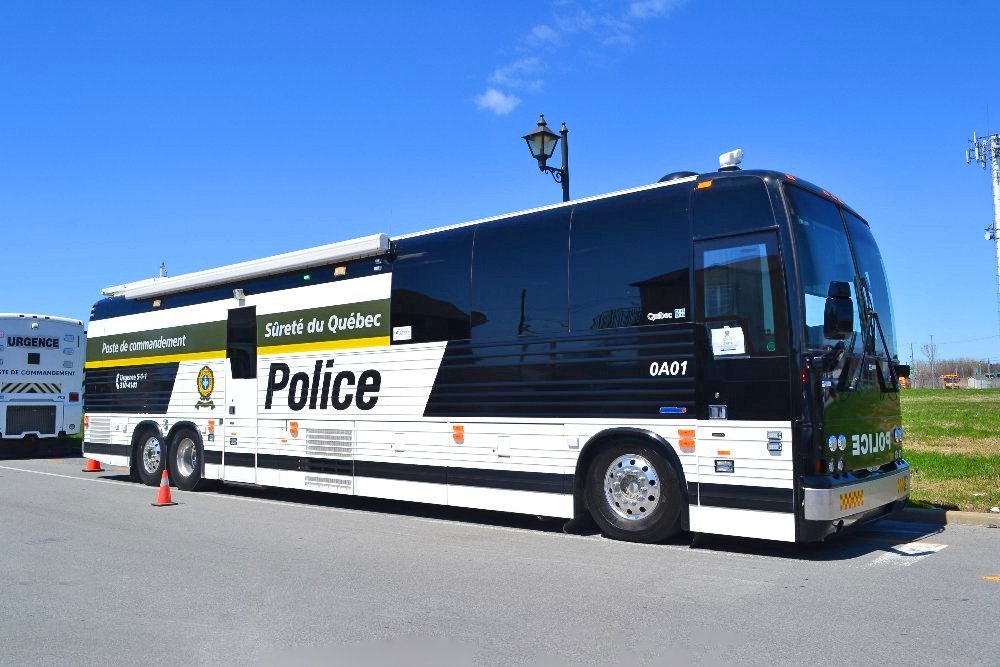
LPD has been on a ticketing blitz near school zones

Officers with the Laval Police Department issued more than 3,000 tickets since the beginning of the school year last September for driving offenses committed while proceeding through school zones.

It is estimated that in Quebec, around 550,000 students rely on yellow school bus service to get to school. In recent weeks, the LPD has been out in certain strategic locations near schools, carefully watching for drivers not paying attention and proceeding past school buses when the yellow flashers are activated.

At the same time, they’ve also been using laser and radar technology to monitor the speed of vehicles passing through school zones and issuing tickets when drivers are above the posted speed limit.

For those drivers who get flagged down, the fines can be steep. In one instance, a young female driver who was late for work was caught speeding and was served a $267 ticket, as well as seven demerit points that could drive up the cost of her SAAQ fees when they come due for renewal.

Since last September, the LPD has carried out more than 700 surveillance operations near schools in the City of Laval. Since school zones are clearly designated along streets with special signage, the advice to drivers from the force is that they should heed the warnings immediately and slow down.

During one recent operation, LPD officers stopped and ticketed six drivers in less than 90 minutes. Most of the infractions were for speeding, although one was for going through a red light.

The penalties for driving offenses committed in school zones are especially costly, ranging from $200-$300 and a loss of up to nine demerit points.

Laval man faces human trafficking charges in Ontario

After recently arresting a man from Laval on human trafficking charges, police in Durham, Ont. put out the word that they are seeking out any additional victims while pursuing their investigation.

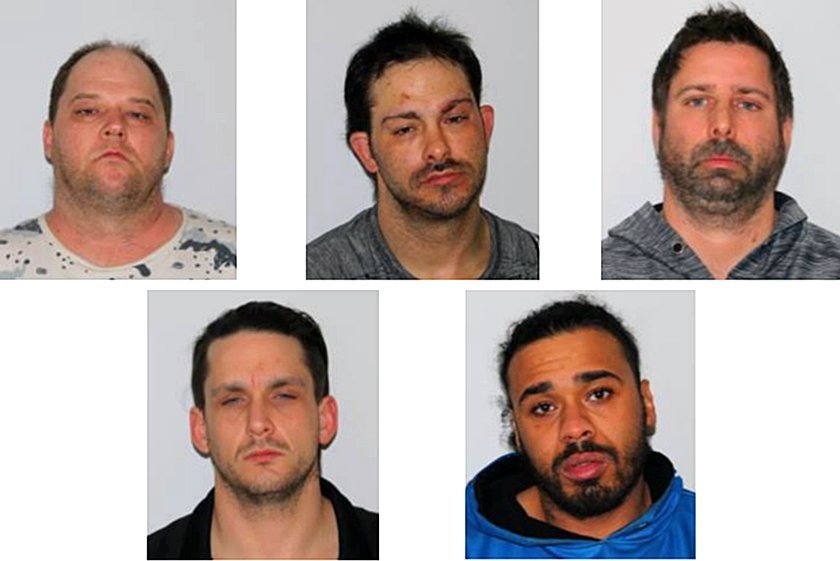
Bruno Diebe-Marquez, age 23, of Laval was arrested in Ontario.

As part of the investigation, officers from the Durham Regional Police Service’s Human Trafficking Unit made an intervention at an unnamed Whitby hotel. There, Bruno Diebe-Marquez, age 23 and identified as being from Laval, was arrested and informed he faced several charges.

The charges included material benefit from sexual services, procuring a person to provide sexual services for consideration, uttering a forged document, obtaining sexual services for consideration, and possession, transfer and sale of an identity document belonging to another person.

In addition to all that, Bruno Diebe-Marquez also faces drug possession charges. The investigators released a photo of Diebe-Marquez in the hopes that other potential victims will come forward. Anyone with information is asked to call the Durham Police Human Trafficking Unit at 1-888-579-1520 ext. 5600.

Montreal Canadiens’ new interim-head coach says it’s the fulfillment of a dream

Hockey Hall-of-Famer Martin St-Louis first pulled on skates at Laval’s Aréna Samson

After all the excitement last week over news of the Montreal Canadiens’ appointing Martin St-Louis as the new interim-head coach of the Habs, let it not be forgotten that St-Louis – a 2018 inductee into the Hockey Hall of Fame – has significant roots in Laval that stretch back to his childhood.

In April 2017, the City of Laval officially recognized the impact that Martin St-Louis had on this community when it chose to rename the Samson Arena in the district of Sainte-Dorothée the Aréna Martin St-Louis.

A renaming ceremony, attended by then-mayor Marc Demers as well local minor hockey supporters, marked the completion of a recent round of renovations at the arena, while also honouring the retired NHL right-winger whose name was mounted from that point on the arena’s front outside wall.

Started at Samson Arena

For St-Louis, who had retired two years before from the New York Rangers, it was a homecoming, since he got his start in hockey while playing at peewee and junior levels at the Samson Arena. Laval is indeed Martin St-Louis’s hometown, born and raised here by parents Normand and France St-Louis on Nadeau St. in the district of Saint-Martin.

The Habs new interim-head coach Martin St-Louis grew up in Laval’s Saint-Martin neighbourhood. (File photo: Martin C. Barry, Newsfirst Multimedia)

Never officially drafted into the NHL, despite his numerous hockey accomplishments, Martin St-Louis nonetheless began his professional career with the NHL’s Calgary Flames in 1998 and ended it with the New York Rangers in 2015. His longest stint, around 14 years, was with the Tampa Bay Lightning, for which he helped win the Stanley Cup in 2004.

A highly skilled player

In the tradition of hockey players such as the Montreal Canadiens’ Yvan ‘The Roadrunner’ Cournoyer, who reached the top in a sometimes brutal sport despite a relatively small stature, Martin St-Louis was also regarded as a highly-skilled player from the beginning of his career in college-level hockey, even though he was only 5’ 8” and weighed in at just over 180 lbs.

During his professional career, St-Louis played in six NHL All-Star games. In 2003-2004, he won the league player association’s Lester B. Pearson Award and the Hart Memorial Trophy as the NHL’s most valuable player selected by other NHL players and league officials.

Leading NHL scorer

During the same period, he was also the NHL’s leading scorer with 94 points one year. Nine years ago at age 37, he had the distinction of being the oldest player in the NHL to again lead the league in scoring. And St-Louis was a member of Canada’s gold medal-winning team at the 2014 Winter Olympics.

The crowning achievement of Martin St-Louis’ career may well have been his formal entry into the Toronto-based Hockey Hall of Fame. Over a span of 17 seasons, he racked up 1,033 points in 1,134 games. During this time, he managed to win the Lady Byng Trophy for balancing skill and sportsmanship three times. He also won the Art Ross Trophy for points performance twice.

The Montreal Canadiens’ new interim-head coach Martin St-Louis did the honors of dropping the first puck during a junior league hockey match held in April 2017 when the City of Laval renamed the former Samson Arena in Sainte-Dorothée the Aréna Martin St-Louis. (File photo: Martin C. Barry, Newsfirst Multimedia)

Fulfilling a dream

Last week, following Habs management’s announcement that Martin St-Louis would step in to replace the fired Dominique Ducharme on an interim basis, St-Louis said he’d enjoyed the time he spent since retirement in the company of his family, but that the position with the Habs was the fulfillment of a dream.

“I’m very blessed to have such a great wife that again allowed me to pursue the thing that I always wanted,” he told journalists during an official announcement in Montreal. This was in spite of the well-known fact the Montreal Canadiens have sunk to a new depth among NHL teams, as the crew in very last place, after reaching the NHL playoffs last year.

Will be focusing on the job

Despite his dazzling career on the ice, something else that’s become a touchy point for Habs management is the fact Martin St-Louis has virtually no experience behind the bench as a professional coach. However, St-Louis said what helped him most as a player was his ability to focus on the task at hand while putting aside criticism.

Martin St-Louis has roots in Laval that stretch back to his childhood

“As an athlete, as a human, all that stuff that people want to doubt or talk and say and comment to me – it’s all noise,” he said. “There always been noise. Now, I’ve always been a guy that blocked the noise and gets after it and that’s what I intend to do.”

STL claims ‘breakdown’ of negotiations with its drivers

The Société de transport de Laval says it recently tabled yet another proposal for arbitration with its drivers, who are currently involved with the STL in an extended labour dispute.

In a statement issued last week, STL management noted that over the past two years, 34 negotiation sessions took place with drivers’ union representatives, in addition to a recent closed-door negotiation session between the two sides in the dispute.

“The STL deplores and has difficulty understanding why the union has refused this solution which would have resolved the current impasse,” the transit agency said. “This situation which continues is needlessly harming the clientele as well as efforts by the organization to get public transit up and running again.”

The STL maintains that it has been acting in good faith throughout the process, modulating its offer on several occasions while also withdrawing a large part of its initial demands in order to concentrate on the main issues, and respecting the financial reality.

“It should be emphasized that public transit has been severely impacted by the pandemic these last two years, and more recently during the Omicron wave,” the STL said. “This situation caused a significant drop in ridership and an important drop in revenues for most public transit agencies in the metropolitan region.”

Bus drivers’ union says Mayor Boyer has a ‘closed door policy’

In a statement issued on Feb. 10 by the Syndicat des chauffeurs de la STL (CUPE 5959), the bus drivers’ union confirms that negotiations with the Société de transport de Laval (STL) have bogged down.

While public transit planning within the Montreal Metropolitan Community “has been a resounding failure and the social climate demands a drastic change in mobility,” add union officials, “the Laval bus drivers’ union has expressed great disappointment over the mayor’s refusal to meet with them.”

“What angers union members even more are the reasons why Laval’s new mayor, Stéphane Boyer, doesn’t want to meet with the president of CUPE Quebec, Patrick Gloutney and union representatives,” stated union president Patrick Lafleur.

“Members of the executive did meet with Boyer back on August 19, 2021 when he was running for mayor at the time,” Gloutney continued. “Unfortunately, public transit does not rank high up on the new mayor’s list of priorities. If that were the case, he’d be talking with the people concerned to find sustainable solutions to ensure effective public transit service in Laval.”

Gloutney said “the mayor’s lack of openness comes at a time when negotiations with the union have gotten quite difficult. The 635 bus drivers, who have been without a contract since July 2019, are determined to renew their collective agreement in good faith.”

He said that talks have bogged down, particularly over insufficient wage offers from the STL, “which, in these inflationary times, will mean greater poverty for the membership. The latter have struck for five days to date, the last time back on December 19, 2021.”

He said the atmosphere in terms of labour relations and at the bargaining table continues to deteriorate, while noting that at a mediation session the day before, “employer’s representatives did not see any purpose to using all of the time allotted to respond to the union’s proposal, even though committee members had come out in good faith to get a negotiated settlement between both parties.”

Gloutney said “the ball is now in the employer’s court,” while maintaining that the union “is hoping to receive a satisfactory wage offer.”

Quebec Transport Minister tells SAAQ to shell out $1 billion to retired accident victims

Bonnardel’s legislated revisions will also make digital log-keeping mandatory on trucks

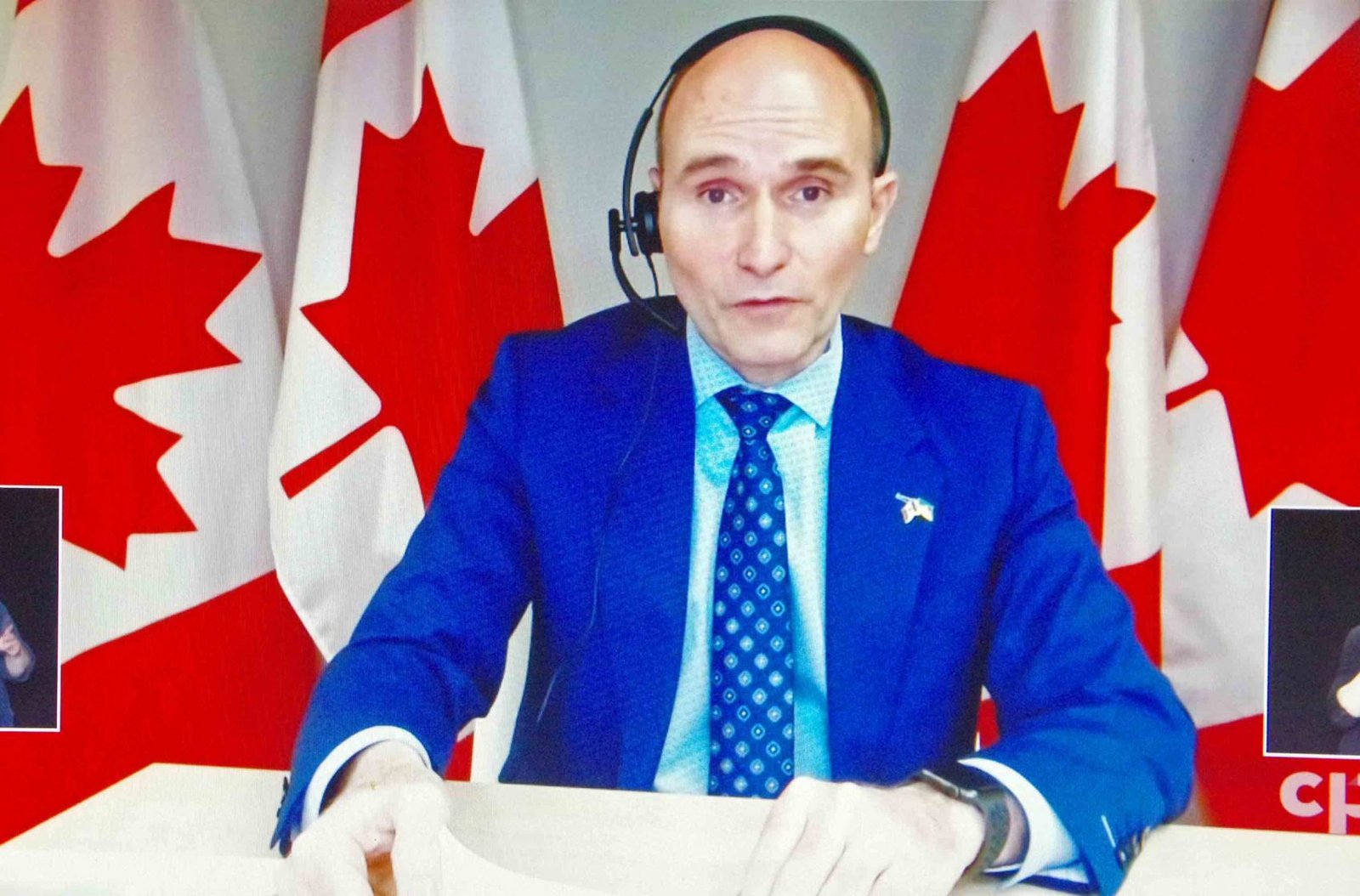
The CAQ government’s Minister of Transport François Bonnardel has announced some forthcoming legislative changes that will see $1 billion from the Société de l’assurance automobile du Québec (SAAQ) repurposed to compensate retired Quebecers who were seriously injured in road accidents and collisions.

Last week, Bonnardel unveiled a proposed new law, Bill 22, to amend changes that had been made by previous governments to provincial public auto insurance regulations (Loi sur l’assurance automobile LAA), as well as the Highway Safety Code (Code de la sécurité routière CSR).

$4.8 billion surplus at SAAQ

In addition to its mandate to manage the province’s public no-fault auto insurance system, the SAAQ also administers Quebec’s system for driver licensing and vehicle plates. According to a recent media report, the SAAQ currently is sitting on a surplus of $4.8 billion.

Quebec Transport Minister François Bonnardel has tabled legislative revisions that will increase payouts to some accident victims, while introducing some changes to the trucking industry. (Photo: Courtesy of Coalition Avenir Québec)

The proposed changes, according to a news release from Bonnardel’s ministry, would modify compensation from the SAAQ to accident victims older than 67 years, so that amounts paid out to injured retirees make allowance for the rising cost of living.

“This proposed law takes into account, among other things, that persons who were road accident victims will be able to have a decent retirement, because since 1990 they no longer had access to the indemnity to replace revenue at 68 years,” the ministry said in its statement.

Other changes in Bill 22

According to the transport ministry, the legislation also aims to improve client service at the SAAQ, to spruce up the public auto insurance system and clarify some road safety regulations, while dealing with a few other issues raised in recent years by auto insurance users and players in the truck transport industry.

The revised system would provide retired beneficiaries with revenues based on the average wage of Quebec workers in cases where injuries were deemed most serious, as well as to compensate for their loss of income over the span of a career.

In one example, the amount typically allowed for the home care of someone who becomes quadriplegic after a road accident would increase from $949 to $1,500 per week. As well, the indemnity for funeral costs would increase to $7,500. And benefits paid to a deceased beneficiary’s surviving partner would no longer be based on the age of the deceased.

Fixing an error, says Bonnardel

“This proposed law will allow us to correct an error made by governments which came before us and which has been having major financial consequences on victims older than 67 years,” Bonnardel said during a webcast press conference from Quebec City last week to announce the changes.

‘This proposed law will allow us to correct an error made by governments which came before us,’ says bonnardel

“This is a billion dollars that we are returning to accident victims and their families thanks to this proposal,” he added. “Our government is also responding to several preoccupations by citizens and in the road transport industry, which have to do with service to the clientele.”

The provincial transport ministry says the primary purpose of the proposed modifications to the LAA is to “better reflect the prevailing cost of living, while offering better financial compensation to road accident victims and their families.”

Digital logging on trucks

The changes “aim to help avoid that certain persons who had to absent themselves from their work because of a long recovery period should find themselves with a significant loss of revenues once they reach the age of 68,” the transport ministry said.

Among other things also contained in Bill 22 will be changes to the Highway Safety Code, making it mandatory for transport trucks to be equipped with digital logging devices to replace the now often-handwritten logbooks that many truckers had continued using in recent years to record their periods of work and mandatory rest while on the road.

Efficient data collection

“In 2022, it makes sense to have data collected on a machine like this, and not having them on paper,” Bonnardel said, noting that the devices typically cost truckers or their employers $300-$600 per vehicle and that they are becoming the standard in the industry.

Bonnardel’s announcement comes after his ministry said in April last year that the SAAQ would be remitting in 2022 and 2023 more than $1.1 billion to the 6.4 million Quebecers who hold driver’s licenses. The move is expected to amount to a savings averaging $184.11 per regular permit, and $338.15 for those licensed to operate motorcycles.

#NewsMatters: The National Assembly Report

How we navigate out of pandemic has become alarmingly divisive in Quebec

Raquel Fletcher in Quebec City

It’s become clear politicians, like Quebecers in general, are fed up with the pandemic that keeps dragging on. Health Minister Christian Dubé even let loose a swear word Friday in the house. Ignoring all decorum, he described the COVID-19 health crisis as “this damn pandemic.” But while everyone can agree the frustration is universal, the question about how to navigate out of this crisis has become alarmingly divisive.

This past week, Quebec lawmakers have had to contend with threats of armed violence. Organizers of the Quebec City trucker convoy, which drew thousands of protesters two weekends ago (and hopes to do the same next weekend) published videos online in which they claimed they knew of people who were considering “taking up arms” and attacking the National Assembly.

Premier François Legault then raised ire and eyebrows when he lashed out, not at the people making threats, but at his political opponents. He accused both the Liberal Party and the Parti Québécois of condoning violent behavior. In nuanced statements, the opposition parties had told reporters earlier that the government was partly responsible for polarized attitudes and rising social division. However, they also unequivocally condemned all threats of violence.

During a debate Friday morning, Liberal MNA Monsef Derraji called out Dubé when he repeated the premier’s comments.

“I want to put an end to this once and for all,” Derraji said, addressing the speaker. “There is not one MNA, not one, in this legislature who encourages violence.”

Quebec City correspondent for Global Raquel Fletcher.

“To suggest otherwise is irresponsible in my opinion,” he added.

The minister eventually acknowledged he was in the wrong. “I’m sorry and I think it’s important Quebecers see us all working together,” Dubé said.

The apology might also be a sign the government believes it’s in its best interest to maintain a constructive and collaborative tone with opposition parties. The trucker convoy in Ottawa, which has now led to Ontario declaring a state of emergency, is stoking more and more tension in the population, as well as anti-government sentiment. Quebec, conscious it needs to tread carefully to avoid similar protests, has now released a reopening calendar with things slated to get back to normal by mid-March. The Legault government hopes this will release the building pressure.

Refusal to end state of emergency

However, Quebec refuses to end the public health state of emergency order, which gives the government exceptional powers to act without debate at the National Assembly. Opposition parties argue this cannot continue.

Debate is needed, they say, to answer pressing questions: Is the vaccine passport still effective? Should mask mandates stay in effect long-term? What happens in the event of a sixth or even seventh wave? Will there be more shutdowns? The only way out of this pandemic, opposition parties say, is if government allows the return to the regular way of debating and passing legislation, rather than governing by decree as it has been since March 2020.

The government sort of agrees. The health minister says he plans to table a bill to address these questions when the National Assembly reconvenes after the March break.

Despite the calls from both sides of the house for more collaboration, politics remains a game of division. That is the very nature of government: to argue, to criticize, to oppose, especially when the province is headed towards an election campaign. But it’s often hard to see when creating division goes too far.

Painting into corner over bilingual judges

In another example this week, French language minister Simon Jolin-Barrette tried to paint the Liberal Party into a corner over bilingual judges. After rising to defend English-speaking communities the week prior, the Liberal Party then supported the minister’s motion this week to affirm that the province should not disqualify unilingual candidates from becoming judges.

Liberal MNA David Birnbaum accused the Legault government of trying to create a conflict where none need exist. He said it is possible for Quebec to strike a balance between the right to work in French and the right for the English minority to have access to justice in their maternal language.

However, playing identity politics can be advantageous for parties, according to Laval University political science professor Marc André Bodet.

“Identity politics has been very useful for the CAQ,” Bodet explained. “It was a way to marginalize the Parti Québécois, but also to marginalize to a certain extent, the Liberal Party.”

“In that sense now a part of the CAQ branding is a defense of the Quebec identity, whatever that is,” he added.

But Bodet cautions against the government and all parties playing that card too often in the current political climate.

“There is a major event that is very salient. That is COVID-19. And then there’s a lot of small politics going on and parties are trying to make gains at the margin.”

In other words, Bodet believes there are few political points to be scored from these kinds of tactics. But there are potentially many political points to be lost when parties start accusing each other of things like inciting violence. Maybe a better strategy is more cohesion and less division.

Has masking in schools exceeded its best before date?

Children and teenagers bearing the brunt of health-threatening policies whose risks are outweighing their benefits

From a political and legal standpoint, the battle over whether mask wearing should be enforced in schools is still raging. Add to this that from a scientific standpoint, the issue of whether masks really do help curb the spread of the coronavirus in schools or in fact, anywhere, has gained enormous ground.

Close to home, students at Laval Senior Academy, weary of the tiresome mandate to wear masks throughout the school day, spontaneously undertook a semi-official protest over the mask restrictions imposed by the government and the school board. Numbering 200, these students became part of a scenario reflecting not an isolated occurrence but a trend rapidly developing across the world whereby students, in the thousands if not millions, are speaking up, demanding that their needs be respected. They are fed up, to say the least, with the violation of their rights.

Public-school students have to, by law, check out their constitutional/human rights, and whether schools can punish them for speaking out depends on where, when, and how they decide to express themselves. Caution.

The assertion that forced-masking all children ages 2 and up has any impact on school safety vis-a-vis COVID-19 is not data-driven and is not reflective of a scientific consensus. Several studies over the past year have claimed without proof that widespread masking can significantly curb transmission among students.

The question, then, becomes what to do in the face of the pandemic, regarding masks? In public schools, especially, the powers that be, the school board, must convert its current policies and strategies, to more normalizing applications of common sense through extensive implementation of such measures as fresh-air, air purifiers, and yes some social distancing, but all of it in the wisdom of doing away with masks which are simply not working.

But masking was intended to be a short-term intervention and we haven’t talked enough about the drawbacks of mandating them for children/youth long-term. If we accept that we don’t want masks to be required in our schools forever, we have to decide when is the right time to remove them. And that’s a conversation that we’re not really having, are we?

The debate about masks in schools can quickly turn vicious because it pits legitimate interests against one another. Many people who are immunocompromised, or live with those who are, understandably fear that getting rid of mandates will make them more vulnerable. But keeping kids in masks month after month also inflicts harm, even if it’s not always easy to measure, but there are significant signs that apart from questionable protection against both contracting and passing on the virus, the damage to emotional stability, physical well-being, social interaction, and psychological/ mental health – the masks are conclusively and negatively consequential.

It would be naïve to not acknowledge that there are downsides of masks. Although some of that data is harder to come by because those outcomes are not as discrete as Covid or not-Covid. But according to teachers and parents of younger children especially, there are significant issues related to language acquisition, pronunciation, concentration, and proper breathing.

As well, very clear social and emotional side effects for older kids, although not always sufficiently covered by mainstream media, are being pointed out as a threat to the general well-being of these adolescents. In classrooms, teachers must spend a lot of time overseeing proper mask-wearing, a difficult task to fulfill in addition to keeping good order and motivating students to learn. Establishing and sustaining an atmosphere conducive to optimum learning requires constant reinforcement by teachers. That’s especially true for young children and those with special needs.

How much longer can kids bear the brunt of all-day masking and punitive mask culture that create disruptions to learning, to literacy and to speech? Worried parents and fed-up-students are legitimately asking what the benefits are, at this stage, for policies like masking and whether they outweigh the harm.

The objective of ending COVID was once laudable, but at this point it’s driven by a mixture of naivete, hubris, arrogance, and entitlement. We can all be furious and devastated by the death and illness this virus is still causing, but we can’t misread people’s desire for normal as indicating callous disregard for human life.

What does the science say about all this? Despite the widespread all-day masking of children in school, the short-term and long-term consequences of this practice are not well-understood, in part because no one has successfully collected large-scale systematic data and few researchers, for mysterious reasons, have tried. Perhaps because mental and social-emotional outcomes are hard to observe and measure, and can take years to manifest. Initial data, however, are not reassuring. Recent prospective studies in Greece and Italy found, not surprisingly, evidence that masking is a barrier to speech recognition, hearing, and communication.

Imposing on millions of children an intervention that provides little discernible benefit, on the grounds that we have not yet gathered solid evidence of its negative effects, violates the most basic doctrine of medicine – to do no harm. The foundation of medical and public-health interventions should be that they work, not that we have insufficient evidence to say whether they are harmful. Continued mandatory masking of children in schools, especially now that most school children are eligible for vaccination, fails this test. Or does it? That is the question.

Renata Isopo

renata@newsfirst.ca

Yves Robillard questions Justin Trudeau’s handling of Covid response

Marc-Aurèle-Fortin MP sides with fellow Liberal Lightbound in pandemic dispute

Marc-Aurèle-Fortin Liberal MP Yves Robillard, normally a reliable defender of his party from the House of Commons’ backbenches, broke his habitual silence last week to come out supporting fellow Liberal Joël Lightbound, who spoke out a few days before to denounce the Trudeau government’s pandemic response.

Response ‘politicized’

According to an account Robillard gave to the Ottawa-based Hill Times, he said he agreed with Lightbound, a fellow Quebec MP representing the riding of Louis-Hébert near Quebec City, that Prime Minister Justin Trudeau had mishandled pandemic response measures and that the federal government’s actions had become politicized and divisive.

“He [Lightbound] said exactly what a lot of us think,” Robillard said in an interview with the Ottawa-based publication. “I agree with everything that Lightbound said.” Lightbound held a press conference last week during which he criticized the Liberal government.

‘Not all equal,’ he said

While saying he wanted to distance himself from the Freedom Convoy 2022 protest, Lightbound said the concerns of the Freedom Convoy 2022 demonstrators and other Canadians shouldn’t be overlooked. He said he’d been hearing similar concerns from his own constituents.

Marc-Aurèle-Fortin Liberal Member of Parliament Yves Robillard, normally a discreet presence on the House of Commons backbenches, spoke out last week to say he agreed with Louis-Hébert Liberal MP Joël Lightbound that Prime Minister Justin Trudeau was mishandling management of the federal government’s pandemic response. (File photo: Martin C. Barry, Newsfirst Multimedia)

“I’ve heard from people worried that those making the decisions seem at times to have been blind to the fact that we’re not all equal for lockdowns, that not everyone can earn a living on a Macbook at the cottage,” Lightbound said. “I’ve heard people worried that a few might have lost sight of the quiet and discreet suffering of the many.”

Until last week, Joël Lightbound was the Liberals’ Quebec caucus chair. However, following a meeting with chief government whip Steven MacKinnon, he stepped down, while agreeing that he would stay on as a Liberal MP.

Was kicked off committee

For his part, Yves Robillard told The Hill Times that following a conversation he’d had with Lightbound, he agreed he would come out to support him and work together with Lightbound to follow up on the issues.

It’s worth noting in all this that the Marc-Aurèle-Fortin MP got into hot water with the chief government whip last December when he disregarded a recommendation made by the Prime Minister to all Liberal MPs that they refrain from non-essential travel outside Canada because of the ongoing threat from Covid.

Robillard believes more Liberal MPs are willing to step forward to express disagreement with the Prime Minister’s Covid containment policies

After Robillard travelled to Costa Rica anyway, he was removed from the Standing Committee on National Defence. Last December, MacKinnon said that although he realized Robillard was fully vaccinated, the MP’s trip during the Commons’ holiday break wasn’t considered essential, and so he was removed from his committee duties as a result.

Stands by his actions

Robillard maintains that he travelled outside the country because international travel wasn’t prohibited at that point. He said Trudeau had recommended to caucus members that they not travel during the Christmas break, but didn’t specifically forbid it.

He told The Hill Times he had no regrets about travelling outside the country during the Christmas break. In his interview with The Hill Times, Robillard objected to MacKinnon’s decision to drop him from the House National Defence Committee and said he wanted the Liberal whip to apologize.

He said he was not concerned about being expelled from the Liberal caucus, and that he believed there were more Liberal MPs willing to come forward to express their disagreement with the Prime Minister’s ongoing policies for Covid containment. Earlier this week, Robillard was invited by the Laval News to elaborate on some of his comments, but he had not responded by deadline.

Laval News Volume 30-06

0

The current issue of the Laval News volume 30-06 published February 16th, 2022.
Covering Laval local news, politics, sports and our new section Mature Life.
(Click on the image to read the paper.)

Trudeau invokes federal Emergencies Act to deal with ‘Freedom Convoy’ truckers’ protests

Saying the federal government was taking action after consulting territorial and provincial leaders across Canada, Prime Minister Justin Trudeau announced late Monday afternoon that Ottawa is invoking the Emergencies Act to deal with the Freedom Convoy 2022 protests which continue to occupy the nation’s capital and have resulted in the closing of several border crossings between Canada and the U.S.

“I want to be very clear: The scope of these measures will be time-limited, geographically-targeted, as well as reasonable and proportionate to the threats they are meant to address,” said Trudeau.

He said the Emergencies Act “will be used to strengthen and support law enforcement agencies at all levels across the country. This is about keeping Canadians safe, protecting people’s jobs and restoring confidence in our institutions.”

Seen here during a press conference in Ottawa, Prime Minister Justin Trudeau invoked the Emergencies Act on Monday Feb. 14.

Justice Minister David Lametti said that having now declared a public order emergency, the Liberal government will table a declaration in Parliament as required within the next seven days.

But the declaration will only last 30 days unless it is renewed. “However, we can and sincerely hope to revoke the emergency much sooner,” Lametti said.

Weather

Laval
few clouds
-10.6 ° C
-10.1 °
-12.1 °
79 %
0kmh
20 %
Thu
-5 °
Fri
-5 °
Sat
-7 °
Sun
-2 °
Mon
-6 °