Home Blog Page 265

Health care challenge looms over rising number of English-speakers

Martin C. Barry

Some recent statistics showing growth in Laval’s English-speaking senior citizens’ community also suggest that the availability of health and social services for seniors may not be able to keep pace with an anticipated further increase in the number of seniors.

Local anglo numbers up

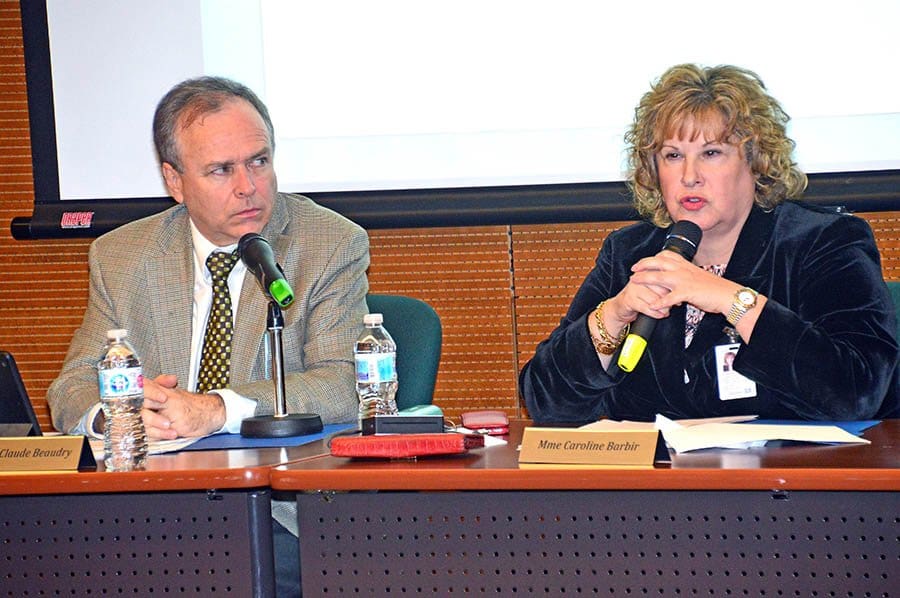
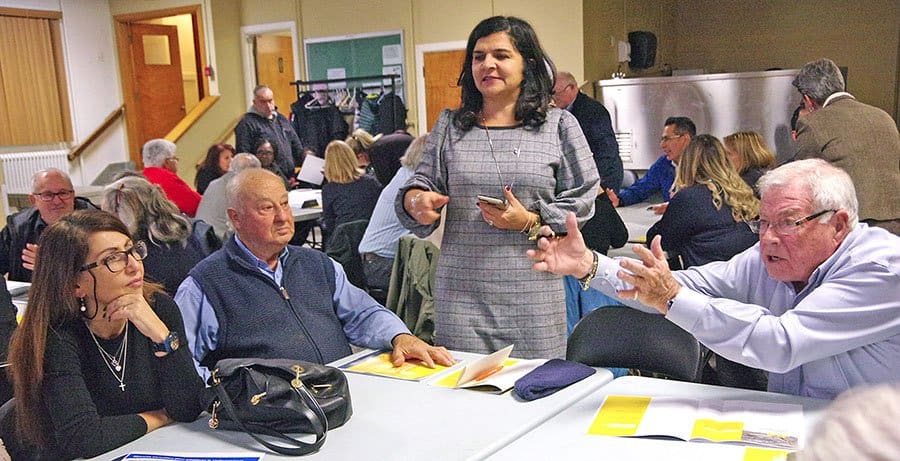
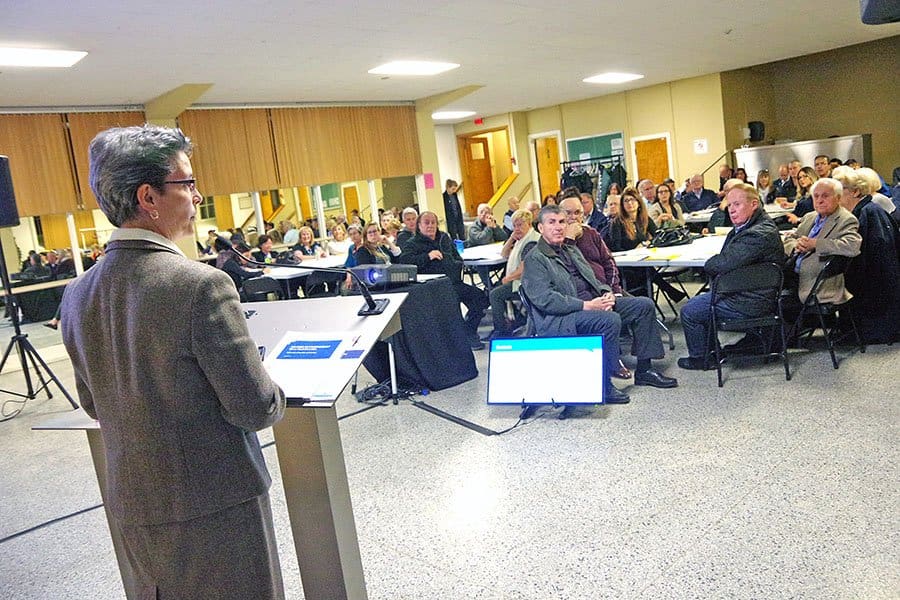
A report on the statistics, based on 2016 Canadian census information which is the most recent, was presented during a briefing at Cité de la Santé last week by the Chomedey-based Youth and Parents AGAPE Association.

The numbers, showing overall growth in the number of English-speaking people in Laval, were tabled as Agape is opening a new Wellness Center for English-speaking seniors in Laval this week.

“The point today of releasing these statistics was first of all to tell the Laval community about English-speaking seniors,” said Joanne Pocock, a research consultant who worked on compiling the information.

Different from the majority

“They are a group that has a profile that’s a little different from the majority group, and therefore their needs and demands, how to support them, will vary from the typical.”

Referring to some of the statistical findings that suggested a significant number of Laval’s English-speaking retirees are living on low incomes, Pocock said, “That fair portion of seniors that’s living on less than $20,000 annually speaks loudly when it comes to health and challenges for that group.”

Apart from the question of low income, Pocock also noted the growth in the number of English-speaking seniors that is forecast in the near future.

More English-speaking seniors

“Laval is a growing community which stands out, and the English-speaking community is growing which stands out in the province, because there are a number of English-speaking communities in decline in terms of numbers.”

The numbers tend to suggest that preparations might be needed to anticipate the rising need for English-speaking senior citizens’ services in Laval for this growing demographic segment. “That growing seniors group – that is a phenomenon that we don’t see elsewhere around the province,” said Pocock.

Going against the trend

According to the statistics, nearly 91,000 of Laval’s 410,850 residents are English-speaking individuals. Among the English-speaking, nearly 20,000 are seniors aged 55 years and over, while more than 9,800 are English-speaking seniors aged 65 or older.

“By comparison you’re a very substantial group here,” Pocock told the gathering, noting that in some other regions of Quebec, English-speakers number as few as 900 individuals amidst the general population.

Agape executive-director Kevin McLeod pointed out that the 2016 census recorded an increase of 10,000 English-speaking individuals in Laval since the 2011 census. “Laval is one of our growing English-speaking communities, because that’s not taking place all around the province,” Pocock added.

The coming ‘tsunami,’ says Pocock

She sees the larger number of individuals in Laval in the 55+ English-speaking seniors group as one of the main reasons demand for English-speaking services here is likely to increase. “You have the tsunami coming, as they say, where that is going to be a growing group,” she said.

Pocock suggested that as the English-speaking population of Laval ages, some might find they have more difficulty coping in instances where the availability of health care services isn’t adequately provided in English.

“Being a senior in itself can represent new challenges,” she said. “If you’re an English-speaking senior but you have been pretty much bilingual all your life, you may find in your older years that you don’t use your French language, your second language, as comfortably.

A vulnerable minority

“There is research that supports the idea that with aging, with acute stress, with illness, we lose our competence in our second language. We want to revert to our other tongue or to the tongue we’re most comfortable in.” And there could be other things for English-speakers, she continued.

“The fact you’re a minority, that there’s fewer of you, means that by and large, and it makes sense, the institutions that you are accessing are probably organized around the majority. The institution sees the majority at their door very often and they organize their services to respond to the demand. So just by virtue of being a minority it makes you a little more vulnerable.”

Action Laval announces major restructuring effort

Former city hall Opposition elected just one candidate in election
Action Laval announces major restructuring effort

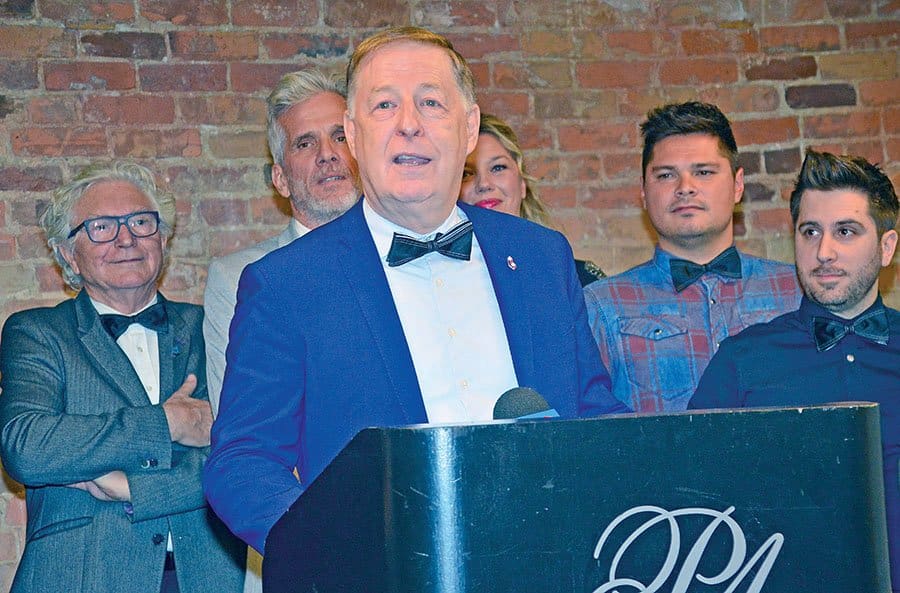
(TLN) During a press conference held at the Château Royal last Monday morning, Action Laval’s interim leader, Achille T. Cifelli, and Aglaia Revelakis, Councillor for Chomedey, took stock of the last election and the future of their party.

Action Laval was founded in 2013 on the eve of the elections the same year by Jean-Claude Gobé and some supporters in order to provide Laval with an administration meeting its aspirations. As Official Opposition, its members stood out with “their constructive and rigorous criticism of Mayor Marc Demers’ administration” and a defence of the interests of Laval citizens, Action Laval said in a statement.

Remains very present

“We have fewer resources than others, but we succeed through our determination and sense of service in being more visible,” said Revelakis. “Rare are the events where we are absent, whether they are official, or in the streets of Laval,” added the interim leader. “We are experienced, we are committed and above all, we are not alone. The vast majority of defeated candidates are giving time to their neighbourhoods and to help Aglaia in her City Councillor role.”

Cifelli was appointed interim leader following the retirement from political life of Action Laval’s founder, Jean-Claude Gobé. “Once I was appointed Interim Leader, I quickly sat down with those who wanted to continue, to plan the next steps. To make a plan and work together for our future,” said Cifelli.

A three-step plan

Action Laval says it is reorganizing based upon a three-step plan:

  1. Re-structuring Action Laval, with clear, precise, open guidelines, approved by a general assembly. This new structure will be made up of dynamic forces, with citizens at heart and working with them, for them. An executive committee, accountable to the assembly, will be formed.
  2. Elect a leader, during an open leadership race, which will require candidates to seek a broad minimum of support in all Laval districts. This leadership race will be the one to choose the new mayor of Laval.
  3. Convince voters, rally all those who wish to make Laval a more prosperous, safer and pleasant city to live in. Action Laval says it will rally the opposition “and all those who are dissatisfied” with Mayor Marc Demers’ team. Councillors from other parties are also welcome to join the team.

Revelakis welcomes steps

For the Councillor for Chomedey, elected for the first time in 2013, the restructuring of the party is welcome and necessary. “Even though I was elected in 2013, I’ve worked in politics for a very long time,” she said. “Being in a party means working together to make ideas come true and realize our aspirations. This new structure will allow us to move forward, now that we have learned of the results of the last election.”


Laval News Volume 26-11

Laval News Volume 26-11

This issue covers local events such as politics, sports and human-interest stories. It features editorials and other columns. Click on the image to read the paper.

Front page image of The Laval News Volume 11
Front page of Laval News.
May 30 2018
Click here button
Click here to read the newspaper.

STL offers special rate of $ 1 on smog days

From June 1 to September 3, each time Environment Canada issues a smog warning, the Laval Transit Corporation (STL) will reduce its bus fare rate to $ 1 on its entire regular bus network. and collective taxis for the next day.

With this program, the STL wants to promote eco-responsible habits in order to reduce the number of cars in circulation, which are largely responsible for air pollution.

“We are pleased to re-launch Smog Alert for the tenth year in a row. This initiative, unique in Canada, encourages the use of public transportation in Laval on days when poor air quality can have adverse effects on the health of Laval residents, “says Eric Morasse, vice President of the STL’s Board of Directors.

STL’s regular cash rate is $ 3.25. The special $ 1 fare awarded on smog days is a reduction of nearly 70%.

Watch for smog alerts!

The STL distributes a special bulletin on its website, on social media, on electronic signs in the city of Laval, on variable message signs from the Ministry of Transport, Sustainable Mobility and Transportation Electrification (MTMDET ), which are located along the main highways of the region in addition to communicating information to the various media.

Major Accident 13 South

A Traffic accident occurred at about 4;00 PM today, (Friday May 18 2018,) on autoroute 13 heading South near Savaria. Based on unconfirmed information we received  the Motorcyclist lost his life.

Thank you Anne for your tip.


STL receives $26.8 million for electrification and new buses

STL receives $26.8 million for electrification and new buses
Elected officials from Quebec City, Ottawa and the City of Laval gathered at STL headquarters on Francis Hughes Ave. for an announcement last week of $28.6 million in subsidies from Ottawa and Quebec to improve STL equipment and services.
Martin C. Barry

With a provincial election scheduled for this fall and a federal election also set for the end of next year, there’s no better time than now it would seem for elected officials from Quebec City and Ottawa to make good on past pledges to inject more money into environmentally-sustainable public transit projects.

Buses and electrification

Leaders from the federal and provincial governments were at Société de transport de Laval administrative headquarters on May 11 to announce a combined investment of $26.8 million for the realization of 14 transit-related projects by the STL. The purchase of new buses being will be the main expenditure, although the STL also plans to use some of the funding to launch its first all-electric bus line.

Diane Lebouthillier, Minister of National Revenue in the Trudeau Liberal government, and Saul Polo, MNA for Laval-des-Rapides with the Quebec Liberals, were joined by other federal, provincial and municipal officials to announce the funding, which was being made under the Public Transit Infrastructure Fund.

STL receives $26.8 million for electrification and new buses
Laval-des-Rapides Liberal MNA Saul Polo, far right, announces Quebec’s contribution to the STL.

Ottawa, Quebec, STL

The federal government will be providing more than $14.9 million for the projects, while Quebec will contribute over $11.9 million. The STL will provide the remaining funding. In addition to the electrified bus line and the new buses, the money will also be used to add new technologies to streamline boarding for passengers.

Once completed, according to the STL and the two governments, the STL’s performance, efficiency and reliability will be improved, public transit in Laval will be more inclusive and allow the STL to meet the community’s immediate needs while preparing for anticipated future increases in ridership.

Boosting the economy

“The governments of Canada and Quebec recognize that investing in public transit infrastructure is crucial to economic growth, reducing air pollution, and creating inclusive communities where everyone has access to public services and job opportunities,” the two governments said in a joint statement.

“Modern efficient public transit infrastructure plays an important role in the development of sustainable communities and the growth of the middle class,” said Lebouthillier, speaking on behalf of Minister of Infrastructure and Communities Amarjeet Sohi.

“By investing in projects such as these in Laval, the Government of Canada is helping communities across Quebec improve residents’ mobility, meet increasing demand and provide key amenities to encourage economic development,” she added.

Public transit’s importance

“I am particularly pleased to see that governments at the federal and provincial levels have taken the importance of transportation in the Laval region to heart,” said Polo, speaking on behalf of André Fortin, Minister of Transport, Sustainable Mobility and Transport Electrification in the Quebec Liberal cabinet.

“These investments will support a clean-growth economy that will benefit Laval residents for generations,” said Vimy Liberal MP Eva Nassif.

“The City of Laval is pleased with the funding provided by the Canadian and Quebec governments for the STL to carry out innovative projects, the primary objective of which is to make public transport more attractive to Laval residents,” said Mayor Marc Demers.

‘Right direction,’ says Demers

“This series of projects, made possible through the Public Transit Infrastructure Fund (PTIF), is an integral part of our efforts to promote active and public transportation while decreasing our greenhouse gas emissions,” Demers added. “This is definitely a step in the right direction.”

“The STL is very grateful for this new show of confidence from the Canadian and Quebec governments,” said Laval city councillor Gilbert Dumas, who is president of the STL. “We are particularly excited about this new set of projects, many of which will mark the history of the STL, notably in terms of electrification.”

Dumas said the 14 approved projects “will allow the STL not only to modernize its equipment, but also to maintain its status as a leader in providing passengers with real-time information and in embracing all forms of innovation, with the goal to provide service that is always more efficient and viable than solo driving.”

Quebec Liberals acknowledge looming uphill battle

Quebec Liberals acknowledge looming uphill battle
The PLQ’s incumbent candidate in Laval-des-Rapides, Saul Polo, centre, is seen here with a virtual who’s who of Quebec Liberal cabinet ministers, as well as a few federal MPs, during the launch of his 2018 campaign on May 12.

Martin C. Barry

The Quebec Liberals face a potentially difficult struggle leading towards the October provincial election, a ranking member of Premier Philippe Couillard’s cabinet acknowledged during a speech delivered in Laval during an investiture meeting for incumbent Laval-des-Rapides Liberal MNA Saul Polo last weekend.

Tough times ahead

“The elections that are coming will not be an easy battle,” Economy, Science and Innovation Minister Dominique Anglade told the more than 150 supporters who came out to École de l’Arc-en-ciel on Meunier St. on May 12 to see Saul Polo crowned the PLQ’s Laval-des-Rapides candidate.

Alluding to surveys that came out last week showing the Coalition Avenir Québec ahead in the polls and the Liberals behind, Anglade remained upbeat.

Quebec Liberals acknowledge looming uphill battle
Incumbent Laval-des-Rapides Liberal candidate Saul Polo arrives for his 2018 election investiture meeting École de l’Arc-en-ciel in Laval-des-Rapides on Saturday May 12.

‘We are determined’

“Remember that we are ready, that we are determined to win the next election, that we are working relentlessly, but mostly that we need Saul Polo with us at the National Assembly next Oct. 2 [the day after the election],” Anglade said.

Firing one of the first salvos of the 2018 pre-campaign period, Municipal Affairs Minister Martin Coiteux took aim at the CAQ when he noted, regarding the PLQ, that if “you listen to the speeches of the political parties, there’s just one – one in the National Assembly – that can and is willing and which has demonstrated it during all its history, that it promotes the unity of all Quebecers.”

CAQ in PLQ’s sights

Alluding a little more directly to the CAQ, Coiteux continued, “We have never divided Quebecers in terms of their being Canadians. No, we have never incited Quebecers to break from the Canadian federation. We are federalist. We are the only real federalist party in the National Assembly.

“The CAQ is not a federalist party,” he added. “The CAQ is a party that on this question is seated on the fence and doesn’t know on which side it will fall.” Referring to the CAQ’s leader, François Legault, Coiteux said, “He’s perhaps changed his mind several times. And it is, in fact, his habit to change his mind virtually a few times a day.

Questions about Legault

“But I’m not sure he’s changed his mind on this fundamental question with regards to being part of Canada. I’m not convinced at all. And I don’t think he’s going to be able to persuade Quebecers that he has truly changed his mind in a definite way on this question.”

Coiteux also took aim at the CAQ, as well as the Parti Québécois, for their xenophobic thinking. “The Parti Québécois and the CAQ are asking themselves whether it’s a good idea to have immigrants in Quebec and whether it might be a good idea to test them after a few years to see if they should remain to be among us in our society,” said Coiteux.

For his own part, Saul Polo, who was first elected in the 2014 Quebec general election, spoke (at times quite emotionally) about his family’s roots in the South American nation of Colombia, as well as their early experiences upon arriving in Canada and Quebec three decades ago.

Respected within the PLQ

After joining the PLQ in 2005, Polo became known within the party (as several of the Liberal cabinet ministers confirmed while praising him in their speeches last Saturday) as a loyal and reliable team player, whose contributions made a lasting impact, for example, in the riding of Westmount-St. Louis, where Polo served as the riding association president, before running and winning for the Liberals four years ago in Laval-des-Rapides.

That said, Laval-des-Rapides has a well-established reputation as being one of the most volatile swing ridings in the province, where elections are usually close and where the Liberals and the PQ have been the top two contenders for at least the past 35 years. A particular oddity about the riding is that since being created in 1981, Laval-des-Rapides has consistently voted for the winning party in every general election.

Sometimes unpredictable riding

In an interview with the Laval News, Polo acknowledged that elections in Laval-des-Rapides can be as unpredictable as the weather, but that he’s determined to give it his best shot leading towards the Oct. 1 election.

“From day one after the last election I never took things for granted,” he said. “I’ve worked very hard for the past four years. Ultimately I think that the residents and citizens of Laval-des-Rapides have seen what I’ve been able to do for the riding and I will continue to demonstrate to them that I am the best person to serve them in Quebec City.”

Laval Ombudsman tables 2017 report

Martin C. Barry

In a review of grievances filed over the past year by Laval residents about city departments and services, the Laval Ombudsman’s office says a total of 526 complaints were dealt with in 2017, representing an increase of 27 per cent over 2016.

Proud of record

Nadine Mailloux, the city’s full-time Ombudsman, takes pride in the fact that her two-person office managed to deal with 68 per cent of last year’s dossiers within 30 days, as well as 52 per cent within five days or less. As well, the Ombudsman’s office says it was able last year to resolve 51 per cent of complaints cases to the satisfaction of residents who presented cases.

According to the office, the Ombudsman’s office intervened directly with the municipal administration in 23 per cent of cases. In 26 per cent of cases, the office undertook in-depth investigations. The office says that 30 per cent of the complaints received concerned services provided by the city’s Public Works and Urban Planning departments.

City of Laval Ombudsman tables 2017 report
The City of Laval’s Ombudsman, Nadine Mailloux, presented her 2017 report to journalists on May 2.

Listening important

“To properly understand you have to know how to listen,” Mailloux, a lawyer, said philosophically on May 2 during a briefing on her report held at the Ombudsman’s office at a high-rise building on Chomedey Blvd. a short distance from Laval city hall. “And to listen you have to take time. This time is sometimes limited, but it must be available.

“We are constantly repeating,” she continued, “that it is fundamental to give a chance to the taxpayer to explain the bases for the complaint, the circumstances which brought him or her to believe they were wronged by a decision, or the special treatment they are claiming for themselves, or the correction they want to make to an analysis which has been made. It thus becomes possible to consider these or to provide guidance.

Not the city’s lawyer, she says

“I advocate for an approach that’s always open and impartial, because as I often say I am not the city’s lawyer and I am not the citizens’ lawyer either – I am here to examine the circumstances of a dossier and ensure that there is a solution that is right for everyone. We try to make our decisions and our exchanges with citizens as simple as possible, keeping in mind equity and being open and accountable.”

According to the Ombudsman’s 2017 annual report, complaints made by residents to the office fall into six categories: Application of urban planning and inspection regulations, traffic, delays in getting service, administrative procedures, zoning and payment of taxes.

Examples of cases

The report contains more than a dozen examples of the types of complaints received by the Ombudsman last year. They range from snow being blown onto private property by the city during the winter, to inadequate followups by municipal inspectors.

The examples also include a complaint from a citizen about noise coming from a municipal pumping station that was disturbing her in her home, a property owner being forced to put up with newly-opened restaurant/bars near his home, and another property owner being charged a fee by the city for snow removal which was never done.

Nassif provides financial aid as part of Homelessness Partnering Strategy

Nassif provides financial aid as part of Homelessness Partnering Strategy
“I am proud that these two organizations continue their remarkable and essential work,” Nassif said of the two groups receiving subsidies from Ottawa.
Martin C. Barry

Vimy Liberal MP Eva Nassif has announced the federal government’s support for the fight against homelessness in Laval through increased financial assistance to two local organizations: Maison Dominique and the Oasis Mobile Intervention Unit.

Fighting homelessness

“Funding initiatives like the HPS help communities develop and deliver important tools and services, a crucial part of the fight against homelessness and poverty,” Nassif said during a press conference held at Maison Dominique in Laval-des-Rapides last week. “I am proud that these two organizations continue their remarkable and essential work and that, one step at a time, they bring comfort and safety to those in need.”

Maison Dominique, whose mission is to provide stability, dignity and security to people at risk of homelessness, was awarded a subsidy of $36,993. Oasis Mobile Intervention Unit, providing on-the-ground intervention and services on the streets of Laval with a mobile unit since 1995, received a subsidy of $33,940.

According to Nassif, the two organizations will be able to continue their efforts to reduce homelessness in Laval and offer unequaled support to people in need. “Homeless is a serious problem and should be treated as such,” she said.

Nassif provides financial aid as part of Homelessness Partnering Strategy
Representatives of Maison Dominique and the Oasis Mobile Intervention Unit are seen here with Vimy Liberal MP Eva Nassif (second from right) alongside the Oasis mobile intervention vehicle.

Support for the vulnerable

“Whenever someone is undergoing a crisis, it is always the devotion of those working for organizations like Oasis Mobile Intervention Unit and Maison Dominique who are there to support our most vulnerable people. This financial support will help them to deliver their services in Vimy and to make the area more inclusive and a better place to live.”

According to the Maison Dominique’s web site, they offer a home environment to homeless individuals afflicted with HIV on a short and long term basis. “Our approach takes into account the individual in his or her globality and places the emphasis on their potentiality and not their limitations,” they say. “We believe that each of us is entitled to respect, dignity and support without regard to social or serological status.”

Helping those in dire need

In a mission statement on the Oasis Mobile Intervention web site, Oasis says the group exists to offer “front line” intervention to persons in Laval 12 years of age and older who are in dire need by listening, referring and preventing.

“We meet people who are in need directly in their environment. Our organization sets out to meet people who are marginalized and who are often not served by other resources. Oasis seeks to establish decisive and significant relationships with its clients with the goal of providing them with concrete and immediate assistance.”

Resources lacking

Following Nassif’s announcement, representatives of the two groups took part in an exchange with her on various issues that affect them. “It’s very difficult to help someone out of homelessness when they can’t find a place to live,” said one, complaining that Laval has almost no available social housing where homeless persons might be placed.

“The biggest challenge we are facing now is finding housing to get people out of poverty and homelessness,” she said. While another complained that the federal government did little or nothing for decades to provide support for social housing, the current Liberal government has launched some new initiatives since 2015 when they came to power.

Federal aid available

Among other things, the government launched the Surplus Federal Real Property for Homelessness Initiative, which makes surplus federal real-estate available to communities for projects that help stabilize the living arrangements of homeless individuals and families and those at risk of becoming homeless.

The government claims that the initiative has proven to be an effective way of supporting communities in their efforts to prevent and reduce homelessness, while ensuring that surplus federal real-estate continues to fulfill the objectives of the government, even after they have outlived their original purpose.

Limousine service operator says Laval is singling him out

Limousine service operator says Laval is singling him out
Milad Abdul-Sater says that in the ten years he’s lived on his street, it was only recently that he received a complaint.
Martin C. Barry

A man who operates a small limousine service out of a residential neighbourhood in Laval-des-Rapides says he wants to know why the City of Laval is singling him out for violating a zoning by-law, when he’s not doing anything differently from other Laval-based limousine operators.

Milad Abdul-Sater’s situation was one of the more than 500 cases dealt with last year by the Laval Ombudsman’s office. Abdul-Sater has also pleaded with Mayor Marc Demers to look into his situation during public question periods at recent city council meetings.

Neighbour’s complaint

As spelled out in the Laval Ombudsman’s annual report which was released recently, one of Abdul-Sater’s neighbours filed a complaint with the city. The neighbour maintained that the operation of a limousine business, even a small one, was incompatible with the neighbourhood’s “residential” zoning and character.

According to the Ombudsman’s report, the neighbour was also unhappy about the fact the city had refused to intervene. The Ombudsman concluded that “the usage being made by the owners of the property did not correspond to the domestic use of office type, as defined by article 16 of By-law L-2000.”

Ombudsman’s report

She recommended to the city’s urban planning service that they end the commercial usage in a fashion as to uphold the “strictly residential character of the sector,” the report stated. For his part, Abdul-Sater thinks By-law L-2000 is arbitrary in that it forbids parking of vehicles larger than a certain size, while overlooking others such as small school buses.

“The inspector came to my house, to the driveway, and said, ‘You’re not allowed to park in the driveway,’” Abdul-Sater said in an interview with the Laval News. “I said, ‘How come? It’s been ten years that I’m parking here. What’s the problem?’ He says there is a law, By-law L-2000: 16 feet and 6 inches you’re not allowed to park. And he says that’s a rule that goes back 50 years.”

More than meets the eye

However, Abdul-Sater maintains there’s much more to the situation than is spelled out in the municipal regulations and the Ombudsman’s report. He painted a picture involving neighbours, some of whom were operating businesses out of homes, but who evidently weren’t seeing eye to eye.

Among the businesses that have been operating from residences in the neighbourhood, Abdul-Sater maintained, was one a few houses away from his own, where the owner, he claimed, was running an automotive garage and detailing service. And Abdul-Sater was in a position to know: he did business himself with the neighbour, whom he hired at one point as a driver for one of his limousines.

‘Business within a business’

But then, according to Abdul-Sater, they had a falling out. The neighbour, it seems, started creating what Abdul-Sater calls a “business within a business,” in other words promoting a venture of his own while driving the boss’s limousine.

“During his work he started to give out his business card – body work, paint, interiors and car wash,” he said. “He used to do the maintenance of all my limos: changing oil, winter tires, summer tires, cleaning inside, outside, paint treatments, waxing, everything.” There was a falling-out between the two over ways of doing business and Abdul-Sater said he terminated his employment.

Home business operators

In the meantime, said Abdul-Sater, another neighbour, also operating a home business, although of a type considered acceptable by the city in a residential environment, had a dispute of his own over spacing between their properties. “The two merged together to give me a hard time,” he said, maintaining the complaint about his vehicles was their doing.

But in the end, the home garage operator himself ended up being given a warning by the city and the garage has been closed since then. Abdul-Sater has also been issued warnings about his limousines, but no fines up to this point. But in the meantime, he is left wondering about a system that allows some business owners to continue operating, while others are subject to municipal by-laws that only seem to kick in when there are complaints.

Limousine service operator says Laval is singling him out
Laval-des-Rapides limousine operator Milad Abdul-Sater, seen here with two warnings received from the city, wants to know why he’s being singled out.

Weather

Laval
overcast clouds
28.7 ° C
28.7 °
28.7 °
39%
6.3m/s
100%
Fri
28 °
Sat
26 °
Sun
19 °
Mon
24 °
Tue
20 °