The City of Laval’s executive-committee says it is donating $40,304 to the Société Saint-Vincent de Paul for a project the non-profit charity is undertaking to help families that have children up to 17 years old and who are struggling during the COVID-19 pandemic.
According to a statement issued on May 15 by the executive-committee, the subsidy will help to boost a food program run by the society at a time that is proving to be very challenging for many families.
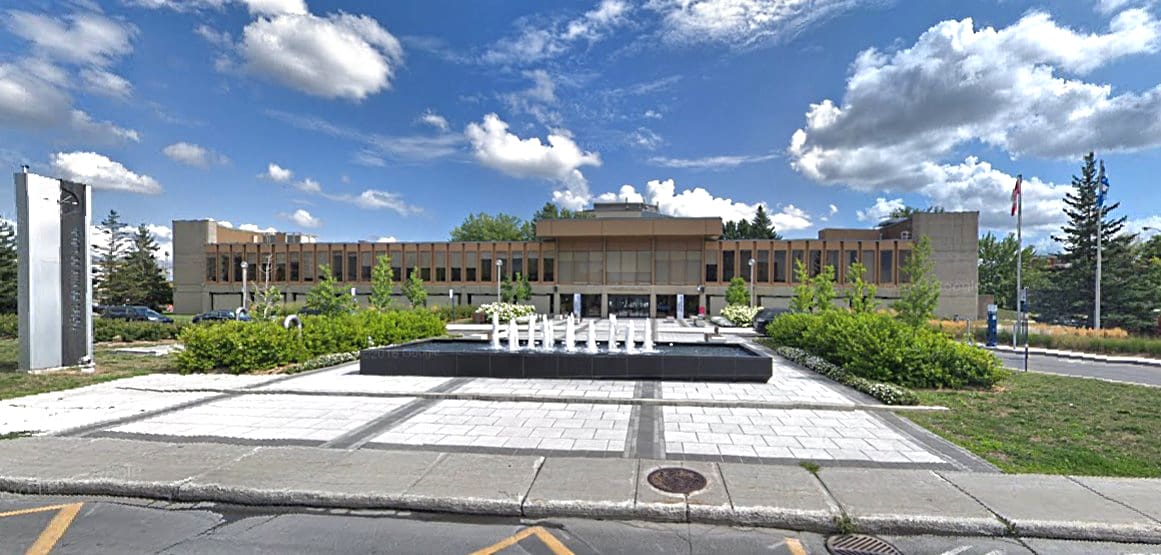
The Fonds Place du Souvenir is named after the outdoor gathering place in front of Laval City Hall on Souvenir Rd.
“Thanks to this subsidy, the Société de Saint-Vincent de Paul will be able to distribute food vouchers to families in Laval that need them,” said Mayor Marc Demers. “In the current context, where a vulnerable clientele is more vulnerable than ever, it is important that we stick together.”
The subsidy is being drawn from the Fonds Place-du-Souvenir, a special fund created by the Demers administration in 2017 specifically to assist children and youths in Laval up to age 17. The fund was created from sums successfully reclaimed by the city from former municipal contractors who were found to have benefited from collusion and corruption over the many years the previous administration was in power.
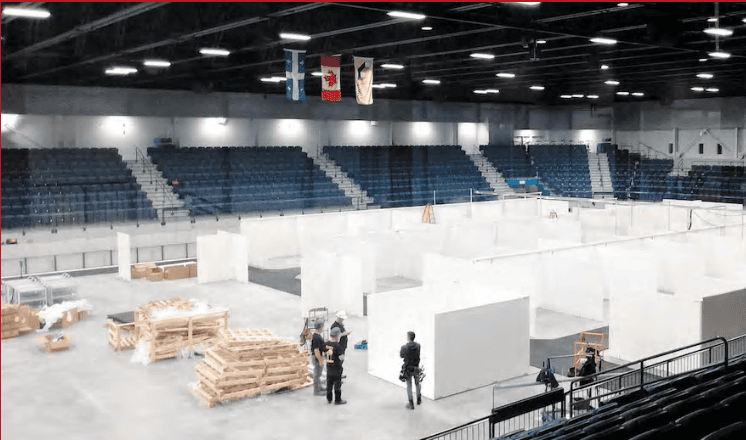
Friday May 15 marked the first day that patients recovering from COVID-19 have started to be taken into a temporary hospital ward set up on one of the ice rinks at Place Bell, the CISSS de Laval announced in a statement.
According to the regional health authority, 15 patients are initially being accommodated and more may be accepted as soon as next week. The hospital beds and other equipment were set up on the rink surface at Place Bell in order to free up space to take in recovering COVID-19 patients from Cité de la Santé Hospital, as well as from retirement residences throughout the Laval region.
Part of Laval’s Place Bell will be taken over to accommodate COVID-19 patients from Cité de la Santé and retirement homes.
Officials with CISSS de Laval pointed out that the operation wouldn’t have been possible without the cooperation of Cité de la culture et du sport de Laval, which manages Place Bell, and the City of Laval, which owns the facility, as well as from labour unions.
The temporary medical unit is equipped to take in up to 50 patients, all of whom are accommodated in private cubicles equipped with a bed, an easy chair, a table and a bedside lamp. Between 75 and 100 CISSS de Laval employees are being assigned to work at the Place Bell unit.
“This non-conventional site is meant to be a convalescence centre where it is possible to offer quality care to users, while freeing up acute care beds at Cité de la Santé Hospital,” said CISSS de Laval president and CEO Christian Gagné.
The City of Laval has announced that with water levels along the Rivière des Prairies and the Rivière des Mille Îles back to normal, the annual flood-risk season appears to be finished and temporary anti-flood barriers that were intalled several weeks ago in several riverfront locations can now be taken down.
According to a statement issued by the city on May 14, the dismantling of the barriers will be taking place in stages. The first of these will be the removal of a pedestrian overpass that was installed between Île Verte and Île Bigras in the south-east of the Laval-Les Îles sector.
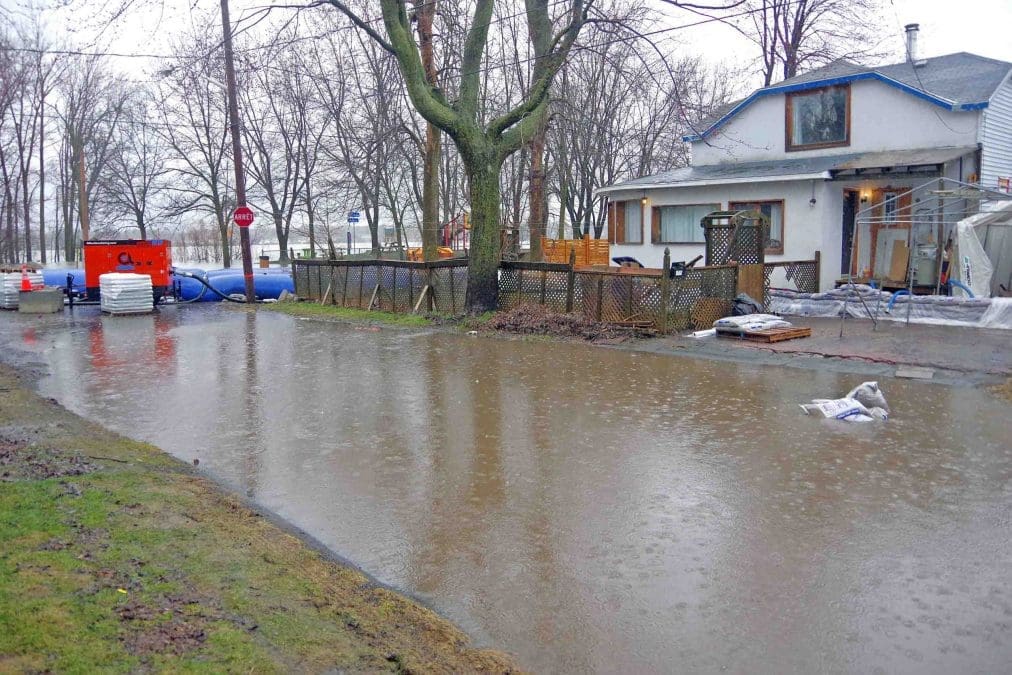
Flood barriers installed a few weeks ago by the City of Laval along Riviera St. in Laval-Ouest will soon be removed with the spring flood-threat now over, the city says.
Following this, during the week of May 18 other temporary measures that were implemented in Laval-Ouest and other areas will be removed, the city says. The removal operation will be taking place over a period of several weeks because of the COVID-19 pandemic.
The city says that sand bags which were distributed over the past few weeks in these areas will be picked up by public works crews beginning on May 25. Regarding the steps to follow for sand bag removal, residents will be informed by telephone.
After announcing the opening of a COVID-19 screening clinic at the Cartier Arena in Pont-Viau/Laval-des-Rapides, the Centre intégré de santé et de services sociaux (CISSS) de Laval says another clinic has now opened – this time at the Pierre Creamer Arena in Chomedey.
With that, there are now two screening clinics available for screening COVID-19 in Laval. They are open from 8 a.m. to 7:30 p.m., Monday to Friday, and from 8 a.m. to 3:30 p.m., Saturday and Sunday. Appointments can be made by calling 450 644-4545 or 1 877 644-4545.
According to the CISSS, groups prioritized for testing are
• People with flu-like or COVID-19 symptoms (fever, onset or recent worsening of a cough, breathing difficulties, sudden loss of smell without nasal congestion with or without loss of taste).
• People who have been in close contact with someone who has tested positive for COVID-19.
Public health officials say they are stepping up their efforts to track the evolution of COVID-19 by increasing the number of tests done every day. “Screening tests are our best bet to slow and contain the spread of the virus in our area and to identify new outbreaks,” said Dr. Jean-Pierre Trépanier, Director of Public Health at the CISSS de Laval.
By appointment or walk-in clinic: Pierre-Creamer Arena, 1160 Pie-X Boulevard, Laval (Chomedey sector). The clinic offers drive-thru or walk-thru testing.
Walk-in clinic: Cartier Arena, 100 Montée Major, Laval (Pont-Viau-Laval-des-Rapides sector).
Plandemic, an upcoming documovie has caused a stir among a North American population that has to deal with an avalanche of information concerning COVID-19. Dr. Christos Karatzios, Assistant Professor of Paediatrics/ Infectious Diseases at the Montréal Children’s Hospital, decided that enough was enough with the conspiracy theories which in the end endanger public health. Here is his rebuttal:
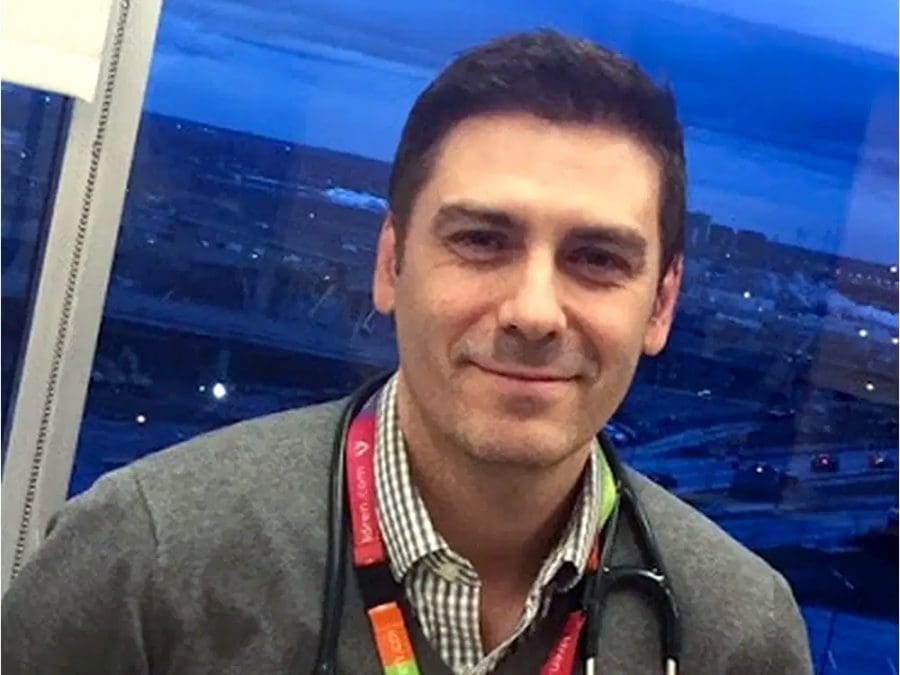
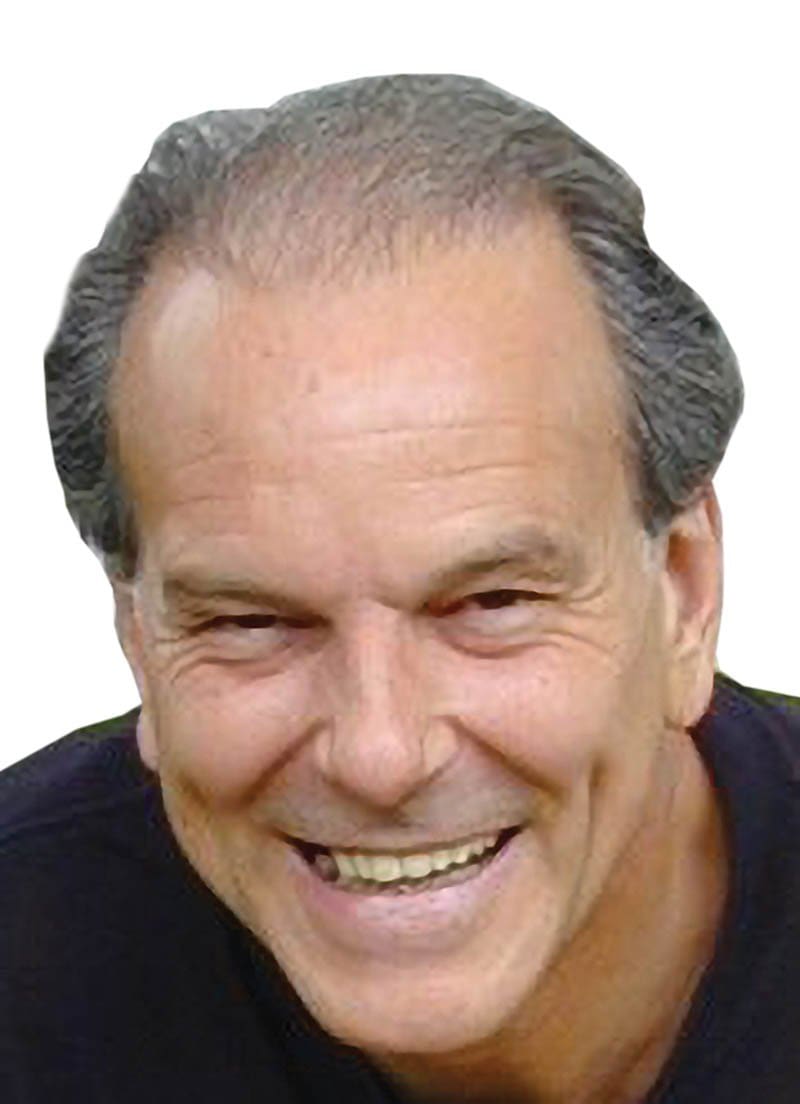
Dr. Christos Karatzios rebuts a range of dangerous myths he says are being promoted by a recent documentary on COVID-19. (Photo: courtesy Dr. Christos Karatzios)
So many people have sent me the video clip of a supposedly upcoming “documovie” called “PlanDEMic” asking me what I think? So…what do I think? It’s like sending an FBI agent a link to the X-Files series and asking if it is true.
Is the world this gullible and dangerously naive? Or are you on the fence or actually secretly/publicly believe that this pandemic is a colossal hoax in order for the “Deep State” or “Illuminati” or some other malevolent secret society (these people target the WHO and the UN now) to set up a “One World Government”? Have all the doctors and nurses and health care workers who have fought to save the lives of all those unfortunate people who have died or come near death from COVID-19 been secretly working for this evil society? Have all those families who lost loved ones been lying to everyone? Ask yourselves if you are willing to accept this shameful theory. Have we lost all faith in our doctors and nurses? How dangerous is that for the fabric of our society?
So what do i think of Judy Mikovits, who is the “protagonist” of this trash that is supposedly a “documentary”?
Here we go: Almost everything she says is a lie. She has a bone to pick with Anthony Fauci it seems. She also has a new book and needs to make money after being stripped of her job and being arrested for falsifying data and stealing lab material including laboratory cells delivered to her house “by mistake”.
She was hired in the 90s by an alcohol, tobacco, and gambling magnate in the US Midwest who has a daughter with the controversial “Chronic Fatigue Syndrome”. She was a paid researcher in his lab and she had a vested interest to make the link of a mouse retrovirus (similar to HIV) as a cause of Chronic Fatigue Syndrome. His “institute” had a vested interest to come up with results so then they could create some form of therapy or cure for Chronic Fatigue Syndrome. She manipulated data and came up with results that were later retracted completely from the medical literature because no one was able to reproduce them ever again.
Does this remind you of Andrew Wakefield and his study of a link between MMR vaccine and autism? It should. Robert Kennedy Jr, the lead antivaxxer in the USA, is Judy Mikovits’s friend and collaborator. He is a supporter and sponsor of her. He wrote the prologue for her recent book. So when she says she is not “anti-vaccine” in the video, she lies. In the past she has claimed that 30% of global vaccines contain a cousin of HIV and are making us ill. In the video she claims that the flu shot makes people susceptible to “coronavirus”. By the way, she laments how patents and “Big Pharma” have tainted science. Does she forget how Paul Wakefield actually had a secret patent to create his own measles vaccine while discrediting the established MMR? Oops. How about the fact that she worked for a millionaire tycoon out in Nevada to find the “cure” for “Chronic Fatigue Syndrome”? Oops.
She even performed another study for Chronic Fatigue Syndrome (after the original was criticized by everyone) that showed no link with the mouse retrovirus and she even admitted to this. Her colleagues on the original Science paper that was retracted admitted to faulty science. She was eventually fired from that institute and then stole its lab material. This is what she was arrested and not for “speaking the truth”.
What she says about HIV and coronavirus are dead wrong.
What she says about the flu shot “causing coronavirus” is completely false. The army study she quoted did not claim what she claims it did:
The study concluded that when you vaccinate people against the flu…you get immunity and stop seeing as much flu and start seeing other common viruses being more prevalent (such as cold viruses like the simple cold coronaviruses and human metapneumoviruses)…Because you are getting rid of the main culprit of respiratory disease in the winter (the flu). Therefore, you can see the background noise with common cold viruses that is usually drowned out by the massive flu when there’s no vaccine.
This was the highlight of that study:
1. We examined virus interference in a Department of Defense dependent population.
2. Vaccinated personnel did not have significant odds of respiratory illnesses.
3. Vaccinated personnel were protected against influenza.
4. Odds of virus interference by vaccination varied for individual respiratory viruses.
So what she is saying is nonsense to those not trained to pick up the gibberish she is peddling. It is dangerous nonsense during a deadly pandemic and she is simply crazy.
I think I almost fell off my chair when she stated that masks activate our own covid and we get reinfected.
The same people behind this video are the same people who believe vaccines kill, who believe Bill Gates will inject us with microchips, who believe that 5G is what is causing COVID-19, who believe that the lockdowns that happened to save our health care system before the first wave were wrong, and they are the same people who are out protesting in the US to open beaches and casinos and whatever they deem necessary.
I think that’s all I have to say about this person and anyone similar to her. Beware of quacks! She and others are allowed to be storytellers but if she is endangering public health, she will find herself behind bars again.
I have a job to do for which I gave an oath when I accepted to sacrifice my youth, to eventually be able to save lives; Your lives and the lives of your children. Enough.
Christos Karatzios, MD, is Associate Investigator, RI-MUHC , Glen site Child Health and Human Development Program Centre for Innovative Medicine Assistant Professor, Department of Pediatrics, Faculty of Medicine, McGill University Department of Pediatrics, Division of Infectious Diseases, MUHC
Former insiders recall October Crisis and launch of James Bay Project
Looking back on former Liberal Premier Robert Bourassa’s accomplishments and political legacy, it’s sometimes a little hard to believe that during the mid-1970s Bourassa was regarded by many as the most reviled political figure in Quebec.
As leader of the PLQ – a party that always strove to be in the middle of the political spectrum, while trying to reconcile both ends – Bourassa’s downfall was almost inevitable during that highly nationalistic era.
A rock and a hard place
He would would find himself caught between the increasingly powerful sovereignist forces in Quebec – demanding greater protections for the French language and culture – and the English-speaking minority, protesting the degradation of their rights. The Anglos would largely abandon the Liberals in 1976 – allowing the PQ, for the first time, to form a government.
Many aspects of Bourassa’s political life came up during an online homage held by he PLQ in a Zoom videoconference channel last Saturday morning for card-carrying party members and their guests.
50th anniversary event
The virtual gathering marked the 50th anniversary of April 29, 1970 – the date when Robert Bourassa formed his first provincial government and, at age 36, became the youngest premier in the history of Quebec.
Bourassa would go on to win four mandates, although in two distinct time frames – 1970-1976 and 1985-1994 – periods that are sometimes referred to as Bourassa I and II.
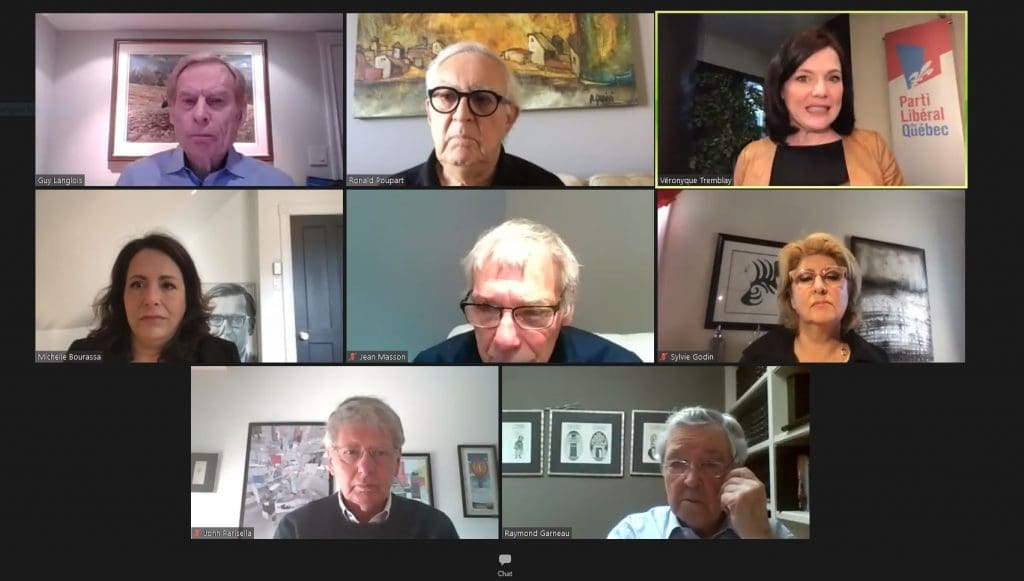
Seen in this screen capture from the PLQ’s online videoconference last Saturday are (clockwise from top left, ending in the centre) ex-Bourassa chief of staff Guy Langlois, former Bourassa director of communications and ex-PLQ d-g Ronald Poupart, current PLQ d-g Véronique Tremblay, ex-Bourassa press attaché Sylvie Godin, former Bourassa cabinet minister Raymond Garneau, former Bourassa chief of staff John Parisella, Bourassa’s daughter Michelle Bourassa, and Jean Masson, the first president of the PLQ’s youth commission.
Eight former insiders (including his daughter, as well as a past Liberal Minister of Finance) recalled their times living or serving alongside someone that historians have come to regard as one of the most successful political leaders ever to govern Quebec.
Among the more noteworthy instances recalled during the videoconference: Guy Langlois, who was Bourassa’s chief of staff in Quebec City in 1970, remembered the moment when he and Bourassa first learned of the events that would trigger the October Crisis.
Kidnapping of James Cross
“We had gone to New York to meet John Rockefeller,” said Langlois. [Bourassa had travelled to the U.S. to seek financing for the massive James Bay hydroelectric project.]
They recalled their times living or serving alongside one of the most highly-regarded political leaders ever to govern Quebec
“So we came back to Montreal and we met with Jérôme Choquette, the Minister of Justice, at a hotel on Côte de Liesse where he briefed us on the situation following the kidnapping of James Cross.”
A short time later, in Sorel about 60 kilometres east of Montreal where Bourassa (who had married into the wealthy Simard family) would spend time with his wife and in-laws, Choquette informed him over the phone that Liberal Labour Minister Pierre Laporte had by now also been taken hostage by the Front de Libération du Québec.
Start of October Crisis
Langlois said he told the one police officer assigned to stand outside to guard Bourassa that he should go fetch the handgun he’d left in his car, and call for additional police reinforcements to protect the Premier from the impending terrorist threat.
According to Langlois, Bourassa then placed a call to Prime Minister Pierre Elliott Trudeau in Ottawa, and convened an emergency meeting of the provincial cabinet at the Queen Elizabeth Hotel in Montreal. “That was the beginning of the October Crisis,” Langlois said.
A ‘loss of innocence’
Bourassa’s daughter, Michelle, was only four years old when the October Crisis erupted. She said she can still remember the night she was scooped out of bed, placed in a car and driven off in a motorcade guarded by motorcycle police to a safe place.
“For me the October Crisis, I think, was a kind of loss of innocence,” she said, recollecting that around the same time she was also with her parents in their living room at home when the FLQ Manifesto was read out on TV. And she remembered when the news of Laporte’s death was announced.
On a happier note, Ronald Poupart, who was Bourassa’s director of communications and at one time also the PLQ’s executive-director, recalled what was undoubtedly to be Bourassa’s and the Quebec Liberals’ proudest accomplishment – the James Bay project.
James Bay Project
According to Poupart, Bourassa and the PLQ leadership made the conscious decision to shine a spotlight on the announcement as an optimistic counterpoint to the negative impact the October Crisis had on Quebec.
[Bourassa had been working on a vision of the James Bay project since at least 1969 when he was still a PLQ backbencher; he then made it a plank in his platform for the Liberal leadership, before going on to win the 1970 election.]
Ironically, according to Raymond Garneau, who was Treasury Board President in the Bourassa cabinet, the Parti Québécois, which had elected its first MNAs to the National Assembly in 1970, were critical at that particular time of such large hydroelectric projects – preferring nuclear energy instead.
“Imagine today, if we had chosen to launch ourselves into nuclear energy,” noted Garneau. “What a disaster it would be because of all the environmental concerns.”
Newsfirst columnist Robert Vairo takes a look at the style and presentation of various officials and leaders during the COVID-19 pandemic.
Robert Bourassa. On this 50th anniversary of his election, you can’t help but wonder how much better he would have handled this pandemic. I reported regularly, some times daily on Bourassa for then PULSE NEWS in the 70’s, 80’s and 90’s. I know that Quebecers had the utmost respect for one of the great, some say the most successful Premier, who first and foremost was an economist, but one who ruled with compassion and kept the party where it belonged, in the center of the political spectrum. Quebec enjoyed the best of economic times with Bourassa at the helm. Not the warmest of orators, but an intelligent and very sensitive man whose devotion was totally to Quebec. His persona would never have allowed our long term homes to reach the shameful state that exists today. He would have held health and the economy in balance, a record Quebecers would have lauded. But we will never know with certitude, because that was then, and this is now.
Have you watched Dr. Bonnie Henry, BC’s chief health physician? She is cautious, calm, communicates extremely well with her audience, like a kind, reassuring nurse at your bedside. The result, BC first to flatten the curve. She is so popular, her BC designed and manufactured John Fluevog shoes sold out.
True leaders stand out in times of crisis, like Ontario’s Doug Ford. Ford speaks from the heart in simple everyday language. He’s genuine, empathetic, and tough. When President Trump stopped our N95s to Canada, Ford said “now we know who our friends are”. When Trump suggested reopening the borders with Canada,”Absolutely not. I don’t want them (Americans) in Ontario”. And he does not want Quebecers in Ontario either. Note the road block to Gatineau cottage country. His approval rating has soared to an astounding 83% according to latest survey. On the recent assault rifle ban, an upfront challenge to Ottawa . “Put the money at the border” because that’s how illegal guns get into Canada. So I find myself watching Ford the most, then Premier Francois Legault, who use to have a reassuring image, still enjoys popularity rating in the 90% range. But error after error have spelled disaster. The first to close schools in Canada, the first to reopen. Anxious to spark the economy, he reasons teachers back in the classroom would care for the children of the employees back on the job. He has lost control of the massively layered bureaucracy governing long term care homes. Understaffed, underpaid, with no real infection control, plagued with staff walk outs. Legault’s call for volunteers to put a stop to our dying seniors has been a failure. So it’s now the always reliable army at our seniors’ homes!
In the neighbouring province, Alberta’s head physican, Dr. Deena Hinshaw is more popular than anyone in her government at 88% approval according to the latest poll. Unlike Quebec, Alberta has limited bureaucracy for quick and effective decisions. Except for the meat processing plants fiasco, Alberta is a leader with massive early testing and a low threshold of reporting so that public health rushes into seniors homes to offer immediate support. They love Hinshaw out west, even selling out of a “periodic table dress” she wore one day.
At the federal level Dr Teresa Tam, taking a lot of heat for relying on WHO, which in turn relied on China’s false data. Despite several premiers outcry, she was late to advise her boss to close borders to the US. She was late screening at our airports, late in closing the border to China, with no mention of Taiwan. Taiwanese were wearing masks long ago and reacted swiftly. One of the first to successfully shut down the virus. But Tam took her cue from the WHO, which does not recognize Taiwan. Seems many Canadians forgive. Her almost daily appearance, and tax payer paid commercials have vaulted this virtually unknown to fame.
Top expert on infectious disease, the tireless Dr. Anthony Fauci, in quarantine, now getting body guard protection because of threats on his life. Why? Because he speaks the truth, and the truth hurts. Isn’t it refreshing to hear leaders like Dr. Fauci speak to us clearly and frankly, often contradicting his boss President Trump and still have his boss’s back. Not an easy task when the boss is President Trump. Fauci boldly predicts the virus will return this autumn (US election) and the hand shake is history. By the way, if Trump fires him, he has a job. Said Italian infectious disease director Dr. Giuseppe Ippolito, “The world needs Fauci!”
The governor of New York, “Andrew Cuomo takes charge” Rolling Stone magazine. He is the boss. Governor Cuomo and his virus infected younger brother are a hit on CNN. The governor regularly challenges Trump. Cuomo is genuine, factual, bold, and wise. On reopening the economy ““We have to temper our desire and emotions with our intelligence”. On schools of tomorrow, “revolutionize” and “re imagine” education.
Thumbs up.
Justin Trudeau is a smooth politician. He has eastern Canadians in the palm of his hand despite the fact he exploited COVID-19 to try to give himself unlimited and unchecked taxing and spending powers till the end of 2021. Canadians are nonetheless thankful for generous and much needed direct deposits to mitigate total economic collapse. Trudeau, and his hair’s daily appearance have bounced his popularity to 73%.
My favourite leader is 39 year old New Zealand Prime Minister Jacinda Ardern. Her leadership style makes her “the most effective leader on the planet” THE ATLANTIC. She is soothing, reassuring, with a firm reign on authority and credibility. “We will see results” she said weeks ago. And they have. New Zealand is Virus free today.
Let’s not forget the leaders who are not on screen every day. The leaders of the front line health workers. Thank you.
In the end, true leadership is having our own sovereign decision makers. No WHO, no external influence, but reliance on Canada’s brains in health, food, transport, manufacture of essential products. All MADE IN CANADA. I’m waiting for that day.
In the meantime, stay a hockey stick length away, eh. That’s what I’m thinking.
Maintains re-opening economy too quickly would be counter-productive
With COVID-19 still spreading and uncertainty remaining as to whether there will be a second wave of the virus next fall, questions are being raised as to the approach that should be taken – with economic recovery paramount in many people’s minds.
According to the Johns Hopkins University School of Medicine, there are more than three million confirmed COVID-19 cases in 185 countries and territories. And without any doubt, the coronavirus pandemic is having a devastating impact on the global economy.
The economic impact
Macroeconomics expert Dr. Alan Green of Central Florida’s Stetson University suggests that fast-tracking economic recovery could be counter-productive in the ongoing public health battle against COVID-19.
Many businesses have been closed for nearly two months, which has caused layoffs and furloughs. Countries are creating economic recovery plans and guidelines for reopening businesses in phases with proper precautions.
But how long can an economy feasibly remain closed down? Should government officials give in to growing public impatience and begin to allow life to come back to normal? Or should they continue, at least for now, with the shutdown?
Should they consider taking a systematic approach – acknowledging there will be an estimated “collateral” casualty count – as measured against damage to the economy from a continuing shutdown? Or do we go on pursuing COVID-19 protective measures until infection and mortality rates reach safe and satisfactory levels – no matter how long that takes if this proves to be necessary?
Virus must be contained
“We’re hearing a lot of people and politicians who look at the economic damage, which is awful, and say Oh gosh, we have to re-open to save the economy,” says macroeconomics expert Dr. Alan Green, department chair and associate professor of economics at Stetson University in Central Florida.
“But what I’m saying, and what I think every economist that I’ve seen publicly say something is saying, is that they’re doing it backwards. Even if you legally allow everything to re-open, the economy’s not going to recover until the virus is contained.”
On the one hand, he maintains, dropping enforced protective measures won’t necessarily help to restart the economy. As people begin circulating openly once again, remnants of the highly contagious SARS-CoV-2 virus will begin spreading again, sickening more people while causing the level of public fear and apprehension to escalate once more.
Could backfire, says economist
“Part of this instinct to try and move quickly to re-open in order to get the economy going really is probably going to backfire,” Green said.
“What will have to be the priority is the public health aspect of broader testing, knowing where the virus is, waiting until case loads have declined, to a point where you can actually keep testing and tracing. So that once we re-open, if there are outbreaks in different areas, we can close them off more precisely.”
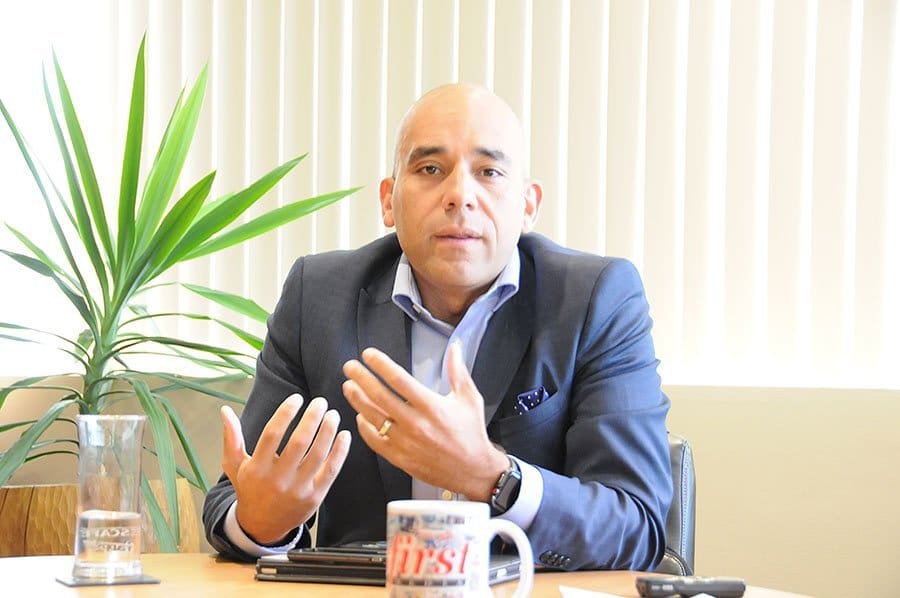
‘The economy’s not going to recover until the virus is contained,’ says Stetson University’s Dr. Alan Green
As for the alternative argument, that we should balance potentially escalated casualties against the greater economic losses from not moving forward faster, Green said he has a problem with that line of thought.
Says health should come first
“It assumes that the total number of deaths from the virus is kind of fixed and inevitable,” he said. “It implies that a lot of people are going to die either way, so we might as well trudge on ahead and get the economy moving. But the total number of deaths is not fixed at all. It’s completely dependent on the public health response.
“And again the point I’m trying to drive home as an economist is that if we kind of proceed, and there are going to be some deaths but we’re just going to try and open the economy, people are going to be afraid and they’re not going to participate in the economy and we will still be in a major recession. And they’ll be justified in being afraid, because people don’t want to die and people don’t want to get their family members sick. So if the virus is not contained, then there’s no way things go back to normal.”
Maintain shutdown, he says
His advice? “Keep the economy closed down longer, which we can afford to do, dramatically ramp up testing so we can know where the virus is, and then trace people who’ve got it,” said Green. “And although it’s still a bit early, that seems to be working, at least in some other places.” He argues that in emphasizing the importance of the human toll, in the long run this will favour a better economic outcome. “Because if we contain the virus, then we can actually re-open with less fear because we’ll have more accurate information, more people will come back and participate. So you get a much better economic recovery with the right public health measures.”
City expects to eventually build three more recycling facilities
During their May city council meeting last week, the members of Laval city council voted in favour of awarding a contract worth $344,465 to the firm Équipe Laurence for the preparation of plans and diagrams to serve in the construction of the city’s first eco-centre, whose opening is scheduled for the fall of 2021.
The centre will be set up on a 30,000 square metre lot located at the corner of Dagenais Blvd. West and Bellerose Blvd. near Auteuil district.
“Thanks to this project, the people of Laval will now have an accessible place to rid themselves of trash that otherwise can’t be put out with the regular garbage, such as household hazardous waste, old computers and appliances,” said Sainte-Rose city councillor Virginie Dufour, who is responsible for environmental issues on the executive-committee.
Many users expected
The City of Laval is anticipating more than 50,000 visits annually to the new eco-centre, while also predicting that 15,000 tons a year of recyclables will be recuperated. The project will involve construction of a main building and an entrance gateway, an access platform, docks for waste containers and parking for employees and visitors.
The opening had initially been scheduled for this year, but was postponed when the city sought out additional tenders and the response from contractors was limited. Over the coming years, the city anticipates building three more eco-centres in locations all over Laval.
Quebec’s Hommage bénévolat-Québec awards recognize volunteers from Laval
On the occasion of Volunteer Appreciation Week and the provincial government’s 23rd annual Hommage bénévolat-Québec, Sainte-Rose MNA Christopher Skeete announced that two persons and one organization deserved special mention for their outstanding volunteerism in the Laval region.
The recipients were Louis Raymond in the Young Volunteer category (Claude-Masson Award), Diane Hachey in the Volunteer category, and the Centre de pédiatrie sociale Laval in the category for organizations and non-profit groups.
Awards since 1998
The Hommage bénévolat-Québec awards have been given out since 1998 to recognize the important volunteer support provided by people in communities all over the province. This year, 341 candidacies were submitted. A jury was mandated to select the winners.
Sainte-Rose MNA Christopher Skeete is recognizing the good work of volunteers in his riding.
“I congratulate this year’s winners for their exceptional contributions in their respective fields,” said Skeete. “Through their actions they are making a big difference in the lives of their fellow citizens, enriching the community.”
“I am extremely proud that the region of Laval is able to count on people who are devoted and committed, such as Mr. Raymond and Mrs. Hachey,” said Eric Girard, the province’s Finance Minister, who is also Minister Responsible for the Laval region. “Thanks to their exceptional contributions, our community is fortunate to have a well-balanced situation.”
Year of the pandemic
Over the past 23 years, 942 persons and groups have been recognized for their volunteerism by the provincial government through Hommage bénévolat-Québec. This year, the organizers added a special category, Solidarity – Floods 2019, to pay homage to all those whose lives were impacted by the widespread springtime flooding last year.
‘Through their actions they are making a big difference in the lives of their fellow citizens,’ said Skeete
“The Hommage bénévolat-Québec Award spotlights exceptional citizens and organizations, who through their actions contribute towards making our communities more inclusive and accepting,” said Quebec Minister of Labour, Employment and Social Solidarity Jean Boulet. “In the context of the current pandemic, thousands of people who are volunteers have stepped forward to come to the assistance of the most vulnerable people.”