Wednesday, February 25, 2026
8 C
Laval
spot_img
Home Blog Page 207

LPD seeks Laval-des-Rapides burglary suspect

The Laval Police have a pretty good idea what the suspect linked to a home burglary in Laval-des-Rapides last fall looks like, because they have a security camera image of him. Now all they need is some help from the public to identify the man believed to be in his 30s.

The Laval Police would like to know the identity of this burglary suspect whose image was taken by a security camera.

According to police, the incident took place around 7 pm one evening last fall at a home on McNamara Blvd. A window was broken and an alarm system was disabled, allowing someone to enter and search the house.

The suspect is described as a white male in his 30s with short dark hair. At the time of the burglary, he was wearing a beige coat and appeared also to have earphones on. Anyone with any information is urged to call Laval Police at 450-662-4636 or 9-1-1. The file number is LVL 191025 006.

Martin C. Barry, Local Journalism Initiative Reporter for the Laval News, marty@newsfirst.ca

Could post-COVID-19 Canada become a ‘surveillance state’?

Martin C. Barry

Although the COVID-19 crisis is probably far from over, Montreal lawyer and human rights activist Julius Grey is warning that the unfolding emergency could become permanent if attention isn’t focused on the risk of our becoming a “surveillance state” while using technology to enforce health protection.

We shouldn’t emulate China by tracking individuals, says Julius Grey

Crisis aftermath

In the aftermath of the Sept. 11 2001 terrorist attacks on the U.S., social critics took note that heightened awareness of public security grew massively, as did sometimes ruthless enforcement measures for many years afterwards – some of which are still with us.

“I have often suggested that we’re living in a post-democracy,” Grey said in an interview this week with Newsfirst Multimedia. “We are no longer a democracy. The fact that everything can be followed and preserved and nothing can be hidden means that, in effect, freedom is a thing of the past.”

Tracking technology

One technological phenomenon that has emerged during the ongoing COVID-19 crisis has been the ability by government and medical authorities to use Google and Facebook location-tracking information to plan infection containment strategies.

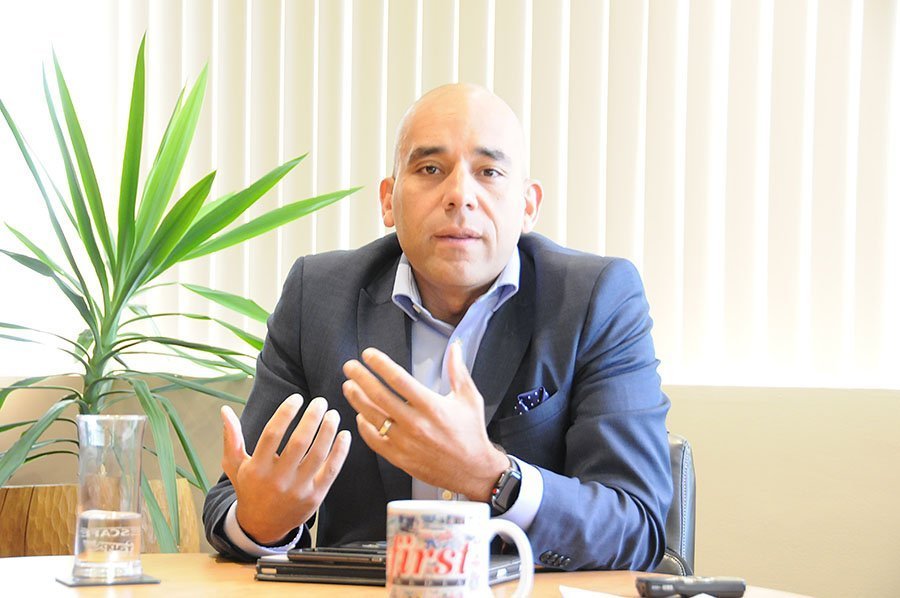
Julius Grey has concerns about the potential impact on personal privacy by the COVID-19 crisis.

While the data is anonymous and is furnished so that there are no personally-identifying markers, it does track people’s movements and shows foot traffic trends at different locations over time. This can help get a better understanding of whether people are adhering to orders they stay home.

China tracking individuals

It should be noted that both Google and Facebook have the ability to track locations individually, although the two companies have stated that they are not sharing their data to that degree of detail and have no plans to do so in the future.

However, in China authorities have gone ahead and taken the additional step: they are using smartphone location data to track people who’ve been identified as being infected with the COVID-19 virus. The Chinese system monitors phone signals to alert police if individuals in isolation leave their location or switch off their phone.

Technology as enabler

As Grey noted, Hungarian Prime Minister Viktor Orban, who was already regarded as authoritarian, used the COVID-19 crisis as a means to increase his power last month when the Hungarian parliament passed a law granting the government the power to rule by decree.

Political ramifications aside, Grey said that on the whole technology has now become the principal enabler of potential abuses against human rights and freedoms.

“Technology means that the rich, the powerful, the government have means that the average man does not have – that the average man has very little way of defending himself from it or of influencing things,” he said.

Freedom from surveillance

“And that’s why what we need quickly after the crisis is not an analysis of what happened with the crisis – because the crisis does genuinely deserve some special measures, which is something that is reasonable – but a discussion of the technology and of the way of maintaining freedom. And one of the things that must be is freedom from constant surveillance.”

As western countries like Canada and the U.S. continue to struggle with the COVID-19 outbreak, imposing limited restrictions on individual rights in order to control the spread, the People’s Republic of China appears to have succeeded, at least for now, in slowing or stopping the virus by electronically tracking and controlling individual carriers.

Doubts China’s claims

All the same, Grey remains unimpressed by China’s performance during the crisis. “I am very sceptical about China,” he said, expressing doubt as to the veracity of the country’s claims to have mostly overcome the virus.

“Even if there were a successful use of special powers by a country which is not democratic, I would not want to see in that the proof that dictatorship works,” Grey added, while suggesting there is an imminent danger of countries like Canada and the U.S. emulating the example.

Risk of emulating China

“I think we are heading down that road already,” he said. “It’s very difficult to argue that the countries we call democracies are really and truly democratic. They have some vestiges left. And some like Canada, Germany, France, maybe Britain, still have a lot of the old freedoms.

“But the United States, what can you say of a country which is a mass imprisonment state, where millions and millions of people are imprisoned? And that’s one of the consequences of technology: technology allows you to catch everybody.”

Martin C. Barry, Local Journalism Initiative Reporter for the Laval News, marty@newsfirst.ca

Marc Demers undecided on whether to cancel Fête nationale

Martin C. Barry

Although major public events are being cancelled all over the world to slow the spread of the COVID-19 virus, Mayor Marc Demers and other administration officials say they are waiting until next month to decide whether Laval’s Fête nationale will be taking place June 24, or what alternate celebration might be held instead.

An intense debate between administration and opposition councillors broke out during the April 7 city council meeting after a motion on the agenda called for the approval of a service contract between the City of Laval and the Corporation de la salle André-Mathieu (CO-Motion).

$662,256 contract

The non-profit corporation, which manages the municipally-supported events venue at Collège Montmorency, is set to be paid $662,256 to produce the Fête nationale show at Laval’s Centre de la nature in Duvernay.

Laval mayor Marc Demers, seen in this screenshot from the televised April 7 city council meeting broadcast on the internet, says his administration hasn’t decided yet whether to proceed with a costly Fête nationale event on June 24, or hold an alternative celebration instead.

Independent city councillor David De Cotis fired the opening shot during the debate. The meeting took place through teleconferencing, with most council members calling in over speakerphones, and only the mayor, council president Christiane Yoakim, and a few administration officials present at city hall.

Be responsible: De Cotis

“We know that the City of Montreal has cancelled many summer events up to July,” De Cotis said. “I think that here in Laval we should be doing the same thing. We will be spending more than $600,000 for a celebration that will last just one day.

“I think it would be more responsible to take that money and place it in a fund or something like that to help the families in Laval – maybe parents who have lost their jobs – who have no revenue coming in. I think it would be responsible for this year to take that money and put it aside and to help Laval’s families.”

No cancellation, says Demers

While Mayor Demers said the city has an option to cancel the agreement if CO-Motion finds itself unable to fulfill its obligations, he added that to postpone the payment to next month would be the equivalent of cancelling altogether.

To cancel immediately would not have the effect of saving the city money,’ says Demers

“To cancel immediately would not have the effect of saving the city money, unless we decided to contest certain things with CO-Motion,” he continued, noting that the city has enjoyed a longstanding partnership with the organization.

Respect contracts: Demers

At the same time, the mayor pointed out that Quebec Premier François Legault advised municipalities to try to respect their agreements with artistic events production companies, because of their importance to the province’s economy, “and they will be part of the strategy for the recovery,” he said.

Executive-committee vice-president Stéphane Boyer said that allotting the money won’t necessarily mean it will all be spent.

“What we are saying is let’s look for other opportunities, other possibilities to keep jobs in the cultural sector while maintaining celebration events, even though we understand that big gatherings are maybe not possible at that time,” Boyer said.

Planet has cancelled: Trottier

Official opposition leader Michel Trottier of the Parti Laval said he was baffled by the mayor’s claim that the issue was still under study.

“The entire planet has cancelled events from now up to the month of July, but in Laval we’re still analyzing,” he said. “This isn’t even a question. In my opinion, it would be irresponsible to hold the Fête nationale on June 24.”

Trottier noted that even the Jeux du Québec (for which the finals were set to take place in Laval) were recently cancelled, although they had originally been scheduled for August. “How is it we are holding an event a month before?” he said.

Says Demers ‘out of touch’

“I can’t believe what I am hearing,” said independent city councillor for Saint-Vincent-de-Paul Paolo Galati, adding that he agreed with what De Cotis said. “The mayor is really out of touch with reality. Everyone is suffering from this illness [COVID-19].

“Everyone is cancelling events, Montreal has cancelled up to July 2, and the mayor is still of the mind that it can take place,” he continued. “So I don’t understand. Things are different this year. We must cancel. It’s the recommendation being made by the experts.”

In the end, the 13 administration city councillors present during the meeting voted unanimously for the $662,256 payment, opposed by eight opposition councillors. As to what the city eventually decides, Premier Legault confirmed on April 8 that the two-metre distancing rule will be in place “for months,” he said, even after the re-opening of some businesses.

Legault has the final say

In his April 8 statement, Legault said the eventual resumption of social and economic activities will take place gradually. Companies will have to be flexible with regard to employee work schedules so that public transit won’t be overcrowded during traditional rush hours.

Premier Legault also acknowledged that his government and public health authorities are thinking over the possibility that schools and daycares won’t re-open before the end of the school year.

Martin C. Barry, Local Journalism Initiative Reporter for the Laval News, marty@newsfirst.ca

Thumbs-up from CFIB for Ottawa’s COVID-19 wage subsidy

The subsidies ‘will maintain the link between the employer and the employee,’ says Canadian Federation of Independent Business

Martin C. Barry

Despite the fact some small and medium-size businesses across the country remain dissatisfied with Ottawa’s subsidy package for employers and employees impacted by the COVID-19 crisis, the Canadian Federation of Independent Business is giving an overall thumbs-up to the federal government for its efforts.

The CFIB issued a statement last week praising the Liberal government for the emergency measure to bolster the country’s economy during the economic pandemonium taking place as COVID-19 continues to keep businesses closed and workers home.

Bar set at 30 per cent

While the CFIB isn’t being overly critical, it did point out that the main criteria for businesses to qualify for federal assistance is that they must have suffered at least a 30 per cent drop in revenue compared to the previous year because of the COVID-19 crisis.

The Canadian Federation of Independent Business’ senior policy analyst Gopinath Jeyabalaratnam says the lobby group is pleased overall with Ottawa’s COVID-19 wage subsidies, although they still have some reservations.

For this reason, the lobby group is urging Ottawa to drop the qualifying condition for businesses that have fewer than 500 employees, as well as those which are currently being obliged to remain partly or completely closed by provincial authorities.

Still some not happy

Although most business owners are happy with the government’s offer to cover 75 per cent of lost wages, a segment of the business community finds the 30 per cent rule problematic, according to Gopinath Jeyabalaratnam, the CFIB’s senior policy analyst.

“Where we and others see a problem is on the criteria of 30 per cent loss that qualifying businesses will have to prove,” he said in an interview with Newsfirst Multimedia. “And that is indeed a problem because it will in time discriminate against many businesses we believe.”

CFIB sees discrimination

Despite this, he said the response by the CFIB to Ottawa’s move is generally positive because the organization hopes to persuade the federal government to change the rule. “The program has to go to parliament and has to become a law before being adopted. So we still hope that we can nudge the government in the good direction so that they correct the program in order to discriminate less.”

Jeyabalaratnam cited several examples of small and medium-size businesses that will not be able to benefit from the federal government’s salary subsidies with the current rules in place.

Startup businesses

“A lot of small and medium businesses will have to prove for the month of March, April, May and June that they have had a 30 per cent loss in comparison to those same months last year,” he said.

“But how would that be possible for a new business that has a startup debt and that has been functioning only since June or July last year maybe? So they would not be able to prove that.”

Another example he gave involves seasonal businesses. “Hotels or other businesses in the touristic domain must make money during summer,” said Jeyabalaratnam.

Bias against tourism

“But summer is not yet here, and so they won’t be able to prove they had a 30 per cent loss because the high season isn’t here. So we are concerned that they also will be discriminated against by the measures.”

Despite these shortcomings, Jeyabalaratnam said the CFIB looked upon the federal government’s wage subsidy as good news. “We’d been asking for that for several weeks,” he said, maintaining that the CFIB was the first interest group in Canada to suggest the subsidy program as a way of reviving the country’s economy during a post-COVID-19 recovery phase.

Employer/employee link

“It will maintain the link between the employer and the employee,” he continued. “And that will be very important when the economy will be starting up and resuming its activities. If businesses don’t have employees on the payroll, they won’t be able to start their activities. So maintaining the link is very important and the subsidy helps to do this.”

He said the subsidy program will also be helping businesses that are currently closed or are suffering from reduced activities to pay salaries until the COVID-19 crisis recedes and the economy returns to a normal pace.

Last week, the CFIB reacted favourably to changes announced on April 8 to the wage subsidy program by the federal government.

To access the subsidy in March, April and May 2020, a firm will be able to compare their sales to the same month last year or January and February, 2020. This will help new and growing firms who may not have qualified based on a comparison to 2019.

The federal government will also now require firms to demonstrate only a 15 per cent reduction in gross revenues for March. A 30 per cent reduction will still be required to receive the subsidy in April and May.

Some businesses reported that their regular accrual accounting method would mean their books would not show a loss of 30 per cent, despite a deep effect on cash flow. Now the government is proposing to allow an option to use cash accounting.

Martin C. Barry, Local Journalism Initiative Reporter for the Laval News, marty@newsfirst.ca

Former LPD chief outraged by CHSLD Ste-Dorothée’s ‘incompetence’

‘The management clearly was lacking leadership,’ Jean-Pierre Gariépy says

Martin C. Barry

The former chief of the Laval Police Department, whose wife was recently transferred to CHSLD Sainte-Dorothée to recover from a brain aneurysm, suggested last week that management at the long-term care facility was incompetent, after his wife and many other residents became infected with the COVID-19 virus.

Not told, he said

Former Laval police chief Jean-Pierre Gariépy is suggesting management at CHSLD Ste-Dorothée is incompetent given the number of deaths there from COVID-19.

Jean-Pierre Gariépy was the head of the Laval Police for 15 years up to the end of 2013 when he retired. He said in a broadcast interview with 98.5 Montreal’s Paul Arcand that his wife, Louise Bourgeois, was hospitalized at Hôpital du Sacré-Coeur in Montreal before being transferred to CHSLD Sainte-Dorothée in western Laval in late March.

“I didn’t know at the time that there were patients there who were at risk,” he told Arcand, while adding that he found out only later that she was transferred after at least one resident was known to be infected with COVID-19.

‘Incompetence’

“She became infected soon after her arrival,” he said. “The transmission took place stage by stage, through an employee who was badly prepared and badly protected. The management clearly was lacking leadership.

“They should have given out precise directives to the staff, which was not the case. They even forced attendants to stay at work despite the fact they were sick. This is appalling incompetence.”

Possible class-action

Gariépy maintained during the interview that management at the CHSLD appeared to be improvising at virtually every stage during the developing COVID-19 crisis. He suggested they didn’t seem to know what they were doing while moving infected residents into areas adjacent to where healthy residents were quartered.

“Did they have a plan for dealing with an outbreak?” he said. “Plans for separating people by floors or by sectors? Did they have facial masks, or appropriate protective gloves?” He said he was seriously considering whether to launch a class-action lawsuit in conjunction with other CHSLD Sainte-Dorothée residents or their relatives.

Martin C. Barry, Local Journalism Initiative Reporter for the Laval News, marty@newsfirst.ca
Beware phony N95 face masks, says Health Canada

Health Canada is warning Canadians about the risks of using fraudulent and unauthorized N95 respirator masks, as they may not protect consumers against COVID-19.

While these N95 disposable facial masks are certified NIOSH, Health Canada warns about using those which are not.

The federal agency advises that you check whether your N95 respirator has been certified by the U.S. National Institute for Occupational Safety and Health (NIOSH). If not, your mask may be fraudulent or unauthorized and you should stop using it as it may not protect you against COVID-19.

Health Canada recommends face mask users learn about the proper use of face masks, following which they get confirmation that the product has been certified by NIOSH by entering the approval number, which can be found on the respirator, in the NIOSH database.”

Martin C. Barry, Local Journalism Initiative Reporter for the Laval News, marty@newsfirst.ca

Flood preps continue in Laval-Ouest

City of Laval public works employees could be seen busily installing flood barriers and sand bags on Riviera St. in Laval-Ouest along the southern bank of the Rivière des Mille Îles on Saturday Apr. 11 as the river’s rising water level threatened to spill over onto the street.

Laval public works crews have been busy Easter weekend installing flood barriers along Riviera St. in Laval-Ouest. (Photo: Martin C. Barry, Laval News)

According to the city, a total of 1.2 kilometres of anti-flood barriers are being installed along streets in Laval-Ouest that are within a short distance of the river. The city is using a combination of concrete blocks and sand bags. The city is also closely monitoring water levels.

Martin C. Barry, Local Journalism Initiative Reporter for the Laval News, marty@newsfirst.ca
Sandbags ready for filling and flood barriers in the background are seen here on Riviera St. in Laval-Ouest on Sat. April 11. (Photo: Martin C. Barry, Laval News)

City gearing up in case of floods

Officials with the City of Laval say they are going to be prepared this year for flooding in some of the island’s most vulnerable riverside areas, while urging residents to also take precautions on their own.

The City of Laval is hoping there won’t be a repetition this year of scenes like this from the 2019 spring floods in Laval-Ouest.

According to the city, the most vulnerable period for flooding is in mid-April. As such, Laval plans to be ready to install an inflatable rubber barrier along the waterfront in Laval-Ouest should this become necessary.

Last year, it proved to be very helpful in deterring surges of floodwater. The city is also offering free sand bags for property owners to stack around their grounds to keep flood waters out.

Martin C. Barry, Local Journalism Initiative Reporter for the Laval News, marty@newsfirst.ca

Quebec calls for cancellation of public events until Aug. 31

Quebec Tourism Minister Caroline Proulx joined two other members of the CAQ cabinet on Friday in calling on the organizers of public events over the coming summer to cancel or postpone at least until Aug. 31 because of the ongoing COVID-19 virus crisis.

Quebec Tourism Minister Caroline Proulx is calling for the postponement or cancellation of public events until Aug. 31 because of COVID-19.

“The government of Quebec has had to make a difficult but necessary decision,” Proulx said in a statement. “We are aware of the impacts this represents for organizers, and we thank them for their contribution to the collective effort. We will be there to prepare a strong recovery in order to see Quebec and its festivities shine brightly a soon as possible.”

She was joined by Culture and Communications Minister Nathalie Roy, as well as delegated Education Minister Isabelle Charest, in the statement. They said the government is considering various alternative ways to support the festivals which would have been taking place this summer.

The province’s announcement comes after Laval mayor Marc Demers stated on April 7 during the most recent city council meeting that he preferred to wait until May before deciding whether to cancel Laval’s Fête nationale celebration and the more than $600,000 expense it entails.

COVID-19 update for Laval up to April 9

While Laval is Quebec’s third largest municipality, it became second only to Montreal for deaths from the COVID-19 virus on April 9 – with a total of 41 fatalities.

Quebec public health authorities say a long road lies ahead before COVID-19 is contained.

The number of COVID-19 deaths in Laval to this date was less than half Montreal’s 93 fatalities, but still significantly ahead of the third-ranking region, Mauricie-et-Centre-du-Québec, which had 29 deaths from the disease.

In Québec, to date, according to Santé Québec officials, there were 10,912 confirmed cases of COVID‑19, including a total of 216 deaths. Laval ranks third in the province for confirmed cases (897), behind Montérégie (1,108) and Montreal (5,262).

Weather

Laval
snow
-10.3 ° C
-9.9 °
-12.1 °
76 %
2.2kmh
99 %
Wed
-1 °
Thu
0 °
Fri
-4 °
Sat
3 °
Sun
-7 °